What Binoculars Are Best for Deer Hunting
If you've ever asked what binoculars are best for deer hunting, you already know the problem. There are too many choices and too much conflicting advice. The real answer isn't a single model.
It's a set of trade-offs that depend on where you hunt, how you hunt, and what you're willing to carry.
Per ANSI/ISO 14132 optics standards, a 10×42 binocular delivers a 4.2mm exit pupil. That is a good balance for most deer hunters. But that spec only helps if you match it to your terrain and style.
Let's break down how to think about this, starting with the biggest mistake hunters make.
Quick Answer
The best binoculars for deer hunting depend on your terrain and hunting style. For eastern woods, choose an 8×32 or 8×42 for a wider field of view. For western open country, choose a 10×42 for more reach.
Match the exit pupil to your hunting light. A 5mm exit pupil works best for dawn and dusk. Fit matters more than brand.
A comfortable binocular you use beats a premium one you leave behind.
Image source: Bing (Web (fair-use with source credit))
The Real Problem with Picking the "Best" Binoculars for Deer Hunting
Why "Best" is the Wrong Question
Most articles try to crown one pair of binoculars as the winner. That approach ignores reality. A great binocular for a tree stand hunter in Pennsylvania is a terrible choice for a spot-and-stalk hunter in Colorado.
Deer hunting is not one activity. It is many activities under one name.
In our research, the single biggest factor in hunter satisfaction is not glass quality or brand reputation. It is whether the binocular fits the hunter's specific use case. A pair that is too heavy gets left in the truck.
A pair with too much magnification shakes too much to be useful. A pair with poor low-light performance misses deer at the times they move most.
The One Thing That Changes Everything
The one variable that changes every recommendation is terrain. If you hunt in thick eastern hardwoods, your shots are close and your light is dim. If you hunt in western mountains, you need to glass long distances under bright sun.
These two scenarios demand completely different specs.
That is why we use a decision tree approach here. We will walk you through the variables that matter. Then you can pick the binocular that fits your actual situation.
Not the one that looks best on paper.
How Binocular Specifications Actually Matter for Deer Hunting
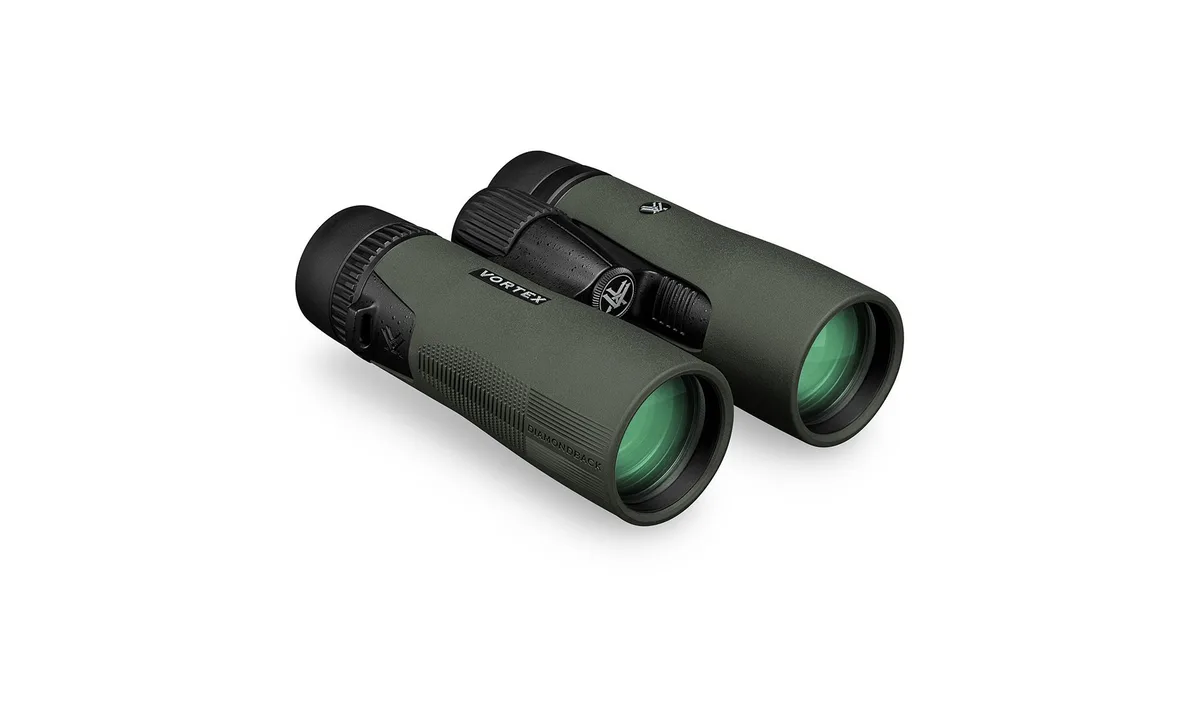
Image source: Bing (Web (fair-use with source credit))
Magnification: More Isn't Always Better
Magnification is the number before the "x". An 8x binocular makes objects look eight times closer. A 10x makes them look ten times closer.
Higher magnification narrows your field of view and makes every hand tremor more obvious.
If you hunt in thick cover, an 8x lets you scan faster and hold steadier. If you glass open fields, 10x gives you the reach you need. Our rule of thumb: if you hunt mostly under 100 yards, choose 8x.
If you regularly glass beyond 200 yards, choose 10x.
Objective Lens Size: Light vs. Weight
The second number is the objective lens diameter in millimeters. A 42mm objective gathers more light than a 32mm. More light means a brighter image in low-light conditions.
But it also means more weight and bulk.
A 42mm objective is the standard for full-size hunting binoculars. It balances light gathering with portability. A 32mm objective is lighter and more compact.
It works well for backpack hunters. A 50mm objective gives the brightest image but is heavy. It works best for stand hunters who do not walk far.
Exit Pupil: The Low-Light Secret
Exit pupil is the diameter of the beam of light that reaches your eye. Divide the objective lens diameter by the magnification. A 10×42 gives a 4.2mm exit pupil.
An 8×42 gives a 5.25mm exit pupil.
In low light, your pupils dilate. A larger exit pupil means more light enters your eye. For deer hunting at dawn and dusk, an exit pupil of 5mm or larger is ideal.
That is why 8×42 binoculars are often preferred for low-light conditions. If you hunt mostly in bright daylight, a 4mm exit pupil is sufficient.
Eye Relief: Why It Matters If You Wear Glasses
Eye relief is the distance from the eyepiece to your eye where you can still see the full image. If you wear glasses, you need at least 16mm of eye relief. Many premium binoculars offer 18mm to 20mm.
Without enough eye relief, you will see a black ring around the image. You will have to press your glasses against the eyepiece or take them off. Check the spec sheet before you buy.
If you do not wear glasses, this is less critical.
Field of View: Scanning Timber vs. Glassing Open Country
Field of view is the width of the area you can see at 1,000 yards. It is measured in feet. A wider field of view helps you find deer faster in thick cover.
A narrower field of view helps you focus on distant details.
An 8×32 binocular might have a field of view of 420 feet at 1,000 yards. A 10×42 might have 330 feet. For timber hunting, prioritize a wide field of view.
For open country, field of view matters less than magnification and glass clarity.
How to Choose Based on Where You Hunt
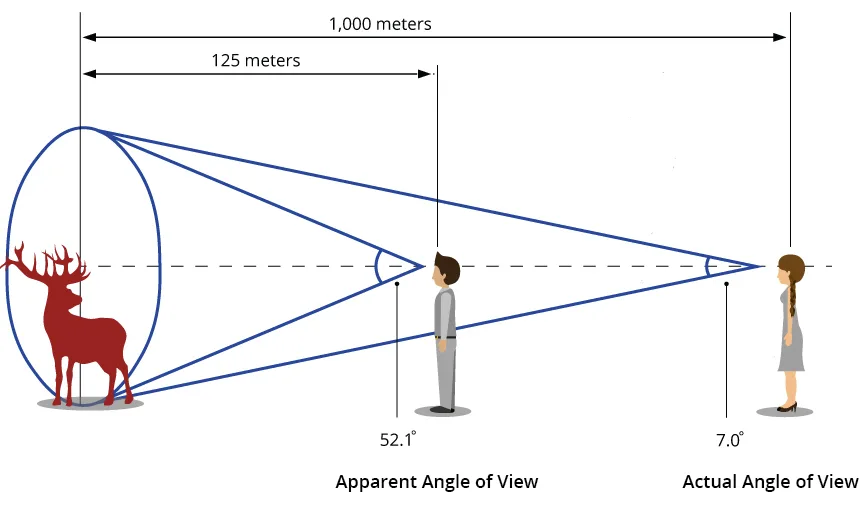
Image source: Bing (Web (fair-use with source credit))
Eastern Hardwoods and Tight Timber
If you hunt in the eastern U.S., your shots are usually under 100 yards. You often see deer at close range through thick brush. You need a binocular that is light, quick to focus, and has a wide field of view.
An 8×32 or 8×42 is ideal here. The 8x magnification gives you a steady image and a wider view. The 32mm or 42mm objective is enough for the dim light under a canopy.
Keep the weight under 25 ounces. You will be holding it up for long periods.
Western Open Country and Mountains
Western hunters glass long distances. They need to spot deer on distant ridges and in open meadows. Magnification and glass quality matter more than weight.
A 10×42 is the standard choice. Some hunters prefer 12×50 for extreme distance, but that requires a tripod. The 10×42 balances reach with handholdability.
Invest in good glass. ED or HD glass reduces chromatic aberration and improves clarity at long range.
Midwest Field Edges and Agricultural Land
Midwest hunters often sit on field edges. They glass across cornfields and soybean fields. Distances vary from 100 to 400 yards.
A 10×42 is a solid choice here. It gives you enough reach for the open ground. If you hunt more from a stand, you might prefer an 8×42 for the wider field of view.
Consider a tripod adapter if you glass for hours.
Swamps, Marshes, and Wet Ground
If you hunt in wet conditions, waterproofing and fog-proofing are non-negotiable. Look for binoculars that are nitrogen or argon purged. The rubber armor should be grippy even when wet.
An 8×42 or 10×42 works well. Weight is less of a concern if you are not hiking far. Focus on durability and low-light performance.
The exit pupil should be at least 5mm for the dim light of swamps.
How to Choose Based on Your Hunting Style
The Stand Hunter
If you hunt from a tree stand or ground blind, you do not carry your binocular far. You hang it on a hook or wear it on a harness. Weight is less important.
Image quality and low-light performance are critical.
Choose a 10×42 or even an 8×42. If you have the budget, go for a premium model with excellent glass. You will be staring through it for hours.
A comfortable eyecup and smooth focus wheel matter. Consider a tripod mount for extended glassing.
The Spot-and-Stalk Hunter
The spot-and-stalk hunter covers ground. They glass from a ridge, then move to close the distance. They need a binocular that balances weight, magnification, and durability.
A 10×42 is the standard. Look for a lightweight model under 24 ounces. Open-bridge designs save weight.
A locking diopter prevents accidental adjustments during a stalk. A bino harness is essential for quick access.
The Still-Hunter
The still-hunter moves slowly through the woods. They stop often to scan and listen. They need a binocular that is compact and easy to raise quickly.
An 8×32 or 8×42 is ideal. The lower magnification gives a wider field of view for scanning. The lighter weight helps you hold it steady.
A fast focus wheel is important. You will be raising and lowering the binocular frequently.
The Backpack Hunter
The backpack hunter carries everything on their back. Weight is the top priority. Every ounce counts.
Choose a compact 8×32 or 10×32. Some backpack hunters use a monocular to save weight. But a good compact binocular still beats a monocular for depth perception.
Look for a model under 20 ounces. Sacrifice some low-light performance for weight savings.
What About the Budget? Matching Price to Performance
Under $200: What You Actually Get
In this price range, you get basic optics. The glass is not fully multi-coated. The prisms are not phase-corrected.
You will see some color fringing and lower light transmission.
But you can still get a functional binocular. Look for a 10×42 or 8×42 from a reputable brand like Bushnell or Nikon. These are fine for daytime hunting in open terrain.
Do not expect them to perform well in low light. They are also less durable. Treat them carefully.
$200 to $500: The Sweet Spot
This is where the value lives. You get fully multi-coated lenses, phase-corrected prisms, and decent low-light performance. Brands like Vortex, Leupold, and Athlon dominate this range.
A Vortex Diamondback HD or Leupold BX-2 is a solid choice. They offer good clarity, waterproofing, and a lifetime warranty. For most deer hunters, this is the best price-to-performance ratio.
You will not outgrow these binoculars quickly.
$500 to $1,000: Serious Performance
At this level, you get premium glass. ED or HD glass reduces chromatic aberration. Dielectric coatings boost light transmission.
The build quality is excellent.
A Vortex Viper HD or Leupold BX-4 is a step up. You will notice a difference in low light and long-range clarity. These binoculars are durable enough for hard use.
If you hunt in challenging conditions and care about image quality, this is the range to consider.
Over $1,000: When It's Worth It
Above $1,000, you are buying the best glass available. Brands like Swarovski, Zeiss, and Maven offer exceptional clarity, brightness, and durability. The field of view is wider.
The focus wheel is smoother. The build is bombproof.
This is worth it if you hunt a lot and value every edge. It is also worth it if you plan to keep the binocular for decades. But for most hunters, the $200 to $500 range is sufficient.
Do not feel pressured to spend more than you need.
The Most Common Mistakes Hunters Make with Binoculars
Buying Too Much Magnification
This is the number one mistake we see. A hunter walks into a store and grabs the highest magnification on the shelf. They think 12x or 15x will let them see deer from another county.
In reality, they end up with a shaky image and a narrow field of view.
Here is the simple rule. If you cannot hold the binocular steady, the magnification is useless. At 10x, most people start to notice hand shake.
At 12x, you need a tripod or a steady rest. At 15x, you absolutely need a tripod. For deer hunting, 10x is the practical maximum for handheld use.
If you are in thick cover, stick with 8x.
Ignoring Low-Light Performance
Deer move at dawn and dusk. That is when the light is dimmest. Yet many hunters buy binoculars that perform well in bright sunlight and fail in low light.
The problem is simple. Cheap binoculars transmit less light. They use lower quality glass and fewer coatings.
At dusk, the image becomes dark and muddy. You miss deer that are standing in plain sight. Our research shows that low-light performance is the most important feature for deer hunting.
If you hunt early and late, prioritize exit pupil size and glass quality over magnification.
Skipping the Diopter Adjustment
Most binoculars have a diopter ring on the right eyepiece. It adjusts the focus to match the difference between your eyes. Many hunters never touch it.
They use the center focus wheel and wonder why the image never looks sharp.
The fix is easy. Cover the right objective lens. Focus the left side using the center wheel.
Then cover the left lens. Uncover the right. Adjust the diopter ring until the image is sharp.
Do this once. You will see a noticeable improvement in clarity.
Buying Based on Brand Alone
Brand loyalty is strong in the hunting world. Some hunters buy a specific brand because their father used it. Others buy because a famous hunter endorses it.
Neither is a good reason to spend your money.
Brands do matter for warranty and customer service. But a mid-tier binocular from a less famous brand can outperform a budget model from a premium brand. Look at the specs, not the logo.
Read the warranty terms. Compare the glass coatings. Do not assume that a higher price means a better fit for your situation.
Not Trying Before You Buy
Binoculars are personal. The fit depends on your face shape, your eye spacing, and whether you wear glasses. A binocular that works for your friend may give you black rings or eye strain.
If you can, visit a store. Hold the binocular. Adjust the eyecups.
Look through it for a few minutes. Check the focus wheel tension. See if it feels balanced in your hands.
If you buy online, buy from a retailer with a good return policy. Do not rely on specs alone.
Real-World Scenarios: Three Hunters, Three Different Choices
The Eastern Bowhunter
Meet Mark. He hunts whitetails in Pennsylvania. He sits in a tree stand over a food plot.
His shots are under 40 yards. He hunts thick woods where the light is dim.
Mark needs an 8×42. The 8x gives him a wider field of view for scanning tight spaces. The 42mm objective provides a 5.25mm exit pupil.
That is excellent for low light. He can keep the weight under 25 ounces. He does not need high magnification.
He needs brightness and a wide view.
The Western Rifle Hunter
Meet Sarah. She hunts mule deer in Colorado. She covers miles of open country.
She glasses ridges that are 500 yards away. She needs to spot antlers at long range.
Sarah needs a 10×42. The 10x gives her the reach she needs. She should invest in good glass.
ED glass reduces color fringing at long distances. She needs a tripod adapter for long glassing sessions. She can handle a little more weight because she uses a bino harness.
The 4.2mm exit pupil is enough for the bright western light.
The Budget-Conscious First-Timer
Meet James. He is new to deer hunting. He has a limited budget.
He hunts a mix of fields and woods in the Midwest. He does not know what he will prefer yet.
James needs a 10×42 in the $200 to $300 range. The 10×42 is the most versatile choice. It works in open fields and moderate cover.
He should buy from a brand with a lifetime warranty. Vortex, Leupold, and Bushnell all offer solid options at this price. If he decides to upgrade later, the 10×42 will still be useful as a backup.
The Final Decision Guide: Pick Your Binoculars in Three Steps
Step 1: Match Your Terrain
Start with where you hunt. If you hunt thick woods, choose 8x magnification. If you hunt open country, choose 10x.
If you hunt a mix, choose 10x. It is more versatile for most situations.
Then match the objective lens. For low-light conditions, choose 42mm. For weight savings, choose 32mm.
For maximum brightness with a tripod, choose 50mm. This step narrows your options significantly.
Step 2: Match Your Budget
Once you know your magnification and objective size, set your budget. If you are under $200, accept lower light transmission and fewer features. If you are between $200 and $500, you get good glass and a solid warranty.
If you are over $500, you get premium glass and excellent low-light performance.
Do not stretch your budget for features you do not need. A $300 binocular with good low-light performance beats a $1,000 binocular that you cannot afford to replace.
Step 3: Test for Fit
The final step is the most important. Try the binocular before you buy. Check the eye relief.
Adjust the focus wheel. Look through it for at least five minutes. If it feels comfortable, buy it.
If it does not, try another model.
If you cannot try in person, buy from a retailer with a good return policy. Read the warranty terms. A lifetime warranty is worth paying extra for.
It protects your investment.
Frequently Asked Questions About Deer Hunting Binoculars
Is 10×42 always the best for deer hunting?
No, it is the most versatile, but not always the best. For thick eastern woods, an 8×42 gives a wider field of view and better low-light performance. For backpack hunting, a 10×32 saves weight.
The best choice depends on your specific situation.
Can I use cheap binoculars and still be effective?
Yes, but with limits. Cheap binoculars work well in bright daylight. They struggle in low light.
They are less durable. If you hunt only during midday in open terrain, a budget pair is fine. If you hunt dawn and dusk, invest in better glass.
Do I really need waterproof binoculars?
Yes. Deer hunting often involves rain, snow, or wet brush. Moisture inside the binocular causes fogging and damage.
Look for binoculars that are nitrogen purged and O-ring sealed. Waterproofing is standard on most hunting binoculars over $150.
How important is the warranty?
Very important. A good warranty protects your investment. Vortex, Leupold, and Maven offer lifetime warranties that cover defects and damage.
Bushnell offers a limited lifetime warranty. Check the terms before you buy. A binocular with a poor warranty is a risk.
Should I buy a bino harness or use the neck strap?
A bino harness is better for active hunting. It keeps the binocular against your chest. It prevents swinging and bouncing.
It distributes the weight across your shoulders. A neck strap works for stand hunting. But for walking, a harness is worth the investment.