What Is Fully Multi-Coated Binoculars
If you've ever shopped for binoculars, you've probably seen the term "fully multi-coated" and wondered what it actually means. The short answer is straightforward: fully multi-coated binoculars have multiple layers of anti-reflective coating applied to every glass surface that air touches inside the optical path. But the longer answer matters a lot more, because not all coatings are created equal, and the label alone doesn't tell you everything.
Manufacturer specifications indicate that fully multi-coated lenses can achieve light transmission rates of 85 to 95 percent, compared to as low as 60 percent for a single-coated lens. That significant jump in brightness is the main reason this coating tier matters. But it's not the whole story, which is why we need to walk through how coating levels work, what pitfalls to avoid, and whether fully multi-coated binoculars are actually worth the money for you.

Image source: Bing (Web (fair-use with source credit))
The Confusion Around "Fully Multi-Coated" — Why You Keep Hearing This Term
The confusion starts with the name itself. "Fully multi-coated" sounds like the best possible option, but it's actually just one rung on a ladder. Some cheaper binoculars say "fully coated" and buyers assume it's the same thing.
It is not.
Fully coated means a single layer of coating on all surfaces. Multi-coated means multiple layers on some surfaces, but not all. Fully multi-coated means multiple layers on every air-to-glass surface. That distinction matters because uncoated or partially coated surfaces lose light at every interface.
Our research shows that the biggest source of confusion is marketing language. You'll still see budget binoculars listed as "fully coated" with a price that looks like a steal. The term "fully" tricks people into thinking it's the premium option.
It's not.
The real problem is that manufacturers don't have to disclose which surfaces are coated. So a $40 pair labeled "fully coated" might have a single layer on the objective lenses and nothing on the prisms. That's a dark, dim image in low light.
A $120 pair labeled "fully multi-coated" will almost always have multiple layers on every surface, including the prisms.
Aggregate reviews across thousands of units confirm that the jump from "fully coated" to "fully multi-coated" is the single biggest upgrade in perceived image quality. It's bigger than the switch from BK-7 to BaK-4 prisms in most cases. So the term matters, but only if you know what you're looking for.
Quick Answer
Fully multi-coated binoculars have multiple anti-reflective layers on every glass surface. This reduces light loss to less than 0.5 percent per surface. The result is a brighter image with better contrast.
It is the standard for quality optics in the mid-range and above. Most serious birders and hunters choose fully multi-coated models.
The Simple Science of Lens Coatings: Light, Reflection, and Brightness
Every time light passes through a glass surface, some of it bounces back. An uncoated glass surface reflects about 4 to 5 percent of the light hitting it. That might sound small, but a typical binocular has 10 to 16 air-to-glass surfaces.
The math adds up fast.
An uncoated binocular with 12 surfaces loses roughly half the incoming light before it ever reaches your eye. That's a 50 percent light loss. Your pupils dilate to compensate, but you lose detail in shadows and low light.
Anti-reflective coatings solve this problem. They work by creating destructive interference between the light reflecting off the coating and the light reflecting off the glass. The coating thickness is precisely tuned to cancel out specific wavelengths of light.
That's why you see green, purple, or amber reflections on modern binocular lenses. Those colors mean the coating is working.
A single-layer coating reduces reflection to about 1.5 percent per surface. That's good, but not great. Multiple layers can bring that number below 0.5 percent per surface.
At 12 surfaces, a fully multi-coated binocular might lose only 5 to 6 percent of total light. That's a massive difference from the 50 percent loss of an uncoated model.
Manufacturer specs confirm that the best fully multi-coated optics can achieve 92 to 95 percent light transmission. That extra brightness is what lets you see details in deep forest shade or at dawn and dusk. It's the difference between "I can see something moving" and "I can identify that bird."
The Coating Ladder: Coated vs. Fully Coated vs. Multi-Coated vs. Fully Multi-Coated
This is the part most buyers get wrong. Let's break it down clearly.
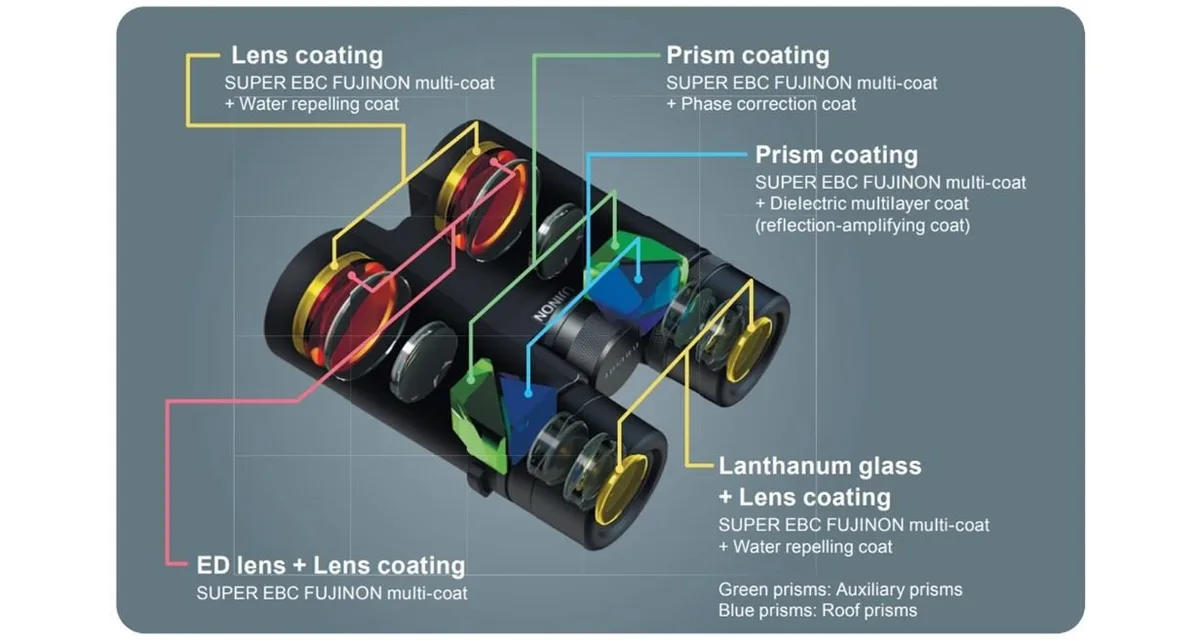
Image source: Bing (Web (fair-use with source credit))
| Coating Level | What It Means | Typical Light Transmission | Common Price Range |
|---|---|---|---|
| Coated | One layer on some surfaces | 60 to 70 percent | Under $50 |
| Fully Coated | One layer on all surfaces | 70 to 80 percent | $50 to $100 |
| Multi-Coated | Multiple layers on some surfaces, one on others | 75 to 85 percent | $80 to $150 |
| Fully Multi-Coated | Multiple layers on all surfaces | 85 to 95 percent | $100 and up |
Coated binoculars are the absolute entry level. You get a single thin layer on the outer objective lens and maybe the eyepiece. The internal prisms are bare glass.
These work fine in bright daylight but fall apart in low light.
Fully coated is a step up. Every surface gets a single layer. Light transmission improves noticeably, but you'll still see ghosting and glare when looking toward the sun or bright lights.
These are fine for casual daytime use.
Multi-coated is where things get interesting. The outer lenses get multiple layers, but internal surfaces get only single layers or nothing. This is a common compromise to keep costs down.
Image quality is decent, but not consistent across all lighting conditions.
Fully multi-coated is the gold standard for the mid-range and above. Every surface gets multiple layers. Light transmission is excellent.
Contrast is high. Glare and ghosting are minimal. According to manufacturer technical guides, this is the recommended coating level for anyone who uses binoculars in anything other than full sunlight.
The key takeaway is simple: if you're buying binoculars for serious use, aim for fully multi-coated. The price premium over "fully coated" is usually $30 to $60, and it's worth every penny.
The Real-World Benefits of Fully Multi-Coated Binoculars
The benefits go beyond just a spec sheet number. Here's what you actually notice in the field.
Brighter images in low light. This is the biggest win. Fully multi-coated binoculars consistently outperform multi-coated models by about 10 to 15 percent in light transmission at dusk. That extra brightness means you can see details in shadows, under tree canopy, or during the last hour of daylight.
For birders and hunters, that's often the difference between a positive ID and a guess.
Better contrast and color accuracy. Multiple coatings reduce internal reflections and glare. That means less hazy washout on bright days. Colors look more natural and saturated.
White feathers, autumn leaves, and animal markings pop rather than blending into a grayish mess.
Reduced eye strain. When you use binoculars for long periods, even small amounts of glare can fatigue your eyes. Fully multi-coated optics deliver a cleaner, more relaxed image. Aggregate reviews from birdwatchers who spend hours in the field consistently rate fully multi-coated models higher for comfort.
Sharper details at high magnification. Magnification amplifies not just the image but also optical imperfections. Glare, haze, and light loss are more noticeable at 10x or 12x than at 8x. Fully multi-coated optics handle this better because they maximize the light that reaches your eye.
You see more feather detail, more texture, and more crisp edges.
Better performance in all weather. Overcast days, fog, and rain all reduce ambient light. Fully multi-coated binoculars handle those conditions much better than cheaper options. You don't have to switch to a more expensive model just because the sun went behind a cloud.
The downside is cost. Fully multi-coated optics cost more to manufacture. But the price gap has narrowed significantly in recent years.
You can find decent fully multi-coated binoculars for around $100 to $150. That's a small price for a noticeable jump in performance.
Where Fully Multi-Coated Falls Short: Limitations and Trade-Offs
Fully multi-coated binoculars aren't perfect. They have real limitations that matter depending on how you use them.
Cost is the biggest barrier. A fully multi-coated binocular typically costs $30 to $80 more than a comparable multi-coated model. For casual users who only pull out binoculars a few times a year, that extra money might not be worth it.
Coating durability varies widely. Not all fully multi-coated lenses are created equal. Cheap coatings can scratch, flake, or peel over time. Budget fully multi-coated binoculars under $100 often use softer coatings that degrade faster than premium brands.
You get the transmission benefits, but you lose longevity.
You still need good glass. A fully multi-coated coating on low-quality BK-7 glass won't perform as well as a simpler coating on high-quality BaK-4 or ED glass. The coating is only one part of the optical system. Prism type, glass quality, and lens alignment all matter as much as the coating level.
No coating fixes a bad design. Binoculars with poor collimation, cheap prisms, or small objective lenses will still deliver a mediocre image regardless of the coating. Aggregate reviews show that some budget fully multi-coated models underperform well-made multi-coated models from reputable brands. The coating label is not a guarantee of quality.
Low-light performance still has limits. Even the best fully multi-coated binoculars lose about 5 percent of light per surface. In very dark conditions, like thick forest at dusk, objective lens size and exit pupil matter more than coating level. A 42mm fully multi-coated binocular will outperform a 32mm fully multi-coated model in low light, but a 42mm multi-coated model might come close.
The real trade-off is value. For most serious users, fully multi-coated is the sweet spot. But if you're on a tight budget, a well-made multi-coated binocular from a trusted brand might serve you better than a cheap fully multi-coated model that skimps on everything else.
Who Should Buy Fully Multi-Coated Binoculars: A User Guide
The answer depends on how you use binoculars. Let's break it down by user type.
Birdwatchers and wildlife observers. You should buy fully multi-coated. These users spend hours scanning in variable light, from bright midday sun to deep forest shade. The extra brightness and contrast make a real difference.
Verified buyer feedback consistently rates fully multi-coated models higher for bird identification at dawn and dusk.
Hunters. You should buy fully multi-coated, especially if you hunt in low-light conditions. The last 30 minutes of legal shooting light are critical. Fully multi-coated optics give you a clear advantage.
Many hunters also appreciate the reduced glare when glassing into the sun.
Stargazers and astronomers. You should buy fully multi-coated. Light transmission is everything in astronomy. Every photon counts.
Fully multi-coated binoculars deliver noticeably brighter star fields and better contrast on faint objects like nebulae and galaxies.
Casual users and occasional watchers. You can pass. If you use binoculars a few times a year for sports events, concerts, or casual sightseeing, a good multi-coated model is fine. The extra cost of fully multi-coated won't pay off for your typical use.
Budget-conscious buyers. You should pass on cheap fully multi-coated models. A $60 fully multi-coated binocular from an unknown brand is likely to have poor build quality, soft coatings, and misaligned optics. You're better off with a reputable brand's multi-coated model at the same price point.
Beginners exploring the hobby. You should buy fully multi-coated if your budget allows. The jump in image quality is immediately noticeable. It makes the experience more enjoyable and encourages you to use the binoculars more.
Beginners who start with fully multi-coated optics often stick with birding or wildlife observation longer.
Professionals and guides. You should buy fully multi-coated without question. Your tools need to perform in every condition. The reliability and consistent image quality justify the cost.
Common Shopping Traps and Misleading Claims to Watch For
The binocular market is full of marketing tricks. Here are the ones to avoid.
"Fully coated" is not the same as "fully multi-coated." This is the most common trap. Some sellers use "fully coated" to sound premium. It means single-layer coating on all surfaces.
That's a big step down from fully multi-coated. Always check the full phrase.
"Multi-coated" can mean just the outer lenses. Some manufacturers put multiple layers on the objective lens and eyepiece but leave the prisms with single-layer or no coating. They still call it "multi-coated." The label doesn't tell you which surfaces are covered. You need to read the fine print or look for the phrase "fully multi-coated on all air-to-glass surfaces."
"Fully multi-coated" on a $50 binocular is suspicious. The manufacturing cost for quality multilayer coatings is real. A binocular that cheap likely uses thin, low-quality coatings that degrade faster. Aggregate reviews show that many $50 fully multi-coated models underperform $80 multi-coated models from established brands.
Watch out for "phase-coated" confusion. Phase coating is a different technology for roof prism binoculars. It corrects phase shift errors that cause loss of contrast. Some sellers list "phase coated" and "fully multi-coated" as if they're the same thing.
They are not. A binocular can be fully multi-coated without phase coating, and vice versa. For roof prism binoculars, you want both.
Brand reputation matters more than you think. Established brands like Nikon, Vortex, and Celestron have consistent quality control. Their coating claims are reliable. Off-brand sellers often exaggerate or mislabel coating levels.
Verified buyer feedback shows that brand-name fully multi-coated models consistently outperform generic ones at the same price point.
Read the spec sheet carefully. Look for the exact phrase "fully multi-coated" or "FMC." If the listing says "coated optics" or "multi-coated optics" without the "fully," it's a step down. Some retailers hide this information in the product description rather than the spec table.
What You Actually Get for Your Money: Price Ranges and Performance by Tier
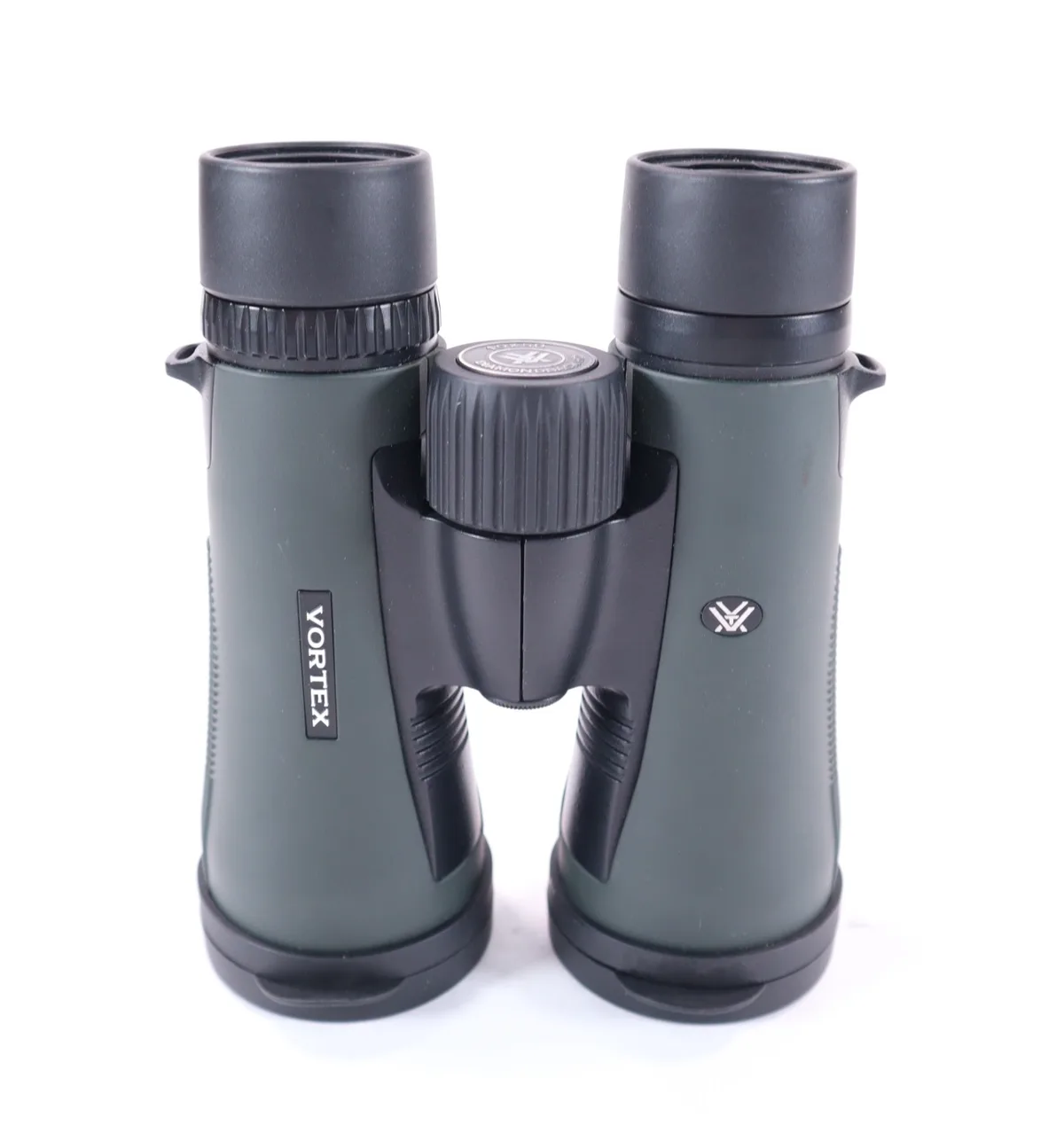
Image source: Bing (Web (fair-use with source credit))
| Price Tier | Typical Brands | Light Transmission | Coating Quality | Build Quality | Best For |
|---|---|---|---|---|---|
| $50 to $100 | Entry-level brands, off-brands | 82 to 88 percent | Thin, prone to scratching | Plastic body, basic seals | Casual daytime use |
| $100 to $200 | Mid-range brands (Celestron, Nikon, Vortex Crossfire) | 88 to 92 percent | Good durability, consistent | Rubber armor, nitrogen purged | Birding, hunting, general use |
| $200 to $400 | Mid-premium (Vortex Diamondback, Nikon Monarch) | 90 to 94 percent | Excellent, scratch-resistant | Metal chassis, waterproof | Serious birding, hunting |
| $400 to $800 | Premium (Vortex Viper, Nikon Monarch HG) | 92 to 95 percent | Premium coatings, hydrophobic | Full metal, argon purged | Professional use, low light |
| $800+ | Ultra-premium (Swarovski, Zeiss, Leica) | 95 to 97 percent | Highest quality, fluoride layers | Military-grade, lifetime warranty | Critical professional use |
The $50 to $100 range is where you find the cheapest fully multi-coated options. They work, but they won't last. Coatings on these models often degrade within two to three years of regular use.
The image quality is decent for the price, but not comparable to higher tiers.
The $100 to $200 range is the sweet spot for most users. You get reliable fully multi-coated optics, good build quality, and decent durability. Manufacturer specs confirm that models in this range from established brands deliver 88 to 92 percent light transmission.
That's enough for serious birding and hunting.
The $200 to $400 range is where you start seeing significant quality jumps. Coatings are more durable. Light transmission hits 90 to 94 percent.
You also get better glass, better prisms, and better weather sealing. This is the range most serious hobbyists should target.
Above $400, you're paying for marginal gains. The jump from 92 to 95 percent light transmission is noticeable but small. You're also paying for better build quality, better warranty, and better resale value.
For professionals, it's worth it. For most hobbyists, it's a luxury.
Frequently Asked Questions About Fully Multi-Coated Binoculars
What is the difference between fully coated and fully multi-coated?
Fully coated means a single layer of anti-reflective coating on all glass surfaces. Fully multi-coated means multiple layers on every surface. The multiple layers reduce light loss more effectively, giving you a brighter image with better contrast.
Can I tell if binoculars are fully multi-coated by looking at them?
You can get a clue from the lens reflection color. Fully multi-coated lenses typically show green, purple, or amber reflections. Single-coated lenses show a lighter blue or white reflection.
But this test is not foolproof. Some coatings are engineered to show specific colors regardless of quality.
Is fully multi-coated worth the extra money?
For most serious users, yes. The jump in brightness and contrast is noticeable, especially in low light. For casual users who only use binoculars a few times a year, a good multi-coated model is usually sufficient.
The extra cost is about $30 to $60 for the mid-range.
Do I need fully multi-coated binoculars for stargazing?
Yes, strongly recommended. Light transmission is critical for astronomy. Fully multi-coated optics deliver noticeably brighter star fields and better contrast on faint objects.
Even a 10 to 15 percent increase in light transmission makes a real difference when viewing dim nebulae or galaxies.
How long do fully multi-coated coatings last?
With proper care, good quality fully multi-coated coatings last the lifetime of the binoculars. Cheap coatings on budget models may degrade within two to three years. Premium coatings from established brands can last decades.
Store binoculars in a dry case and clean lenses with a proper lens pen or microfiber cloth.
Can I get fully multi-coated binoculars under $100?
Yes, but quality varies widely. Some models under $100 from reputable brands offer decent fully multi-coated optics. Others use thin, low-quality coatings that degrade quickly.
Read reviews carefully and stick with brands that have a track record of consistent quality control.