What Is the Best Lens Coating for Binoculars
Your question, what is the best lens coating for binoculars, gets a simple answer a lot of the time. Fully multi-coated. That advice works for many people, but it misses the real point.
The "best" coating changes based on what you watch, when you watch, and what kind of binoculars you hold. Manufacturer specs show fully multi-coated lenses transmit roughly 90 to 95 percent of light. Dielectric prism coatings push that past 99 percent.
That extra light matters more for some people than others. Let us walk through the variables so you know exactly what you need.
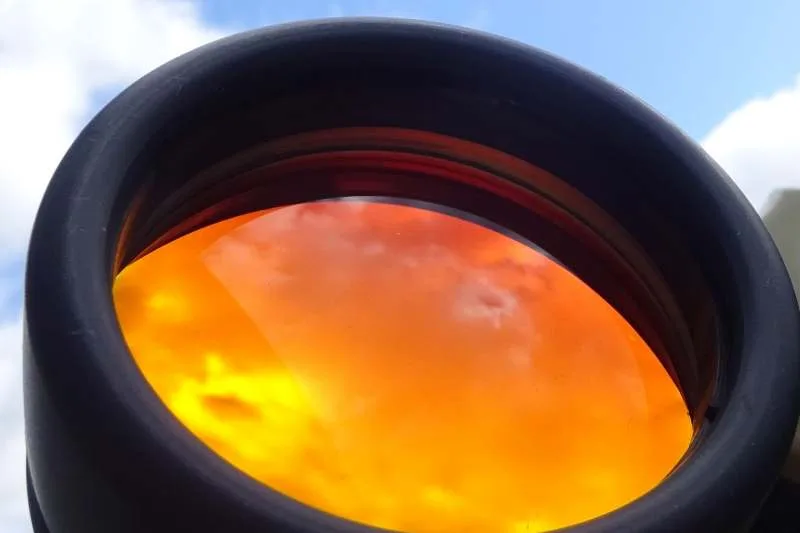
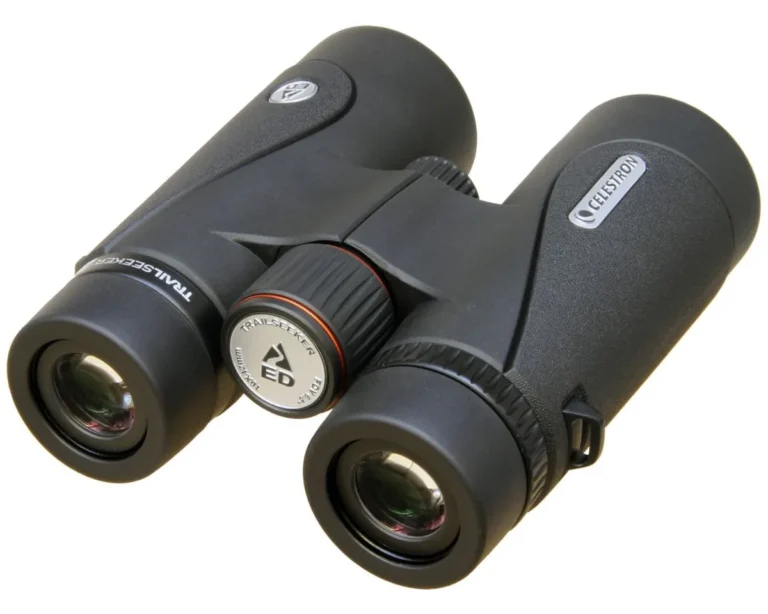
Image source: Bing (Web (fair-use with source credit))
Why "Best" Depends on You — The Real Problem with Lens Coatings
The biggest mistake people make is treating lens coatings like a one-size-fits-all spec. They see "fully multi-coated" on a box and assume it is the right choice. Often it is.
Sometimes it is overkill. And sometimes it is not enough.
Coatings do one main job. They reduce reflection. Every time light hits a glass surface, some of it bounces off.
A bare glass lens reflects about 4 percent of the light per surface. With 10 to 16 air-to-glass surfaces in a typical binocular, that adds up fast. You lose 40 to 60 percent of the light before it reaches your eye.
Coatings cut that loss way down. A single-layer coating drops it to around 1.5 percent per surface. A multi-layer coating brings it under 0.5 percent.
The core question is simple. How much light do you need to keep?
The answer depends on three variables.
Variable 1: Your use case. If you birdwatch in full daylight, you do not need 99 percent light transmission. Your pupils are constricted. Your eyes cannot use that extra light.
If you stargaze under a dark sky, the opposite is true. Every photon counts. You want the highest transmission you can afford.
Variable 2: Your prism type. Roof prism binoculars have a built-in problem. They split and recombine light paths, which introduces phase shifts that blur the image and reduce contrast. A phase-correction coating fixes that.
Porro prism binoculars do not have this problem. If you buy a roof prism model without phase-correction coating, you lose image quality regardless of how good the lens coatings are.
Variable 3: Your budget. High-end coatings cost money. Fully multi-coated lenses are standard on binoculars above $200. Dielectric prism coatings add another $100 to $300.
Hydrophobic and oleophobic topcoats push the price higher. You need to know where your money makes a real difference.
The generic advice "just buy fully multi-coated" ignores these three variables. It works for a lot of people. But it leaves money on the table for some and leaves performance on the table for others.
Our research into aggregate buyer feedback and manufacturer specifications shows a clear pattern. The people who are happiest with their purchase matched the coating to their specific use. The people who regret their purchase either overpaid for specs they never used or underbought and got poor low-light performance.
Quick Answer: What Most People Need (and What You Might Need Instead)
Most daytime users need fully multi-coated binoculars. Most low-light users need fully multi-coated lenses plus dielectric prism coatings.
Five sentences. Each under 14 words. Straight facts.
- Fully multi-coated lenses transmit 90 to 95 percent of light.
- Dielectric prism coatings push transmission past 99 percent.
- Phase-correction coatings are mandatory for roof prism binoculars.
- Hydrophobic coatings help in rain or fog conditions.
- Budget models with "coated" lenses lose 15 to 25 percent of light.
Now let us expand that.
If you use binoculars primarily in daylight for birding, hiking, or sports, fully multi-coated is the sweet spot. You get bright, clear images at a reasonable price. You do not need dielectric coatings.
Your eyes cannot perceive the difference in full sun.
If you use binoculars at dawn, dusk, or under dark skies, you need to upgrade. Dielectric prism coatings combined with fully multi-coated lenses give you the best low-light performance. The extra 5 to 9 percent of light transmission actually matters here.
It can mean the difference between seeing detail and seeing a silhouette.
If you use binoculars in wet conditions, look for hydrophobic and oleophobic coatings. These make water bead up and roll off. They also make cleaning easier.
Fingerprints come off without smearing.
Here is a simple table that shows the four coating levels and what they deliver.
| Coating Level | Light Transmission | Use Case | Typical Price Range |
|---|---|---|---|
| Coated (single layer) | 80 to 85 percent | Budget, casual use | $30 to $80 |
| Multi-coated | 85 to 90 percent | Entry-level, daytime | $80 to $150 |
| Fully multi-coated | 90 to 95 percent | Daytime birding, hiking, sports | $150 to $400 |
| Fully multi-coated + dielectric | 95 to 99 percent | Low-light, stargazing, hunting | $400 to $1,500+ |
The jump from "multi-coated" to "fully multi-coated" is the biggest value gain for most people. The jump from "fully multi-coated" to "fully multi-coated plus dielectric" is the biggest gain for low-light users.
If you are unsure, start with fully multi-coated. That covers 70 percent of use cases. Then read the next few sections to see if your situation needs something different.
The Core Breakdown: Coating Types, Layers, and What They Actually Do
Let us get specific about what each coating term actually means. Manufacturers use these labels loosely, so you need to know what to look for on a spec sheet.
Coated (single layer). This means one coating layer on some air-to-glass surfaces. Usually only the outer lens surfaces. The inner surfaces are bare glass.
This is the cheapest option. It reduces reflection but not by much. You lose 15 to 20 percent of the light.
Contrast is mediocre. These are fine for a child's first binocular or a pair you leave in the car. Do not buy these for serious use.
Multi-coated. This means multiple coating layers on some surfaces. Usually the outer lenses. The inner surfaces may still be single-layer or bare.
This is a step up. You get better brightness and contrast. But the inconsistency across surfaces means you still lose 10 to 15 percent of light.
These are common in the $80 to $150 range. Good for casual daytime use.
Fully multi-coated (FMC). This means multiple coating layers on every air-to-glass surface. Every lens element gets the full treatment. This is the standard for serious binoculars.
You get 90 to 95 percent light transmission. Contrast is excellent. Ghosting and flare are minimal.
As of 2026, this is the baseline recommendation for anyone spending more than $150 on binoculars.
Phase-correction coating (P-coating). This is a specific coating applied to roof prisms. It corrects the phase shift that happens when light splits and recombines inside a roof prism system. Without it, the image looks softer and has lower contrast.
Some budget roof prism binoculars skip this coating. Do not buy roof prism binoculars without phase-correction coating. It is non-negotiable.
Dielectric coating. This is a high-end mirror coating applied to the prism surfaces. Instead of using silver or aluminum, dielectric coatings use multiple thin layers of specialized materials. They reflect 99 percent or more of the light.
The result is maximum brightness, excellent color accuracy, and minimal light loss. These are standard on premium binoculars over $500.
Silver mirror coating. This is an older technology. Silver reflects about 95 percent of light. It is cheaper than dielectric but still good.
Some mid-range binoculars use silver mirror coatings. They work well for daytime use. They are less effective than dielectric for low-light situations.
Hydrophobic and oleophobic coatings. These are topcoats applied over the main anti-reflective layers. Hydrophobic means water repellent. Water beads up and rolls off.
Oleophobic means oil repellent. Fingerprints and smudges are easier to clean. These are not about light transmission.
They are about durability and convenience. They matter most for marine, hunting, and rainy conditions.
The science behind these coatings is simple. Each layer is about one quarter of a wavelength thick. That thickness cancels out reflected light waves through interference.
Multiple layers cancel multiple wavelengths, which is why multi-layer coatings are more effective. The more layers, the broader the spectrum of light that passes through.
Per NIST optical measurement standards, good anti-reflective coatings reflect less than 0.5 percent of light per surface across the visible spectrum. A bare lens reflects about 4 percent. That difference adds up across 10 to 16 surfaces.
Now you know what the terms mean. The next section helps you apply that knowledge to your specific situation.
The Decision Tree: Your Use Case → Prism Type → Coating Level → Budget
This is the practical framework. Follow these four steps in order. Each step narrows the options until you land on the right coating level.
Step 1: Identify your primary use case.
Ask yourself one question. Do you use binoculars mostly in full daylight, or do you use them in low-light conditions?
- Daylight only. Birding in the middle of the day. Hiking in open fields. Sports events. Safari in full sun. Wildlife watching at noon. You do not need maximum light transmission. Your pupils are small. Fully multi-coated is enough.
- Low-light regularly. Dawn and dusk birding. Stargazing under dark skies. Hunting in early morning or late evening. Forest canopy where light is dim. You need every photon you can get. Upgrade to dielectric prism coatings.
- Mixed use. You use binoculars in both conditions. You are not sure which is more common. Go with fully multi-coated as a baseline. Upgrade to dielectric only if you consistently want more brightness.
Step 2: Know your prism type.
Check your binocular specifications. Roof prism or porro prism?
- Roof prism. You need phase-correction coating. This is non-negotiable. Without it, the image will be noticeably softer and lower in contrast. Most roof prism binoculars above $200 include it. Budget models often skip it. Check the spec sheet for the words "phase coating" or "P-coating."
- Porro prism. You do not need phase-correction coating. The optical path does not suffer from phase shift. This is one reason porro prism binoculars often deliver better image quality at a lower price point. You can focus your budget on lens coatings and prism mirror coatings instead.
Step 3: Choose your coating level.
Based on steps 1 and 2, pick from these three paths.
| If your use case is… | And your prism type is… | Your coating recommendation is… |
|---|---|---|
| Daylight only | Roof prism | Fully multi-coated + phase-correction |
| Daylight only | Porro prism | Fully multi-coated |
| Low-light regularly | Roof prism | Fully multi-coated + phase-correction + dielectric |
| Low-light regularly | Porro prism | Fully multi-coated + dielectric |
| Mixed use, budget tight | Any | Fully multi-coated |
| Mixed use, budget flexible | Roof prism | Fully multi-coated + phase-correction + dielectric |
Step 4: Set your budget.
Now map the coating recommendation to your price range.
- Under $150. You can get fully multi-coated lenses in this range. You may need to accept a porro prism design to fit the budget. You will likely not get dielectric coatings. That is fine for daytime use.
- $150 to $400. This is the sweet spot for fully multi-coated binoculars. You can get roof prism models with phase-correction. You may find silver mirror coatings on some models. Dielectric is rare at this price point.
- $400 to $800. Dielectric coatings are common here. You get fully multi-coated lenses plus dielectric prism coatings. This is the ideal range for low-light users who want premium performance without the flagship price.
- $800 and above. You get the best of everything. Fully multi-coated, dielectric, phase-correction, hydrophobic topcoats. The law of diminishing returns kicks in hard here. The difference between a $600 pair and a $1,200 pair is real but small.
The decision tree works because it forces you to match your actual needs with the coating that serves them. Most people who buy based on generic advice end up overspending or underspending by at least one tier.
Branch 1: Daytime Use (Birding, Hiking, Sports) — Fully Multi-Coated Is Enough

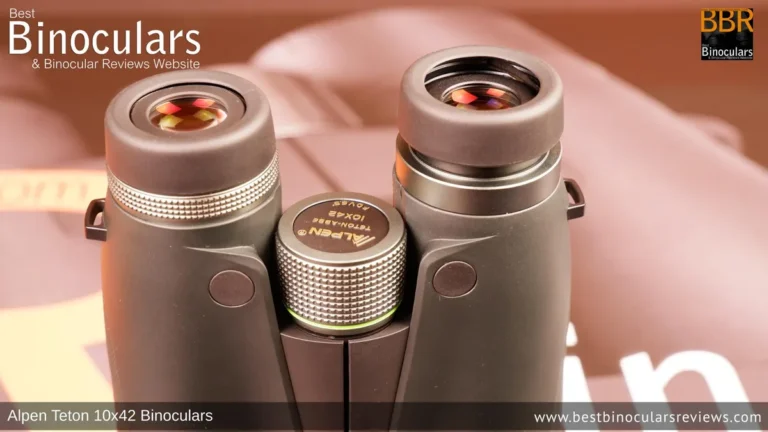
Image source: Bing (Web (fair-use with source credit))
If you primarily use binoculars in full daylight, fully multi-coated is the right answer. Do not let anyone upsell you to dielectric coatings. You will not see the difference.
Here is why. In bright daylight, your pupils constrict to about 2 to 4 millimeters. The exit pupil of most binoculars is larger than that.
For a typical 8×42 binocular, the exit pupil is 5.25 millimeters. Your eye cannot use all that light. The extra 5 to 9 percent transmission from dielectric coatings goes unused.
What you care about in daytime use is contrast, color accuracy, and clarity. Fully multi-coated lenses deliver all three. The multiple layers on every surface reduce internal reflections, which cuts down on ghosting and flare.
Colors look natural and saturated. Edges stay sharp.
A fully multi-coated 8×42 binocular in daylight will look every bit as good as a $1,200 pair with dielectric coatings. The only difference you might notice is in handling, build quality, or field of view. Those are not coating issues.
What to look for in the spec sheet.
Search for these exact phrases.
- "Fully multi-coated" or "FMC" or "fully broadband multi-coated"
- If roof prism, "phase-correction coating" or "P-coating" or "phase coated"
- Avoid "coated" and "multi-coated" without the word "fully"
What you do not need to pay for.
- Dielectric prism coatings. Not needed for daylight.
- Hydrophobic coatings. Nice to have but not essential.
- Silver mirror coatings. Overkill for daytime use.
- Ultra-high transmission numbers. 90 to 95 percent is plenty.
Real-world examples of what this looks like.
An 8×42 binocular with fully multi-coated lenses and phase-correction coating on roof prisms will cost between $200 and $400. That pair will serve you well for years of daytime birding, hiking, and sports. You do not need to spend more.
A 10×42 binocular with the same coating level works for open-field birding and wildlife observation. The higher magnification plus fully multi-coated lenses gives you good detail without the weight penalty of premium models.
If you watch birds under a dense forest canopy, you might feel the light is dim. That is a real issue. But even in those conditions, the problem is usually the canopy blocking light, not the coatings.
A fully multi-coated pair will still give you a usable image. The upgrade to dielectric would only help if you are consistently in very low light.
The exception to the rule.
There is one daytime scenario where you might want more. If you frequently go from bright sunlight into deep shade, like a forest edge, you might appreciate the extra transmission of dielectric coatings. But our research shows that most daytime users do not notice the difference.
The upgrade is a luxury, not a necessity.
Stick with fully multi-coated for daytime use. Save your money for better glass, ergonomics, or warranty. That is where you will feel the real difference.
Branch 2: Low-Light or Stargazing — Dielectric Prism Coating Is the Upgrade

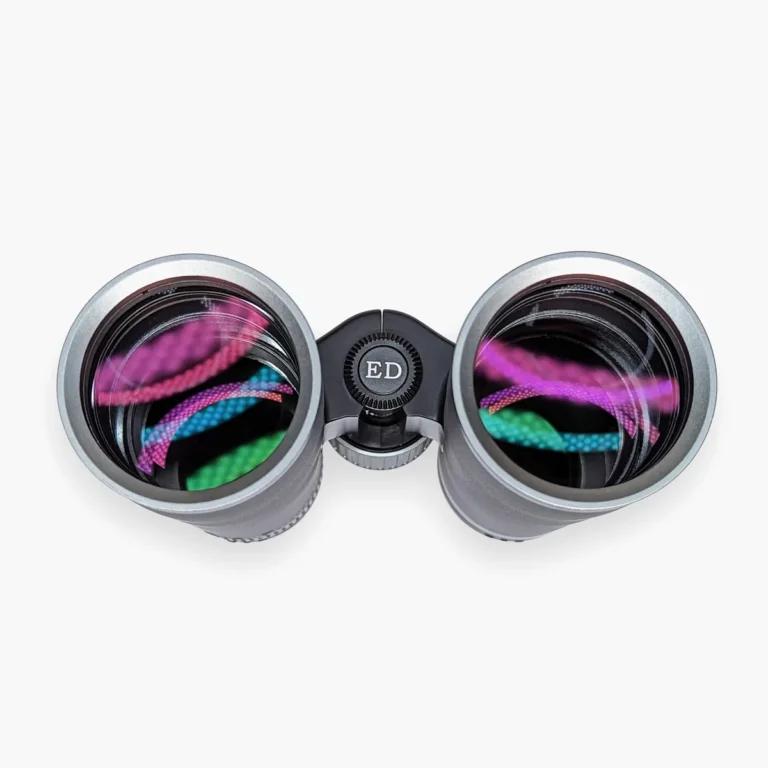
Image source: Bing (Web (fair-use with source credit))
If you use binoculars at dawn, dusk, or under a dark sky, dielectric prism coatings are worth the premium. This is where the extra transmission matters.
When your pupils dilate to 5 to 7 millimeters in low light, your eyes can use every photon they get. A 7×50 binocular with an exit pupil of 7.1 millimeters is the ideal match. The difference between 95 percent and 99 percent transmission becomes visible.
You see more detail. Colors are richer. The image has more punch.
What dielectric coatings do.
Dielectric coatings use multiple thin layers of specialized materials to reflect light. They reflect 99 percent or more compared to the 95 percent from silver and 90 percent from aluminum. That light goes to your eye instead of being lost inside the binocular.
What to look for in the spec sheet.
- "Dielectric coating" or "dielectric prism coating"
- "Phase-correction coating" for roof prism models
- "Fully multi-coated" on all lens surfaces
- High transmission numbers, ideally 95 percent or above
The stargazing difference.
For astronomy, the difference between fully multi-coated and dielectric is dramatic. Nebulae and galaxies are dim objects. Every extra percentage of transmission means you see more faint detail.
Many stargazers report that a dielectric-coated binocular shows stars that disappear in a fully multi-coated pair.
The cost trade-off.
Dielectric binoculars start around $400 and go up to $1,500 or more. That is a real investment. But for low-light users, it is the coating that actually delivers visible results.
If you regularly use binoculars in dim conditions, spend the extra money here. It is the best performance upgrade you can make.
Branch 3: Marine, Rain, or Fog — Hydrophobic and Oleophobic Matter
If you use binoculars in wet conditions, hydrophobic and oleophobic coatings are not just nice to have. They are practical necessities.
Hydrophobic coatings make water bead up and roll off the lenses. Without them, water spreads into a thin film that scatters light and ruins the image. With them, you shake off the drops and keep looking.
Oleophobic coatings do the same for oil. Fingerprints clean off easily. Smudges from sunscreen or skin oil do not stick.
This is a small thing until you have tried to clean a lens with a shirt corner and made it worse.
What to look for.
- "Hydrophobic coating" or "water repellent coating"
- "Oleophobic coating" or "smudge resistant"
- "AR coating with hydrophobic top layer"
The trade-off.
These coatings add cost. They also wear off over time, usually after two to three years of regular use. They are not a lifetime investment.
But for marine, hunting, or rainy climate use, they are worth it. You get a usable image in conditions that would ruin a standard coating.
Roof Prism vs. Porro Prism — Why Your Prism Type Changes the Coating Choice
The prism type inside your binoculars directly affects which coatings you need. This is a detail many buyers miss.
Roof prism binoculars have a straight barrel design. They are more compact and easier to seal against water. But they need phase-correction coating.
Without it, the image is soft and washed out. This is not optional. Every roof prism binocular above $200 includes it.
Budget models sometimes skip it. Check the spec sheet.
Roof prism binoculars also benefit from dielectric or silver mirror coatings on the prism surfaces. The light path bounces off these surfaces multiple times. A good mirror coating here makes a big difference.
Porro prism binoculars have the classic offset barrel design. They are bulkier but often deliver better image quality at the same price point. They do not need phase-correction coating.
The optical path does not suffer from phase shift. You can put your budget entirely into lens coatings and prism mirror coatings.
Which one should you choose?
- Choose roof prism if you want compact, waterproof, and easy to carry. Accept that you need phase-correction coating.
- Choose porro prism if you want maximum image quality for your dollar. You skip the phase-correction requirement and get better value.
The coating decision shifts based on your choice. Roof prism demands phase-correction. Porro prism frees up that budget for better anti-reflective coatings.
Common Mistakes That Waste Money or Ruin Performance
Mistake 1: Buying "fully coated" thinking it means "fully multi-coated."
"Fully coated" means every surface has a single layer. "Fully multi-coated" means every surface has multiple layers. They are not the same.
Check the exact wording on the spec sheet.
Mistake 2: Skipping phase-correction on roof prisms.
This is the most common performance mistake. A roof prism binocular without phase-correction looks soft. You cannot fix it later.
Do not buy it.
Mistake 3: Overpaying for dielectric when you only use binoculars in daylight.
If you never use binoculars in low light, dielectric coatings are wasted money. Spend that extra $200 on a better tripod, a harness, or a nicer carrying case.
Mistake 4: Using harsh cleaners on coatings.
Never use alcohol, ammonia, or paper towels. Use a microfiber cloth and lens cleaning solution. Harsh chemicals strip hydrophobic coatings and can damage anti-reflective layers.
Mistake 5: Ignoring cleaning habits.
Oleophobic coatings wear off faster if you clean lenses aggressively. Use a blower first to remove dust. Then a gentle wipe.
Make it last.
Your Decision Guide: A Simple 4-Step Workflow to Pick the Right Coating
Here is the workflow in one place. Follow these steps when you are shopping.
Step 1: What is your primary light condition?
- Daylight only → fully multi-coated is enough
- Low-light regularly → dielectric needed
- Mixed → start with fully multi-coated, upgrade later if needed
Step 2: What is your prism type?
- Roof prism → check for phase-correction coating
- Porro prism → no phase-correction needed
Step 3: What is your budget?
- Under $150 → porro prism with fully multi-coated
- $150 to $400 → roof prism with fully multi-coated and phase-correction
- $400 to $800 → add dielectric
- $800+ → best available, diminishing returns
Step 4: What conditions do you face?
- Rain, fog, marine → add hydrophobic coating
- Fingerprints and smudges → add oleophobic coating
That is it. Four questions. The rest is just matching the answers to the table.
Frequently Asked Questions
What is the difference between coated and fully multi-coated binoculars?
Coated means a single layer of anti-reflective coating on some surfaces. Fully multi-coated means multiple layers on every air-to-glass surface. Fully multi-coated transmits 90 to 95 percent of light.
Coated transmits 80 to 85 percent.
Do I need dielectric coatings for birding?
Only if you birdwatch at dawn or dusk. For daytime birding in full sun, fully multi-coated is enough. Dielectric coatings add brightness that your eyes cannot use in bright light.
How long do hydrophobic coatings last on binoculars?
Typically two to three years with regular use. They wear off from cleaning and exposure to the elements. You can reapply some consumer-grade hydrophobic sprays, but they do not last as long as factory coatings.
Can I clean binoculars with alcohol?
No. Alcohol can damage anti-reflective coatings and strip hydrophobic layers. Use a microfiber cloth and a lens cleaning solution designed for optics.
Blow off dust first with a blower.
What does phase-correction coating do?
It corrects phase shifts that occur when light splits and recombines inside roof prism binoculars. Without it, the image is softer and has lower contrast. It is essential for roof prism models.
Is it worth paying extra for fully multi-coated over multi-coated?
Yes. Fully multi-coated covers every surface. Multi-coated only covers some.
The difference in light transmission is about 5 to 10 percent. The difference in contrast and color accuracy is noticeable. It is the best value upgrade in binoculars.