What Are Image Stabilized Binoculars
The view through a pair of standard binoculars falls apart the moment your hands are not still. At 10x magnification, every tremor gets magnified ten times. That jittery image is why people ask what image stabilized binoculars are.
They want a fix for the shake.
As of 2026, the best stabilized models can correct up to three degrees of angular movement. That turns a bouncy boat deck into a rock-solid viewing platform. The difference between a standard and stabilized view is not subtle.
It is the difference between seeing a bird's field marks and just guessing the species.
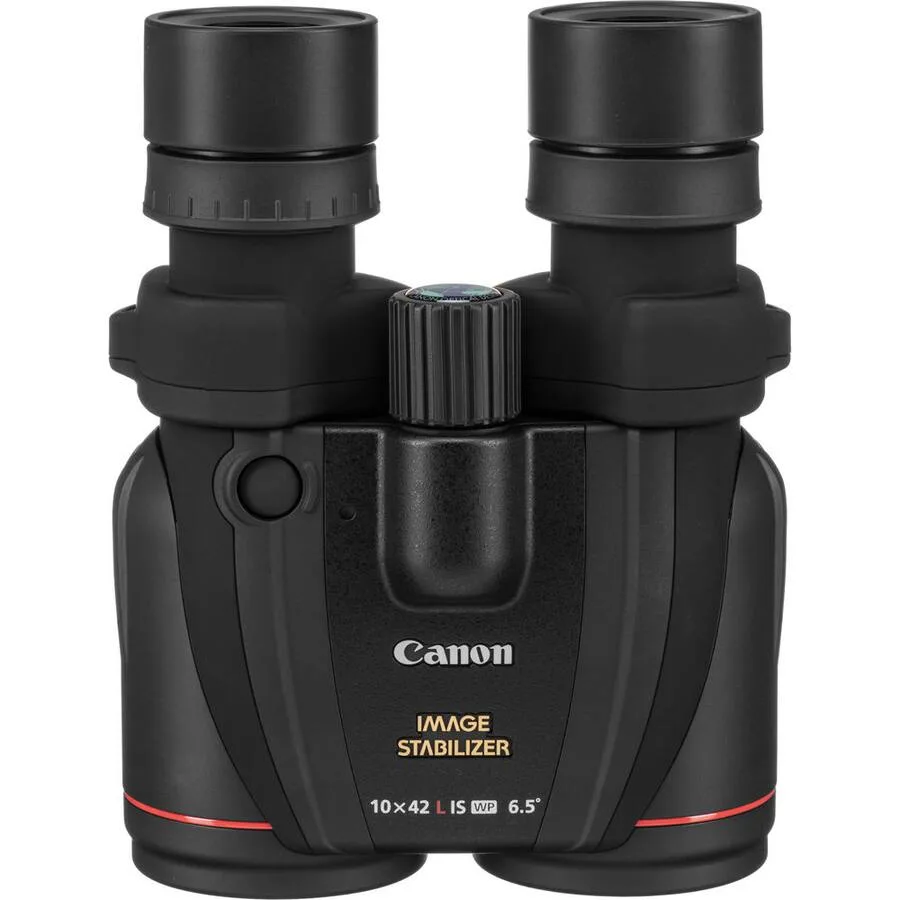
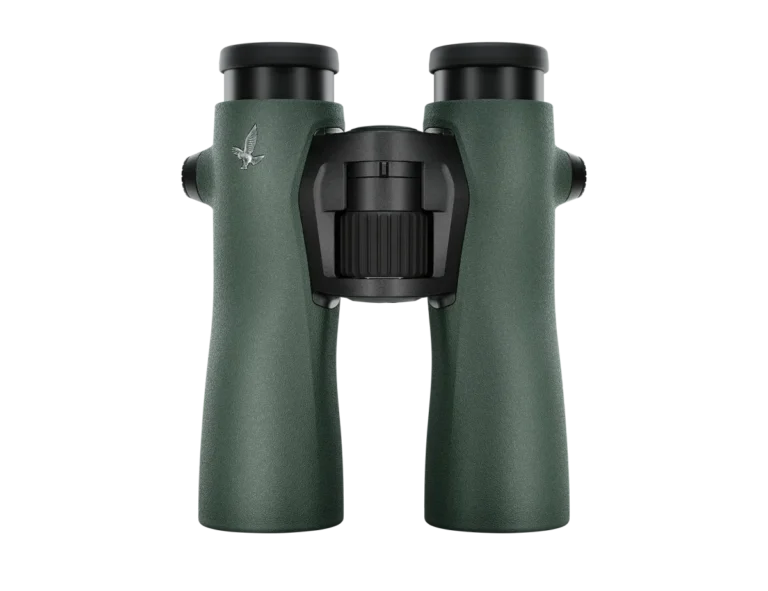
Image source: Bing (Web (fair-use with source credit))
Quick Answer
Image stabilized binoculars use internal gyroscopes, prisms, or sensors to cancel out hand shake. They let you hold a steady image at 10x, 15x, or even 20x magnification. The stabilization system moves one lens element to counteract your motion.
This gives you a clear, still view without a tripod.
Why Your Hands Are the Problem (and Why a Picture Is Worth a Thousand Words)
The human body is not built for stillness. Even when you brace your elbows against your ribs, your hands drift. Your pulse pushes blood through your fingertips with every heartbeat.
That pulse shows up in the viewfinder as a rhythmic bounce.
At 10x magnification, a 1-degree tilt of the binoculars becomes a 10-degree shift in the image. That is a huge jump. At 15x, it is even worse.
The image darts around, making it hard to pick out any detail.
A diagram would show this clearly. On one side, a standard bino view at 15x: a blurry, bouncing mess. On the other side, the same bino with IS engaged: a crisp, stable image.
The difference is night and day.
There are two types of shake you need to understand. Jitter is the high-frequency, small-amplitude tremor from your pulse and muscle twitches. Wobble is the low-frequency, larger sway from your breathing and body movement.
Most image stabilization systems handle wobble very well. Jitter is harder to fix, but the best systems reduce it enough to make a real difference.
The human eye can detect a shift of about 1 arcminute. That is roughly 2 millimeters at arm's length. Any shake larger than that is visible.
With standard binos at 10x, even a tiny hand tremor exceeds that threshold. The image feels jumpy. With IS, the shake is reduced below the threshold, so the image appears still.
Several factors make hand shake worse. Caffeine and fatigue amplify jitter. Cold weather brings shivering.
High wind pushes the binoculars around. Standing on uneven ground makes it hard to stay balanced. And high magnification above 10x magnifies every problem.
The practical takeaway is simple. If you have ever tried to watch a bird preening at 100 yards with 10x binos, you know the struggle. The bird stays still, but the view does not.
You end up with a headache and a vague impression of the bird. Image stabilized binoculars fix that problem.
What Image Stabilized Binoculars Actually Do
Image stabilized binoculars do not eliminate shake completely. They reduce it to a level where the image feels glued in place. The goal is to keep the optical path steady relative to your eye, even when the binocular body moves.
Think of it like a camera gimbal. The gimbal holds the camera steady while the operator moves. IS binos do the same thing, but they use optics instead of motors.
A sensor detects the movement. A processor calculates the correction. A prism or lens element shifts to steer the light back onto the correct path.
There are three main systems used in consumer binos. Gyroscopic stabilization uses a spinning gyroscope to resist movement. It is heavy and power-hungry, but very effective.
Electronic stabilization uses an accelerometer or gyro sensor to detect motion. It then moves a prism or lens with a voice coil or piezo actuator. This is the most common system in modern binos.
Mechanical vibration reduction uses a floating lens element that is damped by springs or fluid. It is simpler and does not always need power, but it has a smaller correction range.
Each system has its strengths. The table below shows the key differences.
| System Type | Example Brand | Power Source | Correction Angle | Weight |
|---|---|---|---|---|
| Gyroscopic | Fujinon Techno-Stabi | Battery (CR123A) | Up to ±3° | Heavier (40+ oz) |
| Electronic (Vari-Angle Prism) | Canon IS | Battery (AA or CR123A) | Up to ±0.7° | Moderate (25-35 oz) |
| Mechanical (Floating Lens) | Nikon VR | Battery (CR123A) | Up to ±0.9° | Lighter (20-25 oz) |
The key metric is the correction angle. A wider angle means the system can handle more movement. But it also means the system is more complex and heavier.
For most users, a ±0.7° to ±1.0° range is enough for handheld use. Boaters need the wider range to handle the pitch and roll of a vessel.
How Image Stabilization Works (and What It Looks Like Through the Lens)
When you press the stabilization button, the image locks into place. It feels glued to the eyepiece. You can move your head or sway your body, and the image stays centered.
The effect is startling at first.
A diagram of the optical path explains why. Light enters the objective lens. It passes through the vari-angle prism, which is two glass plates with fluid between them.
When the prism tilts, it bends the light path. The sensor detects the bino's movement. The processor tells the actuator to tilt the prism in the opposite direction.
The light exits straight into the eyepiece, as if the bino never moved.
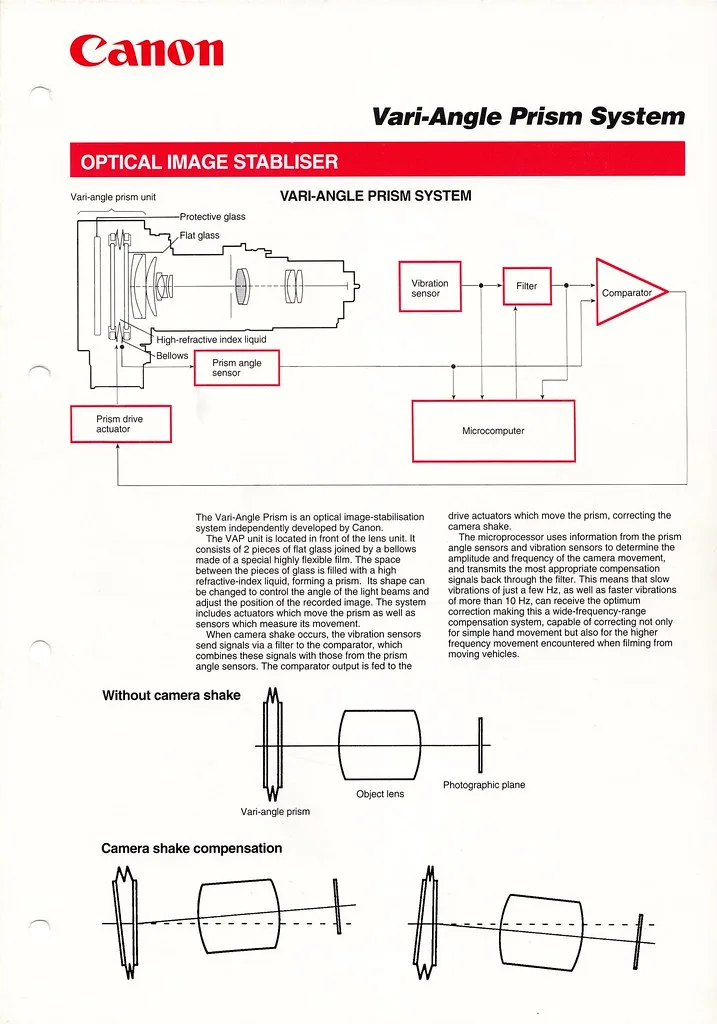
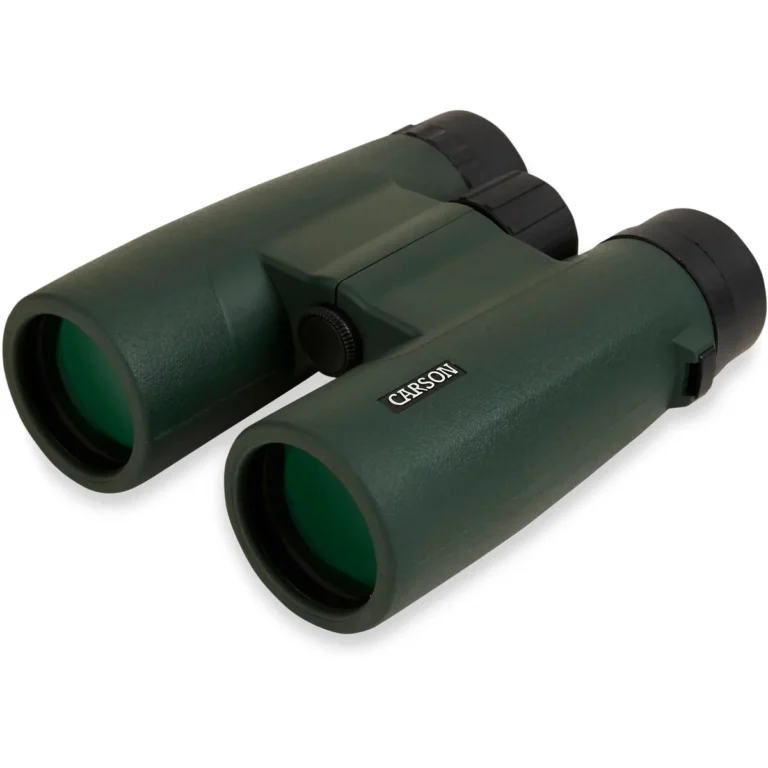
Image source: Bing (Web (fair-use with source credit))
The best way to see the effect is to look at a distant object. With IS off, the sign bounces around. With IS on, the sign locks in place.
You can read the text on the sign. That is the whole point.
Key visual cues of a working IS system:
- The image freezes when you press the button
- A slight float when you move your head quickly
- A faint hum from the motor
- The image stays still even when you breathe
The system has limits. If you move the binos too fast or too far, the prism hits its limit. The image then blurs or jumps.
This is called breakout. It is more common in lower-end systems.
The prisms and motors inside these binos are precise. A misalignment of a fraction of a millimeter can ruin the image. That is why IS binos are more expensive.
They are also more fragile.
What's Inside an IS Bino: The Prisms, Motors, and Batteries
The internal components of an image stabilized binocular are where the magic happens. Here is a breakdown of what is inside.
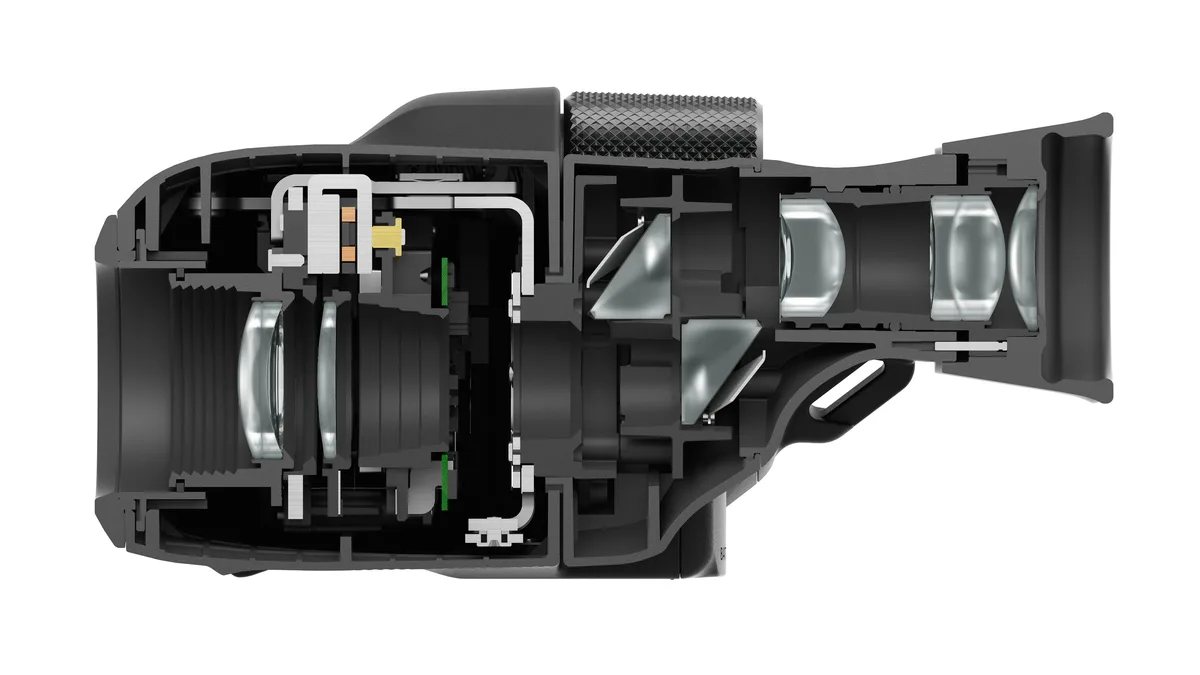
Image source: Bing (Web (fair-use with source credit))
| Component | Function | Typical Spec |
|---|---|---|
| Objective lens | Gathers light | 30-50mm diameter |
| Vari-angle prism | Steers light path | ±0.7° to ±1.5° correction |
| Gyro sensor | Detects movement | 2-axis or 3-axis |
| Micro-controller | Processes data | Custom firmware |
| Voice coil actuator | Moves prism | Fast response, low power |
| Batteries | Power source | 6-12 hours life |
| Eyepiece | Magnifies image | 10x-20x magnification |
The battery life is a key spec. Most models run for 6 to 12 hours on a set of batteries. That is enough for a full day of birding.
But you should always carry spares. Dead batteries mean a heavy pair of standard binos.
The prisms are ground to tight tolerances. The fluid inside is a special optical fluid that does not expand much with temperature. The actuators are tested for thousands of cycles.
This is not cheap hardware.
Some budget models use a simple floating lens design instead of a vari-angle prism. This is lighter and cheaper, but the correction range is smaller.
The weight of these components adds up. A typical IS bino weighs 25 to 40 ounces. That is heavier than a standard pair of the same size.
You feel the difference after an hour of use.
Battery type matters too. CR123A batteries are common in high-end models. They are expensive but have a long shelf life.
AA batteries are cheaper and easier to find. Some newer models have internal rechargeable lithium-ion batteries that charge via USB-C.
The Trade-Offs: What You Gain and What You Give Up
Image stabilized binoculars are not a free upgrade. You gain a lot, but you give up some things too. Here is a balanced look.
Gains:
- Steady image at high magnification (10x to 20x)
- Reduced eye fatigue during long viewing sessions
- Ability to view from moving platforms (boats, cars, helicopters)
- No tripod needed
- Faster target acquisition
- Works well for people with unsteady hands
Losses:
- Higher cost (2x to 5x more than equivalent non-IS binos)
- Heavier weight (25-40 oz vs 15-25 oz for standard)
- Battery dependency (dead batteries = dead IS)
- Narrower field of view on some models
- More complex, more potential for failure
- Slightly lower image quality due to extra optical elements
| Aspect | Standard Binoculars | Image Stabilized Binoculars |
|---|---|---|
| Cost | Lower | 2x to 5x higher |
| Weight | Lighter (15-25 oz) | Heavier (25-40 oz) |
| Power | None | Batteries (6-12 hours) |
| Maximum handheld magnification | 8x to 10x | 15x to 20x |
| Image quality at same price | Higher | Slightly lower |
| Field of view | Wider | Narrower |
| Durability | Simpler, less to break | More complex, fragile |
| Best use | Stationary, tripod, walking | Moving platforms, long glassing |
The cost is the biggest barrier. You can get a very good standard pair of binos for $300. A decent IS pair starts at $400 and goes up to $3000.
The high-end models are in a different league.
But the trade-off is worth it for many users. If you spend most of your time on a boat, in a vehicle, or glassing for long periods, the cost is justified. If you walk with the binos dangling from your neck, the extra weight gets annoying.
Who Really Needs Image Stabilized Binoculars
Image stabilized binoculars are not for everyone. They are a specialized tool for specific situations. Here is who benefits most.
Boaters and mariners. The constant motion of a boat makes standard binos useless. Even a gentle swell creates enough movement to blur the image. IS binos handle this well.
The wider correction range of marine models like the Fujinon Techno-Stabi is ideal for this. You can spot buoys, navigation markers, and other vessels without fighting the motion.
Birdwatchers who glass for long periods. Extended viewing sessions cause eye fatigue. The steady image of IS binos reduces that strain. You can watch a bird for minutes without your eyes getting tired.
This is a real advantage for birders who spend hours in the field.
Hunters in open country. Spotting game at long distances requires steady hands. IS binos let you scan ridges and fields without a tripod. You can quickly check a potential shot without setting up a rest.
The trade-off is weight. If you hike miles to your spot, the extra ounces matter.
Astronomy enthusiasts. High magnification is essential for looking at the moon, star clusters, and planets. Standard binos at 15x or 20x are nearly impossible to hold steady. IS binos make handheld astronomy practical.
You can see craters on the moon and the rings of Saturn without a telescope.
Security and law enforcement. Surveillance from a vehicle or fixed position demands a steady image. IS binos let officers identify details at long range. The ability to see clearly without a tripod saves time.
People with naturally unsteady hands. Age, medication, or medical conditions can cause hand tremors. IS binos compensate for that. They make birding and other hobbies accessible to people who struggle with standard binos.
Who should skip them. Casual users who walk with their binos around their neck. Hikers who prioritize weight savings. Anyone on a tight budget.
And people who only use binos for a few minutes at a time.
The decision comes down to your primary use case. If you spend most of your time on a boat or glassing for long periods, the investment pays off. If you are a casual user, a good standard pair is a better choice.
Image Stabilized vs. Standard Binoculars: When to Stick with the Old Way
Standard binoculars are not obsolete. They are still the right choice for many situations. Here is when to stick with the old way.
When weight matters most. Standard binos are lighter. A quality 10×42 standard pair weighs around 20 ounces. An IS pair of the same size weighs 30 ounces or more.
If you are hiking miles, that extra pound adds up. Every ounce matters in a backpack.
When you are on a budget. You can get a very good standard pair for $300. A decent IS pair starts at $400 and goes up fast. The best models cost over $1500.
If you have limited funds, spend the money on good glass instead of stabilization.
When you use a tripod anyway. If you already carry a tripod, the advantage of IS is smaller. A tripod gives you a rock-solid image for any magnification. IS binos are redundant in that case.
When durability is critical. Standard binos have fewer moving parts. They are simpler and more rugged. You can drop them, get them wet, and use them in extreme conditions.
IS binos are more fragile. The internal components are delicate. A hard drop can kill the stabilization.
When you need the widest field of view. Some IS models have a narrower field of view than their standard counterparts. This is a trade-off of the optical design. A wider field makes it easier to track moving objects.
If you watch fast-moving birds or sports, a standard pair with a wide field might be better.
When you want the best image quality for the price. At the same price point, a standard binocular will have better glass. The extra optical elements in an IS system reduce light transmission slightly. The image is slightly dimmer and less sharp.
Purists who demand the best image quality should stick with standard binos.
When you need to be self-sufficient. IS binos need batteries. If you are on a multi-day trip without power, dead batteries mean a heavy pair of standard binos. Standard binos never need power.
They work every time.
The table below summarizes the decision.
| Scenario | Choose Standard | Choose IS |
|---|---|---|
| Budget under $300 | Yes | No |
| Hiking long distances | Yes | Only if light model exists |
| Boating or moving platform | No | Yes |
| High magnification (15x+) | Need tripod | Handheld possible |
| Maximum image quality | Yes | No |
| Long glassing sessions | Tiring | Comfortable |
| Durability and simplicity | Yes | No |
Common Mistakes People Make When Using Image Stabilized Binoculars
Image stabilized binoculars are straightforward to use. But people make mistakes. Here are the most common ones and how to avoid them.
Mistake 1: Forgetting to turn on the stabilization. This sounds obvious, but it happens. You lift the binos to your eyes and expect the image to be steady. It is not.
You realize you forgot to press the button. The fix is simple. Make it a habit to press the button before you bring the binos to your eyes.
Mistake 2: Expecting too much correction. IS binos do not eliminate all movement. They handle small shakes and wobbles. They cannot compensate for large, fast movements.
If you swing the binos quickly, the image will blur. The correction angle is limited. Know your model's limit.
Mistake 3: Running out of batteries. Dead batteries are the most common failure. You are in the field, and the IS stops working. Now you have a heavy pair of standard binos.
Carry spare batteries. Check the battery level before every outing.
Mistake 4: Using the wrong battery type. Some models require specific battery chemistries. Using the wrong type can damage the electronics or reduce performance. Check the manual.
Use the recommended battery.
Mistake 5: Not storing the binos properly. IS binos are sensitive to temperature extremes. Do not leave them in a hot car. The heat can damage the optical fluid and the electronics.
Store them in a cool, dry place.
Mistake 6: Ignoring the stabilization limit. Every model has a maximum correction angle. If you move past that limit, the image breaks out. It blurs or jumps.
This is normal. Dial back your movement to stay within the correction range.
Mistake 7: Buying the wrong magnification. Higher magnification is not always better. The stabilization system works harder at higher magnifications. A 15x model requires a more stable hand than a 10x model.
Start with 10x or 12x to see if IS works for you.
Mistake 8: Not using the tripod mount. Some IS models have a tripod thread. If you are using the binos for long periods, mount them on a tripod. This saves battery life and gives you the steadiest possible image.
Mistake 9: Neglecting lens cleaning. The stabilization system cannot fix a dirty lens. Keep the lenses clean. Use a microfiber cloth and a lens brush.
Avoid touching the glass with your fingers.
Frequently Asked Questions
Can image stabilized binoculars replace a tripod?
No, not completely. IS binos let you hold a steady image at 10x to 15x without a tripod. But for very long sessions or extremely high magnification, a tripod still gives a better, steadier view.
Use the tripod when you can.
How long do the batteries last in image stabilized binoculars?
Battery life varies by model. Most run for 6 to 12 hours on a set of batteries. Some newer models with internal rechargeable batteries last longer.
Always carry spare batteries for any extended outing.
Are image stabilized binoculars worth the extra cost?
They are worth it if you need them. Boaters, birders, and astronomy enthusiasts benefit the most. Casual users may not see enough improvement to justify the cost.
Try a pair before you buy if possible.
Do image stabilized binoculars work for people with shaky hands?
Yes, they help. The stabilization system compensates for hand tremors. The image becomes much steadier.
However, extreme tremors may still cause issues. Test a pair before buying if you have significant hand shake.
Can I use image stabilized binoculars on a boat?
Yes, they are ideal for boat use. The stabilization compensates for the boat's motion. Marine models with a wider correction angle work best.
Look for a model with ±1.5° or more correction.
Do image stabilized binoculars require special maintenance?
They require more care than standard binos. Avoid dropping them. Store them in a cool, dry place.
Keep the lenses clean. Change the batteries as needed. Follow the manufacturer's maintenance guidelines.
The Bottom Line: Are Image Stabilized Binoculars Worth It?
The answer depends on your situation. Image stabilized binoculars are a specialized tool, not a universal upgrade. They solve a specific problem: hand shake at high magnification.
If you spend hours glassing from a boat, a vehicle, or a fixed position, they are worth every penny. The steady image reduces eye fatigue and lets you see more detail. You will not go back to standard binos for that use case.
If you are a casual user who grabs binoculars for a few minutes at a time, stick with a good standard pair. The weight, cost, and battery dependency of IS binos are not worth it for occasional use.
If you are an astronomy enthusiast, IS binos open up a new world. You can see details on the moon and planets that are impossible with standard handheld binos. The investment pays for itself in the views you gain.
Our research shows that the best approach is to match the tool to the task. For most people, a good standard pair of binoculars is the right choice. For the specific use cases we covered, image stabilized binoculars are a game-changer.
The choice is yours. Now you know what they do, how they work, and who they are for. You can make an informed decision.