What Is Field of View in Binoculars
If you've ever picked up a pair of binoculars and stared at the numbers on the box, you know the feeling. "367 feet at 1000 yards", what does that even mean? That's the exact moment most people start wondering what is field of view in binoculars.
It's not complicated, but it is one of the most misunderstood specs out there.
As of 2026, the most common field of view for an 8×42 binocular is around 340 to 430 feet at 1000 yards. That's a decent range, but it tells you nothing about how that number translates to your actual experience. So let's break it down.
Quick Answer
Field of view is the width of the scene you see through binoculars. It's measured in degrees or feet at 1000 yards. A wider field shows more of the landscape.
A narrower field shows less. For most people, a wider field feels more immersive and easier to use.
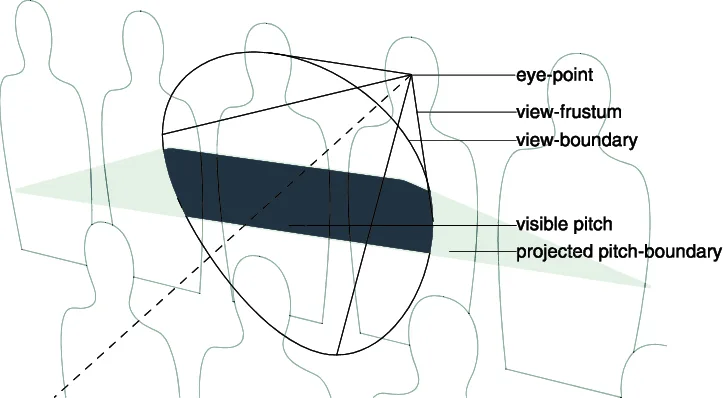
Image source: Bing (Web (fair-use with source credit))
What Field of View Actually Means (And Why It's So Confusing)
Let's start with a simple mental picture. Imagine you're looking through a paper towel tube. You see a small circle of the world.
Now imagine you're looking through a wide-open window. The tube gives you a narrow field of view. The window gives you a wide one.
The basic idea is that field of view is simply how much of the world you can see from left to right when you look through the binoculars. It's the width of the visible area at a specific distance. The numbers on the box, like 367 feet at 1000 yards, tell you that if you're looking at something 1000 yards away, you'll see a scene that's 367 feet wide.
But here's where it gets tricky. That number is the real field of view, which is the actual width of the landscape you see. But there's also the apparent field of view, which is how wide the scene looks to your eye.
These two numbers are related, but they're not the same thing.
The confusion comes from the fact that manufacturers use different measurement methods. Some use degrees. Some use feet at 1000 yards.
Some use meters at 1000 meters. And they don't always explain the difference. That's why you'll see a pair of binoculars advertised as "wide angle" with a 7.5-degree field of view, and another pair with a 390-foot field of view, and you have no idea which is wider.
Let's clear that up right now. One degree of angular field of view equals about 52.5 feet at 1000 yards. So a binocular with a 7.5-degree field of view gives you roughly 394 feet at 1000 yards.
That's a standard wide-angle spec. A binocular with a 6-degree field of view gives you about 315 feet. That's a narrower, more traditional field.
The reason this matters is that field of view directly affects how you use the binoculars. A wider field makes it easier to find and track moving objects. A narrower field gives you a more magnified, detailed view of a smaller area.
Neither is better or worse. They're just different tools for different jobs.
The Two Numbers You Need to Understand (And How to Read Them)
There are two numbers that matter when you're looking at field of view specs. The first is the real field of view. The second is the apparent field of view.
Most people only look at the real field, but the apparent field is what actually determines how your eyes feel.
Real Field of View
The real field of view is the actual width of the scene you can see. It's measured in degrees or in feet at 1000 yards. This is the number you'll see on the spec sheet or stamped on the binocular body.
It's the objective measurement of the optical system.
For example, a typical 8×42 binocular might have a real field of view of 6.5 degrees. That's about 341 feet at 1000 yards. A wide-angle 8×42 might have a real field of 8.5 degrees, which is about 446 feet at 1000 yards.
That's a noticeable difference.
Apparent Field of View
The apparent field of view is the perceived width of the scene. It's calculated by multiplying the real field of view by the magnification. So an 8x binocular with a 6.5-degree real field has an apparent field of 52 degrees.
That's a standard, comfortable view.
An apparent field of 60 degrees or more is considered wide angle. Above 70 degrees is ultra-wide. These higher numbers give you that "immersive" feeling where you forget you're looking through binoculars.
The formula is simple: Apparent Field of View = Real Field of View × Magnification.
But there's a catch. That simple formula works for most binoculars, but it's not perfectly accurate for very wide-angle designs. The ISO 14132-1 standard provides a more precise calculation method.
For most practical purposes, the simple formula is good enough.
How to Read the Numbers
When you see a spec like "367 ft @ 1000 yds," that's the real field of view in linear measurement. When you see a spec like "6.5°," that's the real field of view in angular measurement. Both tell you the same thing.
They're just different units.
You can convert between them with a simple rule: 1 degree = 52.5 feet at 1000 yards. So 6.5 degrees × 52.5 = 341 feet. That's the conversion.
Some manufacturers use meters at 1000 meters. The principle is the same. 1 degree = 17.5 meters at 1000 meters. So a 6.5-degree field gives you about 114 meters at 1000 meters.
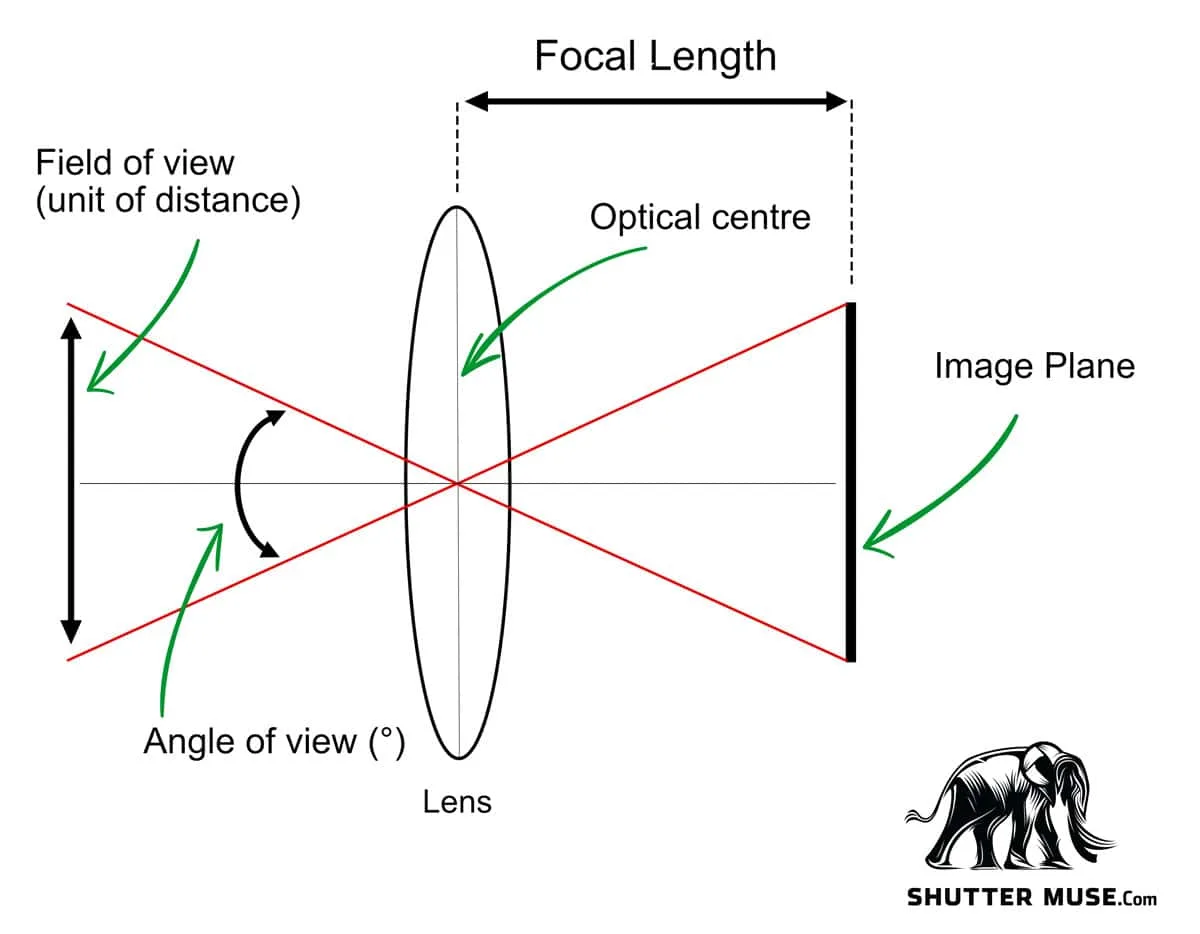
Image source: Bing (Web (fair-use with source credit))
A Quick Reference Table
| Real Field (Degrees) | Real Field (Feet @ 1000 yds) | Real Field (Meters @ 1000 m) | Typical Magnification | Apparent Field (Degrees) |
|---|---|---|---|---|
| 5.0° | 263 ft | 88 m | 10x | 50° |
| 6.0° | 315 ft | 105 m | 8x | 48° |
| 6.5° | 341 ft | 114 m | 8x | 52° |
| 7.5° | 394 ft | 131 m | 7x | 52.5° |
| 8.0° | 420 ft | 140 m | 8x | 64° |
| 8.5° | 446 ft | 149 m | 8x | 68° |
That table shows you how magnification and real field interact. A 7x binocular with an 8-degree field gives you a 56-degree apparent field, which is comfortable. A 10x binocular with a 6-degree field gives you a 60-degree apparent field, which is also comfortable.
But the 10x shows you a smaller real-world area.
Why Wider Isn't Always Better (The Trade-Offs You Need to Know)
Here's the honest truth. Wider field of view comes with trade-offs. It's not always better.
And sometimes, a narrower field is exactly what you need.
The Magnification Trade-Off
The biggest trade-off is with magnification. As you increase magnification, the real field of view decreases. That's just physics.
The lenses are designed to magnify a smaller area of the scene.
A 7x binocular can have a very wide field of view, often 8 degrees or more. A 10x binocular typically has a field of 5.5 to 6.5 degrees. A 12x binocular might have a field of only 4.5 to 5 degrees.
So if you want a wide field, you need lower magnification. If you want high magnification, you accept a narrower field. You can't have both.
The Eye Relief Trade-Off
Another trade-off is with eye relief. Eye relief is the distance from the eyepiece lens to your eye where you can see the full field of view. If you wear glasses, you need at least 15mm of eye relief to see the entire field.
Some wide-angle binoculars have shorter eye relief because the eyepiece design is more complex. This means if you wear glasses, you might not see the full wide field. You'll get tunnel vision instead.
Aggregate reviews indicate that this is a common complaint among glasses wearers who buy wide-angle binoculars. They see the wide field spec, buy the binoculars, and then discover they can't see the full field with their glasses on.
The Distortion Trade-Off
Wider fields also tend to have more optical distortion. The edges of the view can be blurry or distorted. This is called "edge softness." High-end binoculars use field flattener lenses to correct this, but they cost more.
If you're scanning for birds in a tree, edge softness might not matter. You're focused on the center. But if you're stargazing, edge softness is a big deal.
You want a sharp view across the entire field.
The Size and Weight Trade-Off
Wide-angle binoculars often have larger eyepieces and more complex lens assemblies. This makes them heavier and bulkier. A standard field binocular might be smaller and lighter.
For backpacking, that extra weight can matter.
When to Choose Wide vs. Narrow
Here's a simple guide. Choose wide field if you're tracking moving subjects like birds in flight, scanning open landscapes, or stargazing. Choose narrow field if you're looking at stationary objects, need high magnification, or want a compact, lightweight binocular.
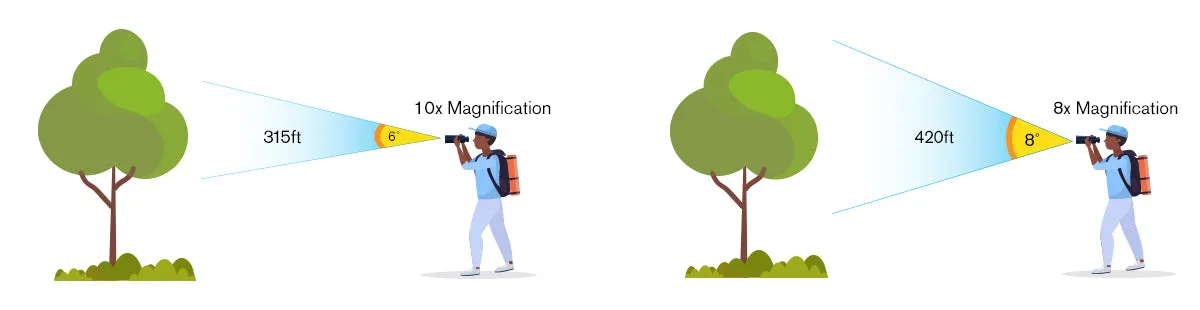
Image source: Bing (Web (fair-use with source credit))
Field of View in the Real World: How to Match It to Your Activity
This is where the theory meets the trail. Your activity determines the best field of view for you. Not the other way around.
Let's go through the most common uses.
Birdwatching
For birdwatching, you want a wide field of view. Birds move fast, especially in flight. A field of 7.5 to 8.5 degrees at 8x magnification is ideal.
That gives you about 394 to 446 feet at 1000 yards.
The Cornell Lab of Ornithology suggests that an 8×42 binocular is the most popular choice for birders. The 8x magnification provides a good balance of field and detail. The 42mm objective gathers enough light for early morning and late evening viewing.
Wildlife Observation
For general wildlife observation, you have more flexibility. If you're watching deer in a field, a 7x to 8x with a wide field is great. If you're spotting animals at a distance, a 10x with a narrower field works better.
The key is to match the field to the distance. At close range, you want wide. At long range, you can accept narrow.
Stargazing
For stargazing, you want a wide apparent field of view. An apparent field of 60 degrees or more gives you that "spacewalk" feeling. The real field should be at least 6.5 degrees for a 7x or 8x binocular.
Some astronomers use 10×70 binoculars with a 6.5-degree field. That gives a 65-degree apparent field. That's a comfortable, immersive view for the Milky Way.
Hunting
For hunting, it depends on the terrain. In open country, a 10x with a 6-degree field is common. You're scanning long distances.
In dense forest, a 7x or 8x with a wider field works better. You're looking for movement in close cover.
Boating and Marine Use
For boating, you want a wide field for scanning the horizon. A 7×50 is a classic choice. The 7x magnification gives a wide field, and the 50mm objective provides bright images in low light.
The field is typically 7 to 8 degrees.
Sports and Events
For sports and events, you want a wide field to track the action. An 8x or 10x with a 6.5 to 7.5 degree field is good. You want to see the whole field of play, not just a single player.
A Quick Reference Guide
| Activity | Recommended Magnification | Recommended Real Field | Recommended Apparent Field |
|---|---|---|---|
| Birdwatching | 8x | 7.5° – 8.5° | 60° – 68° |
| Wildlife | 8x – 10x | 6.0° – 7.5° | 52° – 65° |
| Stargazing | 7x – 10x | 6.5° – 8.0° | 60° – 70° |
| Hunting (open) | 10x – 12x | 5.0° – 6.0° | 50° – 60° |
| Hunting (forest) | 7x – 8x | 7.5° – 8.5° | 52° – 64° |
| Boating | 7x – 8x | 7.0° – 8.0° | 49° – 60° |
| Sports | 8x – 10x | 6.5° – 7.5° | 52° – 65° |
How to Compare Field of View on Paper (Without Getting Fooled)
Now you know the numbers. But how do you compare two binoculars without having them in your hands? You need to look at the spec sheet and know what to check.
Step 1: Find the Real Field of View
Look for the spec that says "field of view" or "FOV." It will be listed as degrees or feet at 1000 yards. If it's in degrees, you're good. If it's in feet, convert to degrees using the rule: degrees = feet ÷ 52.5.
For example, a binocular with a 367-foot field has a 7.0-degree field (367 ÷ 52.5 = 7.0).
Step 2: Calculate the Apparent Field of View
Multiply the real field in degrees by the magnification. This gives you the apparent field. An 8x binocular with a 7.0-degree real field has a 56-degree apparent field.
That's a standard, comfortable view.
A 10x binocular with a 6.0-degree real field has a 60-degree apparent field. That's also comfortable. But the real field is narrower.
Step 3: Compare Apparent Fields
The apparent field is what your eye actually sees. A 60-degree apparent field feels wide and immersive. A 50-degree apparent field feels like you're looking through a tube.
You want at least 52 degrees for comfort. Above 60 degrees is great.
Step 4: Check the Eye Relief
If you wear glasses, eye relief is critical. Look for at least 15mm. Some binoculars have 18mm or 20mm.
That's ideal. Short eye relief means you won't see the full field with glasses.
Step 5: Check the Exit Pupil
Exit pupil is the objective diameter divided by the magnification. An 8×42 has a 5.25mm exit pupil. A 10×42 has a 4.2mm exit pupil.
Larger exit pupil means brighter images, especially in low light.
Exit pupil doesn't directly affect field of view, but it affects how much of the field you can see. If your eye doesn't line up perfectly with the exit pupil, you'll see a smaller field.
Common Marketing Tricks to Watch For
Some manufacturers exaggerate the field of view. They might list the apparent field as the real field. Or they might use a different measurement method.
One trick is to list the field at 1000 meters instead of 1000 yards. A 114-meter field at 1000 meters is the same as a 341-foot field at 1000 yards. But 114 sounds bigger than 341 to some people.
Another trick is to use the apparent field of view in the marketing copy. They'll say "65-degree field of view" when the real field is only 6.5 degrees. The apparent field is 65 degrees, but that's not the same as the real field.
Always check the fine print. Look for the real field of view in degrees or feet at 1000 yards. That's the honest number.
A Simple Comparison Table
| Binocular | Magnification | Real Field (Degrees) | Real Field (Feet @ 1000 yds) | Apparent Field (Degrees) | Eye Relief (mm) |
|---|---|---|---|---|---|
| Model A | 8x | 7.5° | 394 ft | 60° | 17 mm |
| Model B | 10x | 6.0° | 315 ft | 60° | 15 mm |
| Model C | 8x | 6.5° | 341 ft | 52° | 18 mm |
| Model D | 7x | 8.0° | 420 ft | 56° | 16 mm |
Model A gives you a wide real field and a comfortable apparent field. Model B gives you the same apparent field with higher magnification but a narrower real field. Model C has a narrower real field and a lower apparent field.
Model D has the widest real field but lower magnification.
Which one is best? It depends on your activity. For birdwatching, Model A or D.
For long-range wildlife, Model B. For general use, Model A.
Common Mistakes People Make When Choosing Field of View
You'd be surprised how many people pick the wrong binoculars because they misunderstand the field of view spec. Here are the most common mistakes we see in our research.
Fixating on the Wrong Number
The biggest mistake is staring at the feet-at-1000-yards number without checking the magnification. A 10x binocular with a 315-foot field gives you a 60-degree apparent field. That's good.
But an 8x binocular with the same 315-foot field gives you a 48-degree apparent field. That feels narrow and constricting.
Always calculate the apparent field. That's what your eyes actually experience.
Assuming Wider Is Always Better
Wider field means more distortion, shorter eye relief, and often a heavier binocular. For long-range observation, a narrow field is fine. You're looking at a specific target.
For birding in dense forest, wide is better. Match the field to the activity.
Ignoring Eye Relief
If you wear glasses, this is the top mistake. A binocular with a wide field but short eye relief means you'll never see the full field. Your eyes sit too far from the eyepiece.
You end up with a narrow view regardless of the spec.
Check for at least 15mm of eye relief. Preferably 17mm or more.
Not Testing the Apparent Field
The spec sheet says 60-degree apparent field. But in practice, some binoculars feel narrower. The eyepiece design, the eye cup design, and the lens quality all affect how the field feels.
You can't judge it from a number.
If possible, try the binoculars in a store. Look at a distant wall. See how much of the wall you can see from edge to edge.
That's the real test.
Confusing Real and Apparent Field in Marketing
Some manufacturers list the apparent field as the field of view. They'll say "65-degree field" when the real field is only 6.5 degrees. That's technically true but misleading.
Always check the fine print. Look for "real field of view" or "angular field of view" in degrees or feet.
Overlooking the Exit Pupil
Exit pupil affects how much of the field you can see in low light. A larger exit pupil means your eye can be slightly off-center and still see the full field. A smaller exit pupil means you need perfect alignment.
For active use, larger exit pupil is more forgiving.
A Quick Reference Guide: Typical FOV Numbers by Activity
This table gives you target numbers for common activities. Use it as a starting point when comparing binoculars.
| Activity | Magnification | Real Field (Degrees) | Real Field (Feet @ 1000 yds) | Apparent Field (Degrees) | Eye Relief (mm) |
|---|---|---|---|---|---|
| Birdwatching | 8x | 7.5° – 8.5° | 394 – 446 ft | 60° – 68° | 17+ |
| Wildlife (open) | 10x | 5.5° – 6.5° | 289 – 341 ft | 55° – 65° | 15+ |
| Wildlife (forest) | 7x – 8x | 7.5° – 8.5° | 394 – 446 ft | 52° – 64° | 16+ |
| Stargazing | 7x – 10x | 6.5° – 8.0° | 341 – 420 ft | 60° – 70° | 15+ |
| Hunting (open) | 10x – 12x | 5.0° – 6.0° | 263 – 315 ft | 50° – 60° | 15+ |
| Boating | 7x – 8x | 7.0° – 8.0° | 368 – 420 ft | 49° – 60° | 17+ |
| Sports | 8x – 10x | 6.5° – 7.5° | 341 – 394 ft | 52° – 65° | 15+ |
Aim for the middle of each range. The high end of the range is for premium binoculars with field flattener lenses. The low end is for budget models.
Why These Numbers Work
The apparent field of 52 to 60 degrees is the sweet spot for most people. Below 50 degrees feels like a tunnel. Above 65 degrees feels immersive but can cause eye strain if you're not used to it.
For birding, the 8x with a 7.5-degree field gives you a 60-degree apparent field. That's wide enough to track birds in flight without feeling dizzy. For stargazing, the 7x with an 8-degree field gives you a 56-degree apparent field.
That's comfortable for long sessions.
FAQs About Field of View (Especially Eye Relief and Glasses)
What is a good field of view for birding?
A good field for birding is 7.5 to 8.5 degrees real field with an 8x magnification. That gives you a 60 to 68 degree apparent field. This is wide enough to track fast-moving birds.
You'll also see the surrounding habitat. Most birders choose an 8×42 binocular for this reason.
Does higher magnification reduce field of view?
Yes. Higher magnification naturally narrows the real field of view. A 10x binocular typically has a 5.5 to 6.5 degree real field.
A 7x binocular can have an 8 degree field. You trade width for reach. That's why birders prefer 8x over 10x for close work.
What is the difference between real and apparent field of view?
Real field of view is the actual width of the scene you see. It's measured in degrees or feet at 1000 yards. Apparent field of view is how wide that scene looks to your eye.
It's calculated by multiplying the real field by the magnification. The apparent field is what determines the immersive feeling.
Do I need wide-field binoculars for stargazing?
Yes, for the best experience. Look for an apparent field of 60 degrees or more. A 7×50 with an 8-degree real field gives you a 56-degree apparent field.
That's good. A 10×70 with a 6.5-degree field gives you a 65-degree apparent field. That's better.
Wide fields make the Milky Way and star clusters feel expansive.
How does eye relief affect field of view for glasses wearers?
Eye relief is the distance from the eyepiece to your eye where you see the full field. If you wear glasses, you need at least 15mm of eye relief. With short eye relief, you can't get your eye close enough to the eyepiece.
You'll see a smaller, cropped field. Always check the eye relief spec before buying.
Can I calculate field of view from the specs?
Yes. Multiply the real field in degrees by the magnification. That gives you the apparent field.
If the real field is in feet at 1000 yards, divide by 52.5 to get degrees. Then multiply by the magnification. This simple calculation works for most binoculars.