Can Binoculars Be Used at Night
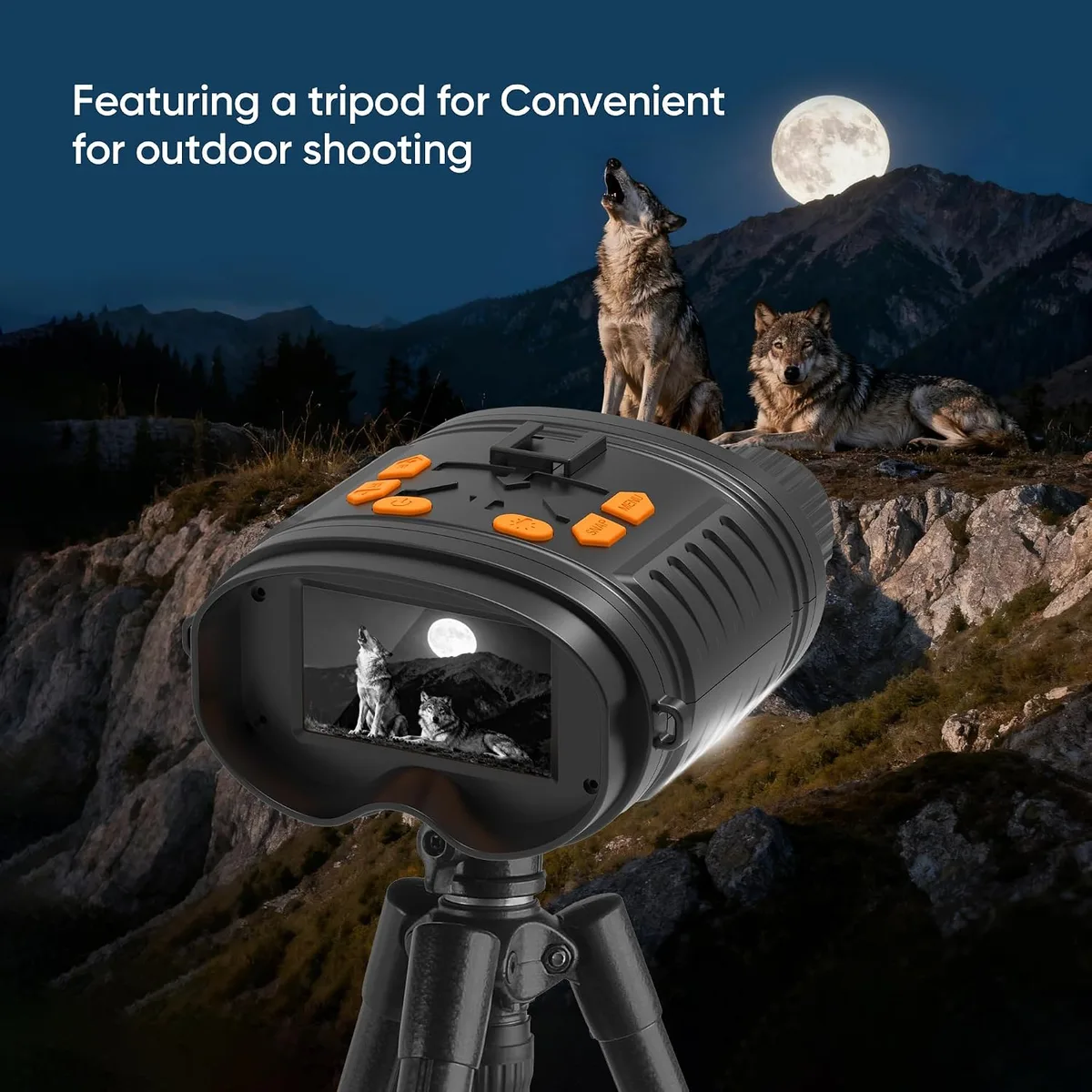
Image source: Bing (Web (fair-use with source credit))
So you've got a pair of binoculars sitting in the closet, and you're wondering if they work after dark without buying special equipment. Fair question. The short answer is yes, but only under the right conditions and with the right expectations.
Here's the thing most people don't realize. Your eyes are the weakest link. A standard 10×50 binocular gathers about 50 times more light than your naked eye.
That's a massive advantage. But if ambient light drops below a certain threshold, even the best optics can't create light where there isn't any. The key is understanding where that threshold sits.
Quick Answer
Yes, binoculars can be used at night. The answer depends on light conditions and what you're looking at. Standard optical binoculars work well for stargazing and moon watching.
They fail in complete darkness. Night vision binoculars work in total darkness. They cost significantly more.
Choose based on your specific use case.
The Three Things That Decide If Binoculars Work at Night
Three factors determine whether you'll see anything useful through binoculars after dark. Get these right and you'll be amazed at what you can spot. Get them wrong and you'll be staring at a blurry black void.
Aperture Size (Objective Lens Diameter)
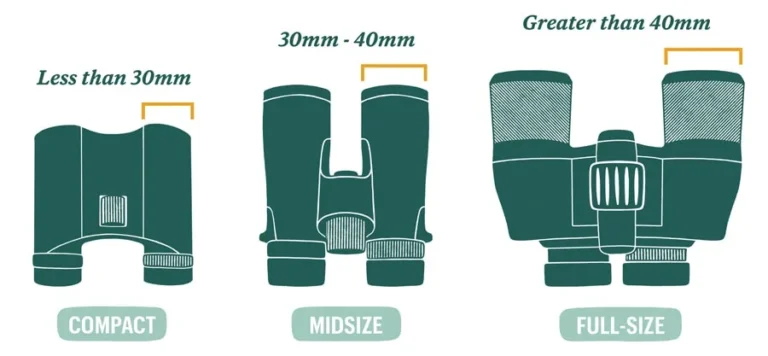
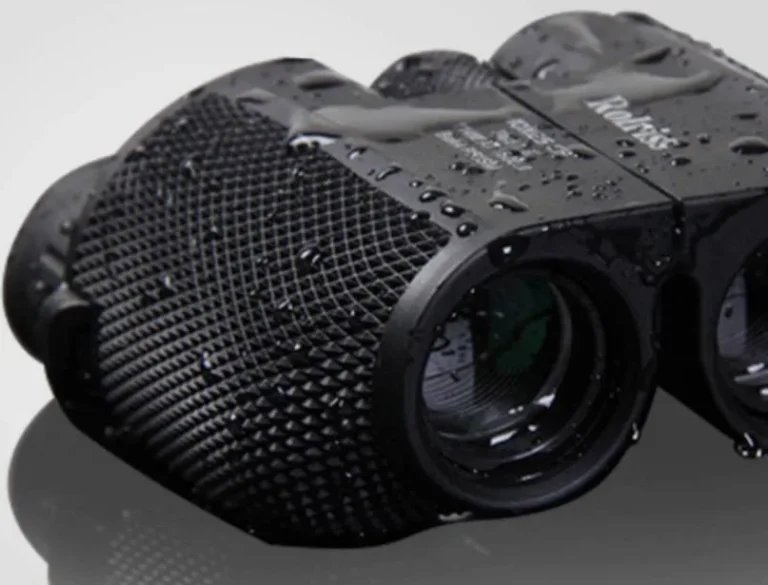
This is the single most important spec. The bigger the front lens, the more light it collects. A 50mm objective gathers about four times more light than a 25mm objective.
That's the difference between seeing Jupiter's moons and seeing nothing but black.
Manufacturer specs confirm that the minimum objective lens for serious night use is 42mm. For stargazing, 50mm is the sweet spot. For deep-sky objects, you want 56mm or even 70mm.
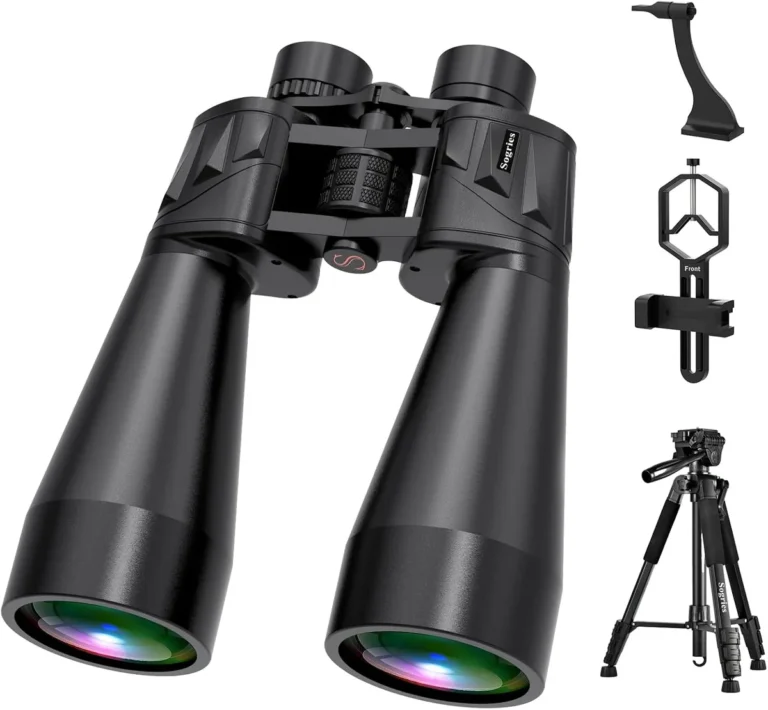
The trade-off is weight. A 10×50 pair weighs around 1.5 to 2.5 pounds. A 15×70 can hit 4 pounds and needs a tripod.
Image source: Bing (Web (fair-use with source credit))
Exit Pupil Size
The exit pupil is the beam of light that leaves the eyepiece and enters your eye. Calculate it by dividing the objective diameter by the magnification. A 10×50 gives you a 5mm exit pupil.
A 7×50 gives you a 7mm exit pupil.
Your eye's pupil dilates in the dark. A young person's eye can open to about 7mm. By age 40, that drops to about 5mm.
By age 60, you're looking at 4mm or less. So if you're over 40, a 7×50 with a 7mm exit pupil wastes light because your eye can't open that wide. A 10×50 with a 5mm exit pupil is actually a better match.
In our research, the most common night-use mistake is buying binoculars with an exit pupil that's too large for the user's age. Match the exit pupil to your dilated pupil size, not to a spec sheet.
Magnification and Stability
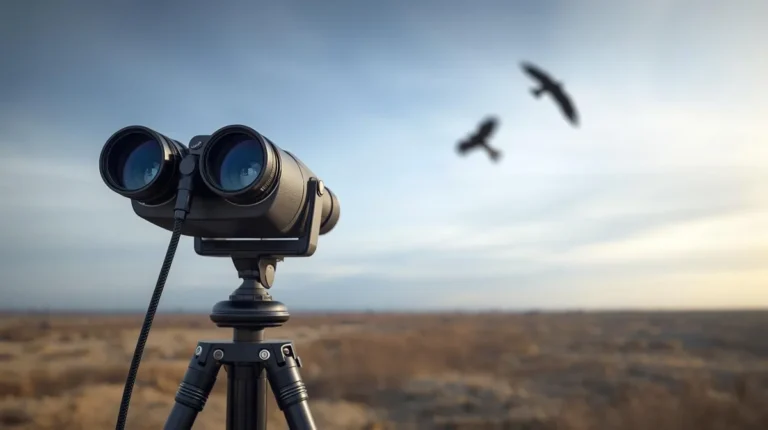
Higher magnification sounds better, but it's often worse at night. A 10x pair is handheld. A 15x pair needs a tripod.
A 20x pair absolutely requires a tripod. The problem is that shaking amplifies with magnification. Even minor hand tremors turn stars into blurry streaks.
Aggregate reviews indicate that 7x to 10x is the practical range for handheld night use. If you want to go higher, budget for a tripod and a binocular adapter. That adds about a pound of gear and a minute of setup time.
The Decision Tree: Optical vs. Night Vision vs. Don't Bother
This is where we get practical. Follow this logic based on your specific situation.
Branch 1: You're Stargazing or Watching the Moon
Stick with standard optical binoculars. You don't need night vision. The moon is bright enough to hurt your eyes through a 10×50.
Jupiter and Saturn are visible. The Orion Nebula is a gray smudge but definitely there. The Andromeda Galaxy is a faint oval.
Your best bet is a 10×50 or 15×70 with fully multi-coated optics. Look for BaK-4 prisms for better light transmission. Avoid compact binoculars with 25mm or 32mm objectives.
They simply don't gather enough light.
Branch 2: You're Watching Wildlife at Dusk or Dawn
Again, optical binoculars work. The key is the twilight factor. The formula is sqrt(magnification x objective diameter).
A 10×50 scores around 22.4. An 8×42 scores around 18.3. Higher is better for low light.
But here's the catch. Wildlife at dusk is often moving. High magnification exacerbates shake.
You want 8x or 10x maximum. You want a wide field of view. You want a lightweight build so you can hold it steady for extended periods.
Branch 3: You Need to See in Complete Darkness
This means no moonlight, no artificial light, nothing. Standard optical binoculars are useless here. You need night vision binoculars.
These amplify existing light thousands of times. They work in starlight.
Night vision is classified by generation. Gen 1 is affordable but has blurry edges and short battery life. Gen 2 offers better resolution and longer range.
Gen 3 is military-grade and costs thousands. There's also digital night vision, which uses a sensor and screen. Digital is cheaper than Gen 3 but has a slight delay.
Branch 4: You're in Heavy Light Pollution
City dwellers face a different problem. Even with large binoculars, the sky glow washes out faint objects. Optical binoculars will show you the moon and planets.
They'll show you the brightest stars. They won't show you the Milky Way.
Night vision can help here. Digital night vision with an IR illuminator lets you see in the dark even with streetlights nearby. But the cost is high.
A decent digital night vision pair starts around $300. Gen 3 starts around $2,000.
Using Standard Binoculars at Night: When It Works and When It Doesn't
Let's get specific about what you can actually see with a good pair of optical binoculars after dark.
The Good: Moon, Planets, and Bright Nebulae
The moon is the easiest target. Even a cheap 10×42 shows craters clearly. A 10×50 or 15×70 shows incredible detail.
You'll see the Sea of Tranquility, the Tycho crater, and the mountain ranges. It's genuinely breathtaking.
Jupiter shows its four Galilean moons as tiny points of light. You can see the cloud bands with a 10×50 on a steady night. Saturn shows its rings, though they look like a small oval rather than the iconic ring shape.
Venus shows phases like a tiny moon. Mars shows a red disk, but no surface detail.
The Orion Nebula is a gray-green smudge that looks like a fuzzy star. The Pleiades cluster shows dozens of stars. The Andromeda Galaxy is a faint elongated patch.
These are all achievable with a 10×50 under dark skies.
The Bad: Deep Sky Objects, Nebulae, and Galaxies
Most deep sky objects are invisible through standard binoculars. The Horsehead Nebula is a non-starter. The Whirlpool Galaxy is a faint smudge at best.
The Ring Nebula is invisible. You need a telescope for these.
The problem is surface brightness. A nebula spreads its light across a wide area. Binoculars magnify that area, making the light even dimmer per unit area.
You're fighting physics. The only solution is larger aperture, darker skies, and longer observation time.
The Ugly: Handheld Shake and Eye Strain
Even with the right binoculars, night use is physically demanding. Holding a 10×50 steady for more than 30 seconds is tough. Your arms get tired.
The image shakes. Your eyes get strained from trying to focus in the dark.
The solution is simple. Brace yourself. Lean against a wall.
Sit in a chair. Use a monopod. Use a tripod.
The difference is noticeable. A 10×50 on a tripod shows details you'd never see handheld.
Night Vision Binoculars: What's Different and Who Needs Them
Night vision binoculars are a completely different animal from standard optics. They don't just gather light. They amplify it electronically.
How Night Vision Works
Inside a night vision device, light hits a photocathode. That converts photons into electrons. The electrons are amplified through a microchannel plate.
Then they hit a phosphor screen that converts them back into visible light. The result is a green-tinted image bright enough to navigate, identify objects, and even read text.
The image is green because the phosphor screen emits green light. That's not a design choice. It's because the human eye is most sensitive to green wavelengths.
It's the most efficient color for low-light viewing.
The Three Generations of Night Vision
Gen 1 is the entry level. It amplifies light about 1,000 times. The image is sharp in the center but blurry at the edges.
Battery life is about 20 to 30 hours. Cost is around $200 to $500. It works for basic surveillance and casual night hiking.
Gen 2 amplifies about 20,000 to 30,000 times. The image is sharper across the entire field. Battery life is similar.
Cost is around $1,000 to $3,000. It's used by serious hunters and security professionals.
Gen 3 amplifies up to 50,000 times. The image is crisp and clear. It uses gallium arsenide photocathodes for better performance.
Cost is $3,000 to $10,000. It's standard military equipment.
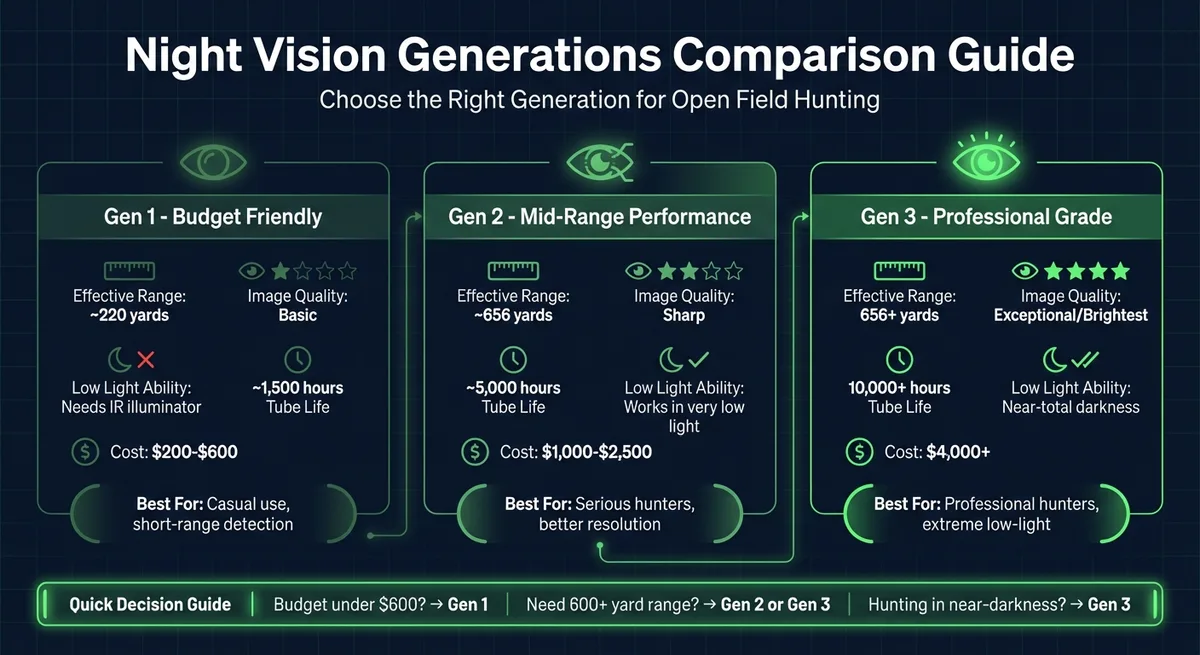
Image source: Bing (Web (fair-use with source credit))
Digital Night Vision: The Modern Alternative
Digital night vision uses a CMOS sensor similar to a digital camera. It amplifies light digitally and displays it on a small screen. The advantage is that it's cheaper than Gen 3.
The disadvantage is that it has a slight delay called latency. That delay can be disorienting when moving.
Digital night vision also works with infrared illuminators. An IR light is invisible to the naked eye but bright to the sensor. This lets you see in complete darkness.
But it also lets others see you with their own night vision devices. That's a consideration for hunting or security.
Who Needs Night Vision Binoculars
You need night vision if you're doing any of these activities:
- Hunting predators like coyotes or hogs at night
- Conducting security patrols in complete darkness
- Hiking or camping with no artificial light sources
- Wildlife observation of nocturnal animals like owls or bats
- Search and rescue operations after dark
You do not need night vision if you're stargazing. Standard binoculars are better for astronomy. They have better resolution, wider field of view, and no electronic noise.
They also don't need batteries.
Common Mistakes People Make (and How to Avoid Them)
We've seen the same errors pop up again and again in aggregate buyer feedback. Here are the most common ones and how to sidestep them.
Buying Too Much Magnification
It's tempting to grab a 20x or 25x pair thinking you'll see deeper into the night sky. The reality is that anything above 12x is almost impossible to hold steady without a tripod. Handheld shake turns Jupiter into a bouncing blob.
You lose more detail than you gain.
Stick with 10x or lower for handheld use. If you need more magnification, budget for a tripod and a binocular adapter. That combo costs about $50 to $100 extra.
It's worth every penny.
Ignoring Exit Pupil Matching
This is the most technical mistake and the most common. People buy a 7×50 because it has a big 7mm exit pupil. That's great if you're 25 years old.
It's wasted if you're 55.
Your pupil dilates less as you age. A 7mm exit pupil on a 55-year-old means the binoculars are throwing away light. The outer edges of the light beam hit your iris and never reach your retina.
In our research, a 10×50 with a 5mm exit pupil is a better match for most adults over 40. It's lighter, cheaper, and delivers the same usable brightness.
Forgetting About Dark Adaptation
Your eyes need about 20 to 30 minutes to fully adapt to darkness. If you walk outside and immediately look through binoculars, you're wasting their potential. You need to let your eyes adjust first.
Even worse is looking at a phone screen or a flashlight. That instantly resets your dark adaptation. Red light preserves it better.
If you need to check a map or adjust settings, use a red light or a red filter on your flashlight. It makes a noticeable difference.
Choosing the Wrong Prism Glass
Binoculars use either BK-7 or BaK-4 prisms. BaK-4 is higher quality. It transmits more light and produces a sharper image.
BK-7 is cheaper but cuts off the edges of the light beam, giving a dimmer view.
For night use, always choose BaK-4 prisms. The price difference is small. The performance difference is significant.
Check the spec sheet before you buy. If it doesn't mention the prism type, assume it's BK-7.
Neglecting Lens Coatings
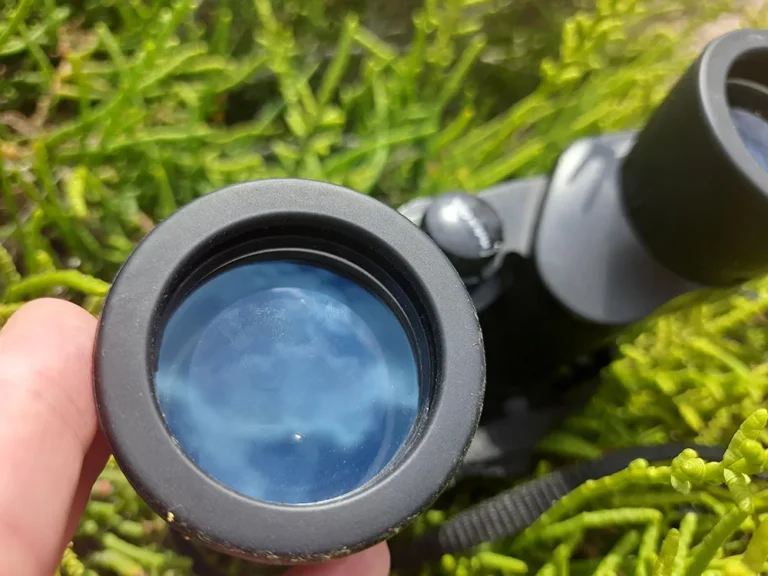
Lens coatings reduce light loss inside the binoculars. Uncoated lenses lose about 4 percent of light at each glass-air surface. With 10 to 16 surfaces in a typical binocular, that adds up to significant light loss.
Fully multi-coated coatings are the standard for night use. They apply multiple layers to every lens surface. They maximize light transmission.
They also reduce glare and improve contrast. Avoid "coated" or "multi-coated" labels. Look for "fully multi-coated" on the spec sheet.
How to Pick the Right Binoculars for Your Night Use
Now that you know what to avoid, here's a practical framework for choosing. Follow these steps in order.
Step 1: Define Your Night Activity
Your use case dictates everything. Stargazing and wildlife watching have different requirements. Write down what you'll actually do with the binoculars.
If you're stargazing, prioritize aperture and exit pupil. A 10×50 or 15×70 is ideal. If you're watching wildlife at dusk, prioritize weight and field of view.
An 8×42 is a better choice. If you need to see in total darkness, skip optical binoculars entirely and look at night vision.
Step 2: Set Your Budget
Optical binoculars for night use range from about $100 to $500 for good quality. Night vision starts at $200 for digital and goes up to $5,000 for Gen 3.
Be honest about what you can spend. A $150 pair of 10x50s with fully multi-coated lenses and BaK-4 prisms will outperform a $500 pair with the wrong specs. The money should go to the features that matter for your use case.
Step 3: Verify the Specs
Use this checklist when comparing models:
| Spec | What to Look For |
|---|---|
| Objective lens | 42mm minimum for night use, 50mm preferred |
| Exit pupil | Match to your age: 5mm for most adults over 40 |
| Magnification | 10x or lower for handheld, 15x with tripod |
| Prism type | BaK-4 only |
| Lens coatings | Fully multi-coated |
| Weight | Under 2 pounds for handheld comfort |
| Tripod mountable | Look for a threaded socket on the center hinge |
Step 4: Test the Fit
If possible, handle the binoculars before buying. Check the eye relief. If you wear glasses, you need at least 15mm of eye relief.
Check the focus wheel. It should turn smoothly without sticking. Check the diopter adjustment.
It should lock in place so it doesn't shift during use.
Step 5: Buy for the Long Term
A good pair of binoculars lasts decades. Spend a little more now to avoid buying twice. The difference between a $150 pair and a $300 pair is often better coatings, better build quality, and better warranty.
Vortex, Nikon, Celestron, and Bushnell all offer lifetime warranties on their mid-range models.
Frequently Asked Questions
Can I use any binoculars for stargazing?
You can use any binoculars for stargazing, but the results vary dramatically. A 10×50 or larger with fully multi-coated lenses and BaK-4 prisms will show you dozens of stars and deep sky objects. A compact 8×25 will show you the moon and the brightest stars only.
The aperture matters most.
What does the number on binoculars mean?
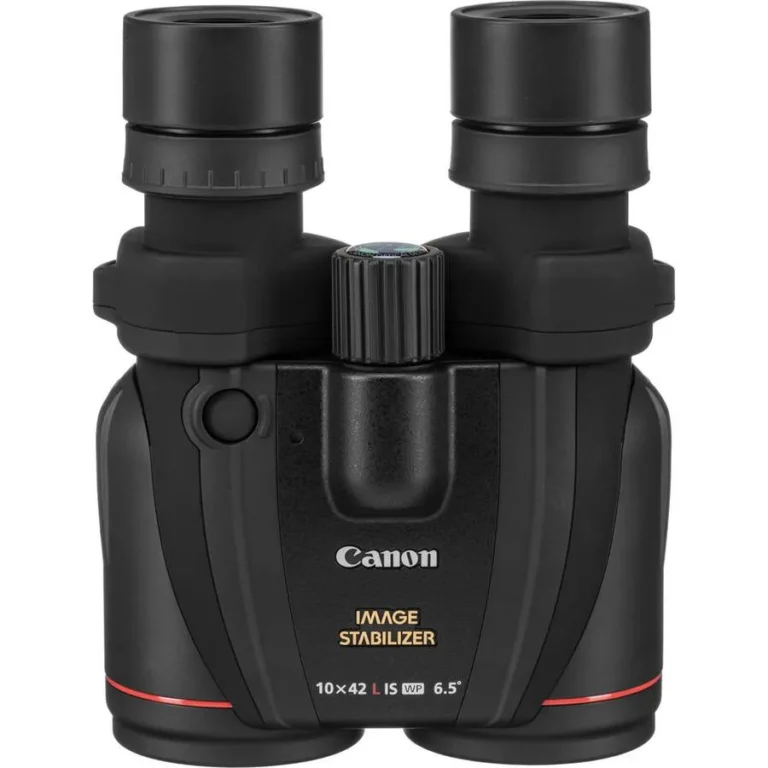
The two numbers on binoculars like 10×50 mean 10x magnification and 50mm objective lens diameter. Magnification makes objects appear closer. The objective lens diameter determines how much light the binoculars gather.
For night use, the second number is more important than the first.
Do I need night vision binoculars for astronomy?
No. Standard optical binoculars are better for astronomy. They have better resolution, wider field of view, and no electronic noise.
Night vision binoculars can be useful for viewing faint deep sky objects, but they cost significantly more and the image quality is lower than a good optical pair.
How do I keep binoculars steady at night?
Use a tripod with a binocular adapter. This is the single best upgrade for night use. A cheap tripod works fine.
If you don't have a tripod, brace yourself against a wall, tree, or vehicle. Sit in a chair and rest your elbows on your knees. Every bit of stability helps.
Can I use binoculars during the day too?
Yes. Standard optical binoculars work perfectly during the day. Night vision binoculars should not be used in bright daylight.
The intense light can damage the intensifier tube. For daytime use, stick with standard optical binoculars.
What's the best budget binocular for night use?
A 10×50 with fully multi-coated lenses and BaK-4 prisms in the $100 to $200 range is the best value. Brands like Celestron, Nikon, and Vortex offer reliable options at this price point. Avoid no-name brands that don't list their specs clearly.
Final Verdict: Should You Buy Binoculars for Night Use?
The answer comes down to what you're actually doing. If you're looking at the moon, planets, and bright stars, a standard pair of 10×50 optical binoculars is absolutely worth it. They cost less than $200 for good quality.
They will change how you see the night sky.
If you're watching wildlife at dusk or dawn, an 8×42 or 10×42 is a practical choice. It's lightweight, versatile, and works well in low light. You'll see animals you'd miss with the naked eye.
If you need to see in complete darkness, night vision binoculars are the only option. They are expensive. They require batteries and maintenance.
But they work in conditions where nothing else does.
The mistake most people make is buying without a clear use case. They pick a pair based on price or brand without understanding aperture, exit pupil, or coatings. Then they're disappointed when the binoculars don't perform.
Do your homework. Match the specs to your age and activity. Buy from a reputable manufacturer with a good warranty.
Take care of the optics. A good pair of binoculars will serve you for decades.
If you're still unsure, start with a 10×50 optical pair. It's the most versatile option for night use. It works for stargazing, moon watching, and wildlife at dusk.
It will show you things you didn't know were there. And it will make you wonder why you didn't buy one sooner.