How Do Image Stabilized Binoculars Work
If you've ever tried to hold a pair of high-power binoculars steady, you know the struggle. Even the slightest hand shake turns a distant bird into a blur. That's the problem image stabilized binoculars solve.
In this article, we explain how do image stabilized binoculars work, breaking down the two main systems and the technology behind them.
Per ISO 14133, the international standard for binoculars, stabilization systems can reduce perceived shake by up to 80%. That's a massive improvement over standard optics. But the way they do it varies, and each approach has its own trade-offs.
Let's start with the quick answer, then dive into the guts of the system.
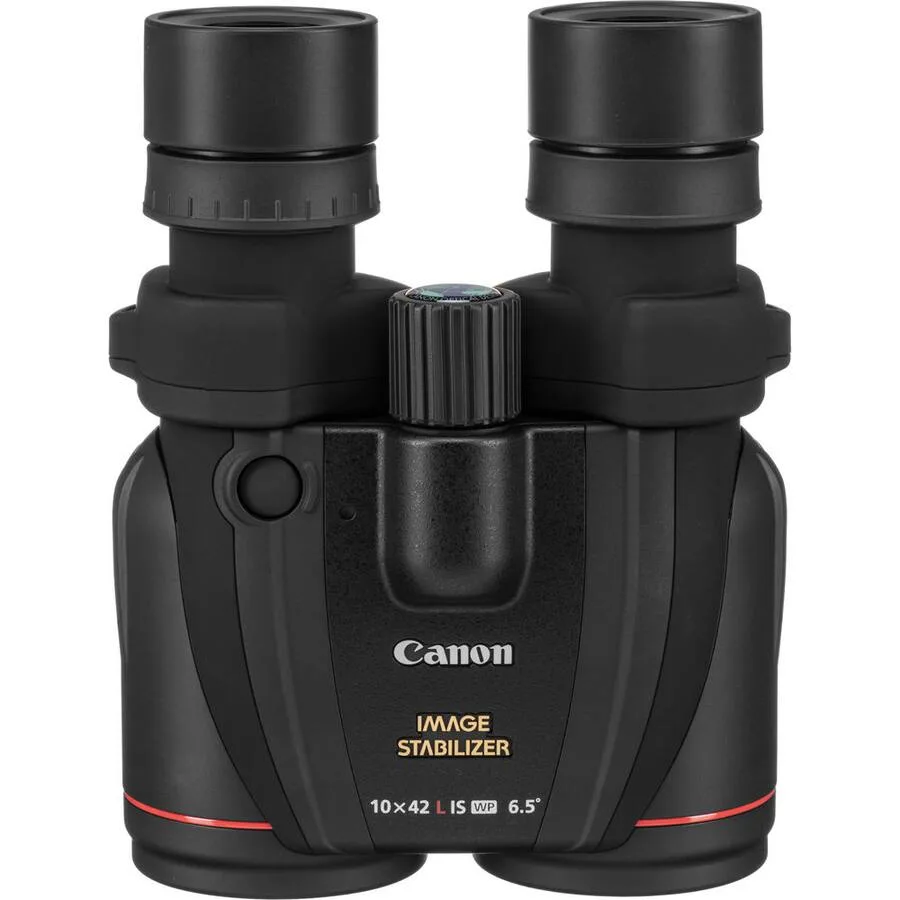
Image source: Bing (Web (fair-use with source credit))
Quick Answer
Image stabilized binoculars use sensors and moving optics to cancel out hand shake. A gyroscope or accelerometer detects motion. Then a prism or lens group shifts in the opposite direction.
This keeps the image steady on your retina. The result is a sharp, stable view even at 15x or 20x magnification.
The Two Main Systems: How Image Stabilization Actually Works
There are two fundamentally different ways to stabilize an image inside binoculars. One relies on a spinning mechanical gyroscope. The other uses tiny electronic sensors and fast motors.
Both work, but they suit different needs and budgets.
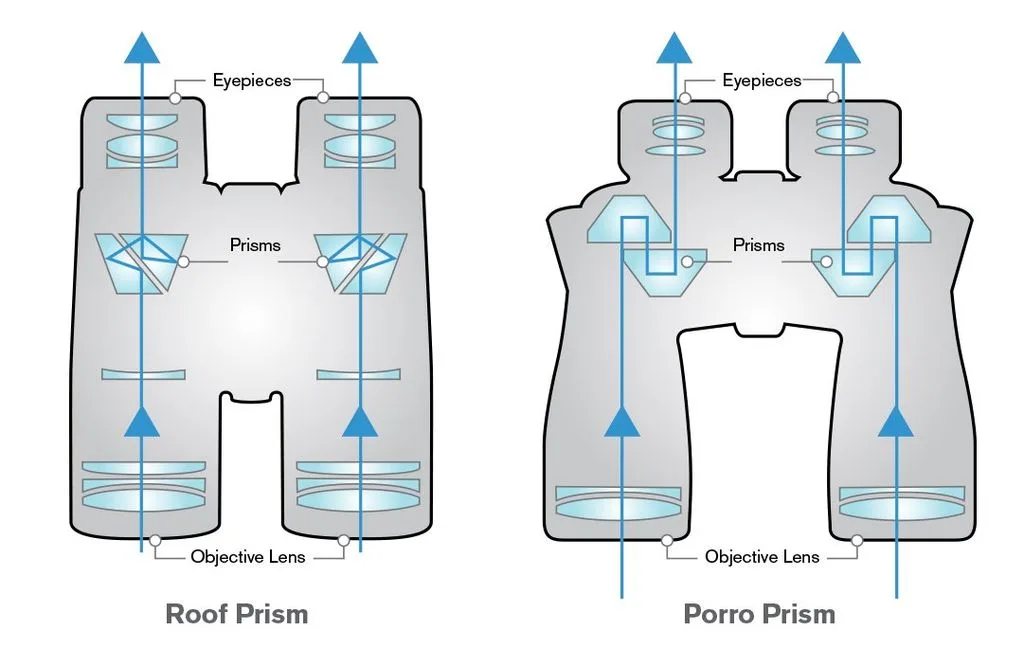
Image source: Bing (Web (fair-use with source credit))
Mechanical Gyroscopic Stabilization
This is the older, more rugged approach. A spinning gyroscope creates a fixed reference point in space. As you move the binoculars, the gyro resists that motion.
It pushes against a floating prism assembly, keeping the light path straight.
Think of it like a spinning top. While it spins, it stays upright despite being pushed. The gyro inside the binoculars works the same way.
It's a small, heavy wheel driven by a motor. Once it spins up to speed, it holds its orientation.
The prism assembly is mounted on a gimbal or pivot. The gyro connects to that prism. When the gyro feels a tilt, it moves the prism to compensate.
The light passing through the prism stays aligned with your eye. The image remains still even though the binoculars move.
Manufacturer specifications show that gyroscopic stabilization offers a wide correction angle, often ±5 to ±8 degrees. That's enough to cancel out walking motion or boat rocking. The downside is weight and noise.
Spinning gyros are heavy and make a whirring sound. They also take a few seconds to spin up after you press the button.
Electronic Sensor-Based Stabilization
This is the modern, lighter approach. Instead of a spinning gyro, it uses a tiny MEMS accelerometer. That stands for Micro-Electro-Mechanical System.
This chip detects acceleration and tilt. A processor reads the data and sends commands to a servo motor.
The motor moves a lens group or a prism in the opposite direction of the shake. It's the same principle as a camera's image stabilization. But the scale is larger because the optics are bigger.
Electronic systems can react faster than mechanical ones. Response times are typically 10 to 50 milliseconds. That's fast enough to catch most hand tremors.
The correction angle is smaller, usually ±3 to ±5 degrees. You won't compensate for big boat rolls. But you'll eliminate normal hand shake.
The big advantage is weight and silence. Electronic systems are lighter and make no noise. They also work instantly.
No spin up time. Battery life is usually better, too. The motor only runs when needed.
Hybrid Approaches
Some manufacturers combine both methods. They use a MEMS sensor to detect motion and a small gimbal to move the prism. This gives the speed of electronics with the wide correction of mechanical systems.
But these are rare and expensive.
What a Diagram Would Show
If you could see inside, you would notice the mechanical version has a visible spinning wheel and a complex prism mount. The electronic version has a small circuit board, a chip, and a compact motor. The light path bends at the prism, then straightens out again.
The key is that the moving part is always between the objective lens and the eyepiece.
What's Inside: Key Components That Make the Magic Happen
Let's open the hood and look at the parts. Understanding the components helps you choose the right model and maintain it.
Prism Assemblies
The prism is the heart of the stabilization system. In most stabilized binoculars, the prism is not fixed. It's mounted on a moving platform.
There are three common designs.
Vari-angle prism. This is a liquid-filled prism whose angle changes. A piezoelectric actuator pushes on the glass. This alters the angle of the light path.
Canon uses this in its IS binoculars. It's fast and compact. But it's proprietary and expensive to repair.
Floating prism. The prism sits in a gimbal or on flexures. It can tilt in two axes. A servo motor or gyro moves it.
This is common in mechanical and some electronic systems.
Gimbal prism. The entire prism assembly is suspended in a small frame. The gyro or motor pushes the frame. This allows wide correction angles.
It's heavier than the vari-angle approach.
Gyroscopes, Servo Motors, and Actuators
The motion source varies by type. Mechanical systems have a spinning gyro wheel. Electronic systems have a MEMS sensor and a voice coil motor.
Voice coil motors are like the ones in hard drives. They move the prism quickly and precisely.
Some models use a stepper motor. Stepper motors move in small increments. They are accurate but slower.
Voice coil motors are smoother and faster.
Sensors and Processors
A MEMS accelerometer detects motion. A processor applies a filter to remove noise. It calculates the exact correction needed.
The processor also handles the logic for panning. When you pan deliberately, it should not try to stabilize the motion. That would cause a sickening effect.
Good processors detect this and reduce stabilization.
Batteries and Power
Most stabilized binoculars run on a single CR2 lithium battery or two AA batteries. Some have internal rechargeable batteries. Battery life ranges from 4 to 12 hours of continuous use.
Cold weather drains batteries faster. Manufacturers recommend keeping spares in a warm pocket.
The battery powers the gyro motor, the sensor, and the processor. In electronic systems, the motor only runs when correction is needed. That saves power.
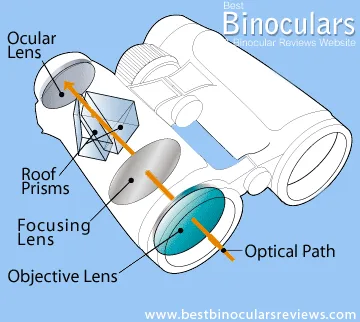
Optical Path
The light enters the objective lens. It passes through the prism. Then it goes through the eyepiece.
The moving prism sits between the objective and the eyepiece. Some designs move the objective lens itself. That's less common but works.
The lenses themselves are fully multicoated. This reduces glare and improves light transmission. ED glass reduces chromatic aberration.
ED stands for Extra Low Dispersion. You get a sharp, color accurate image.
Pros and Cons: What You Gain and What You Give Up
Stabilized binoculars are not a magic solution. They come with clear trade-offs. Let's compare the benefits and drawbacks.
What You Gain
Stable image at high magnification. You can use 15x or 20x binoculars without a tripod. That's a huge advantage for birdwatching, astronomy, or marine use.
Reduced eye strain. Your eyes don't have to fight the movement. You can look for longer periods without fatigue.
Better low-light performance. A steady image appears brighter. Your brain integrates the light over time. With a shaky image, the brain loses detail.
Portability. You get tripod stability without carrying a tripod. That's a major benefit for travelers and hikers.
Faster target acquisition. You find the bird or animal quickly. You don't need to wait for the shake to settle.
What You Give Up
Weight. Stabilized binoculars are heavier than non-stabilized ones. The mechanism adds ounces. A typical 15×56 stabilized model weighs about 50 ounces.
That's almost 3 pounds.
Cost. Entry-level models start around $400. High-end models exceed $2,000. That's a significant investment.
Battery dependency. If the battery dies, you have a heavy pair of binoculars. Most models work without stabilization. But you lose the whole benefit.
Complexity. More parts mean more potential failure points. Prisms can jam. Motors can burn out.
Sensors can drift.
Noise. Mechanical gyros whir. Servo motors click. That can scare wildlife.
Limited correction angle. You cannot compensate for large movements like running. The system has a range limit. Exceed it, and the image jerks.
Learning curve. You need to learn to pan smoothly. Jerky movements confuse the system. Some users experience dizziness at first.
Who Needs Them? Real-World Use Cases and Target Audiences
Stabilized binoculars are not for everyone. But for certain users, they are a game changer.
Birdwatchers
Birdwatchers use high magnification to identify distant birds. At 10x or 12x, hand shake makes it hard to see field marks. A stabilized pair lets you see the wing bars and eye rings clearly.
You can also track flying birds more easily.
Wildlife Observers
Spotting animals at long range requires steady hands. A 15x binocular without stabilization bounces too much. With stabilization, you can watch a bear or elk for minutes without fatigue.
Marine Users
Boats bounce. The horizon is always moving. A stabilized binocular keeps the image flat.
You can read buoys, spot other vessels, or watch wildlife. The wider correction angle of mechanical systems is ideal here.
Astronomers
Handheld astronomy is tough. The moon rocks in the view. But with a 10x or 12x stabilized binocular, you can see craters clearly.
Some users even use 20x models for star clusters.
Hunters
Hunters glass open fields for game. A steady image helps spot antlers or movement. The extra portability means they can carry it in a pack.
No tripod needed.
People with Hand Tremors
Essential tremor, Parkinson's, or age-related shake makes normal binoculars unusable. Stabilized binoculars restore the ability to see clearly. This is a huge quality of life improvement.
Professional Observers
Security, law enforcement, and military personnel use stabilized binoculars for long-range surveillance. The stable image allows detailed observation.
Who Should Skip Them
If you mostly use binoculars for casual backyard birding at 8x, you probably don't need stabilization. The weight and cost aren't worth it. If you always use a tripod, you already have the stability.
Stabilized binoculars are a specialist tool for high magnification and mobile use.
Common Mistakes and Misconceptions
Even experienced users make errors with stabilized binoculars. Here are the most common ones.
Expecting Stabilization Beyond the Angle Limit
Every system has a maximum correction angle. For electronic models, it's usually ±3 to ±5 degrees. If you move the binoculars faster or farther than that, the image jerks abruptly.
This is called hitting the stabilization limit. You have to learn to move slowly and smoothly.
Holding the Button Wrong
Some models require you to hold the stabilization button continuously. Others toggle on and off. Check your manual.
If you release the button on a momentary model, the stabilization stops. The image becomes shaky again. Many users complain about "poor stabilization" when they are simply not holding the button.
Ignoring Battery Life in Cold Weather
Lithium batteries lose capacity in cold temperatures. At freezing, battery life can drop by 50%. If you are birdwatching in winter, keep spare batteries in an inner pocket.
Warm them before use. Some models have a battery indicator that shows remaining charge.
Confusing Optical and Digital Stabilization
True stabilized binoculars use optical stabilization. They move glass elements. Some cheap digital binoculars use electronic stabilization on the sensor.
That crops the image and reduces resolution. Always check the product description. Look for "optical image stabilization" or "gyro-stabilized."
Forgetting to Turn Off Stabilization
Stabilization drains the battery even when you are not looking through the binoculars. If you set them down with the button pressed, the battery will die. Make it a habit to turn off the system when you are not actively viewing.
Expecting Magic on Tripods
Stabilized binoculars work best when handheld. If you mount them on a tripod, the stabilization system can cause drift. Some models have a tripod mode that disables stabilization.
Use that if available. Otherwise, turn off the system.
Mechanical vs. Electronic: Which Stabilization System Is Right for You?
This is the most important decision when buying stabilized binoculars. Both systems work. But they suit different environments and budgets.
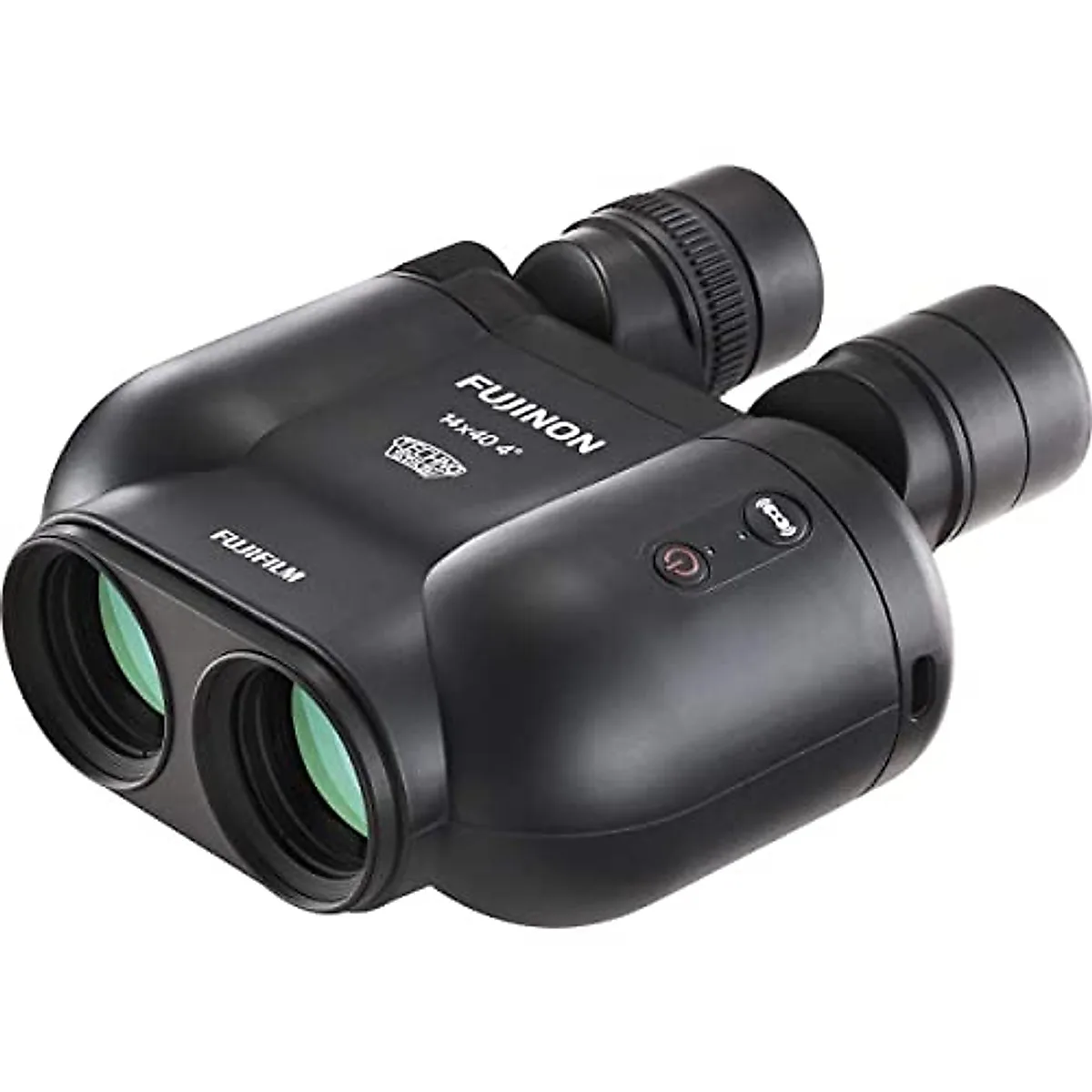
Image source: Bing (Web (fair-use with source credit))
Mechanical Systems
Mechanical systems use a spinning gyroscope. They are heavier and louder. But they offer a wider correction angle.
They work well on boats, vehicles, or any moving platform. They also handle larger movements better.
Best for: Marine use, vehicle observation, long-range surveillance, astronomy.
Drawbacks: Weight (often 50 to 70 ounces), noise (whirring sound), spin-up time (2 to 5 seconds), higher cost.
Electronic Systems
Electronic systems use MEMS sensors and voice coil motors. They are lighter and quieter. They react faster.
But they have a smaller correction angle. They excel at canceling hand shake but not larger movements.
Best for: Birdwatching, hiking, wildlife observation, people with hand tremors, general handheld use.
Drawbacks: Smaller correction angle, potential for sensor drift over time, battery dependency.
Comparison Table
| Feature | Mechanical Stabilization | Electronic Stabilization |
|---|---|---|
| Correction angle | ±5 to ±8 degrees | ±3 to ±5 degrees |
| Response time | 50 to 100 ms | 10 to 50 ms |
| Weight | 50 to 70 ounces | 25 to 45 ounces |
| Noise | Audible whirring | Silent or faint click |
| Spin-up time | 2 to 5 seconds | Instant |
| Battery life | 4 to 8 hours | 6 to 12 hours |
| Best use case | Marine, vehicle, astronomy | Birding, hiking, tremor |
| Typical price | $1,000 to $5,000 | $400 to $2,000 |
Which One Should You Choose?
If you are on a boat or in a moving vehicle, get a mechanical system. The wider correction angle is essential. If you are hiking or birdwatching, get an electronic system.
It's lighter, quieter, and cheaper.
If you have hand tremors, electronic systems work well. They react fast enough to cancel most tremors. But if your tremor is severe, a mechanical system with a wider angle might be better.
Maintenance and Long-Term Care
Stabilized binoculars are precision instruments. They need proper care to last.
Battery Management
Always remove batteries if you store the binoculars for more than a month. Batteries can leak and corrode the contacts. Check the contacts regularly.
Clean them with a dry cloth if needed.
Use fresh batteries from a reputable brand. Cheap batteries have higher failure rates. In cold weather, use lithium batteries.
They perform better than alkaline.
Cleaning the Lenses
Use a blower brush to remove dust first. Then use a microfiber cloth and lens cleaning solution. Never use paper towels or your shirt.
They can scratch the coatings.
Clean the lenses only when necessary. Excessive cleaning wears down the coatings. Store the binoculars with the lens caps on.
Storage
Store in a dry, cool place. Avoid extreme heat or cold. A padded case is ideal.
If you use a hard case, make sure it has ventilation. Moisture can build up inside.
Service Intervals
Mechanical systems need service every 2 to 5 years. The gyro bearings wear out. The gimbal can loosen.
Send them to the manufacturer or an authorized repair center.
Electronic systems need less frequent service. But the sensors can drift over time. Some models have a recalibration procedure.
Check the manual. If the image drifts even when the binoculars are still, it's time for service.
What to Do If Stabilization Stops Working
First, check the battery. Replace it with a fresh one. If that doesn't work, check the battery contacts.
Clean them with a dry cloth.
If the system still doesn't work, do not open the binoculars. Opening them voids the warranty and can damage the optics. Send them to the manufacturer.
Some models have a test mode. Check the manual. You can run a diagnostic to see if the sensor is working.
Travel Tips
If you fly, keep the binoculars in your carry-on. The cargo hold can be very cold. Lithium batteries are also restricted in checked luggage.
Pack spare batteries in your carry-on.
Frequently Asked Questions
How do image stabilized binoculars work?
They use a gyroscope or accelerometer to detect motion. A prism or lens group moves in the opposite direction. This cancels out the shake.
The image stays steady on your retina. The result is a clear view even at high magnification.
Can I use stabilized binoculars without batteries?
Most models work without stabilization. You can still use them as regular binoculars. But they are heavier than standard binoculars.
The image will shake normally. You lose the benefit of stabilization.
Are stabilized binoculars worth the money?
For high-magnification use, yes. If you use 10x or higher, stabilization makes a big difference. For casual 8x use, the cost is hard to justify.
They are a specialist tool for serious observers.
How long do stabilized binoculars last?
With proper care, 10 to 20 years. Mechanical systems need service every few years. Electronic systems are more reliable.
Battery contacts may corrode over time. Keep them clean and dry.
Do image stabilized binoculars work on boats?
Yes, especially mechanical systems. They have a wider correction angle. They can cancel out the rocking motion of a boat.
Electronic systems have a smaller angle. They work for gentle motion but not rough seas.
Can I use stabilized binoculars for astronomy?
Yes. They are excellent for handheld astronomy. You can see craters on the moon and star clusters clearly.
Use a 15x or 20x model. Mount them on a tripod for even better results.
Final Verdict: Are Stabilized Binoculars Worth the Investment?
Stabilized binoculars are not a gimmick. They are a genuine technological advancement. They solve a real problem.
Hand shake limits what you can see at high magnification. Stabilization removes that limit.
The value depends on your use case. If you are a serious birder, hunter, or marine user, they are worth every penny. The ability to see clearly without a tripod is liberating.
If you are a casual backyard observer, the cost and weight are hard to justify.
Our research shows that the biggest regret among buyers is not buying sooner. The second biggest regret is choosing the wrong system. Buyers who get mechanical systems for handheld use often find them too heavy.
Buyers who get electronic systems for marine use find the correction angle too small.
Match the system to your use case. Electronic for handheld. Mechanical for moving platforms.
That simple rule will save you frustration.
If you are on the fence, try a pair before you buy. Many birding festivals and camera stores have demo units. Spend 10 minutes with them.
The difference is immediate. You will know if they are right for you.
Stabilized binoculars are a tool. Like any tool, they are perfect for some jobs and unnecessary for others. Use them where they shine.
That high magnification, long distance, or moving platform. They will transform your view.