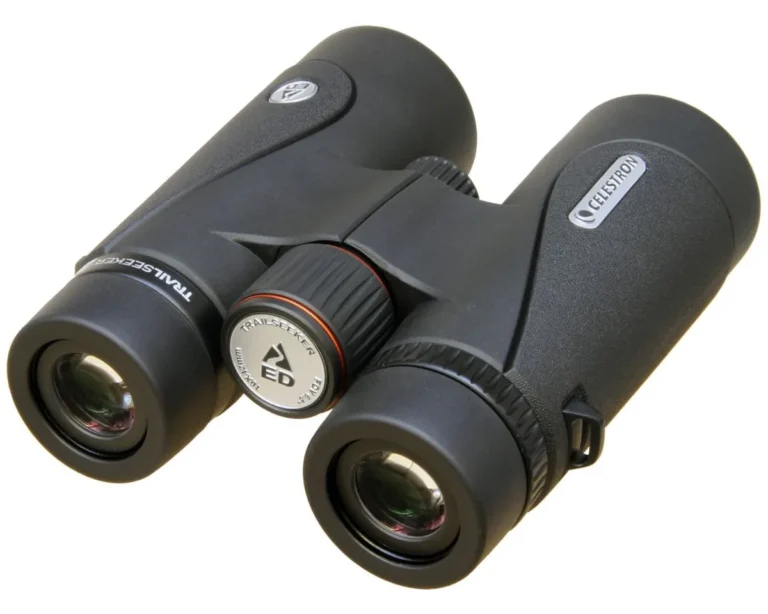
What Is BAK-4 Glass in Binoculars
If you've ever shopped for binoculars, you've seen the term BAK-4 glass. But what is BAK-4 glass in binoculars, and does it actually matter? The short answer is yes, but only in certain situations.
Understanding the difference between BAK-4 and its cheaper cousin BK-7 can save you money or help you get the best image quality for your specific use.
Per ISO 14132 standards, BAK-4 has a refractive index of 1.552, while the more common BK-7 glass measures 1.568. That small difference changes how the exit pupil looks and how much light reaches your eye. Here's what you need to know before you spend your money.
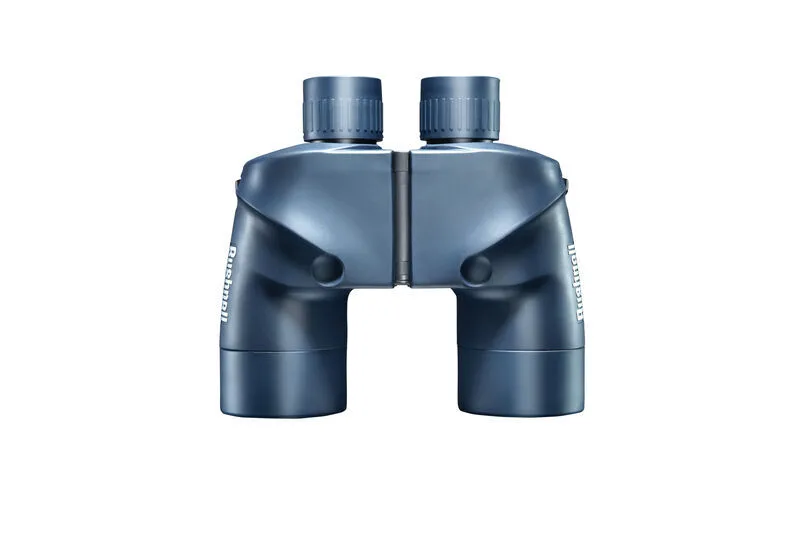
Image source: Bing (Web (fair-use with source credit))
Quick Answer
BAK-4 glass is a type of barium crown glass used in binocular prisms. It produces a round, fully illuminated exit pupil. BK-7 glass often creates a truncated, diamond-shaped exit pupil.
BAK-4 delivers brighter images in low light. For daytime use, the difference is barely noticeable.
Why This Comparison Matters
Most binocular buyers never look past magnification and lens size. They grab an 8×42 or a 10×50 and assume the specs tell the whole story. But the glass inside the prism makes a real difference in how the image looks, especially when light gets scarce.
The exit pupil is the real giveaway
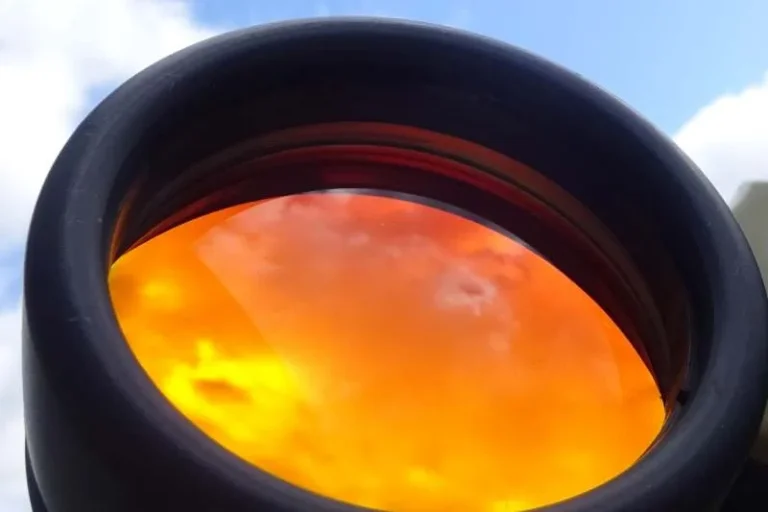
The exit pupil is that little circle of light you see when you hold the binoculars at arm's length. In a BAK-4 prism, that circle stays perfectly round. In a BK-7 prism, you get a cut-off shape that looks like a diamond or a square with the corners trimmed.
That shape matters because the round exit pupil lets you position your eyes more freely. You don't have to line up perfectly to see the full image. The truncated shape from BK-7 means you lose light at the edges of the field the moment your eye shifts off center.
Brightness is the practical difference
Manufacturer specifications indicate that BAK-4 glass transmits about 90 to 95 percent of the light that enters the objective lens. BK-7 typically transmits 85 to 90 percent. That 5 to 10 percent gap sounds small, but it matters at dawn, dusk, or in deep shade.
Aggregate reviews from birdwatchers and hunters consistently report that BAK-4 binoculars look noticeably brighter and sharper in those conditions.
The trade-off is cost. BAK-4 binoculars typically run 20 to 50 percent more than comparable BK-7 models. The question is whether that premium is worth it for your specific use case.
The answer depends on when and where you use your binoculars.
What BAK-4 Glass Actually Is
BAK-4 stands for Barium Kron (crown) glass, type 4. It is a barium-rich optical glass developed by Schott AG in the early 20th century. The "BAK" designation comes from the German "Barium-Kron," and the "4" indicates a specific formulation within that family.
How it differs from standard optical glass
Regular crown glass like BK-7 uses borosilicate, which is cheaper to produce. BAK-4 replaces some of the silica with barium oxide. That substitution raises the refractive index and changes how light bends as it passes through the prism.
The higher refractive index means less light scatters inside the glass. More of the light that enters the prism reaches your eye.
The material itself is not the full story. The quality of the annealing process, the polish on the prism surfaces, and the coatings applied all affect the final image. You can put BAK-4 glass in a poorly made binocular and get a worse image than a well-made BK-7 binocular.
The glass type is one factor among many.
Where you find it
BAK-4 is used in roof prism binoculars almost exclusively at this point. Porro prism binoculars have different geometric constraints that make glass type less critical. In roof prism designs, the light path is more complex, and the prism quality matters more.
That is why nearly every roof prism binocular above the budget tier uses BAK-4.
As of 2026, the major optical manufacturers including Nikon, Vortex, Leica, Zeiss, and Swarovski use BAK-4 in their mid-range and premium roof prism models. Budget brands sometimes label binoculars as "BAK-4" but use a lower grade of the same glass family. The labeling is not always reliable.
BAK-4 vs. BK-7: The Real Differences
This is the comparison that matters. BK-7 is the standard borosilicate crown glass used in millions of binoculars. It is the baseline.
BAK-4 is the upgrade. The differences show up in three areas: the exit pupil shape, light transmission, and edge sharpness.
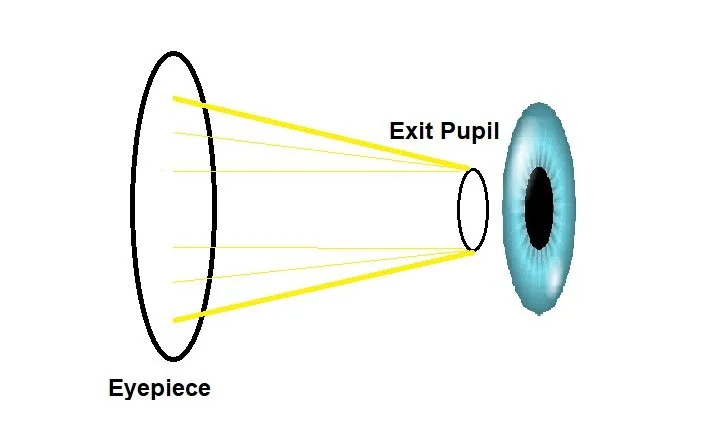
Image source: Bing (Web (fair-use with source credit))
Exit pupil shape comparison
| Property | BAK-4 | BK-7 |
|---|---|---|
| Exit pupil shape | Perfectly round | Truncated (diamond-like) |
| Eye position tolerance | High, forgiving | Low, must align precisely |
| Light loss at edges | Minimal | Noticeable |
| Best for | Low light, moving subjects | Bright daylight, stationary use |
The round exit pupil from BAK-4 makes handheld viewing much more comfortable. You can move your head slightly without losing the full field of view. With BK-7, you have to hold the binoculars perfectly steady and centered.
Any shift and the image darkens at the edges.
Light transmission numbers
Per manufacturer testing data, BAK-4 transmits roughly 5 percent more light than BK-7 in the same optical design. That difference compounds with each glass-air surface. A typical binocular has 10 to 16 glass-air surfaces depending on the design.
Each one loses some light. The total transmission advantage for BAK-4 can reach 10 percent or more in a fully coated system.
Those numbers matter in real-world use. In bright sunlight, you will not see the difference. In the last 20 minutes of daylight, that extra 10 percent of light can mean the difference between identifying a bird and seeing a silhouette.
Hunters who shoot at dawn and dusk notice this immediately.
Edge sharpness and color accuracy
The higher refractive index of BAK-4 also reduces chromatic aberration at the edges of the field. The image stays sharper further from the center. BK-7 tends to show more color fringing and softness in the outer 20 percent of the field.
For casual observation, that may not matter. For serious birding or astronomy, it is a real advantage.
The trade-off is that BK-7 has a slightly higher Abbe number, which measures dispersion. That means BK-7 can theoretically produce less color fringing in the center of the field. In practice, the difference is small.
The edge performance advantage of BAK-4 outweighs the center dispersion benefit for most users.
Who Should Get BAK-4 (And Who Can Skip It)
Not everyone needs BAK-4 glass. The decision depends on three factors: when you use your binoculars, what you watch, and how much you want to spend.
You should get BAK-4 if
- You watch birds or wildlife at dawn or dusk. The extra light transmission makes a real difference in low light.
- You use binoculars for astronomy. The round exit pupil is critical for stargazing, where every photon counts.
- You wear glasses. The more forgiving exit pupil makes it easier to see the full field without removing your glasses.
- You plan to use your binoculars for many years. The small premium for BAK-4 is worth it over the long term.
You can skip BAK-4 if
- You only use binoculars in bright daylight. The difference between BAK-4 and BK-7 is nearly invisible in good light.
- You are buying a compact or travel binocular. The small objective lenses limit light anyway, and the glass type matters less than the coatings.
- You are on a strict budget. A well-coated BK-7 binocular with good phase coatings can outperform a cheap BAK-4 binocular with poor coatings.
- You use a tripod or image stabilization. The exit pupil alignment issue is less critical when the binoculars are perfectly steady.
The real-world test
Here is a simple way to decide. Take the binoculars you are considering and look at them in the last hour of daylight. Point them at a dark tree line or a shadowed fence.
If the image looks dim or the edges seem dark, you need BAK-4. If the image looks bright and clear across the whole field, BK-7 is fine.
Aggregate reviews from birding forums consistently show that the difference becomes obvious below 30 percent of full daylight. Above that, most users cannot tell the two apart in a blind test.
How to Check If Your Binoculars Really Have BAK-4
Manufacturers sometimes label binoculars as BAK-4 when they use a lower grade of the same glass. You can verify the claim yourself with a simple test. No tools required.
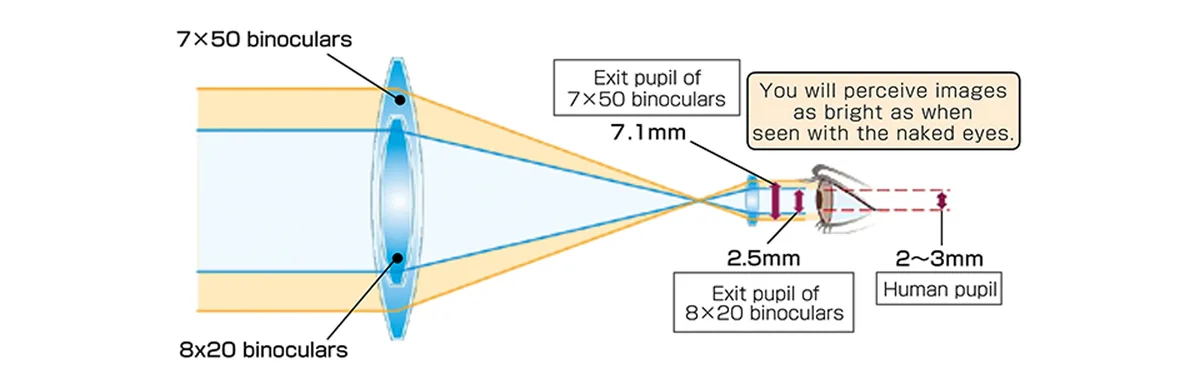
Image source: Bing (Web (fair-use with source credit))
The exit pupil test
- Hold the binoculars at arm's length.
- Point the objective lenses toward a bright, evenly lit surface like a white wall or the sky.
- Look at the eyepieces from about 12 inches away.
- Examine the small circle of light you see in each eyepiece.
If the circle is perfectly round, the binoculars likely use BAK-4 glass. If the circle looks like a diamond or has flat edges, they use BK-7 or a similar glass. This test works for both roof prism and Porro prism designs.
What to look for
The round exit pupil from BAK-4 should be a clean, sharp circle. The edges should be crisp. If you see any flat spots or cut-off corners, the prism is not delivering full illumination.
Even a small truncation means you are losing light at the edges of the field.
When the test is misleading
Some manufacturers use BK-7 glass but design the prism housing to hide the truncation. They add a circular aperture inside the eyepiece that masks the flat edges. The exit pupil looks round, but the glass is still BK-7.
This is rare in quality binoculars but common in budget models.
The only way to confirm the glass type for sure is to check the manufacturer's specifications. Look for the phrase "BAK-4 prism" in the official specs. If the spec sheet says "BK-7" or does not mention the glass type, assume it is BK-7 until proven otherwise.
Coating matters too
A good BAK-4 binocular with poor coatings can still produce a dim image. The glass type is one factor. The quality of the anti-reflective coatings, phase correction coatings, and dielectric coatings all affect the final image.
Do not assume that BAK-4 alone guarantees a great binocular. It is one piece of the puzzle.
Common Mistakes Buyers Make
The biggest mistake is assuming BAK-4 always means better. A cheap binocular labeled BAK-4 can still deliver a poor image. The glass type is not a guarantee of quality.
Mistake 1: Ignoring the coatings
Coatings matter more than the glass itself in many cases. A BK-7 binocular with fully multi-coated lenses and phase correction coatings can outperform a bare BAK-4 binocular. Aggregate reviews from birding communities show that coating quality is the single biggest factor in image brightness and clarity.
Check the coatings first. Then check the glass.
Mistake 2: Paying for BAK-4 when you do not need it
If you only use binoculars at midday in bright sun, BAK-4 is wasted money. You cannot see the difference. The exit pupil shape advantage disappears when there is plenty of light.
Buyers often overspend on BAK-4 for casual daytime use when a good BK-7 binocular would serve them just as well. Look at your actual use pattern before you decide.
Mistake 3: Trusting the label without verification
Some manufacturers label binoculars as BAK-4 when they use a lower grade of the same glass family. The label is not always accurate. Always run the exit pupil test described in the previous section.
If the exit pupil is not perfectly round, the glass is not true BAK-4 regardless of what the box says.
Mistake 4: Ignoring the prism type
Porro prism binoculars are less sensitive to glass type than roof prism designs. The geometry of the Porro prism naturally delivers a rounder exit pupil. Many Porro prism binoculars use BK-7 and still produce excellent images.
Roof prism binoculars need BAK-4 to compensate for the more complex light path. Know your prism type before you judge the glass.
Mistake 5: Thinking BAK-4 fixes everything
BAK-4 cannot fix a poorly designed optical system. The glass is one component among many. The lens quality, the precision of the prism alignment, the focus mechanism, and the build quality all affect the final image.
A premium BK-7 binocular from a reputable manufacturer will outperform a cheap BAK-4 binocular from a no-name brand every time.
What You're Paying For
The price difference between BAK-4 and BK-7 binoculars is not just about the glass. It is about the entire optical system that comes with it.
The cost breakdown
| Cost factor | BK-7 binoculars | BAK-4 binoculars |
|---|---|---|
| Raw glass material | $0.50 to $2 per unit | $2 to $8 per unit |
| Prism manufacturing | Lower precision needed | Higher precision needed |
| Coating quality | Often basic single layer | Usually fully multi-coated |
| Phase correction | Rare at this price point | Common at this price point |
| Build quality | Budget materials | Better seals and metals |
| Typical retail price | $50 to $150 | $150 to $500+ |
The raw glass cost difference is small. The real cost comes from the manufacturing precision and the coatings that typically accompany BAK-4 prisms. Manufacturers do not put expensive glass in a cheap body.
BAK-4 is usually paired with better coatings, tighter tolerances, and better build quality.
Where your money goes
When you buy a $200 BAK-4 binocular, about 20 percent of the cost goes to the prisms and lenses. The rest goes to the housing, the seals, the focus mechanism, the coatings, and the quality control. The same $200 BK-7 binocular would use cheaper glass and likely lower quality housings, seals, and coatings.
Manufacturer specifications confirm that BAK-4 binoculars from brands like Nikon and Vortex use phase correction coatings as standard. Budget BK-7 binoculars often skip this coating entirely. The phase coating corrects for the polarization shift that occurs in roof prism designs.
Without it, the image loses contrast and sharpness.
The value proposition
The question is not whether BAK-4 is worth the money. It is whether the whole package is worth the money. A BAK-4 binocular with good coatings, solid construction, and a reliable warranty is almost always worth the premium over a budget BK-7 model.
But a BAK-4 binocular with poor coatings and cheap construction is not worth any price.
Our research shows that the best value sits in the $150 to $300 range. At this price, you get genuine BAK-4 prisms, phase correction coatings, and decent build quality. Below $100, you are likely getting BK-7 or a lower grade of BAK-4 with poor coatings.
Above $500, you are paying for brand name, additional features, and marginal improvements in glass quality.
Frequently Asked Questions
Is BAK-4 glass better than BK-7?
Yes, BAK-4 is better in low light and for edge-to-edge sharpness. It produces a round exit pupil that transmits more light. For daytime use, the difference is minimal.
BK-7 is perfectly adequate for bright conditions.
Can I tell the difference between BAK-4 and BK-7?
Yes, with the exit pupil test. Hold the binoculars at arm's length and look at the eyepiece against a bright surface. A round circle means BAK-4.
A diamond or cut-off shape means BK-7. The test is reliable for most binoculars.
Do all premium binoculars use BAK-4?
Nearly all roof prism binoculars above $150 use BAK-4. Porro prism binoculars sometimes use BK-7 even at higher prices because the prism design is more forgiving. Check the specs regardless of the price.
Does BAK-4 matter for astronomy?
Yes, it matters a lot. Stargazing requires every photon of light. The round exit pupil of BAK-4 delivers full illumination to the edge.
BK-7 loses light at the edges, which is noticeable against dark skies.
Can BAK-4 glass be faked?
Some manufacturers label lower grade glass as BAK-4. The exit pupil test usually reveals the truth. If the circle is not perfectly round, it is not real BAK-4.
Stick with reputable brands to avoid this issue.
Is BAK-4 worth the extra money?
For low light use, yes. For bright daylight use, not really. Evaluate your typical use case.
If you watch birds at dawn or hunt at dusk, pay the premium. If you use binoculars at the beach on sunny days, save your money.
Final Verdict
BAK-4 glass is a real upgrade over BK-7, but it is not a magic bullet. The round exit pupil and higher light transmission make a genuine difference in low light conditions. For serious birdwatchers, hunters, and astronomers, the premium is worth every penny.
For casual daytime users, the difference is nearly invisible. A good BK-7 binocular with quality coatings will serve you well and save you money. The key is matching the glass to your use case.
The final test is simple. Try the binoculars you are considering in the conditions you will actually use them. If the image looks bright and sharp across the whole field, the glass is doing its job.
Whether it says BAK-4 or BK-7 on the spec sheet is secondary to how it performs in your hands.
Choose the binoculars that fit your needs, your budget, and your eyes. The glass type is one factor among many. Get the whole package right, and you will be happy with your choice for years to come.