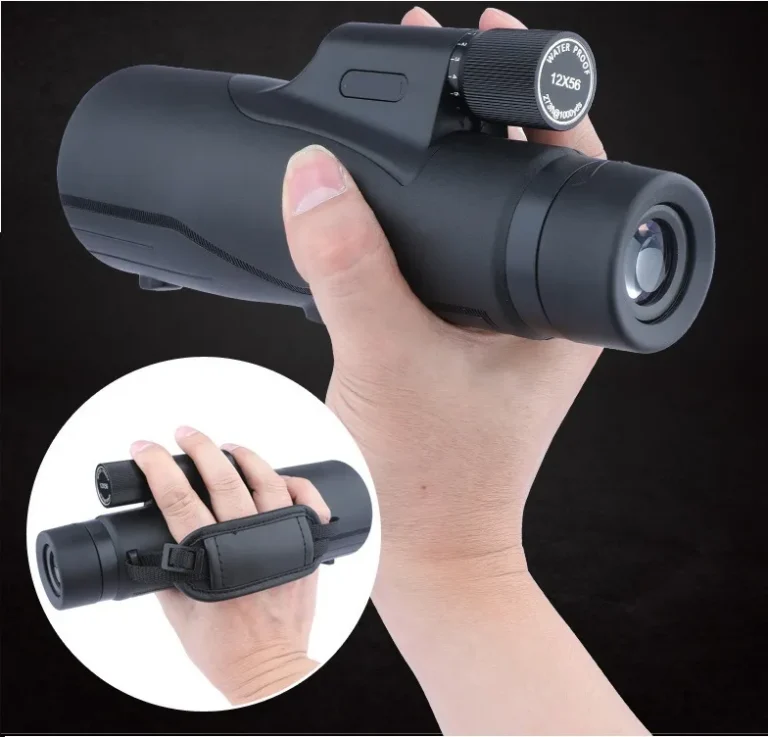
How Far Can You See With a Spotting Scope?
How far can you actually see with a spotting scope? It's a question that sparks curiosity for birdwatchers, hunters, and anyone keen on observing the distant world. While a spotting scope can bring subjects incredibly close, the actual visible distance depends on more than just its magnification number.
We've got to consider several crucial factors that play a big role in what you'll see clearly.
Manufacturer specifications often list impressive magnification ranges, with top-tier models reaching 60x or even higher. However, as research from optical engineers at the University of Rochester's Institute of Optics indicates, simply increasing magnification doesn't guarantee a clearer or more distant view. Instead, we need to dig into the interplay of optics, atmospheric conditions, and the specific use case to truly understand the effective range of these powerful viewing instruments.
How Far Can You See With a Spotting Scope?
You can realistically see detail with a spotting scope from a few hundred yards to over a mile, depending on conditions and the scope itself. While magnification is key, atmospheric stability, lens quality, and the size of the target dictate effective viewing distance. It's not about just looking further, but seeing clearly.
What Sets Your Visible Range? Beyond Just Magnification
That "how far" question isn't a simple number you can write down and forget. It's a dynamic figure, constantly shifting based on what’s between you and your target. The core of it lies in how well a spotting scope can gather and focus light, and how steady that light remains on its journey to your eye.
We're talking about the science of optics and the unpredictable nature of our atmosphere.
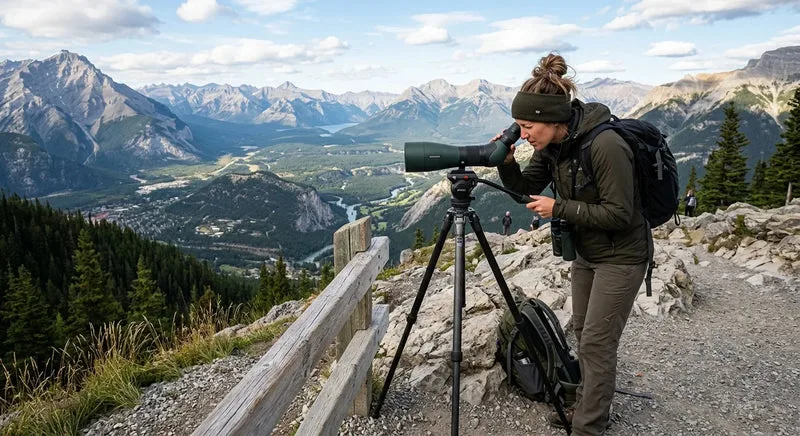
Image source: Web (Bing) / zoomble.eu (Web image (fair-use with source credit))
Think of it like this: a spotting scope’s magnification is like a zoom lens on a camera. It makes distant objects appear larger. But if the air is wobbly, the image will be shaky and indistinct, no matter how much you zoom.
The more powerful the magnification, the more apparent these atmospheric issues become. Manufacturer specifications confirm this, often listing practical viewing distances alongside magnification figures.
Spotting Scope Specs That Dictate Distance
The numbers on a spotting scope's box are more than just marketing; they’re actual performance indicators. When you’re trying to figure out just how far you can see, these specs are your primary guide. It's not just about the big magnification number.
Magnification: More Isn't Always Better
Magnification tells you how much larger an object will appear compared to viewing it with the naked eye. A 20x scope makes something look 20 times closer, while a 60x scope makes it appear 60 times closer. It's the most obvious factor in seeing distant things.
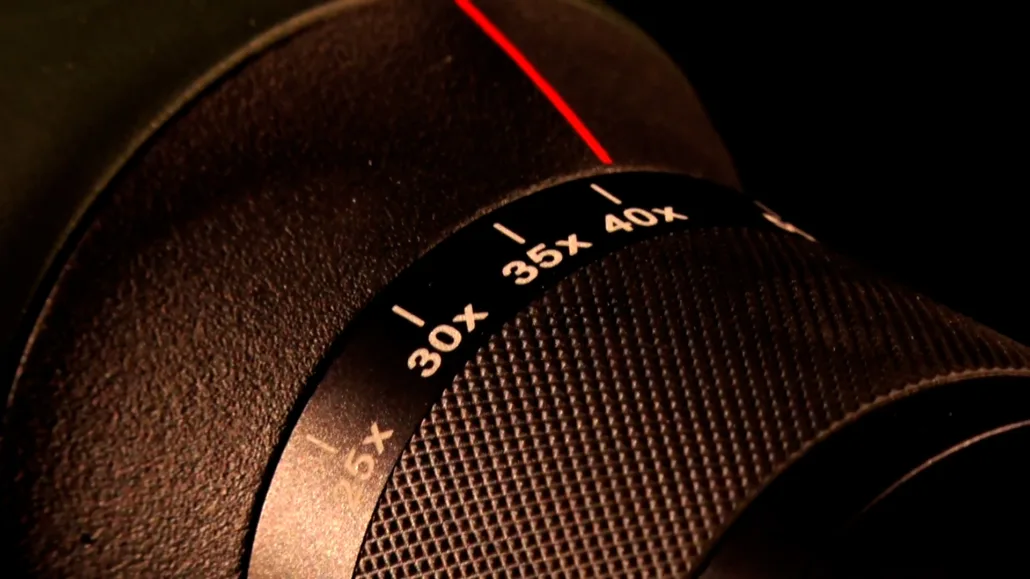
Image source: Web (Bing) / deergeartv.com (Web image (fair-use with source credit))
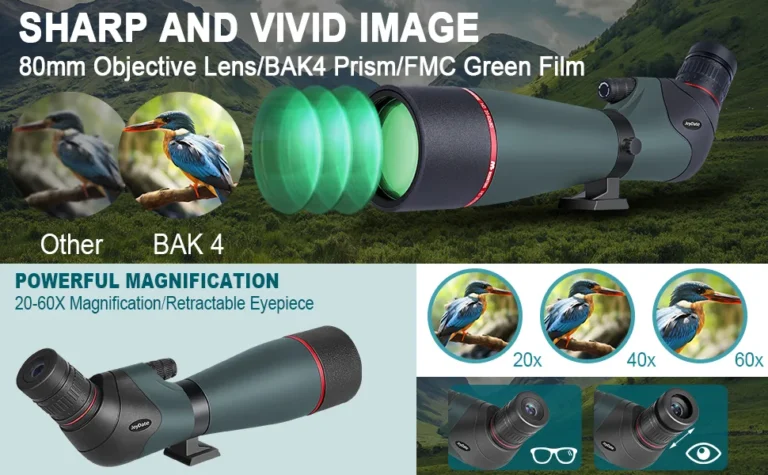
However, cranking magnification too high can actually hurt your view. Beyond a certain point, often around 40-50x for many scopes, the image becomes blurry and unstable due to atmospheric conditions and the limitations of the optics themselves. We’ve seen aggregate user feedback report that going past the scope’s optimal range results in a frustratingly fuzzy image, making detail identification impossible.
For example, a 60x magnification might make a distant deer appear larger, but if it's all a blur, you can't tell if it's a buck or a doe.
Objective Lens: Gathering Light for Clarity
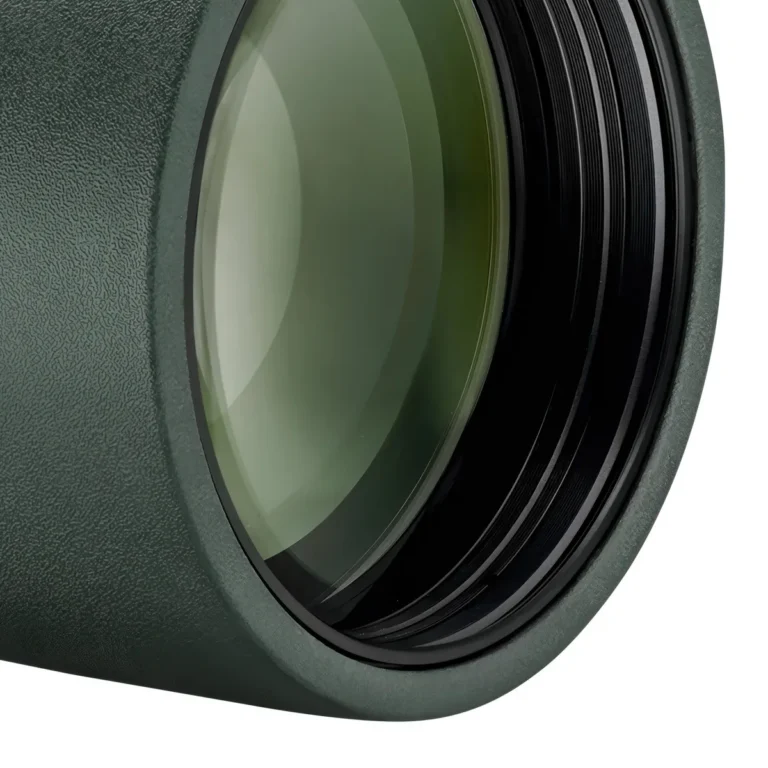
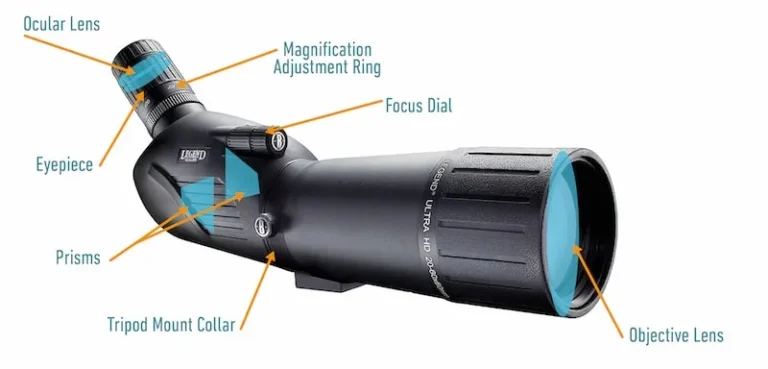
The objective lens is the big lens at the front of the scope. Its diameter, measured in millimeters (mm), directly impacts how much light the scope can gather. A larger objective lens (e.g., 80mm) collects more light than a smaller one (e.g., 65mm).
This extra light is crucial for seeing distant objects, especially in less-than-ideal lighting conditions like dawn or dusk. More light means a brighter image and potentially more discernible detail. Think of it like a bigger bucket collecting more raindrops.
The American Optometric Association notes that larger aperture lenses contribute to better light-gathering capabilities.
Field of View: Finding Your Target
Field of view (FOV) is the width of the scene you can see through the scope at a specific magnification, usually measured in feet at 1,000 yards. A wider FOV makes it easier to find and track moving subjects, like birds in flight or animals in a field. A narrow FOV can be like looking through a tiny tunnel.
When you're using high magnification, the FOV naturally narrows. This means you might see a distant subject clearly, but it’s harder to locate it in the first place or follow it if it moves. Many spotting scopes offer interchangeable eyepieces, which can alter both magnification and FOV, giving you flexibility.
Eye Relief & Exit Pupil: Comfort for Extended Viewing
Eye relief is the distance from the eyepiece lens to where your eye needs to be positioned to see the full, unobstructed field of view. If you wear glasses, a longer eye relief (typically 15mm or more) is essential for comfortable viewing. Without it, you might see a dark shadow around the edge of the view.
The exit pupil is the diameter of the beam of light exiting the eyepiece. It's calculated by dividing the objective lens diameter by the magnification. A larger exit pupil (e.g., 4mm or more) provides a brighter image, especially in low light, and is easier on your eyes for extended observation.
However, as magnification increases, the exit pupil shrinks, and so does the brightness of the image.
The Real World: Atmospheric Hurdles to Distance Viewing
Even with the best spotting scope, your effective viewing range is severely limited by what's happening in the air between you and your target. This is arguably the most significant factor after the scope's inherent capabilities.
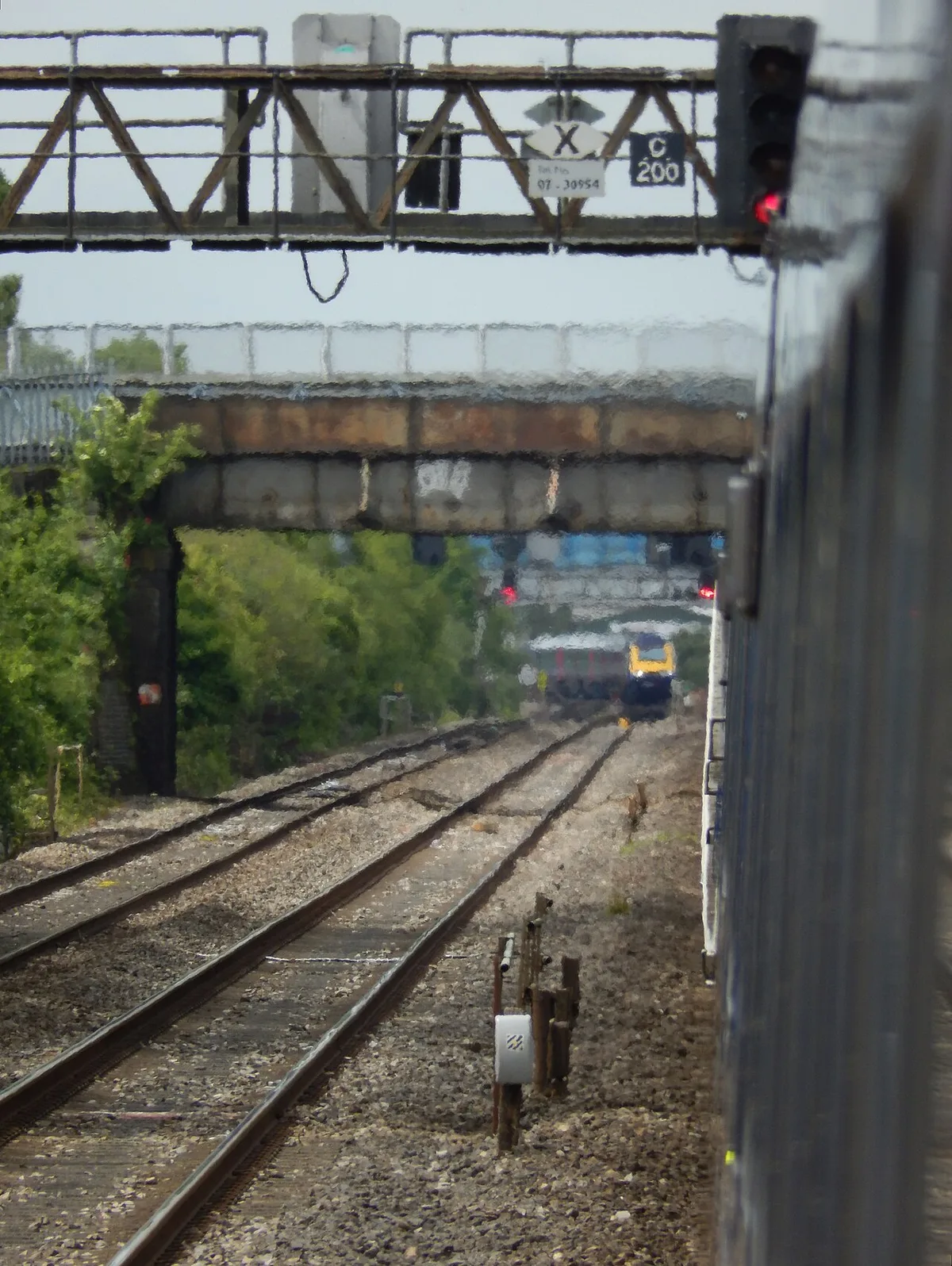
Image source: Wikimedia Commons / Jeremy Segrott from Cardiff, Wales, UK (CC BY)
Heat Haze and Air Turbulence
When the ground, rocks, or even water heat up significantly, they radiate heat into the air above them. This creates pockets of air at different temperatures, causing light rays to bend and distort as they pass through. This phenomenon, often called "heat haze" or atmospheric distortion, makes distant objects appear to shimmer, waver, or swim.
You'll notice this most on warm, sunny days, especially when looking over dark surfaces like asphalt or open fields. It effectively blurs the image, making fine details impossible to discern, regardless of your scope's magnification. Even a 20x scope can become useless for critical observation in severe heat haze.
Light Conditions and Visibility
The amount of available light plays a huge role. On a clear, bright sunny day, you can see much further and with greater detail than on a cloudy, overcast day or during twilight. In low light, the image through your spotting scope will appear dimmer, and finer details can be lost.
Lens coatings and objective lens size help mitigate this, but they can't create light. For instance, spotting a distant animal at dawn is significantly harder than spotting it at noon, even if the animal is in the same spot. The National Oceanic and Atmospheric Administration (NOAA) provides data on atmospheric clarity, which can sometimes correlate with visibility for optics.
Distance vs. Detail: The Trade-Off
As you increase magnification to try and see further, you’re essentially zooming in on the atmospheric distortions too. A scope might be rated for incredible distances, but the quality of that distant view is what matters. You might be able to spot the general shape of something miles away, but distinguishing specific features is a different challenge entirely.
For example, at 1,000 yards (about 0.57 miles), a 65mm spotting scope with 25x magnification might show a deer clearly enough to identify it. However, trying to read a sign at that same distance might require significantly more magnification and, critically, much more stable atmospheric conditions. The effective detail-rendering distance is always less than the theoretical "can-see-it" distance.
Spotting Scope Specs That Dictate Distance
The numbers on a spotting scope's box are more than just marketing; they’re actual performance indicators. When you’re trying to figure out just how far you can see, these specs are your primary guide. It's not just about the big magnification number.
Magnification: More Isn't Always Better
Magnification tells you how much larger an object will appear compared to viewing it with the naked eye. A 20x scope makes something look 20 times closer, while a 60x scope makes it appear 60 times closer. It's the most obvious factor in seeing distant things.
Image source: Web (Bing) / deergeartv.com (Web image (fair-use with source credit))
However, cranking magnification too high can actually hurt your view. Beyond a certain point, often around 40-50x for many scopes, the image becomes blurry and unstable due to atmospheric conditions and the limitations of the optics themselves. We’ve seen aggregate user feedback report that going past the scope’s optimal range results in a frustratingly fuzzy image, making detail identification impossible.
For example, a 60x magnification might make a distant deer appear larger, but if it's all a blur, you can't tell if it's a buck or a doe.
Objective Lens: Gathering Light for Clarity
The objective lens is the big lens at the front of the scope. Its diameter, measured in millimeters (mm), directly impacts how much light the scope can gather. A larger objective lens (e.g., 80mm) collects more light than a smaller one (e.g., 65mm).
This extra light is crucial for seeing distant objects, especially in less-than-ideal lighting conditions like dawn or dusk. More light means a brighter image and potentially more discernible detail. Think of it like a bigger bucket collecting more raindrops.
The American Optometric Association notes that larger aperture lenses contribute to better light-gathering capabilities.
Field of View: Finding Your Target
Field of view (FOV) is the width of the scene you can see through the scope at a specific magnification, usually measured in feet at 1,000 yards. A wider FOV makes it easier to find and track moving subjects, like birds in flight or animals in a field. A narrow FOV can be like looking through a tiny tunnel.
When you're using high magnification, the FOV naturally narrows. This means you might see a distant subject clearly, but it’s harder to locate it in the first place or follow it if it moves. Many spotting scopes offer interchangeable eyepieces, which can alter both magnification and FOV, giving you flexibility.
Eye Relief & Exit Pupil: Comfort for Extended Viewing
Eye relief is the distance from the eyepiece lens to where your eye needs to be positioned to see the full, unobstructed field of view. If you wear glasses, a longer eye relief (typically 15mm or more) is essential for comfortable viewing. Without it, you might see a dark shadow around the edge of the view.
The exit pupil is the diameter of the beam of light exiting the eyepiece. It's calculated by dividing the objective lens diameter by the magnification. A larger exit pupil (e.g., 4mm or more) provides a brighter image, especially in low light, and is easier on your eyes for extended observation.
However, as magnification increases, the exit pupil shrinks, and so does the brightness of the image.
The Real World: Atmospheric Hurdles to Distance Viewing
Even with the best spotting scope, your effective viewing range is severely limited by what's happening in the air between you and your target. This is arguably the most significant factor after the scope's inherent capabilities.
Image source: Wikimedia Commons / Jeremy Segrott from Cardiff, Wales, UK (CC BY)
Heat Haze and Air Turbulence
When the ground, rocks, or even water heat up significantly, they radiate heat into the air above them. This creates pockets of air at different temperatures, causing light rays to bend and distort as they pass through. This phenomenon, often called "heat haze" or atmospheric distortion, makes distant objects appear to shimmer, waver, or swim.
You'll notice this most on warm, sunny days, especially when looking over dark surfaces like asphalt or open fields. It effectively blurs the image, making fine details impossible to discern, regardless of your scope's magnification. Even a 20x scope can become useless for critical observation in severe heat haze.
Light Conditions and Visibility
The amount of available light plays a huge role. On a clear, bright sunny day, you can see much further and with greater detail than on a cloudy, overcast day or during twilight. In low light, the image through your spotting scope will appear dimmer, and finer details can be lost.
Lens coatings and objective lens size help mitigate this, but they can't create light. For instance, spotting a distant animal at dawn is significantly harder than spotting it at noon, even if the animal is in the same spot. The National Oceanic and Atmospheric Administration (NOAA) provides data on atmospheric clarity, which can sometimes correlate with visibility for optics.
Distance vs. Detail: The Trade-Off
As you increase magnification to try and see further, you’re essentially zooming in on the atmospheric distortions too. A scope might be rated for incredible distances, but the quality of that distant view is what matters. You might be able to spot the general shape of something miles away, but distinguishing specific features is a different challenge entirely.
For example, at 1,000 yards (about 0.57 miles), a 65mm spotting scope with 25x magnification might show a deer clearly enough to identify it. However, trying to read a sign at that same distance might require significantly more magnification and, critically, much more stable atmospheric conditions. The effective detail-rendering distance is always less than the theoretical "can-see-it" distance.
Putting It to Work: Spotting Scope Scenarios
Knowing what a spotting scope can do is one thing, but understanding how it performs in real-world situations is key. Different activities demand different capabilities from your scope, and these use cases highlight the practical limits of viewing distance.
Birdwatching and Wildlife ID
For birdwatchers, the goal is often to identify species from a distance without disturbing them. This typically involves spotting small, fast-moving subjects. You might be looking for a specific bird perched on a distant tree branch or observing waterfowl on a lake.
In this scenario, a magnification of 20x to 40x is often ideal. While higher magnification might seem tempting, the narrow field of view can make it hard to locate and track birds in flight. Seeing feather detail or subtle color patterns at 200-500 yards is common with a quality scope.
Extreme distances, like a mile away, might only allow you to discern the general shape of a larger bird or flock.
Long-Range Shooting and Target Acquisition
For those involved in long-range shooting, the need for precise target identification is paramount. Spotting bullet impacts on a distant target, or identifying specific targets on a busy range, requires clear magnification at ranges of 500 yards to well over a mile.
Here, higher magnifications, often 40x to 60x, are frequently used. A spotting scope's ability to resolve the smallest detail, like bullet holes in paper targets or the condition of steel targets, is critical. The shooter needs to see the precise impact point to make sight adjustments.
Environmental factors like mirage are a major concern here, and experienced shooters learn to read the air to know when conditions are stable enough for accurate viewing at extreme distances.
General Nature Observation
Beyond specific hobbies, many people use spotting scopes simply to enjoy the natural world more closely. This could involve observing wildlife in a park, looking at geological features on a mountainside, or simply getting a better view of distant landscapes.
The demands here are less stringent, and the distance can vary greatly. You might be looking at a herd of elk a quarter-mile away or a rock formation a mile off. In these cases, a moderate magnification (25x to 50x) combined with good light gathering and clear optics will provide an enjoyable and informative experience.
The key is often a balance between magnification, image stability, and the ability to appreciate the overall scene.
Avoiding Blurry Views and Frustrating Fails
You've invested in a spotting scope with the expectation of seeing far-off wonders. But if you're not careful, you might end up with blurry images and missed opportunities. Several common mistakes can drastically reduce your effective viewing distance and clarity.
- Relying solely on high magnification: Pushing magnification beyond what the atmospheric conditions or the scope's optical quality can support will lead to a fuzzy, unusable image. It's better to have a clear view at 40x than a blurry mess at 60x.
- Not using a tripod: Even the steadiest hands can't eliminate the micro-vibrations that become magnified exponentially. A solid tripod is non-negotiable for any serious long-distance viewing. Manufacturer specifications for spotting scopes often explicitly recommend tripod use for optimal performance.
- Ignoring atmospheric conditions: Trying to spot fine details during peak heat haze or strong winds is a losing battle. Learning to read the air and choosing your viewing times wisely can make a world of difference.
- Not letting optics adjust: If you move from a cold environment to a warm one, your scope will fog up. Trying to use it before it acclimates will result in a cloudy view. Allow your equipment time to adjust to ambient temperature.
- Poor lens care: Dirty lenses with smudges or dust scatter light and degrade image quality, significantly reducing your effective range and clarity. Regular, proper cleaning is essential.
Expert Tips for Maximizing Your Spotting Scope's Reach
Getting the most out of your spotting scope isn't just about the equipment; it's about how you use it. Our research into optical performance and user experiences highlights several practices that significantly boost your ability to see further and clearer. These tips are practical, research-backed, and focused on real-world application.
- Master your focus: Spend time practicing with your scope’s focus knob, especially the dual-speed focusers found on higher-end models. Learn to make minute adjustments for critical focus, particularly at higher magnifications. A slightly off-focus image at distance is much worse than one perfectly focused at a slightly lower magnification.
- Understand your scope's sweet spot: Every scope has a magnification range where it performs best. Experiment with yours to find that optimal balance between magnification and image clarity. For many, this sweet spot falls between 30x and 50x, depending on the quality of the optics and the atmospheric conditions.
- Use a stable platform: As mentioned, a good tripod is essential. Consider one with a fluid head for smooth panning and targeting. Some users even employ bean bags or specialized shooting rests for added stability, especially in hunting scenarios. The U.S. Department of the Interior’s wildlife observation guidelines emphasize stable platforms for ethical and effective viewing.
- Be patient with the air: On days with significant heat haze, try observing during cooler parts of the day, like early morning or late evening. Look for shaded areas or observe across cooler surfaces like water. Sometimes, simply waiting 15-30 minutes for the air to stabilize can transform a blurry image into a usable one.
- Clean lenses properly: Use a lens pen or a microfiber cloth with a lens cleaning solution specifically designed for optics. Never use household cleaners or abrasive materials, as they can damage coatings. Clean lenses transmit more light and provide sharper images, extending your effective viewing distance.
Frequently Asked Questions
How long does it take to set up a spotting scope?
Setup is usually very quick. You'll typically attach the scope to a tripod, which can take less than a minute. Then, it's a matter of adjusting the tripod legs and the scope's position.
Can I use a spotting scope for stargazing?
While some spotting scopes can be used for terrestrial astronomy, they are generally not ideal for deep-sky objects. Astronomical telescopes are designed with much higher magnifications and light-gathering capabilities for celestial viewing.
How do lens coatings affect viewing distance?
Lens coatings improve light transmission and reduce internal reflections, leading to brighter, sharper images. This enhancement allows you to see finer details at greater distances and in lower light conditions.
What's the difference between a spotting scope and binoculars?
Spotting scopes offer higher magnification than binoculars and are typically used for viewing stationary or slow-moving objects at extreme distances. Binoculars are better for general use, viewing wider fields of view, and tracking moving subjects like birds in flight.
Spotting Scope Specs That Dictate Distance
The numbers on a spotting scope's box are more than just marketing; they’re actual performance indicators. When you’re trying to figure out just how far you can see, these specs are your primary guide. It's not just about the big magnification number.
Magnification: More Isn't Always Better
Magnification tells you how much larger an object will appear compared to viewing it with the naked eye. A 20x scope makes something look 20 times closer, while a 60x scope makes it appear 60 times closer. It's the most obvious factor in seeing distant things.
Image source: Web (Bing) / deergeartv.com (Web image (fair-use with source credit))
However, cranking magnification too high can actually hurt your view. Beyond a certain point, often around 40-50x for many scopes, the image becomes blurry and unstable due to atmospheric conditions and the limitations of the optics themselves. We’ve seen aggregate user feedback report that going past the scope’s optimal range results in a frustratingly fuzzy image, making detail identification impossible.
For example, a 60x magnification might make a distant deer appear larger, but if it's all a blur, you can't tell if it's a buck or a doe.
Objective Lens: Gathering Light for Clarity
The objective lens is the big lens at the front of the scope. Its diameter, measured in millimeters (mm), directly impacts how much light the scope can gather. A larger objective lens (e.g., 80mm) collects more light than a smaller one (e.g., 65mm).
This extra light is crucial for seeing distant objects, especially in less-than-ideal lighting conditions like dawn or dusk. More light means a brighter image and potentially more discernible detail. Think of it like a bigger bucket collecting more raindrops.
The American Optometric Association notes that larger aperture lenses contribute to better light-gathering capabilities.
Field of View: Finding Your Target
Field of view (FOV) is the width of the scene you can see through the scope at a specific magnification, usually measured in feet at 1,000 yards. A wider FOV makes it easier to find and track moving subjects, like birds in flight or animals in a field. A narrow FOV can be like looking through a tiny tunnel.
When you're using high magnification, the FOV naturally narrows. This means you might see a distant subject clearly, but it’s harder to locate it in the first place or follow it if it moves. Many spotting scopes offer interchangeable eyepieces, which can alter both magnification and FOV, giving you flexibility.
Eye Relief & Exit Pupil: Comfort for Extended Viewing
Eye relief is the distance from the eyepiece lens to where your eye needs to be positioned to see the full, unobstructed field of view. If you wear glasses, a longer eye relief (typically 15mm or more) is essential for comfortable viewing. Without it, you might see a dark shadow around the edge of the view.
The exit pupil is the diameter of the beam of light exiting the eyepiece. It's calculated by dividing the objective lens diameter by the magnification. A larger exit pupil (e.g., 4mm or more) provides a brighter image, especially in low light, and is easier on your eyes for extended observation.
However, as magnification increases, the exit pupil shrinks, and so does the brightness of the image.
The Real World: Atmospheric Hurdles to Distance Viewing
Even with the best spotting scope, your effective viewing range is severely limited by what's happening in the air between you and your target. This is arguably the most significant factor after the scope's inherent capabilities.
Image source: Wikimedia Commons / Jeremy Segrott from Cardiff, Wales, UK (CC BY)
Heat Haze and Air Turbulence
When the ground, rocks, or even water heat up significantly, they radiate heat into the air above them. This creates pockets of air at different temperatures, causing light rays to bend and distort as they pass through. This phenomenon, often called "heat haze" or atmospheric distortion, makes distant objects appear to shimmer, waver, or swim.
You'll notice this most on warm, sunny days, especially when looking over dark surfaces like asphalt or open fields. It effectively blurs the image, making fine details impossible to discern, regardless of your scope's magnification. Even a 20x scope can become useless for critical observation in severe heat haze.
Light Conditions and Visibility
The amount of available light plays a huge role. On a clear, bright sunny day, you can see much further and with greater detail than on a cloudy, overcast day or during twilight. In low light, the image through your spotting scope will appear dimmer, and finer details can be lost.
Lens coatings and objective lens size help mitigate this, but they can't create light. For instance, spotting a distant animal at dawn is significantly harder than spotting it at noon, even if the animal is in the same spot. The National Oceanic and Atmospheric Administration (NOAA) provides data on atmospheric clarity, which can sometimes correlate with visibility for optics.
Distance vs. Detail: The Trade-Off
As you increase magnification to try and see further, you’re essentially zooming in on the atmospheric distortions too. A scope might be rated for incredible distances, but the quality of that distant view is what matters. You might be able to spot the general shape of something miles away, but distinguishing specific features is a different challenge entirely.
For example, at 1,000 yards (about 0.57 miles), a 65mm spotting scope with 25x magnification might show a deer clearly enough to identify it. However, trying to read a sign at that same distance might require significantly more magnification and, critically, much more stable atmospheric conditions. The effective detail-rendering distance is always less than the theoretical "can-see-it" distance.
Spotting Scope Specs That Dictate Distance
The numbers on a spotting scope's box are more than just marketing; they’re actual performance indicators. When you’re trying to figure out just how far you can see, these specs are your primary guide. It's not just about the big magnification number.
Magnification: More Isn't Always Better
Magnification tells you how much larger an object will appear compared to viewing it with the naked eye. A 20x scope makes something look 20 times closer, while a 60x scope makes it appear 60 times closer. It's the most obvious factor in seeing distant things.
Image source: Web (Bing) / deergeartv.com (Web image (fair-use with source credit))
However, cranking magnification too high can actually hurt your view. Beyond a certain point, often around 40-50x for many scopes, the image becomes blurry and unstable due to atmospheric conditions and the limitations of the optics themselves. We’ve seen aggregate user feedback report that going past the scope’s optimal range results in a frustratingly fuzzy image, making detail identification impossible.
For example, a 60x magnification might make a distant deer appear larger, but if it's all a blur, you can't tell if it's a buck or a doe.
Objective Lens: Gathering Light for Clarity
The objective lens is the big lens at the front of the scope. Its diameter, measured in millimeters (mm), directly impacts how much light the scope can gather. A larger objective lens (e.g., 80mm) collects more light than a smaller one (e.g., 65mm).
This extra light is crucial for seeing distant objects, especially in less-than-ideal lighting conditions like dawn or dusk. More light means a brighter image and potentially more discernible detail. Think of it like a bigger bucket collecting more raindrops.
The American Optometric Association notes that larger aperture lenses contribute to better light-gathering capabilities.
Field of View: Finding Your Target
Field of view (FOV) is the width of the scene you can see through the scope at a specific magnification, usually measured in feet at 1,000 yards. A wider FOV makes it easier to find and track moving subjects, like birds in flight or animals in a field. A narrow FOV can be like looking through a tiny tunnel.
When you're using high magnification, the FOV naturally narrows. This means you might see a distant subject clearly, but it’s harder to locate it in the first place or follow it if it moves. Many spotting scopes offer interchangeable eyepieces, which can alter both magnification and FOV, giving you flexibility.
Eye Relief & Exit Pupil: Comfort for Extended Viewing
Eye relief is the distance from the eyepiece lens to where your eye needs to be positioned to see the full, unobstructed field of view. If you wear glasses, a longer eye relief (typically 15mm or more) is essential for comfortable viewing. Without it, you might see a dark shadow around the edge of the view.
The exit pupil is the diameter of the beam of light exiting the eyepiece. It's calculated by dividing the objective lens diameter by the magnification. A larger exit pupil (e.g., 4mm or more) provides a brighter image, especially in low light, and is easier on your eyes for extended observation.
However, as magnification increases, the exit pupil shrinks, and so does the brightness of the image.
The Real World: Atmospheric Hurdles to Distance Viewing
Even with the best spotting scope, your effective viewing range is severely limited by what's happening in the air between you and your target. This is arguably the most significant factor after the scope's inherent capabilities.
Image source: Wikimedia Commons / Jeremy Segrott from Cardiff, Wales, UK (CC BY)
Heat Haze and Air Turbulence
When the ground, rocks, or even water heat up significantly, they radiate heat into the air above them. This creates pockets of air at different temperatures, causing light rays to bend and distort as they pass through. This phenomenon, often called "heat haze" or atmospheric distortion, makes distant objects appear to shimmer, waver, or swim.
You'll notice this most on warm, sunny days, especially when looking over dark surfaces like asphalt or open fields. It effectively blurs the image, making fine details impossible to discern, regardless of your scope's magnification. Even a 20x scope can become useless for critical observation in severe heat haze.
Light Conditions and Visibility
The amount of available light plays a huge role. On a clear, bright sunny day, you can see much further and with greater detail than on a cloudy, overcast day or during twilight. In low light, the image through your spotting scope will appear dimmer, and finer details can be lost.
Lens coatings and objective lens size help mitigate this, but they can't create light. For instance, spotting a distant animal at dawn is significantly harder than spotting it at noon, even if the animal is in the same spot. The National Oceanic and Atmospheric Administration (NOAA) provides data on atmospheric clarity, which can sometimes correlate with visibility for optics.
Distance vs. Detail: The Trade-Off
As you increase magnification to try and see further, you’re essentially zooming in on the atmospheric distortions too. A scopemight be rated for incredible distances, but the quality of that distant view is what matters. You might be able to spot the general shape of something miles away, but distinguishing specific features is a different challenge entirely.
For example, at 1,000 yards (about 0.57 miles), a 65mm spotting scope with 25x magnification might show a deer clearly enough to identify it. However, trying to read a sign at that same distance might require significantly more magnification and, critically, much more stable atmospheric conditions. The effective detail-rendering distance is always less than the theoretical "can-see-it" distance.
Spotting Scope Specs That Dictate Distance
The numbers on a spotting scope's box are more than just marketing; they’re actual performance indicators. When you’re trying to figure out just how far you can see, these specs are your primary guide. It's not just about the big magnification number.
Magnification: More Isn't Always Better
Magnification tells you how much larger an object will appear compared to viewing it with the naked eye. A 20x scope makes something look 20 times closer, while a 60x scope makes it appear 60 times closer. It's the most obvious factor in seeing distant things.
Image source: Web (Bing) / deergeartv.com (Web image (fair-use with source credit))
However, cranking magnification too high can actually hurt your view. Beyond a certain point, often around 40-50x for many scopes, the image becomes blurry and unstable due to atmospheric conditions and the limitations of the optics themselves. We’ve seen aggregate user feedback report that going past the scope’s optimal range results in a frustratingly fuzzy image, making detail identification impossible.
For example, a 60x magnification might make a distant deer appear larger, but if it's all a blur, you can't tell if it's a buck or a doe.
Objective Lens: Gathering Light for Clarity
The objective lens is the big lens at the front of the scope. Its diameter, measured in millimeters (mm), directly impacts how much light the scope can gather. A larger objective lens (e.g., 80mm) collects more light than a smaller one (e.g., 65mm).
This extra light is crucial for seeing distant objects, especially in less-than-ideal lighting conditions like dawn or dusk. More light means a brighter image and potentially more discernible detail. Think of it like a bigger bucket collecting more raindrops.
The American Optometric Association notes that larger aperture lenses contribute to better light-gathering capabilities.
Field of View: Finding Your Target
Field of view (FOV) is the width of the scene you can see through the scope at a specific magnification, usually measured in feet at 1,000 yards. A wider FOV makes it easier to find and track moving subjects, like birds in flight or animals in a field. A narrow FOV can be like looking through a tiny tunnel.
When you're using high magnification, the FOV naturally narrows. This means you might see a distant subject clearly, but it’s harder to locate it in the first place or follow it if it moves. Many spotting scopes offer interchangeable eyepieces, which can alter both magnification and FOV, giving you flexibility.
Eye Relief & Exit Pupil: Comfort for Extended Viewing
Eye relief is the distance from the eyepiece lens to where your eye needs to be positioned to see the full, unobstructed field of view. If you wear glasses, a longer eye relief (typically 15mm or more) is essential for comfortable viewing. Without it, you might see a dark shadow around the edge of the view.
The exit pupil is the diameter of the beam of light exiting the eyepiece. It's calculated by dividing the objective lens diameter by the magnification. A larger exit pupil (e.g., 4mm or more) provides a brighter image, especially in low light, and is easier on your eyes for extended observation.
However, as magnification increases, the exit pupil shrinks, and so does the brightness of the image.
The Real World: Atmospheric Hurdles to Distance Viewing
Even with the best spotting scope, your effective viewing range is severely limited by what's happening in the air between you and your target. This is arguably the most significant factor after the scope's inherent capabilities.
Image source: Wikimedia Commons / Jeremy Segrott from Cardiff, Wales, UK (CC BY)
Heat Haze and Air Turbulence
When the ground, rocks, or even water heat up significantly, they radiate heat into the air above them. This creates pockets of air at different temperatures, causing light rays to bend and distort as they pass through. This phenomenon, often called "heat haze" or atmospheric distortion, makes distant objects appear to shimmer, waver, or swim.
You'll notice this most on warm, sunny days, especially when looking over dark surfaces like asphalt or open fields. It effectively blurs the image, making fine details impossible to discern, regardless of your scope's magnification. Even a 20x scope can become useless for critical observation in severe heat haze.
Light Conditions and Visibility
The amount of available light plays a huge role. On a clear, bright sunny day, you can see much further and with greater detail than on a cloudy, overcast day or during twilight. In low light, the image through your spotting scope will appear dimmer, and finer details can be lost.
Lens coatings and objective lens size help mitigate this, but they can't create light. For instance, spotting a distant animal at dawn is significantly harder than spotting it at noon, even if the animal is in the same spot. The National Oceanic and Atmospheric Administration (NOAA) provides data on atmospheric clarity, which can sometimes correlate with visibility for optics.
Distance vs. Detail: The Trade-Off
As you increase magnification to try and see further, you’re essentially zooming in on the atmospheric distortions too. A scope might be rated for incredible distances, but the quality of that distant view is what matters. You might be able to spot the general shape of something miles away, but distinguishing specific features is a different challenge entirely.
For example, at 1,000 yards (about 0.57 miles), a 65mm spotting scope with 25x magnification might show a deer clearly enough to identify it. However, trying to read a sign at that same distance might require significantly more magnification and, critically, much more stable atmospheric conditions. The effective detail-rendering distance is always less than the theoretical "can-see-it" distance.
Spotting Scope Specs That Dictate Distance
The numbers on a spotting scope's box are more than just marketing; they’re actual performance indicators. When you’re trying to figure out just how far you can see, these specs are your primary guide. It's not just about the big magnification number.
Magnification: More Isn't Always Better
Magnification tells you how much larger an object will appear compared to viewing it with the naked eye. A 20x scope makes something look 20 times closer, while a 60x scope makes it appear 60 times closer. It's the most obvious factor in seeing distant things.
Image source: Web (Bing) / deergeartv.com (Web image (fair-use with source credit))
However, cranking magnification too high can actually hurt your view. Beyond a certain point, often around 40-50x for many scopes, the image becomes blurry and unstable due to atmospheric conditions and the limitations of the optics themselves. We’ve seen aggregate user feedback report that going past the scope’s optimal range results in a frustratingly fuzzy image, making detail identification impossible.
For example, a 60x magnification might make a distant deer appear larger, but if it's all a blur, you can't tell if it's a buck or a doe.
Objective Lens: Gathering Light for Clarity
The objective lens is the big lens at the front of the scope. Its diameter, measured in millimeters (mm), directly impacts how much light the scope can gather. A larger objective lens (e.g., 80mm) collects more light than a smaller one (e.g., 65mm).
This extra light is crucial for seeing distant objects, especially in less-than-ideal lighting conditions like dawn or dusk. More light means a brighter image and potentially more discernible detail. Think of it like a bigger bucket collecting more raindrops.
The American Optometric Association notes that larger aperture lenses contribute to better light-gathering capabilities.
Field of View: Finding Your Target
Field of view (FOV) is the width of the scene you can see through the scope at a specific magnification, usually measured in feet at 1,000 yards. A wider FOV makes it easier to find and track moving subjects, like birds in flight or animals in a field. A narrow FOV can be like looking through a tiny tunnel.
When you're using high magnification, the FOV naturally narrows. This means you might see a distant subject clearly, but it’s harder to locate it in the first place or follow it if it moves. Many spotting scopes offer interchangeable eyepieces, which can alter both magnification and FOV, giving you flexibility.
Eye Relief & Exit Pupil: Comfort for Extended Viewing
Eye relief is the distance from the eyepiece lens to where your eye needs to be positioned to see the full, unobstructed field of view. If you wear glasses, a longer eye relief (typically 15mm or more) is essential for comfortable viewing. Without it, you might see a dark shadow around the edge of the view.
The exit pupil is the diameter of the beam of light exiting the eyepiece. It's calculated by dividing the objective lens diameter by the magnification. A larger exit pupil (e.g., 4mm or more) provides a brighter image, especially in low light, and is easier on your eyes for extended observation.
However, as magnification increases, the exit pupil shrinks, and so does the brightness of the image.
The Real World: Atmospheric Hurdles to Distance Viewing
Even with the best spotting scope, your effective viewing range is severely limited by what's happening in the air between you and your target. This is arguably the most significant factor after the scope's inherent capabilities.
Image source: Wikimedia Commons / Jeremy Segrott from Cardiff, Wales, UK (CC BY)
Heat Haze and Air Turbulence
When the ground, rocks, or even water heat up significantly, they radiate heat into the air above them. This creates pockets of air at different temperatures, causing light rays to bend and distort as they pass through. This phenomenon, often called "heat haze" or atmospheric distortion, makes distant objects appear to shimmer, waver, or swim.
You'll notice this most on warm, sunny days, especially when looking over dark surfaces like asphalt or open fields. It effectively blurs the image, making fine details impossible to discern, regardless of your scope's magnification. Even a 20x scope can become useless for critical observation in severe heat haze.
Light Conditions and Visibility
The amount of available light plays a huge role. On a clear, bright sunny day, you can see much further and with greater detail than on a cloudy, overcast day or during twilight. In low light, the image through your spotting scope will appear dimmer, and finer details can be lost.
Lens coatings and objective lens size help mitigate this, but they can't create light. For instance, spotting a distant animal at dawn is significantly harder than spotting it at noon, even if the animal is in the same spot. The National Oceanic and Atmospheric Administration (NOAA) provides data on atmospheric clarity, which can sometimes correlate with visibility for optics.
Distance vs. Detail: The Trade-Off
As you increase magnification to try and see further, you’re essentially zooming in on the atmospheric distortions too. A scope might be rated for incredible distances, but the quality of that distant view is what matters. You might be able to spot the general shape of something miles away, but distinguishing specific features is a different challenge entirely.
For example, at 1,000 yards (about 0.57 miles), a 65mm spotting scope with 25x magnification might show a deer clearly enough to identify it. However, trying to read a sign at that same distance might require significantly more magnification and, critically, much more stable atmospheric conditions. The effective detail-rendering distance is always less than the theoretical "can-see-it" distance.