What Is the Difference Between Straight and Angled Spotting Scopes?
When you're out in the field, wanting to get a closer look at distant wildlife, the sky, or even distant targets, a spotting scope is your best friend. But to make sure it's a comfortable and effective companion, you need to pick the right type. The crucial question is: What Is the Difference Between Straight and Angled Spotting Scopes?
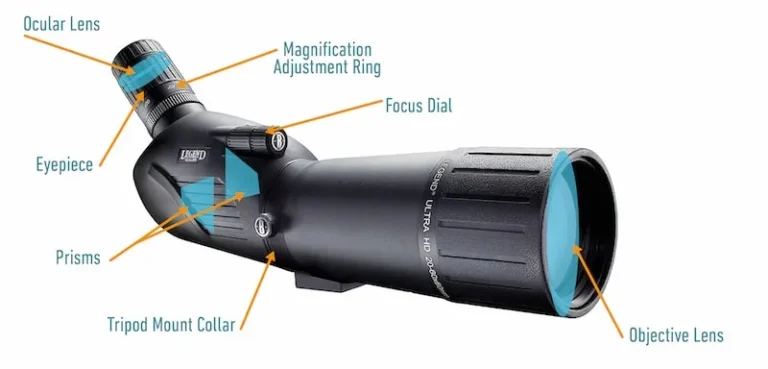
The main difference lies in the eyepiece angle: straight scopes have an eyepiece aligned directly with the main tube, while angled scopes feature an eyepiece tilted at an angle, usually 45 degrees. Manufacturer specifications indicate that this angle significantly impacts user comfort and viewing scenarios.
Angled Spotting Scopes: Comfort and Versatility
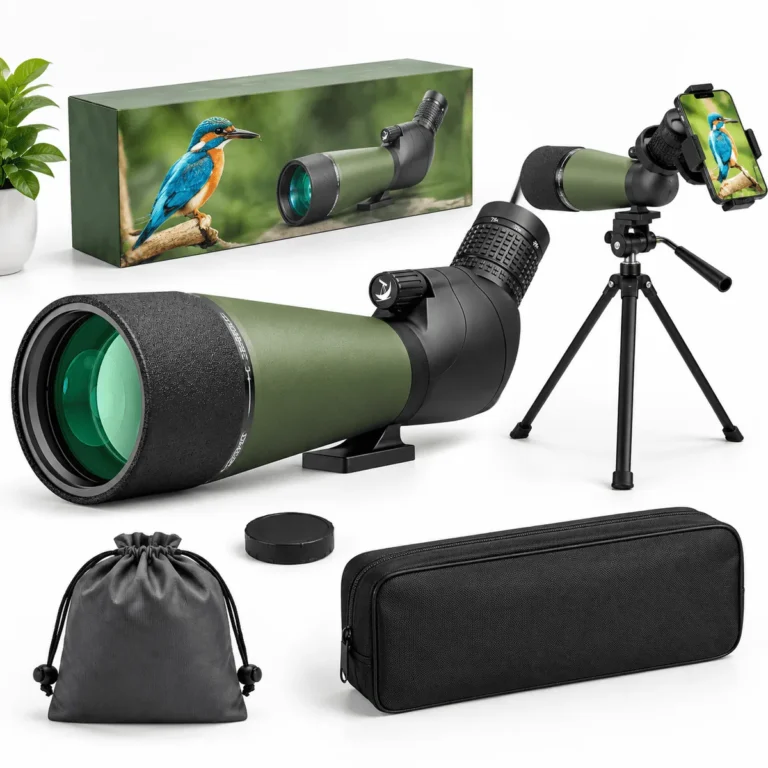
Angled spotting scopes are designed with an eyepiece that's tilted away from the main body of the scope, typically at a 45-degree angle. This design choice makes a noticeable difference in how you can use the scope, especially during longer observation periods.
Why Angled Scopes are Great for Long Sessions
If you've ever spent a good chunk of time looking through a straight spotting scope, you've probably felt it: that ache in your neck. With an angled scope, your head and neck can remain in a much more natural, relaxed position. This is because you're looking up into the eyepiece, rather than craning your neck back.
This ergonomic advantage is a major reason why many birdwatchers and wildlife enthusiasts prefer angled models for extended stakeouts or patient observation sessions. It’s also generally easier to share an angled scope among people of different heights, as the eyepiece can accommodate a wider range of upward viewing angles.
Best Use Cases for Angled Models
Angled spotting scopes really shine when you're settled in for a while. Think of birdwatching from a blind, observing a distant herd of animals from a fixed point, or even using it for some casual stargazing. They’re fantastic for scanning high into trees or across wide-open fields where your target is often elevated.
The relaxed posture means you can maintain focus for longer without fatigue setting in, which is crucial for spotting subtle movements or details.
Straight Spotting Scopes: Speed and Directness
A straight spotting scope features an eyepiece that comes out directly from the back of the main tube, in line with the objective lens. This straightforward design offers specific advantages that make it the preferred choice for certain activities.
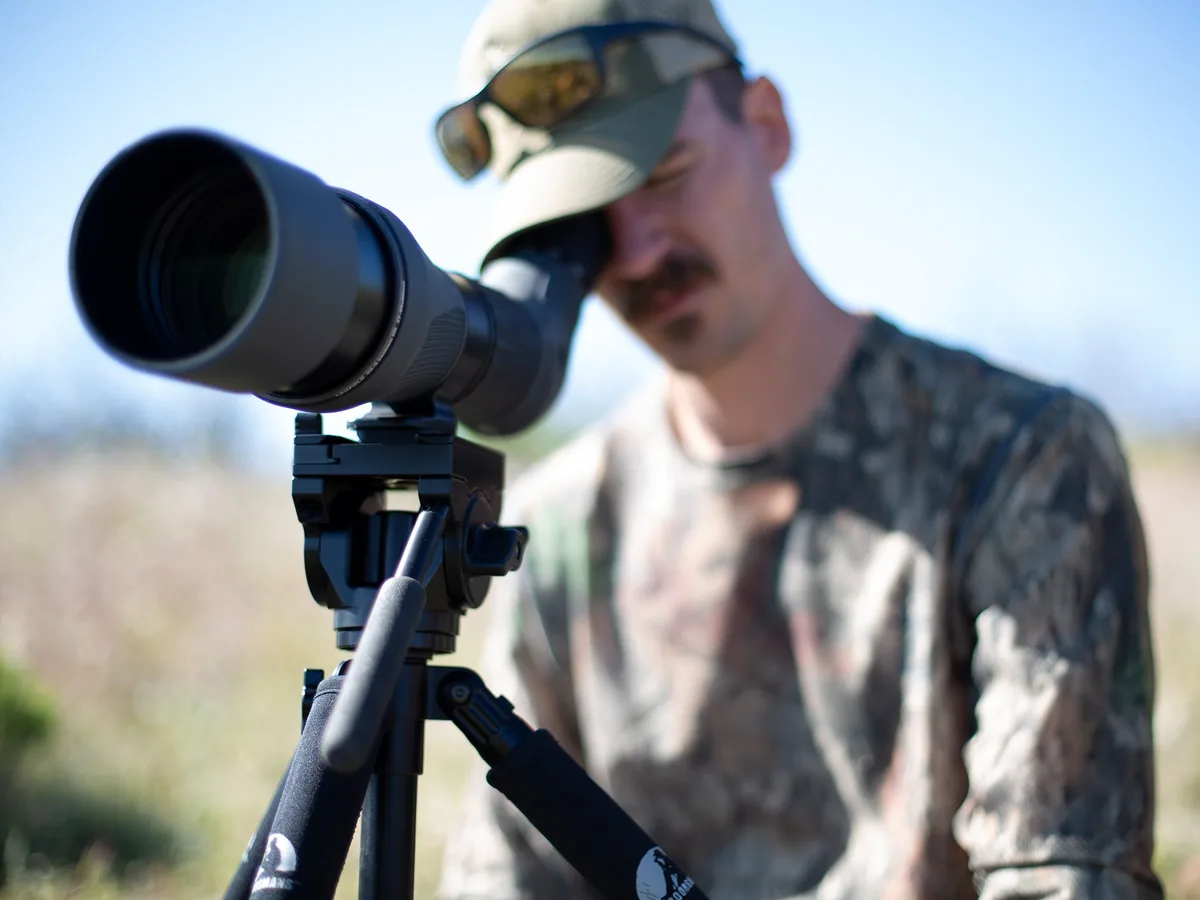
Image source: Web (Bing) / outdoorsmans.com (Web image (fair-use with source credit))
When Straight Scopes Shine: Quick Looks and Ground-Level Viewing
The main draw of a straight spotting scope is its speed and simplicity for target acquisition. If you're often in a vehicle, like a truck or car, and need to quickly raise the scope to glass something moving by, the straight design can be faster to orient. You simply point and look.
They are also exceptionally well-suited for observing subjects that are low to the ground, such as tracking game trails or spotting small ground-dwelling creatures, as you can look down into the eyepiece naturally without having to stoop excessively.
Ideal Scenarios for Straight Models
Hunters often favor straight scopes for their ease of use when moving between vantage points or when needing to make rapid observations. Similarly, if your primary interest is spotting details on the ground, like animal tracks or geological formations, a straight scope offers a more intuitive viewing experience. The direct line of sight can sometimes feel more immediate, especially in fleeting moments where every second counts.
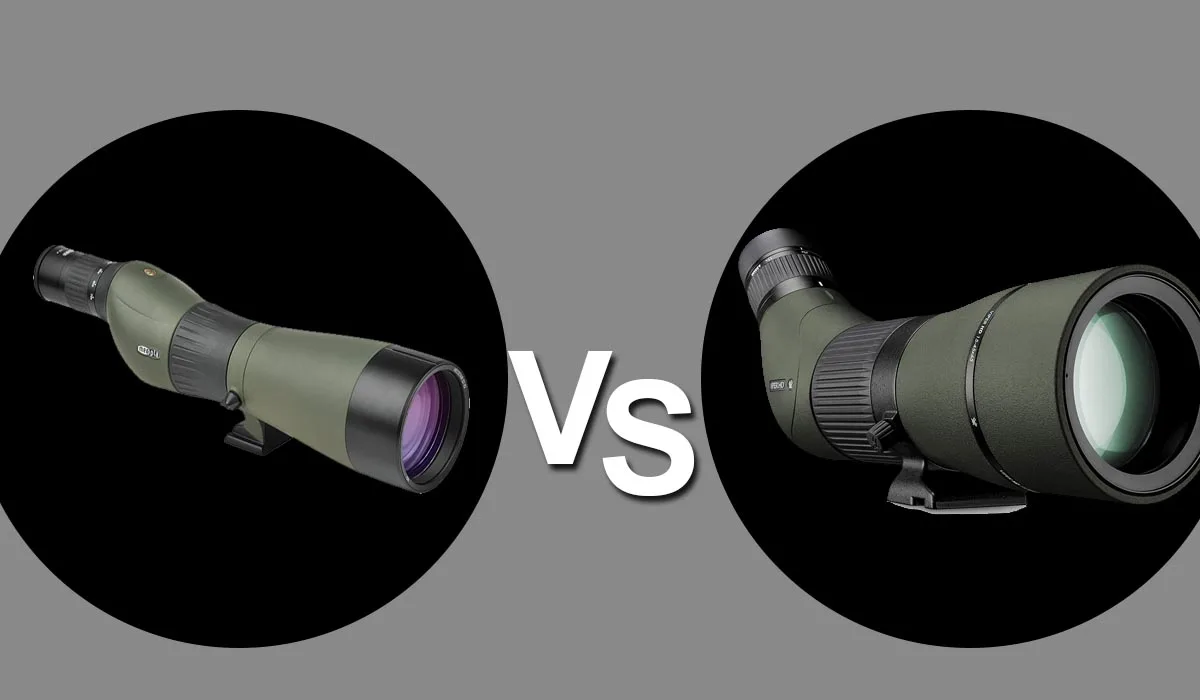
Image source: Bing (Web (fair-use with source credit))
Straight vs. Angled: Key Differences That Matter
The choice between a straight and an angled spotting scope often comes down to personal preference and the specific activities you plan to engage in. While both perform the fundamental job of magnifying distant objects, their design influences usability in significant ways.
Ergonomics: Neck Strain vs. Natural Posture
The most significant difference, as noted, is ergonomics. Angled scopes promote a relaxed, upright posture by directing the eyepiece upwards. This significantly reduces neck and shoulder strain, making them ideal for prolonged observation periods.
Straight scopes, conversely, require you to crane your neck downwards or backward, which can lead to discomfort after extended use, especially when viewing objects high up. For users who wear glasses, the angled design can also offer a more comfortable fit, preventing the glasses from being pushed into their face.
Target Acquisition: Speed and Ease
When it comes to quickly finding and locking onto a target, straight scopes often have a slight edge in certain situations. Their direct alignment allows for more intuitive pointing and immediate viewing, particularly when you're in a vehicle or moving frequently. Angled scopes might require a fraction more time to orient and find your subject, as you're working with an indirect line of sight.
However, once a target is located, the comfort of an angled scope often makes it easier to maintain that observation for longer.
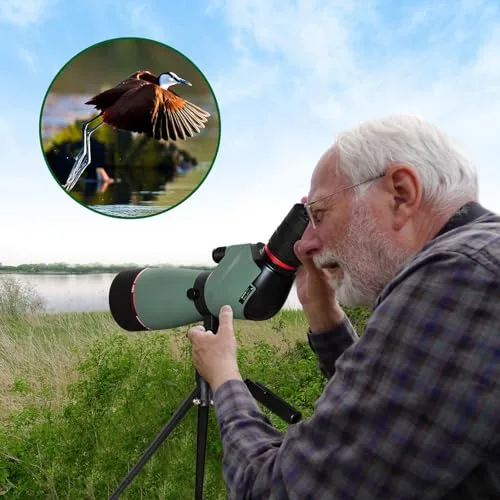
Image source: Bing (Web (fair-use with source credit))
Who Needs Which? Matching Scope to Your Hobby
Deciding between a straight and an angled spotting scope isn't about one being universally superior; it's about aligning the tool with your primary use case and personal comfort. Your typical environment and viewing habits are the biggest factors here.
For the Patient Birdwatcher and Wildlife Observer
If your passion lies in patient observation, like birdwatching from a comfortable hide or spending hours monitoring a wildlife camera's general vicinity, an angled spotting scope is likely your best bet. Birders, in particular, often find the sustained comfort of the 45-degree viewing angle invaluable for long days spent scanning treetops or distant fields. This design minimizes fatigue, allowing for more extended and enjoyable viewing sessions without the physical strain that a straight scope might induce.
It’s also easier for multiple people of varying heights to share comfortably.
For the Mobile Hunter and Quick-Glassing Enthusiast
Hunters, especially those who are frequently on the move or glassing large expanses from a vehicle, often gravitate towards straight spotting scopes. The direct line of sight facilitates rapid target acquisition, which can be critical when tracking game or assessing distant terrain quickly. For observers who spend a lot of time scanning the ground for tracks or low-lying wildlife, a straight scope offers a more natural and less awkward viewing angle.
This immediate, no-fuss pointing makes it an efficient tool for those who need to react fast.
Common Pitfalls to Avoid When Choosing
When you're trying to decide between a straight and an angled spotting scope, it's easy to get caught up in the specs and forget about how you'll actually use it. Falling into a few common traps can lead to a purchase you might later regret. Paying attention to these potential issues can save you frustration and ensure you get the best tool for your needs.
Ignoring Your Viewing Habits
The biggest mistake people make is not honestly assessing their typical viewing scenarios. If you mostly sit in one spot for hours, you'll really feel the neck strain from a straight scope. Conversely, if you're constantly on the move, needing to quickly glass moving targets, the slight delay in acquiring a target with an angled scope might become annoying.
Think about where and for how long you'll be using the scope. For example, a hunter who spends all day in a treestand might prefer angled for comfort, while a spotter in a vehicle might prioritize the speed of a straight model.
Overlooking Comfort for Higher Magnification
Sometimes, users focus too much on the maximum magnification a scope offers and forget that higher powers often require a stable viewing platform and can be more taxing to use. While magnification is important, the comfort of the eyepiece design plays a huge role in your ability to actually utilize that power effectively. An angled eyepiece can make using high magnification much more bearable for extended periods, preventing fatigue from hindering your observation.
Always consider the ergonomic implications alongside technical specifications like 20-60x zoom.
Frequently Asked Questions
What is the primary advantage of an angled spotting scope?
The primary advantage of an angled spotting scope is increased user comfort during prolonged observation sessions due to a more natural viewing angle that reduces neck strain.
When would a straight spotting scope be a better choice?
A straight spotting scope is often a better choice for quick target acquisition from a vehicle or for observing subjects at ground level where a direct line of sight is more convenient.
Can I use a spotting scope for astronomy?
Yes, many spotting scopes can be used for basic astronomical viewing, particularly for the moon and brighter planets, though dedicated telescopes offer superior performance for deep-sky objects.
Does the eyepiece angle affect image quality?
No, the eyepiece angle itself does not directly affect image quality. Image quality is determined by factors like lens coatings, aperture, and optical design, not the angle of the eyepiece housing.
Is one type of spotting scope better for beginners?
For beginners who are unsure of their specific viewing habits, an angled scope is often recommended due to its general comfort and versatility, making it more forgiving for extended use.