How to Choose a Spotting Scope?
Figuring out how to choose a spotting scope can feel like a puzzle, especially when you want something that perfectly matches your outdoor pursuits. You need to know what to look for to get clear, detailed views without getting bogged down by jargon or overpaying. This guide breaks down the key features and factors to consider.
In our research, we've found that matching the spotting scope's specifications to your intended use is the biggest step. Manufacturer specifications often highlight that a wider objective lens diameter, such as 80mm compared to 65mm, significantly increases light-gathering ability, leading to brighter images in low-light conditions.
How to Choose a Spotting Scope?
To choose a spotting scope, match its magnification, objective lens size, and eyepiece style to your activity like birdwatching or target shooting. Consider portability, durability, and budget.
What Will You Use Your Spotting Scope For?
Your primary reason for getting a spotting scope is the most important factor in narrowing down your choices. Different activities demand different features. Think about where and how you'll be using it most often.
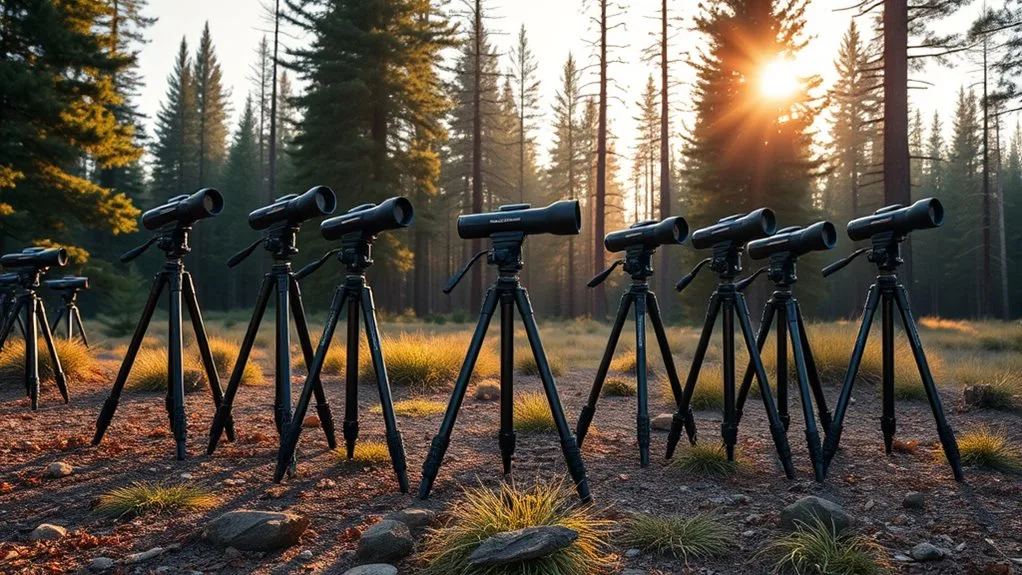
Image source: Bing (Web (fair-use with source credit))
Choosing Based on Your Viewing Activity
- Birdwatching & Nature Study: You'll want a scope that's relatively lightweight for carrying, offers excellent detail for identifying subtle markings, and provides true-to-life color reproduction. Portability and a good field of view are key for spotting and tracking fast-moving subjects.
- Target Shooting: Here, clarity at extreme distances and the ability to handle high magnification without excessive shakiness are paramount. Durability is also a major consideration, as these scopes might face tougher conditions.
- General Scenery Viewing: For enjoying landscapes, you’ll want a balance between magnification and a comfortable field of view. Brightness and sharpness are important for appreciating the fine details of distant vistas.
Key Spotting Scope Specs Explained
When you look at spotting scope specifications, a few numbers and terms pop up repeatedly. Understanding these will help you cut through the marketing and find what truly matters for your needs.
Objective Lens Size: More Light, Better Views
The objective lens is the large lens at the front of the scope. Its diameter, measured in millimeters (mm), directly impacts how much light the scope can gather. Generally, a larger objective lens means a brighter and often sharper image, especially when light is limited, like at dawn or dusk.
- Common Sizes: You'll typically see ranges like 65mm, 80mm, or even 85mm.
- Impact: A 80mm scope gathers significantly more light than a 65mm scope, providing a more robust image in dim conditions.
- Trade-off: Larger lenses mean larger, heavier scopes, which can be a drawback if you plan on hiking long distances.
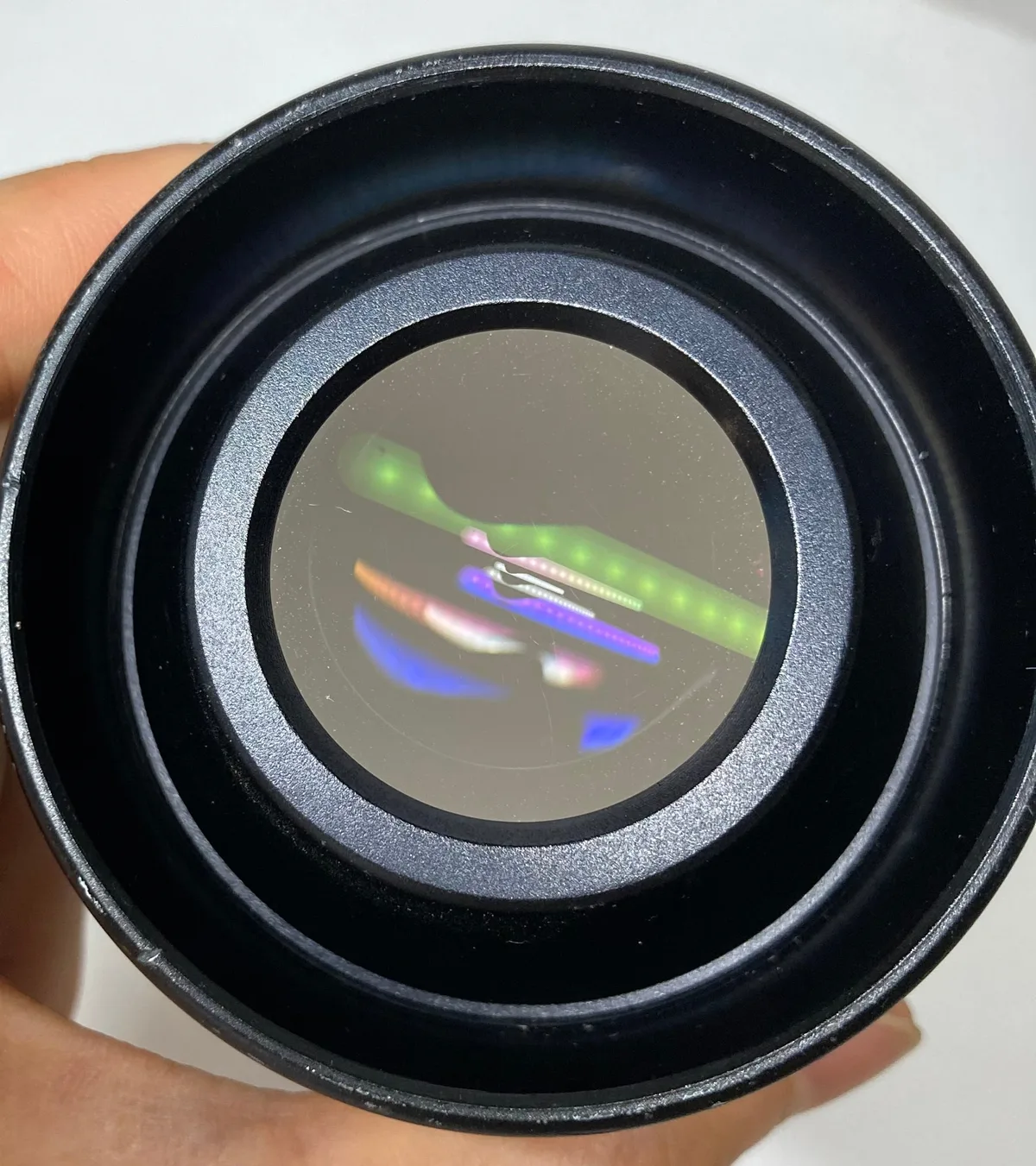
Image source: Bing (Web (fair-use with source credit))
Magnification: Getting Closer (Carefully)
Magnification tells you how much closer the scope makes distant objects appear. It's usually expressed as a range, like 20-60x. This means you can zoom in from 20 times closer to 60 times closer.
- Higher Magnification: Lets you see finer details on distant subjects.
- Lower Magnification: Provides a wider field of view (more area visible at once) and a steadier image.
It's critical to remember that higher magnification amplifies any movement. For handheld use, 20x to 30x is often the practical limit for a stable image. Beyond that, a tripod becomes essential for good viewing.
Field of View: Seeing the Bigger Picture
The field of view (FOV) refers to the width of the area you can see through the scope at a specific magnification, often measured in feet or meters at 1,000 yards (or meters). A wider FOV makes it easier to find and track moving subjects, like birds in flight.
- Wider FOV: Better for scanning an area or following fast action.
- Narrower FOV: You see less at once, but specific details appear larger.
As a general rule, you get a wider FOV at lower magnification settings on the scope. For example, a scope set to 20x will have a wider FOV than when set to 60x.
Eyepiece Styles: Angled vs. Straight
The eyepiece is where you look through the scope. The angle of the eyepiece is a major comfort and usability factor, especially for extended viewing sessions.
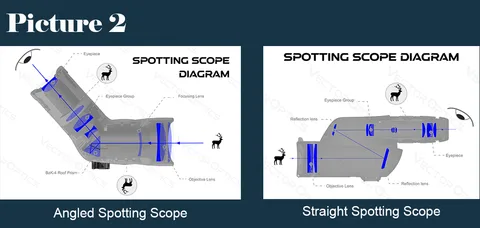
Image source: Bing (Web (fair-use with source credit))
Angled Eyepiece
These eyepieces are set at an angle, most commonly 45 degrees, to the scope's body.
- Pros: They offer superior comfort for long viewing periods, as you don't have to crane your neck as much. This is particularly beneficial when looking up at birds in tall trees or down into valleys. Angled scopes also make it easier for multiple people to share the view without constant repositioning.
- Cons: Some users find they can be slightly slower to acquire a horizontal target compared to straight models.
Straight Eyepiece
With a straight eyepiece, you look directly through the scope in a line.
- Pros: They can be quicker to get on target, especially for horizontal views or when tracking subjects moving directly towards you. Some straight models are also more compact.
- Cons: They can be less comfortable for extended use, particularly when looking at high or low angles, as they require more neck strain.
For general all-around use and comfort, especially for birdwatching, angled eyepieces are often preferred by our research participants.
Practical Spotting Scope Features
Beyond the core specs, several other features can significantly enhance your experience with a spotting scope. These are the details that often make the difference between a good scope and a great one for your specific needs.
Eye Relief: A Comfort Factor
Eye relief is the distance between the eyepiece lens and where your eye needs to be to see the full field of view. This is especially important if you wear glasses. If the eye relief is too short, you might see a dark shadow around the edge of the view, or you won't be able to get the full picture at all.
- For Glasses Wearers: Look for scopes with at least 15mm of eye relief. This usually allows you to keep your glasses on while using the scope comfortably.
- General Comfort: Even if you don't wear glasses, adequate eye relief can make viewing more relaxed and less tiring, especially during long observation sessions.
Durability and Weatherproofing
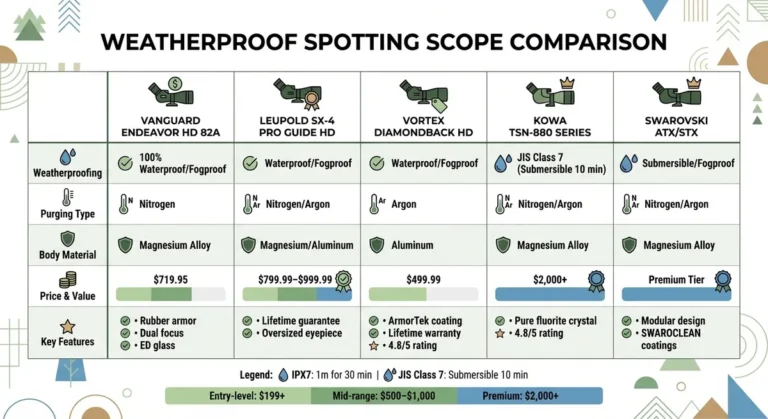
Spotting scopes are often used outdoors, so they need to be built to withstand the elements. Many manufacturers offer scopes that are both waterproof and fogproof.
- Waterproof: This means the scope is sealed to prevent water from getting inside, protecting it from rain, splashes, or even brief submersion.
- Fogproof: This is achieved by purging the scope's internal air with dry nitrogen gas. This prevents internal fogging, which can happen when the scope is taken from a cold environment to a warmer one.
If you plan on using your scope in varied weather conditions or near water, these features are essential for longevity and uninterrupted viewing.
Common Spotting Scope Mistakes to Sidestep
Even with the right specifications, a few common oversights can lead to disappointment. Avoiding these pitfalls will save you frustration and ensure you get the most out of your spotting scope purchase.
- Underestimating Tripod Importance: Many users focus solely on the scope itself and neglect the tripod. A flimsy tripod will make even the best spotting scope feel unstable and unusable at higher magnifications, rendering its clarity useless.
- Overpaying for Unnecessary Magnification: While high magnification sounds impressive, it's often impractical without a stable mount. For many birdwatching or nature observation tasks, a magnification range of 20-45x is perfectly sufficient and more user-friendly.
- Ignoring Eyepiece Comfort: Not considering the angled vs. straight eyepiece can lead to discomfort during prolonged use, especially if you have specific viewing angles or physical limitations.
Comparing Spotting Scopes for Different Activities
The "best" spotting scope truly depends on what you intend to do with it. Here’s a quick breakdown of which features tend to be more critical for common activities.
| Activity | Key Features Prioritized | Typical Magnification | Recommended Objective Lens | Eyepiece Style |
|---|---|---|---|---|
| Birdwatching | Portability, clarity, true color, decent FOV | 20-45x | 65mm – 80mm | Angled |
| Target Shooting | High magnification clarity, durability, ruggedness | 30-60x+ | 80mm – 85mm | Angled or Straight |
| General Scenery | Brightness, detail, moderate FOV | 20-45x | 65mm – 80mm | Angled |
| Wildlife Photography | Smooth focus, adaptable for camera, good optical quality | 20-60x (variable) | 80mm+ | Angled |
This comparison table shows that there's no one-size-fits-all answer. What's perfect for a hiker wanting to spot distant wildlife might be overkill for someone viewing a range at 100 yards.
Expert Tips for Spotting Scope Success
To truly get the most out of your spotting scope, consider these pieces of advice gathered from user feedback and optical best practices. These tips go beyond the basic specifications.
- Invest in a Sturdy Tripod: This cannot be stressed enough. A quality tripod with a smooth pan-and-tilt head is as important as the scope itself. Look for one that's rated for the weight of your scope and offers stability.
- Consider a Field Tripod: For portability, a lighter travel tripod can be a good option, but ensure it’s still stable enough for your highest magnification settings.
- Learn Your Scope's Limits: Understand how your magnification, objective lens, and viewing conditions interact. Pushing magnification too high in poor light or windy conditions will only result in a blurry, shaky image.
- Protect Your Investment: Keep lens caps on when not in use, and consider a protective case for transport and storage. Regular cleaning of the lenses with appropriate optical cleaners will maintain image quality.
Frequently Asked Questions About Spotting Scopes
What’s the difference between a spotting scope and binoculars?
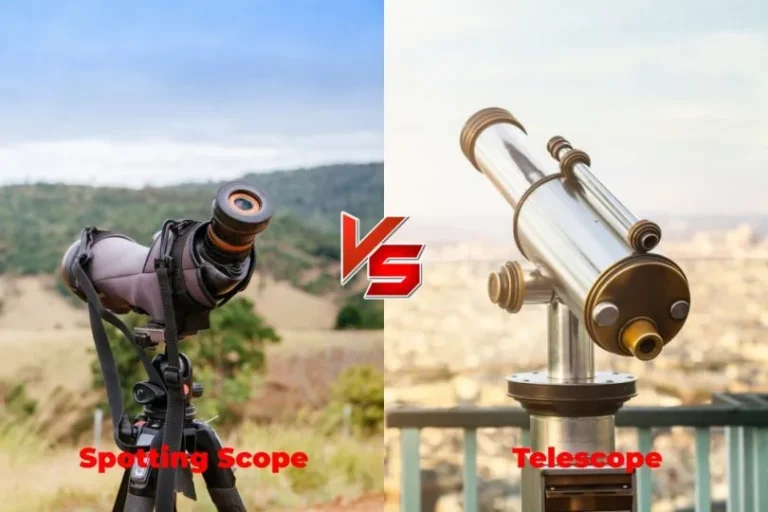
A spotting scope is essentially a small telescope designed for terrestrial use, offering higher magnification than binoculars but usually a narrower field of view and requiring a tripod. Binoculars are more portable and handheld, with lower magnification but a wider, more immediate view.
How much should I expect to spend on a spotting scope?
Prices vary widely. Basic spotting scopes can start around $100-$200, while high-end professional models can cost $1,000 or much more. For good quality birdwatching or nature viewing, expect to spend between $300-$700, and for serious target shooting or premium optics, budgets often exceed $800.
Can I use a spotting scope for astronomy?
While a spotting scope is a telescope, it's optimized for viewing distant terrestrial objects. Its magnification and field of view are generally not ideal for astronomy, where specialized astronomical telescopes offer much higher magnifications and different optical designs for viewing celestial bodies.