How Much Does a Good Spotting Scope Cost?
Figuring out how much a good spotting scope costs can feel like a guessing game, especially when you see prices all over the map. You're looking for clear views of distant subjects, whether it's a soaring hawk, a far-off target, or a detail in nature, and that clarity comes with a price tag. Understanding what drives that cost is key to making a smart purchase that fits your needs and your budget.
Our research indicates that the most significant cost drivers are the optical system and the ruggedness of the build. Cheaper scopes often cut corners on these aspects, leading to compromises in image clarity, brightness, and durability. For instance, most quality spotting scopes utilize BaK-4 prisms, a type of optical glass known for its superior refractive properties that contribute to a brighter, sharper image, a standard you'll find across many reputable brands as of 2026.
This guide will help you navigate the market and find a scope that delivers value without breaking the bank.
How Much Does a Good Spotting Scope Cost?
A good spotting scope can cost anywhere from $100 to over $1,000, depending on optical quality, magnification, and build. Expect to spend between $300 and $800 for a solid mid-range option suitable for most birdwatching and nature observation. Premium models with advanced features and superior optics can exceed $800.
How Spotting Scope Prices Break Down: Key Factors
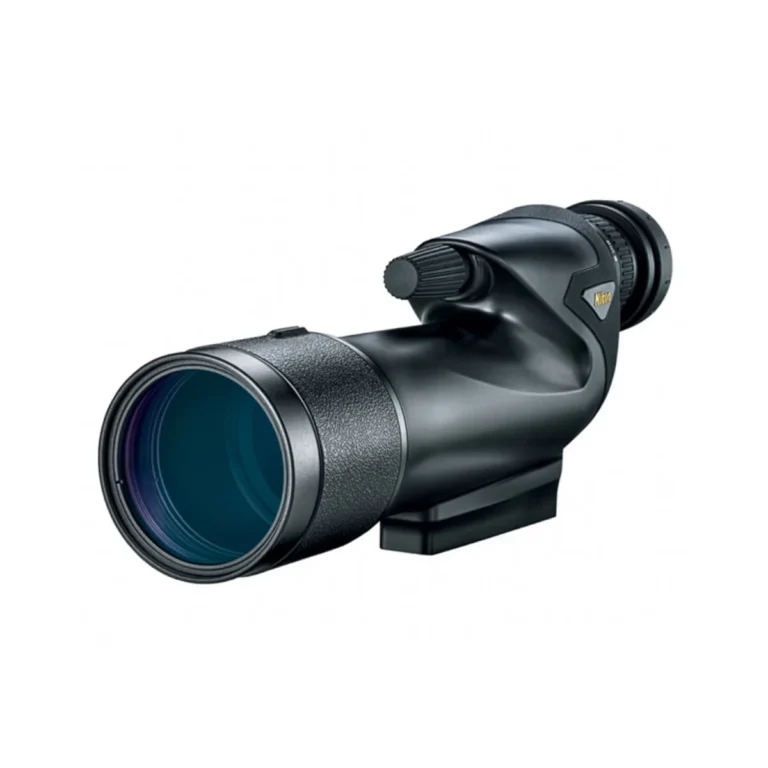
The price of a spotting scope isn't just about a number; it's a reflection of the technology, materials, and craftsmanship packed into that tube. When you're considering how much a good spotting scope costs, several core elements directly influence the final figure. Think of it like buying a car, a basic model gets you from A to B, but a high-performance vehicle with premium features will naturally cost more.
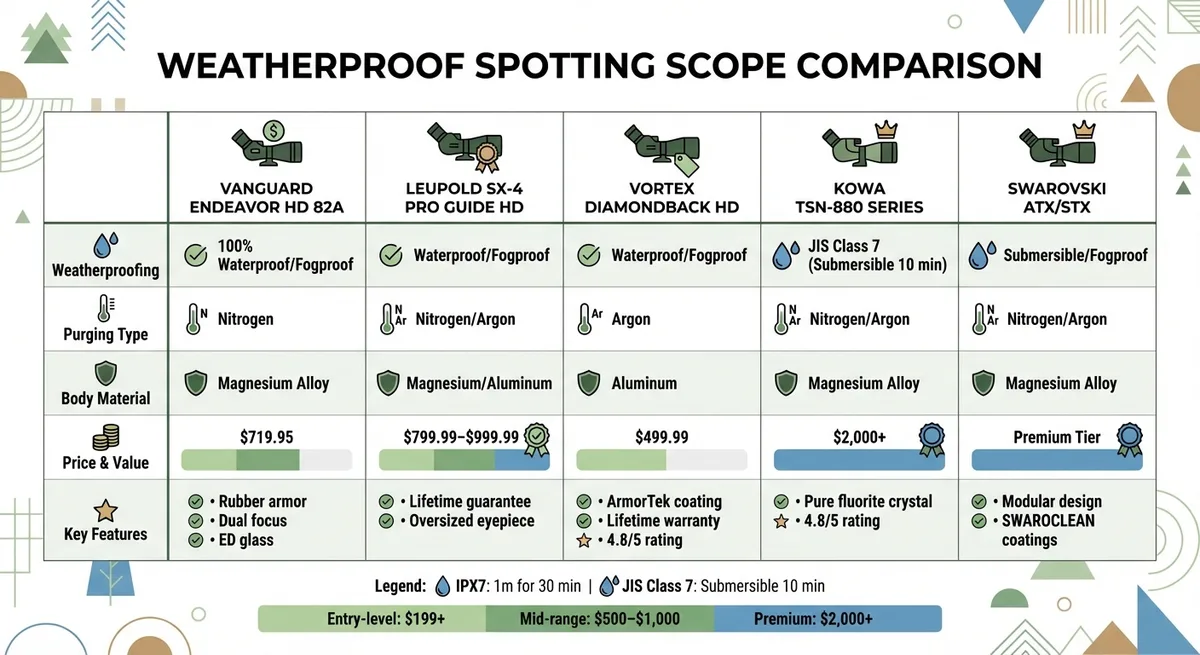
Image source: Bing (Web (fair-use with source credit))
Magnification Matters (and So Does Quality)
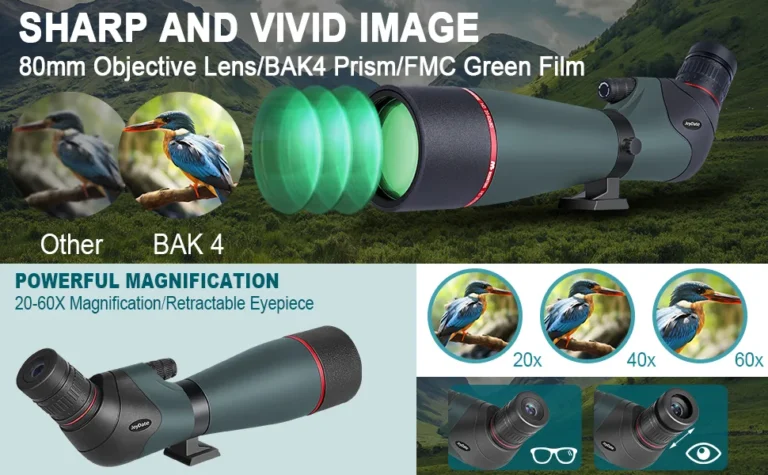
The magnification level, often expressed as a number like 20x or 60x, tells you how much larger the subject appears through the scope. A higher magnification means you can see finer details from a greater distance. However, simply slapping a big number on the scope doesn't make it good.
Here’s where quality comes into play. Pushing magnification too high without corresponding optical quality leads to a blurry, dim image filled with chromatic aberration (color fringing). Many entry-level scopes might offer high zoom ranges but lack the optical precision to render those magnifications usable.
For instance, a 60x scope with poor optics might be less effective than a 30x scope with excellent lens elements.
- Usable Magnification: Aim for a magnification range that matches your typical viewing distance and subject size.
- Image Stability: Higher magnification makes it harder to hold the image steady. A sturdy tripod is crucial.
- Optical Correction: The quality of the lenses and prisms is paramount for sharp, clear images at any magnification.
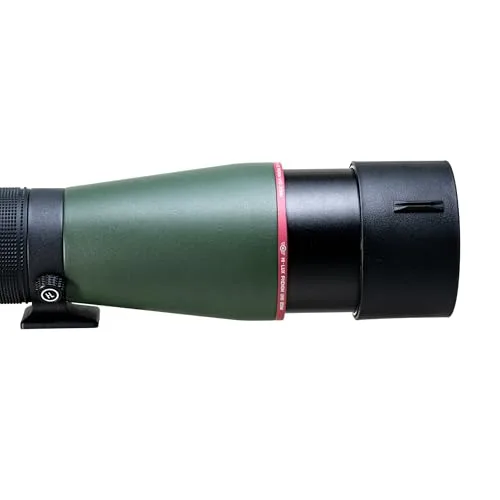
Image source: Web (Bing) / peachfrog.com (Web image (fair-use with source credit))
Objective Lens Size: Gathering More Light
The objective lens is the large lens at the front of the scope. Its diameter, measured in millimeters (mm), dictates how much light the scope can gather. A larger objective lens generally means a brighter image, especially in low-light conditions like dawn or dusk, or when viewing subjects in dense foliage.
Common objective lens diameters for spotting scopes range from 65mm to 85mm, with some larger models reaching 100mm. Scopes with larger objective lenses tend to be bulkier and heavier, and they also command a higher price. However, for serious birdwatching or wildlife observation where every bit of light matters, this feature is worth considering.
Manufacturer specifications often highlight light transmission percentages, which are also a good indicator of performance.
- Brighter Views: Larger objectives collect more light, improving performance in dim conditions.
- Size & Weight: Bigger lenses mean bigger, heavier scopes.
- Cost Factor: Larger lenses require more glass and more complex manufacturing, increasing the price.
Glass Quality and Lens Coatings: The Real Image Makers
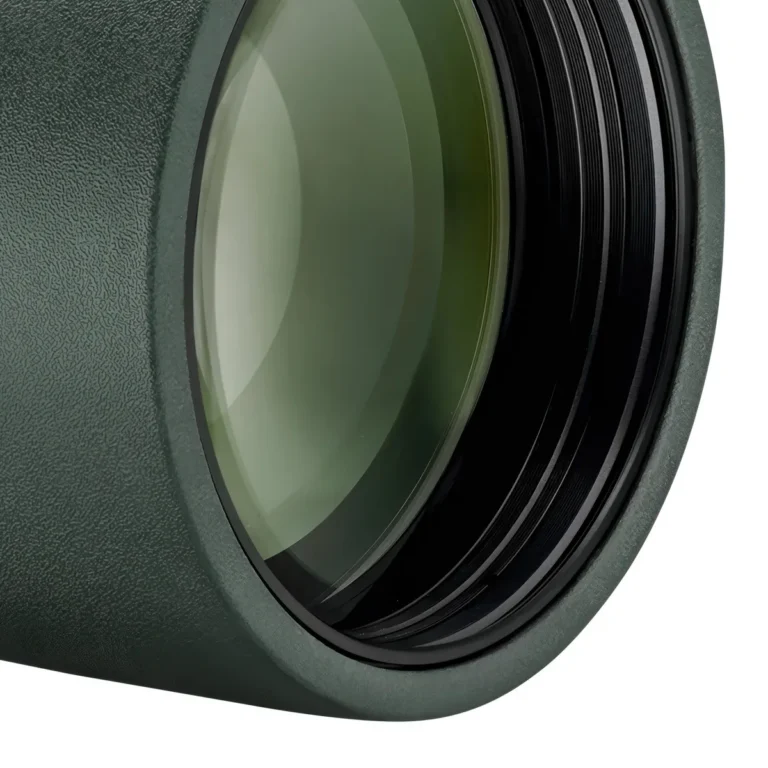
This is where many budget scopes fall short, and where premium prices are often justified. The type of glass used and the coatings applied to the lenses have a massive impact on image quality. For better spotting scopes, manufacturers use special glass like ED (Extra-low Dispersion) glass.
ED glass significantly reduces chromatic aberration, meaning you'll see a sharper image with fewer annoying color fringes around the edges of objects, especially noticeable on high-contrast areas like branches against a bright sky. On top of that, lens coatings, multiple layers applied to optical surfaces, boost light transmission and reduce internal reflections. You’ll often see terms like "fully multi-coated" (FMC) on quality scopes, indicating that multiple layers of anti-reflective coating are applied to all air-to-glass surfaces.
- ED Glass: Minimizes color fringing for a clearer, more natural view.
- Multi-Coatings (FMC): Maximize light passing through and reduce glare.
- Impact on Price: High-quality glass and advanced multi-coatings are expensive to produce.
Build Quality: Durability and Weatherproofing
Beyond the optics, how a spotting scope is constructed is crucial, especially if you plan to use it outdoors in varying conditions. A good spotting scope should be built to withstand bumps, drops, and the elements. Many reputable scopes are described as waterproof and fogproof, meaning they are sealed to prevent moisture from entering and are often filled with nitrogen or argon gas to prevent internal fogging.
This ruggedness comes from using robust materials for the housing, precision-machined internal components, and high-quality seals. While you might get away with a less durable scope for occasional backyard use, if you're heading into the field, a weather-sealed, shock-resistant body is essential. This level of engineering adds to the overall cost but ensures the scope will last and perform reliably when you need it most.
A scope that can survive a sudden downpour or an accidental knock is a worthwhile investment.
- Waterproof/Fogproof: Essential for reliable performance in varied weather.
- Nitrogen/Argon Purged: Prevents internal fogging.
- Durable Housing: Protects internal optics from shock.
Spotting Scope Costs: Price Tiers and What You Get
When you start looking at prices, spotting scopes generally fall into a few distinct categories. Each tier offers a different balance of optical performance, build quality, and features, and understanding these tiers is the quickest way to figure out where your money is best spent. As of 2026, these price ranges represent a common market segmentation.
Entry-Level Scopes: Around $100 – $300
At this price point, you can find basic spotting scopes that will offer some magnification beyond what binoculars can provide. They are often suitable for very casual observation or for getting a feel for what spotting scopes offer. However, expect compromises.
- Magnification: You might find zoom ranges up to 40x or even 60x, but the quality at the higher end of the zoom will likely be poor.
- Optics: Glass is usually standard, and coatings are minimal or absent. Chromatic aberration and softness at the edges of the field of view are common.
- Build: These scopes are generally less durable and may not be fully waterproof or fogproof. They often come with flimsy tripods or require a separate purchase for stable viewing.
- Best for: Occasional backyard birding, children’s introduction to optics, or general distant object viewing where image quality isn't paramount.
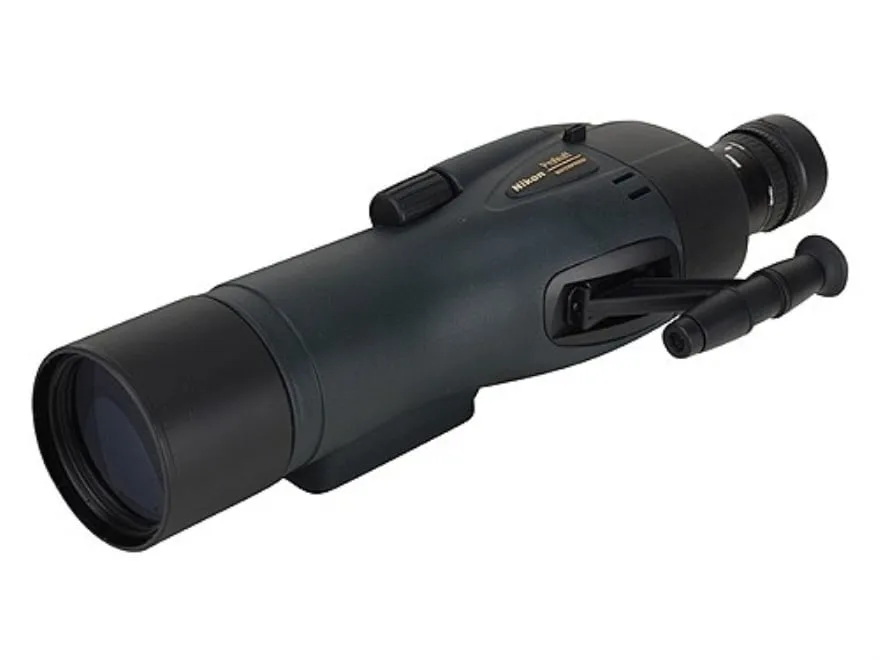
Image source: Bing (Web (fair-use with source credit))
Mid-Range Options: $300 – $800
This is often the sweet spot for many users. Scopes in this category offer a significant step up in optical quality and build. You'll find better magnification usability, brighter and sharper images, and more robust construction.
- Magnification: Typical zoom ranges might be 20-60x or 15-45x, with the full range being much more usable than on cheaper models.
- Optics: You'll start seeing better glass, sometimes with ED elements, and at least fully multi-coated lenses. This leads to noticeably better color rendition, sharpness, and light transmission.
- Build: These scopes are usually waterproof, fogproof, and more durable. They often come with a decent tripod or at least a solid tripod mount.
- Best for: Dedicated birdwatchers, nature enthusiasts, amateur astronomers, and target shooters who need reliable performance without a premium price tag.
Premium Spotting Scopes: $800+
If your budget allows and your needs demand the absolute best, premium spotting scopes deliver exceptional optical performance and rugged durability. These are built for discerning users who need clarity, brightness, and reliability under the most demanding conditions.
- Magnification: High-power zoom ranges are common, but the key is that the entire range is optically sound, often featuring fine focus adjustments.
- Optics: Expect state-of-the-art ED glass, advanced multi-coatings, and sophisticated optical designs that minimize aberrations. Images are incredibly sharp, bright, and true to life.
- Build: These are typically top-tier, built to last a lifetime with superior waterproofing, rugged housings, and premium accessories like high-quality cases.
- Best for: Professional wildlife photographers, serious ornithologists, extreme hunters, and astronomers who require the highest level of detail and performance.
Who Needs Which Spotting Scope (and What They'll Spend)
The "best" spotting scope isn't a one-size-fits-all answer; it really depends on what you plan to do with it. Your intended use cases will heavily influence the features you need, and consequently, how much you should expect to spend. We've broken down typical user profiles and their associated budget considerations.
Birdwatchers and Casual Nature Observers
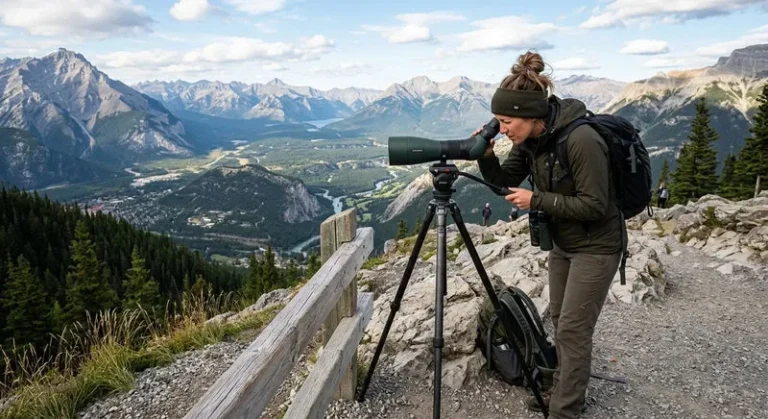
If you're heading out to your local park, nature reserve, or even just your backyard to observe birds and other wildlife, you're likely looking for a balance of portability, optical quality, and price. You need something that can bring distant subjects into clear view without being too cumbersome to carry.
- Key Features: Good magnification (around 20-60x), decent objective lens diameter (65mm is a popular compromise between size and brightness), and decent light transmission are important. Weatherproofing is a plus for field use.
- Typical Spend: Most birdwatchers find excellent value in the mid-range, spending between $300 and $800. Scopes in this bracket offer the optical clarity needed for detailed identification without weighing you down too much. Entry-level scopes might suffice for very casual users, but the optical limitations can become frustrating quickly.
Wildlife Photographers and Serious Enthusiasts
For those who want to capture images of their subjects, the demands on a spotting scope increase significantly. You'll need not only excellent optical quality for sharp images but also features that facilitate digiscoping (attaching a camera).
- Key Features: High-quality ED glass and advanced multi-coatings are non-negotiable for the sharpest, most color-accurate images. A smooth, precise focusing mechanism and a stable tripod mount are critical. Compatibility with digiscoping adapters is a major consideration. Larger objective lenses (75mm-100mm) are often preferred for maximum light gathering.
- Typical Spend: Enthusiasts and photographers are usually looking at the upper end of the mid-range or the premium tiers, expecting to spend $700 to $1,500 or more. The investment is for superior optics that translate directly into better photo quality.
Target Shooters and Hunters
Precision and durability are paramount for target shooters and hunters who rely on their spotting scopes for long-range observation and shot confirmation. They often need to function in tough environments and provide clear views of small details at extreme distances.
- Key Features: Robust construction, excellent waterproofing, and high magnification are essential. The ability to resolve fine details (like bullet holes on a paper target or subtle animal camouflage) is critical. Features like fine focus controls and a wide field of view at lower magnifications can be beneficial for scanning.
- Typical Spend: This group often invests in mid-range to premium scopes, typically costing $500 to $1,200+. Durability and optical precision for long-range target identification justify the higher expense. Some specialized hunting scopes might even exceed this, focusing on specific camouflage patterns or specialized reticles if integrated.
Common Spotting Scope Buying Mistakes (and How to Sidestep Them)
Even with a good understanding of spotting scope features, it's easy to make a misstep when you're on the hunt for a new one. These common errors can lead to disappointment, wasted money, or a scope that just doesn't meet your needs. Knowing them in advance helps you avoid them.
Paying for Power You Won't Use
One of the most tempting aspects of spotting scopes is the high magnification numbers advertised. It's easy to think "more is better," leading people to buy scopes with extreme zoom capabilities, like 70x or 80x, without considering the practical implications. At very high magnifications, the image becomes dim, shaky, and often blurry due to optical limitations and atmospheric conditions.
For most birdwatching and general nature observation, a magnification of 20-60x is more than sufficient. Pushing beyond that often yields diminishing returns and a frustrating viewing experience.
- The Pitfall: Overspending on extreme magnification that results in an unusable image.
- The Fix: Prioritize optical quality over sheer magnification numbers. A good 30x or 40x view is far better than a poor 60x view.
Ignoring Optical Quality for Price
It's tempting to grab the cheapest option available, but when it comes to spotting scopes, optical quality is king. A bargain scope might save you money upfront, but it will likely deliver washed-out colors, fuzzy details, and color fringing (chromatic aberration) that can make identifying subtle differences in plumage or animal markings impossible. This significantly diminishes the very reason you bought a spotting scope in the first place.
Remember, advanced glass elements like ED (Extra-low Dispersion) glass and comprehensive lens coatings are expensive to produce, and their absence is felt directly in image clarity.
- The Pitfall: Choosing a scope based solely on price, leading to poor image quality.
- The Fix: Focus on specifications like ED glass and "fully multi-coated" lenses. Read reviews that specifically discuss image sharpness, brightness, and color fidelity.
Forgetting the Tripod
You might find a spotting scope with incredible optics, but if you can't hold it steady, it's practically useless. High magnification amplifies even the slightest tremor, turning your subject into a bouncing blur. Many lower-cost spotting scopes come bundled with flimsy, unstable tripods that are more of a hindrance than a help.
A solid, stable tripod is not an optional accessory; it's an essential part of the viewing experience. When budgeting for a spotting scope, always factor in the cost of a good quality tripod and head.
- The Pitfall: Assuming any tripod will do, or neglecting to budget for one at all.
- The Fix: Allocate a portion of your budget for a sturdy tripod. Look for metal construction, a fluid head for smooth panning, and a stable leg design.
Spotting Scope FAQs: Your Top Questions Answered
Do I really need a tripod for a spotting scope?
Yes, absolutely. A tripod is crucial for stable viewing, especially at higher magnifications. Without one, even a slight hand tremor will make your subject bounce around, rendering the scope almost unusable for detailed observation.
A quality tripod is as important as the scope itself.
What's the difference between an angled and a straight spotting scope body?
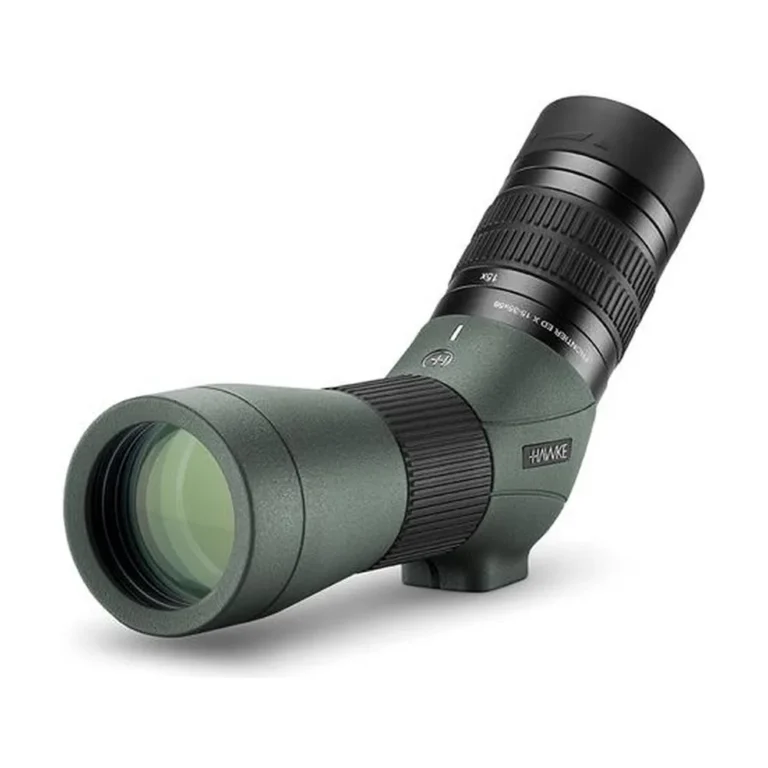
The main difference is how you look through the eyepiece. An angled body means the eyepiece tube is set at an angle to the main scope body, typically 45 degrees. This is often more comfortable for viewing subjects overhead (like birds in trees) or when using the scope on a lower tripod.
A straight body has the eyepiece directly in line with the scope tube, which can be simpler to use when scanning the horizon or when the scope is mounted higher.
How can I tell if a spotting scope is good quality just by looking at specs?
Look for specific indicators of optical quality. Prioritize scopes that mention ED (Extra-low Dispersion) glass, as this significantly reduces color fringing. Also, check for "fully multi-coated" (FMC) lenses, which indicate multiple anti-reflective layers on all glass surfaces for brighter, clearer images.
Objective lens diameter (65mm, 85mm, etc.) tells you about light-gathering ability, with larger diameters generally being brighter.
Can I use a spotting scope for stargazing?
While some spotting scopes with very large objective lenses and lower magnifications can be used for casual stargazing, they are not optimized for astronomy. Dedicated astronomical telescopes are designed with different optical formulas and higher magnification capabilities for viewing celestial objects like planets and deep-sky objects. A spotting scope might show you the moon's craters, but it won't offer the detailed views of Jupiter's moons or Saturn's rings that a proper telescope can.
How do I clean my spotting scope lenses?
Always start with a soft-bristle brush or a can of compressed air to remove loose dust and debris. Then, use a specialized lens cleaning solution and a microfiber lens cloth. Apply the solution to the cloth, not directly to the lens, and wipe gently in a circular motion.
Avoid using household cleaners or paper towels, as they can scratch the delicate lens coatings.
Making the Right Spotting Scope Choice: Your Decision Guide
Choosing the right spotting scope involves aligning its capabilities with your specific needs and budget. You've seen that prices vary widely, from under $100 for basic models to well over $1,000 for professional-grade optics. The key is to identify what "good" means for you.
Consider your primary use: Are you a casual birdwatcher, a dedicated photographer, a hunter, or an amateur astronomer? Your answer will guide you toward the features that matter most. For instance, a birder might prioritize portability and a wide field of view, while a photographer will need excellent sharpness and digiscoping compatibility.
- Prioritize Needs Over Wants: Do you truly need 60x magnification, or would a sharp 30x be more practical?
- Budget Wisely: Factor in the cost of a sturdy tripod and any necessary accessories. Don't let a low initial price fool you if the optical quality is poor.
- Research Specific Models: Once you've identified your tier, look at reputable brands and read reviews that focus on optical performance and durability, not just price. The ideal spotting scope is one that enhances your observation experience without becoming a burden.