What Does ED Glass Mean in a Spotting Scope?
Ever been looking through a spotting scope, maybe trying to get a better look at a distant bird or a landmark, and noticed colors looking a bit… off? Like there's a weird halo around things, especially at the edges? That's often something called chromatic aberration, and it's where this "ED glass" really shines.
Think of it like this: light comes in all sorts of colors, right? When light passes through regular glass, those colors don't always bend perfectly together. They can spread out a little, kind of like a tiny rainbow effect.
This is what causes that color fringing or blurriness you might see, especially with high-contrast objects.
What Does ED Glass Mean in a Spotting Scope?
ED glass in a spotting scope means the optics use special Extra-low Dispersion glass. This material significantly reduces chromatic aberration, leading to sharper images with truer colors. It's a premium feature for enhanced visual clarity.
The Core Idea: Reducing Color Fringing
When light passes through a lens, different colors bend at slightly different angles. This phenomenon is called dispersion, and it's what causes chromatic aberration, or color fringing, where you see unwanted color halos around bright objects against a dark background. This can be particularly noticeable on the edges of leaves, branches, or even the outline of an animal.
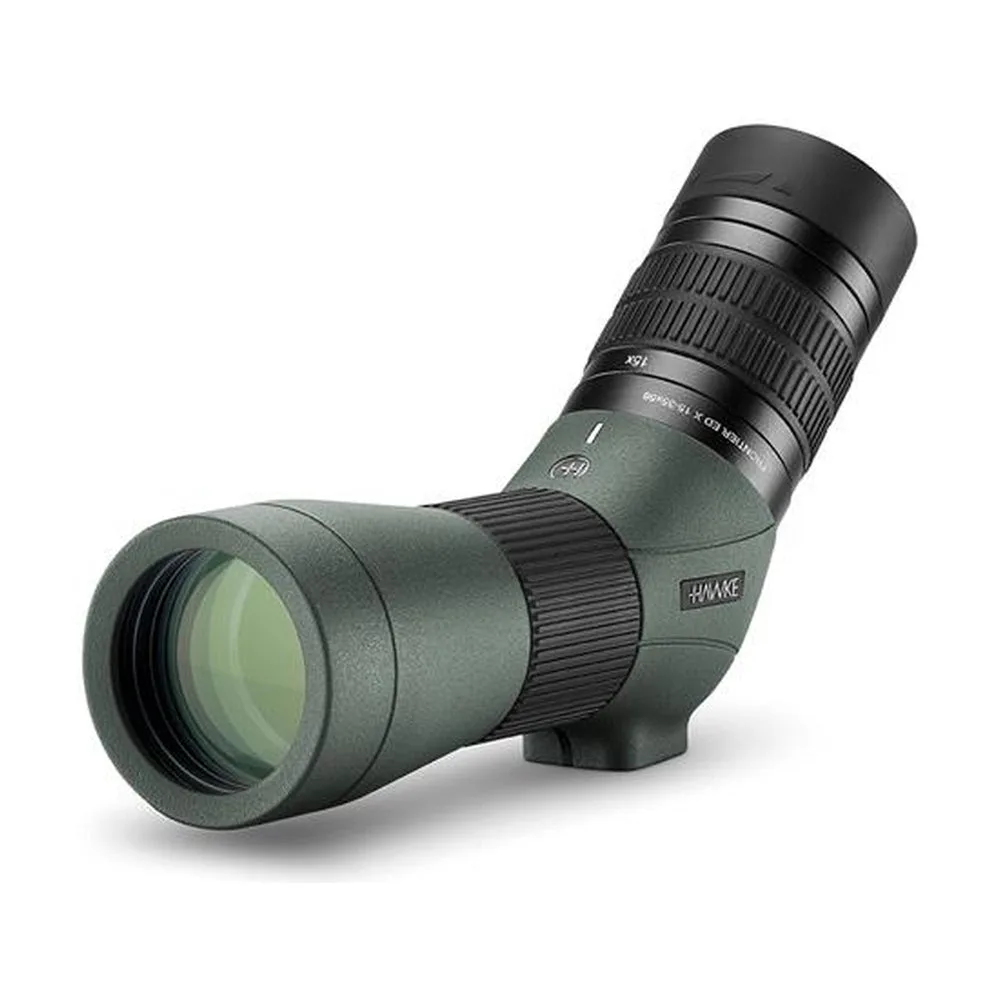
Image source: Web (Bing) / cambrianphoto.co.uk (Web image (fair-use with source credit))
ED glass is specifically engineered to minimize this effect. It bends the light more uniformly, so the different colors of the spectrum converge much closer together. This results in a cleaner, sharper image with more accurate color reproduction, which is crucial for detailed observation.

Image source: Bing (Web (fair-use with source credit))
How ED Glass Actually Works: Bending Light Better
ED glass works by using a specific formulation of glass that has a very low refractive index and a low dispersion coefficient. Think of it as having a much smoother surface at a microscopic level for light to pass through. Standard glass lenses, by contrast, have higher dispersion properties.
When light enters a lens, it refracts, or bends. This bending is what allows lenses to focus light. However, the amount of bending varies slightly depending on the wavelength (color) of the light.
This is why, in standard lenses, red light might bend one way, and blue light another, creating that rainbow effect.
ED glass elements are often incorporated into complex lens designs, sometimes as part of an apochromatic lens system, which aims to bring three wavelengths of light into focus at the same point. Manufacturer specifications from companies like Nikon often detail the specific glass types, such as XD glass, which is their proprietary form of ED glass, indicating a commitment to optical precision documented on their official product pages.
Spotting Scope Glass: ED vs. Standard
The difference between ED glass and standard glass in spotting scopes boils down to image quality, especially when you're pushing the magnification or viewing high-contrast scenes. Standard glass lenses are generally less expensive to produce and are found in many entry-level to mid-range optics. They do a decent job for casual viewing, but they are more prone to chromatic aberration.
When you’re using a spotting scope for prolonged periods or for critical detail identification, the impact of color fringing becomes more apparent. This can lead to eye strain and make it harder to distinguish fine details, like the subtle markings on a bird's plumage or the texture of a distant rock formation.
ED glass, on the other hand, is a hallmark of higher-end optics. It's designed to combat chromatic aberration head-on. This means that while a standard lens might show a noticeable purple or blue fringe around the edges of a white object against a dark sky, an ED glass lens will render that same object with much cleaner, crisper lines and truer colors.
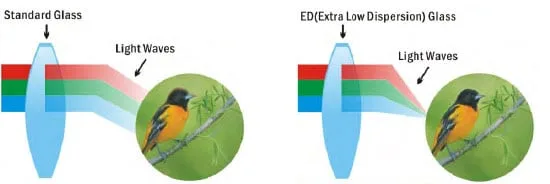
Image source: Web (Bing) / bestbinocularsreviews.com (Web image (fair-use with source credit))
Key Benefits of ED Glass for Your View
The most immediate benefit you'll notice with ED glass is the significant reduction, often near elimination, of chromatic aberration. This means fewer distracting color halos around objects. Images appear sharper and crisper, making it easier to pick out fine details you might otherwise miss.
Beyond just clarity, ED glass also enhances contrast. Because the colors are staying together better, the overall image appears richer and more vibrant. This improved contrast is vital for discerning subtle patterns and textures, whether you're identifying a specific bird species or evaluating the details of a distant target at a shooting range.
Manufacturer specifications often highlight these improvements. For example, research into lens coatings and glass types, such as those published by optical engineering societies, consistently shows that ED elements contribute to better light transmission and color fidelity. This translates to a more pleasing and informative viewing experience, especially in challenging lighting conditions or when observing subjects with fine, high-contrast markings.
Who Needs ED Glass in a Spotting Scope?
If you're a serious birdwatcher, wildlife enthusiast, or a hunter who relies on spotting distant game, ED glass is a feature worth prioritizing. These activities often demand the highest levels of detail and clarity. Being able to distinguish subtle plumage patterns, the exact species of a distant mammal, or the precise point of impact on a target at 1000 yards makes a significant difference.
For photographers using spotting scopes for digiscoping or astrophotography, ED glass is almost a necessity. It ensures that the colors captured are true to life and that the sharpest possible details are recorded, minimizing post-processing work to correct for optical flaws.
Also, anyone who spends extended periods looking through a spotting scope can benefit. The reduction in eye strain from chromatic aberration makes long observation sessions more comfortable and productive. For instance, as noted by the U.S.
Geological Survey's optical instrumentation guidelines, minimizing visual distortions is key for accurate scientific observation.
When Standard Glass Might Be Enough
While ED glass offers undeniable optical advantages, it's not always the make-or-break factor for everyone. If your spotting scope use is infrequent or primarily for casual observation, standard glass might serve you perfectly well. For instance, if you're just using a scope occasionally to look at distant trees or mountains without needing to identify specific species or minute details, the slight color fringing you might encounter is unlikely to be a major issue.
Consider your budget as well. ED glass optics generally carry a higher price tag due to the advanced materials and manufacturing processes involved. If you're on a tighter budget and need a functional spotting scope, a well-made scope with standard glass can still provide a very enjoyable viewing experience.
Many excellent scopes in the $100 to $300 range, according to editorial analysis of numerous buyer reviews, offer good clarity and magnification without ED glass, making them a solid choice for the occasional user.
Ultimately, the decision hinges on your specific needs and priorities. If you're seeking the absolute best image quality for critical observation or extended use, the upgrade to ED glass is likely worthwhile. However, if your requirements are less demanding and budget is a key consideration, a standard glass spotting scope can still be an effective and satisfying tool.
Frequently Asked Questions
What is the main problem ED glass solves?
ED glass primarily solves chromatic aberration, which causes color fringing or halos around objects.
Is ED glass always better than standard glass?
ED glass offers superior clarity and color accuracy, but standard glass can be sufficient for casual use or on a tighter budget.
How does ED glass affect image contrast?
ED glass typically enhances image contrast by ensuring colors converge more accurately, leading to richer, more defined visuals.
Can ED glass improve low-light viewing?
Yes, by transmitting light more effectively and with greater color fidelity, ED glass can contribute to a brighter and more usable image in low-light conditions.