What Is a Spotting Scope Used For?
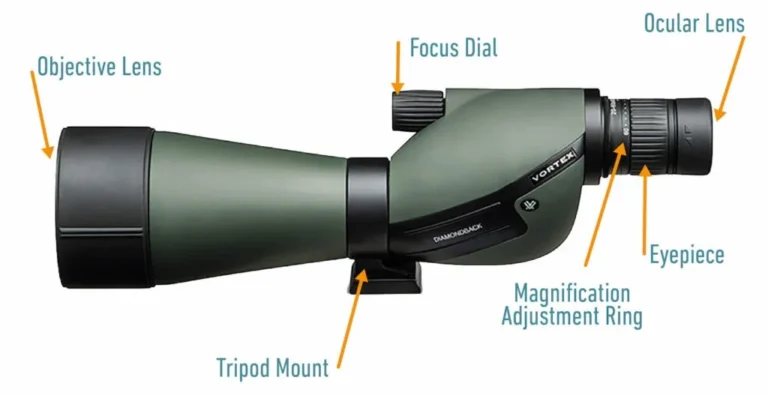
So, you're looking to understand what a spotting scope is actually used for, beyond just being a fancy telescope. It’s a specialized optical tool designed to bring distant subjects into sharp, magnified focus, far beyond what regular binoculars can offer. Think of it as your secret weapon for seeing the fine details when you're too far away to get closer.
The key is its high magnification, often ranging from 20x to over 60x, which typically requires a tripod for stable viewing. Manufacturer specifications confirm that this power is crucial for detailed observation of specific subjects at considerable distances.
What Is a Spotting Scope Used For?
A spotting scope is primarily used for detailed observation of distant subjects that are impossible to see clearly with the naked eye or regular binoculars. Its main purpose is to provide high magnification and clarity for identifying specific features of objects far away.
Spotting Scope vs. Binoculars: Seeing the Difference
It’s easy to confuse spotting scopes and binoculars, as both are optical instruments for viewing distant things. However, they serve quite different needs, and knowing the difference is key to choosing the right tool. Binoculars are designed for general viewing, offering a wider field of view and moderate magnification that’s easy to hold steady.
They’re great for scanning landscapes, following fast-moving subjects like birds in flight, or general observation where you need to take in a broad scene.
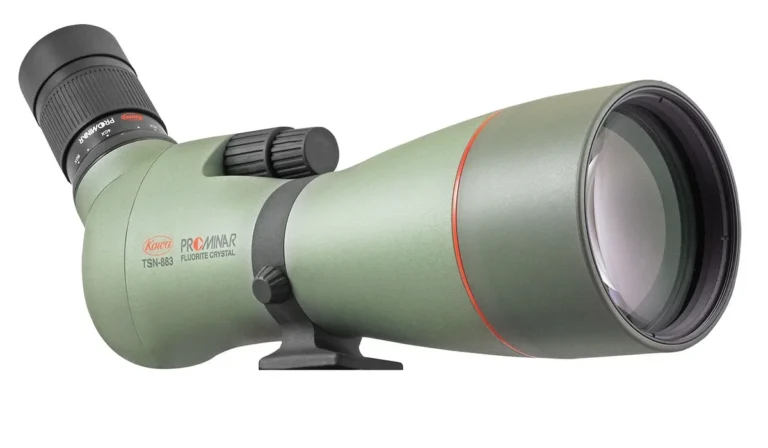
A spotting scope, on the other hand, is built for detailed inspection of a single, distant object. It’s a monocular, meaning you look through it with one eye, and its magnification is significantly higher, often 20x to 60x or more. This high power, while providing incredible detail, makes hand-holding impossible for steady viewing.
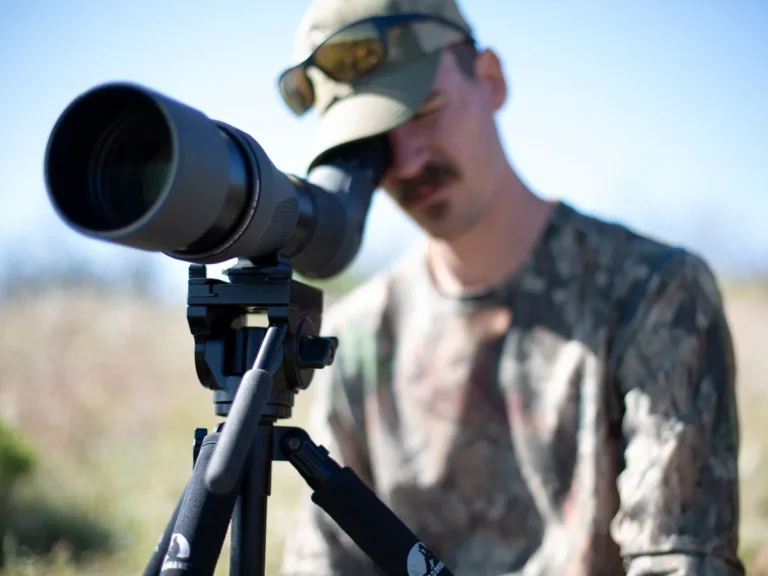
Therefore, spotting scopes are almost always designed to be mounted on a tripod. This distinction is critical: binoculars are for general scanning and quick identification, while spotting scopes are for precise, detailed observation and confirmation.

Image source: Web (Bing) / aceoptics.co.uk (Web image (fair-use with source credit))
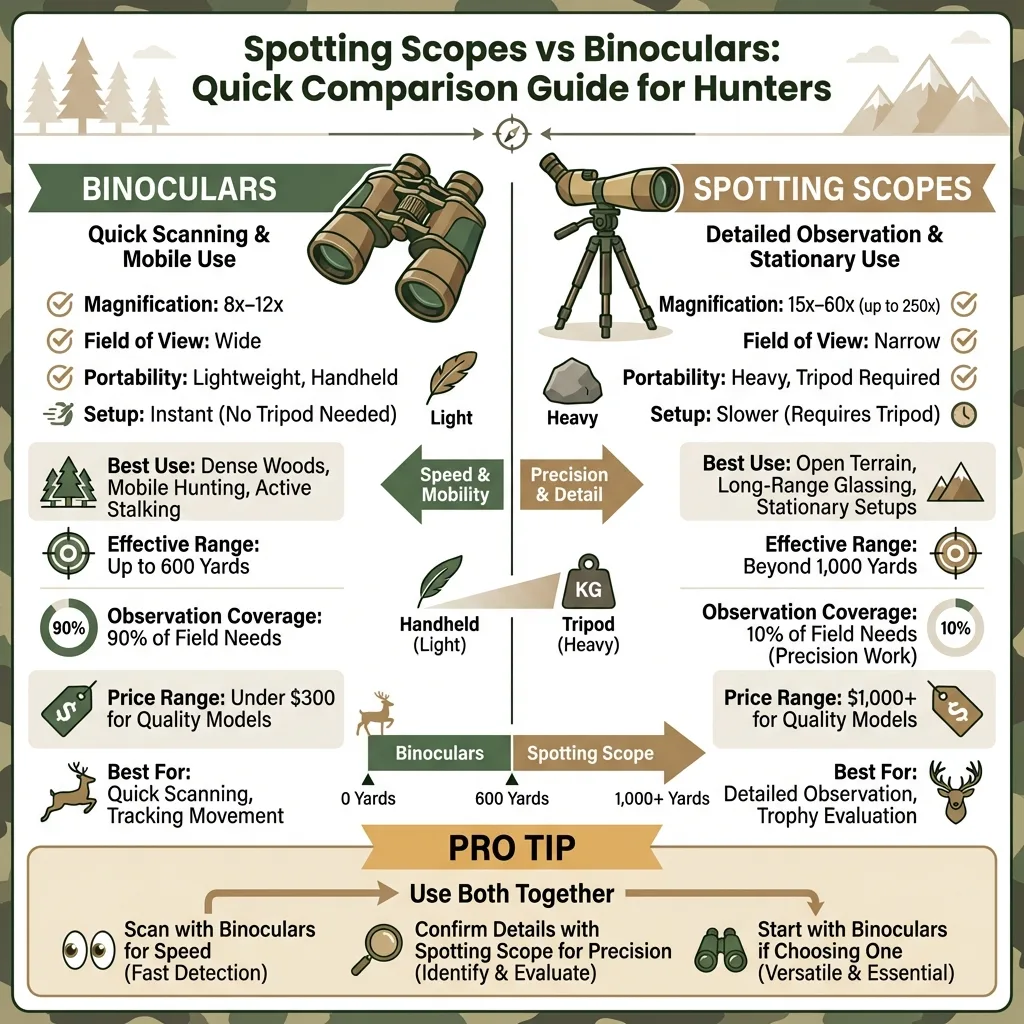
Image source: Web (Bing) / scopeitoutdoors.com (Web image (fair-use with source credit))
When You Absolutely Need a Spotting Scope: Key Use Cases
The decision to grab a spotting scope over binoculars hinges on the need for extreme detail at a significant distance. If you find yourself squinting to make out crucial features or wishing you could zoom in further on a specific item, that’s your cue for a spotting scope. Its purpose isn't to survey the whole scene but to dissect a small part of it with incredible clarity.
Birdwatching and Wildlife Observation
For birders and wildlife enthusiasts, a spotting scope is often considered essential equipment. Imagine trying to identify a specific raptor perched on a distant crag or a shy mammal grazing in a meadow several hundred yards away. Binoculars might confirm the subject's presence, but a spotting scope allows you to see the subtle plumage patterns, horn shapes, or distinct markings that are vital for accurate identification.
This capability is invaluable for serious enthusiasts and researchers alike, enabling detailed study without disturbing the animals. It’s also extremely helpful for simply enjoying the intricate details of nature from a comfortable distance, enhancing the overall viewing experience.
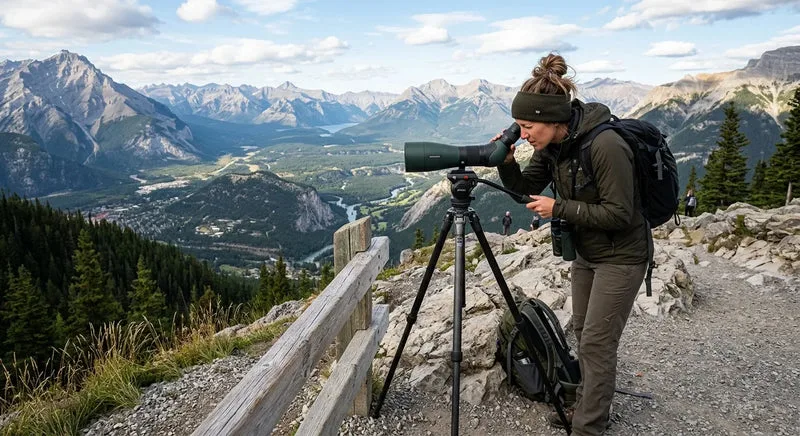
Image source: Web (Bing) / zoomble.eu (Web image (fair-use with source credit))
Shooting, Hunting, and Precision Viewing
In disciplines requiring precision at range, like target shooting or hunting, a spotting scope is indispensable. Marksmen at a shooting range need to see exactly where their bullets are impacting the target, often from hundreds of yards away. Binoculars simply don't offer the necessary magnification or precision for this.
Hunters use spotting scopes for "glassing" terrain, which involves systematically scanning large areas for game. This allows them to identify animals, assess their size and condition, and even confirm species before committing to a stalk or shot. This capability saves time, effort, and promotes more ethical hunting practices by ensuring shots are taken only when an animal can be clearly identified and is within optimal range.
Features That Matter for Spotting Distant Detail
When you're looking at a spotting scope, several key features dictate how well it performs its primary job: bringing distant objects into clear, magnified view. It’s not just about the number on the magnification dial; a combination of factors contributes to its effectiveness. Understanding these will help you appreciate why certain scopes cost more or perform better in specific situations.
Magnification and Clarity
The most obvious feature is magnification. Spotting scopes typically offer zoom capabilities, often ranging from 20x to 60x or even higher. This means an object can appear 20 to 60 times closer than it is to the naked eye.
However, higher magnification isn't always better. Beyond a certain point (which varies by scope quality and atmospheric conditions), increased magnification can lead to a narrower field of view, reduced brightness, and more pronounced image shake.
Equally important is the optical quality that provides clarity. This relates to the lenses used and how they are treated. High-quality glass, such as that found in premium models, combined with advanced coatings (like anti-reflective coatings), minimizes light loss and chromatic aberration (color fringing).
Per manufacturer specifications, advanced lens elements like ED (Extra-low Dispersion) glass are used to ensure true-to-life color rendition and exceptional sharpness, making those distant details pop without distortion.
Stability and Mounting Options
Because spotting scopes have high magnification, any tremor from your hands is amplified, turning your view into a blurry mess. This is why almost all spotting scopes are designed to be used with a tripod. The scope will have a standard tripod mount, typically a 1/4"-20 thread, allowing it to securely attach to almost any camera tripod or specialized spotting scope tripod.
The stability provided by a tripod is crucial for two main reasons:
- Precision Viewing: It allows you to hold the magnified image steady enough to discern fine details, track moving subjects smoothly, and make accurate observations.
- Reducing Fatigue: Constantly fighting to hold a high-magnification image is exhausting. A tripod supports the weight and eliminates the effort, allowing for longer, more comfortable viewing sessions.
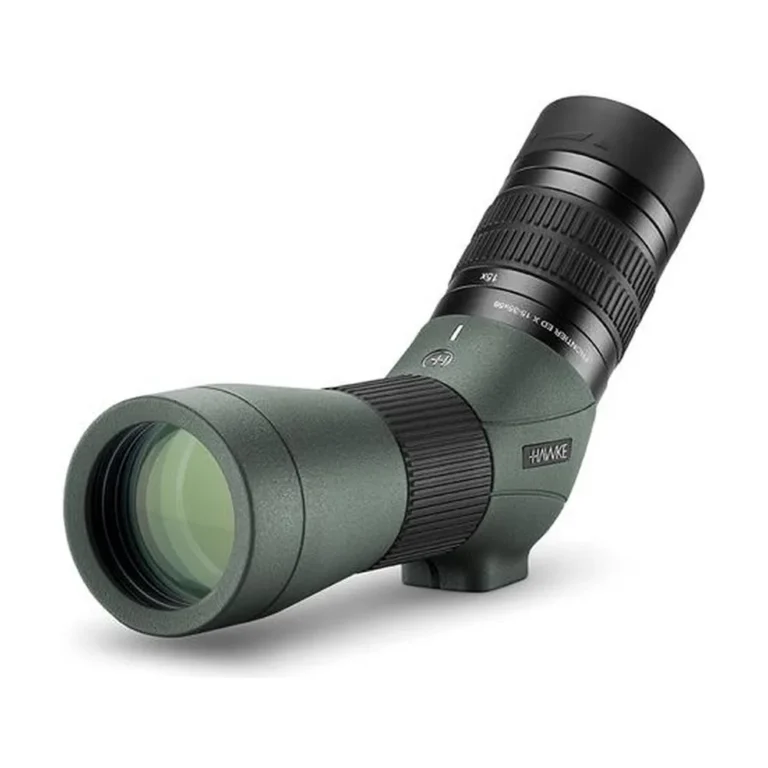
Some scopes also offer different eyepiece options (angled vs. straight) which can affect comfort and ease of use depending on your viewing situation. An angled scope, for example, is often more comfortable for observing subjects overhead or when scanning across a wide landscape.
Common Pitfalls When Using a Spotting Scope
Even with the right equipment, it's easy to make mistakes that hinder your viewing experience. One of the most common issues is neglecting to use a tripod. Trying to hand-hold a scope with 40x magnification is like trying to read fine print while riding a roller coaster, you'll see very little clearly.
Another frequent error is focusing too much on extreme magnification. Pushing the zoom to its maximum setting often results in a dimmer, shakier image with a narrow field of view, making it harder to find and track your subject.
Atmospheric conditions also play a huge role, and many users don't account for them. Hazy or turbulent air can distort distant images, a phenomenon known as "heat shimmer." Pushing magnification in these conditions will only exaggerate the distortion. Finally, improper maintenance can degrade performance over time.
Letting dust or grime build up on the lenses or internal prisms can significantly reduce image brightness and clarity, a problem that’s easily avoidable with basic care.
Expert Tips for Getting the Most Out of Your Spotting Scope
To truly maximize your spotting scope’s potential, consider a few expert-backed strategies. Firstly, always pair it with a stable tripod. This isn't just a suggestion; it's fundamental for clear, detailed viewing.
Look for a tripod that’s sturdy enough to handle the weight of your scope and resistant to wind.
When you're out in the field, particularly in warmer conditions, give your scope time to acclimate to the ambient temperature to minimize heat shimmer. Aggressively zooming in too soon can also obscure details. Instead, try to find your subject at a lower magnification and then slowly increase the zoom to the level that provides the best balance of detail and stability for that specific viewing situation.
Finally, keep your optics clean. A microfiber lens cloth and a lens brush are inexpensive tools that will preserve image quality for years.
Frequently Asked Questions About Spotting Scopes
What is the primary difference between a spotting scope and binoculars?
A spotting scope offers significantly higher magnification (20x-60x+) and is designed for detailed observation of single, distant subjects, almost always requiring a tripod. Binoculars have lower magnification (7x-15x), a wider field of view, and are intended for general scanning, locating subjects, and observing broader scenes, typically used handheld.
Can I use a spotting scope for stargazing?
While some spotting scopes can offer basic views of bright celestial objects like the moon’s craters, they are not designed for serious astronomical observation. Dedicated telescopes offer far superior magnification, light-gathering capabilities, and specialized optics for viewing planets, nebulae, and galaxies. Spotting scopes are optimized for terrestrial (land-based) viewing.
How do I know if I need a spotting scope?
If you find yourself frequently trying to identify distant objects (like birds, wildlife, or targets) and your binoculars don't provide enough detail or magnification, you likely need a spotting scope. It's essential for activities where precise, close-up views of far-off subjects are critical.
What does "digiscoping" mean?
Digiscoping is a technique that involves attaching a camera, usually a smartphone or DSLR, to a spotting scope to capture high-magnification photos or videos. This effectively extends the reach of your camera's lens, allowing you to photograph distant wildlife or landscapes you otherwise couldn't capture.
How important is the objective lens diameter?
The objective lens diameter (e.g., 65mm, 80mm) determines how much light the scope can gather. A larger objective lens generally results in a brighter image, especially in lower light conditions or at higher magnifications. However, larger lenses also mean a heavier and bulkier instrument.