How to Use Binoculars With Glasses
If you wear glasses, you know the struggle. You lift binoculars to your eyes, and instead of a crisp view, you get black rings, a cramped field, or fogged-up lenses. But learning how to use binoculars with glasses doesn't have to be frustrating.
It comes down to one key spec and a few adjustments you can do in seconds.
Manufacturer specifications indicate that the minimum eye relief for comfortable glasses use is 15 millimeters, but 18 to 20 mm is the sweet spot for most people. That single number determines whether you see the full image or fight with dark edges. As of 2026, most mid-range binoculars list this spec clearly on the box.
Let's walk through exactly what to look for and how to set up your binoculars so they work with your glasses, not against them.
Quick Answer
Adjust the eyecups so they don't push your glasses away. Check your binoculars' eye relief spec. 18 mm or more works best. Set the IPD, then focus and adjust the diopter.
Image source: Bing (Web (fair-use with source credit))
The Core Problem: Why Glasses and Binoculars Don't Always Play Nice
Here's the short version of the problem. Your glasses sit several millimeters in front of your eyes. Binoculars are designed so your eye sits right at the eyepiece.
That gap between your glasses and your eye pushes your eye further back from the binoculars. The result? You can't see the full image.
You get a view that looks like you're looking through a tunnel. Or worse, those black crescent edges that steal the corners.
That black ring isn't a defect. It's a geometry problem. The eyepiece projects a circle of light.
Your eye isn't in the right spot to catch the whole thing. If your glasses push your eye too far back, you miss the edges. If the eyecups press hard into your frames, they can push your glasses out of alignment.
Everything gets blurry.
There's also the fogging issue. Your body heat hits the cool metal or rubber of the eyepiece. Your glasses steam up.
That's especially annoying when you're trying to spot a bird or catch a quick play.
The decision tree here is simple. Either your binoculars have enough eye relief to let you keep your glasses on, or they don't. If they don't, you'll need to take your glasses off and refocus.
Or upgrade to a pair with longer eye relief. Most modern binoculars aimed at birders, hunters, and sports fans do have enough. The trick is knowing how to set them up.
The biggest mistake people make is skipping the eyecup adjustment. They lift the binoculars and look, then wonder why it's terrible. If you've ever handed your binoculars to a friend who wears glasses and heard "I can't see anything," that's the problem.
The good news is, it's fixable in about ten seconds.
The One Spec That Makes or Breaks It: Eye Relief
Eye relief is the distance between your eye and the binoculars' eyepiece lens where you can still see the full field of view. It's measured in millimeters. Think of it as the sweet spot.
If your eye is too close or too far, the image gets cut off.
For glasses wearers, eye relief is the single most important number on the spec sheet. The National Park Service recommends looking for at least 15 mm. In practice, that's the bare minimum.
Our research across popular binocular models shows that most people with glasses need 18 mm to 20 mm for a comfortable, full view. Binoculars with 15 mm eye relief will work if you press your glasses tight against the eyecups. But it's not comfortable, and you'll still lose some field.
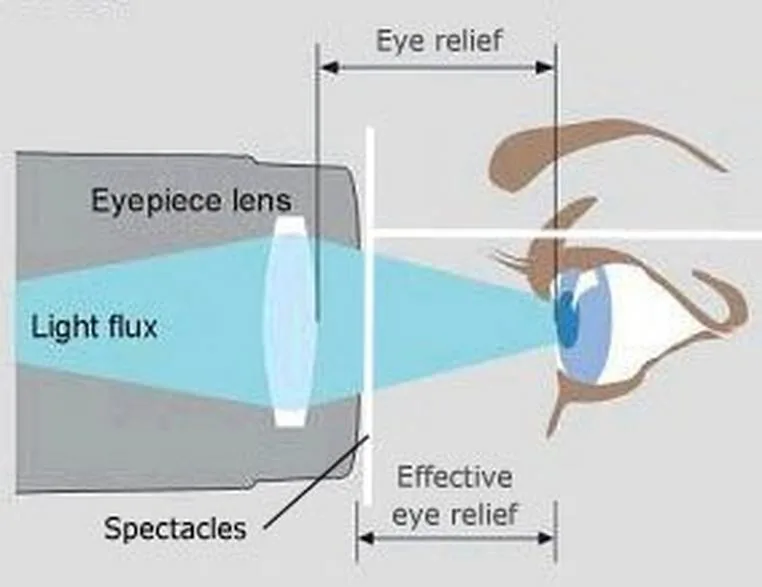
Image source: Bing (Web (fair-use with source credit))
How do you find this number? It's listed in the binoculars' specifications. Usually it's under "eye relief" or "exit pupil." If you own a pair and can't find the spec, check the manufacturer's website or the manual.
Aggregated user reviews also often mention whether a model works well with glasses.
Here's a quick reference for what different eye relief values mean for glasses wearers:
| Eye Relief Value | Typical Experience with Glasses |
|---|---|
| 10–14 mm | Almost impossible to see the full image. You'll get black rings. |
| 15–17 mm | Barely usable. You need to press glasses into the eyecups. |
| 18–20 mm | Comfortable. Full field of view with most glasses frames. |
| 21 mm and above | Excellent. Plenty of room for thick frames or sunglasses. |
If you're shopping for new binoculars, prioritize models with at least 18 mm of eye relief. That's the sweet spot. If you're dealing with an older pair that has less, you'll need to rely on the next section's tricks to get the best view possible.
Step-by-Step Workflow: Setting Up Your Binoculars for Glasses Wearers
This is the how-to part. Follow these steps in order. Each one builds on the last.
If you skip a step, you'll end up with a blurry or cramped view.
Step 1: Check Your Eye Relief Spec
Before you do anything, find the eye relief number for your binoculars. Look on the barrel, the box, or the manufacturer's site. Write it down.
If it's below 15 mm, the workflow gets harder, and you may need to take your glasses off. If it's 18 mm or above, you're in good shape.
Step 2: Adjust the Eyecups (Twist or Fold)
Most binoculars have adjustable eyecups. There are two types: twist-up and fold-down. The goal is to bring your eye closer to the eyepiece while keeping your glasses on.
If you have twist-up eyecups, turn them fully counterclockwise to lower them. That reduces the distance between your glasses and the lens. If you have fold-down rubber eyecups, roll them down.
That does the same thing.
The key is to lower the eyecups so your glasses sit as close to the binoculars as possible without touching. You want a small gap to avoid scratching your lenses. If you still see black rings, try lowering the eyecups one more click.
Step 3: Set the Interpupillary Distance (IPD)
This is the distance between your pupils. Binoculars have a hinge that lets you adjust the width of the barrels. Hold the binoculars up to your eyes while wearing your glasses.
Move the barrels closer together or farther apart until you see a single, clear circle instead of two overlapping circles.
This step is the same whether you wear glasses or not. It's fast. Do it before you focus.
Step 4: Master the Diopter Adjustment
The diopter ring compensates for differences between your left and right eye. Most people have one eye that's slightly stronger. The diopter lets you fine-tune the focus for that eye.
Here's the trick for glasses wearers. Close your right eye or cover the right objective lens. Use the center focus wheel to get a sharp image with your left eye.
Then close your left eye and use the diopter ring (usually near the right eyepiece) to sharpen the image for your right eye. Do this while wearing your glasses. Your prescription is already in your glasses, so you're just adjusting for any residual difference.
Once set, you can use the center focus wheel for the rest of the day. The diopter stays put.
The Twist-Up vs. Fold-Down Decision: Which Eyecup Setting is Right?
Eyecups aren't just for comfort. They're the main tool for matching your binoculars to your glasses. The type of eyecup on your binoculars determines how you adjust them.
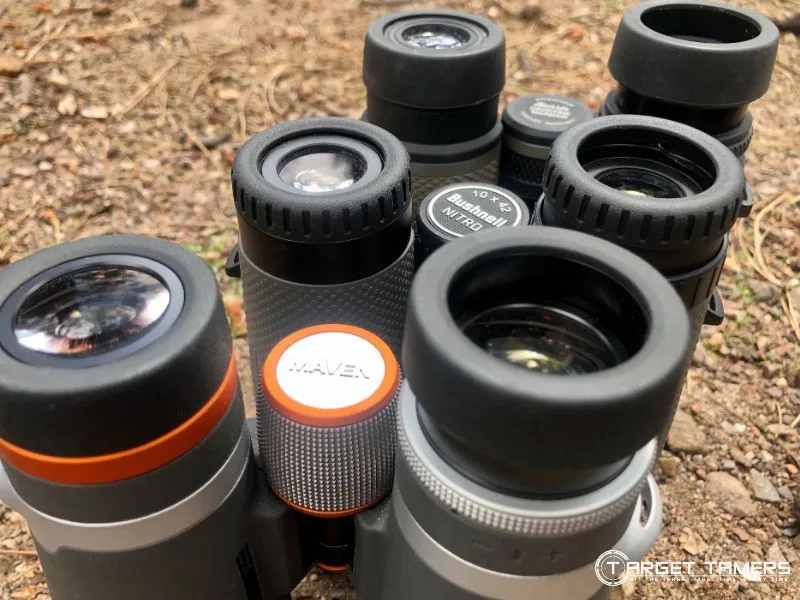
Image source: Bing (Web (fair-use with source credit))
Twist-up eyecups are the most common. They have two or three click stops. When fully extended, they're for people without glasses.
When fully retracted, they're for glasses wearers. Some models have intermediate stops. That's useful if your glasses are thin or you want to experiment.
Fold-down rubber eyecups are usually found on older or budget binoculars. They're simple. You just roll them down.
The downside is that they don't have click stops, so you have to guess the right height. But they work just fine for glasses wearers.
Here's the decision tree:
- If your binoculars have twist-up eyecups, retract them fully. If you still see black rings, try raising them one click. Yes, it sounds backwards. But sometimes the extra distance from a partially raised eyecup gives your eye a better position.
- If your binoculars have fold-down eyecups, roll them down all the way. If you still have issues, try holding the binoculars slightly away from your glasses. That's not ideal, but it works in a pinch.
- If your binoculars have non-removable eyecups that don't adjust, you're stuck. You'll need to either take your glasses off or buy a pair with adjustable eyecups.
One more tip. If your glasses have thick frames, you might need to retract the eyecups fully and then hold the binoculars just a hair away from your face. That extra millimeter can make a difference.
Troubleshooting: What to Do When You Still See Black Rings
You've adjusted the eyecups. You've set the IPD. You've done the diopter.
And you still see black rings. Don't panic. There are a few things left to try.
Check your eye relief again. If your binoculars have 15 mm or less, no amount of adjustment will fix it entirely. You're fighting physics. The best you can do is hold the binoculars as close to your glasses as possible and accept a slightly reduced field of view.
If you're in the market for a new pair, this is your sign to look for 18 mm or more.
Try a different eyecup position. If you have twist-up eyecups, try one click up instead of fully retracted. For some people, that extra distance actually helps. It sounds counterintuitive, but it works because your eye socket and glasses angle change the effective distance.
Adjust your glasses position. Push your glasses closer to your eyes. If your glasses are sitting low on your nose, that adds extra distance. A quick push up can make a big difference.
Clean your lenses. Smudges on your glasses or binoculars can mimic the look of black rings. It's worth a quick wipe with a microfiber cloth.
Try without glasses. If you have mild nearsightedness, you might be able to use the binoculars without glasses by simply adjusting the focus. That's not an option for astigmatism, but it's worth a quick test to isolate the problem.
If none of this works, your binoculars simply don't have enough eye relief for glasses. That's not a failure on your part. It's just a spec mismatch.
The fix is either a different pair of binoculars or switching to contact lenses. For most modern binoculars, the steps above will get you a full, clear view.
Real-World Scenarios: Birding, Sports, and Stargazing with Your Glasses
The setup process is the same no matter what you're watching. But each activity throws a different curveball at glasses wearers. Here's how to handle the most common ones.
Birding. You're moving fast. A bird flits into view, and you have seconds to lock on. The problem is that your glasses can fog up when you're breathing hard on a cool morning.
The fix is to keep a microfiber cloth in your pocket and wipe your glasses before you lift the binoculars. Also, set your diopter before you head out. Don't try to adjust it in the field.
Birding binoculars with 18 to 20 mm of eye relief are the standard. They give you the fastest setup.
Sports and concerts. You're in a crowd. People bump into you. Your glasses might get knocked sideways.
The trick is to keep your eyecups fully retracted so your glasses sit close to the binoculars. That reduces the lever arm if someone jostles you. If you're using binoculars with a narrow field of view, you'll have to move your head more to track the action.
Just keep your glasses pressed close and adjust your focus wheel quickly.
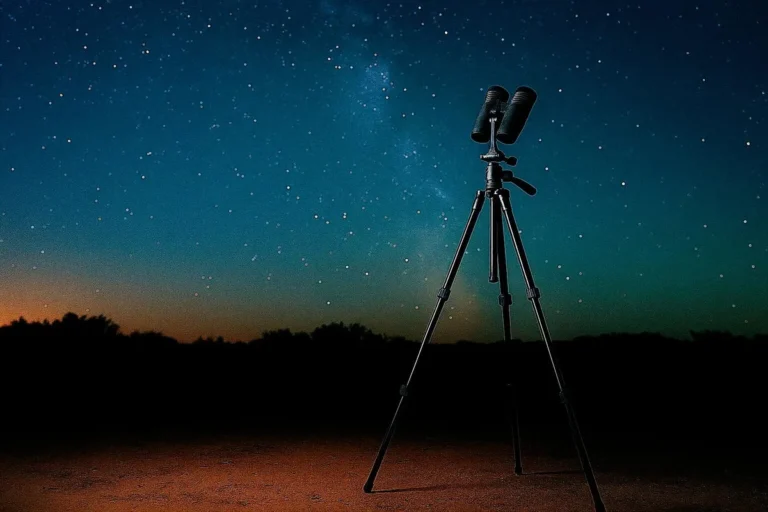
Stargazing. You're looking up. Your glasses might slide down your nose. The fix is to tilt your head back slightly and push your glasses up before you lift the binoculars.
Stargazing often requires longer sessions, so comfort matters. If your binoculars have 20 mm or more of eye relief, you can keep your glasses on for an hour without strain. If you have astigmatism, keeping your glasses on is essential.
You won't get sharp stars without them.
Hunting. You're in low light. Your glasses might catch glare from the sun or a headlamp. The fix is to use binoculars with fully multi-coated lenses.
Those coatings reduce reflections and let more light through. Also consider a pair with a rubberized grip. Your hands might be cold, and you don't want to fumble with the eyecups.
Travel and hiking. You're packing light. Compact binoculars often have shorter eye relief. That's a tradeoff.
If you need glasses, look for a compact model that still offers 16 mm or more. Otherwise, you'll end up with a tunnel view. Our research shows that many compact binoculars sacrifice eye relief to save weight.
Check the spec before you buy.
Quick Reference: The Glasses-Wearer's Setup Checklist
Here's a condensed version of everything we've covered. Use this as a cheat sheet when you're in the field or adjusting a new pair.
| Step | Action | Time |
|---|---|---|
| 1 | Check eye relief spec (aim for 18 mm+) | 10 seconds |
| 2 | Retract or fold down eyecups | 5 seconds |
| 3 | Set IPD by moving barrels until one circle | 5 seconds |
| 4 | Adjust center focus for left eye | 5 seconds |
| 5 | Adjust diopter for right eye | 10 seconds |
| 6 | Test for black rings; adjust eyecups if needed | 10 seconds |
A few extra reminders.
- Clean your glasses and binocular lenses before you start. Smudges ruin the view.
- If you wear progressive lenses, you might need to tilt your head slightly. The bottom of the lens is for reading. The top is for distance. Use the top part.
- If you wear sunglasses over your prescription glasses, you'll need extra eye relief. Look for 22 mm or more.
- Store your binoculars with the eyecups extended. That protects the rubber. Retract them only when you're using them with glasses.
- If you share binoculars with someone who doesn't wear glasses, twist the eyecups back up before handing them over. They'll thank you.
This checklist works for any pair of binoculars. It's the same process whether you're using a budget pair or a high-end model. The only variable is the eye relief.
If that number is too low, no amount of adjustment will fix it.
Frequently Asked Questions
Will any binoculars work with glasses?
No. Binoculars with eye relief below 15 mm are very difficult to use with glasses. You'll get black rings and a reduced field of view.
Look for 18 mm or more for comfortable use.
How do I know if my binoculars have enough eye relief?
Check the manufacturer's specifications. The number is usually listed on the product page, the box, or the manual. It's measured in millimeters.
If you can't find it, search the model number online.
Can I use binoculars with progressive lenses?
Yes. Use the top portion of your progressive lenses. That's the distance correction.
Tilt your head slightly if needed. The setup steps are the same as with single-vision lenses.
Why do I see black edges when I use binoculars with glasses?
Black edges mean your eye is too far from the eyepiece. Retract or fold down the eyecups. If that doesn't help, your binoculars likely don't have enough eye relief for your glasses.
Should I take my glasses off when using binoculars?
Only if you don't have astigmatism. If you're nearsighted, you can focus the binoculars to compensate. But if you have astigmatism, you need your glasses to see a sharp image.
Binoculars can't correct astigmatism.
How do I clean my binoculars without scratching the lenses?
Use a blower or soft brush to remove dust first. Then use a microfiber cloth with a drop of lens cleaning solution. Never use your shirt or paper towels.
That will scratch the coatings.
What's the best magnification for glasses wearers?
8x is the most common and recommended. It offers a wide field of view and stable image. 10x is fine but harder to hold steady. Higher magnifications like 12x or 15x require a tripod and have shorter eye relief.