What Magnification Is Best for Hunting
If you're asking what magnification is best for hunting, you've probably noticed the answer changes depending on who you ask. Some guys swear by a fixed 4x. Others run a 6-24x.
Plenty of hunters just grab whatever came on the rifle they bought. The truth is, the right magnification depends on where and how you hunt. Put too much scope on a brush gun and you'll fight tunnel vision all day.
Put too little on a long-range rig and you'll struggle to see your target.
Manufacturer specifications show that a 3-9×40 has been the best-selling hunting scope configuration for decades. That's no accident. It covers the widest range of realistic hunting scenarios from 50 to 250 yards.
It also offers decent low-light performance and manageable weight. But the best choice for you could be a fixed 4x, a 1-6x LPVO, or a 4-16x depending on your terrain, game, and typical shot distances. Let's walk through how to make that call step by step.
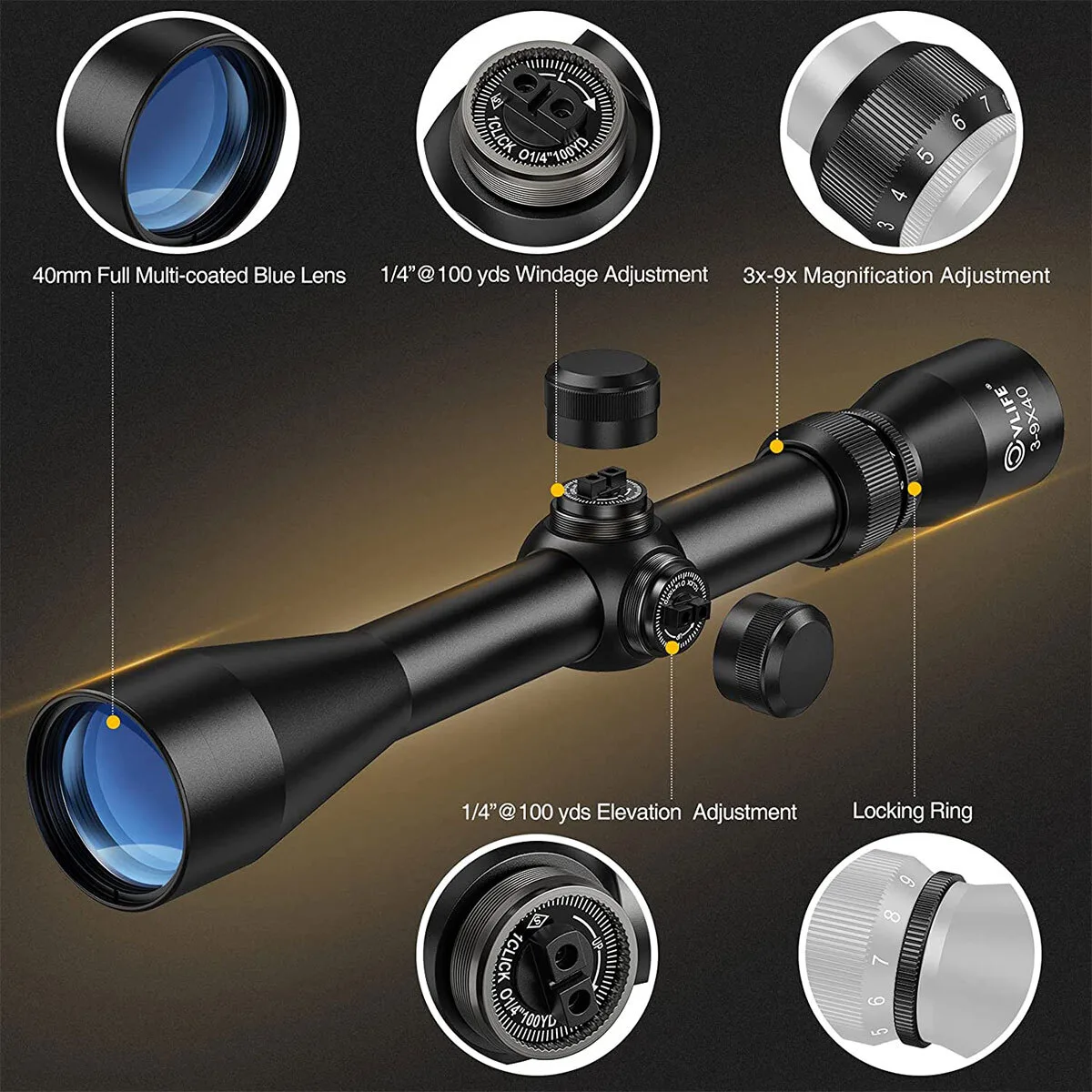
Image source: Bing (Web (fair-use with source credit))
Quick Answer
For most hunters, 3-9x is the best range. It covers 50 to 250 yards. The 40mm objective handles low light.
The scope stays light and easy to carry. Choose a 1-6x or 2-7x for thick brush. Choose a 4-16x for open country past 300 yards.
How Magnification Actually Works in the Field
Most hunters think more magnification means more ability to hit things. That's only half true. Higher magnification shrinks your field of view, tightens your eye box, and makes every wobble look twice as big.
These trade-offs matter more than the number on the box.
What is field of view and why does it matter?
Field of view is how much you see left to right at a given distance. At 3x, you see roughly 33 feet across at 100 yards. At 9x, that drops to about 12 feet.
At 16x, you're down to around 7 feet. That's a massive difference when a deer steps out at 50 yards and you need to find it in the scope fast. Lower magnification means faster target acquisition.
Higher magnification means you see the target smaller and tighter.
Eye relief is a safety issue, not just comfort
Eye relief is the distance your eye needs to be from the eyepiece to see the full image. Most hunting scopes offer 3 to 4 inches of eye relief. Get too close and the scope can hit you during recoil.
That's called scope bite and it's a real injury. A scope with short eye relief on a heavy-kicking rifle is a bad combination. Always check the eye relief spec before you buy.
Exit pupil determines low-light performance
Exit pupil is the diameter of the beam of light leaving the eyepiece. You calculate it by dividing the objective lens diameter by the magnification. A 3-9×40 at 3x gives a 13.3mm exit pupil.
At 9x, it gives 4.4mm. Your eye's pupil dilates to about 5 to 7mm in low light. If the exit pupil is smaller than your eye's pupil, the image gets dimmer.
That's why a 50mm objective helps at high magnification. A 40mm objective works fine at low to moderate magnification.
Per the National Shooting Sports Foundation, proper eye relief and exit pupil matching are critical for safe and effective hunting. A scope that's too dark or too tight on eye relief will cost you shots in the field.
How to Match Magnification to Your Hunting Situation
This is where the rubber meets the road. You need to match magnification to your typical shot distance, terrain, and game size. Here's the decision tree broken down by hunting scenario.
Branch 1: You Hunt Thick Woods, Brush, or Stands Under 100 Yards
If your shots are inside 100 yards and you're hunting in timber, swamp, or thick cover, low magnification is your friend. A 1-4x, 1-6x, or 2-7x scope gives you a wide field of view for fast target acquisition. A fixed 4x also works well here.
You don't need high magnification because you're shooting close and the deer is filling your view. Going higher than 7x on a brush gun is a mistake. You'll lose the deer in the scope when it moves fast.
The best option for this branch is a 1-6x LPVO or a 2-7x variable. Keep the objective around 32 to 40mm. You don't need a 50mm bell in the woods.
It adds weight and snags on brush.
Branch 2: You Hunt Fields, Open Timber, or Mixed Terrain (50 to 250 Yards)
This is the most common scenario for American hunters. You're hunting agricultural fields, open timber, or rolling hills. Your shots might be 50 yards one day and 200 yards the next.
This is where the 3-9×40 shines. It gives you enough power for a 200-yard shot and enough field of view for a 50-yard surprise. The 40mm objective keeps the scope light and mounts low.
A 3-9×40 is the default recommendation for this branch. A 4-12×40 also works if you occasionally stretch to 250 or 300 yards. Stick with a second focal plane reticle for simplicity.
Use a duplex or BDC reticle for quick holdover.
Branch 3: You Hunt Mountains, Plains, or Western Open Country (200 to 400 Yards)
If you're hunting mule deer, pronghorn, or elk in open country, you need more magnification. A 4-16×44 or 4-16×50 gives you the reach to see antlers at 400 yards and place a precise shot. You also need a larger objective to gather light at dusk and dawn when animals move.
The wider field of view at 4x still lets you scan for animals.
The trade-off is weight and bulk. A 4-16×50 scope weighs 20 ounces or more. Make sure your rifle handles the extra weight.
A side focus parallax adjustment is helpful at these distances. Without it, parallax error can shift your point of impact by several inches at 300 yards.
Branch 4: You Hunt Varmints, Predators, or Long-Range Targets (300+ Yards)
Varmint hunting and long-range predator hunting demand high magnification. A 6-24×50 or 6-24×56 gives you the power to see prairie dogs at 500 yards and coyotes at 400 yards. You need a first focal plane reticle so the subtensions stay accurate at all magnification levels.
Parallax adjustment is non-negotiable. You'll be shooting at multiple distances. Fixed parallax at 100 yards will cause errors at 400 yards.
This branch also requires a solid rest or bipod. High magnification magnifies every wobble. If you're shooting offhand, 16x or 24x makes the crosshairs dance all over the target.
Use a shooting stick, bipod, or rest for these shots.
Fixed Power vs Variable Power: Pros, Cons, and When Each Makes Sense
The debate between fixed and variable power scopes has been around as long as scopes have been adjustable. Both have their place. The choice comes down to simplicity versus versatility.
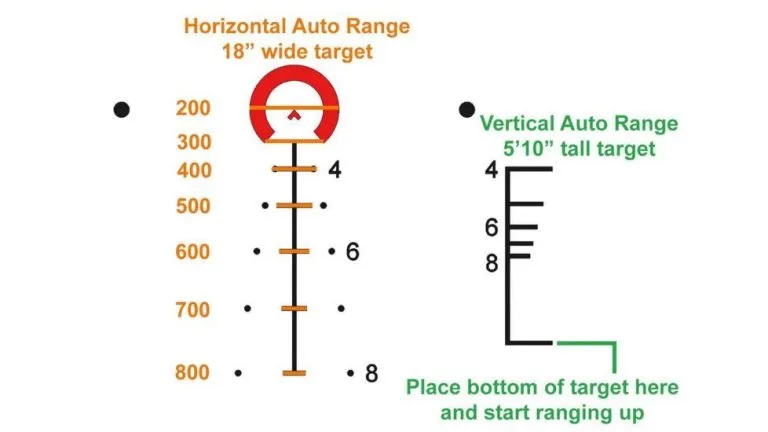
Image source: Bing (Web (fair-use with source credit))
Fixed power scopes: lighter, simpler, fewer things to break
A fixed 4x scope has no moving parts in the magnification mechanism. That means less weight, fewer seals to fail, and a simpler optical path. Fixed power scopes are often brighter for the same objective size because there's less glass inside.
They're also cheaper. A good fixed 4x can cost half of what a comparable variable costs.
The downside is obvious. You're stuck at one magnification. If the deer steps out at 30 yards, you see it at 4x.
If it's at 200 yards, you still see it at 4x. That's fine for brush hunting where all your shots are close. It's limiting for mixed terrain.
Fixed scopes are best for budget builds, brush guns, and hunters who know their shot distance will not change.
Variable power scopes: one scope does everything
A variable power scope like a 3-9x or 4-16x lets you dial down for close shots and dial up for long shots. That's a huge advantage for hunters who cover different terrain in a single season. You can walk through the woods at 3x and then dial to 9x when you reach a field.
The trade-offs are weight, complexity, and cost. Variable scopes have more lenses and moving parts. They're heavier and more prone to fogging if the seals fail.
A cheap variable scope is often worse than a good fixed scope. Spend enough to get decent glass and reliable tracking.
Variable scopes are best for all-around hunters, mixed terrain, and anyone who wants one rifle for multiple hunting scenarios.
Which one should you choose?
If you hunt thick brush or stands under 100 yards and you want a lightweight, budget-friendly setup, a fixed 4x is a solid choice.
If you hunt mixed terrain, fields, or open country, a variable scope is the better option. The 3-9×40 is the most popular for a reason. It covers the most ground.
Features That Actually Matter for Hunting
Beyond the magnification number, three features determine how well a scope works in the field. Ignore them and you might end up with a scope that looks good on paper but stinks in practice.
First focal plane versus second focal plane
FFP reticles change size as you zoom in and out. SFP reticles stay the same size regardless of magnification. Which one is better for hunting?
For most hunters, SFP is the better choice. Here's why. At low magnification, you want a clear, unobstructed view of the target.
A thick FFP reticle at 3x can obscure a deer's vitals. At high magnification, an SFP reticle gets thicker and easier to see. That's when you need precision.
SFP also keeps the reticle subtensions accurate at one specific magnification, usually the highest power.
FFP is better for long-range shooting where you need holdover accuracy at any magnification. If you're hunting varmints at 400 yards and adjusting magnification, FFP makes sense. For whitetail hunting at 100 to 200 yards, SFP is simpler and more forgiving.
Objective size: bigger is not always better
The objective lens diameter affects light gathering, weight, and mounting height. A 40mm objective is the standard for all-around hunting. It gathers enough light for dawn and dusk shots without adding much weight.
A 50mm objective gathers more light but adds 4 to 6 ounces and requires high rings. That can make the rifle sit too high for a comfortable cheek weld.
A 56mm objective is for dedicated long-range and low-light hunting. It's heavy and bulky. It's overkill for most hunters.
Rule of thumb: Use a 40mm objective for mixed terrain. Use a 44mm or 50mm for open country and low-light hunting. Use a 32mm for brush guns.
Lens quality: the spec that doesn't show up on the box
Lens coatings and glass quality matter more than the magnification number. A cheap 3-9x with poor coatings will be dim and blurry at dusk. An expensive 3-9x with fully multi-coated lenses will be clear and bright.
You can't see the coatings in a store display. You have to look through the scope in low light to judge.
Aggregate reviews report that the biggest complaint about cheap scopes is poor low-light performance. Spend enough to get a scope with fully multi-coated lenses and a decent warranty. You don't need to spend a thousand dollars.
The $50 scope from a discount store will fail you when it matters.
Manufacturer specifications indicate that lens coatings are rated by the number of layers applied. Fully multi-coated means all air-to-glass surfaces have multiple layers of anti-reflective coating. That's the minimum standard for a hunting scope you can trust.
Common Magnification Mistakes That Cost You Shots
Most hunters make at least one of these mistakes when they pick a scope. Every single one is avoidable once you know what to look for.
Cranking the magnification too high for close shots
This is the most common mistake in the woods. A hunter sees a deer at 50 yards and dials the scope to 9x or 12x. The field of view shrinks to a few feet.
The deer moves slightly and disappears from the scope. The hunter panics and misses the shot.
The fix is simple. Keep your scope on the lowest power that still gives you a clear view of the target. For shots under 100 yards, that means 3x or 4x.
Only dial up when you have time and a stable rest. Practice transitioning from low to high power so it becomes muscle memory.
Choosing magnification based on the longest possible shot
Some hunters buy a 6-24x because they might take a 400-yard shot one day. Then they hunt all season at 100 yards with a scope that has a narrow field of view and a heavy weight. The scope is wrong for 90 percent of their shots.
Magnification should match your average shot distance, not your maximum. If you hunt mixed terrain, pick a scope that works well at your typical range. A 3-9x covers 50 to 250 yards.
A 4-16x covers 100 to 400 yards. Don't buy a 6-24x for a 100-yard deer stand.
Ignoring parallax error at shorter distances
Many hunting scopes have fixed parallax set at 100 yards. That works fine for 100-yard shots. At 50 yards, the parallax error can shift your point of impact by an inch or more.
At 200 yards, it shifts the other way.
Parallax matters more than most hunters realize. If your scope has adjustable parallax, set it for the distance you're shooting. If it has fixed parallax, know that your aim point might shift if you move your eye behind the scope.
Keep your cheek weld consistent to minimize the error.
Using a scope with poor low-light performance
Dawn and dusk are the best times to see deer. They're also the times when cheap scopes fail. A scope with poor coatings or a small objective lens will be too dark to see through at legal shooting light.
Aggregate reviews report that low-light performance is the most common complaint about budget scopes. If you hunt early morning or late evening, spend the money on a scope with fully multi-coated lenses and a 40mm or larger objective. A bright scope at dusk is worth more than a high magnification that you can't use.
Mounting the scope too high or too low
Scope height affects your cheek weld, your eye alignment, and your ability to acquire the target quickly. A scope mounted too high forces you to lift your head off the stock. A scope mounted too low might not give you enough eye relief.
Use the lowest rings that still allow the objective bell to clear the barrel. Check the eye relief by mounting the scope and shouldering the rifle. The full field of view should appear when you close your eyes and open them.
If you have to adjust your head position, the scope is mounted wrong.
Real Scenarios: Three Hunters, Three Different Scopes
Theory is useful. Real examples are better. Here are three hunters with different situations and the magnification that fits each one.
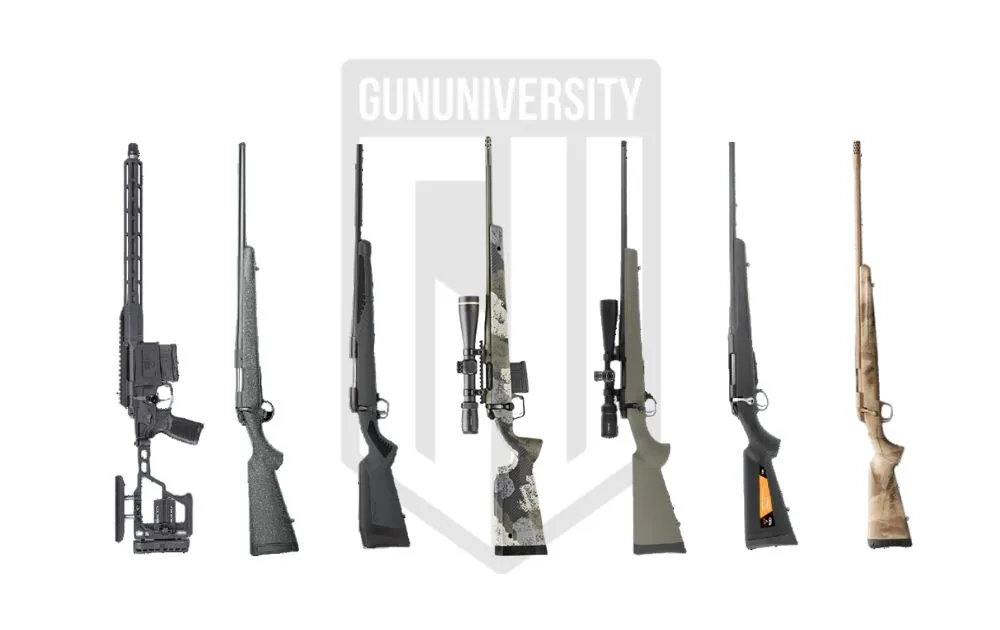
Image source: Bing (Web (fair-use with source credit))
Scenario 1: The whitetail hunter in eastern timber
Mark hunts whitetail deer in the Appalachian Mountains. His shots are almost always under 120 yards. The terrain is steep, thick, and often dark under the canopy.
He carries his rifle up and down ridges for miles.
What he needs is a lightweight scope with a wide field of view and enough magnification for 100-yard shots. He doesn't need high power. He needs fast target acquisition and low weight.
The right choice is a 2-7×32 or a 3-9×40. A 2-7×32 is lighter and gives a wide field of view at 2x. A 3-9×40 is slightly heavier but offers more versatility if he ever hunts a field edge.
Mark picks the 3-9×40 because he sometimes hunts a power line at 200 yards. He keeps the scope on 4x during the walk and dials to 9x only when he settles in for a shot.
Scenario 2: The mule deer hunter in the high country
Sarah hunts mule deer in the Rocky Mountains. Her shots range from 150 to 400 yards. She glasses from ridges, stalks into position, and shoots from a bipod or pack.
She needs to see antlers at a distance and place a precise shot.
What she needs is a scope with enough magnification for 400-yard shots. She also needs a larger objective for low light at dawn. A reticle that helps with holdover is useful.
Weight matters but not as much as optical performance.
The right choice is a 4-16×44 or a 4-16×50. A 4-16x gives her 4x for scanning the hillside and 16x for a precise shot at distance. The 44mm or 50mm objective gathers light during the early morning when mule deer are most active.
She uses a side focus parallax adjustment to stay accurate at varying distances. She mounts the scope in lightweight rings to keep the total weight manageable.
Scenario 3: The varmint hunter on the prairie
Tom hunts prairie dogs and coyotes in the Great Plains. His shots are often 300 to 500 yards. He shoots from a bench or a prone position with a bipod.
He needs to see small targets at long range and adjust for wind and elevation.
What he needs is high magnification. He also needs a first focal plane reticle and adjustable parallax. His scope must track reliably when he dials elevation.
The right choice is a 6-24×50 or a 6-24×56. The 24x maximum gives him the power to see prairie dogs at 500 yards. The FFP reticle keeps holdover subtensions accurate at any magnification.
He uses a side focus parallax to set the correct distance for each shot. The larger objective helps with light because even at 24x, the exit pupil is small. He locks the turrets or uses a zero stop to prevent accidental adjustments during transport.
Costs, Pricing, and Data: What You Get at Each Price Level
The relationship between price and performance in rifle scopes is not linear. You get a big jump from $100 to $400. You get smaller improvements from $400 to $1,000.
Beyond $1,000, you pay for incremental gains in glass quality, tracking accuracy, and durability.
Budget tier: $100 to $300
At this price, you get a functional scope with basic lens coatings. The glass is decent in bright light but struggles at dawn and dusk. The tracking is usually adequate for hunting distances but not precise enough for long-range target shooting.
The warranty is often limited.
What you can expect is a 3-9×40 or a 4-12×40 with a simple duplex reticle. The scope will be waterproof and fogproof if it's from a reputable brand. It will work for whitetail hunting at moderate distances.
It will not survive repeated hard knocks or extreme weather.
Best for budget builds, youth hunters, and hunters who only shoot a few times a season.
Mid-range tier: $300 to $800
This is the sweet spot for most hunters. You get fully multi-coated lenses, better glass, and more consistent tracking. The low-light performance is noticeably better than budget scopes.
The warranty is usually lifetime and transferable.
What you can expect is a 3-9×40, 4-12×40, or 4-16×44 with a duplex or BDC reticle. The scope will have a 30mm tube for more adjustment range. The turrets will be finger-adjustable and repeatable.
Parallax adjustment is often included on higher magnification models.
Best for serious hunters who hunt in varied conditions and want a scope they can trust for years.
Premium tier: $800 to $1,500
Premium scopes use high-index glass, advanced coatings, and precision-machined components. The image clarity is excellent in all light conditions. The tracking is accurate and repeatable.
The scope is built to withstand hard use.
What you can expect is a 3-9×40, 3-15×44, or 4-16×50 with a first or second focal plane reticle. The glass is noticeably brighter and sharper than mid-range scopes. The adjustment range is wider.
The warranty is lifetime and no-questions-asked.
Best for hunters who shoot in low light, hunt in extreme conditions, or want a scope that will last a lifetime.
High-end tier: $1,500 and above
High-end scopes use the best glass available, typically from German or Japanese manufacturers. The optical performance is outstanding. The tracking is precise enough for competitive shooting.
The scope is built to military and law enforcement standards.
What you can expect is a 3-18×50, 5-25×56, or similar. The image is clear even in the worst light. The turrets are tactile and repeatable.
The reticle options are extensive. The weight is higher but the performance is unmatched.
Best for long-range hunters, professional guides, and hunters who demand the best possible optical performance.
Expert Tips: Getting the Most Out of Your Hunting Scope
Once you have the right magnification, you need to set up the scope correctly and use it properly. Here are the tips that make the difference between a good shot and a missed opportunity.
Set the eye relief before you mount the scope
Mount the scope in the rings and slide it forward or backward until you see a full field of view with your eyes closed. Shoulder the rifle naturally. Open your eyes.
The image should be clear and centered. If you have to move your head forward or backward, adjust the scope position.
This takes five minutes. It saves you from scope bite and missed shots.
Use the correct torque on ring screws
Over-tightening scope rings can crush the tube and damage the internal lenses. Under-tightening can let the scope slip under recoil. Use a torque wrench set to the manufacturer's recommended value.
Most rings require 15 to 20 inch-pounds of torque.
A torque wrench is cheap. A damaged scope is not.
Practice transitioning between magnification levels
Most hunters set their scope at one power and never change it. That leaves performance on the table. Practice dialing from low to high power while keeping the rifle shouldered.
Do it until the motion is smooth and your eye stays on target.
You should be able to change magnification in under two seconds without looking at the turret.
Clean the lenses only when necessary
Over-cleaning scratches lens coatings. Use a lens brush or compressed air to remove dust. Use a microfiber cloth and lens cleaning solution only when the lens is visibly dirty.
Never use your shirt or paper towel. They scratch the coatings.
A clean lens is important. A scratched lens is permanent.
Frequently Asked Questions
What magnification is best for deer hunting at 100 yards?
A 3-9×40 set at 4x to 6x is ideal for 100-yard deer hunting. It gives you enough power to see the vitals clearly and a wide enough field of view to track a moving deer. Fixed 4x also works well for this distance.
Can you have too much magnification for hunting?
Yes. Too much magnification shrinks your field of view, makes every wobble visible, and slows down target acquisition. Anything above 16x for general hunting is usually too much unless you're shooting past 300 yards from a stable rest.
Is a 4-12×40 good for hunting?
A 4-12×40 is an excellent choice for open country and mixed terrain hunting. It covers shots from 100 to 300 yards well. The 40mm objective keeps the scope light and easy to mount.
It's a good alternative to the 3-9×40 if you frequently shoot past 200 yards.
What magnification do I need for 200-yard shots?
A 3-9x set at 6x to 9x is plenty for 200-yard shots. You don't need 12x or 16x for that distance. The extra magnification just adds weight and narrows the field of view.
A 4-12x also works but keep it at 8x or 9x for the clearest image.
Should I use a red dot instead of a scope for hunting?
A red dot is a good choice for thick brush hunting where all shots are under 75 yards. It gives you unlimited eye relief and fast target acquisition. For anything beyond 75 yards, a scope with magnification is better for precision and target identification.
Is a fixed 4x scope good for hunting?
Yes, a fixed 4x scope is an excellent choice for brush hunting, stand hunting, and budget builds. It's lightweight, simple, and bright for its size. The limitation is that you're stuck at 4x for all shots.
It works best if your shot distances are consistent.
Final Decision Guide: Picking the Right Magnification Step by Step
You have all the information you need. Here is the decision process boiled down to a simple flowchart.
Step 1: Measure your typical shot distance
Look at your hunting notes or average range. If you haven't measured, estimate based on your terrain. Thick woods means under 100 yards.
Fields mean 100 to 250 yards. Open country means 200 to 400 yards. Varmint hunting means 300 to 500 yards.
Step 2: Match magnification to that distance
Under 100 yards: 1-4x, 1-6x, 2-7x, or fixed 4x.
100 to 250 yards: 3-9×40 or 4-12×40.
200 to 400 yards: 4-16×44 or 4-16×50.
300 to 500 yards: 6-24×50 or 6-24×56.
Step 3: Choose objective size based on light conditions
If you hunt early morning or late evening, go with a 44mm or 50mm objective. If you hunt mostly midday, a 40mm objective is fine. If you hunt in thick woods where light is limited, a 40mm is still fine because you're at low magnification and the exit pupil is large.
Step 4: Pick the reticle type
For general hunting, choose a second focal plane duplex or BDC reticle. For long-range hunting, choose a first focal plane mil-dot or BDC reticle. For varmint hunting, choose a first focal plane reticle with wind hold marks.
Step 5: Set your budget and buy the best scope you can afford
Spend enough to get fully multi-coated lenses and a reliable warranty. The $300 to $800 range is where most hunters find the best value. A good scope at this price will last for years and perform well in the field.
The final answer
For most hunters, the best magnification is 3-9x with a 40mm objective. It covers the widest range of scenarios. It handles low light well.
It keeps the weight manageable. If you hunt thick brush, go with 1-6x. If you hunt open country, go with 4-16x.
If you hunt varmints, go with 6-24x.
Match the scope to your hunting, not to the longest shot you might take. That's the rule that wins every time.