What Do the Numbers on Binoculars Mean
What do the numbers on binoculars mean? It's the first question anyone asks when they pick up a pair. And it's a fair one.
The numbers look like a code, but they're actually simple specifications that tell you everything about how the binoculars will perform.
The first number is the magnification. The second is the objective lens diameter in millimeters. A standard 8×42 model means 8x magnification and a 42mm objective lens.
But the real story is in how these numbers work together. As of 2026, most birders and hunters agree that understanding these specs is the key to a satisfying purchase. Let's clear up the confusion.
Quick Answer
The two numbers on binoculars are magnification and objective lens size. The first number shows how much closer objects appear. The second number is the lens diameter in millimeters.
Together, they determine brightness, field of view, and stability. Choosing the right pair depends on your activity.
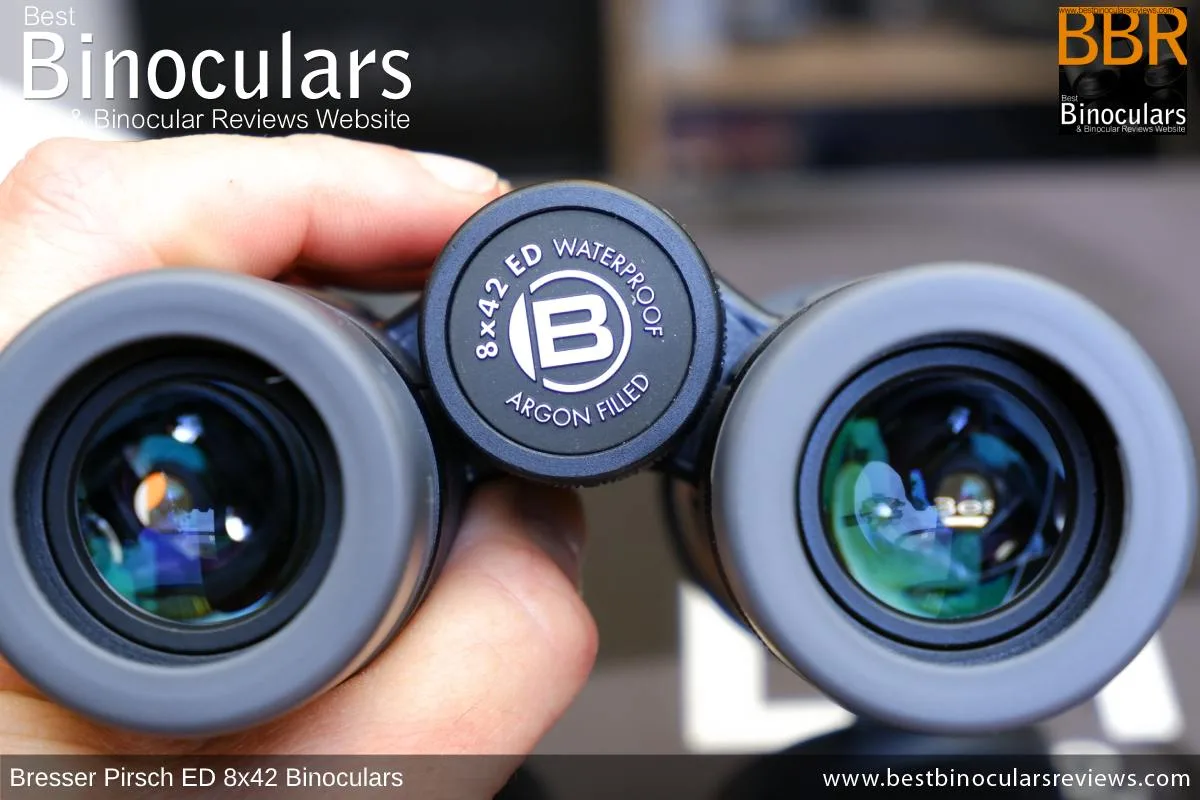
Image source: Bing (Web (fair-use with source credit))
The Confusion: Why Binocular Numbers Feel Like a Secret Code
It's easy to see why people get confused. You see a pair labeled 10×50 and another labeled 8×32, and you have no idea which is better. The truth is, neither is universally better.
They're just different tools for different jobs.
The biggest misconception is that higher magnification always means a better view. That's not true. Higher magnification magnifies everything, including your hand shake, atmospheric haze, and optical flaws.
A 10x pair will show more detail on a distant bird, but it will also be harder to hold steady. An 8x pair gives you a wider, brighter, and steadier image in most handheld situations.
Another common mistake is thinking the second number is a quality rating. It's not. It's the diameter of the front lens in millimeters.
A 50mm lens lets in more light than a 32mm lens, making the image brighter in low light. But it also makes the binoculars heavier and bulkier.
Here's the if/then logic. If you're using binoculars mostly in daylight, a 32mm objective is fine. If you're hunting or birding at dawn or dusk, you'll want a 42mm or 50mm objective.
If you're hiking long distances, weight matters, so a 32mm or even a 25mm compact might be your best bet.
The numbers also interact in ways that aren't obvious. The ratio between magnification and objective lens size determines the exit pupil, which controls how bright the image appears to your eye. We'll dig into that in a moment.
For now, just know that the two numbers are a starting point, not the whole story.
Manufacturer specifications indicate that the most popular all-purpose binocular is an 8×42. It's a good balance of magnification, brightness, and portability. But it's not right for everyone.
If you're a serious birder, you might prefer 8×32 for lighter weight. If you're a hunter in open country, 10×42 might be better for spotting game at distance.
Let's break down each number in detail so you can make an informed decision.
The Two Numbers That Matter Most — Magnification and Objective Lens
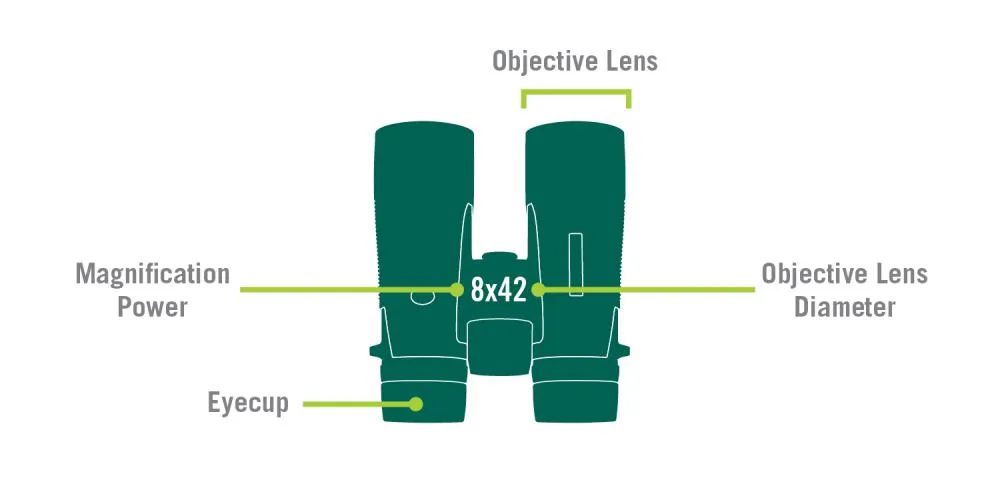
Image source: Bing (Web (fair-use with source credit))
Magnification: What It Really Means
The first number is the magnification factor. It tells you how many times closer the object appears compared to the naked eye. An 8x binocular makes a bird 100 feet away look like it's 12.5 feet away.
A 10x binocular makes it look like 10 feet away.
That sounds simple, but there's a trade-off. Higher magnification means a narrower field of view. You'll see less of the scene at once, which makes it harder to find and track moving objects.
It also means you'll notice every tiny movement of your hands. For most people, 8x is the sweet spot for handheld use. Aggregate reviews from thousands of birders confirm that 8x is the most popular choice for general nature observation.
If you're using a tripod or a stable rest, 10x or even 12x becomes more practical. For astronomy, 15x or 20x is common, but those are almost always tripod-mounted.
Objective Lens Diameter: The Light Collector
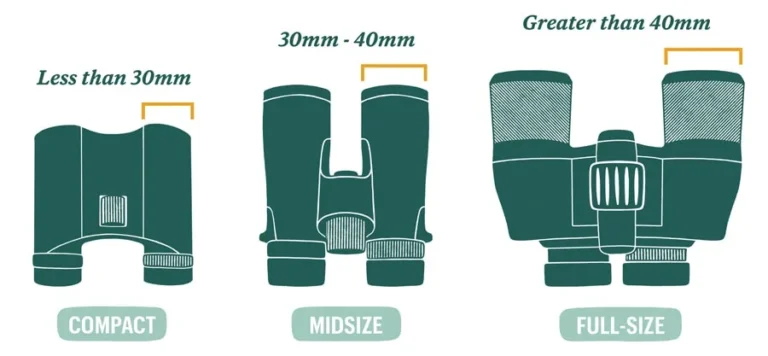
The second number is the diameter of the front lens in millimeters. A larger lens gathers more light, which makes the image brighter, especially in low-light conditions. But a larger lens also means more weight, more bulk, and often higher cost.
Here's a quick comparison of common objective sizes:
| Objective Size | Light Gathering | Typical Use | Weight Range |
|---|---|---|---|
| 25mm | Low | Daylight, compact travel | 10–15 oz |
| 32mm | Medium | All-purpose, hiking | 15–22 oz |
| 42mm | High | Birding, hunting, low light | 22–32 oz |
| 50mm | Very high | Astronomy, low-light hunting | 32–50 oz |
The rule of thumb is simple. If you mostly use binoculars in bright daylight, a 32mm is plenty. If you need to see detail in twilight or thick forest, go with 42mm or 50mm.
But remember, a 50mm binocular is heavy. You might not want to carry it on a long hike.
How They Work Together
The combination of magnification and objective lens size determines the exit pupil. This is the diameter of the beam of light that reaches your eye. You calculate it by dividing the objective lens diameter by the magnification.
For an 8×42, that's 42 ÷ 8 = 5.25mm. For a 10×42, it's 4.2mm. For a 7×50, it's a generous 7.14mm.
A larger exit pupil means a brighter image, especially in low light. But there's a catch. Your own eye's pupil only dilates to about 7mm in young people, and less as you age.
A 7mm exit pupil is wasted on someone over 40 whose pupils only open to 5mm. So a 10×42 with a 4.2mm exit pupil might be just as good for an older user as a 7×50 with a 7mm exit pupil.
Per ISO 14132 standards for optical instruments, these numbers are calculated and reported consistently across manufacturers. That means you can trust the specs on the box. The key is to understand what they mean for your specific situation.
The Hidden Numbers That Make or Break Your View — Exit Pupil, Field of View, and Eye Relief
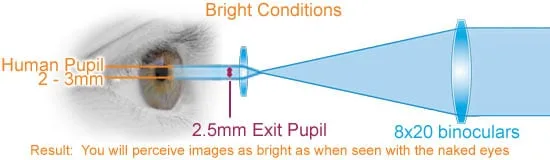
Image source: Bing (Web (fair-use with source credit))
Exit Pupil: The Brightness Factor
We just touched on exit pupil, but it deserves its own deep dive. The exit pupil is the bright circle of light you see when you hold binoculars at arm's length and look at the eyepiece. It's measured in millimeters.
The larger it is, the brighter the image.
Here's the practical if/then logic. If you're using binoculars during the day, any exit pupil above 3mm is fine. If you're using them at dawn, dusk, or in deep shade, you want an exit pupil of 4mm or more.
For astronomy, 5mm or more is ideal.
But don't go overboard. If your eye's pupil is only 5mm dilated, a 7mm exit pupil delivers light that hits your iris instead of your retina. That's wasted light.
So match the exit pupil to your age and typical use.
Common exit pupil values:
| Model | Exit Pupil | Brightness Rating |
|---|---|---|
| 8×32 | 4.0mm | Good for low light |
| 8×42 | 5.25mm | Excellent for low light |
| 10×42 | 4.2mm | Good for low light |
| 10×50 | 5.0mm | Great for low light |
| 7×50 | 7.14mm | Best for astronomy |
Field of View: How Much You See
Field of view is the width of the area you can see at a specific distance. It's usually given as feet at 1,000 yards or meters at 1,000 meters. A wider field of view makes it easier to find and follow moving subjects like birds or sports players.
Higher magnification typically gives a narrower field of view. An 8×42 might have a field of view of 390 feet at 1,000 yards, while a 10×42 might have 340 feet. That difference matters when you're scanning a treeline for a warbler.
If you're birding or watching sports, prioritize a wide field of view. If you're focusing on a stationary target, like a distant mountain or a celestial object, a narrower field of view is fine.
Eye Relief: The Glasses Factor
Eye relief is the distance from the eyepiece lens to where your eye needs to be to see the full image. It's measured in millimeters. If you wear glasses, this is critical.
When you wear glasses, your eye is farther from the eyepiece. You need eye relief of at least 15mm to see the full field of view. Many modern binoculars offer 17mm to 20mm of eye relief, and they have twist-up eyecups that let you adjust the distance.
If you don't wear glasses, you can ignore this number. But if you do, check the spec before you buy. A pair with 10mm of eye relief will give you a tunnel vision view with glasses.
How Your Activity Changes the Decision — A Quick Branching Guide
Here's where the decision tree comes in. Your activity determines which numbers matter most. Follow the branches below to find the right spec.
Branch 1: Birding and Wildlife Watching
You need a wide field of view to track birds, plus good low-light performance for early morning or late evening. The standard choice is 8×42. The 8x magnification gives you a steady image and a wide field of view, while the 42mm objective provides enough light for dawn and dusk.
If you want to save weight, 8×32 is a good compromise. If you're photographing or watching from a blind, 10×42 can help you see more detail.
Branch 2: Hunting
Hunting requires different specs depending on the terrain. In open country, you want higher magnification to spot game at distance. A 10×42 is a common choice.
In thick woods or heavy cover, you want a wider field of view and better low-light performance, so 8×42 or even 7×50 is better. If you're hunting at dawn or dusk, prioritize a large exit pupil of 4mm or more.
Branch 3: Hiking and Backpacking
Weight is your biggest concern. Choose compact or mid-size binoculars. An 8×32 is the most popular for hiking.
It's light enough to carry all day but still gives you a decent view. If you're a minimalist, 8×25 or 10×25 compacts are options, but they'll be dimmer in low light.
Branch 4: Stargazing and Astronomy
You need maximum light gathering. A 7×50 or 10×50 is the standard for handheld astronomy. Both give you a large exit pupil of 7.14mm and 5.0mm respectively.
For deeper observation, you'll want 15×70 or 20×80, but those require a tripod.
Branch 5: Sports and Concerts
You want a wide field of view to follow the action, and you don't need extreme low-light performance. An 8×32 or 8×42 is ideal. The 8x magnification gives you a steady image, and the wide field of view helps you track players or performers.
Quick Decision Table
| Activity | Recommended Spec | Why |
|---|---|---|
| Birding | 8×42 | Balance of brightness, field of view, and stability |
| Hunting (open) | 10×42 | Higher magnification for distance |
| Hunting (woods) | 8×42 | Wider field of view for close cover |
| Hiking | 8×32 | Lightweight, good enough for daylight |
| Astronomy | 7×50 or 10×50 | Large exit pupil for brightness |
| Sports | 8×32 | Wide field of view, steady image |
The Mistakes That Waste Your Money and Ruin Your View
Buying Too Much Magnification
It's tempting to get the highest number. But 12x or 15x handheld is a recipe for a shaky, blurry image. Unless you're using a tripod, stick to 8x or 10x.
Aggregate user feedback consistently shows that most people who buy 12x binoculars end up not using them because they're too hard to hold steady.
Ignoring Exit Pupil
You might buy a 10×25 compact because it's small. But that gives you a 2.5mm exit pupil, which is dim in any light. It's fine for a sunny day at the race track, but useless at dusk.
Always check the exit pupil before you buy.
Overlooking Eye Relief
If you wear glasses and buy a pair with 10mm of eye relief, you'll see a narrow circle with black edges. It's a waste of money. Look for eye relief of 15mm or more, and make sure the eyecups are adjustable.
Choosing by Price Alone
Cheap binoculars often have poorly aligned prisms, low-quality coatings, and plastic lenses. The image will be soft, blurry, or ghosted. You don't need to spend a fortune, but avoid the bottom shelf.
A decent pair in the $150 to $300 range will serve you well for years.
Ignoring Weight
If you buy a 50mm binocular for a long hike, you'll leave it in the car. Weight is a real factor. Try to hold the binoculars for a few minutes in the store.
If they feel heavy, they'll feel heavier on the trail.
Not Checking the Field of View
A narrow field of view makes it hard to find birds or follow sports. Always check the field of view spec. For birding, look for at least 350 feet at 1,000 yards.
For sports, 300 feet or more is acceptable.
Buying a Zoom Binocular
Variable magnification binoculars sound great, but they usually have a narrow field of view, poor image quality at higher magnifications, and fragile internals. They're a compromise that rarely works well. Stick to fixed magnification.
Three Real-World Examples — Matching Specs to the Moment
Example 1: Dawn Birding in a Forest
You're standing in a wooded trail at 6:30 AM. The light is low. A warbler moves through the understory twenty feet away.
An 8×42 pair is your best tool here. The 5.25mm exit pupil gives you a bright image in the dim light. The 8x magnification keeps the view steady in your hands.
The wide field of view lets you track the bird as it hops between branches.
Now imagine you brought a 10×25 compact instead. The 2.5mm exit pupil is too small. The image looks dark and muddy.
The higher magnification magnifies your pulse, so the bird bounces around in the viewfinder. You miss the identification.
The lesson is clear. Low light demands a large exit pupil. Steady viewing demands moderate magnification.
A 10×25 is fine for a sunny football game, but it fails in the woods at dawn.
Example 2: Open Country Hunting
You're glassing a field at dusk, looking for deer moving from cover to feed. The nearest treeline is 300 yards away.
A 10×42 is the standard choice here. The 10x magnification brings distant detail close enough to distinguish antler points. The 4.2mm exit pupil is adequate for the fading light.
The weight is manageable for carrying across the field.
But if you're in thick brush instead of open country, the same 10×42 becomes a liability. The narrow field of view makes it hard to spot a deer that's fifty feet away. You'd be better off with an 8×42 that gives you a wider view and steadier image at close range.
Manufacturer specs confirm that 10×42 is the most popular hunting binocular for open terrain. For forest hunting, 8×42 dominates. The terrain determines the right magnification.
Example 3: Long Distance Hiking
You're planning a ten mile hike with a 30 pound pack. Every ounce matters. You want binoculars for spotting distant peaks and maybe a hawk.
An 8×32 pair is the sweet spot. It weighs around 18 ounces, half the weight of a 50mm model. The 4.0mm exit pupil is bright enough for daylight use.
The 8x magnification gives you a steady, wide view.
Now consider a 10×50. It weighs 35 ounces or more. You feel it bouncing on your chest strap.
By mile six, you're annoyed. By mile eight, you've stopped using it. You carried three pounds of optics for nothing.
The right choice here is a mid-size binocular that balances weight and performance. An 8×32 or even a compact 8×25 works well for daytime hiking. Save the heavy glass for car camping or dedicated observation sessions.
Fast Reference — Common Specs at a Glance
This table summarizes the most common binocular configurations and their best uses. Use it as a quick reference when comparing models.
| Model | Exit Pupil | Field of View (ft @ 1000 yds) | Weight Range | Best For |
|---|---|---|---|---|
| 8×32 | 4.0mm | 380-420 ft | 15-22 oz | Hiking, daylight birding |
| 8×42 | 5.25mm | 330-390 ft | 22-32 oz | All purpose, low light |
| 10×42 | 4.2mm | 290-350 ft | 22-32 oz | Open country, distance |
| 10×50 | 5.0mm | 270-330 ft | 32-50 oz | Astronomy, low light |
| 7×50 | 7.14mm | 260-310 ft | 32-50 oz | Astronomy, marine |
A few things to notice. The 8×32 has the widest field of view, which makes it great for tracking moving subjects. The 7×50 has the largest exit pupil, making it the brightest choice for night use.
The 10×42 strikes a balance between reach and portability.
When you're comparing models, check these four numbers in order. First, confirm the magnification fits your activity. Second, check the objective size for light gathering.
Third, verify the field of view is wide enough. Fourth, make sure the eye relief works for your glasses if you wear them.
Frequently Asked Questions
What does 8×42 mean on binoculars?
The 8 is the magnification. It makes objects appear eight times closer. The 42 is the objective lens diameter in millimeters.
A larger objective gathers more light for a brighter image. Together they determine the exit pupil, which is 5.25mm.
What is the best magnification for birding?
Most birders choose 8x magnification. It gives a steady handheld image and a wide field of view. A 10x is useful for seeing detail on distant birds, but it's harder to hold steady.
For beginners, 8x is the safer choice.
What does exit pupil mean in binoculars?
Exit pupil is the diameter of the light beam that reaches your eye. You calculate it by dividing the objective lens size by the magnification. A larger exit pupil means a brighter image, especially in low light.
For daytime use, 3mm is fine. For dawn or dusk, aim for 4mm or more.
Do I need higher magnification for better views?
Not always. Higher magnification makes the image larger but also narrower and shakier. It reduces the field of view and amplifies hand movement.
For handheld use, 8x or 10x is the practical limit. Anything above 12x usually requires a tripod.
What is the difference between 8×42 and 10×42?
The 8×42 has lower magnification, a wider field of view, and a larger exit pupil (5.25mm vs. 4.2mm). The 10×42 shows more detail at distance but is harder to hold steady and dimmer in low light. Choose 8×42 for general use and 10×42 for open country.
Your Next Step — Pick the Right Pair for Your Situation
You now know what the numbers mean. You understand how magnification, objective lens size, exit pupil, field of view, and eye relief work together. The only step left is matching those specs to your activity.
Here's a final decision checklist. If you're a birder who watches at dawn, choose 8×42. If you're a hiker who wants light weight, choose 8×32.
If you hunt in open fields, choose 10×42. If you watch the stars, choose 7×50 or 10×50. If you wear glasses, check for eye relief of 15mm or more.
One last piece of advice. Try before you buy. Hold the binoculars in your hands.
Feel the weight. Look through them at a store or in a friend's backyard. The numbers on the box tell you the specs, but only your eyes can tell you if the view feels right.
A good pair of binoculars can last for decades. Taking twenty minutes to understand the specs is a small investment for years of clear, steady views. You've got the knowledge now.
Go find the pair that fits your life.