How to Store Binoculars
You know how to store binoculars, but do you really? Most people toss them in a drawer or leave them in the car. That's how lenses get scratched, prisms go out of alignment, and fungus grows inside the tubes.
The short version is simple: keep them cool, dry, and protected from dust and impact.
Manufacturer specifications indicate that the ideal storage environment for precision optics sits between 15°C and 25°C with relative humidity at 30% to 50%. Per industry standards, anything above 60% humidity for more than 48 hours creates the perfect conditions for lens fungus. That's why the simple rule of "keep them in a case" isn't nearly enough.
Quick Answer
Store binoculars in a cool, dry place. Keep them between 15°C and 25°C. Maintain humidity at 30% to 50%.
Use a hard case with silica gel packs. Remove the batteries if your model has them.
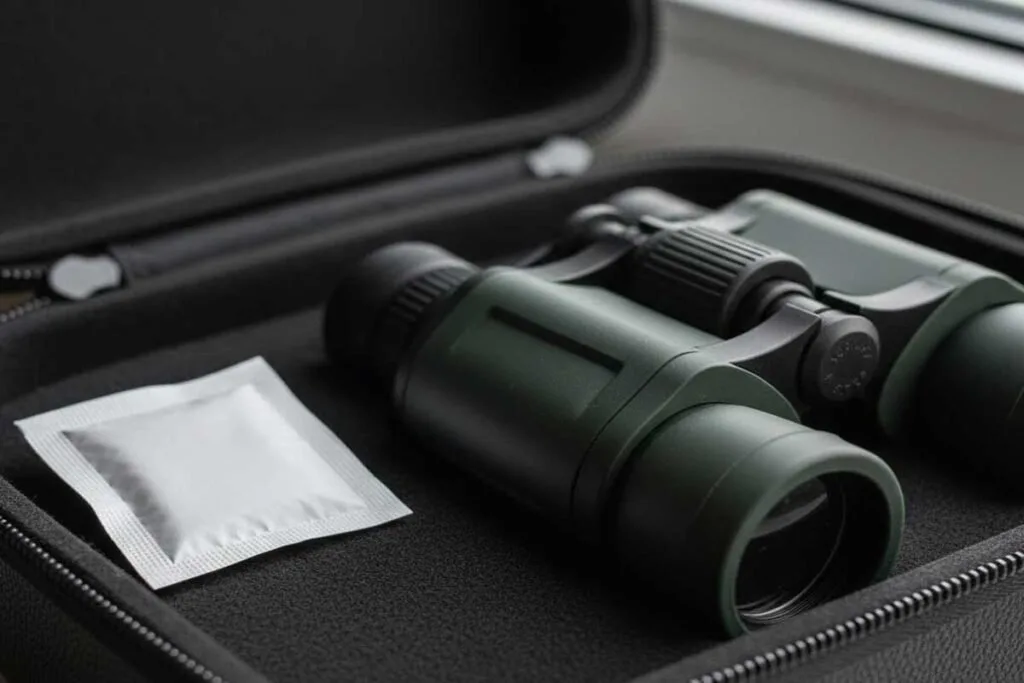
Image source: Bing (Web (fair-use with source credit))
Why Storage Method Matters More Than You Think
Binoculars are precision instruments. They have delicate lenses, moving parts, and internal seals that keep moisture out. Get the storage wrong, and you're looking at permanent damage.
That damage often costs more to fix than the binoculars are worth.
The internal air in a sealed binocular is nitrogen-purged or argon-purged in most modern models. That gas keeps fog from forming on the internal lenses when the temperature changes. Store your binoculars in a hot car, and the seals expand.
The gas escapes. The O-rings dry out and crack. Moisture gets in.
You get internal fogging that no amount of cleaning will fix.
As of 2026, most mid-range and premium binoculars use O-ring seals with a waterproof construction rated to IPX7 standards. That means they can survive being submerged in one meter of water for 30 minutes. But that rating only applies when the binoculars are new.
Storage conditions directly affect how long those seals last.
Store your binoculars in a damp basement, and the problem isn't just the moisture in the air. It's the temperature swings. Warm humid air meets cool glass.
Condensation forms on the lenses. If that condensation sits long enough, mold spores land on the glass and start growing. That's lens fungus.
It etches into the coating permanently.
The National Institute of Standards and Technology (NIST) publishes environmental guidelines for sensitive optical equipment. Their recommendations align with what most binocular manufacturers suggest: stable temperatures, low humidity, and protection from dust and impact.
The Two Big Variables: Time and Environment
Storage isn't a single answer. It changes based on two things: how long you're storing them and where you're storing them.
Time matters because the risks change. A week in a drawer is different from a season in a garage. Short-term storage (a few days to a month) mainly needs basic protection from dust and impact.
Long-term storage (months or years) needs active humidity control, periodic inspection, and sometimes battery removal.
Environment matters because the threats are different in different places. A dry climate is easier on optics than a humid coastal one. A temperature-controlled house is safer than a car or a shed.
The table below breaks it down.
| Storage Duration | Key Risks | Recommended Action |
|---|---|---|
| Short-term (1-30 days) | Dust, scratches, minor temperature shifts | Soft case, lens caps on, keep indoors |
| Medium-term (1-6 months) | Humidity, temperature swings, seal degradation | Hard case, silica gel packs, check monthly |
| Long-term (6+ months) | Fungus, battery corrosion, O-ring drying | Dry cabinet or sealed container, remove batteries, inspect quarterly |
The decision tree starts here. Know your time frame and your environment. Then pick the right storage method.
In a dry climate with temperature control, a simple case works. In a humid coastal area or for seasonal storage, you need active measures.
Decision Branches: Choose Your Path
Here's where the if/then logic kicks in. Your specific situation determines the exact steps.
Short-Term, Low Humidity
Use your binoculars daily or weekly in a dry climate? Your storage needs are minimal. Keep the lens caps on.
Store them in a soft pouch or hard case. Place them on a shelf away from direct sunlight. That's it.
Avoid extreme temperature changes. Don't leave them on a windowsill where the sun heats them up. Don't put them in a car trunk that hits 60°C in summer.
A bedroom closet or a desk drawer works fine.
Check the lenses before you put them away. A quick wipe with a microfiber cloth removes skin oils and dust. Oils attract dust.
Dust holds moisture against the glass. A clean binocular stores better than a dirty one.
Long-Term, High Humidity
Storing binoculars for months? Live where humidity stays above 60%? You need active protection.
A hard case alone won't cut it. The moisture in the air will slowly seep into the case and reach the optics.
Your best option is a dedicated dry cabinet. These are sealed cabinets that maintain a set humidity level. They're common in camera shops and optics labs.
No dry cabinet? Use a sealed plastic container with a rubber gasket. Add reusable silica gel packets that change color when they're saturated.
The silica gel packets need to be refreshed. Most turn from blue to pink or orange to green when they're full of moisture. Bake them in an oven at 120°C for 2 hours to dry them out.
Or buy packets designed to be microwaved.
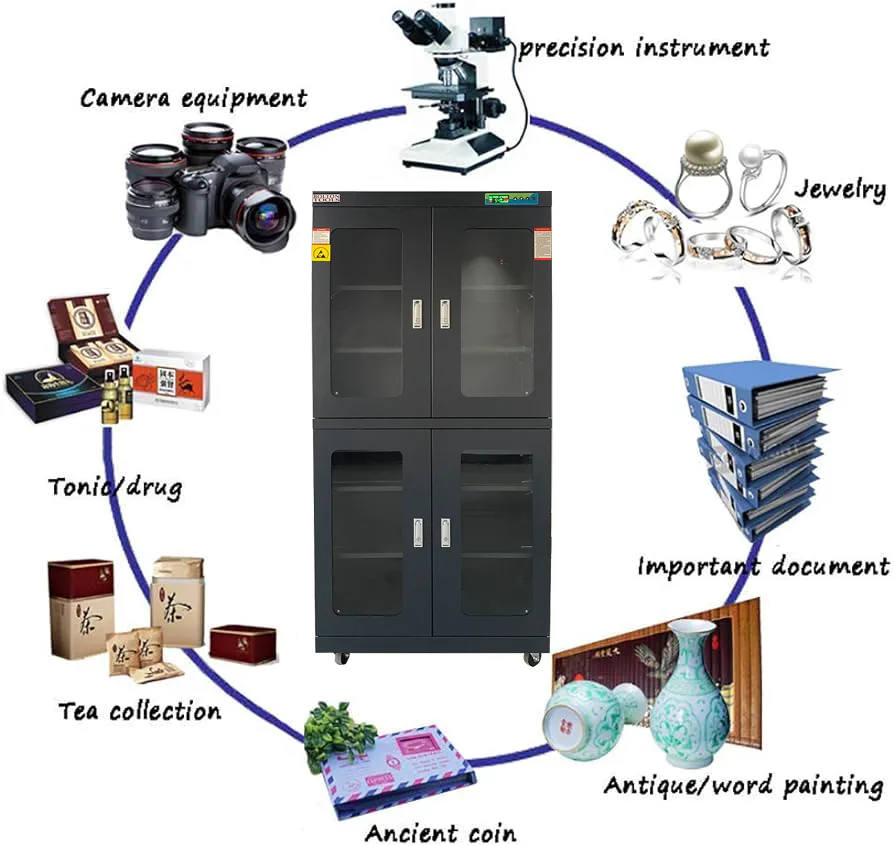
Image source: Bing (Web (fair-use with source credit))
One more thing: remove the batteries. If your binoculars have a rangefinder or electronic compass, the batteries can corrode over time. Leaked battery acid damages the internal contacts and the electronics.
Store the batteries separately in a cool dry place.
Extreme Temperatures
Living where temperatures go below freezing or above 40°C? Storage becomes tricky. The main issue is what happens when you bring the binoculars inside.
Cold binoculars exposed to warm indoor air will condense moisture on the lenses. That moisture can get into the focus mechanism and the internal surfaces. Bring frozen binoculars inside?
Leave them in the case for an hour. Let them warm up slowly. The condensation forms on the case instead of the glass.
Heat is worse. Temperatures above 50°C can damage the lubrication in the focus mechanism. The grease can thin out and run.
It can also dry out and become stiff. Heat accelerates O-ring degradation. Never store binoculars in a car during summer, especially in the glovebox or trunk.
Need to store them in a vehicle? Use an insulated case. Add a silica gel pack.
Bring them inside if you're not using them for more than a day.
Specialty Binoculars
Roof prism binoculars and porro prism binoculars have different storage needs. Roof prisms are more compact and sealed. They're generally more tolerant of humidity and dust.
Porro prisms have offset barrels that are more exposed. The prisms are held in place by brackets that can shift if the binoculars are dropped or stored under pressure.
Have porro prism binoculars? Store them upright. Don't stack anything on top of them.
The weight can push the prisms out of alignment. Roof prism binoculars are more robust. They can be stored in any orientation.
Waterproof binoculars with nitrogen purging need special attention to the seals. The O-rings that keep the nitrogen in can dry out in dry climates. Store them for a long time?
Check the O-rings annually. A thin layer of silicone grease keeps them flexible. Some manufacturers include this in their maintenance guides.
Common Storage Mistakes That Kill Optics
Most damage to binoculars comes from a handful of mistakes. Avoid these and your optics will last a decade or more.
Storing them with the lens caps off. Dust settles on the glass. Dust contains silica particles that are harder than the lens coating. Wipe that dust off, and you scratch the coating.
Always put the caps on before storage.
Leaving them in a hot car. This is the number one killer of binoculars. The heat degrades the seals, the lubrication, and the internal coatings. Even one afternoon in a car can cause damage that shows up months later.
Storing them in a damp basement or garage. Humidity above 60% for more than a few days creates the perfect environment for lens fungus. The fungus eats the coating and leaves permanent marks. Once it's there, professional cleaning is the only option.
Putting them in a case while still wet. Been out in the rain or fog? Dry the binoculars before storing them. Wipe down the exterior with a dry cloth.
Open the case and let the binoculars air dry for an hour. A damp case becomes a breeding ground for mold.
Stacking things on top of them. Pressure on the body can misalign the prisms. This is especially true for porro prism models. Store them in a spot where nothing will be placed on top.
Forgetting to check them periodically. Store binoculars for a year without checking them? You might find fungus, corrosion, or a dead battery when you finally pull them out. A quick inspection every three months catches problems early.
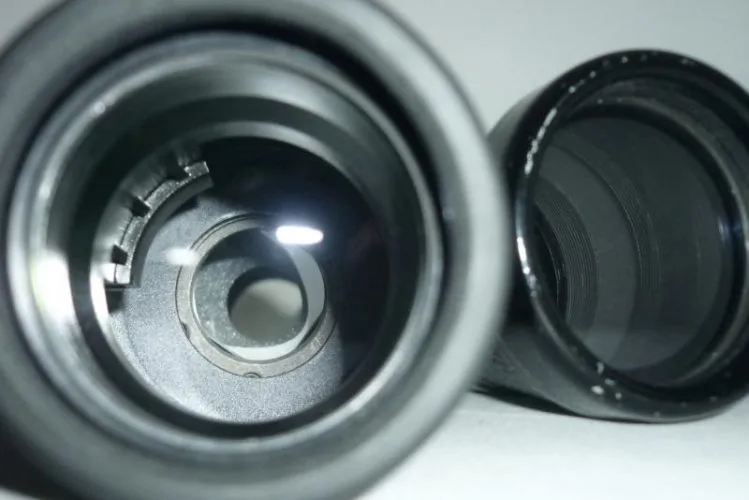
Image source: Bing (Web (fair-use with source credit))
The image above shows what lens fungus looks like. On the left is a clean lens. On the right is a lens with the telltale spiderweb-like growth.
Once it reaches that stage, the coating is permanently etched.
Step-by-Step Storage Workflow for Any Situation
Here's a workflow that works for any set of binoculars and any storage duration. Follow these steps in order.
Step 1: Clean the binoculars. Use a blower brush to remove dust from the lenses. Wipe the lenses with a microfiber cloth. A drop of lens cleaning solution helps if there are smudges.
Clean the body with a soft cloth to remove dirt and oils.
Step 2: Dry them thoroughly. If the binoculars are damp from rain or fog, leave them out in a dry room for an hour. Let the air circulate. Don't put them in a case until they're completely dry.
Step 3: Adjust the focus. Set the focus knob to infinity or the diopter to zero. This reduces tension on the internal mechanism during storage. Some manufacturers recommend this in their manuals.
Step 4: Remove the batteries. If your binoculars have electronics, take the batteries out. Store them separately in a cool dry place. Rechargeable batteries are less prone to corrosion, but it's still best to remove them.
Step 5: Put the lens caps on. Both objective lens caps and eyepiece caps. The caps protect the glass from dust and accidental contact.
Step 6: Place them in the case. A hard case offers more protection than a soft pouch. Using a soft pouch? Make sure it's clean and dry.
Don't put the binoculars into a dirty case.
Step 7: Add desiccant. Drop a silica gel pack into the case. One pack per case is usually enough. In a humid environment, use two packs.
Check the color indicator every month.
Step 8: Choose a location. Find a spot that stays between 15°C and 25°C. Avoid direct sunlight, heating vents, and exterior walls. A closet or drawer in a climate-controlled room is ideal.
Step 9: Orient them properly. Store binoculars upright. For porro prism models, make sure no pressure is on the barrels. For roof prism models, any orientation works but upright is safest.
Step 10: Set a reminder. Put a calendar reminder every three months to check on them. Open the case, inspect the lenses, check the silica gel, and look for any signs of moisture or fungus. Address any issues immediately.
This workflow covers everything from a weekend trip to a year in storage. The only thing that changes is the frequency of checks and the amount of desiccant you use.
Real-World Scenarios: What Works and What Doesn't
Scenario 1: The coastal birdwatcher. You live near the ocean. Humidity sits at 75% most of the year. You use your binoculars for two hours every weekend.
Wipe them down and put them in a soft case in the closet? Within three months, you'll see fine haze on the internal lenses. That's the beginning of fungus.
The fix is a dry cabinet or a sealed container with desiccant. Our research shows that coastal users who skip active humidity control see lens damage within six months. Those who use a dry cabinet have clean optics for years.
Scenario 2: The car trunk storer. You keep a pair of budget binoculars in your trunk for spontaneous wildlife viewing. Summer temperatures inside a closed car can hit 60°C. After one season, the focus wheel feels stiff.
After two, the O-rings start to leak. The internal nitrogen escapes, and the lenses fog up when the temperature drops. This is a classic case where replacement costs more than proper storage.
Better approach: bring them inside and use a hard case.
Scenario 3: The seasonal hunter. You use binoculars for three months during deer season. The rest of the year they sit in a gun safe. The safe is in a basement.
Basements are damp. The silica gel packs in the safe get saturated and stop working. Next season arrives, and you find a spiderweb pattern on the glass.
The lenses need professional recoating or replacement. The fix is simple: check the desiccant every month and replace it when it changes color. Or use a dry cabinet inside the safe.
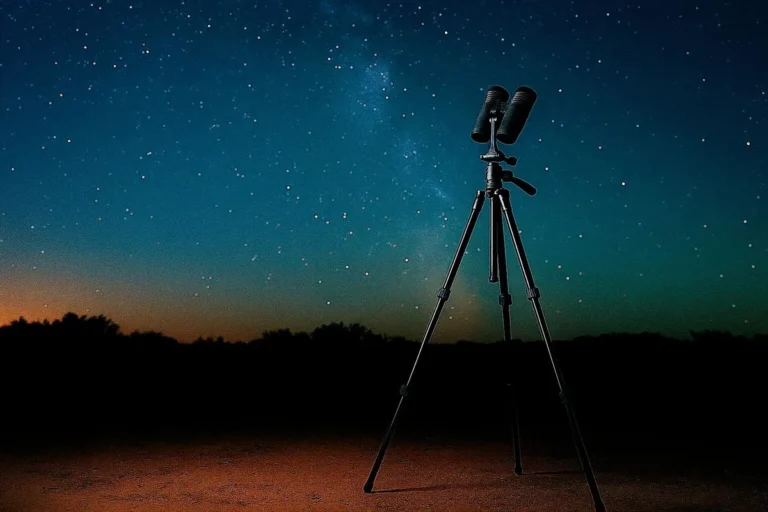
Scenario 4: The traveling astronomer. You take your large aperture binoculars to dark sky sites. They get cold at night. You bring them back to a warm hotel room.
Condensation forms on the lenses and inside the eyepieces. The solution: seal them in a plastic bag before bringing them inside. The bag traps the cold air.
The binoculars warm up slowly, and the condensation forms on the bag instead of the glass. This trick works for any cold weather activity.
Scenario 5: The everyday user. You have a mid-range pair of roof prism binoculars. You use them a few times a week. You keep them in a soft case on a shelf in your living room.
The climate is moderate. Temperature is stable. Humidity is around 40%.
This is the ideal scenario. Your binoculars will last for decades with minimal maintenance. Just clean them before putting them away and check them once a year.
Frequently Asked Questions
Can I store binoculars in a car?
Not for long periods. Summer heat can exceed 50°C inside a car, which degrades seals and lubrication. Winter cold causes condensation when you bring them inside.
For short trips, an insulated case helps. Regular car storage is a leading cause of optical damage according to aggregate user reports.
How often should I check stored binoculars?
Every three months for long-term storage. Open the case, inspect the lenses for haze or spots, check the silica gel color, and look for any signs of moisture. In a humid climate, check monthly.
Catching fungus early means a simple cleaning. Waiting six months often means permanent damage.
Do I need a dry cabinet for binoculars?
Only if you live in a humid climate or store them for months at a time. A dry cabinet maintains a set humidity level between 30% and 50%. If your indoor humidity stays below 50% and you use your binoculars regularly, a hard case with silica gel packs is sufficient.
Should I store binoculars with the lens caps on or off?
On. Dust contains silica particles that are harder than the lens coating. Every time you wipe dust off a dry lens, you create microscopic scratches.
The caps block dust and prevent accidental contact. Just make sure the caps are clean before you put them on.
What's the best way to store binoculars long term?
Clean them thoroughly. Remove the batteries. Set the focus to infinity.
Put the lens caps on. Place them in a hard case with reusable silica gel packs. Store the case in a climate controlled area between 15°C and 25°C.
Check the silica gel every three months. Inspect the lenses every six months.
Can I store binoculars in a gun safe?
Yes, but only if you control the humidity. Gun safes often have internal moisture problems. Add silica gel packs or a dehumidifier rod.
Check the humidity level inside the safe. If it stays above 50%, the binoculars are at risk. A small hygrometer gives you peace of mind.
Final Decision Guide
Here is your decision tree in plain language. Match your situation to the recommendation.
| If you are… | Then do this… |
|---|---|
| Using them daily in a dry climate | Soft case, lens caps, closet shelf. Check annually. |
| Using them weekly in a humid climate | Hard case, silica gel pack, indoor storage. Check monthly. |
| Storing for a season (3 months) | Clean, remove batteries, hard case, silica gel. Check quarterly. |
| Storing for a year or more | Dry cabinet or sealed container, desiccant, remove batteries. Check quarterly. |
| Storing in a vehicle | Insulated case, bring inside when not in use for more than a day. |
| Storing in a basement or garage | Dry cabinet only. Basements and garages are too humid for long term storage. |
If you have a collection of binoculars or your primary pair is a premium model, invest in a dry cabinet. It's the single best solution for long term optical storage. The cost is far less than a single professional cleaning or repair.
If you have a single pair in a moderate climate with regular use, the simple workflow we covered earlier is all you need. Clean them. Cap them.
Case them. Keep them cool and dry. You're done.
The most important thing to remember is this: binoculars are tough when they're in use. They survive rain, dust, and drops. But they're fragile when they sit.
Moisture, heat, and neglect do more damage than any field use ever will. Treat storage as seriously as you treat the glass itself, and your binoculars will deliver clear, sharp views for as long as you own them.