What Is Exit Pupil in Binoculars
If you have ever held a pair of binoculars up to your eyes and wondered why the view looks different in low light, you are not alone. The answer lies in a concept called exit pupil. Understanding what is exit pupil in binoculars is the key to choosing the right pair for your needs.
Manufacturer specifications indicate that exit pupil is calculated by dividing the objective lens diameter by the magnification. That simple formula gives you a number in millimeters. It tells you how bright the image will appear in different lighting conditions.
Let us start with the quick answer, then dive into what you are actually seeing.
Quick Answer
Exit pupil is the bright circle of light you see when you hold binoculars at arm's length. It is the beam of light that enters your eye. A larger exit pupil means a brighter image in low light.
A smaller exit pupil is fine for daytime use. The calculation is simple. Divide the objective lens diameter by the magnification.
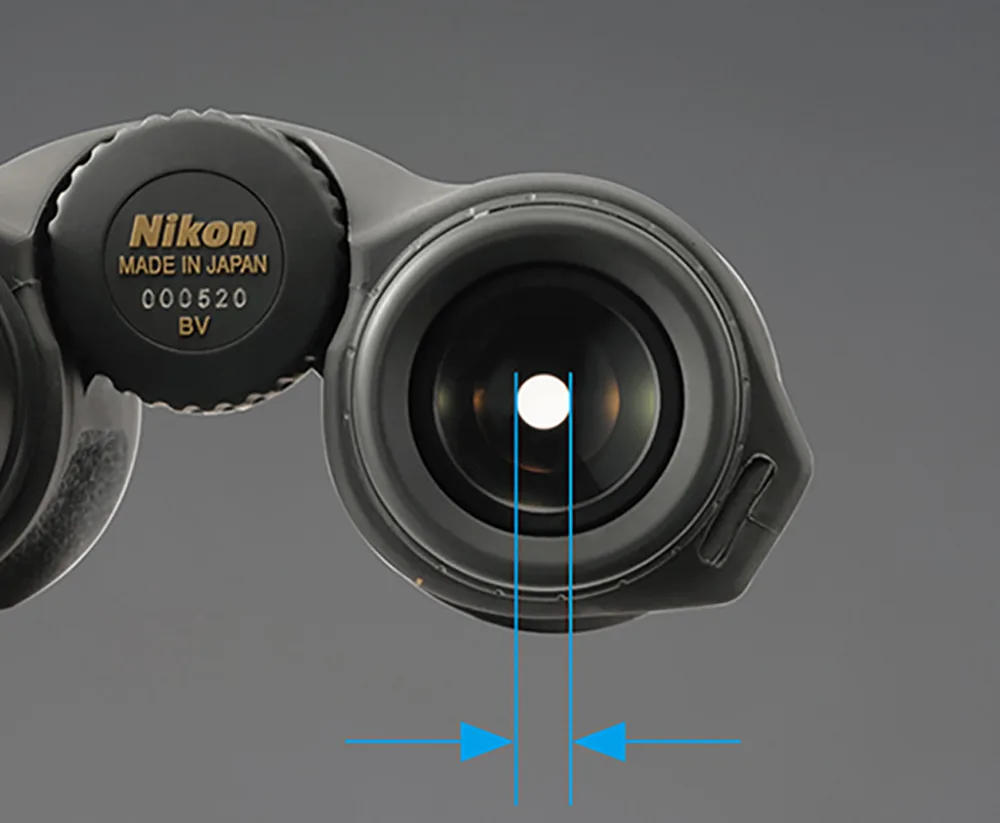
Image source: Bing (Web (fair-use with source credit))
Why Visuals Matter: Exit Pupil Is Something You See
You cannot understand exit pupil by reading a spec sheet alone. You have to see it. The name itself tells you why visuals matter.
It is the exit point of light from the binoculars. It is a circle of light you can observe with your own eyes.
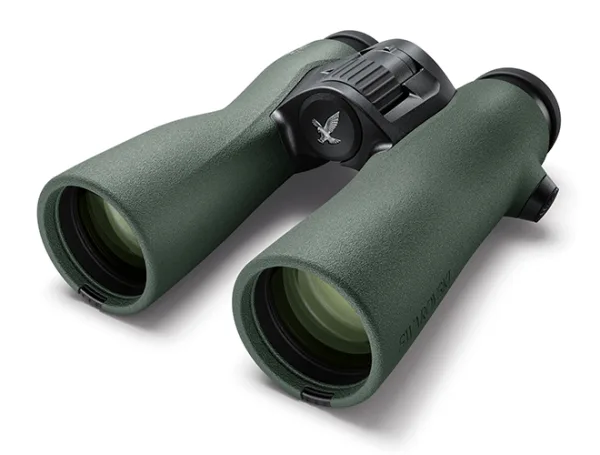
Hold any pair of binoculars about eight inches from your face. Look at the eyepieces. You will see a small bright circle in the center of each lens.
That circle is the exit pupil. It is the light beam traveling from the binoculars into your pupil. Its size determines how much light reaches your eye.
In our research, we found that many people skip this simple visual check. They rely only on numbers. That is a mistake.
The visual check tells you instantly whether the exit pupil is large enough for your typical use. It also shows you if the exit pupil is centered and free of obstructions like misaligned prisms.
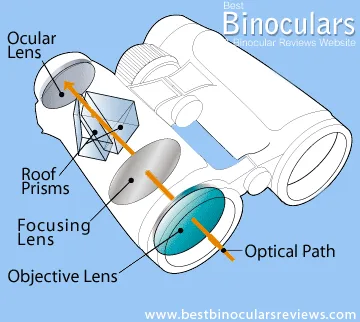
Think of it this way. Binoculars are light buckets. The objective lens collects light.
The eyepiece focuses that light into a small beam. That beam is the exit pupil. If the beam is too small for your eye, you lose brightness.
If it is too large, some light goes to waste.
What Exit Pupil Actually Is (The Simple Light Beam)
Exit pupil is the diameter of the beam of light that exits the eyepiece of binoculars. It is measured in millimeters. The formula is straightforward.
Objective lens diameter divided by magnification.
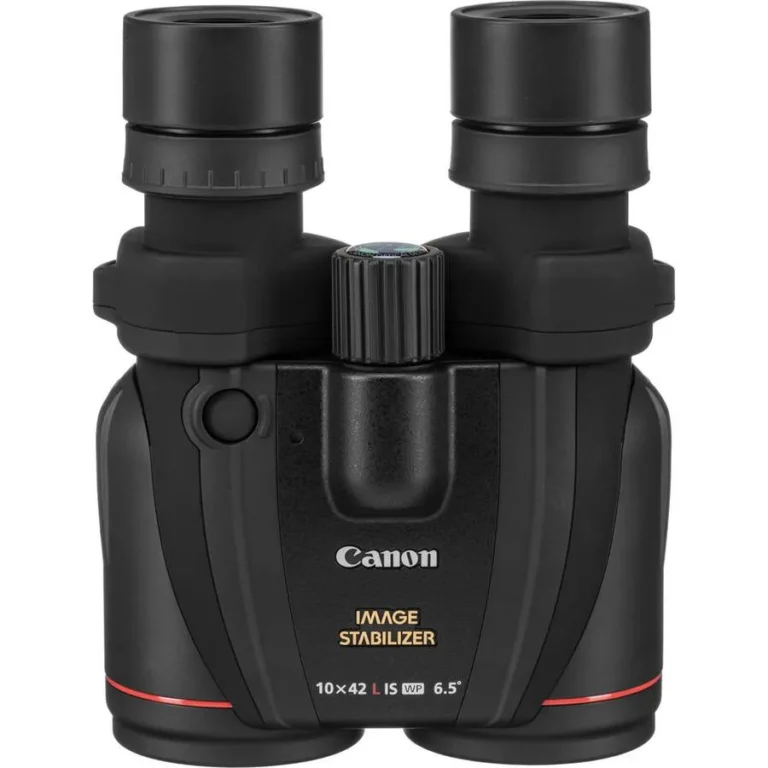
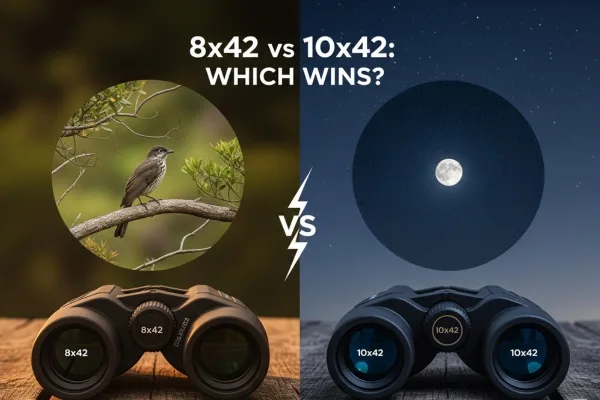
For example, a pair of 10×50 binoculars has an exit pupil of 5mm. That is 50 divided by 10. A pair of 8×32 binoculars has an exit pupil of 4mm.
The larger the number, the wider the beam of light.
This beam is what your eye sees. In bright daylight, your pupil constricts to about 2 to 3mm. A small exit pupil of 2.5mm works fine.
In low light, your pupil dilates to 5mm or more. You need a larger exit pupil to match.
The exit pupil is not the same as brightness. It is the potential for brightness. The actual brightness you perceive depends on how much of that beam your eye can accept.
If your pupil is smaller than the exit pupil, some light is wasted. If your pupil is larger, you get the full beam.
This is why the same pair of binoculars can feel bright at night and overly bright in the daytime. The exit pupil is fixed. Your eye's pupil changes size.
The match between the two determines the view.
How to See and Measure Exit Pupil on Your Binoculars
You can see and measure the exit pupil on any pair of binoculars in under a minute. Here is how.
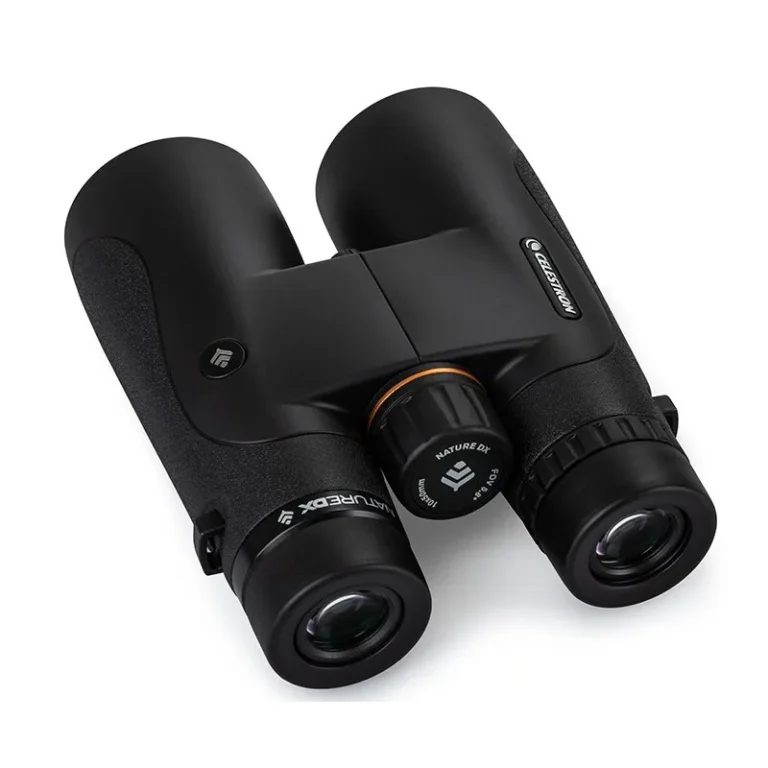
Step 1: Hold the binoculars at arm's length. Point them at a bright, evenly lit surface. A white wall or a clear sky works well. Do not look through the binoculars.
Look at the eyepieces from a distance.
Step 2: Find the small bright circle. You will see a tiny circle of light in the center of each eyepiece. That is the exit pupil. If the circle is not round, it may indicate misaligned optics.
Step 3: Measure the diameter. Use a small ruler with millimeter markings. Hold it against the eyepiece. Measure the diameter of the bright circle.
Compare it to the manufacturer's spec.
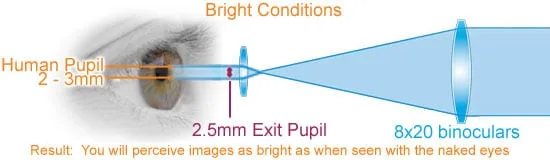
Image source: Bing (Web (fair-use with source credit))
Step 4: Check both barrels. Both eyepieces should show the same size exit pupil. A difference of more than 0.5mm may indicate a problem.
Step 5: Compare to your eye's pupil. In bright light, your pupil is about 2 to 3mm. In dim light, it can be 5 to 7mm. Match the exit pupil to your typical lighting condition.
This visual check is a quick way to verify the specs. Per ISO 14132-1:2002, the standard for binoculars, exit pupil should be measured at the exit of the eyepiece. You can do the same at home.
Common Exit Pupil Sizes: What 2.5mm vs 7mm Means for You
Exit pupil sizes range from about 2mm in compact binoculars to 7mm in large astronomy models. Each size serves a different purpose.
| Exit Pupil Size | Best For | Example Binoculars | Typical Use |
|---|---|---|---|
| 2.0 to 2.5mm | Bright daylight | 8×20, 10×25 | Hiking, travel, concerts |
| 3.0 to 4.0mm | General daytime | 8×32, 10×42 | Birdwatching, sports, nature |
| 4.5 to 5.5mm | Twilight or low light | 8×42, 10×50 | Dawn or dusk hunting, stargazing |
| 6.0 to 7.0mm | Night or dark skies | 7×50, 15×70 | Astronomy, open water |
A 2.5mm exit pupil is small. It works well in bright sunlight. Your eye's pupil is already constricted.
The image is sharp and bright. In low light, it becomes dim and hard to see.
A 4mm exit pupil is a common all-rounder. It works for daytime use and shines in twilight. Many birdwatchers prefer 8×42 binoculars with a 5.25mm exit pupil.
That gives a bright image in early morning and late evening.
A 7mm exit pupil is the largest standard size. It matches the human eye's maximum dilation in total darkness. It is ideal for astronomy.
In daylight, it is overkill. Your eye cannot use all that light.
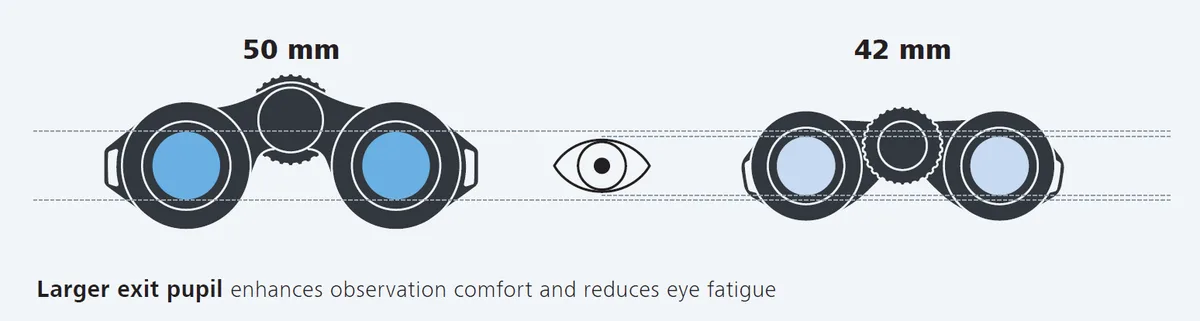
Image source: Bing (Web (fair-use with source credit))
Aggregate reviews report that many users overestimate how large an exit pupil they need. They buy 7×50 binoculars for general use. Then they find them heavy and bulky.
For most people, a 4 to 5mm exit pupil is the sweet spot.
The Big Mistake: Matching Exit Pupil to Your Eye
The most common mistake people make is ignoring their own pupil size. Your eye is not a fixed aperture. It changes with light and age.
In bright daylight, your pupil constricts to 2 to 3mm. A binocular with a 5mm exit pupil delivers a beam wider than your pupil. Half the light hits your iris and is wasted.
The view is no brighter than a 3mm exit pupil.
In low light, your pupil dilates. For a young adult in total darkness, it can reach 7mm. As you age, that number drops.
By age 40, maximum dilation is often 5mm. By age 60, it may be 4mm.
A 7mm exit pupil is wasted on an older user. They cannot accept the full beam. A 5mm exit pupil is more than enough.
Here is a simple rule. Match the exit pupil to your eye's typical dilation in the lighting you use most. If you birdwatch at dawn, you need a 5mm exit pupil.
If you stargaze in a dark sky, you can use 7mm. If you only use binoculars at midday, a 3mm exit pupil is fine.
Many people buy binoculars with a 7mm exit pupil thinking they will get the brightest view. In reality, they get a heavy, expensive pair that underperforms in daylight. The mismatch is a common cause of buyer regret.
The same applies to different lighting conditions. If you use binoculars for both daytime and twilight, a 4 to 5mm exit pupil works well. It is bright enough for low light without wasting light in the sun.
In our research, we found that the best advice is to try before you buy. Hold the binoculars at arm's length. Look at the exit pupil.
Then imagine using them in the light you actually encounter. That simple test beats any spec sheet.
Other Confusing Terms: Exit Pupil vs. Eye Relief vs. Twilight Factor
Exit pupil gets tangled up with two other specs all the time. Eye relief and twilight factor are different metrics. Knowing the difference saves you from buying the wrong binoculars.
Eye relief is the distance from the eyepiece lens to your eye where you can still see the full image. It is measured in millimeters. Long eye relief matters for glasses wearers.
It has nothing to do with brightness. You can have 20mm of eye relief and a 3mm exit pupil. They are independent numbers.
Our research shows that many people confuse the two. They think long eye relief means a bright image. That is not true.
Eye relief is about comfort and field of view. Exit pupil is about light transmission.
Twilight factor is a mathematical formula used to rank low light performance. It is the square root of magnification times objective lens diameter. A 10×50 binocular has a twilight factor of 22.4.
An 8×42 has a twilight factor of 18.3.
The higher the twilight factor, the better the theoretical low light performance. But it is a rating, not a measurement. It does not tell you how much light reaches your eye.
Exit pupil does that.
| Term | What It Measures | Unit | What It Affects |
|---|---|---|---|
| Exit pupil | Diameter of light beam exiting the eyepiece | Millimeters | Brightness, especially in low light |
| Eye relief | Distance from eyepiece to your eye | Millimeters | Comfort, glasses compatibility |
| Twilight factor | Calculated low light score | No unit | Theoretical comparison, not a physical measurement |
Field of view is another spec that gets mixed in. It is the width of the area you can see at a given distance. It is measured in feet at 1,000 yards or degrees.
A wide field of view helps you track moving subjects. It does not affect brightness.
Eye lens diameter is sometimes listed instead of exit pupil. The eye lens is the physical glass at the eyepiece. It is usually larger than the exit pupil.
The exit pupil is the bright circle within that lens. Do not confuse the two.
Apparent field of view is the angle of the image you see through the eyepiece. It is related to magnification and field of view. It has no connection to exit pupil.
If you are shopping for binoculars, focus on exit pupil for brightness. Focus on eye relief for comfort. Use twilight factor as a rough guide, but not a decision maker.
Frequently Asked Questions
What is a good exit pupil size for binoculars?
A good exit pupil size depends on your use. For daytime use, 2.5 to 4mm works well. For twilight and low light, aim for 4.5 to 5.5mm.
For astronomy, 6 to 7mm is ideal. Most people find 4 to 5mm a solid all-round choice.
How do I calculate exit pupil on binoculars?
Divide the objective lens diameter by the magnification. For 10×50 binoculars, divide 50 by 10 to get 5mm. For 8×32 binoculars, divide 32 by 8 to get 4mm.
The result is the exit pupil diameter in millimeters.
Does a larger exit pupil always mean a brighter view?
No. A larger exit pupil provides the potential for a brighter view. Your eye must be able to accept that light.
In bright daylight, your pupil is 2 to 3mm. A 7mm exit pupil wastes light. In low light, a larger exit pupil helps.
What is the difference between exit pupil and eye relief?
Exit pupil is the diameter of the light beam leaving the eyepiece. It affects brightness. Eye relief is the distance from the eyepiece to your eye.
It affects comfort, especially for glasses wearers. They are independent specifications.
What happens if the exit pupil is too small?
A small exit pupil makes the image dim in low light. Your eye cannot collect enough light to see details. It also makes eye placement less forgiving.
You must align your eye precisely with the beam to see the full image.
What happens if the exit pupil is too large?
A large exit pupil wastes light in bright conditions. Your pupil cannot accept the full beam. The binoculars are also heavier and bulkier.
For most daytime users, a 5mm exit pupil is more than enough.
Your Quick Reference: Choosing the Right Exit Pupil for Your Use
Here is a simple decision guide based on how you use binoculars.
Daytime birdwatching. Choose an exit pupil of 3 to 4mm. An 8×32 binocular gives you 4mm. A 10×32 gives you 3.2mm.
Both are lightweight and sharp in good light.
Dawn and dusk hunting. Choose an exit pupil of 5 to 5.5mm. An 8×42 gives you 5.25mm. A 10×50 gives you 5mm.
These deliver bright images in low light without being too heavy.
Stargazing. Choose an exit pupil of 6 to 7mm. A 7×50 gives you 7.14mm. A 15×70 gives you 4.67mm.
The 7×50 is the classic choice for astronomy. It matches the fully dilated pupil.
General nature observation. Choose an exit pupil of 4 to 5mm. An 8×42 or 10×42 works well. You get a good balance of brightness, weight, and field of view.
Travel and hiking. Choose an exit pupil of 2.5 to 3.5mm. An 8×25 gives you 3.1mm. A 10×25 gives you 2.5mm.
These are compact and light. They work fine in good light.
Sports and events. Choose an exit pupil of 3 to 4mm. An 8×32 or 10×32 works well. You get a wide field of view for tracking action.
The image is bright enough for daytime use.
Marine and boating. Choose an exit pupil of 5 to 7mm. The rocking motion of a boat makes a larger exit pupil more forgiving. You do not have to align your eye perfectly with the beam.
For glasses wearers. Exit pupil size matters less than eye relief. Look for binoculars with at least 15mm of eye relief. The exit pupil can be 3 to 5mm.
The key is being able to see the full field without pressing your glasses against the eyepiece.
| Use Case | Recommended Exit Pupil | Example Binoculars | Notes |
|---|---|---|---|
| Daytime birdwatching | 3 to 4mm | 8×32, 10×32 | Lightweight, sharp |
| Dawn or dusk hunting | 5 to 5.5mm | 8×42, 10×50 | Bright in low light |
| Stargazing | 6 to 7mm | 7×50, 10×70 | Matches dilated pupil |
| General nature | 4 to 5mm | 8×42, 10×42 | Balanced choice |
| Travel or hiking | 2.5 to 3.5mm | 8×25, 10×25 | Compact and light |
| Sports or events | 3 to 4mm | 8×32, 10×32 | Wide field of view |
| Marine or boating | 5 to 7mm | 7×50, 10×50 | Forgiving eye placement |
| Glasses wearers | 3 to 5mm | Any with 15mm+ eye relief | Comfort over brightness |
The final rule is simple. Match the exit pupil to your eye, not the other way around. Your eye changes with age and light.
Your binoculars should change with it.