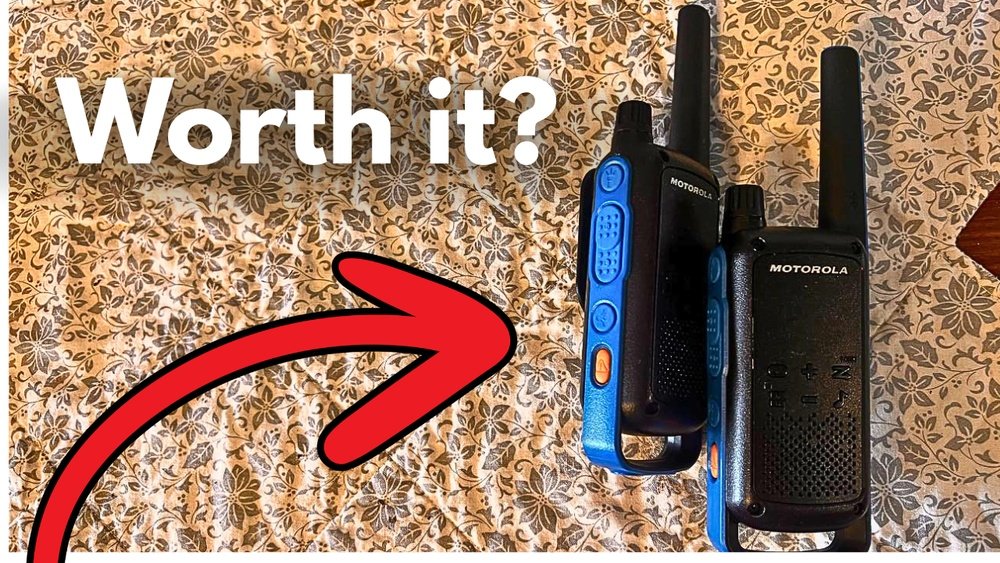
Is Motorola T800 Radio Worth It? Honest Review and Verdict
Is Motorola T800 Radio Worth It?
Imagine you’re on a hiking trail, deep in the woods, far from cell signal. You want to stay connected with your group, check the weather, and share your location if needed. This is where the Motorola T800 radio promises to help. The T800 is not just a walkie-talkie—it’s also a bridge between your phone and the outdoors, thanks to its unique Bluetooth app features. But is it actually worth your money? Let’s explore every angle to help you decide.
What Makes Motorola T800 Unique?
The Motorola T800 stands out from regular two-way radios because it combines classic walkie-talkie functions with modern connectivity. Most users notice two big features:
- Bluetooth App Pairing: Connects to your smartphone via the Motorola Talkabout app.
- Location Sharing & Messaging: Lets you share locations and send messages, even when you have no cell service.
These features make the T800 attractive for outdoor lovers, families, and anyone who values reliable communication away from civilization. While most radios stick to basic voice communication, the T800’s app integration adds a whole new level—making it possible to coordinate, share plans, and keep everyone informed without needing Wi-Fi or mobile networks.
For example, imagine a group of friends hiking in a national park. They can mark points of interest, send quick text updates if someone finds a shortcut, and share their GPS location if they get separated. This is especially useful for parents with kids, as it reduces worry about losing track of each other.
Non-obvious insight: If you travel in areas where phone coverage is unreliable, the T800’s app features help fill the gap, letting you stay in touch and share information safely.
Core Features And Specs
Understanding the T800’s key features is important before deciding if it’s right for you.
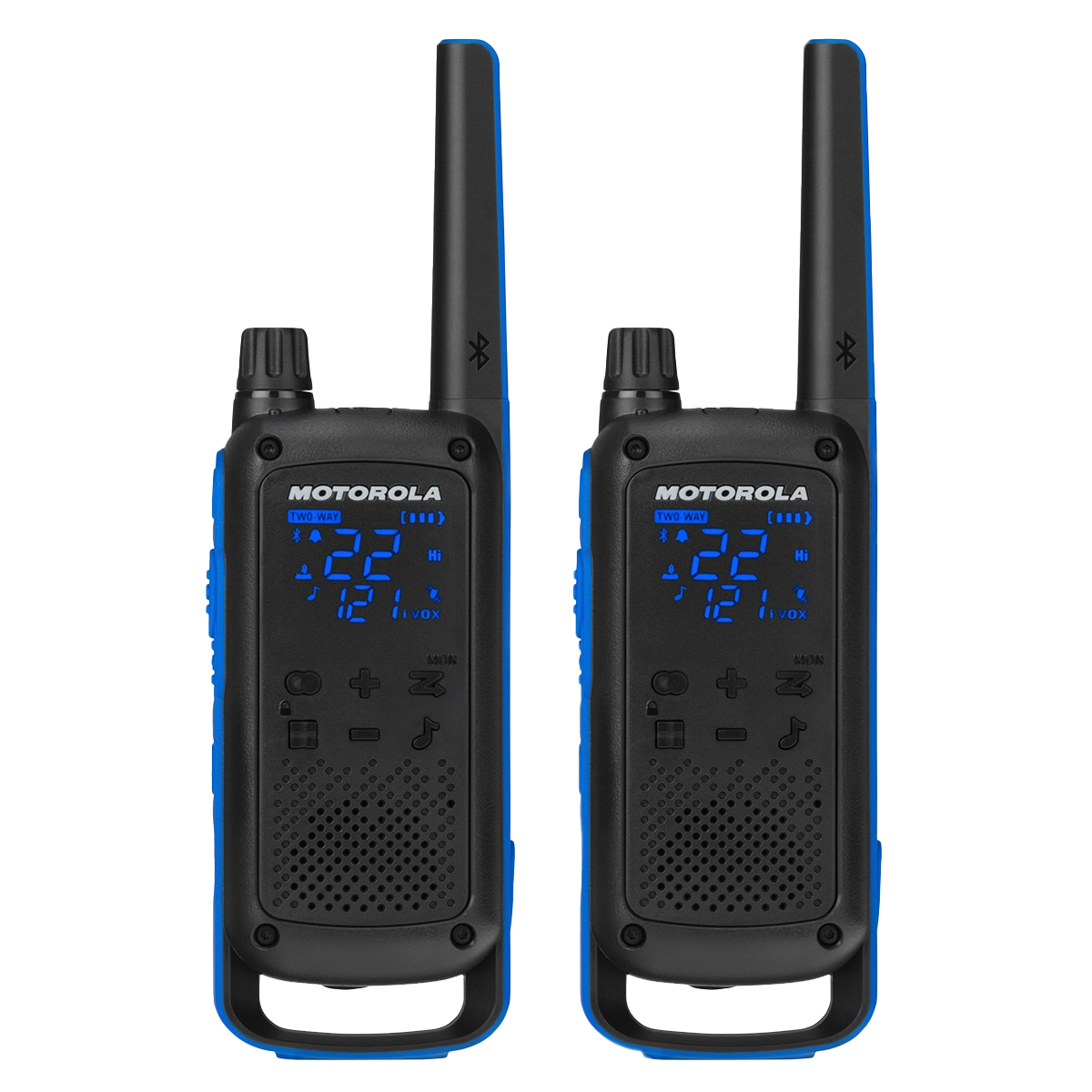
- Range: Up to 35 miles in ideal conditions (mountain-to-valley), about 1–2 miles in real-world situations like forests or cities.
- Channels: 22 FRS/GMRS channels, plus 121 privacy codes.
- Battery: Uses both rechargeable NiMH batteries (included) and standard AA batteries.
- Weather Alerts: NOAA weather channels and alerts.
- Durability: IPX4 weatherproof rating.
- Bluetooth Connectivity: Links to your phone for offline messaging, location sharing, and more.
- Flashlight: Built-in LED for emergencies.
Let’s compare the T800 to two similar models—the T600 and T460—to see how it stacks up.
| Model | Range (max) | Bluetooth | Weatherproof | Battery Type | NOAA Alerts |
|---|---|---|---|---|---|
| T800 | 35 miles | Yes | IPX4 | NiMH/AA | Yes |
| T600 | 36 miles | No | IP67 | NiMH/AA | Yes |
| T460 | 35 miles | No | IP54 | NiMH/AA | Yes |
Insight: The T800’s Bluetooth app makes it stand out, but the T600 offers better waterproof protection. If you often hike near rivers or in heavy rain, the T600 might last longer if dropped in water. Meanwhile, the T460 is simpler and more affordable, but lacks advanced features.
Another detail to note is the privacy codes. With 121 codes, the T800 helps reduce unwanted interference from other radio users in busy areas. This is helpful for popular parks and events where many people use radios.
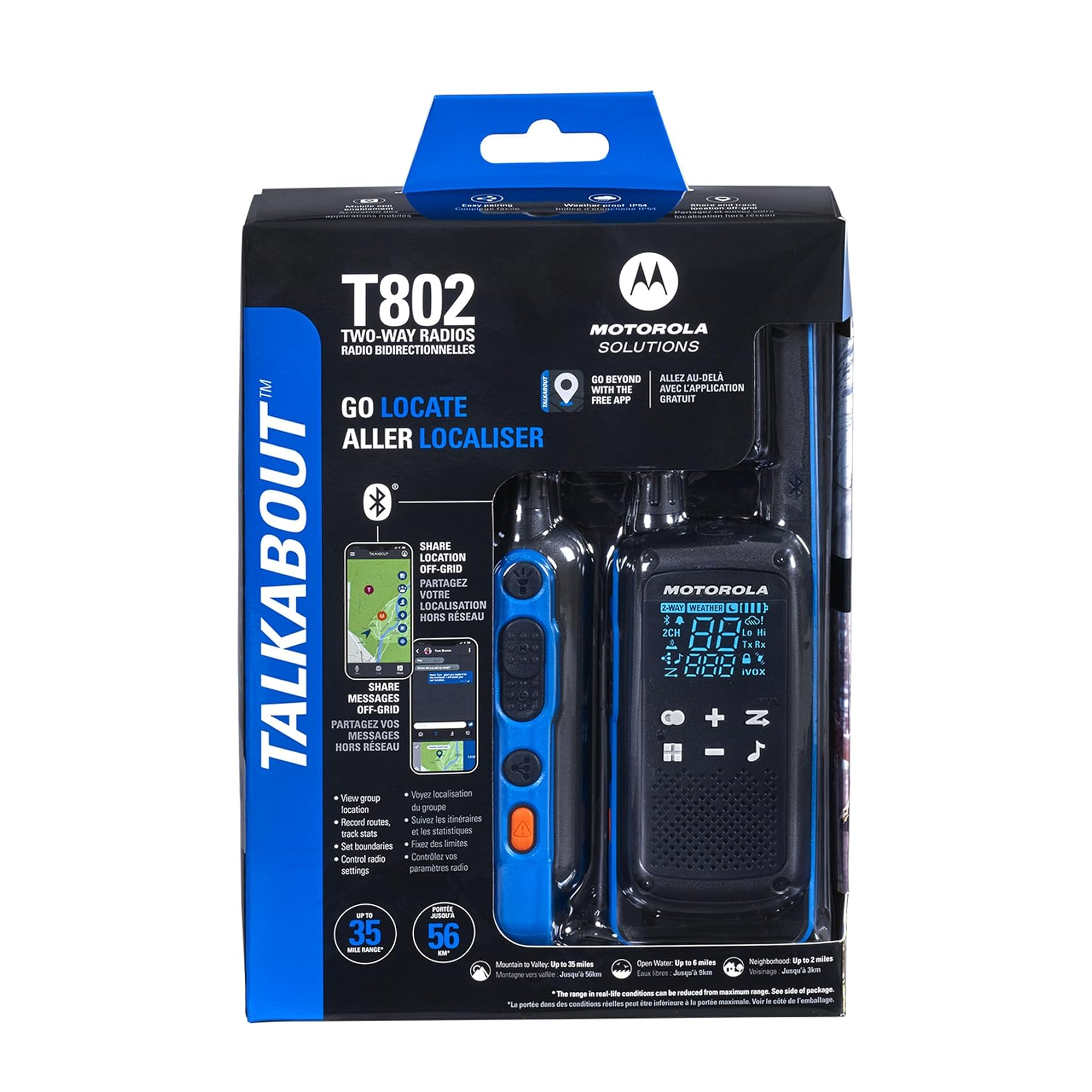
Motorola Talkabout App: Real Benefits
The T800’s Motorola Talkabout app is its main selling point. Here’s what you get:
- Messaging Without Cell Signal: You can send text messages, share locations, and plan routes. This works even if your phone has no signal, as long as you’re connected to the T800 via Bluetooth.
- Location Sharing: Perfect for families or groups. If someone gets separated, you can see their last known location.
- Easy Group Management: Create groups and manage who can contact you.
- Offline Maps: Download maps before your trip and use them through the app.
The app is especially helpful for tracking group members on tricky trails or in crowded places. Parents can check if their children are nearby, or hikers can see if someone is lagging behind.
Non-obvious insight: The app only works within Bluetooth range (about 100 feet). Messages and location sharing are sent via radio signals, not the internet, so don’t expect smartphone-style speed. This means you can’t use the app to reach people miles away unless you’re also using the radio’s voice communication.
Another benefit is route planning. You can mark waypoints or meeting spots before your trip, helping everyone stay organized even if you split up.
Real-world Performance
On paper, the T800 claims up to 35 miles of range. But real users know that walkie-talkie range depends on terrain, weather, and obstacles.
- Open fields: Up to 3 miles, sometimes more.
- Forests: Usually 1–2 miles.
- Urban areas: Often less than 1 mile.
A test by outdoor enthusiasts found the T800’s actual range was about 1. 5 miles in thick woods, and just under 1 mile in city blocks. In ideal conditions (mountain to valley, clear line of sight), the full 35 miles is possible, but rare.
When hiking in hilly areas, expect the range to drop further, sometimes to a few hundred yards if there are many trees or rocks. On a lake or open beach, the range improves, but can still be affected by weather.
Common mistake: Beginners believe the advertised range is typical. Always expect less range in real life. If you need to cover larger areas, consider using repeaters or higher-powered radios.
Extra tip: Hold the radio upright and avoid covering the antenna for best performance. Even small changes in position can affect signal quality.
Battery Life And Charging
Battery life matters, especially for long trips. The T800 uses two types:
- NiMH Rechargeable Batteries: Last about 18 hours.
- AA Alkaline Batteries: Last about 23 hours.
Charging the NiMH batteries takes 8–10 hours. You can charge via micro-USB, which is handy if you have a power bank.
Tip: Always carry spare AA batteries. If you’re camping more than one night, rechargeables may run out, so backups keep you safe.
Battery life depends on usage. The more you use the radio for talking, messaging, or flashlight, the faster the battery drains. Cold weather can also reduce battery performance.
Non-obvious insight: If you use the Bluetooth app frequently, it will drain both your radio’s and your phone’s battery. Make sure to charge both devices fully before you leave home, and bring a portable charger.
For group trips, consider rotating radios so one is always charging while others are in use. This keeps everyone connected and avoids running out of power unexpectedly.
Durability And Build Quality
The T800 is IPX4 weatherproof, meaning it can handle splashes and light rain, but shouldn’t be submerged. The body feels solid, with rubber grips for easy handling.
- Drop Test: Survives falls from about 3 feet onto grass or dirt.
- Rain Test: Works fine after 10 minutes in light rain.
The buttons are large and well-spaced, making it easy to use with gloves or cold fingers. The belt clip is sturdy, but avoid using it on heavy backpacks—it can pop off if pulled hard.
If you need a radio for kayaking or heavy rain, choose a model with IP67 waterproofing instead. IPX4 is fine for most hiking, camping, or casual outdoor use, but not for dunking in water.
Extra tip: Use a ziplock bag or waterproof pouch for extra protection in wet environments. This simple step can extend the radio’s life.
Ease Of Use
For a radio with so many features, the T800 is surprisingly easy to use.
- Large Buttons: Good for gloves.
- Clear Display: Shows battery, channel, Bluetooth status.
- Simple Menu: Switching channels, activating Bluetooth, and scanning weather is quick.
The Talkabout app is also user-friendly, with clear icons and step-by-step instructions. However, connecting Bluetooth can take a few tries. If you’re new to radio apps, practice before your trip.
Most functions can be learned in a few minutes. The manual is clear, and Motorola provides video tutorials online. For group trips, teach everyone how to use key features—like emergency messaging and weather alerts—before you leave.
Non-obvious insight: The radio remembers the last channel and settings, so you don’t need to reset every time you turn it on. This saves time and avoids confusion.
Safety Features
Safety is a big reason people buy radios. The T800 offers:
- NOAA Weather Alerts: Get emergency warnings about storms or fires.
- LED Flashlight: Useful if you lose power or need to signal for help.
- Emergency Group Messaging: Share your location quickly in case of trouble.
Example: During a hiking trip, one user received a tornado warning via NOAA, allowing their group to seek shelter early.
The flashlight is bright enough to help you find your way in the dark or signal others. The emergency messaging feature lets you send a distress signal to your group with your location, which can be lifesaving in isolated areas.
Extra tip: Program your radio to scan weather channels automatically. This ensures you get alerts even if you’re busy.
Price And Value
The T800 usually costs between $80 and $120 for a two-pack. That’s higher than basic radios, but cheaper than professional models. You pay for the Bluetooth features and app support.
| Model | Price (2-pack) | Main Feature | Best For |
|---|---|---|---|
| T800 | $100 | Bluetooth app | Families, tech lovers |
| T600 | $110 | Waterproof | Kayakers, wet weather |
| T460 | $80 | Basic radio | Budget buyers |
Insight: If you don’t need Bluetooth or app features, a cheaper model may work just as well. But for groups who want advanced communication, the T800’s value is clear.
Consider the cost of replacement batteries and accessories. Some users find it helpful to buy extra chargers or protective cases, especially for frequent use.
Who Should Buy The T800?
The T800 is best for:
- Families: Easy to use, safe, and lets you stay connected in parks, hikes, or theme parks.
- Outdoor Groups: Share routes, locations, and messages.
- Tech Enthusiasts: Enjoy experimenting with Bluetooth and offline apps.
- Safety-Conscious Users: Get weather alerts and fast group messaging.
It’s less ideal for:
- Extreme sports: Waterproof rating isn’t enough for kayaking or heavy rain.
- Professional rescue teams: May need longer range, rugged build.
Extra tip: If you plan trips with young children or older adults, the T800’s simple interface and emergency features provide peace of mind.
Common User Complaints
No device is perfect. Some users mention these issues:
- Bluetooth Range: Only works within about 100 feet.
- Battery Charging: Slow recharge time for NiMH batteries.
- App Bugs: Sometimes the Talkabout app disconnects or fails to send messages.
- Plastic Build: Not as tough as some high-end radios.
Tip: Update the app before your trip, and test Bluetooth pairing at home. Carry extra batteries to avoid running out of power.
Another complaint is the radio’s speaker volume—not as loud as professional radios. In noisy environments, you may need to hold it closer to hear clearly.
Practical Examples
Here are some scenarios where the T800 shines:
- Camping Trip: Parents use the T800 to check weather alerts and keep track of kids.
- Skiing: Groups use offline maps to plan ski routes, even with no cell signal.
- Theme Park Visit: Families separate but can share locations and messages for easy meetups.
- Road Trip: Travelers use the radios to coordinate stops when phones lose signal.
- Mountain Hiking: Hikers stay safe by sharing their position and receiving emergency alerts.
Non-obvious insight: The T800’s app can help you remember trail routes—simply mark waypoints before you leave, and share them with your group.
Another practical use: If you’re volunteering at a large event, you can organize teams, send updates, and respond to emergencies faster than relying on cell phones.
Comparing With Other Radios
Let’s compare the T800 to popular alternatives.
- Midland GXT1000: Offers longer range (up to 36 miles), more channels, but no Bluetooth/app features.
- BaoFeng BF-F8HP: Professional radio with higher power and range, but not user-friendly, and requires a license.
- Motorola T600: More waterproof, similar range, but no Bluetooth.
If you need advanced features but don’t care about app connectivity, Midland or BaoFeng models may be better. If you want easy messaging and location sharing, the T800 is a top pick.
Extra tip: Check if your group needs compatibility with other radio brands. The T800 uses standard FRS/GMRS channels, so it works with most consumer radios.
Buying Tips
Before you buy, consider:
- Usage: Will you use Bluetooth features? If not, save money with a simpler radio.
- Battery Needs: Do you have access to power for recharging? If not, bring extra AA batteries.
- Durability: For water sports, pick a radio with IP67 waterproofing.
- Group Size: The T800 works well for groups of 2–10 people. Larger groups may need radios with more channels.
Common mistake: Buying the T800 for solo use. Its app features shine when used with others.
Also, check if accessories like headsets or carrying cases are available for your model. These can improve comfort and safety, especially on long trips.
Official Support And Updates
Motorola offers good support for the T800. Firmware updates and app improvements are released regularly. Customer service can help with pairing issues or warranty claims.
For more official details and specs, visit the Motorola Solutions website.
Extra tip: Register your product to get warranty and software updates. This ensures you have the latest features and bug fixes.
Frequently Asked Questions
Is The Motorola T800 Radio Legal To Use In The Us?
Yes, the T800 uses FRS and GMRS channels. FRS channels are legal for everyone; GMRS channels require a simple FCC license. Always check local rules before using GMRS.
How Far Can The T800 Radio Reach?
Motorola claims up to 35 miles, but real range is usually 1–2 miles in forests, and less than 1 mile in cities. Open areas may allow longer distances.
Does The Motorola Talkabout App Work Without Cell Service?
Yes, the app works offline. It connects to the T800 radio via Bluetooth. You can send messages and share locations as long as your phone is paired and within Bluetooth range.
Can I Use The T800 Radio For Water Sports?
It’s IPX4 weatherproof (splash-proof), but not fully waterproof. For kayaking or boating, consider radios with IP67 rating.
What’s The Battery Life Like?
With NiMH rechargeable batteries, expect about 18 hours. With AA batteries, around 23 hours. Recharge time is 8–10 hours.

Final Thoughts
The Motorola T800 radio offers a clever mix of classic walkie-talkie power and modern app features. If you love the outdoors and want easy messaging and location sharing without cell service, it’s a smart buy. Families and groups benefit most, especially for hiking, camping, and parks. The Bluetooth app is a real advantage, but remember its limitations—range, battery, and waterproofing. Compare carefully with other radios, and choose what fits your needs. For those who value connectivity, safety, and ease of use, the T800 is worth serious consideration.