How Long Does Propane Last in a Fire Pit
If you have ever had the flame sputter out right when the conversation got good, you know the frustration. So how long does propane last in a fire pit? The honest answer is anywhere from 3 to 15 hours, depending on three things you control.
A standard 20-pound tank holds about 4.2 gallons of propane, and each gallon packs 91,500 BTUs of energy.
According to Propane Education and Research Council data, a 60,000 BTU fire pit on high will drain a 20-pound tank in roughly 6.5 hours. But that is just one scenario. Your actual runtime depends on tank size, heat output, and how high you set the flame.
Let us walk through the math so you never run out mid-evening again.
Quick Answer
A 20-pound propane tank holds about 4.2 gallons. One gallon of propane produces 91,500 BTUs. A 60,000 BTU fire pit burns roughly 0.66 gallons per hour.
That gives you around 6.5 hours on high. Lower the flame to double that time.
Image source: Bing (Web (fair-use with source credit))
The Three Variables That Determine Burn Time
Three things control runtime: tank size, fire pit BTU rating, and flame height. Get these right, and you can predict your fuel usage within 15 minutes.
Tank size is the most obvious factor. A 20-pound tank holds about 4.2 gallons of propane. A 30-pound tank holds about 7 gallons.
A 40-pound tank holds about 9.4 gallons. The bigger the tank, the longer you can run. But bigger tanks are heavier and harder to move.
If you want a portable setup, stick with a 20-pounder. If you have a permanent outdoor installation, consider a larger tank.
The BTU rating is the engine of your fire pit. It tells you how much heat the burner produces per hour. A 30,000 BTU fire pit is modest.
A 100,000 BTU fire pit is a beast. Higher BTUs mean more heat but also more fuel consumption. You can find the BTU rating on the fire pit label or in the manual.
If you are shopping for a user-friendly model, check the specs before you buy.
Flame height is the easiest variable to control. Running on low can cut your burn rate by 30 to 50 percent. If you are just relaxing with friends, a low flame creates ambiance and saves fuel.
If you need warmth on a cold night, crank it up. But know that high heat drains your tank fast.
Here is a quick comparison of common tank sizes and their typical runtime on a 60,000 BTU fire pit:
| Tank Size | Propane Gallons | Runtime on High (60K BTU) | Runtime on Low (30K BTU) |
|---|---|---|---|
| 20 lb | 4.2 | 6.4 hours | 12.7 hours |
| 30 lb | 7.0 | 10.6 hours | 21.2 hours |
| 40 lb | 9.4 | 14.2 hours | 28.5 hours |
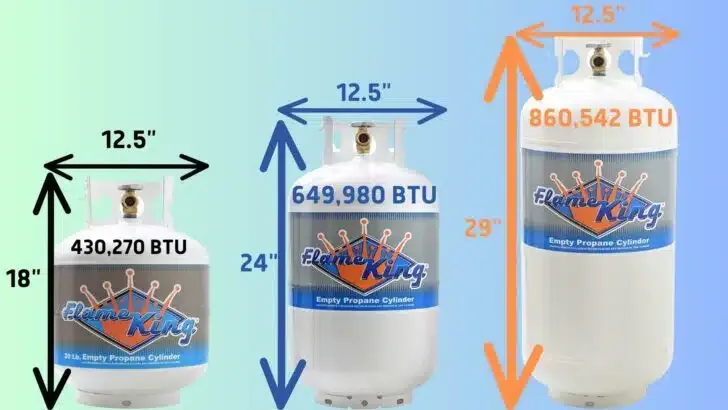
Image source: Bing (Web (fair-use with source credit))
How to Calculate Your Fire Pit's Exact Runtime
Let us walk through the calculation step by step. It is simple math. Once you know the formula, you can estimate runtime for any setup.
Step 1: Find your tank usable propane. A 20-pound tank holds about 4.2 gallons. A 30-pound tank holds about 7 gallons. You can also weigh the tank.
The tare weight is stamped on the collar. Subtract that from the current weight to find the propane weight. Divide by 4.2 to get gallons.
Step 2: Find your fire pit BTU rating. Look on the label or in the manual. It is usually a number like 50,000 or 80,000.
Step 3: Calculate gallons per hour. Divide the BTU rating by 91,500. For a 60,000 BTU pit, that is 0.66 gallons per hour.
Step 4: Divide tank gallons by gallons per hour. For a 20-pound tank on a 60,000 BTU pit, that is 4.2 divided by 0.66, which equals about 6.4 hours.
Here is a table for common scenarios:
| Fire Pit BTU | Gallons per Hour | 20 lb Tank | 30 lb Tank | 40 lb Tank |
|---|---|---|---|---|
| 30,000 | 0.33 | 12.7 hrs | 21.2 hrs | 28.5 hrs |
| 60,000 | 0.66 | 6.4 hrs | 10.6 hrs | 14.2 hrs |
| 100,000 | 1.09 | 3.9 hrs | 6.4 hrs | 8.6 hrs |
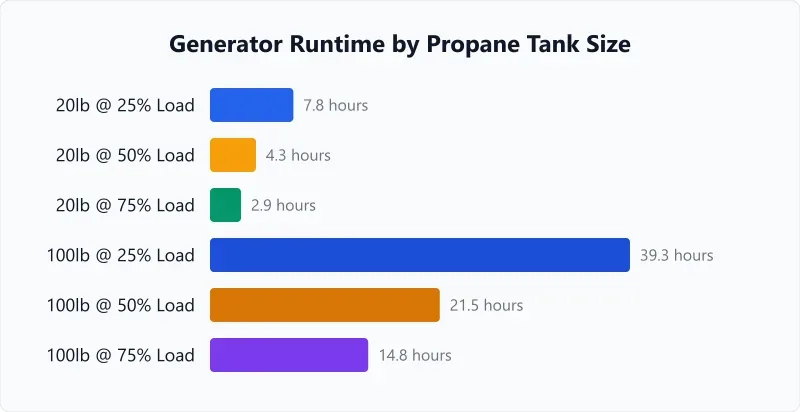
Image source: Bing (Web (fair-use with source credit))
If you are shopping for a new fire pit, affordable options exist that balance heat output with fuel efficiency. A 50,000 BTU pit is a good middle ground for most backyard gatherings.
Common Mistakes That Wreck Your Runtime Estimate
Mistake 1: Trusting the tank gauge. The dial on most propane tanks is a simple spring gauge. It measures pressure, not liquid level. It stays high until the tank is nearly empty, then drops fast.
The only reliable way to know your fuel level is to weigh the tank or use a magnetic gauge that attaches to the side.
Mistake 2: Ignoring cold weather. Propane vaporizes at different rates depending on temperature. Below 20 degrees Fahrenheit, the vapor pressure drops significantly. You might get a weak flame or no flame at all.
In winter, keep your tank in a warmer spot or use a larger tank to maintain pressure.
Mistake 3: Getting shortchanged at exchange kiosks. When you exchange a tank, you often get one that is only 80 percent full. Exchange companies fill to 80 percent to allow for expansion. You pay for a full tank but get less fuel.
Refilling at a station gives you a true 20 pounds.
Mistake 4: Not accounting for wind. Wind can blow out the flame or cause uneven burning. That wastes fuel because you have to relight and adjust. Use a wind guard or position your fire pit in a sheltered area.
Some fire pits with push-button ignition make relighting easier, but it is better to prevent the problem.
Safety Tips Every Propane Fire Pit Owner Should Know
Safety starts with proper storage. Keep your propane tank upright and at least 10 feet from any heat source. Never store it indoors or in a garage.
Propane is heavier than air and can collect in low spots, creating a fire hazard.
Always check for leaks before each use. Mix a 50/50 solution of water and dish soap. Spray it on the hose connections, the regulator, and the tank valve.
If you see bubbles, you have a leak. Turn off the tank immediately and tighten the connection. If it persists, replace the hose.
Never use a propane fire pit indoors or in an enclosed space. Propane produces carbon monoxide, which is odorless and deadly. This includes tents, garages, and screened porches.
Always use your fire pit in a well-ventilated outdoor area.
Make sure your tank has an Overfill Protection Device (OPD). All tanks manufactured after 2002 have this feature. It prevents overfilling and reduces the risk of a gas leak.
You can identify an OPD tank by the triangular handwheel on the valve.
If you are using a fire pit on a deck, make sure it is a deck-safe model. Some fire pits are designed specifically for wood surfaces and include heat shields. The National Fire Protection Association (NFPA) publishes guidelines for safe propane tank placement.
We recommend reviewing their outdoor propane safety standards.
FAQs: Propane Fire Pit Runtime Questions
How long does a 20-pound propane tank last on a fire pit?
On a 60,000 BTU fire pit running at high, expect about 6.4 hours. Drop to low heat around 30,000 BTUs, and you get roughly 12.7 hours. The exact number depends on your fire pit actual BTU rating and how high you set the flame.
Can I use a 100-pound tank for a fire pit?
Yes, you can. A 100-pound tank holds about 23.6 gallons of propane. On a 60,000 BTU fire pit, that gives you roughly 35 hours of run time on high.
The trade-off is weight and portability. A full 100-pound tank weighs around 170 pounds. You will need a permanent spot and a proper regulator.
Does cold weather affect propane burn time?
Yes, it does. Below 20 degrees Fahrenheit, propane vapor pressure drops. The tank may not deliver enough gas to maintain a full flame.
You might get a weak flame or no flame at all. In cold weather, use a larger tank to increase surface area for vaporization.
How do I know when my propane tank is almost empty?
The most reliable method is weighing the tank. Find the tare weight stamped on the tank collar. Subtract that from the current weight.
The difference is the propane weight. A 20-pound tank full weighs about 37 pounds total. When it hits 17 pounds, it is empty.
Is it cheaper to refill or exchange propane tanks?
Refilling is almost always cheaper per gallon. Exchange kiosks often give you a tank that is only 80 percent full. You pay for a full tank but get less fuel.
A local refill station fills the tank to its true capacity. Over time, refilling saves you money.
Can I run a fire pit on a 1-pound disposable propane canister?
You can, but the runtime is very short. A 1-pound canister holds about 0.23 gallons of propane. On a 30,000 BTU fire pit, that gives you roughly 45 minutes.
On a 60,000 BTU fire pit, you get about 20 minutes. These are best for small portable fire pits or camping stoves.
The Final Decision Guide: Which Tank and Setting for Your Needs
Think about your typical evening. Are you hosting a party or relaxing with a partner? Your answer changes your setup.
If you entertain often, go with a 30-pound or 40-pound tank. A 60,000 BTU fire pit on medium will run 8 to 10 hours. That covers a long dinner party without a mid-evening swap.
Keep a spare tank handy for backup.
If you use the fire pit solo or with one other person, a 20-pound tank is fine. Run it on low for ambiance. You will get 12 to 15 hours of use.
That could cover several evenings before a refill.
If you live in a cold climate, use a larger tank. A 40-pound tank has more surface area for vaporization. It performs better in freezing temperatures than a 20-pound tank.
Keep the tank in a sheltered spot if possible.
If you want maximum fuel efficiency, run the fire pit on low. Low heat cuts the burn rate by 30 to 50 percent. You get twice the runtime for the same tank.
Reserve high heat for nights when you actually need warmth.
Here is a quick reference table for the most common scenarios:
| Your Situation | Recommended Tank | Expected Runtime (60K BTU, Medium) |
|---|---|---|
| Occasional solo use | 20 lb | 8 to 10 hours |
| Regular entertaining | 30 lb | 12 to 14 hours |
| Cold weather or long events | 40 lb | 16 to 18 hours |
| Permanent installation | 100 lb | 35 to 40 hours |
If you are still deciding which fire pit fits your space, check our guide on the best options for outdoor living spaces. A model with adjustable flame control gives you the most flexibility. And if you want a model that works year-round, look for one with a high BTU rating and a durable build.
Know your tank size. Know your BTU rating. Adjust the flame to match your needs.
With those three numbers, you will never run out of propane mid-conversation again.