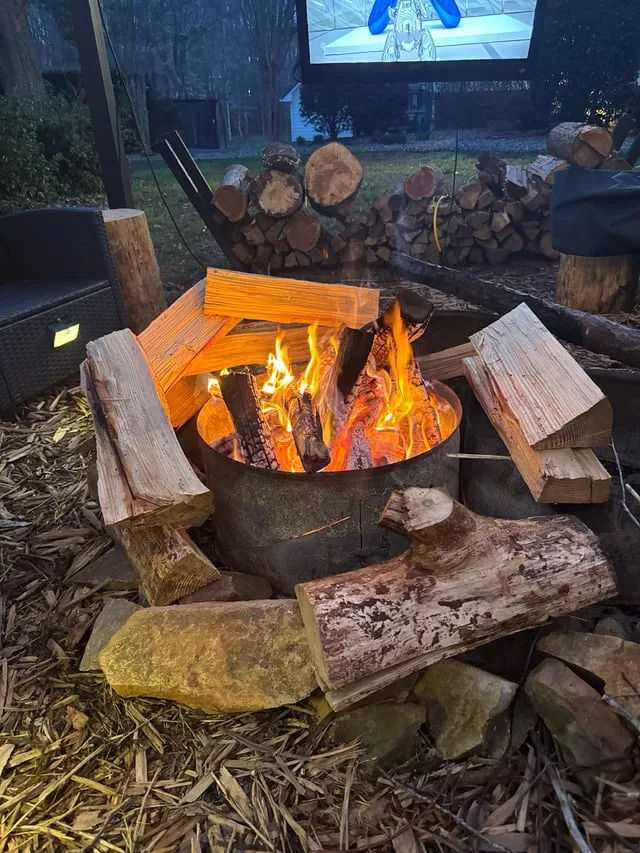
Can You Roast Marshmallows on a Fire Pit
So, can you roast marshmallows on a fire pit? The short answer is yes, but it's not a one-size-fits-all situation. The type of fire pit you own changes everything.
Wood-burning pits, gas models, and tabletop units all behave differently when you stick a marshmallow near the flame.
In our research, we found that many gas fire pits, for example, aren't designed for direct food contact. Their burners can produce soot or uneven heat. The good news is that the right setup works perfectly.
As of 2026, most portable fire pits include a cooking grate. But you still need to know the rules. Let's walk through the types one by one.
Quick Answer
Yes, you can roast marshmallows on a fire pit. Wood fire pits work best after the flames die down to glowing coals. Gas fire pits need a food-safe burner and a cooking grate.
Tabletop pits are safe but small. Always check the manufacturer's guidelines first.

Image source: Web (Bing) / thuthuatphanmem.vn (Web image (fair-use with source credit))
Step 1: Identify Your Fire Pit – Wood, Gas, or Tabletop?
Before you grab a bag of marshmallows, figure out what you're working with. This is the most important step. The answer depends entirely on the fuel and design.
If you have a wood-burning fire pit, you're looking at the classic campfire experience. These pits use logs, kindling, and a spark screen. They produce real flames and real smoke.
The heat is intense right over the fire, but it drops off quickly as you move away.
If you have a gas fire pit, it runs on propane or natural gas. These are clean-burning, with no smoke or ash. But they often have a burner system covered in lava rocks or glass beads.
Some models include a cooking grate. Others do not.
If you have a tabletop fire pit, it's usually a small portable unit. It runs on gel fuel cans or a tiny propane tank. These are popular for balconies and small patios.
They produce a low flame and very little heat.
Here's a quick comparison to help you decide:
| Fire Pit Type | Best For | Main Risk |
|---|---|---|
| Wood-burning | Classic flavor, large groups | Ash, smoke, burn bans |
| Gas (propane/natural gas) | Clean, instant heat, easy control | Soot, food-safety concerns |
| Tabletop (gel fuel/propane) | Small spaces, one or two people | Low heat, slow roasting |
Check the owner's manual or the manufacturer's website first. Look for the words "food-safe" or "cooking grate." If you're still unsure, look for a simple propane model that explicitly mentions roasting. Many of the simplest designs work well for this purpose.
Step 2: Wood Fire Pits – The Classic Choice, But Watch for Ash and Bans
If you've got a wood-burning fire pit, you're on the right track. You can absolutely roast marshmallows on it. But you need to follow a few key rules.
The biggest mistake people make is trying to roast over a full flame. A roaring fire will char the outside of the marshmallow while leaving the inside cold and raw. You want the fire to burn down to glowing embers first.
This usually takes about 45 minutes after you light the logs.
Wait for the flames to die and the coals to turn a bright orange-red. That's the sweet spot. The radiant heat from the embers cooks the marshmallow evenly.
You'll get a golden brown exterior and a soft, melty center.
Watch out for ash. Wood fire pits produce fine ash that can stick to the marshmallow. It's harmless but not pleasant.
Use a long roasting fork and hold the marshmallow above the embers, not directly in them. If you see ash kicking up, move your marshmallow to a cleaner spot.
Another issue is burn bans. Many areas ban wood fires during dry seasons. Check local regulations before you light up.
If you live in a fire-prone region, you might need a gas or a low-smoke model instead.
Step 3: Gas Fire Pits – Convenient, But Not All Are Food-Safe
Gas fire pits are popular for a reason. They light instantly, produce no smoke, and are easy to control. But not all of them are safe for food.
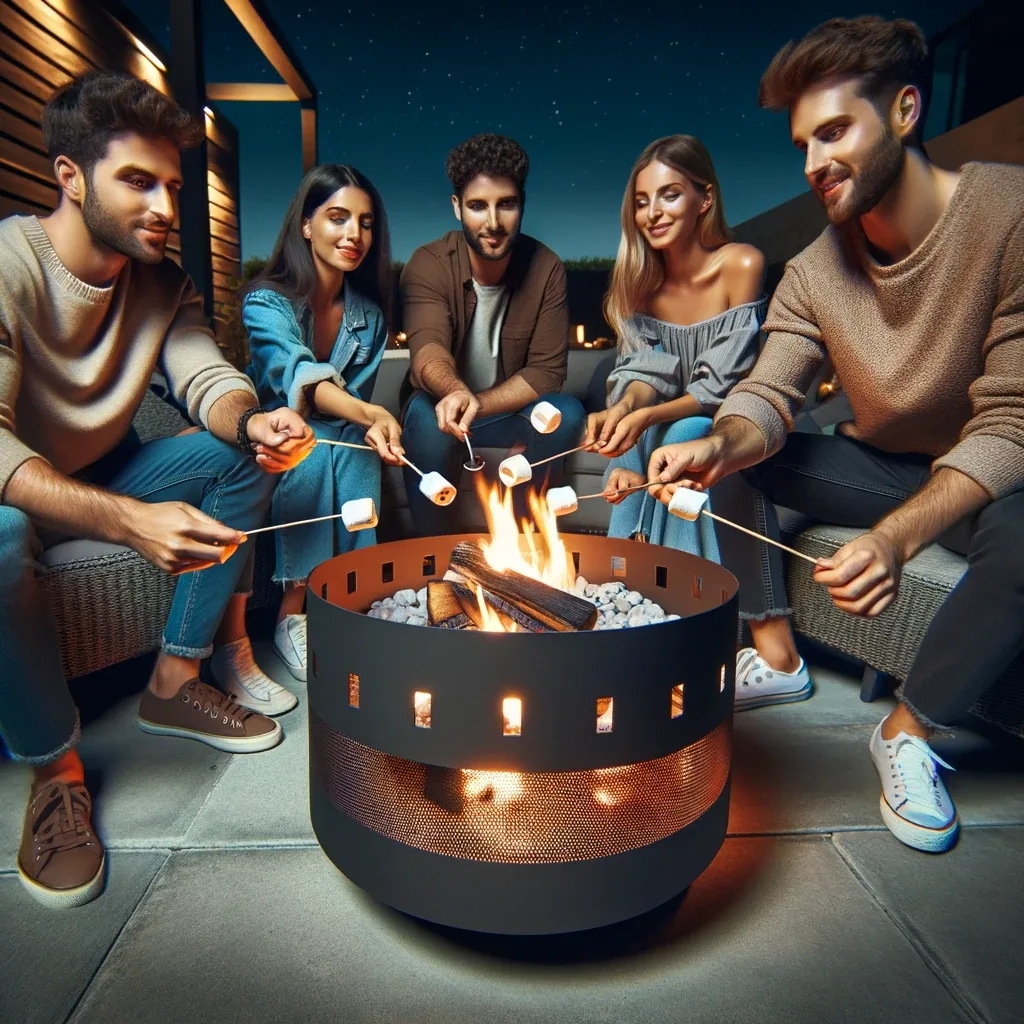
Image source: Bing (Web (fair-use with source credit))
The burner system, lava rocks, or glass beads can release chemicals or soot when heated. Some manufacturers explicitly state that their pits are not for cooking. Others include a food-grade cooking grate.
If your gas fire pit has a removable cooking grate, you're in good shape. Place the grate over the burner and let it heat up. Adjust the flame to low or medium.
You want a steady, even heat, not a roaring jet of fire.
The key is the flame height. Keep the flame about 4 to 6 inches below the marshmallow. If the flame is too high, the marshmallow will burn on the outside and stay cold inside.
If it's too low, the marshmallow won't cook at all.
Gas fire pits are ideal for people who want a clean, easy roasting experience. They're also great for permanent outdoor setups where you don't want to deal with wood ash. Just make sure the unit is rated for food contact.
Step 4: Tabletop and Portable Fire Pits – Small Flames, Big Fun, Fewer Risks
Tabletop fire pits are the smallest option. They sit on a table or a flat surface. They run on gel fuel cans or small propane cylinders.
The answer here is a definite yes, but with some size limits.
The flame from a tabletop pit is small and low. It produces a gentle heat that's perfect for roasting one or two marshmallows at a time. You'll need a short roasting fork, but the marshmallow will be close to the flame.
Rotate it slowly and watch for even browning.
The biggest advantage is safety. These units have a low flame height and a small fuel supply. They're less likely to cause burns or fire hazards.
They're also easy to move and store. You can use them on a balcony, a deck, or even a picnic table.
The downside is the limited heat output. You can't roast a large batch quickly. You'll be doing one marshmallow at a time.
But for a small gathering or a romantic evening, they work beautifully.
Some tabletop pits use gel fuel cans that are disposable. Others use a small propane tank. Both are fine.
Just make sure the fuel is food-safe and that the unit has a stable base. Never leave a tabletop fire pit unattended.
How to Roast Marshmallows on Any Fire Pit (Step-by-Step)
Once you know your fire pit type, the actual process is straightforward. Follow these steps for a perfect roast every time.
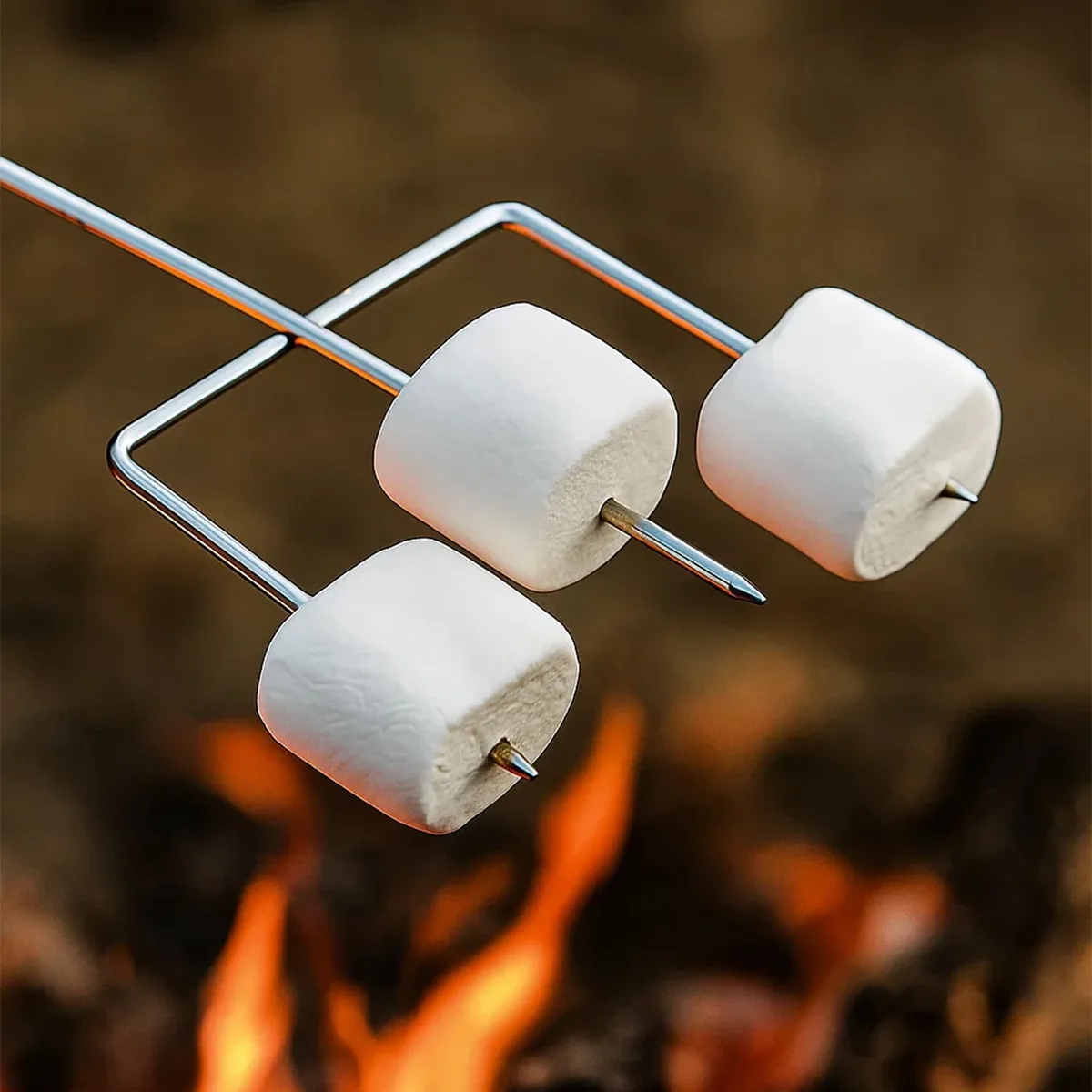
Image source: Bing (Web (fair-use with source credit))
Step 1: Let the fire settle. For wood pits, wait for flames to die down to glowing embers. For gas pits, set the flame to low or medium. You want steady heat, not a blast furnace.
Step 2: Choose the right tool. Use a long roasting fork or skewer. The handle should be at least 24 inches long. This keeps your hands safe from the heat.
A wooden stick works fine for wood fires, but avoid painted or treated wood.
Step 3: Thread the marshmallow. Push the fork through the center of the marshmallow. Don't jam it through the side. You want it balanced and secure.
A wobbly marshmallow is a lost marshmallow.
Step 4: Hold it at the right height. Position the marshmallow 4 to 6 inches above the heat source. Too close and it burns. Too far and it won't soften.
Rotate it slowly and steadily.
Step 5: Watch for color changes. The marshmallow will start to puff and turn golden. Keep rotating until it reaches your preferred doneness. For a campfire-style char, let it touch the embers briefly.
Step 6: Let it cool. Pull the marshmallow away from the heat. Wait 10 to 15 seconds before eating. The inside stays molten hot much longer than the outside looks.
A simple fire pit saves you hassle every time you roast.
Mistakes to Avoid and Safety Tips for Fire Pit Roasting
Even experienced roasters make errors. Here are the most common mistakes we see in aggregate reviews and how to avoid them.
Roasting over a full flame. This is the number one mistake. A roaring fire chars the outside and leaves the inside raw. Wait for embers or lower the gas flame.
Patience pays off.
Using a short skewer. Your hand gets too close to the heat. You'll end up with burned fingers or a dropped marshmallow. Use a fork that's at least 24 inches long.
Ignoring the cooking surface. Some fire pits have a mesh screen that blocks access. Others have a cooking grate that's too high. Check your setup before you start.
If the grate is too far from the heat, the marshmallow won't cook.
Forgetting about wind. Wind can blow the flame sideways or kick up ash. Position your fire pit in a sheltered spot. If you're on a deck, a wind guard helps.
A model designed for use on a deck handles wind better.
Not cleaning the pit. Old ash, grease, or food residue can affect the taste. Clean the cooking grate and the fire bed before each use. For gas pits, check the burner ports for blockages.
Safety first. The National Fire Protection Association recommends keeping a fire extinguisher or a water source nearby. Never leave a fire pit unattended. Keep children and pets at least three feet away.
The outer surface of a fire pit can stay hot for hours after the flame is out.
Check local rules. Some areas have burn bans that apply to wood fire pits. Gas fire pits are often exempt, but verify with your local fire department. A low-smoke model can help you avoid complaints from neighbors.
One of the units built for easy upkeep simplifies your routine.
Frequently Asked Questions
Can you roast marshmallows on a propane fire pit?
Yes, you can. Make sure the burner is food-safe and the unit has a cooking grate. Set the flame to low or medium.
Rotate the marshmallow slowly for even browning. Avoid direct contact with lava rocks or glass beads.
How do you roast marshmallows on a gas fire pit without a grate?
You need a grate or a mesh screen. Without one, the marshmallow will fall into the burner. Use a portable cooking grate that sits on top of the fire pit.
Some models include a removable grate as a standard feature.
Can you roast marshmallows on a fire pit with lava rocks?
It depends on the lava rocks. Some are food-safe. Others can release chemicals or soot when heated.
Check the manufacturer's specifications. If you're unsure, use a cooking grate to keep the marshmallow above the rocks.
What is the best fire pit for roasting marshmallows?
The best fire pit for roasting is one that lets you control the heat. A wood pit with a good ember bed works great. A gas pit with a low flame setting and a cooking grate is also excellent.
Look for a multi-fuel option if you want flexibility.
How long does it take to roast a marshmallow on a fire pit?
It takes about 45 to 90 seconds per marshmallow. The exact time depends on the heat level and your preferred doneness. Rotate it slowly and watch for color changes.
A golden brown exterior means the inside is soft and melty.
Can you use a fire pit for s'mores indoors?
No, you should never use a fire pit indoors. Carbon monoxide buildup is a serious risk. Even gel fuel pits produce fumes.
Always use a fire pit in a well-ventilated outdoor space. The National Fire Protection Association warns against indoor use of any combustion device.