Are Spotting Scopes Good for Stargazing?
You've seen them, those long, slender tubes birdwatchers use, often mounted on tripods. You might be wondering, "Are spotting scopes good for stargazing?" It’s a practical question for anyone curious about the night sky but maybe a bit intimidated by complex telescopes. The short answer is: they can be, but with some significant limitations.
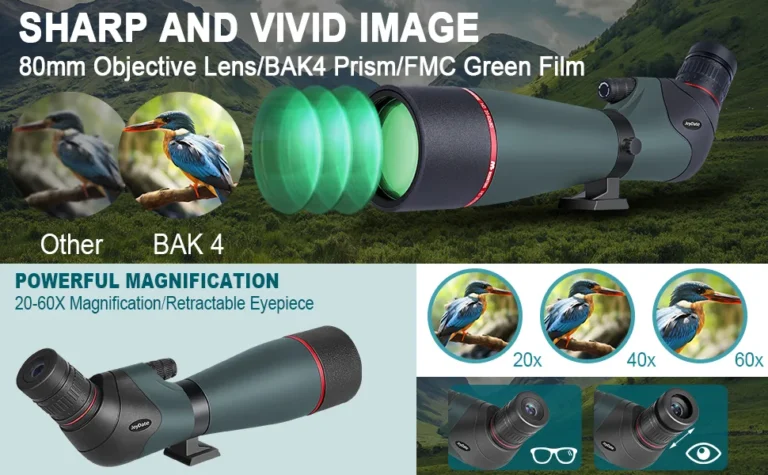
Spotting scopes are built for magnifying distant terrestrial objects, and while they can offer a glimpse of bright celestial bodies, they’re not designed for the deep-sky wonders that excite many amateur astronomers. Manufacturer specifications often highlight their magnification for daytime use, with typical models offering 20x to 60x power, a range that can reveal lunar craters but struggles with fainter objects.
Are Spotting Scopes Good for Stargazing?
Yes, spotting scopes can be good for stargazing if your expectations are focused on bright objects like the Moon and brighter planets. They offer portability and ease of use, making them accessible for casual viewing. However, their limited light-gathering ability restricts views of fainter nebulae and galaxies.
Spotting Scopes vs. Telescopes: What's the Difference for Stargazing?
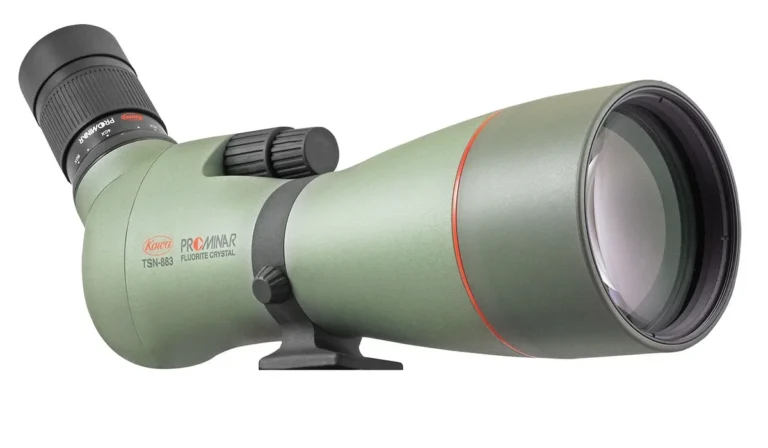
This is the heart of the matter. Spotting scopes and astronomical telescopes are fundamentally different tools, designed with distinct purposes in mind. Spotting scopes excel at providing detailed, magnified views of objects that are relatively close and illuminated by daylight.
Think of a bird on a tree branch or a distant mountain peak. Their optical design prioritizes a clear, bright image of a small, defined area.
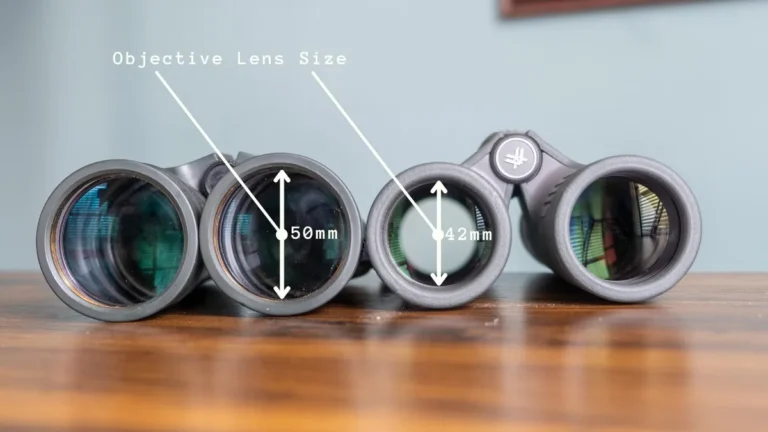
Telescopes, conversely, are engineered to collect as much light as possible from incredibly distant and often faint celestial objects. This light-gathering capability is crucial for seeing details on planets, nebulae, galaxies, and star clusters that are simply too dim for a spotting scope. Manufacturer specifications often show telescopes having much larger objective lens or mirror diameters, which directly correlates to their ability to gather light.
For instance, a typical 60mm spotting scope has a significantly smaller light-gathering area than even a modest 70mm refractor telescope.
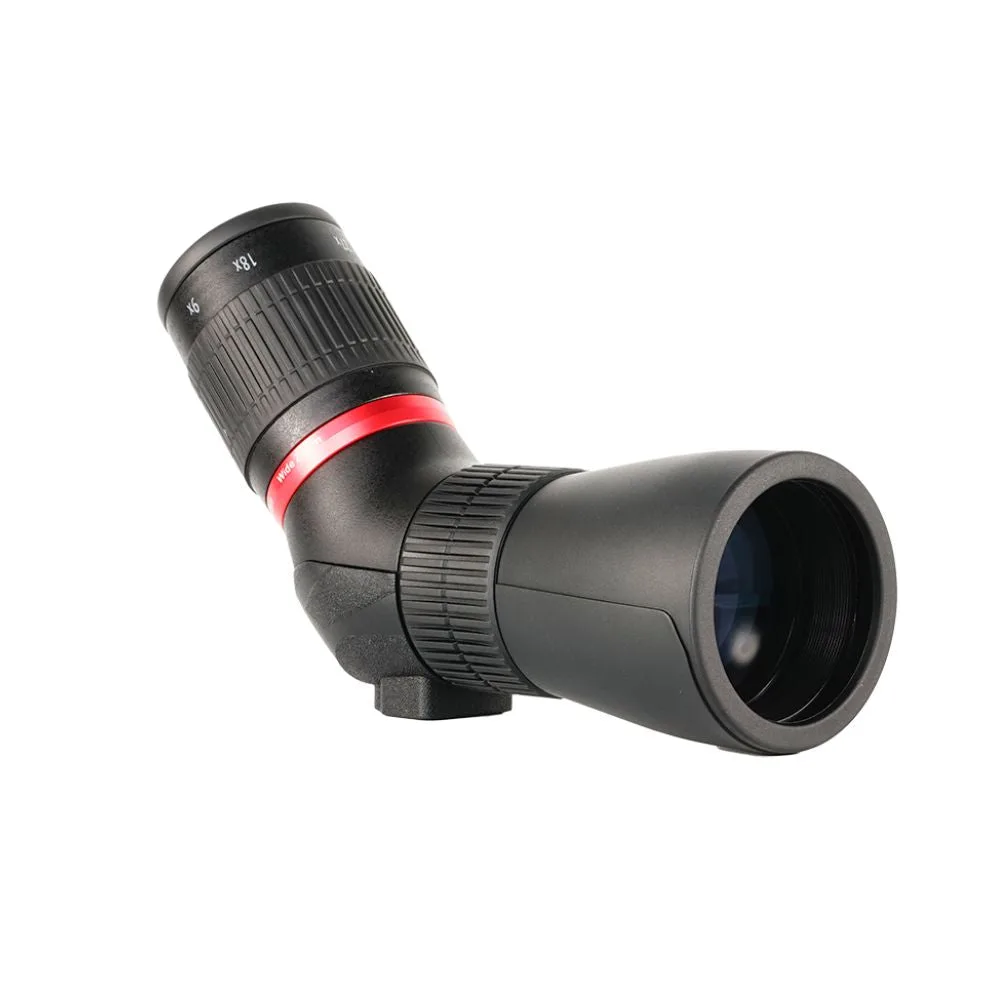
Image source: Web (Bing) / shop.app (Web image (fair-use with source credit))
If you’re looking for a tool to explore the vastness of the cosmos, a telescope is generally the preferred choice. However, if you already own a spotting scope and are curious about what it can show you of the night sky, there are definitely some things you can see.
Can You See Planets and the Moon with a Spotting Scope?
Absolutely, you can see some impressive sights with a spotting scope! The Moon is probably the most rewarding target. Pointing a spotting scope at our closest celestial neighbor, you can easily resolve craters, mountain ranges, and the terminator (the line between sunlight and shadow), which changes daily.
With good atmospheric conditions, you can make out impressive detail.
Bright planets are also visible. Jupiter, for example, will appear as a distinct disc, and if your spotting scope has enough magnification (around 40x or higher), you might even be able to spot its four largest moons, Io, Europa, Ganymede, and Callisto, appearing as tiny pinpricks of light lined up next to the planet. Saturn’s rings can sometimes be glimpsed as a faint extension of the planet itself, though they will appear very small and might be hard to distinguish clearly.
Other objects that might be visible include brighter star clusters, like the Pleiades (M45). You can see that the Pleiades isn't just a solid triangle of stars, but a scattering of individual, bright stars. However, remember that the field of view on spotting scopes is typically quite narrow.
This means you'll be looking at a very small patch of the sky, making it harder to find these objects initially compared to a telescope with a wider view.
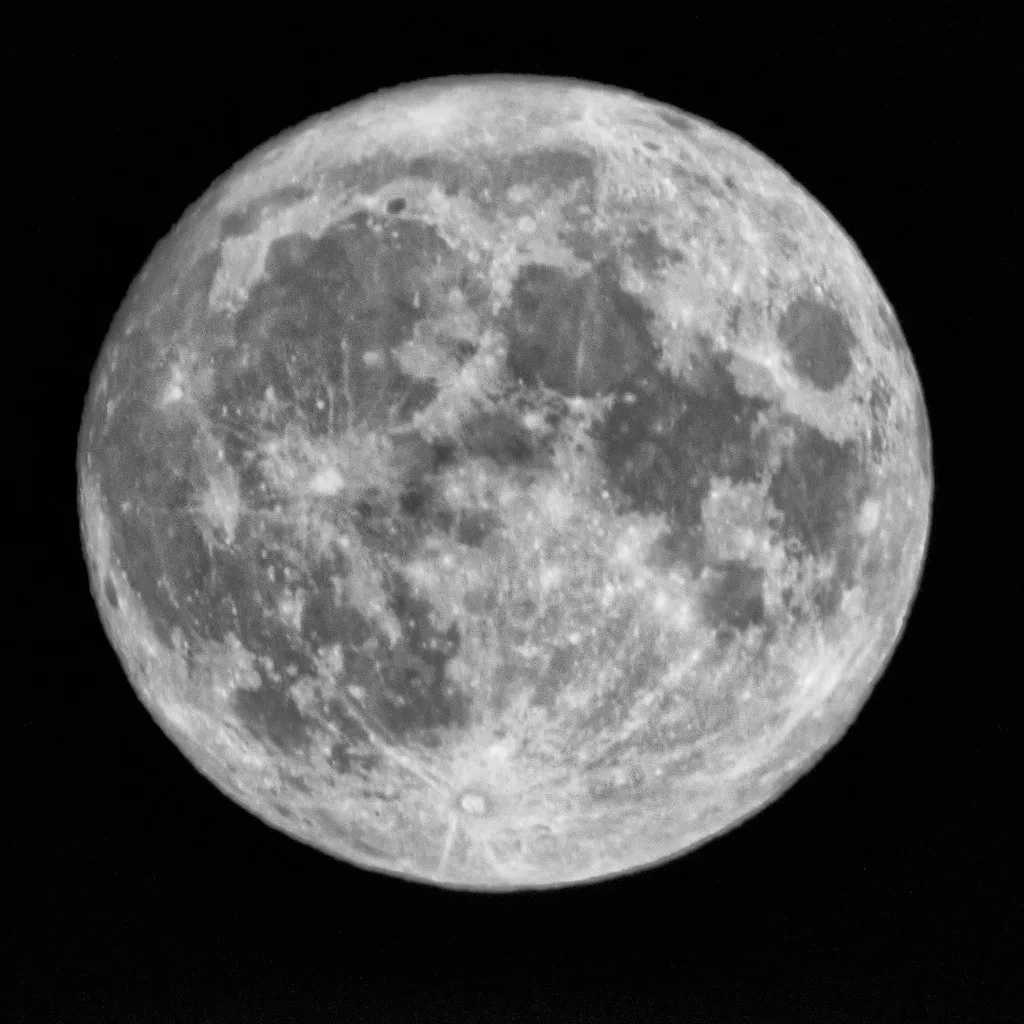
Image source: Web (Bing) / flickr.com (Web image (fair-use with source credit))
While these views can be fascinating, it’s important to set your expectations. You won't be seeing detailed cloud bands on Jupiter or the faint glow of distant nebulae. That’s where the limitations of a spotting scope become apparent.
Spotting Scopes vs. Telescopes: What's the Difference for Stargazing?
This is the core of understanding what a spotting scope can and cannot do for astronomy. The fundamental difference lies in their design goals and, crucially, their light-gathering ability and field of view.
Light Gathering: This is arguably the most significant factor. Telescopes, especially larger ones, have much bigger objective lenses or mirrors. This larger aperture allows them to collect far more light from faint, distant objects like galaxies, nebulae, and dimmer star clusters.
A spotting scope, typically with an objective lens diameter between 50mm and 80mm, simply can't gather enough light to reveal the subtler beauty of these deep-sky objects. Manufacturer specifications often highlight aperture in millimeters (mm) or inches, directly indicating this light-gathering power.
Field of View: Spotting scopes are designed to magnify a specific, narrow target. This results in a very limited field of view, which can make locating celestial objects challenging. It’s like trying to find a specific house on a vast street by only looking through a narrow tube.
Telescopes, particularly those designed for astronomy, generally offer wider fields of view, making it easier to scan the sky and frame larger objects like star clusters or nebulae.
| Feature | Spotting Scope | Astronomical Telescope |
|---|---|---|
| Primary Use | Terrestrial viewing (birds, targets) | Celestial viewing (planets, stars, nebulae, galaxies) |
| Aperture | Typically 50mm – 80mm | Varies widely, 60mm to 300mm+ common for beginners/pros |
| Light Gather | Moderate | High to Very High |
| Field of View | Narrow | Moderate to Wide |
| Best For | Daytime detail, Moon, bright planets | Faint objects, deep-sky, detailed planetary views |
| Portability | Very High | Varies, often less portable than spotting scopes |
| Ease of Use | High | Varies, can be complex |
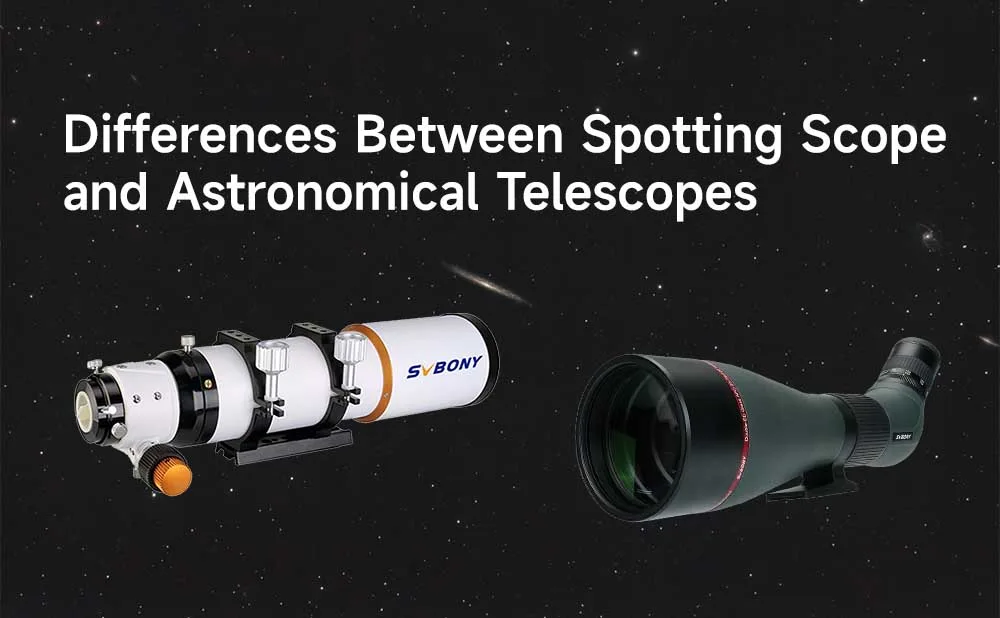
Image source: Web (Bing) / svbony.com (Web image (fair-use with source credit))
When you consider that even a faint nebula like the Orion Nebula (M42) requires significant light to be seen beyond a ghostly smudge, the difference becomes clear. A good telescope will reveal its intricate structure and glow, something a spotting scope simply cannot achieve.
The Upside: When a Spotting Scope is Handy for the Night Sky
Despite their limitations for deep-sky viewing, spotting scopes offer some compelling advantages for casual stargazing, especially if you already own one or prioritize portability.
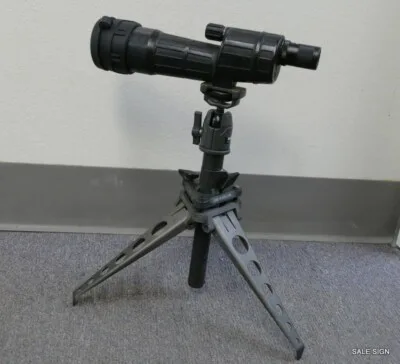
Unmatched Portability: This is their shining star. Spotting scopes are significantly lighter and more compact than most astronomical telescopes. If you're someone who enjoys hiking to dark-sky locations away from city lights, or simply wants an easy-to-carry instrument, a spotting scope is a massive win. They often come with a compact tripod or can be mounted on smaller, more manageable tripods.
Simplicity and Ease of Use: Setting up and using a spotting scope is typically very straightforward. There’s usually no complex alignment process required, as you would find with some computerized telescopes. You simply set it on a stable surface, point it at your target, and adjust the focus. This makes them ideal for spontaneous stargazing sessions or for those who prefer a no-fuss approach.
Affordability: For many, a decent spotting scope is a more budget-friendly entry point than purchasing a dedicated astronomical telescope. If your primary interest is wildlife observation and you're looking to dabble in stargazing with existing gear, a spotting scope can be a cost-effective solution.
Great for Bright Objects: As we discussed, for the Moon and brighter planets like Jupiter or Saturn, a spotting scope can provide surprisingly satisfying views. The magnification, while limited compared to some telescopes, is often sufficient to reveal surface features on the Moon and the moons of Jupiter.
If your stargazing goals are modest, you want to see the Moon's craters on a whim, or show a friend Jupiter's moons without a huge setup, a spotting scope can absolutely fulfill those needs. It’s about matching the tool to the task.
The Downside: Where Spotting Scopes Fall Short for Astronomy
While spotting scopes have their place, their limitations become quite apparent when you try to push beyond the Moon and brightest planets. These drawbacks are primarily rooted in their optical design, which is optimized for terrestrial viewing, not for capturing faint light from distant cosmic objects.
Limited Light-Gathering Power: This is the biggest hurdle. The aperture, or the diameter of the main lens or mirror, dictates how much light an instrument can collect. Spotting scopes, with apertures typically ranging from 50mm to 80mm, gather considerably less light than astronomical telescopes, which can range from 70mm to over 300mm. This means fainter objects like nebulae, galaxies, and dimmer star clusters will appear very dim, if visible at all. You might see a faint smudge where a galaxy should be, but without detail. According to optical principles, light-gathering power increases with the square of the aperture's diameter.
Narrow Field of View: Spotting scopes are designed to zoom in on specific targets, resulting in a narrow field of view. This makes it challenging to locate celestial objects in the vast expanse of the night sky. You might spend more time scanning and hunting for a target than observing it. For comparison, a typical astronomical telescope eyepiece might offer a field of view that is several times wider, allowing for easier object acquisition and the appreciation of larger celestial structures.
Image Quality at High Magnification: While spotting scopes offer magnification, pushing them to their highest settings often results in a dim, blurry, and shaky image, especially when hand-held or on a less-than-perfect tripod. Atmospheric conditions also play a significant role; heat rising from the ground on clear nights can distort the image, making high magnification views unstable.
Not Designed for Deep-Sky Objects: Their optical configuration is simply not optimized for the subtle, diffuse light of nebulae and galaxies. These objects require instruments that can collect faint photons over long periods, something spotting scopes are not built to do. The experience of viewing such objects with a spotting scope is often underwhelming compared to what even a basic telescope can offer.
Who is a Spotting Scope Best For When Looking Up?
The decision of whether a spotting scope is the right tool for stargazing hinges entirely on your specific goals and existing gear. If you're already an avid birder or nature observer who owns a decent spotting scope, it's definitely worth exploring the night sky with it. For these users, a spotting scope offers a low-barrier entry into observing celestial objects.
You can easily see the Moon's craters and the brighter planets without any additional investment.
However, if your primary passion is astronomy and you dream of seeing nebulae, galaxies, or detailed planetary views, a spotting scope will likely leave you wanting more. For such users, a dedicated entry-level astronomical telescope is a far better investment. Our research indicates that most beginner astronomers find a 70mm refractor telescope offers a significantly more rewarding experience for a comparable price point to a higher-end spotting scope, due to superior light-gathering and a wider field of view.
The key takeaway is this: a spotting scope is an excellent secondary tool for casual stargazing if you already possess one. It’s not ideal if astronomy is your main focus.
Common Stargazing Mistakes with Spotting Scopes
When using a spotting scope for astronomy, several common mistakes can lead to disappointment. One frequent error is expecting it to perform like a telescope. Users may become frustrated when deep-sky objects are not visible, forgetting the fundamental difference in light-gathering capability.
It's crucial to remember that these instruments are not designed for faint, distant galaxies or nebulae.
Another mistake is pushing the magnification too high. While a spotting scope might advertise up to 60x magnification, using it at these extreme levels often results in a dim, shaky, and blurry image. This is exacerbated by atmospheric turbulence, especially on warmer nights.
It's generally recommended to stay within a more moderate magnification range, typically around 20x to 40x, for a clearer view, especially if using a less stable tripod.
Finally, users often struggle with finding objects due to the narrow field of view. They might aim directly for a faint object without first locating a brighter, nearby star to use as a reference point. This can turn a stargazing session into a frustrating hunt, leading to the misconception that the spotting scope itself is inadequate.
Your Stargazing Decision: Spotting Scope or Telescope?
Deciding between a spotting scope and a telescope for stargazing is less about which is "better" and more about which tool fits your specific needs and expectations. If your primary interest is observing the Moon, bright planets like Jupiter or Saturn, and perhaps some of the more prominent star clusters, and you value extreme portability and ease of use, a spotting scope can be a perfectly adequate choice, especially if you already own one.
However, if your aspirations lean towards exploring the deeper reaches of space, seeing the swirling clouds of nebulae, the majestic spiral arms of galaxies, or intricate details on planets, then an astronomical telescope is the clear winner. The superior light-gathering power and typically wider field of view of a telescope are essential for these types of observations. As of 2026, entry-level astronomical telescopes, often in the 70mm to 100mm aperture range, offer a significantly more immersive and rewarding experience for these celestial targets compared to what a spotting scope can provide.
Here's a quick breakdown to help you decide:
| Scenario | Recommended Tool | Why |
|---|---|---|
| Casual viewing, portability is key | Spotting Scope | Easy to carry, quick setup, good for Moon/bright planets. |
| Already own a spotting scope | Spotting Scope | Leverage existing gear for basic celestial views. |
| Serious interest in nebulae/galaxies | Astronomical Scope | Essential for light-gathering to see faint deep-sky objects. |
| Detailed planetary observation | Astronomical Scope | Higher magnification and better optics reveal more detail. |
| Want a wider view of star fields | Astronomical Scope | Offers a broader perspective of the night sky. |
| Budget is a major constraint | Spotting Scope | Can be more affordable than a dedicated telescope. |
| Want to grow in amateur astronomy | Astronomical Scope | Provides the capabilities needed to explore further and learn more. |
Ultimately, your stargazing journey will be more fulfilling if you choose the instrument that aligns with your astronomical interests.
Frequently Asked Questions About Spotting Scopes and Stargazing
Can I see constellations with a spotting scope?
Constellations are patterns of stars, and while a spotting scope can magnify individual bright stars within them, it's not the ideal tool for viewing entire constellations. Its narrow field of view means you can only see a small portion of the sky at once. You’d have to pan the scope extensively to trace out a constellation, and you’d miss the broader context.
Telescopes with wider fields of view are much better suited for appreciating the scale and beauty of constellations as a whole.
How stable does my tripod need to be for stargazing with a spotting scope?
Stability is crucial for clear stargazing, especially at higher magnifications. A wobbly tripod will translate into a shaky image that makes it hard to focus and observe details. For stargazing with a spotting scope, you’ll want a tripod that is sturdy enough to support the weight of the scope and any accessories, and importantly, resist vibrations from wind or even your own touch.
A tripod designed for photography, with a fluid head for smooth panning, is generally recommended. Avoid flimsy, lightweight tripods that might be sufficient for casual daytime birdwatching but will prove inadequate for the demands of astronomical viewing.
Is a spotting scope good for astrophotography?
Generally, no. Spotting scopes are not well-suited for astrophotography. Their optical design is optimized for bright, daytime subjects, not the faint, distant light of celestial objects over longer exposure times.
While some very basic lunar or planetary photography might be attempted with adapters, you won't be capturing detailed images of nebulae or galaxies. Dedicated astronomical telescopes with specific imaging capabilities are required for serious astrophotography.