Can You Wear Glasses While Using Binoculars
Yes, you can wear glasses while using binoculars. But whether it works well depends on a few specific numbers and adjustments on your binoculars. The good news is that many modern binoculars are designed with glasses wearers in mind.
Manufacturer specifications indicate that the key measurement here is eye relief. Most binoculars on the market today offer between 10mm and 20mm of eye relief. For glasses wearers, the general rule is that 15mm or more usually provides a full field of view.
Let's break down what that means for your setup.
Quick Answer
Yes, you can wear glasses while using binoculars. It depends on having enough eye relief. Look for a spec of 15mm or more.
Adjustable eyecups are also essential. Many binoculars are designed for glasses wearers.
Yes, You Can Wear Glasses with Binoculars — Here's What Changes
The short answer is a confident yes. Millions of people wear glasses and use binoculars every day for birding, sports, astronomy, and hunting. The experience is different from someone without glasses, but it can be just as good.
What changes when you keep your glasses on? The main difference is the distance between your eye and the eyepiece. Your glasses push your eye back by about 10mm to 15mm.
That means you lose that close, snug position that binoculars are designed for.
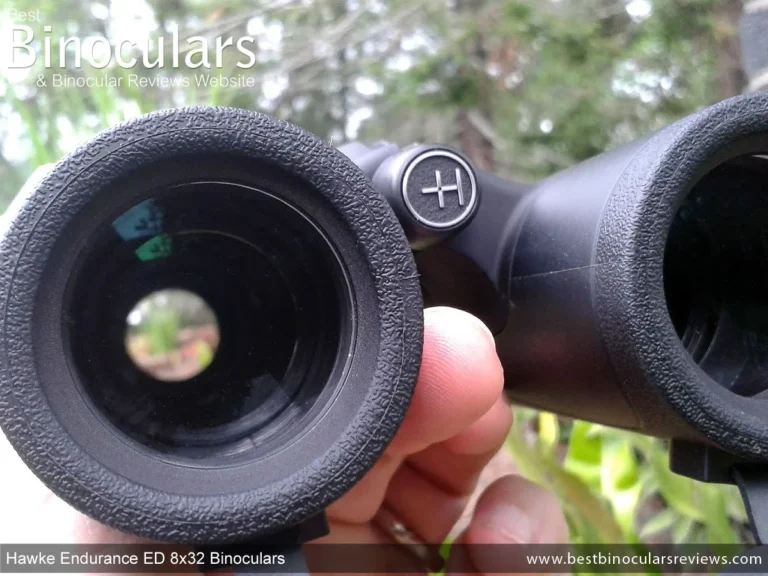
The result is a potential trade-off. If your binoculars have enough eye relief, you get the same full image. If they don't, you see a black ring around the edge or a smaller picture.
That's called vignetting.
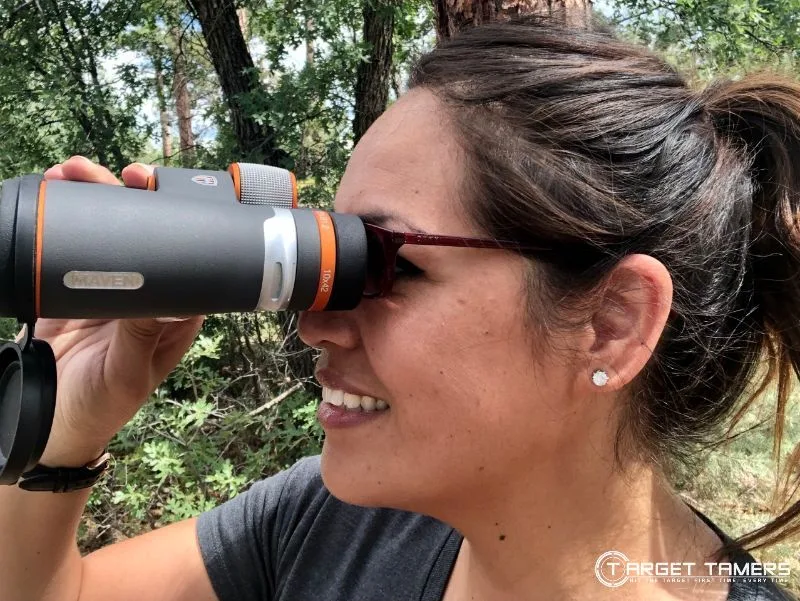
Image source: Bing (Web (fair-use with source credit))
So the real question is not "can you" but "will your specific binoculars deliver the full image?" The answer depends on three things: eye relief, eyecup design, and your glasses style.
Aggregate user reviews across the birding and astronomy communities confirm that people with glasses routinely get great results. The key is knowing what to look for and how to adjust.
Eye Relief: The Main Number That Decides Whether It Works
Eye relief is the distance from the eyepiece lens to the point where your eye needs to be to see the full field of view. Think of it as the sweet spot where the image looks perfect.
Manufacturers measure it in millimeters. A typical binocular might have eye relief somewhere between 10mm and 20mm. Some long eye relief models go up to 25mm.
Here's the simple rule for glasses wearers. If your binoculars have 15mm or more of eye relief, you can likely see the full image with glasses on. If they have less than 15mm, you will probably see some black ring or a reduced field of view.
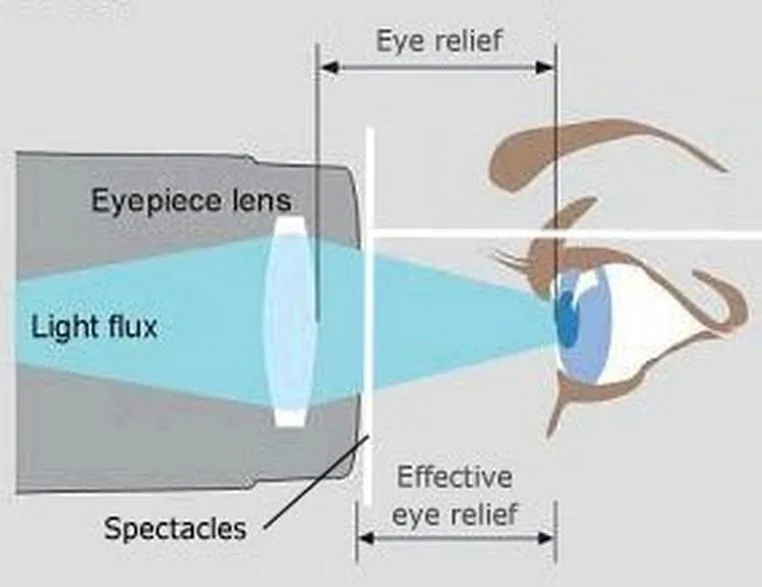
Image source: Bing (Web (fair-use with source credit))
Why does 15mm matter? Your glasses lenses sit about 10mm to 15mm from your eyes. The eyepiece needs to reach past that glasses lens to your eye.
If the eye relief is too short, your eye is too far back.
Let's look at common specs:
| Eye Relief | Works for Glasses? | Typical Experience |
|---|---|---|
| 10mm to 14mm | Usually not | Black ring, hard to see full image |
| 15mm to 17mm | Often yes | Good for most glasses wearers |
| 18mm to 20mm+ | Excellent | Full field of view, comfortable |
| 21mm to 25mm | Best | Extra room for thick frames |
You can find the eye relief spec in the binocular's manual or on the manufacturer's website. It is usually listed under "technical specs" or "optical data."
One thing to keep in mind. Eye relief is measured from the eyepiece lens, not from the eyecup. That means twist-up eyecups can change the effective distance.
We cover that in the next section.
The Decision Tree: Does Your Setup Work for Glasses?
Here is a practical decision tree to figure out if your binoculars work with your glasses. Go through these steps in order.
Step 1: Check your eye relief spec.
Look up your binocular model. Find the eye relief number. If it is 15mm or more, you are in good shape.
If it is under 15mm, move to step 2.
Step 2: Check your eyecup adjustability.
Binoculars with adjustable eyecups can often be modified to work with glasses. If you have twist-up eyecups that can be fully retracted, you can get closer to the lens. If you have fixed eyecups, you are stuck with what you have.
Step 3: Try the glasses-on test.
Put your glasses on. Set the eyecups to the lowest position (fully retracted for twist-ups, or folded down for rubber eyecups). Look through the binoculars.
Do you see the full circle of light? If yes, it works. If you see a black ring, your eye relief is too short.
Step 4: Try the glasses-off test.
Remove your glasses. Adjust the diopter ring to compensate for your vision. If you are nearsighted, you can often focus without glasses.
Most binoculars have a diopter range of +/- 2 to 4 diopters. That corrects for mild to moderate nearsightedness.
Here is a summary table:
| Condition | Action | Works? |
|---|---|---|
| Eye relief 15mm+ | Use glasses, retract eyecups | Yes |
| Eye relief 12-14mm | Try glasses, may see vignetting | Maybe |
| Eye relief under 12mm | Remove glasses, use diopter | Usually no |
| Twist-up eyecups | Retract fully | Improves chances |
| Fold-down eyecups | Fold down | Improves chances |
| Progressive lenses | May need head tilt | Can work with practice |
For most people, the answer comes down to that one number. If you are shopping for binoculars, look for a model with at least 17mm of eye relief. That gives you a comfortable margin.
How to Adjust Eyecups, Diopter, and Focus While Wearing Glasses
Getting the best view with glasses on takes a few specific steps. The order matters. Here's the process.
Step 1: Set the eyecups.
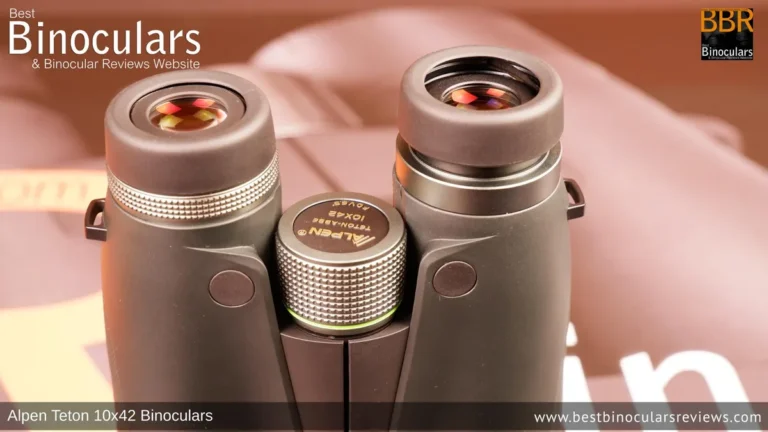
Twist-up eyecups should be fully retracted (twisted all the way down). Fold-down eyecups should be folded completely out of the way. The goal is to get your glasses lens as close to the eyepiece as possible.
Step 2: Set the interpupillary distance (IPD).
Hold the binoculars up to your eyes. Move the two barrels closer together or farther apart until you see one single circle of light. This is the IPD adjustment.
It is the same whether you wear glasses or not.
Step 3: Set the diopter.
The diopter ring compensates for differences between your two eyes. Cover the right objective lens (the front lens). Use the center focus wheel to focus the left eye.
Then cover the left objective lens. Use the diopter ring to focus the right eye.
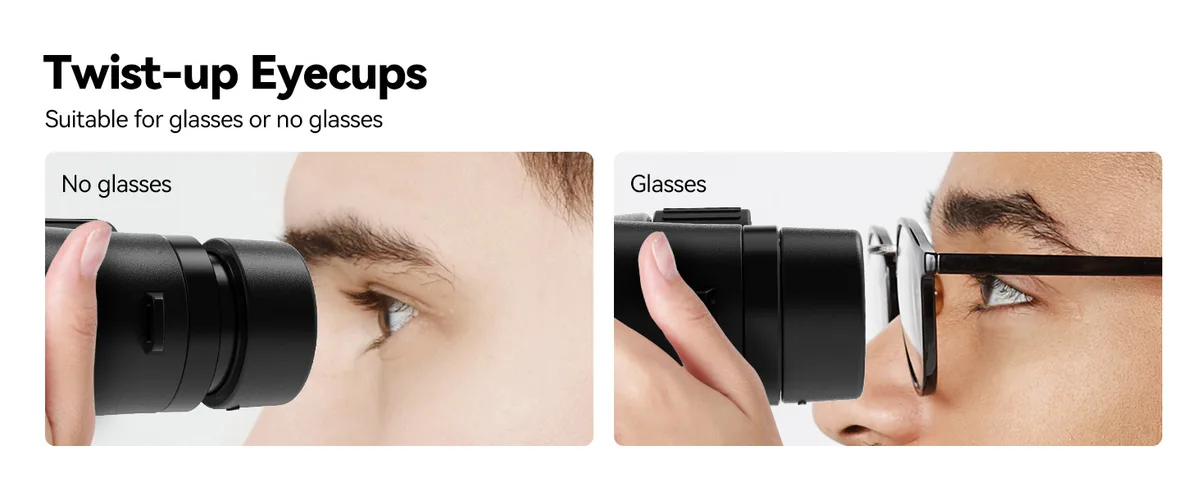
Image source: Bing (Web (fair-use with source credit))
Step 4: Fine-tune the focus.
Now use the center focus wheel to focus on a distant object. Your glasses are on. Your diopter is set.
The image should be sharp and clear.
Step 5: Check for vignetting.
Look for the full circle of light. If you see a dark ring around the edge, try adjusting the eyecups slightly. Some twist-up mechanisms have multiple stops.
You might find that a partial twist gives you a better view than fully retracted.
Step 6: Adjust for progressive lenses.
If you wear progressive lenses, you may need to tilt your head slightly. The reading area of progressives is at the bottom. The distance area is at the top.
Look through the top part of your glasses while looking through the binoculars. A slight head tilt helps.
Step 7: Clean the lenses.
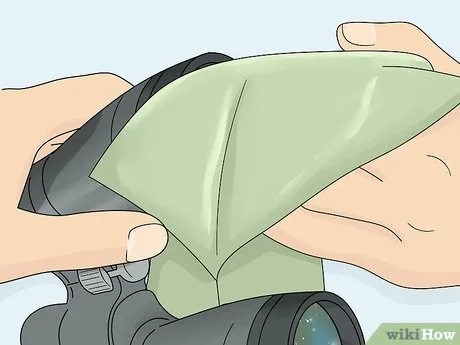
Glasses lenses pick up smudges from the eyepiece. Keep a microfiber cloth handy. Clean both your glasses and the eyepiece after each use.
This prevents scratches and keeps the view clear.
Quick Fixes for Common Problems (Vignetting, Fogging, Scratched Lenses)
Even with the right setup, you might run into issues. Here are the most common problems and how to fix them.
Vignetting (black ring around the edge).
This happens when your eye is too far from the eyepiece. The fix is usually to retract the eyecups further. If they are already fully retracted, your eye relief is too short.
You can try holding the binoculars slightly away from your glasses. That can sometimes help. But the real solution is longer eye relief.
Fogging between glasses and eyepiece.
When you breathe, warm air can fog up your glasses. This happens more in cold weather. The fix is to create a small gap.
Pull the binoculars slightly away from your face. Or use an anti-fog spray on your glasses lenses. Some people also use a small fan or just wait for the lenses to warm up.
Scratched glasses lenses.
The eyepiece can scratch your glasses if it presses against them. This is more common with metal eyecups. The fix is to use a rubber eyecup cover or a silicone ring.
Some binoculars have soft rubber eyecups that are gentle on glasses. If yours don't, you can buy aftermarket eyecup covers.
Reduced field of view.
If you see a smaller image with glasses on, check your eyecup position. Also check that your glasses are sitting correctly on your nose. Sometimes glasses slip down, and you lose the sweet spot.
Push them up and try again.
Difficulty focusing.
If the image is blurry, check your diopter setting. It might need adjustment. Also check that your glasses are clean.
A smudge on the lens can make everything look soft.
Nose discomfort.
Some binoculars have a narrow IPD range. If your face is wider or narrower than average, the bridge of your nose can press against the binoculars. The fix is to choose a model with a wider IPD range.
Most binoculars adjust between 56mm and 74mm. That covers most adults.
Mistakes That Cost You Field of View or Comfort
Even with the right binoculars, small mistakes can ruin the experience. Here are the most common ones we see from verified buyer feedback.
Not adjusting eyecups before looking. Many people leave the eyecups fully extended out of habit. With glasses, that pushes your eye too far back. Retract them first.
It is the single easiest fix.
Forgetting the diopter adjustment. The diopter compensates for differences between your eyes. If you skip this step, one eye stays blurry. That causes eye strain and headaches over time.
Set the diopter once with your glasses on.
Choosing the wrong eye relief for your frames. Not all glasses are the same. Thick frames or strong prescriptions push your eyes further back. If you have thick frames, aim for at least 17mm of eye relief.
The standard 15mm might not be enough.
Holding the binoculars at the wrong angle. Some people tilt the binoculars to avoid the glasses frame. That causes the image to distort. Instead, adjust the eyecups and bring the binoculars straight to your eyes.
Neglecting to clean both lenses. Smudges on your glasses or the eyepiece reduce contrast and sharpness. Eyepieces pick up oils from your skin and glasses. Clean both after every use with a microfiber cloth.
Skipping the IPD adjustment. If the two barrels are not set to your eye width, you see two overlapping circles instead of one. This is easy to fix. Move the barrels until you see a single circle of light.
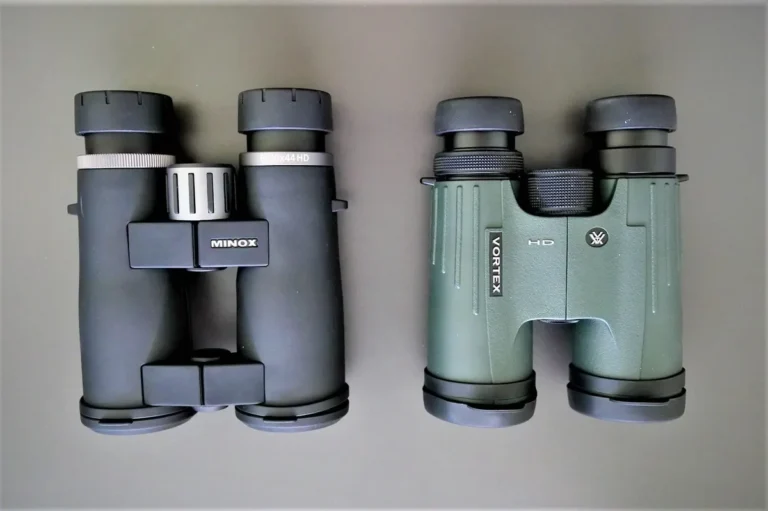
Assuming all binoculars are the same. Budget binoculars often have short eye relief. Spending a little more on a model with adjustable eyecups and 17mm of eye relief makes a huge difference.
When Binoculars Just Don't Work with Your Glasses: Alternatives
Sometimes your binoculars simply lack the eye relief. Or you have a strong prescription that makes glasses necessary. Here are your options.
Option 1: Use the diopter without glasses. If you are nearsighted, you can often remove your glasses and focus using the diopter. Most binoculars have a diopter range of +/- 2 to 4 diopters. That corrects for mild to moderate nearsightedness.
Try it. Remove your glasses. Look through the binoculars.
Use the center focus wheel to sharpen the image. If you can get a clear view, you do not need glasses for binocular use.
Option 2: Contact lenses. Contacts are the simplest workaround. They eliminate the distance between your eye and the eyepiece. You get the full field of view without any adjustments.
The downside is that contacts do not correct astigmatism as well as glasses for some people. If you have astigmatism, try it before committing.
Option 3: Monoculars. Monoculars often have longer eye relief than binoculars at the same price point. They are also easier to position with glasses. The trade-off is that you use only one eye.
Option 4: Upgrade to glasses-friendly binoculars. If you plan to use binoculars regularly, invest in a model with 17mm to 20mm of eye relief. Look for adjustable eyecups and a smooth diopter ring.
Here is a quick comparison:
| Option | Best For | Trade-off |
|---|---|---|
| Use diopter without glasses | Nearsighted users | Does not work for astigmatism |
| Contact lenses | All prescription types | Can be uncomfortable for long use |
| Monocular | Quick views, hiking | Only one eye |
| Upgrade binoculars | Regular users | Higher cost |
Option 5: Custom prescription binoculars. Some premium brands offer models with built-in prescription lenses. These are expensive and niche. They are worth considering only if you use binoculars professionally.
Real Scenarios: Bifocals, Progressives, Astigmatism, and More
Different vision conditions require slightly different approaches. Here is how to handle each one.
Bifocals
Bifocals have a visible line separating distance and reading zones. The distance zone is at the top. Look through that part when using binoculars.
Tilt the binoculars slightly downward to keep your view in the distance area.
The line can be distracting at first. Most people adjust within a few uses.
Progressive lenses
Progressives have no visible line. The distance prescription is at the top, reading at the bottom. You need to look through the top third of the lens.
The trick is a slight head tilt. Tilt your head back a little. This brings the distance zone into alignment with the eyepiece.
It feels awkward at first but becomes natural.
Aggregate user reviews report that progressives work well with binoculars that have long eye relief. The extra distance gives you room to adjust your head position.
Astigmatism
Astigmatism requires cylindrical correction. Contact lenses can correct it, but not as precisely as glasses. If you have astigmatism, keep your glasses on.
Binoculars with long eye relief are especially important here. You need the full field of view to avoid eye strain. Look for models with 18mm or more of eye relief.
Nearsightedness (myopia)
Nearsighted people have the easiest time. You can often remove your glasses entirely. Use the diopter to focus.
Most binoculars can correct for up to -4 diopters of nearsightedness.
Check your prescription. If your sphere number is between -1.00 and -4.00, you can likely use binoculars without glasses.
Farsightedness (hyperopia)
Farsightedness is harder to correct with the diopter alone. The diopter range is usually limited. You will likely need to keep your glasses on.
Long eye relief binoculars are the best choice here. They give you the room to keep your glasses in place.
Presbyopia (age-related near vision loss)
Presbyopia affects reading, not distance vision. If you wear reading glasses only, you can use binoculars without them. The binoculars focus at infinity, which is distance vision.
If you wear progressives, refer to the progressive lens section above.
Frequently Asked Questions
Can I use binoculars with progressive lenses?
Yes, you can. Look through the top portion of your progressive lenses. Tilt your head back slightly to align the distance zone with the eyepiece.
Long eye relief binoculars make this easier.
What is the best eye relief for glasses wearers?
Aim for 17mm to 20mm of eye relief. This gives you a comfortable margin for most glasses frames. Models with 15mm work for many people but may cause vignetting with thicker frames.
Do I need to remove my glasses to use binoculars?
No, you do not need to remove them. If your binoculars have enough eye relief, you can keep your glasses on. If they do not, try using the diopter adjustment without glasses.
Can I use binoculars with astigmatism?
Yes, keep your glasses on. Binoculars do not correct astigmatism on their own. Look for models with long eye relief to ensure a full field of view without eye strain.
How do I focus binoculars with glasses?
Set the eyecups to the lowest position. Adjust the IPD to match your eye width. Set the diopter for your dominant eye.
Then use the center focus wheel to sharpen the image. Clean both lenses regularly.
What are the best binoculars for glasses wearers?
Look for binoculars with adjustable twist-up eyecups and at least 17mm of eye relief. Roof prism designs often have better eye relief than porro prism models at similar prices.