What Is the Difference Between DJI Osmo Action 4 and Action 3?
When you're gearing up for your next adventure, deciding on the right action camera can make a world of difference in how you capture those epic moments. The question of "What Is the Difference Between DJI Osmo Action 4 and Action 3?" often comes up for thrill-seekers and content creators alike. Both cameras offer robust features for high-octane filming, but subtle improvements in the Action 4 might tip the scales for specific users.
Manufacturer specifications confirm the DJI Osmo Action 4 boasts a larger 1/1.3-inch sensor, which directly impacts its performance in challenging light conditions compared to the Action 3's 1/1.7-inch sensor. This difference is crucial for anyone looking to capture clear footage when the sun isn't shining brightly. Let's break down exactly what sets these two capable cameras apart.
What's Actually Different Between the Action 4 and Action 3?
The core difference between the DJI Osmo Action 4 and the Action 3 boils down to a few key hardware and software enhancements that significantly impact image quality and usability, especially in varied environments. While both cameras are built tough and offer excellent stabilization, the Action 4 brings some notable upgrades that serious users will appreciate. Think of it as a refinement and boost to an already solid foundation.
These aren't just minor tweaks; they're designed to provide a better shooting experience across more conditions. For instance, if you’re filming a sunrise surf session or a campfire scene, these differences become immediately apparent. It's about getting that extra bit of quality and creative control when it matters most for your footage.
The Big Upgrade: Sensor Size and Low-Light Power
The most significant upgrade in the DJI Osmo Action 4 over its predecessor is the sensor size. DJI equipped the Action 4 with a larger 1/1.3-inch CMOS sensor. A larger sensor typically captures more light, which translates directly to better performance in low-light situations.
This means less of that grainy, noisy footage you get when shooting at dawn, dusk, or indoors.
Aggregate reviews indicate that this larger sensor allows the Action 4 to produce clearer, more detailed images with a wider dynamic range, especially when light levels drop. The Action 3, while still competent with its 1/1.7-inch sensor, simply can't match the low-light capabilities of the Action 4. If your adventures frequently take you into dimly lit environments, this spec alone could be the deciding factor.
Color Science: Getting More Out of Your Footage
Another key area where the Action 4 pulls ahead is its color science capabilities, particularly with the introduction of D-Log M and 10-bit color recording. D-Log M is a specialized color profile designed to capture a much wider dynamic range of colors and brightness levels. This is a big deal for anyone who plans to do serious color grading in post-production.
Essentially, D-Log M gives you significantly more flexibility to adjust colors, highlights, and shadows without degrading the image quality. The Action 3 does offer 10-bit color, which is still excellent for capturing richer colors than standard 8-bit footage, but it lacks the D-Log M profile found on the Action 4. If you’re a videographer who wants maximum control over the final look of your footage, the Action 4’s color options are a substantial advantage.
Side-by-Side: Key Features Compared
While the sensor and color science are major differentiators, there are other features where these cameras offer distinct experiences. Both cameras feature DJI's renowned electronic image stabilization, RockSteady, which is critical for producing smooth footage during high-motion activities. However, the Action 4 brings a slightly refined version.
The waterproof depth is also a point of comparison, with both being incredibly capable underwater. For those who rely on quick setup and changes in mounting, the magnetic quick-release system remains a standout feature on both models. Understanding these finer points helps in making an informed choice based on your specific needs.
Performance Specs: What the Numbers Tell Us
When we drill down into the technical specifications, the DJI Osmo Action 4 and Action 3 present a clear picture of their capabilities. Both are designed for action, supporting high frame rates for dramatic slow-motion footage, and offer excellent battery life that should see you through most shooting days. However, the Action 4's improvements, particularly in sensor size, directly influence its raw performance metrics in challenging scenarios.
As of 2026, these specs continue to define the competitive landscape for action cameras.
| Feature | DJI Osmo Action 4 | DJI Osmo Action 3 | Notes |
|---|---|---|---|
| Sensor Size | 1/1.3-inch | 1/1.7-inch | Larger sensor on Action 4 means better low-light performance and detail capture. |
| Color Profile | D-Log M & 10-bit color | 10-bit color (no D-Log M) | D-Log M on Action 4 provides superior flexibility for advanced video editing and color grading. |
| Max Video Res. | 4K/120fps | 4K/120fps | Both cameras support high frame rates for detailed slow-motion effects. |
| Stabilization | RockSteady 3.0+ | RockSteady 3.0 | Both offer excellent stabilization, with Action 4 featuring a marginally enhanced version. |
| Field of View | 155° | 155° | Both capture a wide perspective, ideal for immersive shots. |
| Waterproof Depth | 18m (without case) | 16m (without case) | Both are highly capable underwater without additional housing for common recreational activities. |
| Battery Life | Up to 160 minutes | Up to 155 minutes | Very similar, providing extended recording times for extended shoots. |
| Screen Type | Dual Touchscreen (Front & Rear) | Dual Touchscreen (Front & Rear) | Both feature convenient front and rear touchscreens for easy operation and framing. |
| Magnetic Quick Release | Yes | Yes | This system allows for rapid attachment and detachment from mounts, a significant convenience. |
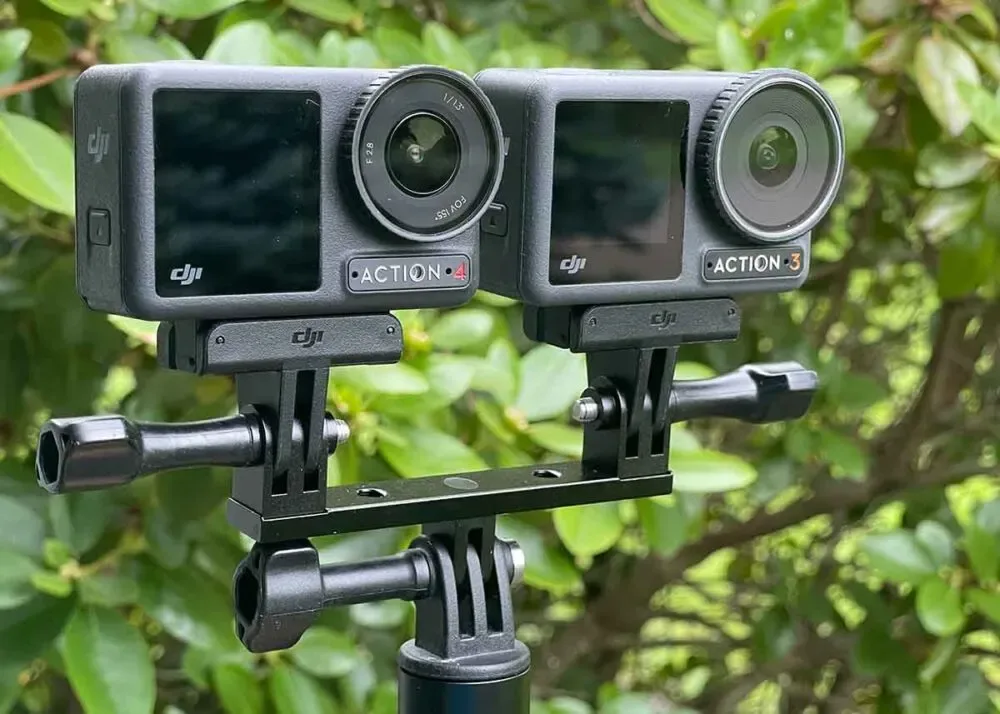
Image source: Bing (Web (fair-use with source credit))
Who Should Choose Which Camera?
Deciding between the DJI Osmo Action 4 and the Action 3 ultimately hinges on your primary use cases, shooting conditions, and budget. If you're a professional or an enthusiast who demands the absolute best in low-light performance and requires maximum flexibility in post-production editing, the Action 4 is likely the stronger contender. Its larger sensor and advanced color profiles are geared towards those who push their cameras to the limit in varied environments.
However, the Action 3 remains an incredibly capable camera. For many users who primarily shoot in good lighting conditions and don't require advanced color grading, it provides excellent value. The choice often comes down to prioritizing cutting-edge features versus cost-effectiveness for your specific adventure-capturing needs.
Action 4: Best for Low Light and Pro Editing
The DJI Osmo Action 4 is the clear choice if your adventures often involve less-than-ideal lighting. Manufacturer specifications highlight its 1/1.3-inch sensor as a key advantage for capturing detail and reducing noise in low-light conditions. This means better footage when filming at dawn, dusk, indoors, or in dense forests.
For content creators who aim for polished, professional-looking videos, the inclusion of D-Log M and 10-bit color recording in the Action 4 offers unparalleled flexibility for color grading in post-production. This allows you to fine-tune the look of your footage extensively, recovering details in highlights and shadows that would be lost with less advanced color profiles. If you prioritize cutting-edge sensor technology and maximum creative control in editing, the Action 4 is a worthwhile investment.
It's built for those who want to extract every bit of quality from their footage, regardless of the lighting.
Action 3: The Value Champion for Everyday Adventures
The DJI Osmo Action 3 still stands out as an excellent value proposition, especially for users whose shooting conditions are typically well-lit. While its 1/1.7-inch sensor isn't as potent in low light as the Action 4's, it performs admirably during daylight hours and in reasonably bright indoor settings. The camera’s RockSteady stabilization is also top-tier, ensuring smooth, watchable footage during high-impact activities.
For many adventure enthusiasts, travelers, and casual vloggers, the Action 3 provides all the essential features needed to capture dynamic moments without the premium cost associated with the latest model. It offers a robust, durable action camera experience that is still highly competitive, making it a smart choice if your budget is a consideration and your primary shooting environments are bright.
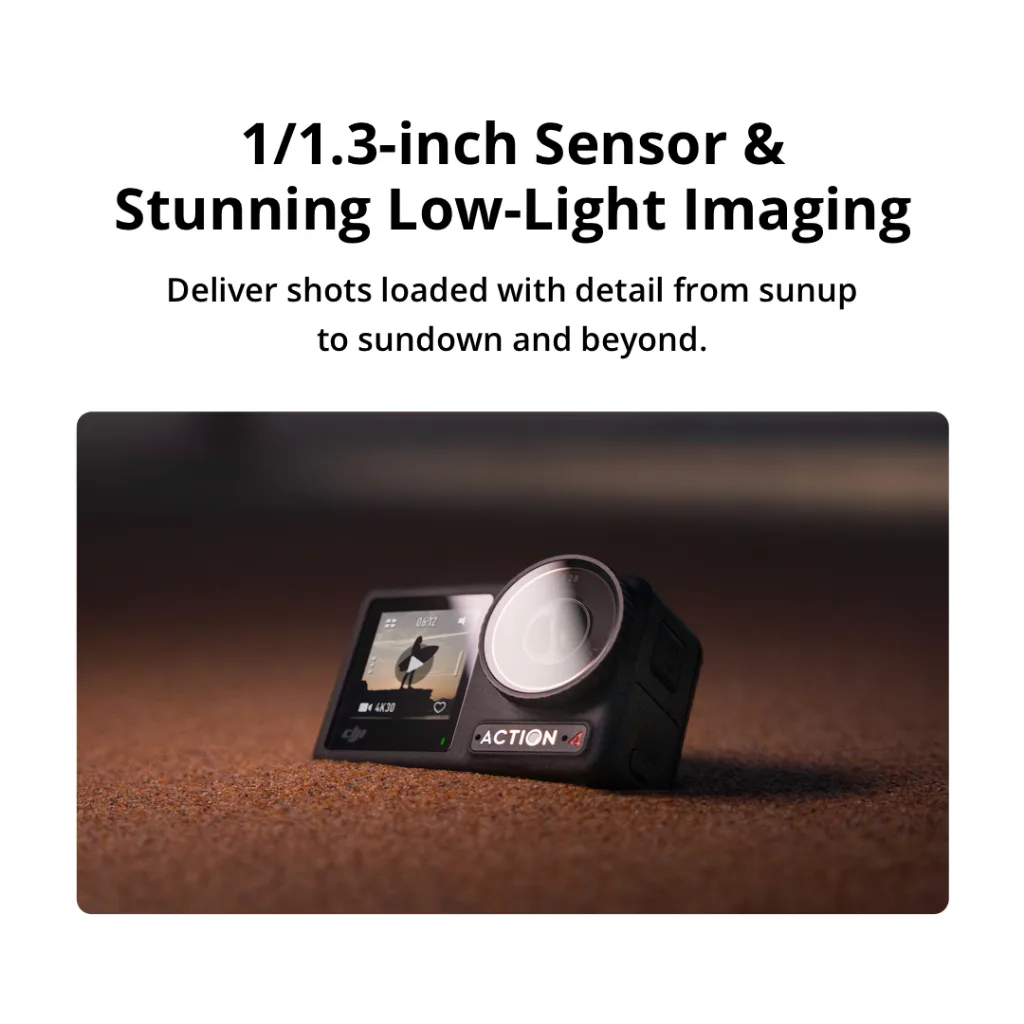
Image source: Bing (Web (fair-use with source credit))
Making Your Choice: Final Thoughts
When you're weighing the DJI Osmo Action 4 against the Action 3, it's not about which camera is definitively "better," but which is better for you. Our research indicates that the Action 4 offers tangible improvements in low-light performance and post-production flexibility thanks to its larger sensor and D-Log M color profile. If these aspects are critical to your videography workflow and budget isn't the primary constraint, the Action 4 is the logical upgrade.
However, the Action 3 remains an incredibly capable camera. For many users who primarily shoot in good lighting conditions and don't require advanced color grading, it provides excellent value. The choice often comes down to prioritizing cutting-edge features versus cost-effectiveness for your specific adventure-capturing needs.

Image source: Web (Bing) / djiph.com (Web image (fair-use with source credit))
Frequently Asked Questions
Does the Action 4 have better stabilization than the Action 3?
The Action 4 features RockSteady 3.0+, a slightly refined version of the Action 3's RockSteady 3.0. While both offer excellent stabilization for smooth footage, the Action 4's version may provide marginal improvements in managing extreme shakes and vibrations.
Which camera is more durable?
Both cameras are built to be very durable and waterproof. The Action 4 is rated for 18 meters (without a case), a slight increase from the Action 3's 16 meters, but both are designed to withstand demanding outdoor conditions and submersion.
Is the Action 4 worth the upgrade if I already own the Action 3?
The upgrade is most beneficial if low-light performance and advanced color grading with D-Log M are crucial for your specific video projects. If you primarily shoot in good lighting and are satisfied with the Action 3's capabilities, the upgrade might not be essential.
Can I use accessories interchangeably between the Action 4 and Action 3?
Yes, many accessories, including mounts utilizing the magnetic quick-release system, are interchangeable between the DJI Osmo Action 4 and Action 3 due to their shared design elements.