Is Garmin Etrex Solar Worth It? Honest Review and Buyer’s Guide
If you love hiking, biking, or exploring wild places, you know how important a good GPS is. Maybe you’ve heard about the Garmin Etrex Solar, a new GPS device that promises unlimited battery life, thanks to its solar charging feature. But is this device really worth your money? Does it stand out from other GPS units, or is it just another gadget with a fancy name? Let’s take a deep look at what makes the Etrex Solar unique, how it performs, and whether it’s the right choice for your next adventure.
What Is Garmin Etrex Solar?
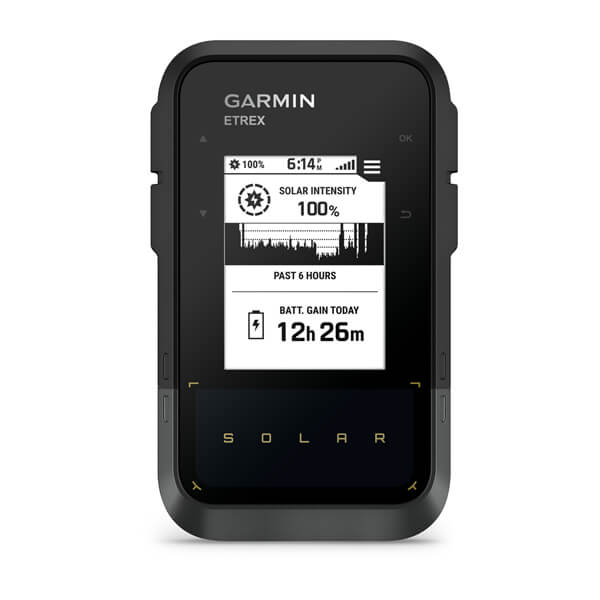
The Garmin Etrex Solar is a handheld GPS device designed for outdoor activities. It looks similar to previous Etrex models, but adds a big feature: a solar panel built into the device. This means you can charge the battery using sunlight, a major advantage for long trips without access to power.
Here are some core details:
- Weight: 4.2 oz (120 g)
- Display: 2.2-inch color screen, 240 x 320 pixels
- Battery life: Up to 1,800 hours in expedition mode (with solar charging)
- Water rating: IPX7 (can survive rain, splashes, and drops into water)
- Connectivity: USB-C, Bluetooth, and Garmin’s own wireless protocol
The Etrex Solar is marketed for hikers, cyclists, geocachers, hunters, and anyone who needs reliable navigation in remote places. But how does it actually perform?
Key Features And Real-world Performance
To understand if the Etrex Solar is worth it, you need to know what features it offers—and how these features hold up in the real world.
Solar Charging And Battery Life
The headline feature is solar charging. Garmin claims you can get “unlimited” battery life if you use the device in expedition mode, with regular sunlight.
- Expedition mode: Up to 1,800 hours with solar, or 200 hours without solar
- Standard GPS mode: About 100 hours (with solar), 60 hours (without solar)
These numbers are impressive. For comparison, most handheld GPS units last 20–40 hours on a charge. The Etrex Solar is designed for multi-day or even multi-week trips.
But there’s a catch: “unlimited” battery depends on sunlight, and expedition mode updates your location less often (every 10–15 minutes). This is fine for basic navigation, but not for fast-moving activities like cycling or hunting.
Satellite Support
The Etrex Solar supports four satellite networks:
- GPS
- GLONASS
- Galileo
- BeiDou
This means you get strong global coverage, quick fixes, and better accuracy—even in forests or valleys. The device also supports WAAS and EGNOS, which help with accuracy in North America and Europe.
Rugged Design
Like other Etrex models, the Solar is built tough. The IPX7 rating means it can survive being dropped into water (up to 1 meter for 30 minutes). The screen is scratch-resistant. The buttons are simple and easy to use with gloves.
Navigation Tools
You get basic mapping, waypoint marking, route planning, and track logging. The device displays topographic maps (pre-installed and downloadable). You can create routes and see elevation profiles. For geocachers, the device supports paperless geocaching, letting you download cache info directly.
Wireless Connectivity
The Etrex Solar connects to your phone via Bluetooth. You can sync data, receive smart notifications, and upload activities to Garmin Connect. It also supports USB-C charging, which is faster than older micro-USB.

Garmin Etrex Solar Vs Other Gps Devices
You might wonder how the Etrex Solar stacks up against other GPS units, especially in terms of battery life, features, and price. Here’s a comparison with two popular alternatives: Garmin GPSMAP 66st and Garmin Etrex 32x.
| Feature | Garmin Etrex Solar | Garmin GPSMAP 66st | Garmin Etrex 32x |
|---|---|---|---|
| Battery Life | Up to 1,800 hrs (expedition mode w/solar) | Up to 35 hrs (GPS mode) | Up to 25 hrs (GPS mode) |
| Display | 2.2″ color | 3″ color | 2.2″ color |
| Maps | TopoActive, downloadable | Topo maps, Birdseye imagery | Topo maps, downloadable |
| Weight | 4.2 oz (120 g) | 8.1 oz (230 g) | 5 oz (141 g) |
| Water Rating | IPX7 | IPX7 | IPX7 |
| Price (USD) | $249 | $449 | $199 |
As you can see, the Etrex Solar offers unmatched battery life, especially in expedition mode. It’s lighter and less expensive than the GPSMAP 66st, but a bit pricier than the Etrex 32x. The GPSMAP 66st has a bigger screen and more advanced mapping, but it is heavier and costs more.
Pros And Cons Of Garmin Etrex Solar
No device is perfect. Here’s a quick look at the main advantages and disadvantages of the Etrex Solar.
Pros
- Unmatched battery life: With solar charging, you can go for weeks without recharging.
- Lightweight and portable: Easy to carry, fits in any pocket or pack.
- Multi-satellite support: Accurate tracking, even in tough terrain.
- Waterproof and rugged: Built for harsh weather and rough use.
- Affordable price: Costs less than most advanced GPS units.
Cons
- Limited display size: The 2.2-inch screen is small, not ideal for detailed maps.
- Basic mapping: No advanced features like Birdseye imagery or satellite photos.
- Expedition mode is slow: Only updates location every 10–15 minutes.
- No touchscreen: Button-only controls, which some people find old-fashioned.
- Solar charging depends on sunlight: Cloudy days or dense forests will slow charging.
Real User Experiences And Reviews
To see if the Etrex Solar lives up to its claims, let’s look at what real users say.
Positive Feedback
- Long-distance hikers love the battery life. One Appalachian Trail hiker reported charging only twice in three weeks, thanks to sunny days.
- Geocachers appreciate the accuracy and ruggedness. The device works well in forests and urban areas.
- Hunters and fishermen mention the device’s reliability in rainy conditions.
Critical Feedback
- Some users complain that the screen is hard to read in bright sunlight.
- A few hikers wish for a bigger screen and more detailed maps.
- Cyclists say the slow update rate in expedition mode can be frustrating if you move quickly.
Insight: Beginners Often Forget That Solar Charging Is Not “always On.” You Need To Place The Device In Sunlight, And Cloudy Days Can Drain The Battery Faster Than Expected. Also, Many First-time Users Don’t Realize That Expedition Mode Is Meant For Slow-moving Or Stationary Activities.
Practical Scenarios: Who Should Buy Etrex Solar?
Let’s look at who will benefit most from the Etrex Solar, and who might want something else.
Best Uses
- Multi-day hikes and treks: If you’re going into the wild for days or weeks, the solar charging is a game-changer.
- Backcountry camping: No need to carry spare batteries or power banks.
- Geocaching: Light, accurate, and rugged.
- Field work: Scientists, researchers, or surveyors who work outside for long periods.
Not Ideal For
- Cyclists: The small screen and slow update rate in expedition mode can make navigation difficult.
- Urban explorers: Phone-based GPS apps offer more detailed maps and faster updates.
- Navigation in dense forests: Solar charging slows down in thick woods.
Hidden Details: What Beginners Usually Miss
Many new users overlook these important facts:
- Battery life depends on sunlight intensity. If you travel in cloudy regions or spend time in thick forests, solar charging may be weaker. Always check the battery indicator before long trips.
- Mapping options are basic. While you can download maps, the detail level is not as high as smartphone apps or advanced GPS units. If you need satellite imagery, the Etrex Solar may not be enough.
Price And Value For Money
The Etrex Solar costs about $249 in the US. Compared to the Etrex 32x ($199) and GPSMAP 66st ($449), it sits in the middle.
Is it worth the price? For people who prioritize battery life and durability, yes. If you need advanced mapping or a bigger screen, you may want to spend more.
Here’s a quick breakdown of what you get for your money:
| Device | Battery Life | Mapping | Display | Price |
|---|---|---|---|---|
| Etrex Solar | Weeks (with solar) | Basic topo | Small, color | $249 |
| Etrex 32x | 1–2 days | Basic topo | Small, color | $199 |
| GPSMAP 66st | 1–2 days | Advanced, Birdseye | Large, color | $449 |
If battery life is your top concern, the Etrex Solar is a clear winner. If you want more mapping features, look at the GPSMAP line.
Tips For Using Garmin Etrex Solar Effectively
If you decide to buy the Etrex Solar, here are some helpful tips to get the most from it:
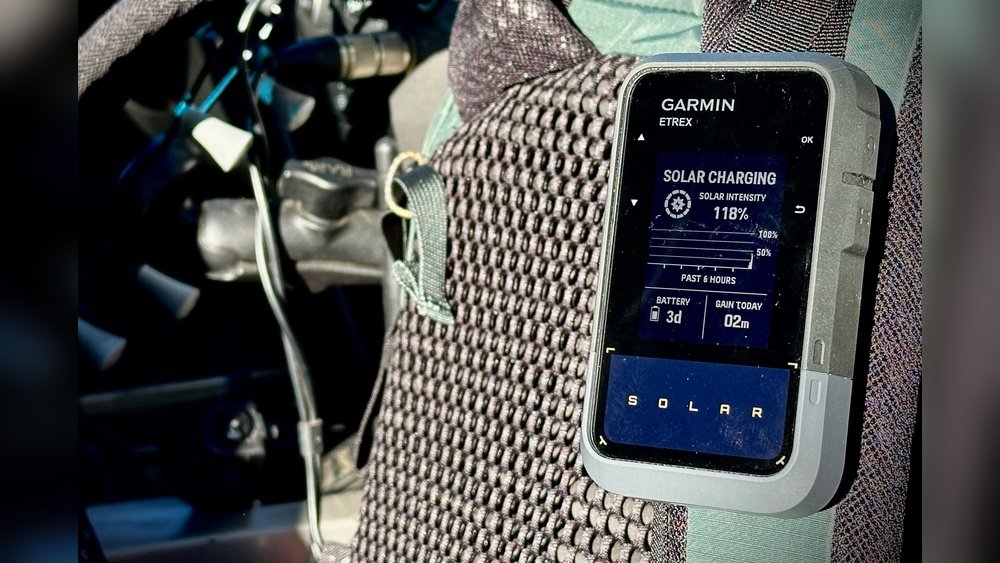
- Keep it in sunlight: To maximize solar charging, attach the device to your backpack or keep it exposed while hiking.
- Use expedition mode for long trips: This mode saves battery but updates less often. Switch to standard GPS mode when you need real-time navigation.
- Download maps before you go: The device supports downloadable topo maps. Make sure you have the right maps for your region.
- Check battery status regularly: Don’t assume solar charging is enough. Watch the battery indicator, especially in cloudy weather.
- Protect the screen: Use a screen protector to avoid scratches from rocks or sand.
Common Mistakes To Avoid
- Expecting unlimited power all the time: Solar charging is great, but not magical. Plan for cloudy days or shaded trails.
- Ignoring the update rate: Expedition mode is slow. Use regular GPS mode for faster navigation.
- Not learning button controls: The Etrex Solar is not a touchscreen device. Practice using the buttons before your trip.
How Does Etrex Solar Compare To Smartphone Gps?
Many people ask if they should just use their smartphone for navigation. Smartphones have bright screens, detailed maps, and fast updates. But they also have limited battery life, and most aren’t waterproof.
Here’s a quick comparison:
| Feature | Etrex Solar | Smartphone |
|---|---|---|
| Battery Life | Days to weeks (solar) | 4–10 hrs (GPS use) |
| Durability | Rugged, waterproof | Fragile, not waterproof |
| Maps | Basic topo | Advanced, satellite imagery |
| Controls | Buttons | Touchscreen |
| Price | $249 | $300–$1200 (new phone) |
For short trips, a smartphone is fine. For long adventures, the Etrex Solar is safer and more reliable.
Final Verdict: Is Garmin Etrex Solar Worth It?
If you need a GPS device for long trips, remote adventures, or field work, the Garmin Etrex Solar is one of the best options available. Its solar charging feature solves the biggest problem with handheld GPS units: running out of power. You get weeks of battery life, a rugged design, and accurate navigation.
However, you need to understand its limits. The screen is small, mapping is basic, and solar charging depends on sunlight. If you want advanced mapping or fast updates for biking or urban navigation, look at higher-end models or use your smartphone.
For most hikers, campers, geocachers, and outdoor workers, the Etrex Solar is a smart investment. It’s reliable, affordable, and built for real-world use. If you value battery life above all, it’s hard to beat.
If you want to see more technical details, visit the official Garmin website.

Frequently Asked Questions
How Does Solar Charging Work On Garmin Etrex Solar?
The Etrex Solar uses a built-in solar panel to charge its battery. When you expose the device to sunlight, it slowly recharges. The solar charging works best in direct sunlight. In expedition mode, the device uses less power, so solar charging can keep the battery going for weeks.
Cloudy weather or shade will reduce charging speed.
Is The Garmin Etrex Solar Waterproof?
Yes, the device has an IPX7 rating. This means it can survive being dropped in water up to one meter deep for 30 minutes. It’s also resistant to rain and splashes, making it safe for most outdoor activities.
Can I Use The Etrex Solar For Geocaching?
Absolutely. The device supports paperless geocaching, letting you download cache information and hints directly. It’s accurate, rugged, and works well in forests or urban areas. The small screen may be less ideal for reading long descriptions, but it’s great for marking and navigating to caches.
What Maps Are Available For Garmin Etrex Solar?
The Etrex Solar comes with TopoActive maps for your region. You can download more maps using Garmin’s software. The mapping is basic—topographic, trails, roads, and some points of interest. It does not support satellite imagery or Birdseye view.
Does The Etrex Solar Connect To Smartphones?
Yes, you can connect the device to your phone via Bluetooth. This lets you sync data, receive smart notifications, and upload activities to Garmin Connect. It does not support navigation apps like Google Maps, but you can share waypoints and tracks.
If you’re looking for a GPS that can handle long trips and tough conditions, the Garmin Etrex Solar is a strong choice. It’s not perfect, but its battery life and durability make it stand out in the world of handheld GPS devices.