Is Anker Solix C1000 Worth It? Unbiased Review & Expert Verdict
When you look for portable power stations, you quickly find many options. But Anker Solix C1000 stands out in many reviews and discussions. Is it really worth your money? Or are you just paying for a brand name? This is a question many buyers ask before choosing a solar generator. In this article, you’ll get a clear, honest look at the Anker Solix C1000—what it offers, where it shines, and where it falls short. If you need backup power for camping, home emergencies, or working outdoors, this guide will help you decide if the C1000 is the right fit for you.
What Is The Anker Solix C1000?
The Anker Solix C1000 is a portable power station. It stores electricity in a battery and lets you run or charge your devices anywhere. Think of it as a giant power bank, but with more power, more ports, and the ability to run things like laptops, fans, mini fridges, and even some power tools. You can recharge it from a wall outlet, car, or solar panels. Anker is a well-known brand for charging devices, and the Solix C1000 is one of their flagship models for portable energy.
Key Features And Specifications
Here’s what you get with the Anker Solix C1000:
- Capacity: 1056Wh (watt-hours)
- Battery Type: LiFePO4 (Lithium Iron Phosphate)
- Weight: 28.4 lbs (12.9 kg)
- AC Output: 1800W (Surge 2400W)
- DC Outputs: Car port, USB-C, USB-A
- Charging Time: 0–100% in 58 minutes (using AC input with Anker’s HyperFlash)
- Cycle Life: 3,000+ cycles to 80% capacity
- App Control: Yes (Bluetooth and Wi-Fi)
- Solar Input: Up to 600W
This means it can power almost any small or medium device, and you can recharge it quickly if you have access to a wall or a strong solar panel.

Real-world Performance
Numbers on a spec sheet are one thing, but how does the C1000 perform day to day? In real use, its 1056Wh capacity is enough for:
- Running a CPAP machine for 15–18 hours
- Powering a mini fridge for up to 15 hours
- Charging a laptop about 16 times
- Charging a phone 80+ times
The pure sine wave AC output is safe for sensitive electronics. The 1800W output means you can run higher-wattage devices like a coffee maker, hair dryer, or even a microwave for short periods (though the battery will drain fast with heavy loads).
What’s impressive is the fast recharge time. Many power stations this size need 4–6 hours to charge. The C1000 can go from empty to full in under an hour using a wall outlet, thanks to HyperFlash technology. Solar charging is also possible—if you have a 600W solar panel, you can get a full charge in about 2 hours of good sunlight.
Pros Of The Anker Solix C1000
Let’s break down the strongest points of this power station:
- Fast Charging: Few competitors offer a full recharge in under an hour.
- Long Battery Life: LiFePO4 batteries are safer and last longer (over 3,000 cycles).
- High Output: 1800W continuous is enough for most home appliances.
- Plenty of Ports: You can charge multiple devices at once, including USB-C laptops.
- App Control: See stats and control outputs from your phone.
- Expandable: You can add a battery pack to double the capacity.
- Build Quality: Anker is known for reliable, durable products.
Cons And Limitations
Of course, nothing is perfect. Here are some drawbacks:
- Heavy: At nearly 29 lbs, it’s not light, especially if you need to carry it far.
- Price: Usually costs more than $900, which is a big investment.
- No 240V Output: Not suitable for US 240V appliances (like clothes dryers or large ovens).
- Fan Noise: The cooling fans can be loud under heavy use.
- Solar Panels Not Included: You must buy solar panels separately.
When Is The Anker Solix C1000 Worth It?
This power station is a good buy if:
- You need fast recharging (for road trips, work sites, or frequent outages)
- You want a long-lasting battery for regular use
- You plan to run multiple devices at once
- You value app control and easy monitoring
- You want to be ready for emergencies
If you just want a backup for your phone or a small light, this may be more than you need. But for home backup, RVs, van life, or off-grid work, the C1000 shines.
Comparison: Anker Solix C1000 Vs. Key Competitors
How does the Solix C1000 stack up against similar models? Here’s a side-by-side look with two main rivals: EcoFlow Delta 2 and Jackery Explorer 1000 Plus.
| Feature | Anker Solix C1000 | EcoFlow Delta 2 | Jackery Explorer 1000 Plus |
|---|---|---|---|
| Capacity | 1056Wh | 1024Wh | 1264Wh |
| Battery Type | LiFePO4 | LiFePO4 | LiFePO4 |
| AC Output | 1800W | 1800W | 2000W |
| Weight | 28.4 lbs | 27 lbs | 30.9 lbs |
| Charging Time (AC) | 58 min | 80 min | 100 min |
| Solar Input | 600W | 500W | 400W |
| App Control | Yes | Yes | No |
You see that the Anker Solix C1000 is faster to charge, lighter than Jackery, and has strong output. The Jackery offers higher output, but with a higher price and slower recharge.
Who Should Skip The Anker Solix C1000?
While the C1000 is strong, it’s not for everyone. You might want another model if:
- Your budget is limited and you don’t need high output.
- You want something ultra-light (for hiking, for example).
- You only need to charge phones, tablets, or small cameras.
- You need US 240V output for large appliances.
In these cases, a smaller and less expensive power station may make more sense.
How Long Will The Battery Last?
The C1000 uses LiFePO4 chemistry, which is more stable and longer-lasting than typical lithium-ion. Anker claims over 3,000 charge cycles before the battery drops to 80% of its original capacity. If you use and recharge it once a week, it could last more than 10 years. This is much better than many older power stations, which start to fade after 500–800 cycles.
Is It Safe?
Safety is a real concern with any large battery. The Solix C1000 includes:
- Overload protection
- Short circuit protection
- Temperature control
- High/low voltage protection
LiFePO4 batteries are less likely to overheat or catch fire compared to older battery types. Still, you should avoid storing it in direct sun or wet places.
Setup And First Use
Setting up the C1000 is simple:
- Unbox and inspect: Make sure nothing is damaged.
- Charge to full: Plug into the wall for the fastest first charge.
- Download the app: Connect via Bluetooth or Wi-Fi.
- Connect devices: Use the correct ports for your gear.
- Monitor with the screen/app: Check power in/out, remaining time, and temperature.
The app helps you update firmware, set charging limits, and turn outlets on/off remotely. This is helpful if the unit is outside or in another room.
User Experience: Real Feedback
Owners of the C1000 often mention:
- The fast charging is a huge advantage, especially for travel.
- The handle is comfortable but the unit is still heavy.
- The display is bright and clear, showing all important stats.
- The fan noise is noticeable but not a deal-breaker for most.
- App updates bring new features, showing Anker’s support.
Some users wish for quieter fans and a lower price, but most feel they get their money’s worth.

Common Use Cases
Here’s where the C1000 really shines:
- Camping: Runs lights, fans, and a small fridge all night.
- Home backup: Keeps Wi-Fi, phone, and a few lights on during power cuts.
- Outdoor work: Powers tools for several hours.
- Emergency kit: Reliable for medical devices and urgent charging.
- Tailgating/Parties: Runs speakers, projectors, or blenders.
You can also use it with solar panels to create a small off-grid system—great for cabins or RVs.
Solar Charging: What You Need To Know
Solar charging is one of the C1000’s strengths. It accepts up to 600W of solar input, which is higher than many rivals. In perfect sunlight, a 600W solar panel can recharge the battery in about 2 hours. Realistically, count on 3–5 hours depending on weather and sun angle.
Non-obvious insight: Many buyers forget that cheaper, smaller panels will charge much slower. If you buy only a 100W panel, expect a full day for a charge.
Tip: Use MC4 connectors for most third-party panels, or buy Anker’s own panels for plug-and-play use.
Expandability: Growing Your System
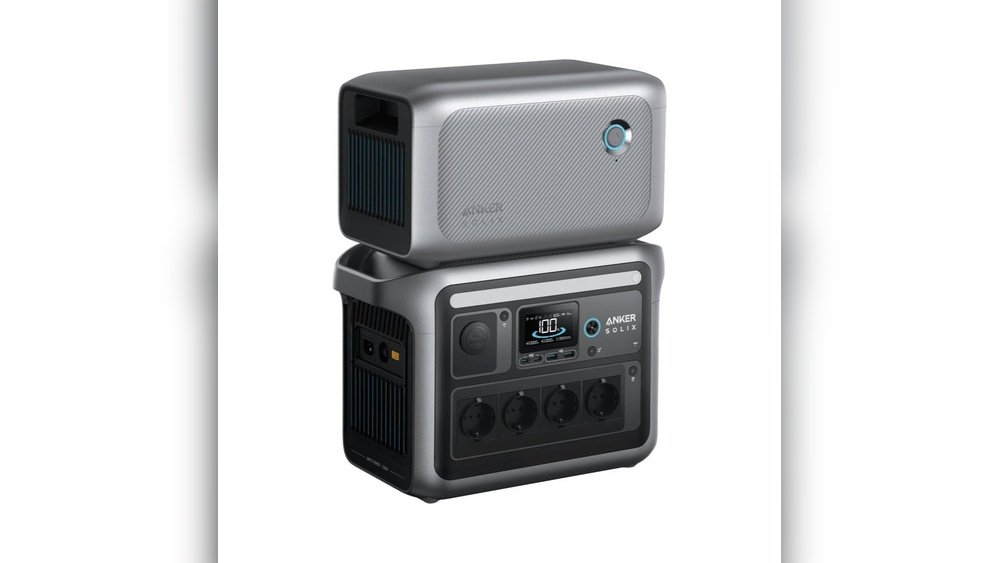
One thing that sets the C1000 apart is expandability. You can connect an extra battery pack (the Anker Solix BP1000) to double your storage to over 2kWh. This is ideal if you want more backup time for your devices but don’t want to buy a whole new unit.
Not all power stations in this size range allow expansion. If you think your needs might grow, this feature adds real value.
Noise And Heat: What To Expect
When charging or discharging at high wattage, the C1000’s fans will turn on. The noise is similar to a laptop under heavy load—noticeable but not extreme. The shell stays cool to the touch, and the battery management system prevents overheating.
Pro tip: Place the unit on a hard surface with space for air flow. Avoid running it in a closed cabinet or under blankets.
Warranty And Support
Anker offers a 5-year warranty on the Solix C1000, which is longer than some rivals (many give just 2 years). Their customer service is responsive, and spare parts like cables are easy to find. The app can also help you update the firmware, which keeps the unit running smoothly.
Price And Value For Money
At around $999 retail (prices may vary), the C1000 is not cheap. But when you consider the fast charging, long battery life, strong output, and expandability, it’s a good investment for people who need reliable portable power. Cheaper models often use older battery tech, are slower to charge, or can’t run high-wattage devices.
If you only need to charge phones and tablets, you can save money with a smaller unit. But for home backup, camping, or work, the C1000 justifies its price.
Is The Anker Solix C1000 Right For You?
Ask yourself:
- Do I need to run large or many devices at once?
- Is fast recharge important to me?
- Will I use it regularly, or just for rare outages?
- Do I want to add solar or extra batteries later?
If you answered yes to most, the C1000 is a top choice. If you only need emergency phone charging, it’s more than you need.
Real-world Example: Powering Through An Outage
During a recent storm, a user in Texas reported using the C1000 to:
- Keep a Wi-Fi router, two laptops, and three phones running for 14 hours
- Power a small fan for 8 hours
- Recharge a flashlight and camera batteries
The unit still had 12% left when grid power returned. This kind of use shows the value of a high-capacity, fast-charging station for real emergencies.
Comparison Table: Key Specs At A Glance
Here’s a quick summary for easy reference:
| Model | Capacity | Max Output | Charging Time | Weight | Expandability |
|---|---|---|---|---|---|
| Anker Solix C1000 | 1056Wh | 1800W | 58 min | 28.4 lbs | Yes |
| EcoFlow Delta 2 | 1024Wh | 1800W | 80 min | 27 lbs | Yes |
| Jackery Explorer 1000 Plus | 1264Wh | 2000W | 100 min | 30.9 lbs | Yes |
Where To Buy And What To Check
The C1000 is available from Anker’s official site, Amazon, and big electronics retailers. Watch for sales—sometimes you’ll find bundles with solar panels or extra batteries for less.
Non-obvious tip: Always check the version and warranty. Some third-party sellers offer shorter warranties or older models.
If you want more details, see the official product page on Anker’s website.
Final Thoughts
The Anker Solix C1000 stands out for its fast charging, strong and safe battery, and smart features. It’s not the cheapest, but you get real value for the price—especially if you want reliable power for emergencies, travel, or outdoor work. The extra cost goes into better battery chemistry, fast recharging, and a long warranty.
If you need a portable power station that will last for years and can handle real-world needs, the C1000 is worth it. If your needs are small, a lighter and cheaper option may be smarter. Overall, the C1000 is a top performer in its class.
Frequently Asked Questions
How Long Does The Anker Solix C1000 Take To Charge?
With a wall outlet, it can recharge from 0–100% in about 58 minutes using Anker’s HyperFlash mode. Solar charging takes 2–5 hours depending on sunlight and panel size.
What Can You Power With The C1000?
You can run most small appliances (mini fridge, CPAP, lights), charge laptops and phones many times, and even power tools. High-wattage items like microwaves can run for short periods.
How Long Will The C1000 Battery Last?
The LiFePO4 battery supports over 3,000 cycles to 80% capacity. With weekly use, this means 8–10 years of life before noticeable capacity drop.
Is The C1000 Safe For Indoor Use?
Yes, it’s safe for indoor use. It has multiple safety protections and does not produce fumes. Just keep it dry and well-ventilated.
Can I Use Third-party Solar Panels?
Yes, as long as the panels’ voltage and connectors are compatible. MC4 to XT60 adapters work well. For best results, use 300–600W of solar input.
If you need a portable power solution that works hard and lasts, the Anker Solix C1000 is a smart choice for most users.