Is Dji Air 3S Worth It? Honest Review and Buyer’s Guide
Is Dji Air 3s Worth It?
Buying a drone isn’t just about picking the newest model. It’s about finding the right mix of features, price, and reliability. The DJI Air 3S is one of the most talked-about drones of 2026. It sits between DJI’s beginner-friendly Mini series and the professional Mavic line. But with so many drones on the market, is the Air 3S worth your money? This article breaks down the key features, real-world performance, and how it compares to other drones. You’ll also learn where the Air 3S shines, where it falls short, and who should (and shouldn’t) buy it.
Core Features Of Dji Air 3s
The Air 3S brings together many features from DJI’s more expensive models, but at a more reachable price. Here’s what stands out:
Camera System
The Air 3S offers a dual-camera setup. You get a 1-inch main sensor (24mm equivalent lens, f/1.7) for regular shots and a 3x telephoto lens (70mm equivalent, f/2.8). The main camera can shoot 48MP stills and record up to 4K video at 100fps with HDR, while the telephoto lens lets you zoom without moving the drone physically.
What does this mean in practice? With the main sensor, you capture lots of detail, even in low light. The telephoto lens is perfect for filming subjects like people or cars from a safe distance, which is often required by drone laws.
Flight Performance
The Air 3S is fast and stable. It can fly up to 46 minutes on a single charge, which is among the best in its class. Top speed is 47 mph (in Sport mode), and wind resistance is rated for up to 12 m/s.
Key flight features:
- Omnidirectional obstacle sensing: Sensors on all sides help prevent crashes.
- O4 transmission: Stable 1080p live feed up to 20 km (12.4 miles).
- APAS 5.0: Advanced autopilot that can automatically avoid obstacles.
Intelligent Flight Modes
Smart modes help you create professional-looking shots. The Air 3S includes:
- ActiveTrack 5.0: Follows and films moving subjects automatically.
- Mastershots: Drone picks the best camera moves for you.
- Hyperlapse: Create moving time-lapses without post-editing.
- QuickShots: Pre-set maneuvers for instant creative shots (like Rocket, Dronie, Circle).
Portability And Build
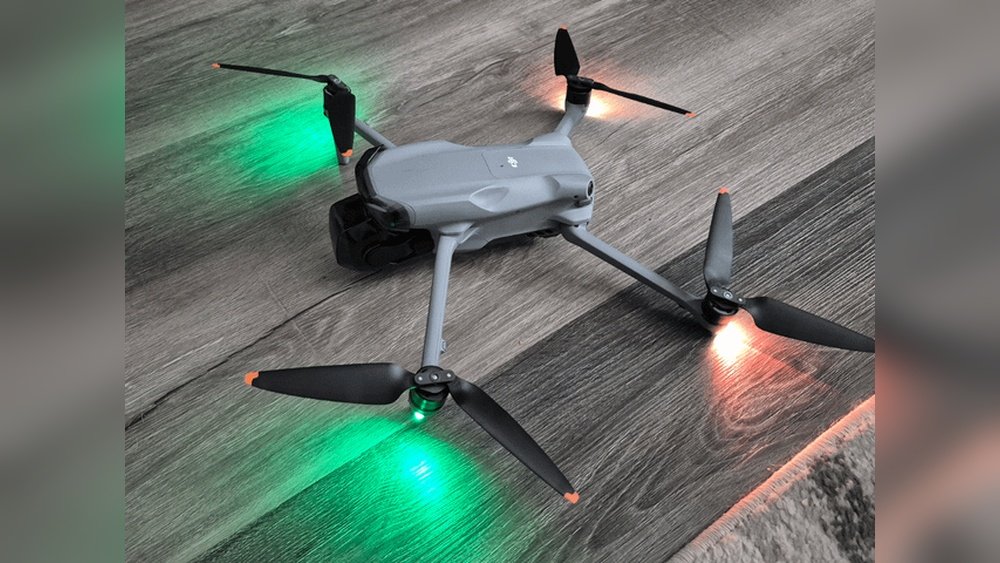
The Air 3S weighs 720 grams. It folds up small enough to fit in a camera bag or large jacket pocket. The build feels solid, with upgraded motors and propellers for quieter operation compared to the Air 2S.
Battery Life
DJI says you get up to 46 minutes of flight on one battery. Real-world use is usually 36-40 minutes with wind and camera use. That’s still better than most drones under $2,000.
Safety And Regulations
With Remote ID support and built-in geo-fencing, the Air 3S meets new FAA and EU rules. This helps avoid fines and fly legally.
Non-obvious insight: Many buyers miss that omnidirectional sensors only work in standard flight modes. In Sport mode, obstacle avoidance is limited. That means flying fast near trees or buildings is still risky.
How Does Dji Air 3s Compare To Other Drones?
Let’s see how the Air 3S stacks up against other popular drones in its price range.
| Model | Camera | Max Flight Time | Obstacle Sensors | Weight | Price (USD) |
|---|---|---|---|---|---|
| DJI Air 3S | 1″ CMOS + 1/1.3″ Telephoto | 46 min | All Directions | 720 g | ~$1,099 |
| DJI Mini 4 Pro | 1/1.3″ CMOS | 34 min | All Directions | 249 g | ~$759 |
| DJI Air 2S | 1″ CMOS | 31 min | 4 Directions | 595 g | ~$899 |
| DJI Mavic 3 Classic | 4/3″ CMOS | 46 min | All Directions | 895 g | ~$1,599 |
| Autel Evo Lite+ | 1″ CMOS | 40 min | 3 Directions | 835 g | ~$1,249 |
Key takeaways:
- The Air 3S gives you more flight time and better sensors than the Air 2S.
- It’s heavier than the Mini 4 Pro, but much better in wind and image quality.
- The Mavic 3 Classic has a bigger sensor, but costs $500+ more and is heavier.
- The Autel Evo Lite+ is a strong alternative, but lacks some smart features.
Non-obvious insight: Many new drone buyers focus too much on the camera specs, but for smooth video, the transmission system (O4 on Air 3S) is just as important. Poor video feed means missed shots and lost drones.
What’s New In Dji Air 3s Vs Air 2s?
Wondering if the upgrade is worth it? Here’s a clear comparison.
| Feature | DJI Air 3S | DJI Air 2S |
|---|---|---|
| Camera | 1″ CMOS + 1/1.3″ Telephoto | 1″ CMOS (single lens) |
| Flight Time | 46 min | 31 min |
| Obstacle Sensing | Omnidirectional | 4 Directions |
| Transmission | O4 (20 km) | O3 (12 km) |
| Weight | 720 g | 595 g |
| Price (USD) | ~$1,099 | ~$899 |
Is the upgrade worth it?
- If you value the new telephoto lens and longer flight time, yes.
- If you just want a solid camera drone for simple shots, the Air 2S still holds up for $200 less.
Real-world Performance
Specs matter, but how does the Air 3S perform in the field? Here’s what you can expect from daily use.
Image And Video Quality
The main sensor delivers sharp, colorful video even in low light. The HDR mode is especially good for sunrise or sunset shots, handling bright skies and dark ground at the same time. The telephoto lens is slightly softer, but it’s very useful for creative framing and distant subjects.
A unique feature is the seamless switch between lenses during video recording. You can start wide, then zoom in for detail. This is rare in drones outside of the Mavic 3 series.
Flight Stability
Thanks to the new motors and propellers, the Air 3S is stable in wind (up to 25 mph gusts). Even when flying near cliffs or water, the drone holds its position well. The improved transmission means you get a clean video feed without lag or dropouts — very important for safe landings.
Obstacle Avoidance
The omnidirectional sensors work well. The drone will stop or reroute automatically if it senses trees, walls, or even power lines. It’s not perfect — thin branches and wires can still be missed, especially in low light — but crashes are much less likely.
Pro tip: Always test sensors in a safe area before trusting them in tight spaces. Don’t rely 100% on automation.
Battery And Charging
Expect about 38-40 minutes per battery in real use. The charging hub lets you charge three batteries in sequence, which is handy for longer shoots. A full charge from empty takes about 70 minutes.
Noise Level
The Air 3S is quieter than older Air models. It’s not silent, but in most environments, people won’t notice unless you’re flying very close.
Who Should Buy The Dji Air 3s?
Not every drone fits every user. Here’s a clear breakdown.
Best For:
- Serious hobbyists – If you want high-quality photos and video, but don’t want the bulk or price of a Mavic 3.
- Travelers – The Air 3S is light enough for travel, but strong enough for windy locations.
- Content creators – YouTube, Instagram, and TikTok users will love the smart modes and easy editing.
- Real estate – Perfect for agents who need smooth, high-res shots of properties.
- Outdoor sports – Hikers, bikers, and boaters benefit from long battery life and obstacle avoidance.
Not Ideal For:
- Beginners on a tight budget – The Mini 4 Pro or Air 2S is cheaper and easier to start with.
- Professional filmmakers – If you need raw video or the biggest sensor, the Mavic 3 or Inspire series is better.
- People who must travel ultra-light – At 720g, it’s not as “pocketable” as the Mini series (sub-250g).
Common mistake: Some buyers think a better drone makes them a better pilot. In reality, practice matters more than specs. Start with easy flights and learn the controls before using advanced modes.
Pros And Cons Of Dji Air 3s
Here’s a quick summary of what’s great — and where the Air 3S falls short.
Pros
- Excellent image quality with dual cameras
- Long battery life (best in class for the price)
- Omnidirectional obstacle avoidance
- Powerful smart modes (ActiveTrack, Mastershots, Hyperlapse)
- Strong wind resistance
- Compact, travel-friendly design
- Up-to-date safety features (Remote ID, geo-fencing)
- Reliable transmission for long-range flights
Cons
- Price is higher than entry-level drones
- Telephoto camera is softer than main camera
- Heavier than Mini series (requires registration in some countries)
- Obstacle sensors can miss thin objects
- No built-in internal storage (microSD card required)
- Requires smartphone or smart controller for full features

Common Buyer Mistakes
Buying a drone is exciting, but many people make simple errors:
- Ignoring local laws: In the US, drones over 250g must be registered with the FAA. The Air 3S is 720g, so registration is required.
- Underestimating size: It’s portable, but not as small as the Mini. Check your bag space before travel.
- Buying too few batteries: Real flight time is under 40 minutes. For a good experience, buy at least two spare batteries.
- Skipping insurance: Crashes happen. Consider DJI Care Refresh or third-party insurance, especially if flying near water or in cities.
- Assuming all smart modes are beginner-proof: Some creative modes need practice to get smooth results.
Pro tip: Before your first flight, watch official DJI tutorials and practice in an open field. This reduces the risk of crashes and lost drones.
Value For Money: Is It Worth The Price?
The Air 3S costs about $1,099 (standard kit), up to $1,349 (Fly More Combo with extra batteries and bag). Is it a good deal?
Yes, if:
- You need both wide and telephoto shots.
- You value flight safety (omnidirectional sensors).
- You want long battery life for travel or long shoots.
- You plan to grow your skills — the Air 3S has enough features for years of use.
No, if:
- You just want simple, casual drone shots.
- You don’t care about telephoto or pro video features.
- Your main goal is to save money or fly without registration (Mini 4 Pro is better here).
Comparison with similar drones:
- Mini 4 Pro: Cheaper, lighter, almost as smart, but less stable in wind and lower image quality.
- Air 2S: Still a great value if you don’t need telephoto or the best obstacle sensors.
- Mavic 3 Classic: Superior camera, more pro features, but much bigger and more expensive.
Non-obvious insight: The Air 3S will likely hold its value better than older models. DJI’s quick update cycle means Air 2S prices are dropping, but the Air 3S will remain “current” for at least 2-3 years.
For those who want the best mix of features, safety, and creative options under $1,500, the Air 3S is hard to beat.
Accessories And Add-ons
To get the most from your Air 3S, consider these extras:
- Extra batteries: Each adds 35-40 minutes of flight. Essential for travel or long shoots.
- ND filters: For smooth video in bright sun, ND filters are a must.
- Propeller guards: Good for indoor flying or crowded areas.
- Carrying case: Protects your investment during travel.
- DJI Care Refresh: Covers accidental damage for a small fee.
Pro tip: Buy accessories from trusted sellers. Cheap, unbranded batteries or filters can cause issues.
How Does The Dji Air 3s Fit Into The Dji Lineup?
DJI has more drone choices than ever. Here’s where the Air 3S fits:
| Series | Main Audience | Key Features | Price Range |
|---|---|---|---|
| Mini | Beginners, travelers | Sub-250g, easy to use | $399–$799 |
| Air (Air 3S) | Hobbyists, creators | Dual camera, smart modes, long flight | $1,099–$1,349 |
| Mavic | Professionals | Largest sensors, pro video | $1,599–$2,199+ |
| FPV/Avata | Racing, first-person view | Fast, immersive flying | $999–$1,399 |
The Air 3S is the “sweet spot” for most users. It balances power and portability, and offers more creative options than the Mini, without the cost or weight of the Mavic line.

Software, Updates, And Support
DJI’s Fly app is your main tool for controlling the Air 3S. It’s available for iOS and Android, with regular updates. The Air 3S will get software updates for at least two years, adding new features and improving safety.
DJI’s customer support is generally fast and helpful. Their global service centers mean repairs and replacements are handled quickly. For complex issues, there are many active online communities with tips and tricks.
For more in-depth specs and software features, see the official DJI Air 3S page.
Frequently Asked Questions
What Is The Real Flight Time Of The Dji Air 3s?
In real-world use, you get about 38-40 minutes per battery, depending on wind and camera use. The official 46-minute rating is under ideal, slow-flight conditions.
Does The Dji Air 3s Need To Be Registered?
Yes, in most countries (including the US and EU), drones over 250g must be registered. The Air 3S weighs 720 grams, so registration is required.
Can I Fly The Air 3s Indoors?
Yes, but with caution. Use propeller guards and fly slowly. Obstacle sensors help, but GPS is weak indoors, so manual control is needed.
Is The Air 3s Good For Beginners?
It’s user-friendly, but not as beginner-proof as the Mini 4 Pro. If you’re brand new to drones, start with a cheaper model or practice in open spaces.
What’s The Main Advantage Of The Dual Camera System?
You get wide shots and 3x telephoto zoom without loss of quality. This means more creative options and safer filming from a distance.
The DJI Air 3S is one of the most balanced drones on the market right now. If you want long battery life, smart safety features, and creative flexibility, it’s well worth the investment. For casual flyers or those on a tight budget, there are cheaper options, but for most serious users, the Air 3S is a smart buy that will last for years.