
How Far Should a Fire Pit Be From a House
You asked how far should a fire pit be from a house. It's a fair question. Get it wrong and you risk melting siding, sparking a fire, or violating local codes.
The simple answer is at least 10 feet for a portable pit. But your situation might need more.
The National Fire Protection Association (NFPA) sets that 10-foot baseline. Local codes often push it to 15 or 20 feet. Your house materials, wind patterns, and fuel type all change the number.
Let's walk through the decisions so you get it right.
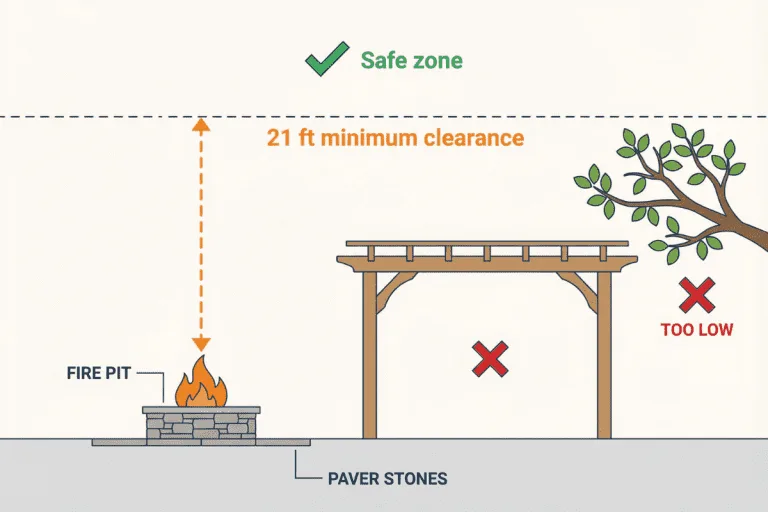
Image source: Bing (Web (fair-use with source credit))
Why 10 Feet Isn't a Safe Number for Everyone
The 10-foot rule comes from the NFPA. It's a minimum for portable fire pits. But it's not a guarantee.
Your specific setup might require more space.
The type of fire pit changes the risk. A portable metal bowl radiates heat differently than a built-in stone pit. Wood fires shoot embers.
Gas fires produce steady heat without sparks. Embers can travel up to 15 feet in a moderate wind.
Your house construction matters too. Vinyl siding melts at around 165°F. Wood siding can catch fire.
Brick and stone handle more heat. Overhanging eaves can ignite from a tall flame. Wind direction pushes heat and sparks toward your home.
Local codes can override the general rule. Some cities require 15 feet. Others demand 25 feet for permanent pits.
Your homeowners insurance might have its own rules. Ignoring them could void your policy.
The smart approach is a decision workflow. Start with the baseline. Then adjust for your specific situation.
That's what we cover next.
Quick Answer: Minimum Distance by Fire Pit Type
Portable fire pits need at least 10 feet from your house. Permanent pits need 15 to 20 feet. Gas fire pits often need less clearance.
Always check your local codes first.
The distance isn't just from the wall. It includes eaves, overhangs, and roof lines. Your deck or patio material also matters.
Non-combustible surfaces like stone or concrete allow slightly closer placement.
For a portable wood-burning pit, 10 feet is the minimum. For a permanent in-ground or masonry pit, 15 to 20 feet is safer. For a gas fire pit, manufacturer specs usually say 5 to 10 feet.
Follow the strictest rule you find.
Decision Branch 1: Codes and Insurance Requirements
Start with your local fire department or building department. They can tell you the exact setback requirements for your area. Your city might have stricter rules than the national standard.
Homeowners associations often have their own guidelines. Some ban fire pits entirely. Others require specific distances from property lines.
Check your HOA covenants before you buy or build.
Your insurance policy is another factor. Some companies require a minimum distance for coverage. Others exclude fire pits from certain policies.
A quick call to your agent can save you headaches later.
Here is a comparison of common requirements:
| Authority | Portable Fire Pit | Permanent Fire Pit |
|---|---|---|
| NFPA (general) | 10 ft | 15 ft |
| Typical city code | 10-15 ft | 15-25 ft |
| HOA restriction | 15-25 ft | 20-30 ft |
| Insurance policy | Varies | Varies |
The safest move is to meet the strictest requirement. If your city says 15 feet and your HOA says 20 feet, go with 20 feet. That covers you for liability and safety.
If you need a model that works with different fuel types, a versatile multi-fuel design gives you more flexibility.
Decision Branch 2: Wood vs. Gas — Heat Radius and Ember Risk

Image source: Bing (Web (fair-use with source credit))
Wood fire pits are the traditional choice. They produce embers, sparks, and smoke. Embers can travel up to 15 feet in a moderate wind.
That's why many codes require a larger setback.
Gas fire pits burn cleaner. They don't produce embers or sparks. But they still radiate significant heat.
The heat can damage nearby siding, decking, or landscaping.
The heat radius differs by fuel type. A wood fire typically has a radiant zone of 5 to 8 feet. A gas fire might have a smaller zone of 3 to 5 feet.
But the gas flame can be taller, especially with natural gas.
Use this table for a quick comparison:
| Factor | Wood Fire Pit | Gas Fire Pit |
|---|---|---|
| Ember risk | High | None |
| Spark risk | High | None |
| Heat radius (avg) | 5-8 ft | 3-5 ft |
| Minimum setback | 10-15 ft | 5-10 ft |
| Overhead clearance | 10-20 ft | 10-15 ft |
For wood pits, you also need to account for ash and ember cleanup. For gas pits, you need to check the gas line clearance. Both require a non-combustible base.
For a cleaner burn with less smoke, a low-smoke design is worth considering.
Decision Branch 3: Your Yard's Specific Risks
Image source: Bing (Web (fair-use with source credit))
Wind direction is a major factor. If your prevailing winds blow toward your house, you need more distance. Embers and smoke will travel in that direction.
Position your fire pit so the wind carries smoke away from your home.
The type of siding on your house matters. Vinyl siding can melt at 165°F. Wood siding can catch fire.
Brick and stone are more heat resistant. But even heat-resistant materials can crack from extreme temperature changes.
Eaves and overhangs are a fire risk. A tall flame can reach them. Most codes require 10 to 20 feet of overhead clearance.
That includes tree branches, pergolas, and roof overhangs.
Here is a guide for siding materials:
| Siding Type | Heat Tolerance | Recommended Distance |
|---|---|---|
| Vinyl | Low (165°F) | 15-20 ft |
| Wood | Medium | 15-20 ft |
| Brick/Stone | High | 10-15 ft |
| Fiber cement | Medium | 10-15 ft |
Your deck or patio material also matters. Always place the fire pit on a non-combustible surface. Stone, concrete, or gravel are best.
Never put a fire pit directly on grass or wood decking.
If you're installing on a deck, a setup designed for deck use will have the right safety features.
Your Personal Safe Distance: A 4-Step Decision Workflow
Step 1: Check your local codes. Call your fire department or building department. Get the exact setback requirement for your area.
Write it down.
Step 2: Identify your fire pit type. Is it portable or permanent? Wood or gas?
Check the manufacturer's manual for recommended clearances. Use the stricter of the two numbers.
Step 3: Assess your yard. Look at your siding material. Check for eaves, overhangs, and tree branches.
Note the prevailing wind direction. Add 5 feet to your distance if you have vinyl siding or if the wind blows toward your house.
Step 4: Measure and mark the spot. Use a tape measure from the house foundation, not the wall. Include eaves and overhangs in your measurement.
Mark the center of your fire pit location. Then measure the distance to your house again to confirm.
Your final number is the highest of these three: local code minimum, manufacturer spec, or your adjusted yard distance. That's your safe distance.
Common Fire Pit Placement Mistakes
Placing the pit too close to the house is the most common mistake. People think 10 feet is plenty. But they forget to measure from the eaves or overhangs.
Your house extends beyond the wall.
Ignoring local codes is another mistake. Some people assume the general rule applies everywhere. It doesn't.
Your city could have a 20-foot requirement. A quick phone call can save you a fine.
Putting a fire pit on grass or wood decking is risky. Embers can ignite dry grass. Heat can scorch wood decking.
Always use a non-combustible base like stone, concrete, or gravel.
Forgetting about wind direction is a common oversight. A fire pit that's 15 feet away is still dangerous if the wind blows embers toward your house. Check your local wind patterns before you settle on a spot.
Failing to check your insurance policy is another mistake. Some policies exclude fire damage from outdoor fire pits. A quick call to your agent can confirm your coverage.
Frequently Asked Questions
Can I put a fire pit closer than 10 feet to my house?
No, not safely. The NFPA minimum is 10 feet for portable pits. Closer placement risks heat damage to siding and ember ignition.
Local codes may require more distance. Always check your specific regulations.
Does a gas fire pit need the same distance as a wood fire pit?
No. Gas fire pits don't produce embers or sparks. But they still radiate heat.
Manufacturer specs typically recommend 5 to 10 feet. Local codes may still require more. Follow the strictest rule.
What is the minimum distance from a fire pit to a fence?
Most codes require 10 feet from a fence. Check your local ordinances. Some areas require more.
Keep the fence clear of dry leaves and debris. Wood fences can catch fire from embers or radiant heat.
Can I put a fire pit on a wooden deck?
Yes, but with caution. Place the pit on a non-combustible pad. Use a fire pit mat underneath.
Keep it at least 10 feet from the house. Check your deck's weight capacity. Never leave a fire unattended.
Do I need a permit for a fire pit?
It depends on your location. Some cities require a permit for permanent fire pits. Others require one for any fire pit.
Your local fire department can tell you. Failure to get a permit can result in fines.
How far should a fire pit be from a tree?
At least 10 feet from the trunk. The canopy needs more clearance. Keep branches at least 10 to 20 feet above the fire.
Heat can damage tree bark. Embers can ignite dry leaves.