Best Fishing Rod: Top Picks For Every Angler
The best fishing rod balances strength, comfort, sensitivity, and value for your favorite fishing style.
Picture yourself beside a quiet lake at dawn, or standing on a windy shoreline with a loose line and tired hands. The wrong rod can feel heavy, dull, or too weak when a fish finally strikes. The right fishing rod makes casting smoother, detects light bites, and gives you better control during the fight. I reviewed these popular rod and reel combos for build, action, comfort, travel use, and real-world value. Whether you fish in freshwater, saltwater, or both, this guide can help you choose with confidence.

PLUSINNO Fishing Rod and Reel…
🎣 Warm Prompt: Full Kit with Carrier Case Include 1 Fishing Rod + 1 Fishing Reel + Fishing Line + Various Fishing Lures + Fishing Hooks + Some Necessary Accessories…

Ugly Stik 7’ Complete Saltwater…
UGLY STIK 7’ COMPLETE SALTWATER SPINNING COMBO: Includes 9 pieces of Saltwater tackle to catch multiple Saltwater Species: 20lb. mono double hook bottom rig (2), 3oz. pyramid sinker (2) and…

Ugly Stik 6’6″ GX2 Casting…
UGLY STIK 6’6″ GX2 CASTING ROD: The next-gen Ugly Stik, featuring better balance and improved components for enhanced durability. From the makers of the #1 rod series in the world….
PLUSINNO Telescopic Rod and Reel Combo

The PLUSINNO telescopic combo is built for anglers who want a compact setup that travels well. Its 24-ton carbon fiber telescopic rod keeps the package small when collapsed. The included spinning reel has 12+1 shielded bearings, which should help it feel smooth during normal casting and retrieval. The combo also includes a carrier bag, so you can move it from a car trunk to a dock with less fuss.
I like this type of rod for casual lake trips, bank fishing, camping, and light saltwater use. The telescopic design saves space, but it also asks for careful setup before each trip. Check that every section is fully seated and clean before you cast. This is a practical Best Fishing Rod choice for beginners and travelers who value convenience more than tournament-level sensitivity.
Pros:
- Compact telescopic design suits travel and storage
- 24-ton carbon fiber construction keeps the rod light
- Included spinning reel makes it a ready-to-fish package
- 12+1 shielded bearings support smooth reel operation
- Carrier bag helps protect and organize the setup
- Works for many common freshwater fishing situations
Cons:
- Telescopic joints need regular cleaning and inspection
- Compact sections may feel less crisp than a one-piece rod
- Not the ideal choice for very heavy fish or large lures
Ugly Stik 7-Foot Saltwater Spinning Combo

The Ugly Stik 7-foot saltwater kit targets anglers who want a simple and durable spinning combo. It uses Ugly Tech construction and includes the brand’s familiar clear tip design. The rod is telescopic and listed as a two-piece setup, which gives you a useful mix of portability and reach. At 7 feet, it offers enough length for shore casts without becoming difficult for most beginners to handle.
This combo makes sense for piers, beaches, docks, and inshore areas where a dependable rod matters more than a feather-light feel. The clear tip can help show movement near the end of the blank, while the Ugly Stik design is known for handling everyday abuse. I would rinse the rod and reel with fresh water after saltwater use and allow them to dry fully. For a new angler, this may be the Best Fishing Rod package when durability and ease of use come first.
Pros:
- 7-foot length provides useful casting range from shore
- Telescopic format makes transport easier
- Ugly Tech construction is suited to regular use
- Clear tip offers visible movement near the rod tip
- Spinning design is easy for beginners to learn
- Saltwater-focused kit supports pier and beach fishing
Cons:
- May feel heavier than a premium graphite rod
- Telescopic joints require care after saltwater trips
- Included reel may not satisfy anglers seeking advanced drag control
Ugly Stik GX2 6.5-Foot Casting Rod

The Ugly Stik GX2 is a standalone casting rod for anglers who already own a compatible baitcasting reel. It measures 6 feet 6 inches and uses a medium-heavy power rating. The listed 10-to-25-pound line rating and 1/4-to-3/4-ounce lure range give it a useful role for stronger freshwater presentations. Its two-piece build also makes it easier to store than many one-piece casting rods.
I see this rod as a good fit for bass, pike, catfish, and other fish that need firm hook-setting power. The medium-heavy blank gives you more backbone around cover, weeds, and docks. It will not offer the same compact travel size as a telescopic model, but it should feel more direct once assembled. If you prefer to choose your own reel, this GX2 can be a strong Best Fishing Rod starting point at a practical price.
Pros:
- Medium-heavy power supports firm hook sets
- 10-to-25-pound line rating suits stronger fishing lines
- Handles lures from 1/4 to 3/4 ounce
- 6-foot-6 length offers control in tight fishing spots
- Two-piece design improves storage and transport
- Useful for anglers who prefer a custom reel setup
Cons:
- Requires a separate compatible casting reel
- Medium-heavy power may feel stiff for small baits
- Not the best option for anglers who prefer spinning gear
Ugly Stik Bigwater Spinning Combo

The Ugly Stik Bigwater combo is made for anglers who want more strength than a basic light or medium setup can provide. Its bold black, red, and yellow design is easy to spot in a crowded gear bag. The spinning format keeps operation simple, while the Bigwater name signals a focus on larger fish and demanding conditions. It is a rod and reel package, so beginners do not need to match separate components.
This combo deserves attention from surf anglers, pier fishers, and anyone who targets powerful fish from shore. A stronger setup can help manage heavier terminal tackle, but it may feel excessive when you chase small panfish. I would pair it with line and leaders that match the target species rather than simply choosing the heaviest option. For power on a budget, the Bigwater is a serious Best Fishing Rod contender.
Pros:
- Built for larger fish and demanding fishing conditions
- Spinning reel design remains simple to operate
- Combo format reduces the guesswork for new anglers
- Strong profile suits surf, pier, and big-fish use
- Bright color pattern improves visibility around shared gear
- Offers more backbone than many entry-level fishing rods
Cons:
- May be too heavy for small freshwater species
- Less convenient for backpack travel than a telescopic rod
- Anglers may need to confirm the exact power and line match before purchase
Ugly Stik Carbon Inshore Rod and Penn Reel

This inshore combo pairs a 7-foot Ugly Stik Carbon rod with a Penn Pursuit IV size 40 reel. The rod uses medium power and carries a listed 10-to-17-pound line rating. That range makes it a balanced option for inshore species, light surf work, and larger freshwater fish. Because it is a one-piece rod, it may provide a more connected feel than a travel-style telescopic blank.
The Penn reel adds appeal for anglers who want a known reel platform with a ready-matched rod. Medium power gives you useful flex without making the setup feel soft when a fish turns. The one-piece design does take more room in a vehicle, so measure your storage space before ordering. In my view, this combo may be the Best Fishing Rod for anglers who want a balanced inshore setup without building one from separate parts.
Pros:
- Medium power suits a broad range of inshore targets
- 10-to-17-pound line rating supports versatile line choices
- 7-foot length balances casting distance and control
- Penn Pursuit IV size 40 reel comes as part of the combo
- One-piece construction can provide a direct fishing feel
- Useful for both saltwater inshore and stronger freshwater use
Cons:
- One-piece rod is harder to transport in small cars
- Medium power may not cover very heavy offshore applications
- Saltwater care is essential after every coastal trip
Penn Battle IV 8-Foot Spinning Combo

The Penn Battle IV combo is aimed at anglers who want an 8-foot spinning setup with a larger size 5000 reel. Its reel features CNC gear technology, a full metal body and sideplate, and an HT-100 drag system. These features point toward a sturdy saltwater and surf-oriented package. The 8-foot rod can help create casting distance from beaches, jetties, and open banks.
This is the combo I would consider when the trip calls for more reach and a reel with a solid metal frame. It is not the lightest choice for a child or a short afternoon of panfish. The longer rod also needs room during transport and more attention around trees or crowded piers. For beach anglers and serious inshore users, the Penn Battle IV could be the Best Fishing Rod package among these options when strength and reach matter most.
Pros:
- 8-foot length can improve casting range from open shorelines
- Size 5000 reel suits heavier spinning applications
- Full metal body and sideplate provide a sturdy platform
- CNC gear technology supports smooth, reliable gear engagement
- HT-100 drag system is designed for strong fish runs
- Combo format offers a matched rod and reel setup
Cons:
- Longer length can be awkward in tight cover
- Metal construction may add noticeable weight
- May be more gear than a beginner needs for small fish
Sougayilang Travel Telescopic Fishing Combo
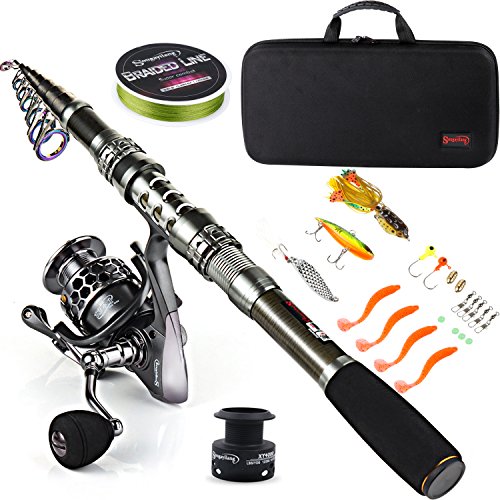
The Sougayilang combo is a compact travel setup with a 1.8-meter, or 5.91-foot, telescopic rod. It includes a spinning reel and a carrier bag for easier transport. The short assembled length gives beginners a manageable platform for small lakes, ponds, rivers, and casual shoreline trips. Its main appeal is convenience: you can keep it ready in a vehicle, camper, or travel bag.
I would choose this rod for spontaneous fishing rather than heavy-duty saltwater work. The smaller size can feel comfortable for younger anglers and anyone fishing from a narrow bank. As with any telescopic rod, wipe away dirt and salt, then check each section before use. It is a useful Best Fishing Rod pick for low-cost travel, simple freshwater fishing, and gift buyers who want a complete package.
Pros:
- 5.91-foot size is easy to control for beginners
- Telescopic design stores in a small space
- Includes a spinning reel and carrier bag
- Good fit for casual freshwater trips
- Simple setup works well for first-time anglers
- Portable format suits camping and road travel
Cons:
- Short length may limit casting distance from wide shorelines
- Not intended for the largest fish or heaviest tackle
- Telescopic sections need careful handling and cleaning
My Recommendation
After comparing these six setups, I would match the rod to the place and fish rather than chase one universal winner. The PLUSINNO and Sougayilang models suit travel and casual freshwater use. The Ugly Stik saltwater and Bigwater combos make more sense for anglers who want durable, ready-to-fish packages. The GX2 is the better route for someone who already owns a casting reel and wants firmer power.
For balanced inshore fishing, I favor the Ugly Stik Carbon and Penn Pursuit IV combo. It combines a manageable 7-foot length, medium power, a useful 10-to-17-pound line range, and a one-piece feel. For surf anglers who need extra reach and a larger reel, the Penn Battle IV is the stronger choice. In simple terms, the Best Fishing Rod is the one that matches your target fish, lure weight, line, and fishing location.
| Best for | Why |
|---|---|
| Travel and casual freshwater fishing | PLUSINNO and Sougayilang telescopic combos pack small and include reels. |
| Inshore saltwater versatility | Ugly Stik Carbon with Penn Pursuit IV balances length, power, and reel size. |
| Surf and stronger fish | Penn Battle IV offers an 8-foot rod and a larger size 5000 reel. |
How I Choose the Best Fishing Rod
A fishing rod is more than a long stick with guides. It is the link between your hand, your line, your lure, and the fish. I start with the fishing style, then check power, action, length, material, line rating, and lure rating. This order prevents a common mistake: buying a rod that looks impressive but does not fit the way you fish.
Match the Rod to the Fishing Style
Spinning rods work with spinning reels and are usually the easiest choice for beginners. The reel sits below the rod, and the spool releases line with a simple open-and-close bail. Casting rods work with baitcasting reels, which can offer strong control but require more practice. If you are buying your first complete setup, a spinning combo usually reduces the learning curve.
Freshwater anglers often need a lighter and more flexible setup than surf anglers. A small pond may call for a compact rod that handles light lures. A beach may demand a longer rod that can cast past breaking waves. The Best Fishing Rod for a quiet trout stream would not be the best choice for a large catfish or a beach redfish.
Understand Rod Power
Power describes how much force it takes to bend a rod. Ultralight and light rods bend with small fish and light lures. Medium rods offer broad use for bass, walleye, trout, and many inshore species. Medium-heavy and heavy rods provide more lifting power for larger fish, thick cover, and heavier baits.
Power is not the same as action. A medium-heavy rod can still have a fast or moderate action. Always read both labels before you buy. A rod with too much power may not load well with a tiny lure, while one with too little power may struggle to set a hook through a tough mouth.
Understand Rod Action
Action tells you where the rod bends. A fast-action rod bends near the tip and often feels sharp when you detect a bite. A moderate-action rod bends farther down the blank and can help keep treble-hook fish pinned. A slow-action rod bends through more of its length and works well for light lines and delicate presentations.
For soft plastics and single-hook lures, many anglers like the quick feel of fast action. For moving baits, moderate action can give a fish more time to take the lure. This is not a strict rule. Your skill, lure type, and target species should guide the final choice.
Choose the Right Rod Length
Longer rods can cast farther when you have open space. They can also help keep line above shoreline grass and control a fish near the bank. Shorter rods offer better accuracy in tight areas, under trees, and around docks. They may also feel easier for children and new anglers.
The 6-foot-6 to 7-foot range is a useful middle ground for many people. An 8-foot rod can help from a beach, but it may be cumbersome in a small boat. Telescopic rods solve storage problems, while one-piece rods often feel more connected. Think about where you will store the rod between trips, not just how it looks online.
Check Line and Lure Ratings
The line rating shows the general line range the rod is designed to handle. The lure rating shows the weight range that should load the blank properly. These numbers are useful guides, not invitations to exceed the rod’s limits. A lure that is too heavy can damage the blank during a hard cast.
Use the lure rating with your full rig in mind. Add the weight of the hook, sinker, jig head, bait, and any metal hardware. A live bait rig may weigh more than it appears. If your usual lure sits near the middle of the listed range, the rod will often feel more balanced and predictable.
Carbon Fiber, Fiberglass, and Composite Builds
Carbon fiber, also called graphite in many rod descriptions, can provide a light and sensitive blank. It helps you notice small taps and changes in bottom contact. Fiberglass tends to offer more flex and impact tolerance. Composite rods blend traits from both materials.
Light weight feels good after hours of casting, but extreme lightness is not the only goal. A rod must also suit the fish, hook, and cover. A tough fiberglass or composite design can be a smart choice for children, rental gear, rough storage, and demanding trips. The right Best Fishing Rod balances sensitivity with the abuse your habits create.
Why Reel Size Matters
Reel size should match the rod and line. Small reels suit light line and small lures. Larger reels hold more line and may provide more drag capacity for big fish or long casts. A size 5000 reel, such as the one listed with the Penn Battle IV combo, is more at home in heavier applications than a small panfish reel.
A large reel on a light rod can make the setup feel nose-heavy. A tiny reel on a long surf rod may not hold enough line. Hold the assembled combo if possible and check whether the balance point rests near your grip. A balanced setup reduces wrist strain and makes repeated casting feel less like work.
Spinning Versus Casting Rods
Choose a spinning rod if you want easy casting, simple lure changes, and fewer early problems. Spinning gear works well with light lures and many line types. It is also a good fit for families who share one setup. The Ugly Stik combos in this guide use a simple format that most new anglers can learn quickly.
Choose a casting rod if you want precise lure control and already feel comfortable managing a baitcasting reel. Casting equipment can shine around cover and with heavier lures. It also lets experienced anglers control the spool with a thumb. The Ugly Stik GX2 casting rod is a better match for that user than a complete spinning combo.
What Makes a Good Saltwater Rod?
Saltwater fishing places extra stress on guides, reel parts, line, and connections. Salt crystals can damage metal and create rough spots that harm fishing line. Rinse your setup with clean, low-pressure water after each saltwater trip. Do not use a strong jet that forces salt and grit deeper into the reel.
Dry the rod before placing it in a sleeve or case. Open the bail and let the reel drain. Check the guides for cracks by running a cotton swab around the inside; loose fibers can reveal damage. These basic steps matter more than a flashy color or a long list of marketing terms.
One-Piece, Two-Piece, or Telescopic?
One-piece rods usually provide a clean, continuous blank and a direct feel. Their main problem is transport. Two-piece rods separate near the middle and fit in more vehicles. They need the ferrule connection checked often so the sections stay aligned.
Telescopic rods collapse into a very small package. That makes them ideal for hiking, camping, travel, and emergency use. They also have more moving connections, so dirt can affect performance. I treat a telescopic rod like a folding tool: convenient and useful, but worth checking before every trip.
Comfort and Handle Design
A rod can have excellent specifications and still feel wrong in your hand. Look at grip length, handle material, reel seat, and overall weight. Longer handles can help with two-handed casts and heavier fish. Shorter grips can feel better when you cast one-handed from a kayak or narrow bank.
Cork and EVA foam are both common handle materials. Cork can feel warm and light, while EVA foam is easy to clean and often handles rough use well. Neither material automatically makes a rod better. What matters most is a secure grip that does not create hot spots during a long day.
Guides and Line Protection
Rod guides direct line from the reel to the tip. They should sit in a straight path and remain firmly attached. A damaged guide can create friction, reduce casting distance, and weaken the line. Before each trip, look for bent frames, cracked inserts, or loose wraps.
Saltwater anglers should pay close attention to guide care. Even a small amount of salt can build up over time. Clean guides with fresh water and inspect them when you change line. This small habit can protect both your rod and your catch.
How to Set Up a New Fishing Rod
Start by joining the rod sections with the guides aligned. Do not twist them together with excessive force. On a telescopic model, extend each section gently and keep the guides in line. Attach the reel, tighten the seat by hand, and avoid crushing the reel foot.
Thread the line through every guide, including the small tip guide. Open the spinning bail before pulling line through the spool area. Tie on a lure or practice plug, then test the drag with your hand. A few minutes of setup can prevent a frustrating first cast and help you learn how the rod loads.
How to Care for Your Fishing Rod
Wipe your rod after each use, even after freshwater trips. Mud, sand, and sunscreen can collect around the handle and reel seat. Store the rod away from direct heat, such as a hot car dashboard or attic. Extreme heat can damage finishes and increase stress on some materials.
Do not lean a rod tip-first against a wall. The thin tip is easy to bend or break. Use a case or rod tube during travel, especially with one-piece models. If you notice a strange crack, deep scratch, or soft spot, stop using the rod until you can inspect it safely.
Common Buying Mistakes to Avoid
The first mistake is choosing by color alone. Bright colors can look fun, but length, power, action, and line rating affect fishing far more. The second mistake is buying the strongest rod possible for every situation. Too much power can make light lures hard to cast and small fish less enjoyable.
Another mistake is ignoring storage. A rod that stays at home because it does not fit your car is not a useful purchase. Some buyers also forget that combo specifications can vary by size and model. Read the exact listing, check the rod length, and confirm whether the package includes the reel, line, case, or other accessories.
Who Should Buy a Fishing Rod Combo?
A combo helps beginners because the rod and reel are selected to work together. It can also save time for an experienced angler who wants a backup setup. Combos are useful gifts because the buyer does not need to understand every reel measurement. They are often ready for basic fishing soon after opening the package.
Separate rod and reel purchases make more sense when you have a specific technique. You may want a special action for crankbaits, a certain drag range for surf fishing, or a precise balance for tournament use. The GX2 casting rod is a good example of a product for anglers who want to choose their own reel.
How Much Should You Spend?
You do not need an expensive rod to enjoy fishing. A well-matched entry-level combo can catch many fish and teach you important skills. Spend more when you fish often, need lower weight, want greater sensitivity, or face stronger fish. Spend less when you are testing the hobby, buying for a child, or seeking a backup rod.
Value comes from use, not just price. A compact rod that travels with you may deliver more value than a premium rod that stays in a closet. A durable saltwater combo may save money if it survives years of regular trips. Think about cost per trip, comfort, and the chance that you will keep using the setup.
FAQs Of Best Fishing Rod
What is the Best Fishing Rod for beginners?
A spinning combo is usually the easiest starting point. The Ugly Stik saltwater kit, PLUSINNO combo, and Sougayilang combo include a rod and reel. Choose based on where you fish, how much storage space you have, and the size of fish you expect to catch.
Is a telescopic fishing rod worth buying?
Yes, if portability matters. Telescopic rods fit well in cars, backpacks, and camping gear. They need careful cleaning and alignment, so they may not be ideal for anglers who want maximum sensitivity or heavy-duty performance.
What rod length should I choose?
A 6-foot-6 to 7-foot rod works well for many general fishing trips. Choose a longer rod for open beaches and extra casting range. Choose a shorter rod for tight cover, small boats, and easier control.
What is the difference between rod power and action?
Power describes how much force bends the rod. Action describes where the bend starts. Medium-heavy power gives more backbone, while fast action bends mostly near the tip. You should consider both ratings before choosing a rod.
Can I use a freshwater rod in saltwater?
You can, but saltwater requires extra care. Rinse the rod and reel with fresh water after each trip. Dry the setup fully and inspect guides, reel parts, and connections for salt or damage.
Final Verdict: Which Should You Buy?
For most inshore anglers, I recommend the Ugly Stik Carbon with Penn Pursuit IV combo. Choose the Penn Battle IV for surf power, or PLUSINNO for travel. Each can be the Best Fishing Rod for a different need.
Match rod power, length, action, and reel size to your fish and water. With basic care, the right fishing rod can turn simple trips into lasting memories.