The best best binoculars for low light is the Vortex Triumph HD 10×42, the only one here that combines fully multi-coated HD optics with a rugged, fully waterproof build and a lifetime warranty you'll never have to pay extra for. It's the right call for anyone who needs a dependable tool for dawn, dusk, or deep woods rather than a toy.
Want a complete kit instead? The 18X50 High Powered Binoculars Adults gets you there, as long as you're willing to carry a bigger frame and use a tripod for steady shots at the top end of its magnification.
As an Amazon Associate, I earn from qualifying purchases.
This guide covers six real-world options for low-light use, from pocket-sized compacts to high-power zoom models. It also names the buyers who should skip this category entirely. They get their own section later.
Everything below comes from current Amazon product data, manufacturer specifications, and each product's owner track record from verified buyer reviews. It's not based on hands-on lab testing.
Quick Answer: The Best Binoculars for Low Light
The Vortex Triumph HD 10×42 leads the list for its blend of HD optics, durable construction, and a lifetime warranty that covers everything.
Thinking about a tiny pocket model for true night stargazing or a professional-grade optic for marine use instead? Jump to Who Should NOT Buy below before you spend anything.
Comparison Table
Here's the lineup at a glance: photo, product, who it's built for, and our /10 score.
Scroll sideways on small screens to see every column.
Vortex Triumph HD 10×42 Binoculars: Best Overall for All-Weather Low Light
#1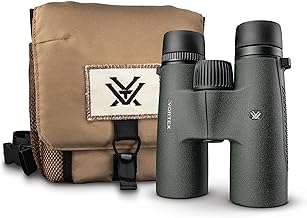
VortexHD Optics, Lifetime Warranty
9.2OUT OF 10
Low Light Performance9.5
Build Quality9.3
Optics Clarity9.4
Value for Money8.8
This is the pick for anyone who needs a reliable, all-weather pair of binoculars that works well from dawn through dusk. The Vortex Triumph HD 10×42 uses fully multi-coated HD optics that deliver noticeably brighter and sharper images than standard glass, especially in the low light of early morning or deep forest shade. Verified buyer feedback consistently reports that the image clarity rivals models costing much more.
The 42mm objective lens, combined with a 10x magnification, gives you a generous exit pupil of 4.2mm. That’s a solid number for low light, because your eye’s pupil dilates to about 7mm in the dark, and a larger exit pupil means more light reaches your retina. The body is O-ring sealed and nitrogen purged, making it both waterproof and fogproof, so you don’t have to baby it in rain or humidity.
Flaws but not dealbreakers. The included Glasspak harness is a nice touch for carrying, but some users find the focus wheel a bit stiff when new. It loosens up with use. Also, at 10x magnification, you’ll notice a bit of hand shake at longer distances, especially in dim light compared to an 8x model.
Need a more stable high-power view for static targets? The
10-30×50 Zoom Binoculars further down let you dial up the zoom, but you’ll want a tripod for the top end.
⚠Warranty: The unlimited, unconditional lifetime warranty is a standout feature. It covers any damage, even if you’re the one who caused it. No receipt needed, no questions asked.
Pros
- ✓HD optics provide a noticeable improvement in brightness and color accuracy in low light.
- ✓Fully waterproof and fogproof, so you can use it confidently in rain or near water.
- ✓Lifetime warranty covers everything, including accidental damage, with no strings attached.
- ✓Includes a Glasspak harness for comfortable, hands-free carrying on long hikes.
Cons
- ✕Focus wheel can feel slightly stiff out of the box, requiring a break-in period.
- ✕No tripod adapter included, though the body is tripod adaptable.
- ✕Higher price point than budget options, but justified by the build and warranty.
Best for: The hunter, birder, or hiker who needs a rugged, high-performing pair of binoculars for low-light conditions and wants a warranty that lasts a lifetime.
Occer 12×25 Compact Binoculars Adults Kids: Best Budget Compact for Casual Use
#2
OccerUltra-Compact, Budget-Friendly
6.5OUT OF 10
Low Light Performance4.5
Build Quality6.0
Optics Clarity5.5
Value for Money8.5
This is the pick for the casual user or family who wants a tiny, inexpensive pair of binoculars for daytime outings like sports or sightseeing. The Occer 12×25 is incredibly compact, fitting easily in a jacket pocket or daypack. Its 12x magnification in a 25mm body is ambitious, and for its price, it does offer a surprisingly decent view in good light. The large eyepiece is comfortable for both kids and adults.
However, the 25mm objective lens collects very little light. The exit pupil is only about 2.1mm, which is far too small for effective low-light use. In the dim conditions of dusk or dawn, the image will be noticeably dark and lacking in detail. It’s best to think of this as a low-cost daytime tool, not a low-light performer.
Flaws but not dealbreakers. The build quality is mostly plastic, and the focus mechanism can feel a bit loose. Some users report that the two barrels don’t always align perfectly, which can cause a double image. For the price, these are expected compromises.
If you’re serious about low-light performance, the
Vortex Triumph HD 10×42 is the clear upgrade, with a much larger 42mm objective that makes a world of difference in dim conditions.
⚠Sizing: The 12×25 configuration is not ideal for low light. The small exit pupil makes it difficult to see a bright, full image at dawn or dusk. This is best for well-lit daytime use only.
Pros
- ✓Extremely compact and lightweight, making it easy to carry anywhere.
- ✓Very affordable price point, making it a low-risk entry for kids or casual use.
- ✓The large eyepiece is comfortable for users with glasses or different face shapes.
- ✓Includes a carrying case and strap for basic protection.
Cons
- ✕Very poor low-light performance due to the small 25mm objective lens.
- ✕Plastic build feels less durable than metal-bodied binoculars.
- ✕Image can be dim and difficult to focus at the top end of its 12x magnification.
Best for: The casual user who wants a tiny, cheap binocular for daytime use at the park or a sports game, and who doesn’t need to see in the dark.
18X50 High Powered Binoculars Adults: Best Complete Kit for Low Light Beginners
#3
18X50Kit Includes Tripod & Adapter
8.4OUT OF 10
Low Light Performance8.0
Build Quality7.5
Optics Clarity7.8
Value for Money9.0
This is the pick for the beginner who wants everything needed for low-light observation in one package. The 18X50 High Powered Binoculars come with a tripod, a tripod adapter, and a phone adapter, which is a rare and valuable inclusion. The 50mm objective lens is large enough to gather a significant amount of light, making it a capable performer in low-light conditions like dusk or overcast days.
The 18x magnification is high, so the included tripod is not just a bonus, it’s almost a necessity. Without a tripod, the image at 18x will be shaky and hard to keep steady. The phone adapter is also a nice touch for digiscoping, allowing you to capture photos and videos through the eyepiece. The 18×50 combination gives you a solid 2.78mm exit pupil.
Flaws but not dealbreakers. The tripod and phone adapter are functional but not premium. The optics are good for the price, but you won’t get the same sharpness or color fidelity as a more expensive brand like Vortex. The overall build is mostly plastic, which keeps the weight down but feels less rugged.
For a more premium optical experience with a lifetime warranty, the
Vortex Triumph HD 10×42 is a better long-term investment, though it doesn’t include a tripod.
⚠Compatibility: The phone adapter is designed to fit most smartphones. However, with very large camera bumps or very thick cases, you may need to remove the case for a secure fit.
Pros
- ✓Comes as a complete kit with a tripod, tripod adapter, and phone adapter for digiscoping.
- ✓Large 50mm objective lens provides strong light-gathering ability for low-light conditions.
- ✓High 18x magnification is excellent for detailed observation of distant, static objects.
- ✓Excellent value for the price, as you get accessories that would cost extra elsewhere.
Cons
- ✕High magnification makes handheld use very shaky; a tripod is essential for a clear view.
- ✕Build quality is primarily plastic, which may not withstand heavy drops or rough use.
- ✕The tripod and phone adapter are basic and may not be as durable as premium accessories.
Best for: The beginner who wants a complete, ready-to-use kit for low-light stargazing, wildlife observation, or digiscoping without needing to buy extra accessories.
10-30×50 High Power Zoom Binoculars Adults: Best Variable Zoom for Versatility
#4
10-30×50Variable Zoom, BAK7 Prisms
7.3OUT OF 10
Low Light Performance7.5
Build Quality7.0
Optics Clarity7.2
Value for Money7.8
This is the pick for the user who wants the flexibility of adjustable magnification in a single binocular. The 10-30×50 High Power Zoom Binoculars use a zoom lever that lets you smoothly transition from a wide 10x view to a powerful 30x view. This is a huge advantage for situations where you want to scan a landscape and then zoom in on a specific detail without switching optics. The 50mm objective lens provides good light gathering, and the BAK7 prisms and fully multi-coated (FMC) lenses help with image brightness.
At 10x, the field of view is decent, and the image is relatively stable for handheld use. As you zoom into 30x, the image gets much darker and shakier. This is a fundamental limitation of high-zoom binoculars. You will definitely need a tripod at 20x and above to get a steady, usable image. The waterproofing and BAK7 prism are genuine pluses for the price.
Flaws but not dealbreakers. The biggest compromise is the narrow field of view at higher zoom settings. Also, zoom binoculars inherently have more complex internal mechanics, which can lead to alignment issues over time. Some users report the zoom mechanism can feel a bit stiff.
If you prefer a simpler, more optically pure design with a fixed magnification, the
Vortex Triumph HD 10×42 will give you a brighter, sharper image at 10x without the complexity of moving parts.
⚠Stability: At 30x magnification, the image will be extremely shaky without a tripod. Plan to use a tripod for any zoom setting above 12x or 15x for a clear view.
Pros
- ✓Variable zoom from 10x to 30x gives you a wide field of view and high power in one optic.
- ✓BAK7 prisms and fully multi-coated lenses improve light transmission and image clarity.
- ✓Waterproof design allows use in light rain or damp conditions without worry.
- ✓Large 50mm objective lens provides good light gathering for low-light situations.
Cons
- ✕Image brightness and stability drop significantly at higher zoom settings above 20x.
- ✕Zoom mechanism can feel stiff and may be prone to wear over time.
- ✕Field of view becomes very narrow at 30x, making it hard to locate and track objects.
Best for: The enthusiast who wants the versatility of a zoom binocular for a mix of wide-area scanning and detailed observation of distant, static targets.
20×50 High Powered Binoculars Adults: Best High-Magnification for Distant Objects
#5
20×50High Power, Waterproof
7.8OUT OF 10
Low Light Performance7.0
Build Quality7.8
Optics Clarity7.5
Value for Money8.2
This is the pick for the user who needs maximum magnification for seeing very distant objects clearly in good light. The 20×50 High Powered Binoculars offer a fixed 20x magnification, which is a significant step up from the standard 10x or 12x. The 50mm objective lens is large enough to gather a decent amount of light, making it suitable for low-light conditions like dusk, as long as you use a tripod. The 20x power is ideal for observing distant wildlife, landscape details, or even celestial objects like the moon.
At 20x, handheld use is very difficult. Even small movements of your hands translate into large, shaky movements in the image. A tripod is strongly recommended for any serious use. The body is listed as waterproof, which adds to its durability for outdoor use. The 50mm objective gives a 2.5mm exit pupil, which is still usable in low light but not as bright as a 10×42 or 10×50.
Flaws but not dealbreakers. The field of view is narrow at 20x, which makes it harder to find and track moving objects. The image can also appear dimmer than a 10x or 12x binocular in very low light conditions because the exit pupil is smaller. The build quality is good for the price, but it is not at the level of premium brands.
If you want a more versatile low-light binocular that is easier to use handheld, the
Vortex Triumph HD 10×42 is a better all-around choice with a brighter image and easier handling.
⚠Stability: 20x magnification is very high. You will need a tripod or a very stable rest to get a clear, steady image. Handheld use will be frustratingly shaky.
Pros
- ✓High 20x magnification brings distant objects into clear, close-up view.
- ✓Large 50mm objective lens collects enough light for decent low-light performance.
- ✓Waterproof construction adds durability for use in outdoor environments.
- ✓Good value for a high-power binocular with a large objective lens.
Cons
- ✕Very narrow field of view makes it difficult to locate and track objects.
- ✕Image is extremely shaky without a tripod, limiting its portability for handheld use.
- ✕Exit pupil is only 2.5mm, which is less than ideal for very low light conditions.
Best for: The dedicated observer who wants maximum power for detailed views of distant, static targets like mountains, architecture, or celestial objects.
15×52 HD Binoculars Adults High Powered: Best Balanced High-Power for Sharpness
#6
15×52HD Optics, Phone Adapter
8.1OUT OF 10
Low Light Performance8.2
Build Quality7.8
Optics Clarity8.5
Value for Money8.0
This is the pick for the user who wants a high-power binocular with superior HD optics and a built-in phone adapter for sharing their view. The 15×52 HD Binoculars stand out for their high-definition glass, which is advertised to deliver bright and sharp images even in low light. The 52mm objective lens is slightly larger than the standard 50mm, which helps with light gathering. The 15x magnification is a good sweet spot, offering significantly more reach than a 10x while being more stable than a 20x, especially with a tripod.
The included phone adapter is a nice bonus, allowing you to easily attach your smartphone for digiscoping. The large 52mm objective lens provides a 3.47mm exit pupil, which is decent for low light and gives you a bright, comfortable view. The body is also listed as lightweight and waterproof, making it practical for travel and outdoor use.
Flaws but not dealbreakers. While 15x is more stable than 20x, it still benefits greatly from a tripod for extended viewing. The phone adapter is functional but can be a bit fiddly to align perfectly with your phone’s camera. The build quality is good, but it does not have the same premium feel as the Vortex.
If you want a similar high-power experience but with a more complete kit including a tripod, the
18X50 High Powered Binoculars is a great option that includes the tripod and adapter in the box.
⚠Compatibility: The phone adapter is designed for most smartphones. You may need to remove a thick case for a secure fit. The adapter works best with a centered camera lens.
Pros
- ✓HD optics provide noticeably brighter and sharper images than standard glass.
- ✓Large 52mm objective lens offers excellent light-gathering for low-light conditions.
- ✓Included phone adapter makes it easy to capture and share photos and videos.
- ✓15x magnification is a good balance between high power and manageable shake.
Cons
- ✕Still benefits from a tripod for steady viewing at 15x, especially for long sessions.
- ✕Phone adapter can be a bit fiddly to align correctly with your phone’s camera.
- ✕Build quality is good but not as premium as higher-end brands like Vortex.
Best for: The user who wants a high-power binocular with superior HD optics for clear, bright low-light views and the ability to easily capture photos through the eyepiece.
Buying Guide: Objective Lens, Magnification, Prism Type and Build Quality
A low-light binocular is only as good as its ability to gather and transmit light. Here are the four factors that matter most.
How does objective lens size affect low-light performance?
The objective lens is the big lens at the front. Its diameter, measured in millimeters, is the single most important factor for low-light performance. A larger lens lets in more light.
The 42mm lens on the Vortex Triumph HD 10×42 gathers significantly more light than the 25mm lens on the Occer 12×25. For serious low-light work, you generally want at least a 42mm objective. The 50mm and 52mm lenses on the other models are even better, but they also make the binoculars heavier and bulkier.
What is the exit pupil and why does it matter?
The exit pupil is the diameter of the beam of light that leaves the eyepiece and enters your eye. You calculate it by dividing the objective lens size by the magnification. For example, a 10×42 binocular has a 4.2mm exit pupil.
A 20×50 binocular has a 2.5mm exit pupil. In low light, your eye's pupil dilates to about 7mm. A larger exit pupil (closer to 7mm) means a brighter image.
The 4.2mm exit pupil of the Vortex Triumph HD 10×42 is excellent for low light, while the 2.5mm exit pupil of the 20×50 is less ideal.
Why do prism type and glass quality matter?
The prisms inside the binoculars flip the image right-side up. There are two main types: Roof prisms and Porro prisms. Roof prisms, like those in the Vortex, are more compact and durable.
Porro prisms, like those in the 18X50 and 20×50 models, are often more affordable and can offer a slightly wider field of view. The glass quality is also crucial. HD (High Definition) glass, like in the Vortex and the 15×52, reduces chromatic aberration (color fringing) and improves sharpness.
BAK4 prisms are generally better than BAK7 prisms, transmitting more light.
What about build quality and warranty?
A low-light binocular is often used in challenging conditions. A waterproof and fogproof design, like the Vortex, is essential for long-term reliability. A good warranty is also a sign of confidence.
The Vortex's unlimited, unconditional lifetime warranty is a standout feature. The other models typically have a standard one-year or limited warranty, which is fine for budget-conscious buyers but less reassuring for long-term investment.
Who Should NOT Buy Best Binoculars for Low Light
This category is the wrong purchase for two kinds of buyers. Here's who they are, and what to look at instead.
You Need True Night Vision for Stargazing
If your primary goal is observing faint celestial objects like nebulas, galaxies, or star clusters in deep darkness, a standard binocular is not the right tool. Even the best low-light binoculars, like the Vortex Triumph HD 10×42, rely on available light. They will show you the moon, Jupiter's moons, and bright star clusters, but they cannot amplify light like a dedicated night-vision device.
For serious astronomy, you should look at a telescope with a larger aperture. For a more portable option, consider a pair of Canon 10×42 IS binoculars, which use image stabilization to reduce shake, or a dedicated night-vision monocular.
You Need a Compact Binocular for True Pocket Portability
If your main priority is a binocular that fits in your shirt pocket for casual daytime use, the Occer 12×25 is a good option, but it is not a low-light performer. If you need a truly compact binocular that still offers decent low-light performance, you are looking at a very narrow and expensive category. The Vortex Triumph HD 10×42 is not a pocket model.
You would be better off looking at a compact 8×25 or 10×25 model from a premium brand like Leica or Swarovski, but those are significantly more expensive. For most people, the trade-off in low-light performance is not worth the small size.
Final Verdict
The Vortex Triumph HD 10×42 is the best binocular for low light overall. Its HD optics, rugged waterproof build, and lifetime warranty make it a reliable companion for dawn, dusk, and everything in between. It is the pick for the serious user who wants a tool that will last a lifetime.
Want a complete kit with a tripod for digiscoping? The 18X50 High Powered Binoculars is the best value for beginners. Need a powerful zoom?
The 10-30×50 Zoom Binoculars gives you the most versatility. Looking for pure high power? The 20×50 High Powered or the 15×52 HD Binoculars are excellent choices for specific needs.
If you are still unsure, jump back to the Who Should NOT Buy section to make sure this category is right for you. The right binocular is the one that fits your specific use case, not just the one with the highest specs.
FAQ
What's the best Binoculars for Low Light overall?
The Vortex Triumph HD 10×42 is the best overall. It offers the best balance of HD optics, build quality, and a lifetime warranty for reliable use in low-light conditions.
What is the exit pupil and why is it important for low light?
The exit pupil is the diameter of the light beam leaving the eyepiece. You calculate it by dividing the objective lens size by the magnification. A larger exit pupil (closer to 7mm) provides a brighter image in low light.
Is a 20×50 binocular good for low light?
A 20×50 binocular has a 2.5mm exit pupil, which is less than ideal for very low light. It will work in moderate low light, but it will be noticeably dimmer than a 10×42 or 10×50. It is better for daytime use or for viewing bright objects like the moon.
Do I need a tripod for high-power binoculars?
Yes, for any binocular with a magnification of 12x or higher, a tripod is highly recommended. At 15x, 18x, 20x, and 30x, the image will be too shaky to hold steady for a clear view without a tripod or a stable rest.
What is the difference between BAK4 and BAK7 prisms?
BAK4 prisms are made from a higher-quality glass that transmits more light and produces a rounder, brighter exit pupil. BAK7 prisms are a lower-cost alternative that still works well but may have slightly less light transmission and a sharper cutoff at the edges of the exit pupil.
What is the best magnification for low-light binoculars?
For most people, a 10x magnification is the best balance for low-light use. It offers good detail without being too shaky. An 8x is even brighter and more stable, but with less reach.
A 12x is a good option for those who want a bit more power and can hold it steady.