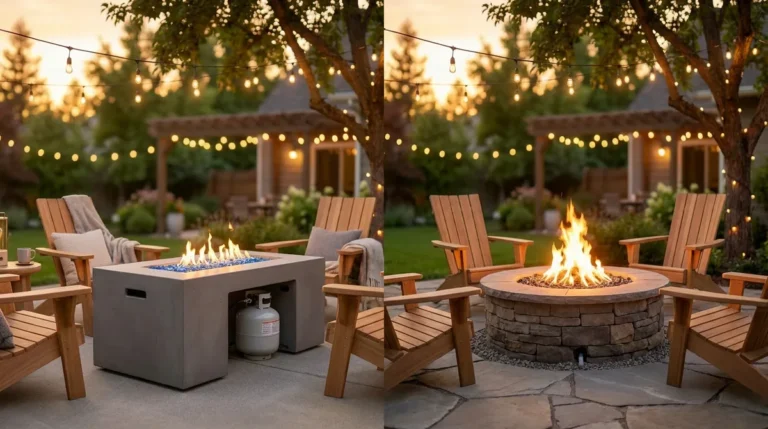
Are Fire Pits Legal in My Area
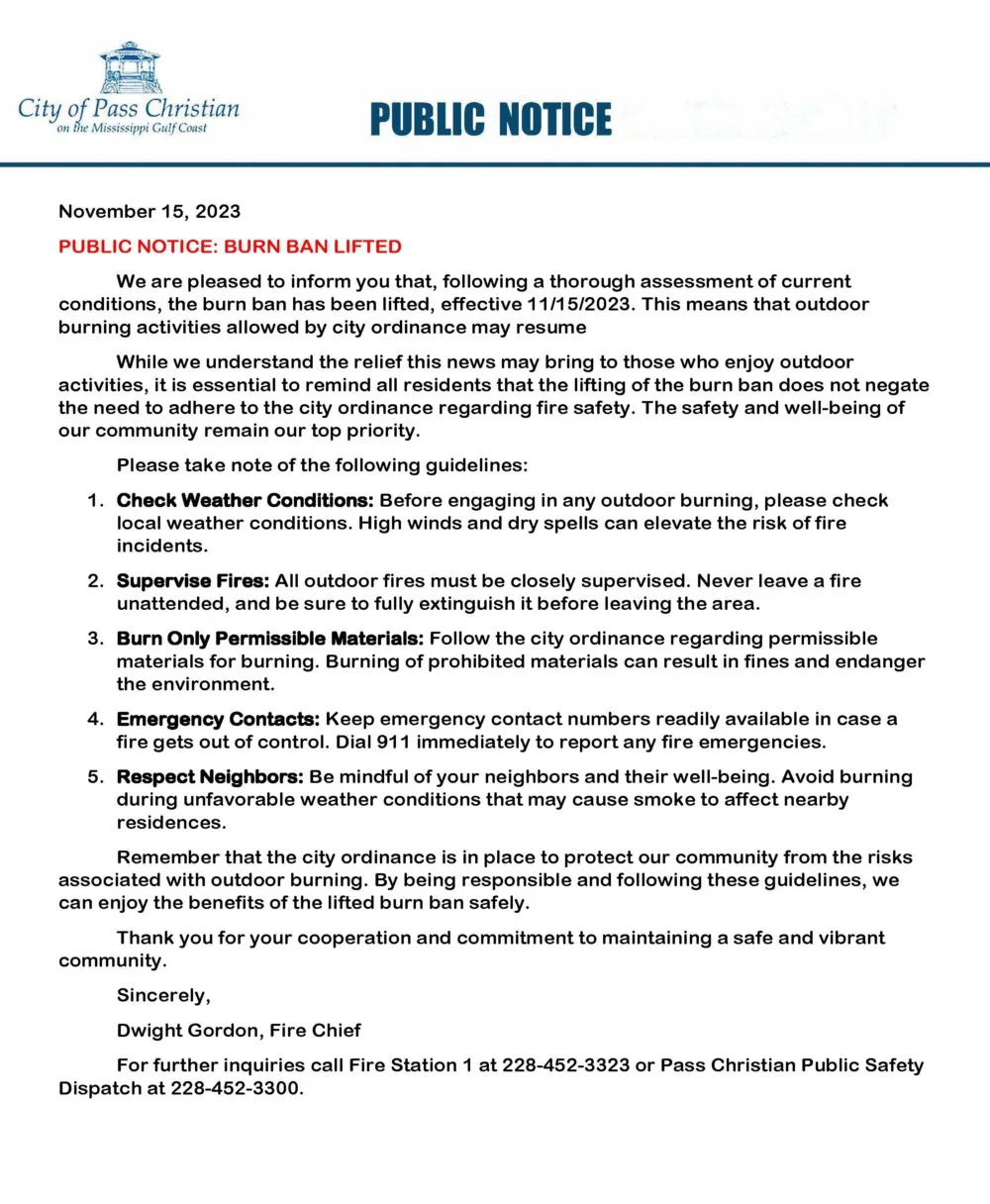
Image source: Bing (Web (fair-use with source credit))
You type "are fire pits legal in my area" into Google and brace yourself for a frustrating rabbit hole of outdated PDFs and conflicting advice. We have all been there. The short answer is: it depends on where you live, what kind of fire pit you have, and what time of year it is.
In our research, most municipal fire codes in the United States follow NFPA 1 guidelines. Those require a minimum 25-foot setback from structures for open wood fires. But many cities tighten that to 10 or 15 feet.
As of 2026, the real challenge is not finding the general rule. It is figuring out which specific rules apply to your address. Let us walk through the three things that determine your answer.
Quick Answer
Fire pits are legal in most areas with conditions. You need to check three things: your city or county fire code, your HOA rules, and current burn ban status. Wood pits face more restrictions than gas units.
Portable models are easier to permit than permanent structures. The process takes about 30 minutes if you know where to look.
Why "Check Local Laws" Is Not Enough (and What to Ask Instead)
Telling someone to "check local laws" is like telling them to find a needle in a haystack. It sounds helpful, but it leaves you holding the hay. The problem is that the answer changes based on three overlapping layers of rules.
City ordinances set the baseline. They cover distances from houses, decks, fences, and property lines. They also specify acceptable fuel types and whether you need a permit. County regulations add another layer, especially around air quality and fire season. HOA covenants can ban fire pits entirely, even if the city allows them.
The real question is not "are fire pits legal in my area." It is "what specific conditions must my fire pit meet to be legal at my address on this date." That is a much more useful question. It forces you to look at the actual variables.
The Three Layers of Rules That Apply to You
Layer 1: Your City or Municipal Code. Most cities have a fire prevention chapter in their municipal code. You can usually find it online by searching "[your city name] fire code recreational fire." Look for sections on "open burning" or "recreational fires." Pay attention to these details:
- Minimum distance from structures (house, deck, garage)
- Minimum distance from property lines
- Maximum fire pit diameter (commonly 3 feet)
- Required spark arrestor or screen
- Time restrictions (often no burning after 11 PM)
Layer 2: Your County and Air Quality District. Counties often enforce stricter rules during fire season. They also manage air quality burn bans. You might need a permit from the county fire marshal.
Check your county website for "burn ban status" and "recreational fire permit."
Layer 3: Your HOA Covenants. This is where most people get tripped up. Your HOA can ban fire pits entirely, even if the city says they are fine. The HOA is a private contract, not a public law.
You agreed to it when you bought the property. Read your CCRs carefully. Look for "fire pits," "open flames," or "recreational fires."
The 3-Part Decision Framework: Your Location, Your Equipment, and the Season
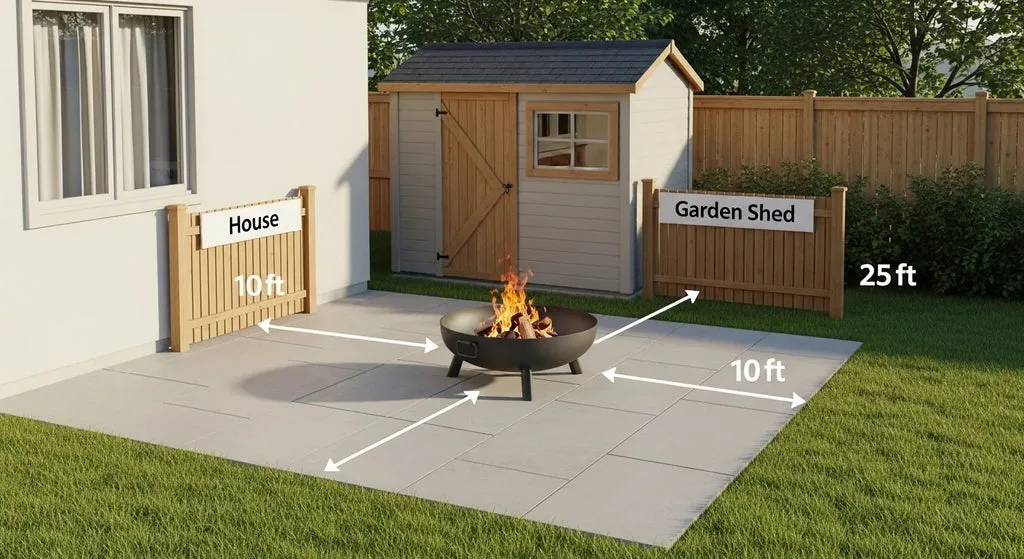
Image source: Bing (Web (fair-use with source credit))
Now that you know the three layers, let us turn them into a simple decision framework. Think of it as three yes/no questions you ask yourself before you buy or light a fire pit.
Question 1: Does my location allow recreational fires at all? Some cities ban them completely. Some counties ban them during certain months. Some HOAs ban them forever.
You need a "yes" from all three layers before you proceed.
Question 2: What type of fire pit does my location allow? Wood pits face the most restrictions. Gas pits are often treated like outdoor appliances, not open fires. Propane models are considered portable and usually face fewer rules.
Permanent structures often require a permit and inspection.
Question 3: Is it currently safe to burn? Even if your location allows fire pits nine months of the year, a burn ban can shut you down overnight. Always check the current burn ban status before lighting a fire.
Fire Pit Type Comparison for Legality
| Fire Pit Type | Typical Restrictions | Permit Often Required | Best For |
|---|---|---|---|
| Wood-burning | 25 ft setback, spark arrestor, size limits | Yes | Rural areas, large lots |
| Propane (portable) | 10 ft setback, no size limit | No | Suburban yards, decks |
| Natural gas (permanent) | 10 ft setback, requires inspection | Yes | Patios, outdoor kitchens |
| Gel fuel (tabletop) | No restrictions, very small | No | Apartments, balconies |
How to Find the Exact Rules for Your Address in 30 Minutes or Less
This is the practical part. Here is a step-by-step process that works for any address in the United States. You can finish this in under 30 minutes if you stay focused.
Step 1: Search your city municipal code online. Go to Google and type "[your city name] municipal code fire prevention." Look for a chapter called "Fire Prevention and Protection" or "Open Burning." Find the section on "Recreational Fires" or "Outdoor Fires." Write down the key numbers: setback distance, size limit, and time restrictions.
Step 2: Check your county burn ban status. Search "[your county name] burn ban status" or "[your county name] fire marshal." Most counties have a daily updated page. Some use a color-coded system: green means burn allowed, yellow means restricted, red means banned.
Step 3: Read your HOA covenants. Dig out your original HOA paperwork or search "[your HOA name] CCRs." Look for "Fire Pits" or "Recreational Fires." If you cannot find it, email your HOA board directly. Ask them: "Are fire pits allowed, and if so, are there any restrictions?"
Step 4: Measure your yard. Grab a tape measure. Measure from your house to your property line. Measure from your deck to your fence.
Compare these distances to the setback requirements in your city code. If your yard is small, you may not have enough room for a wood fire pit. Some deck-friendly designs work in tighter spaces.
Step 5: Call the fire department. This is the most reliable step. Call your local fire department non-emergency line. Ask them: "Are recreational fires allowed at my address right now?" They can also tell you about permit requirements and current burn ban status.
What Most People Get Wrong: HOA Rules vs. City Ordinances and Why It Matters
This is the single biggest mistake we see in reader forums. People assume that because the city says fire pits are legal, their HOA cannot stop them. That is wrong.
An HOA is a private contract. You gave up certain rights when you bought the property.
Here is the truth: your HOA can ban fire pits entirely. They can set stricter rules than the city. They can fine you for violating those rules.
They can put a lien on your house if you refuse to pay.
The worst part: many people buy a fire pit, invite friends over, light it up, and then get a warning letter from the HOA the next day. They had no idea the HOA rules existed. Now they own a fire pit they cannot use.
HOA vs. City Ordinance Comparison
| Rule Type | City Ordinance | HOA Covenant |
|---|---|---|
| Enforcement | Police or fire department | HOA board |
| Penalty | Fine (typically $50 to $500) | Fine plus legal fees plus lien |
| Appeal process | Court or city council | HOA board hearing |
| Can it ban fire pits? | Rarely, but some cities do | Yes, very common |
| Where to find it | Municipal code online | CCRs or HOA website |
How to avoid this mistake: Before you buy any fire pit, check your HOA rules first. If the HOA bans fire pits, your only option is a tabletop gel fuel model. Those are small enough that most HOAs do not consider them a fire hazard.
But even then, check first.
Burn Bans and Seasonal Restrictions: The One Thing That Can Shut You Down Overnight
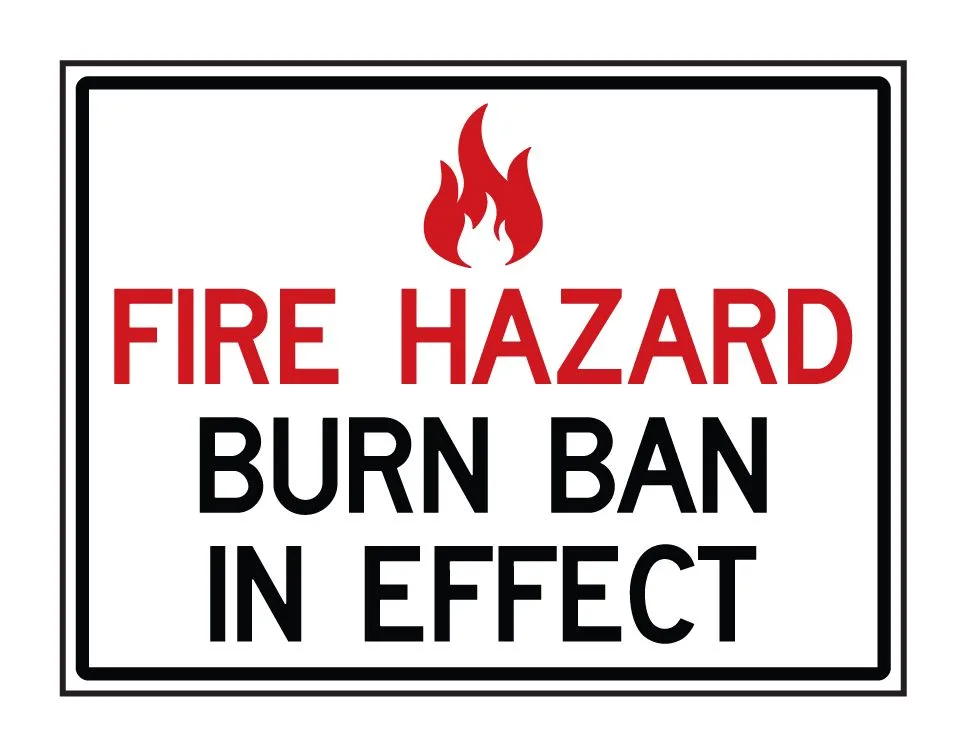
Image source: Bing (Web (fair-use with source credit))
You can have a perfect fire pit. You can have a compliant setback. You can have HOA approval.
Then a burn ban hits, and all of it goes out the window.
Burn bans are temporary restrictions issued by local or state authorities. They typically happen during dry, hot, or windy weather. Anyone who violates a burn ban risks a fine.
In some areas, you can face criminal charges. These bans are not suggestions. They are legally enforceable.
Two types of burn bans exist. A fire season burn ban applies to everyone. It bans all outdoor burning, including recreational fires. You cannot light a wood fire pit during a total burn ban.
Period. A red flag warning is a less severe alert. It tells you conditions are dangerous but does not automatically ban fires.
Many smart owners choose not to burn during a red flag warning anyway.
How to Check Burn Ban Status
Check burn ban status before every single fire. Not once a month. Every time.
Here is how:
- Call your county burn ban hotline. Many counties have an automated phone line or text alert system.
- Check the county website. Most counties update their burn ban status daily. Look for a red or green banner at the top of the page.
- Use the local fire department non-emergency line. They can tell you the current status in under a minute.
- Sign up for emergency alerts. Many counties send text alerts when burn bans are issued.
The one exception: Some gas fire pits are exempt from burn bans. Propane and natural gas models produce no embers and very little smoke. Check your local burn ban wording.
It often says "open burning" or "recreational fires" are banned. Gas fire pits may fall under a different category. But do not assume.
Call and ask. Some all-season units are designed to work around restrictions.
What Happens If You Violate a Burn Ban
The consequences range from annoying to serious. A first offense might get you a written warning. A second offense could cost you $100 to $500.
In extreme cases, especially during wildfire season, you could be held liable for firefighting costs. That can run into the thousands.
The best advice we can give: never burn during a burn ban. It is not worth the risk. One spark from a wood fire pit can start a wildfire.
Even if you think you are careful, the wind can change. The fines and potential liability are not worth an evening of roasting marshmallows.
Which Fire Pit Type Is Easiest to Get Approved? (Wood vs. Gas, Portable vs. Permanent)
If you have not bought a fire pit yet, this section matters most. The type of fire pit you choose will determine how easy or hard it is to get approval from your city, county, and HOA.
Wood fire pits face the most restrictions. They produce smoke, embers, and ash. Cities worry about air quality and fire risk. If you live in a dense suburban area, a wood fire pit may simply not be allowed.
The setback requirements are often 25 feet from any structure. That is a lot of space. Many small lots do not have that much room.
Propane fire pits are much easier to get approved. They produce no smoke and no embers. Most cities treat them like outdoor appliances, not open fires. The setback is usually 10 feet, not 25.
In many areas, you do not need a permit for a portable propane model. These simpler models are often the quickest path to a legal backyard fire.
Natural gas fire pits fall in the middle. They are permanent installations. That means you need a permit and an inspection. But once approved, they are very safe.
The gas line is buried, so there is no tank to trip over. The flame is controlled. Most cities approve natural gas pits without much fuss.
Portable vs. permanent is another major factor. A portable fire pit is easier to get approved because it is not attached to your property. You can move it if a neighbor complains. You can take it with you if you move.
A permanent fire pit is a built-in structure. It requires a permit, an inspection, and often a variance if your lot is small.
Ease of Approval by Fire Pit Type
| Fire Pit Type | Likelihood of Approval | Typical Setback | Permit Required | Best For |
|---|---|---|---|---|
| Propane portable | Very high | 10 ft | Usually no | Small yards, decks, renters |
| Natural gas permanent | High | 10 ft | Yes | Patios, outdoor kitchens |
| Gel fuel tabletop | Highest | None | Never | Apartments, balconies |
| Wood burning portable | Low to moderate | 15 to 25 ft | Often yes | Large lots, rural areas |
| Wood burning permanent | Low | 25 ft | Always | Acreage, custom builds |
Our Recommendation
If you are buying your first fire pit, start with a portable propane model. It is the easiest to get approved. It is the most flexible.
You can use it during most burn bans. If you find that you love having a fire pit and want something more permanent, you can upgrade later. Starting with a propane model avoids the most common headaches.
If you already own a wood fire pit and your city or HOA has restrictions, you have options. You can look into cleaner burning models that produce less smoke. You can also consider dual-fuel options that burn both wood and propane.
That gives you flexibility depending on the season.
Frequently Asked Questions About Fire Pit Legality
Can I have a fire pit in my backyard if I live in a city?
Yes, but with conditions. Most cities allow recreational fires as long as they meet setback requirements, size limits, and fuel type restrictions. Check your city municipal code for the specific rules.
Some cities ban wood fires entirely but allow propane models.
Does my HOA have the right to ban fire pits?
Yes. HOAs are private contracts. They can ban fire pits even if the city allows them.
Read your HOA Covenants, Conditions, and Restrictions before buying a fire pit. If your HOA bans fire pits, your only option is a small tabletop gel fuel model.
Do I need a permit for a fire pit?
It depends on the type. Portable propane fire pits typically do not need a permit. Permanent wood or gas fire pits almost always do.
Check with your local fire department or building department. Permits are usually inexpensive, around $10 to $50.
Can I use a fire pit during a burn ban?
It depends on the burn ban wording. Some bans only apply to open burning, which means wood fires. Gas fire pits may be exempt.
Never assume. Call your local fire department non-emergency line and ask. The fine for violating a burn ban can be $500 or more.
What is the minimum distance a fire pit must be from my house?
It varies by city. Common distances are 10 feet for propane and gas fire pits, and 15 to 25 feet for wood fire pits. Check your local municipal code for the exact number.
Measure your yard before you buy a fire pit.
Can I use a fire pit on a balcony or apartment patio?
Probably not. Most apartments and condos ban open flames on balconies. Your lease or HOA rules will spell this out.
The only exception might be a small tabletop gel fuel fire pit, but even that is often prohibited. Check your lease before buying anything.