Are Spotting Scopes Waterproof?
When you're out in the field, hoping for that perfect shot of a rare bird or meticulously tracking a distant target, a sudden shower or an accidental splash can spell disaster for your spotting scope. Many users wonder, "Are spotting scopes waterproof?" It’s a crucial question for anyone who relies on their optics in unpredictable outdoor environments.
Our research and analysis of manufacturer specifications indicate that while many spotting scopes offer significant water resistance, true "waterproof" capabilities vary greatly by model and design. Understanding the specific ratings and features is key to knowing how your scope will perform when things get wet.
What Does "Waterproof" Even Mean for Spotting Scopes?
Spotting scopes aren't generally designed to be submerged in deep water for extended periods, unlike some specialized diving equipment. Instead, the terms "waterproof" and "water-resistant" usually refer to a scope's ability to withstand exposure to moisture, from light rain and mist to direct splashes. This protection is essential for ensuring the optics remain clear and functional in challenging weather.
The level of protection is typically defined by rigorous testing standards. For instance, many scopes aim to meet certain performance benchmarks set by international organizations to guarantee their resilience against the elements. This ensures that your view of the world stays clear, no matter the weather.
Your Spotting Scope's Waterproofing: Understanding IP Codes
The most reliable way to determine a spotting scope's protection against water is by checking its IP (Ingress Protection) rating. This is an international standard used to classify the degree of protection provided by enclosures against intrusion from solid objects and liquids. Manufacturer specifications will clearly list this rating.
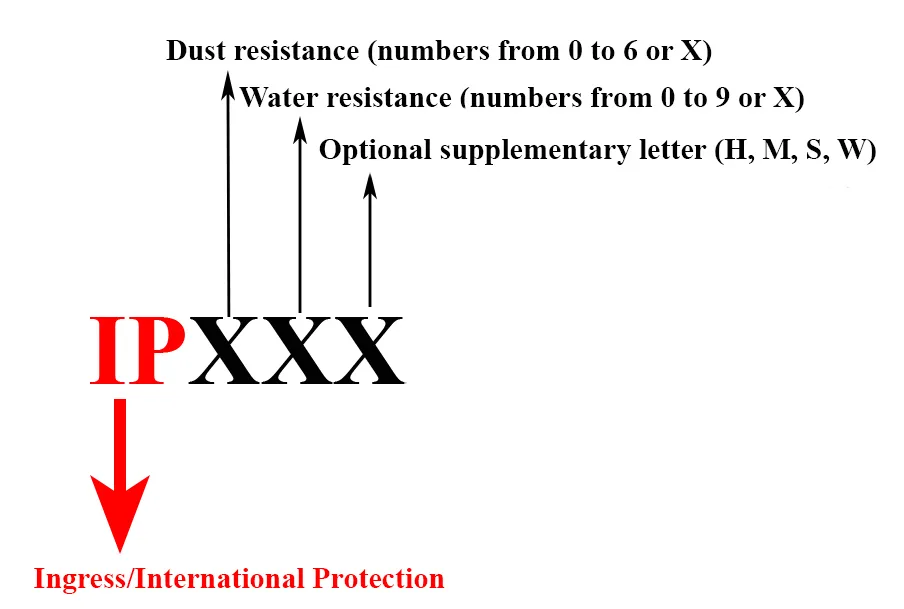
Image source: Web (Bing) / audioreputation.com (Web image (fair-use with source credit))
This rating is crucial because it takes the guesswork out of understanding your scope's resilience. Without this standard, claims of "waterproof" could be interpreted very differently by various manufacturers, leading to confusion and potential damage to your equipment.
Decoding the Numbers: IPX4 to IPX8
An IP rating usually consists of two digits, though for water resistance, we focus on the second digit, often shown as "X" or a number in the "IPX" designation. The higher the number, the greater the protection.
- IPX4: This rating means the scope is protected against splashes of water from any direction. It's suitable for light rain or accidental spills but shouldn't be exposed to direct, high-pressure streams.
- IPX5: Protected against water jets. This offers better defense against heavier rain or being hosed down briefly.
- IPX6: Protects against powerful water jets. This suggests the scope can handle significant rain or direct spray from a hose.
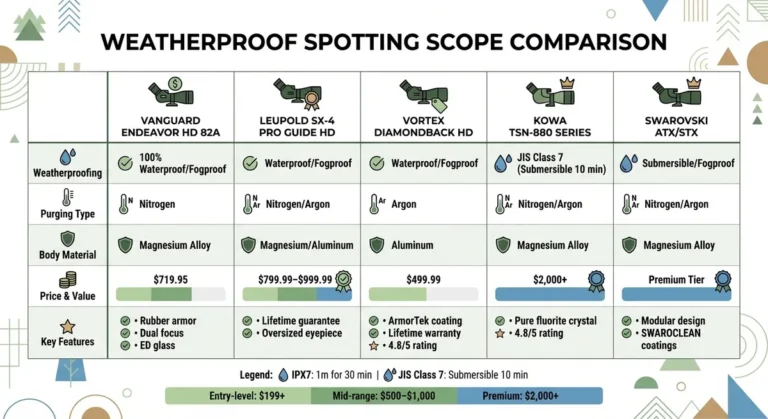
- IPX7: This is where we start talking about submersion. A scope with an IPX7 rating can be immersed in water up to 1 meter (about 3 feet) deep for up to 30 minutes. This is robust protection for most accidental drops into puddles or streams.
- IPX8: This is the highest level of water protection, indicating the scope can be submerged in water under conditions specified by the manufacturer, often deeper or longer than IPX7. This is considered fully waterproof for most practical uses.
The International Electrotechnical Commission (IEC) sets these standards, ensuring a consistent way to measure a device's protection against environmental factors.
Beyond the Rating: Other Water-Resistant Features
Even with a solid IP rating, spotting scopes often incorporate additional features to bolster their defense against moisture and internal fogging. These design elements work in concert with the IP rating to provide comprehensive protection.
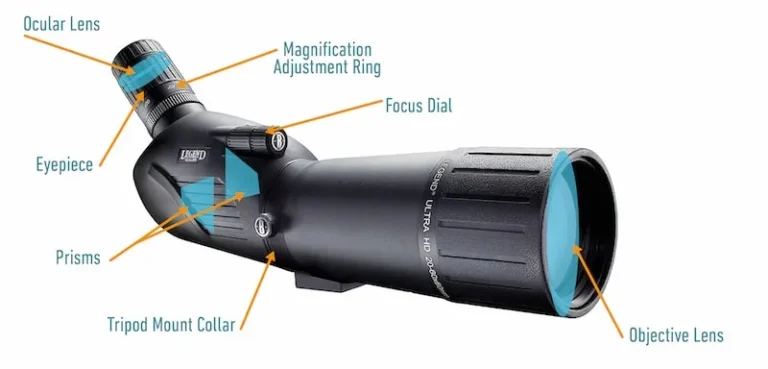
- Nitrogen or Argon Purging: High-quality spotting scopes are often purged with inert gases like nitrogen or argon. This process removes air and moisture from the internal optical chambers.
- Benefit 1: Prevents internal fogging. This is vital when you move between cold and warm environments, as condensation can form on lenses.
- Benefit 2: Seals the scope. The gas acts as a barrier, helping to keep external moisture from seeping inside.
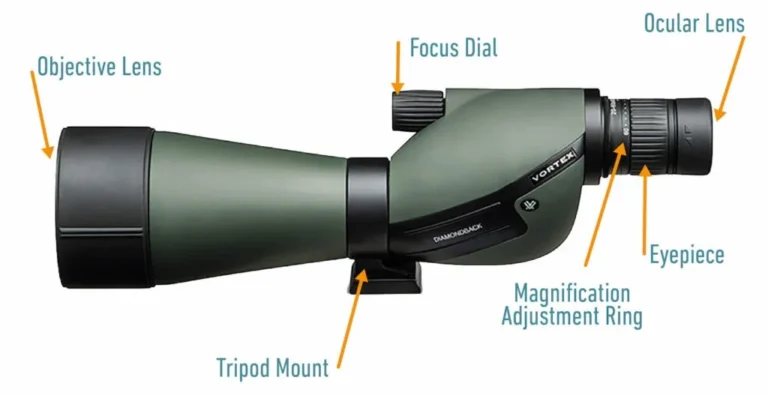
- O-Ring Seals: These are crucial components used at connection points, such as where the eyepiece housing meets the main scope body, or where lens caps and accessory ports are located. They act like tiny, flexible gaskets, creating a watertight barrier to prevent water from entering the internal components.
These features are not just about keeping water out; they are also about maintaining the clarity and performance of your optics under diverse conditions.
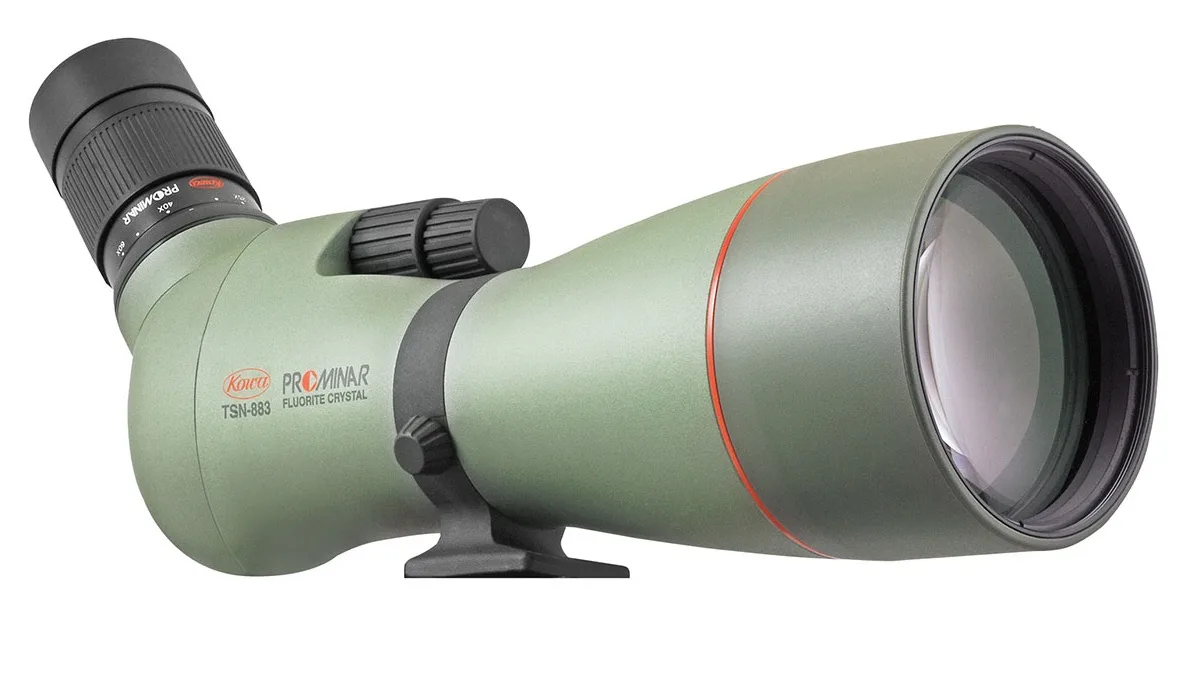
Image source: Web (Bing) / birders-store.co.uk (Web image (fair-use with source credit))
Is My Spotting Scope Waterproof? A Quick Check
Figuring out your specific spotting scope's water resistance is straightforward if you know where to look. It doesn't require specialized tools, just a little attention to detail. Most manufacturers provide this information clearly for consumers.
Here’s a quick checklist to determine if your spotting scope is built to handle moisture:
- Consult the Product Specifications: This is your most reliable source.
- On the Box: Many scopes will have their IP rating or "waterproof" / "water-resistant" claims printed directly on the packaging.
- In the Manual: The user manual is an excellent resource. It will detail the scope's features, including its water resistance capabilities.
- Manufacturer's Website: Look up your specific model number on the brand's official website. The product page will almost always list detailed specifications.
- Look for the IP Rating: Specifically, search for an "IPX" followed by a number (e.g., IPX7). As discussed, a higher number indicates better water protection. A rating of IPX7 or IPX8 is generally considered waterproof for typical outdoor use.
- Note "Water-Resistant" vs. "Waterproof": Be aware of the terminology. "Water-resistant" often implies protection against light splashes or mist, while "waterproof" suggests a higher degree of protection, often including submersion.
- Consider Fogging: If the specifications mention nitrogen or argon purging, it's a good sign the scope is designed to be sealed against moisture and prevent internal fogging.
If you can't find any information about water resistance, it's safest to assume your scope is not waterproof and take measures to protect it from moisture.
When Weather Gets Rough: Spotting Scopes in Rain and Mist
When you're out observing wildlife or enjoying a shooting session and the skies open up, knowing your spotting scope can handle the conditions is a huge relief. For scopes rated IPX7 or IPX8, dealing with rain and mist is generally not a problem. These ratings mean the scope is designed to keep water out, even during moderate to heavy rainfall.
However, it's important to remember that even "waterproof" scopes aren't invincible. Driving rain at odd angles, or submersion beyond the tested depth or duration, could still pose a risk. Always check the specific limits of your scope's rating.
For scopes with lower ratings, like IPX4 or IPX5, it's essential to be more cautious. These can handle light drizzles or splashes but should be shielded from prolonged exposure or direct rain.
Protecting Your Investment: Using Rain Covers
Even if your spotting scope is rated as waterproof, using a rain cover can offer an extra layer of protection and peace of mind. These covers are specifically designed to fit snugly over your scope, acting like a waterproof jacket for your optics.
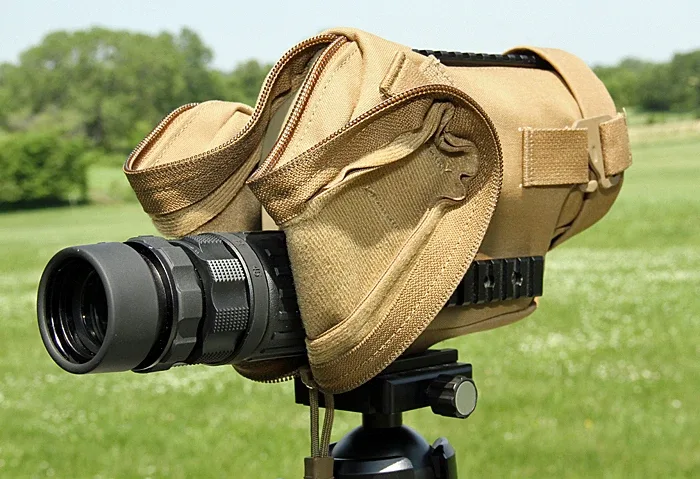
Image source: Web (Bing) / storage.googleapis.com (Web image (fair-use with source credit))
Rain covers are particularly valuable for a few reasons:
- Enhanced Protection: They provide an additional barrier against heavy downpours, spray, and even accidental knocks that could compromise seals.
- Reduced Glare and Smudging: Some covers are designed to reduce glare from wet lenses and minimize the smudging that can occur when water droplets form.
- Improved Grip: Many covers offer a textured surface, making it easier to hold onto your scope in wet or slippery conditions.
- Preserving Optics: They help keep the objective lens and eyepiece free from water spots and debris, which can otherwise impair your view.
When choosing a rain cover, ensure it's compatible with your spotting scope's size and that it allows easy access to adjustment rings and other controls.
Common Mistakes to Avoid with Wet Spotting Scopes
Even with a scope rated for water resistance, users can make mistakes that compromise its performance or shorten its lifespan. Understanding these common pitfalls is as important as knowing your scope's IP rating. One prevalent error is assuming "water-resistant" means "submersible." A scope rated IPX4 can handle splashes but will likely fail if dunked.
Another mistake is neglecting the lens caps. While it might seem minor, leaving lens caps off when not actively using the scope exposes the delicate optical elements to moisture, dust, and accidental damage. Furthermore, failing to dry off a scope thoroughly after exposure to rain can lead to water seeping into crevices over time, even if the seals are intact.
This is especially true if the scope is stored wet.
Lastly, some users don't realize the impact of extreme temperature changes on sealed optics. While nitrogen purging helps, rapid shifts from cold to warm environments can still cause condensation on internal lens surfaces if the seals aren't perfect. It’s wise to allow the scope to acclimate gradually rather than making sudden transitions.
What Happens If My Spotting Scope Gets Too Wet?
If your spotting scope experiences moisture exposure beyond its rating, the consequences can range from minor inconveniences to significant damage. Internal fogging is one of the first issues you might notice, obscuring your view and potentially leading to mold or mildew growth if left untreated. This happens when moisture penetrates the sealed optical chambers.
Beyond fogging, water can corrode internal metal components, including delicate focusing mechanisms and adjustment knobs. This can lead to stiff operation or complete failure of these parts. In severe cases, water ingress can damage coatings on the lenses or prisms, permanently affecting image quality and clarity.
If a scope is dropped into water and not dried properly, the internal seals can be compromised, making it more susceptible to future moisture problems.
Improper Drying Techniques
Drying a spotting scope after it's been exposed to moisture requires a gentle approach. A common mistake is using high heat, such as a hairdryer on a hot setting, to speed up the drying process. Excessive heat can damage lens coatings, warp plastic components, and compromise rubber seals.
Similarly, vigorously rubbing the scope with abrasive cloths can scratch surfaces.
Instead, the best practice is to gently wipe down the exterior with a soft, lint-free microfiber cloth. For any internal moisture that might have seeped in, allow the scope to air dry naturally in a clean, dry environment. This might take several hours or even a day or two, depending on the extent of the exposure.
Never attempt to disassemble the scope yourself unless you are highly experienced, as this will almost certainly void warranties and can lead to further damage.
FAQs: Your Spotting Scope Waterproof Questions Answered
Can I use my spotting scope in heavy rain?
You can generally use your spotting scope in heavy rain if it has a high waterproof rating, such as IPX7 or IPX8. For scopes with lower ratings (IPX4-IPX6), it's advisable to use a rain cover or keep it protected and only use it for brief periods.
What should I do if my spotting scope gets submerged?
If your spotting scope gets submerged, immediately retrieve it from the water. Do not try to operate any controls. Remove the lens caps and eyepiece, and gently wipe away any external moisture with a soft, lint-free cloth.
Allow the scope to air dry completely in a warm, well-ventilated area for at least 24-48 hours. If fogging or internal moisture persists, consult the manufacturer.
Does "fogproof" mean the same thing as "waterproof"?
No, "fogproof" and "waterproof" are different. "Fogproof" typically means the scope's internal chambers are purged with an inert gas (like nitrogen) to prevent internal fogging due to temperature changes. "Waterproof" refers to its ability to prevent external water from entering the scope.
A scope can be fogproof but not waterproof, or waterproof but not fogproof, though many high-quality scopes are both.
How do I clean my spotting scope after it's wet?
After any water exposure, gently wipe the exterior with a soft microfiber cloth. For lenses, use a lens cleaning solution specifically designed for optics and a lens brush or blower to remove loose particles first. Then, use a clean microfiber lens cloth to gently wipe in a circular motion.
Avoid pressing too hard.