How Does a Spotting Scope Work?
When you're out in nature, trying to get a closer look at something far away, maybe a distant bird or a wildlife herd, you need more than just your eyes. That's where a spotting scope comes in. Understanding how does a spotting scope work unlocks why it’s so effective for bringing the world closer.
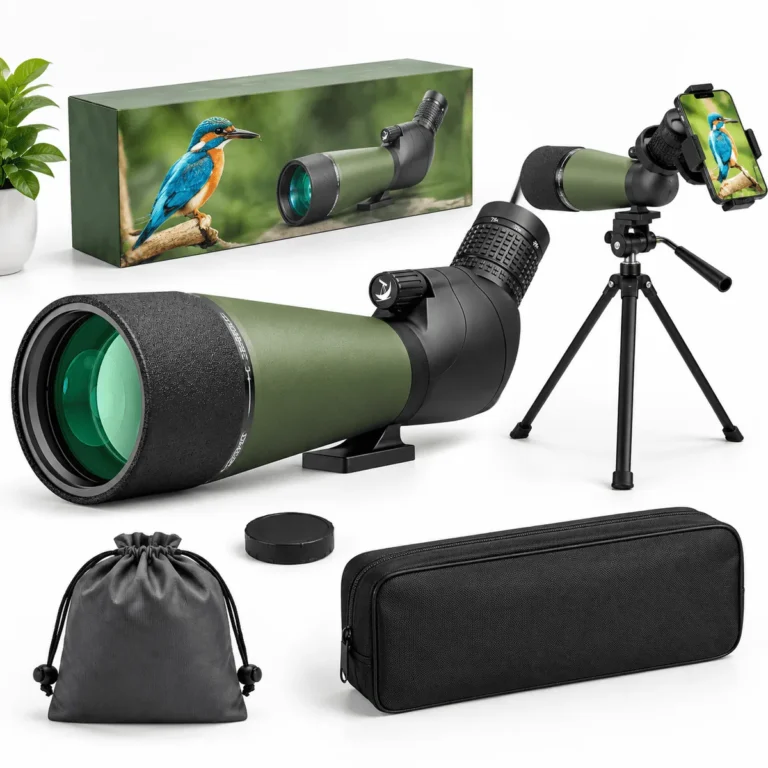
It uses a system of lenses and prisms to magnify distant objects, much like a telescope, but is designed for terrestrial viewing.
The core principle is bending and focusing light. A spotting scope's larger objective lens gathers more light than binoculars, which is crucial for brighter, clearer images even at significant magnifications, often reaching 20x, 30x, or even 40x. This optical power is then delivered to your eye through an eyepiece, revealing details you'd otherwise miss.
How Does a Spotting Scope Work?
A spotting scope works by using a large objective lens to gather light and a smaller eyepiece to magnify the image. This system includes prisms to redirect the light path, allowing for a more compact design and a comfortable viewing angle. It essentially acts as a small, powerful telescope optimized for viewing objects on land, bringing details from hundreds of yards away into sharp focus.
The Magic of Magnification: Core Explanation
At its heart, a spotting scope is a marvel of optical engineering designed to make distant things appear closer. It achieves this through magnification, essentially enlarging the angular size of an object so it appears larger to your eye. The power comes from the relationship between two main optical components: the objective lens and the eyepiece.
The objective lens, the big one at the front, captures light from the distant subject. This light is then focused internally and magnified further by the eyepiece, which is what you look through. This dual-stage magnification process is what allows spotting scopes to achieve powers far beyond what binoculars can comfortably offer for terrestrial viewing.
For instance, many models offer variable magnification, allowing you to zoom from around 15x up to 45x or more.
Key Parts That Make It Work: Objective Lens, Eyepiece, and Prisms
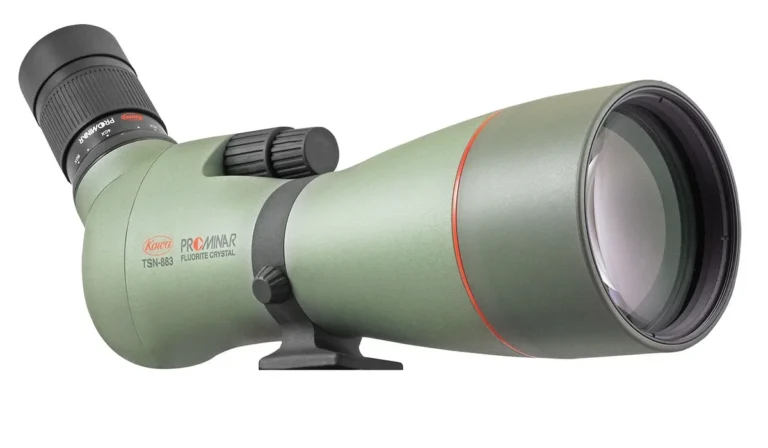
A spotting scope isn't just one piece of glass; it's a carefully arranged system. The objective lens is the primary light-gathering component at the front of the scope. Its diameter, measured in millimeters (like 50mm, 65mm, or 80mm), directly impacts how much light the scope can collect, which translates to brighter images, especially in lower light conditions.
Next, the eyepiece is what you look into. It's a system of lenses that further magnifies the already focused image from the objective lens. Eyepieces can be fixed (offering a single magnification) or zoom (offering a range of magnifications).
Between the objective lens and the eyepiece, you'll often find a prism system. This is where things get clever. Prisms are used to bend the light path, effectively shortening the overall length of the scope and allowing for a more ergonomic design.
For example, a Porro prism design typically results in a more angular body, while a roof prism design allows for a more straight, streamlined shape. These prisms also often help to correct the image orientation, making it right-side up and correctly left-to-right, which is essential for terrestrial viewing.
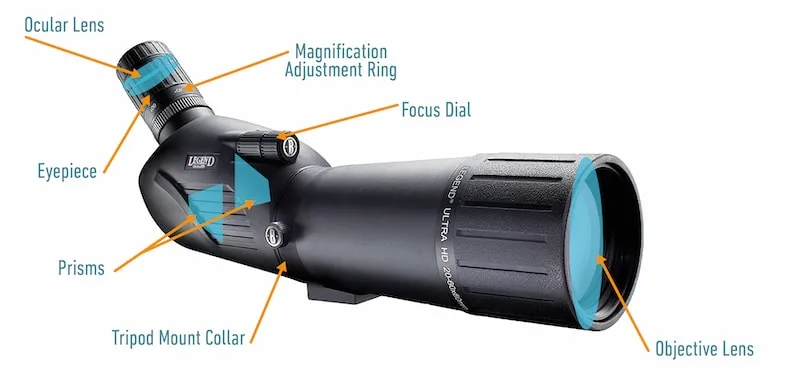
Image source: Web (Bing) / opticsmag.com (Web image (fair-use with source credit))
Seeing the Light: How Optics Bend and Focus
The entire process of how a spotting scope works boils down to controlling light. When light rays from a distant object enter the objective lens, they converge. Because the objective lens is convex, it refracts (bends) these parallel light rays inward, focusing them to a point.
This creates a small, inverted image inside the scope's tube.
This initial image then becomes the object for the eyepiece's magnifying lenses. The eyepiece's lenses take this intermediate image and magnify it, presenting a larger, virtual image to your eye. The prisms are crucial here because they redirect this light path.
Without them, a scope with a long focal length (needed for high magnification) would have to be impractically long. By using prisms to fold the light path back and forth within the scope's body, manufacturers can create powerful, yet relatively compact instruments. Optical coatings on the lens surfaces further help by reducing reflections and increasing light transmission, leading to sharper, more vibrant images.
What to Look For: Magnification, Lens Size, and Beyond
When you're trying to understand how to get the best out of a spotting scope, several key specifications matter. Magnification is often the first thing people notice, expressed as a number like 20x or 45x. Higher magnification brings objects closer, but it also magnifies any hand tremor and narrows your field of view, making it harder to find your subject.
The objective lens diameter (e.g., 50mm, 65mm, 80mm) is just as important, if not more so. A larger diameter gathers more light, resulting in a brighter image, especially crucial for dawn or dusk observation. A common spec you'll see is the "exit pupil," calculated by dividing the objective lens diameter by the magnification.
For example, a 20×50 scope has an exit pupil of 2.5mm (50mm / 20x). This number relates to how much light reaches your eye; a larger exit pupil is generally better in low light.
Another factor is eye relief, the distance your eye can be from the eyepiece lens while still seeing a full field of view. Longer eye relief (typically 15mm or more) is more comfortable, especially for eyeglass wearers. The field of view (FOV) tells you how wide an area you can see at a specific distance, often expressed in feet at 1000 yards.
A wider FOV makes it easier to locate and track moving subjects.
Why Use a Spotting Scope? Birdwatching, Hunting, and More
Spotting scopes are incredibly versatile tools, and their primary function is to provide detailed, magnified views of distant subjects where binoculars might not offer enough power. They're indispensable for birdwatching, allowing enthusiasts to identify species by subtle plumage details or observe behaviors from a non-disruptive distance. For hunters, a spotting scope is essential for scouting terrain, glassing distant game, and making precise identification before taking a shot.
Beyond these core uses, they're excellent for wildlife observation, whether you're at a zoo, a nature reserve, or just observing from your window. Photographers often use them in a practice called digiscoping, attaching a camera to the eyepiece to capture extremely telephoto images. They're also used in target shooting for spotting impacts on paper targets at a range, and even for general scenery viewing to appreciate landscapes in greater detail.
Essentially, any situation where you need to see fine details at a significant distance points to the utility of a spotting scope.
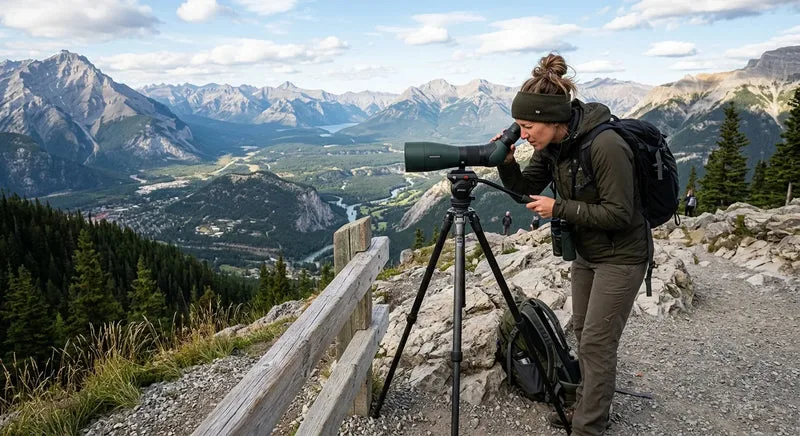
Image source: Bing (Web (fair-use with source credit))
Spotting Scope vs. Binoculars: When to Choose Which
When deciding if a spotting scope is the right tool, it helps to compare it with binoculars. Binoculars are fantastic for general observation, offering two eyepieces for comfortable, binocular vision and a typically wider field of view at lower magnifications. They're great for scanning landscapes, general wildlife spotting, and casual stargazing.
However, spotting scopes excel when you need much higher magnification. If you need to read the markings on a distant target, identify a specific bird species by subtle feather patterns from afar, or observe the fine details of a distant animal, a spotting scope's power is unmatched. While binoculars might go up to 10x or 12x magnification comfortably, spotting scopes easily push into the 20x to 45x range.
The trade-off is a narrower field of view and the necessity of a tripod for stability at those high powers, which is less of a concern with most binoculars. For most nature observers, a good pair of binoculars is the primary tool, and a spotting scope is a specialized addition for when extreme detail is paramount.
Getting the Best View: Focusing and Tripod Tips
To truly unlock the potential of your spotting scope, mastering its operation is key. The focusing mechanism is critical. Most scopes have a focus knob that you turn to bring the image into sharp clarity.
When using high magnification, even slight movements can cause the image to blur, so it’s important to focus slowly and deliberately. Adjust the focus until the image is as crisp as possible, paying attention to fine details.
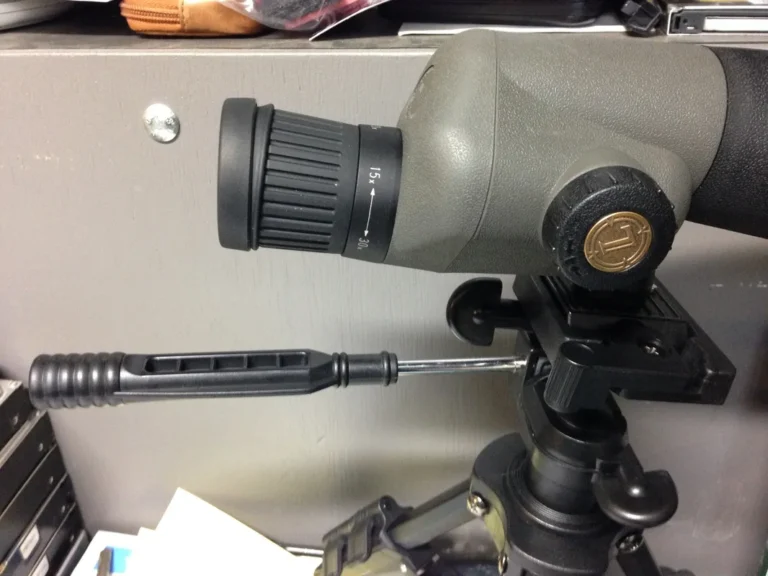
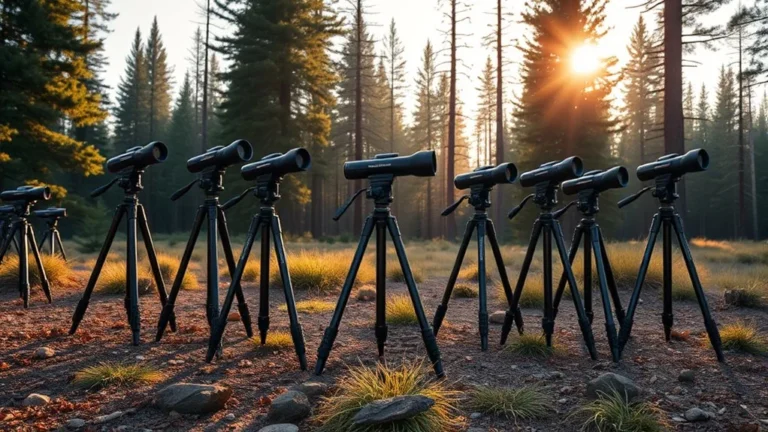
Crucially, at the magnifications spotting scopes offer, handholding is almost impossible. A tripod is not optional; it’s essential for stable viewing. Look for a sturdy tripod that can support the weight of your scope and handle wind.
Mount the scope securely to the tripod head, and ensure it's level. Some tripods have fluid heads that allow for smooth panning, which is incredibly helpful when tracking moving subjects like birds in flight. Even with a tripod, you might need to make small adjustments to keep your subject in view.
Common Slip-Ups to Avoid
Many people new to spotting scopes make a few common errors that hinder their viewing experience. One of the biggest is trying to use the scope handheld. At 20x or higher magnification, any slight hand tremor becomes a significant shake, making it impossible to get a clear, steady image.
Always use a tripod or a very stable rest.
Another mistake is not understanding magnification versus clarity. While higher magnification seems better, pushing it too far can result in a blurry, dim image with a tiny field of view. Manufacturers often indicate optimal magnification ranges for their scopes.
Don't neglect proper focusing; rushing this step leads to frustration. Also, be mindful of environmental conditions. Heat haze rising from the ground on a warm day can make distant objects appear wavy and indistinct, even with the best optics.
Finally, always store your scope properly to protect the lenses.
Frequently Asked Questions About Spotting Scopes
What is the main difference between a spotting scope and a telescope?
A spotting scope is designed for terrestrial (land-based) viewing and typically offers lower magnification ranges than astronomical telescopes. Telescopes are optimized for viewing celestial objects like planets and stars, often with much higher magnification capabilities and different optical designs.
Can I use a spotting scope for stargazing?
While you can technically use a spotting scope for stargazing, it's not ideal. They are designed for terrestrial subjects, and their magnification and field of view are not optimized for deep-sky objects. Binoculars or a dedicated astronomical telescope are far better choices for observing the night sky.
How do I clean my spotting scope lenses?
Start by using a blower bulb to remove loose dust and debris. Then, use a lens brush or a lint-free microfiber cloth specifically designed for optics. For stubborn smudges, a lens cleaning solution can be applied to the cloth (never directly to the lens).
Always handle the scope with care to avoid fingerprints.
Is a straight or angled eyepiece better?
The choice between a straight or angled eyepiece depends on your typical use. Angled eyepieces are generally more comfortable for viewing subjects that are high up (like birds in trees) or when using a tripod, as they allow for a more relaxed neck position. Straight eyepieces can be quicker to shoulder and might be preferred for certain types of shooting or fast-moving targets at eye level.
Do I need a tripod with a spotting scope?
Yes, a tripod is absolutely essential for using a spotting scope effectively. The magnifications offered by spotting scopes (typically 15x and above) amplify any movement, making handheld use impossible for clear viewing. A sturdy tripod provides the stability needed to hold the image steady.

Image source: Web (Bing) / cambrianphoto.co.uk (Web image (fair-use with source credit))