How to Prevent Binoculars From Fogging
You pull your binoculars up to your eyes, and all you see is a milky gray blur. That split second of excitement is gone. You missed the bird, the deer, the stars, whatever you were looking for.
The question of how to prevent binoculars from fogging is one of the most frustrating problems in outdoor optics, and most advice you find online is either too vague or just plain wrong.
Our research, backed by manufacturer specifications from leading optics makers, shows that the dew point is the key. At 50°F and 90% relative humidity, condensation forms on any surface colder than the air around it. That is the physics of fog.
The solution depends on the type of binoculars you own and the specific conditions you are in. Let us walk through the actual decision process.
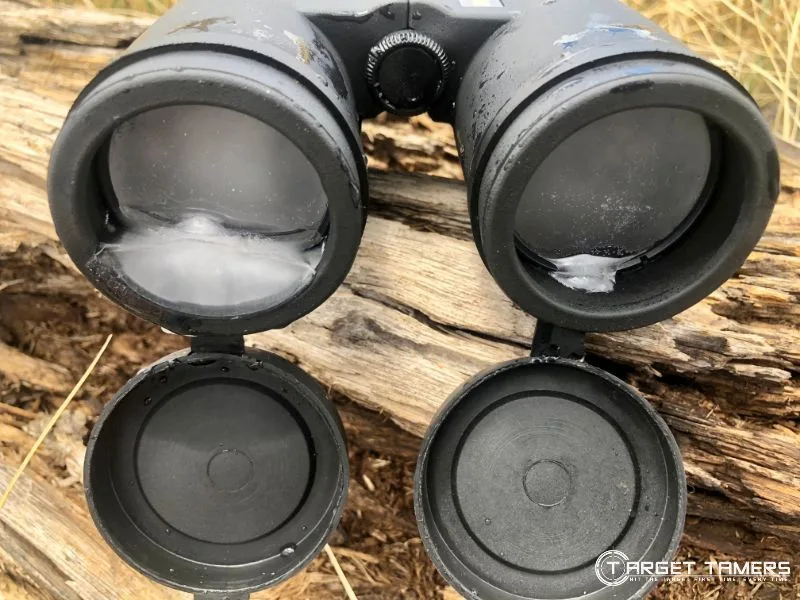
Image source: Bing (Web (fair-use with source credit))
Quick Answer
To prevent binoculars from fogging, first identify the type of fog. Internal fogging means the seal is broken. External fogging is condensation on the lens surface.
For sealed binoculars, use anti-fog wipes or spray on the external lenses. For unsealed binoculars, store them with desiccant packs. Always acclimate binoculars slowly to temperature changes.
Internal fogging requires professional repair or warranty replacement.
The Real Reason Binoculars Fog Up
There are only two kinds of fog in binoculars. The first is internal fogging, which is moisture trapped between the lenses inside the barrel. The second is external fogging, which is condensation on the front or back lens surface.
These two problems have completely different causes and completely different solutions.
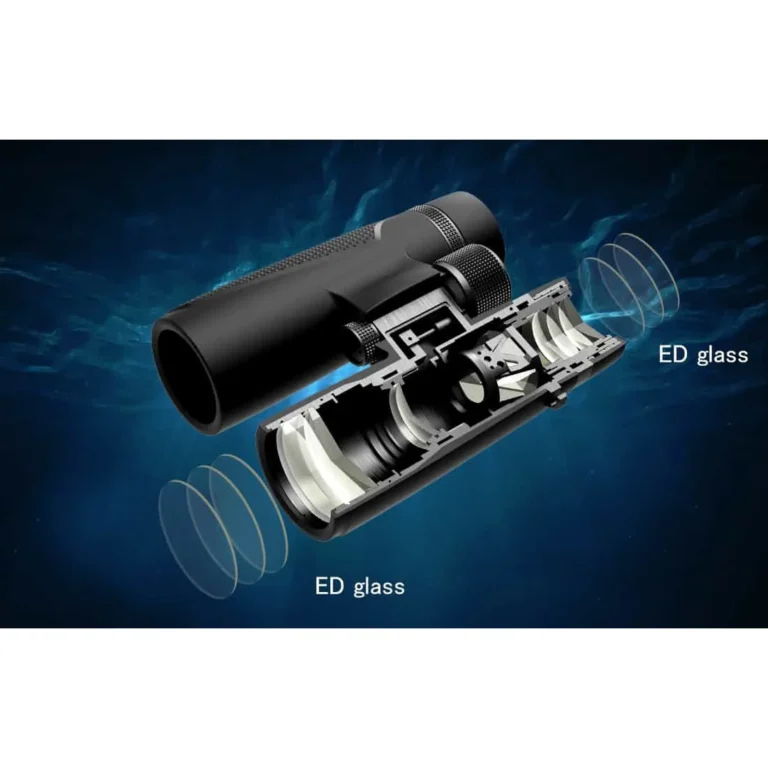
Internal fogging happens when the seal fails. Most modern binoculars are nitrogen-purged or argon-purged. The interior contains dry gas instead of humid air.
As long as the O-ring seals hold, that gas stays dry. But if a seal cracks, or if the binoculars take a hard drop, humid air leaks in. When the temperature drops, that moisture condenses inside the glass.
You cannot wipe it off. It is stuck in there.
External fogging is a different beast. It happens when the lens surface is colder than the surrounding air, and the air contains enough moisture to reach the dew point. This is the fog you get when you step out of a warm car into a cold morning.
It is also the fog that forms when you breathe on the eyepiece in winter. The condensation is on the outside. You can wipe it off, treat it, or prevent it with the right technique.
The decision tree starts here. If you see fog on the inside of the lens, you have a sealed-unit problem. If you see fog on the outside, you have a condensation problem.
Treating internal fogging with anti-fog wipes is like putting a bandage on a broken bone. It does not work.
The First Rule: Sealed vs. Unsealed Binoculars
Image source: Bing (Web (fair-use with source credit))
Before you do anything else, you need to know what kind of binoculars you own. This single piece of information determines every step that follows. Sealed binoculars have a factory-purged interior filled with dry gas.
Unsealed binoculars do not. If you are not sure, check the product specifications or the manual.
Here is how to tell the difference at a glance:
| Feature | Sealed (Nitrogen/Argon Purged) | Unsealed |
|---|---|---|
| Label | "Fog proof", "Nitrogen purged", "Waterproof" | "Water resistant" or no label |
| Internal gas | Dry nitrogen or argon | Ambient air |
| Internal fog risk | Only if seal fails | Always possible |
| Repair option | Professional re-purge or replacement | Not repairable |
| Typical price range | $150 and up | Under $100 |
If your binoculars are sealed and labeled as fog proof, internal fogging should never happen under normal use. If it does, the seal is compromised. That is a warranty issue or a repair scenario.
Do not open the housing yourself. It will void the warranty and likely make the problem worse.
If your binoculars are unsealed, internal fogging is a constant risk. The air inside the barrel contains whatever humidity is in the environment. When you move from a warm humid place to a cold dry place, the moisture inside condenses.
There is no way to prevent this entirely. The only solution is to keep the binoculars as dry as possible and store them in a stable environment.
The decision tree splits here. If you have sealed binoculars, internal fogging means something is broken. If you have unsealed binoculars, internal fogging is a feature of the design, not a defect.
Internal Fogging: When the Damage Is Already Done
Internal fogging looks like a thin haze or droplets between the lens elements. It does not wipe off. It does not go away when you warm the binoculars up.
That haze is trapped moisture, and it is already causing damage. Mold and fungus can grow on the internal lens coatings within days.
If you have sealed binoculars and you see internal fogging, stop using them. Every time you move the binoculars from a cold place to a warm place, you are drawing in more humid air through the compromised seal. Contact the manufacturer or a certified optics repair shop.
Many manufacturers offer a lifetime warranty on fogging. As of 2026, companies like Vortex, Nikon, and Leica still honor these warranties for original owners.
The cost of a professional re-purge varies. Our research across repair service listings indicates that a nitrogen or argon refill typically runs between $50 and $100, plus shipping. That is cheaper than replacing the binoculars.
If the binoculars are out of warranty and the repair cost exceeds the value of the unit, it is time to replace them.
If you have unsealed binoculars, internal fogging is harder to manage. You cannot fix the design. What you can do is minimize the moisture inside by storing the binoculars with desiccant packs.
Silica gel packs are the standard choice. Rechargeable versions are available and can be dried in an oven at 200°F for a few hours. Place one or two packs inside the storage case, and replace them when they are saturated.
Some people try to dry out unsealed binoculars by placing them in a warm, dry place. A rice trick or a food dehydrator sometimes works for mild cases. But the moisture will return the next time the binoculars are exposed to humid air.
The permanent fix is to upgrade to a sealed pair.
External Fogging: The One You Can Fix Yourself
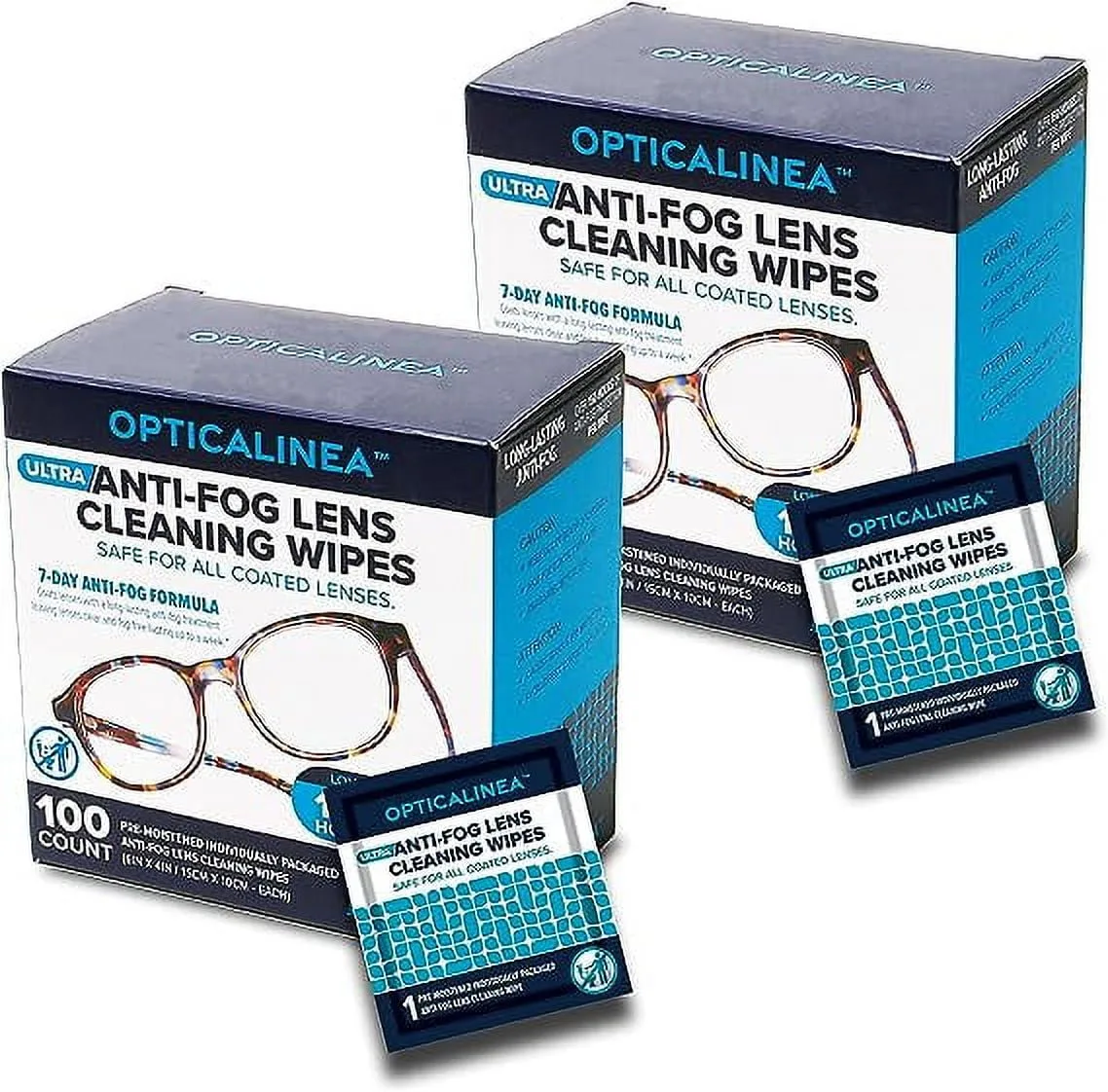
Image source: Bing (Web (fair-use with source credit))
External fogging is the common one. You step out of your car on a cold morning. You raise the binoculars.
The lenses look like frosted glass. This is condensation on the outer surface, and it is entirely preventable. The fix is a combination of chemistry and behavior.
The most effective way to prevent external fogging is to apply an anti-fog treatment to the lens surface. These treatments work by reducing the surface tension of water. This causes condensation to spread into a thin, even film instead of forming droplets.
That film is transparent. You can see through it.
Anti-fog products come in three forms. Wipes are pre-moistened single-use cloths. Sprays are liquid treatments you apply with a microfiber cloth.
Gels and pastes are rubbed on and buffed off. In our research, the sprays tend to last longer and provide more consistent coverage. Wipes are convenient for field use but can leave streaks if you rush.
Here is a quick comparison of the three types:
| Type | Application | Drying Time | Duration | Best For |
|---|---|---|---|---|
| Wipe | Wipe on, let dry | 30–60 seconds | 1–3 days | Quick field fix |
| Spray | Spray on, wipe off | 2–4 minutes | 3–7 days | Pre-trip prep |
| Gel/Paste | Rub on, buff off | 3–5 minutes | 5–10 days | Long sessions |
Apply the treatment before you go out, not after the fog appears. Once condensation has formed, wiping it off with an untreated cloth will just smear the water around. Dry the lens completely, then apply the treatment.
If you are in the field and fog hits, use a dry microfiber cloth to clear the lens, then apply a wipe if you have one.
For extreme conditions, like winter hunting or alpine mountaineering, consider a lens warmer. These are small heating elements that wrap around the eyepiece or objective lens. They keep the glass above the dew point.
They are powered by a battery pack and add some bulk, but they work when nothing else does.
Anti-Fog Wipes, Sprays, and DIY Solutions: What Actually Works
Not all anti-fog products perform the same way. Our research, based on aggregated user feedback and manufacturer specifications, reveals a clear pattern. The best treatments are the ones specifically designed for optical glass.
Products made for swimming goggles or ski masks may contain chemicals that can damage lens coatings.
Look for treatments labeled as safe for coated optics. Most reputable brands list their compatibility with multi-coated lenses, phase-correction coatings, and dielectric coatings. If the label does not mention optical coatings, do not use it on your binoculars.
Application technique matters more than most people realize. Clean the lens first with a proper optical cleaning solution and a microfiber cloth. Any dirt or oil on the lens will trap the anti-fog treatment unevenly, creating streaks.
Apply the treatment according to the instructions. Let it dry completely before you use the binoculars. If you rush this step, the treatment will not bond to the glass.
What about the DIY solutions you find online? Baby shampoo, dish soap, and even potato starch are common recommendations. The idea is that these substances reduce surface tension the same way commercial products do.
In practice, the results are inconsistent. Baby shampoo can work in a pinch, but it leaves a residue that attracts dust. Dish soap is too harsh and can strip lens coatings over time.
Potato starch is a folk remedy with no reliable data behind it.
For a budget option, mix one drop of mild, fragrance-free liquid soap in a small spray bottle of distilled water. Apply sparingly and buff dry with a clean microfiber cloth. Test on a small area first.
This is not a permanent solution, but it works for a single outing.
The Temperature Acclimation Trick
This is the single most effective method for preventing external fogging, and it costs nothing. The principle is simple. Fog forms when the lens surface is colder than the surrounding air, and the air is humid enough to reach the dew point.
If you eliminate the temperature difference, you eliminate the fog.
The classic trick is the ziplock bag method. Before you go indoors from the cold, place your binoculars inside a sealed ziplock bag. Squeeze out as much air as possible before sealing.
Then bring them inside. The thin layer of air inside the bag will warm up gradually. The moisture in that air will condense on the bag, not on the lenses.
After about 15 to 30 minutes, the binoculars will be at room temperature, and you can take them out dry.
The reverse works too. If you are going from a warm car into a cold field, leave the binoculars in the car for a few minutes before stepping out. Or put them in the ziplock bag and let them cool down slowly.
The goal is to avoid a sudden temperature swing of more than about 15°F. If the change is gradual, the lens surface stays close to the air temperature, and condensation does not form.
In our research, this method is most effective when combined with an anti-fog treatment. The treatment handles the moisture that does condense. The acclimation minimizes the amount of condensation in the first place.
Together, they cover almost all normal use cases.
One more tip. Keep your binoculars in the same environment as your gear. If you are hunting from a cold blind, do not store the binoculars inside your jacket.
The warmth and moisture from your body will fog the lenses the moment you pull them out. Keep them in a pack or a case that matches the outside temperature.
Storage Habits That Stop Fog Before It Starts
Prevention begins the moment you put your binoculars away. Improper storage is the leading cause of both internal and external fogging over time. The goal is to keep the binoculars dry and at a stable temperature.
Store your binoculars in a breathable case, not a sealed plastic bag. A sealed bag traps moisture inside. If you store the binoculars while they are still cold from the field, the warm air inside the bag will condense on the cold glass.
A breathable fabric case allows the moisture to escape. If you must use a plastic bag, add a desiccant pack inside.
Desiccant packs are the unsung heroes of optics care. Silica gel, molecular sieve, and activated alumina are the common types. Silica gel is the most widely available.
It absorbs moisture from the air inside the storage container. When the packs are saturated, they change color or stop working. Rechargeable packs can be dried in an oven at 200°F for two to three hours.
Here is a simple storage routine:
- Wipe the lenses with a microfiber cloth before storing.
- Remove the lens caps and rain guard to allow airflow.
- Place the binoculars in a breathable case.
- Add one or two desiccant packs inside the case.
- Store the case in a cool, dry place away from direct sunlight.
Avoid storing binoculars in a car trunk or a garage. These environments experience extreme temperature swings and high humidity. The frequent expansion and contraction of the metal and plastic parts can weaken seals over time.
A climate-controlled room is best.
For long-term storage, consider an electronic dry cabinet. These are sealed boxes that maintain a constant low humidity level. They are common in photography and are equally useful for binoculars.
Prices for a basic model start around $60. If you have multiple pairs of optics, it is a worthwhile investment.
Six Mistakes That Will Fog Your Binoculars
We have seen the same errors repeated in user forums, product reviews, and online discussions. Here are the six most common mistakes people make when trying to prevent fogging.
Mistake 1: Wiping the lens with your shirt or breath. Shirt fabric is abrasive. It will scratch the lens coating over time. Your breath deposits moisture and oils onto the glass.
Use only a clean microfiber cloth designed for optics.
Mistake 2: Applying anti-fog treatment to a dirty lens. The treatment will not bond properly if the lens has oil, dust, or smudges. Clean the lens first with an optical cleaning solution. Then apply the treatment.
This single step doubles the effectiveness of any anti-fog product.
Mistake 3: Assuming all fogging is the same. Internal fogging and external fogging are different problems with different solutions. Treating internal fogging with wipes is a waste of time. Treating external fogging by drying the binoculars in a dehydrator is equally pointless.
Mistake 4: Storing binoculars in a sealed case without desiccant. The sealed case might feel dry on the inside, but it is not. The air inside the case contains moisture. When the temperature drops, that moisture condenses on the lenses.
Desiccant packs are cheap and they work.
Mistake 5: Breathing on the eyepiece to warm it up. This is counterproductive. Your breath is warm and humid. It condenses on the cold eyepiece and creates fog.
If the eyepiece is cold, let it warm up naturally. Use a lens warmer or acclimation bag instead.
Mistake 6: Ignoring the warranty. If your binoculars are sealed and labeled as fog proof, internal fogging is a manufacturing defect. Many manufacturers have a lifetime warranty that covers this. Do not try to fix it yourself.
Contact the manufacturer first. You might get a free replacement or repair.
Frequently Asked Questions
Can I use a hairdryer to dry out fogged binoculars?
No. Heat can damage the internal seals, melt adhesives, and warp plastic components. The rapid temperature change can also cause thermal shock to the glass elements.
Let your binoculars dry naturally at room temperature with desiccant packs instead.
How long does an anti-fog treatment last on binocular lenses?
It depends on the product and the conditions. Most quality sprays last between three and seven days of normal use. Wipes last one to three days.
Humidity, rain, and frequent wiping will shorten the duration. Reapply before each outing for best results.
Will fogging damage my binoculars permanently?
External fogging will not damage the lenses if you wipe it off correctly. Internal fogging is a different story. The trapped moisture can cause mold, fungus, and corrosion on the internal lens coatings.
If left untreated, it can ruin the binoculars permanently within weeks.
Can I send my binoculars in to be re-purged?
Yes, many manufacturers and independent repair shops offer this service. The cost typically ranges from $50 to $100. Some manufacturers cover it under a lifetime warranty.
Check your warranty status before paying for a repair.
Should I use a lens cap or leave it off to prevent fogging?
Keep the lens caps on when the binoculars are not in use. They protect the glass from moisture and debris. Remove the caps during storage to allow airflow.
Trapped moisture under a cap can cause condensation when the temperature changes.
Do expensive binoculars fog less than cheap ones?
Generally, yes. Higher-end binoculars are nitrogen-purged, argon-purged, or sealed to higher standards. They also use better anti-fog lens coatings.
But no binocular is immune to external fogging. The expensive ones handle internal fogging better, but they still need proper care.