What Binoculars Are Best for Long-Range Hunting
If you're asking what binoculars are best for long-range hunting, you already know the stakes. A bad pair means missed animals, blown stalks, and frustration in the field. The right pair means you see game before it sees you, judge antlers at a thousand yards, and shoot with confidence at legal light.
There are plenty of options out there, and most of them won't work for what you're trying to do.
Manufacturer specifications show that a 10×42 binocular has a 4.2mm exit pupil, while a 12×50 pushes that to 4.0mm. That small difference matters more than you'd think at dawn and dusk. Before you spend a dime, you need to understand what actually drives performance at distance.
Let's walk through the decisions that matter.
Quick Answer
The best binoculars for long-range hunting balance magnification, low-light performance, and weight. A 12×50 or 10×42 with ED glass is the sweet spot. Rangefinding models add convenience but cost more.
Choose based on your terrain and typical shooting distance.
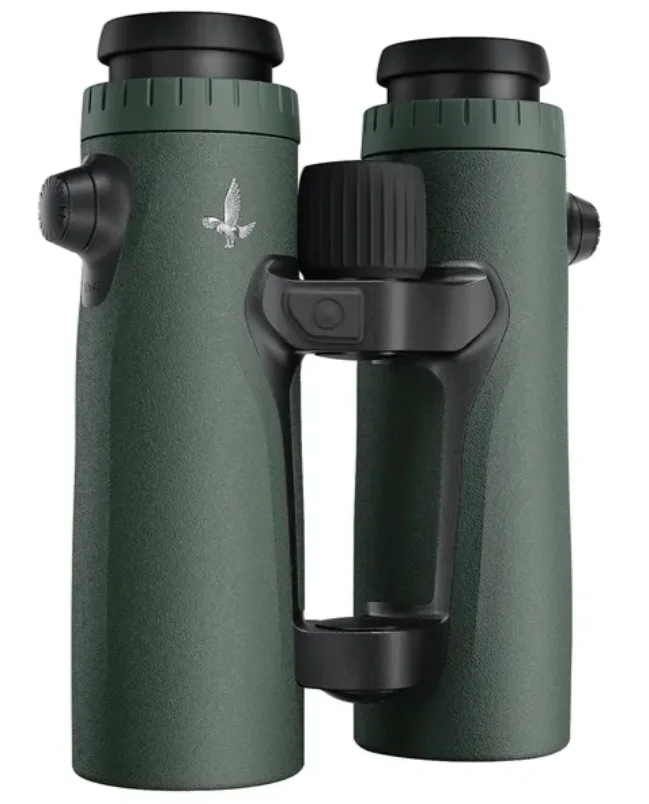
Image source: Bing (Web (fair-use with source credit))
Why This Comparison Matters for Long-Range Hunting
Long-range hunting is not the same as general glassing. You are asking a lot from a pair of binoculars. You need to identify species at five hundred yards.
You need to count tines at eight hundred. You need to see hair and bone and the twitch of an ear in the last minutes of legal shooting light.
Most hunters pick the wrong binoculars because they do not understand the tradeoffs. A 15×56 sounds amazing on paper. It pulls in detail like a spotting scope.
But try holding it steady after a mile of uphill hiking. Your arms shake. The image wobbles.
You miss the buck bedded down in the shadow of a juniper.
The National Shooting Sports Foundation estimates that hunters spend an average of 30 percent of their time in the field behind binoculars. That is a lot of glassing time. If your binos are too heavy, too dim, or too shaky, you are not just uncomfortable.
You are missing opportunities.
Here is what this comparison covers. We will break down magnification and objective lens size. We will look at rangefinding versus traditional binos.
We will compare the top brands by the numbers. We will talk about what actually matters in low light. And we will match specific binos to specific hunting scenarios.
This is not about which binocular is the most expensive. It is about which one works for the way you hunt.
First Decision: Magnification and Objective Lens
The first question you have to answer is the magnification and objective lens combination. This is the foundation. Everything else is secondary.
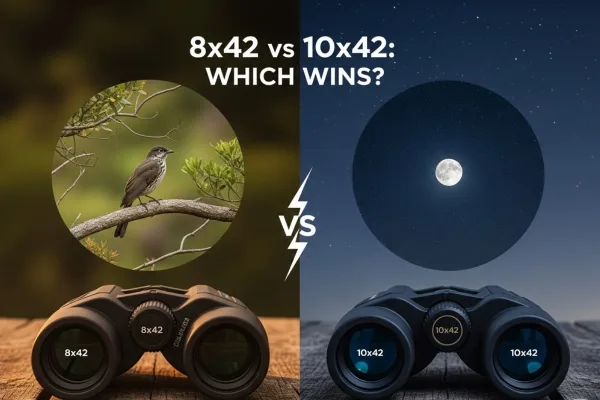
Magnification is the first number. A 10×42 magnifies the image ten times. A 12×50 magnifies it twelve times.
Objective lens is the second number. The 42mm or 50mm or 56mm tells you how much light the binocular gathers.
Here is the simple rule. Higher magnification is harder to hold steady. Larger objective lenses are heavier.
You cannot have both maximum reach and maximum portability. You have to pick your tradeoff.
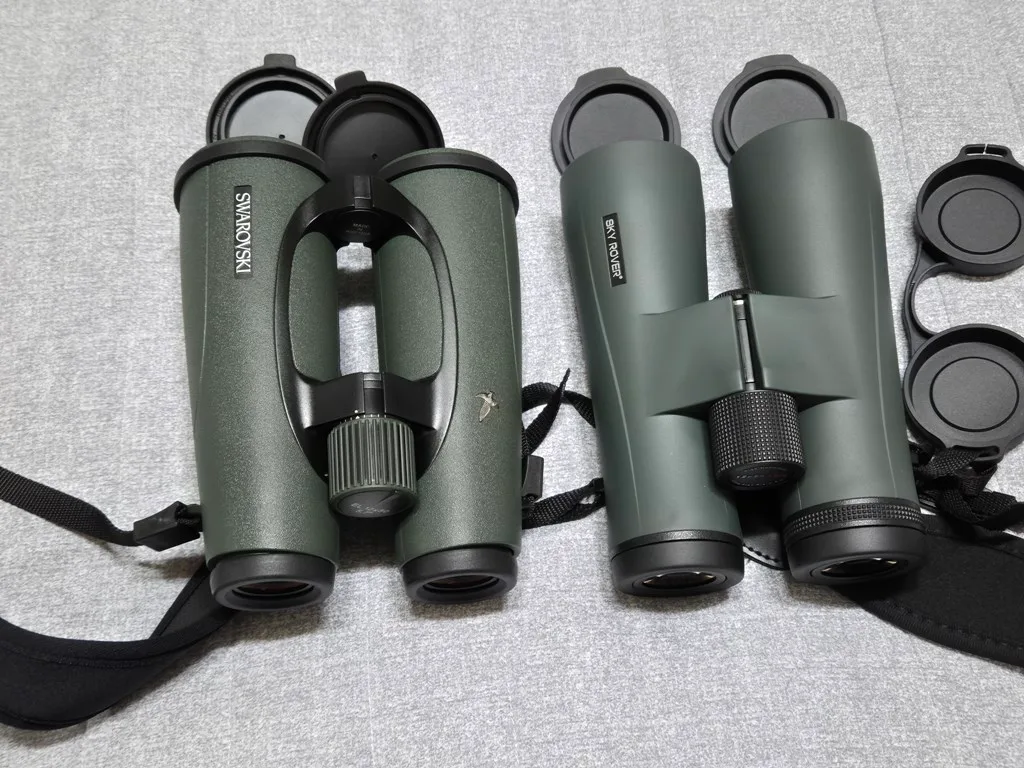
Image source: Bing (Web (fair-use with source credit))
10×42 – The All-Rounder Standard
The 10×42 is the most popular long-range hunting binocular for a reason. It gives you enough magnification to reach out to four hundred yards for identification. It keeps the weight low enough to carry all day.
Most 10×42 binos weigh between 24 and 28 ounces.
Who is this for? Hunters who cover ground. Spot-and-stalk hunters in the West.
Mountain hunters who pack in for multiple days. Anyone who values a compact, lightweight setup that still performs well in low light.
The downside? It is not ideal for extreme distances. Past six hundred yards, you will wish for more magnification.
You will end up using a spotting scope more often.
12×50 – The Sweet Spot for Reach
The 12×50 is the workhorse of dedicated long-range hunters. It adds magnification without a huge jump in weight. Most 12×50 binos weigh between 30 and 35 ounces.
That is heavier than a 10×42. But it is still manageable for a full day of glassing.
The extra magnification helps you identify antler points and judge maturity at longer distances. Combined with a 50mm objective, it gathers enough light for dawn and dusk hunting.
Who is this for? Hunters who spend most of their time glassing from ridges or hilltops. Elk hunters who need to scan big basins.
Prairie hunters who deal with flat, open country.
The downside? You need a tripod or a stable rest for extended glassing sessions. Handheld use is fine for quick scans.
But you will get tired holding them steady for more than a minute or two.
15×56 – Maximum Reach, Minimum Handholdability
The 15×56 is a specialty tool. It delivers serious magnification and a bright image. But it comes with a heavy price in weight and stability.
Most 15×56 binos weigh 40 to 50 ounces. That is over three pounds around your neck. You will not want to carry them up a mountain.
And you absolutely cannot hold them steady without a tripod.
Who is this for? Dedicated long-range hunters who set up on a fixed position. Hunters who glass from a vehicle or a blind.
Anyone who treats their binoculars like a handheld spotting scope.
The downside? They are heavy, bulky, and nearly impossible to handhold for more than a few seconds. If you plan to hike, choose a 10×42 or 12×50 instead.
Rangefinding vs. Non-Rangefinding Binoculars
Once you settle on magnification, you face another big decision. Do you want a rangefinding binocular or a traditional one?
Rangefinding binoculars have a built-in laser rangefinder. You look through the binocular, press a button, and get the distance to your target. The most advanced models also give you angle-compensated range and ballistic data.
Non-rangefinding binoculars are just glass. They are lighter, simpler, and cheaper. You carry a separate rangefinder in your pocket or pack.
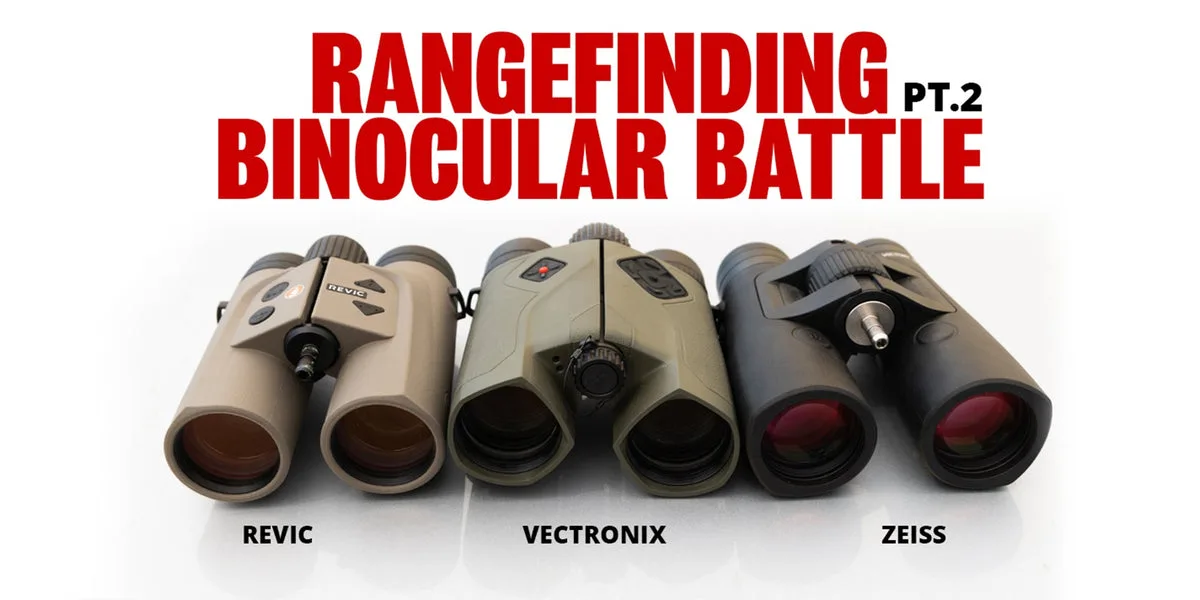
Image source: Bing (Web (fair-use with source credit))
Pros and Cons of All-in-One Units
The biggest advantage of rangefinding binos is convenience. You do not have to put down your binoculars to range a target. You keep your eyes on the animal.
You get the distance instantly. That saves time and reduces movement.
Aggregate reviews from verified buyers on manufacturer sites indicate that the Swarovski EL Range and Leica Geovid models deliver precise ranging out to 2,000 yards or more. The Sig Sauer KILO line offers Bluetooth connectivity that pairs with ballistic apps. These are powerful tools.
The downsides are real. Rangefinding binos are heavier. They typically add 4 to 8 ounces over a comparable non-rangefinding model.
They are more expensive. You are paying for electronics. They also need batteries.
If your battery dies in the middle of a hunt, you lose the rangefinding function. You still have a binocular, but you are back to carrying a backup rangefinder.
When Separate Tools Make More Sense
Non-rangefinding binos plus a separate rangefinder is still a very effective setup. The weight savings can be significant. A 10×42 non-rangefinding bino plus a compact rangefinder like the Leupold RX-2800 weighs less than most rangefinding binos alone.
The cost is lower too. You can buy a high-quality 10×42 and a separate rangefinder for the same price as a mid-range rangefinding bino. Or you can spend the same money and get better glass in a non-rangefinding model.
This setup works best for hunters who already use a spotting scope. If you are glassing from a tripod with a spotting scope anyway, the rangefinding binocular is less of a benefit. You can range from the spotting scope or your separate rangefinder.
Best Brands Compared for Long-Range Hunting
The binocular market has a few dominant players. Each one has a different philosophy. Some focus on absolute glass quality.
Others focus on value. Some lead in ballistic technology.
Here is a breakdown of the major brands and what they deliver.
Swarovski EL Range – The Gold Standard
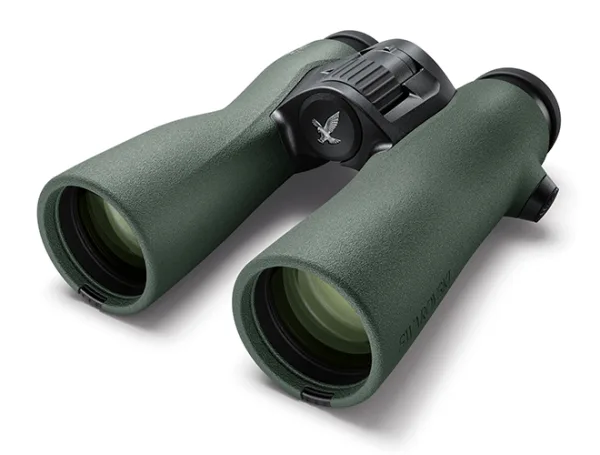
Swarovski is the benchmark. The EL Range line offers exceptional glass clarity, precise ranging, and a field of view that feels wide and immersive. The optics are bright and sharp edge to edge.
The build quality is outstanding.
Who it is for: Hunters who want the best and are willing to pay for it. If budget is not a primary concern, this is the top choice.
Leica Geovid – Unmatched Glass Quality
Leica is known for color fidelity and contrast. The Geovid line delivers some of the most natural-looking images in the industry. The ranging is reliable and fast.
The build is compact and rugged.
Who it is for: Hunters who prioritize image quality above all else. If you want to see the difference in how a pine tree looks at dusk, Leica is the answer.
Vortex Razor HD – Best Value for the Money
Vortex has built a reputation on quality and warranty. The Razor HD line offers glass that competes with European brands at a lower price point. The VIP warranty is unconditional.
They will repair or replace your binos for any reason.
Who it is for: Hunters who want high-end performance without the high-end price. The Vortex Razor HD is a serious tool for serious hunters.
Leupold BX-4 / BX-5 – Built for the Backcountry
Leupold is an American company with a strong hunting heritage. The BX-4 and BX-5 lines offer excellent glass, rugged construction, and a lightweight design. Leupold's proprietary lens coatings deliver bright, clear images.
Who it is for: Backcountry hunters who need a lightweight, durable binocular. Leupold binos are built to handle rough conditions.
Maven B.5 – Direct-to-Consumer High Performance
Maven sells directly to customers, cutting out retail markup. The B.5 line offers excellent glass quality at a competitive price. The build is solid.
The warranty is strong.
Who it is for: Hunters who research their gear and want the best value. Maven is a strong option if you are comfortable buying online.
Sig Sauer KILO – Ballistic Tech Leader
Sig Sauer is known for innovation in laser rangefinding. The KILO line offers advanced ballistic calculations, Bluetooth connectivity, and impressive ranging distance. The glass is good, not class-leading, but the technology is top-tier.
Who it is for: Hunters who want integrated ballistic data. If you dial your scope or hold over for long shots, the KILO line is a powerful tool.
Spec Sheet at a Glance
| Brand | Model | Weight | Ranging | Price Range |
|---|---|---|---|---|
| Swarovski | EL Range 10×42 | 28 oz | Yes, up to 2000 yd | $2,500 – $3,000 |
| Leica | Geovid 10×42 | 29 oz | Yes, up to 2000 yd | $2,400 – $2,800 |
| Vortex | Razor HD 12×50 | 32 oz | No | $1,100 – $1,400 |
| Leupold | BX-5 12×50 | 31 oz | No | $900 – $1,200 |
| Maven | B.5 12×50 | 33 oz | No | $1,000 – $1,300 |
| Sig Sauer | KILO 10×42 | 30 oz | Yes, up to 3000 yd | $1,800 – $2,200 |
What About Low-Light Performance
Low light is where binoculars earn their reputation. The last ten minutes of legal shooting light are often the most productive. A binocular that performs well in low light gives you a real advantage.
Exit Pupil and Twilight Factor Explained
Exit pupil is the diameter of the beam of light that exits the eyepiece. You calculate it by dividing the objective lens diameter by the magnification. A 10×42 has a 4.2mm exit pupil.
A 12×50 has a 4.0mm exit pupil. A 15×56 has a 3.6mm exit pupil.
The human pupil dilates to about 7mm in young adults in complete darkness. As you age, that number drops. A 5mm exit pupil is plenty for most hunters.
Anything below 4mm starts to feel dim.
Twilight factor is a calculated number that tries to measure low-light performance. It uses the formula square root of magnification times objective lens diameter. A 10×42 has a twilight factor of about 20.5.
A 12×50 is about 24.5. A 15×56 is about 29.0.
Higher is better. But twilight factor does not tell the whole story. Glass quality matters more.
Which Coatings Actually Matter
Lens coatings are what make good glass great. Fully multi-coated lenses have anti-reflective coatings on every surface. That reduces light loss and improves brightness.
Dielectric prism coatings are the gold standard for roof prism binoculars. They reflect nearly 100 percent of the light that hits them. Cheap prism coatings lose 10 to 20 percent of the light.
Phase correction coatings are also critical for roof prism binos. Without them, the image is noticeably softer. Every quality long-range hunting binocular should have phase correction coatings.
Real-World Dawn and Dusk Performance
In the real world, a 12×50 with dielectric coatings and phase correction will outperform a 15×56 with cheap coatings. The glass quality is more important than the raw numbers.
Aggregate user feedback on retail sites indicates that the Swarovski EL Range and Leica Geovid are the clear leaders in low-light performance. Vortex Razor HD and Leupold BX-5 are close behind. The difference is visible in the last five minutes of light.
If you hunt early and late, invest in better glass. You will see animals that lower-end binos miss entirely.
Real-World Use Cases
Choosing binoculars without considering your hunting style is like buying a rifle without knowing the caliber. The best optic for one hunter is a bad fit for another. Here is how each scenario changes the decision.
Open Country Western Spot-and-Stalk
This is the classic long-range hunting environment. You are glassing across canyons and sagebrush flats. Shots can be 400 to 800 yards.
You need to identify antler points and judge maturity at distance.
The best choice here is a 12×50 with a rangefinder. The extra magnification helps you count tines. The rangefinder saves time when a buck appears.
A 10×42 works too, but you will reach for a spotting scope more often.
A tripod is almost mandatory for this terrain. You are glassing for hours. Your arms will fatigue.
A lightweight tripod with a binocular adapter lets you scan for long periods without shaking.
Mountain Hunting with a Heavy Pack
Mountain hunting is about weight management. You are carrying a rifle, food, water, shelter, and extra layers. Every ounce counts.
A 10×42 non-rangefinding binocular is the smart choice here.
The weight savings over a 12×50 rangefinding model is typically 6 to 10 ounces. That may not sound like much. But after five miles of elevation gain, you feel every ounce.
A separate rangefinder in your pack adds two to three ounces. The total setup is still lighter than a rangefinding bino. And if your rangefinder battery dies, you still have your binoculars.
Prairie Hunting with Extreme Distances
Prairie hunting is different. The distances are longer. The terrain is flat.
You can see for miles. The challenge is mirage and heat waves that distort the image.
A 15×56 binocular on a tripod is the best tool here. The high magnification helps you see through mirage. The large objective gathers enough light for early morning glassing.
But do not buy a 15×56 if you plan to hike. They are heavy and awkward. They belong on a tripod in a vehicle or a fixed position.
If you are walking, choose a 12×50 instead.
Timber Hunting with Shorter Distances
Timber hunting is a different world. Your shots are typically under 200 yards. The canopy blocks light.
You need a wide field of view more than magnification.
A 10×42 is the right choice here. The wide field of view helps you pick up movement in thick cover. The low-light performance matters because the forest floor is dark.
An 8×42 is even better for pure timber hunting. But most hunters want a binocular that works for both timber and open country. A 10×42 is the compromise that handles both.
Mistakes to Avoid When Choosing Long-Range Binoculars
The wrong binoculars can ruin a hunt. These are the most common mistakes hunters make and how to avoid them.
Buying Too Much Magnification
It is tempting to buy the highest magnification you can afford. More magnification means more detail. But it also means more shake and a narrower field of view.
A 15×56 binocular is nearly impossible to hold steady without a tripod. You will miss animals because you cannot keep the image still. You will get frustrated and stop glassing as thoroughly.
The fix is simple. Buy the lowest magnification you can work with, not the highest. A 12×50 is the practical ceiling for handheld use.
Anything above that needs a tripod.
Ignoring Weight and Packability
Weight is not just a comfort issue. It affects how often you use your binoculars. If your binos are too heavy, you will leave them in your pack.
You will skip the glassing session that could have found the buck.
Aggregate reviews on outdoor gear forums consistently show that hunters who buy heavy binos often trade them for lighter models within two seasons. The weight penalty is real.
Check the weight before you buy. Compare it to your current pack weight. Every pound of optics means less water or food you can carry.
Overlooking Eye Relief and Fit
Eye relief is the distance between your eye and the eyepiece where the full image is visible. If you wear glasses, you need long eye relief. Most quality long-range binos offer 16 to 20 millimeters of eye relief.
The fit is also important. The binoculars should feel natural in your hands. The focus wheel should be smooth.
The eyecups should twist up and down easily.
You cannot test these things from a spec sheet. Visit a store if possible. Hold the binoculars like you would in the field.
Make sure they fit your face.
Assuming Higher Price Always Means Better
Price is not a perfect indicator of quality. Some expensive binoculars are overpriced. Some mid-range models offer excellent performance.
The best value for long-range hunting is typically in the $1,000 to $1,500 range. Above that, you are paying for marginal improvements in glass quality and brand prestige. Below that, you are sacrificing low-light performance and durability.
Do not stretch your budget to buy the most expensive model. Buy the best binocular you can afford that fits your hunting style. A mid-range binocular that you use every time is better than a premium one that sits in the safe.
Frequently Asked Questions
Is a 10×42 or 12×50 better for long-range hunting?
A 12×50 is better for dedicated long-range hunting where you glass from a tripod or stable rest. A 10×42 is better if you hike and need to hold the binoculars steady by hand. The 12×50 gives you more reach.
The 10×42 is more versatile.
Do I need a rangefinding binocular for long-range hunting?
Not necessarily. A rangefinding binocular is convenient. It saves time and reduces movement.
But a separate rangefinder and a quality non-rangefinding binocular is lighter and cheaper. The choice depends on your budget and how much weight you want to carry.
What is the most important feature for low-light performance?
Glass quality is more important than objective lens size. A 10×42 with dielectric coatings and phase correction will outperform a 12×50 with cheap coatings. Pay attention to the prism coatings and the quality of the ED glass.
That is where the real low-light performance comes from.
Can I use a 15×56 binocular without a tripod?
You can, but you will not enjoy it. The image shakes too much for accurate glassing. You will miss detail and get eye strain.
A 15×56 is a tripod-only tool for most hunters. If you plan to glass from a fixed position, it works well. If you plan to hike, choose something smaller.
What is the best binocular for long-range elk hunting?
A 12×50 non-rangefinding binocular from a quality brand like Vortex, Leupold, or Maven is the best balance of reach, weight, and cost. Add a separate rangefinder. The 12×50 gives you enough magnification for open basins.
The weight is manageable for a full day of hunting.
Final Verdict – Which Binoculars Should You Buy
There is no single best binocular for long-range hunting. The right choice depends on your terrain, your physical condition, and your budget.
If you hunt open country from a tripod, a 12×50 rangefinding binocular from Swarovski or Leica is the best. The glass is exceptional. The rangefinder is fast and accurate.
You will pay a premium, but you will get the best tool for the job.
If you hunt mountains and pack heavy, a 10×42 non-rangefinding binocular from Vortex or Leupold is the smart choice. The weight savings are real. The glass quality is excellent.
The warranty is strong.
If you hunt prairie and need extreme reach, a 15×56 on a tripod is the answer. Pair it with a separate rangefinder. The setup is heavy, but it delivers the detail you need.
If you hunt timber and open country, a 10×42 is the versatile choice. It handles both environments well. It is light enough to carry all day.
It is the best all-around binocular for most hunters.
The key is to match the tool to the task. Consider your typical hunting conditions. Consider how far you hike.
Consider your budget. A good binocular is an investment. A great one will serve you for a decade or more.
Pick the one that fits your hunts, not the one that looks best on paper. That is how you win in the field.