What Binoculars Are Best for Hunting
Figuring out what binoculars are best for hunting can feel like a maze of specs and marketing hype. Walk into any optics store and you'll see rows of glass from $100 to $3,000, each claiming to be the one. The truth is, the best pair for you depends entirely on where and how you hunt.
There's no single winner, but there is a right answer for your specific situation.
Manufacturer specifications indicate that a 10×42 binocular with a 5mm exit pupil is the most common choice among hunters, but that doesn't make it right for everyone. The ISO 14132 standard for binoculars defines how field of view and magnification interact, yet most buyers never look past the numbers on the box. Let's fix that by walking through exactly what matters.
Image source: Bing (Web (fair-use with source credit))
Quick Answer
The best hunting binoculars match your terrain, game, and hunting style. For most whitetail hunters in timber, an 8×42 works best. For western spot-and-stalk hunters, a 10×42 is the standard.
The exit pupil matters more than magnification alone. Focus on optical quality and weight, not just the numbers on the box.
Why Most Hunters Buy the Wrong Binoculars (and How to Fix That)
The number one mistake hunters make is buying binoculars based on what a friend recommends or what's on sale at the big box store. Your buddy hunts open prairie in Montana. You hunt tight river bottoms in Georgia.
The same pair can't do both jobs well.
A second common error is thinking higher magnification always means better. More magnification means a narrower field of view, shakier image, and heavier weight. A 12×50 looks impressive on paper, but in thick brush it's a liability.
You'll struggle to find deer at 50 yards because your field of view is too narrow.
Then there's the budget trap. Spending too little gets you poor glass that washes out at dawn. Spending too much on features you don't need wastes cash you could spend on other gear.
The sweet spot sits between $300 and $800 for most hunters, as of 2026.
| Mistake | Why It Happens | The Fix |
|---|---|---|
| Buying a friend's recommendation | Different terrain, different needs | Match specs to your specific hunt |
| Choosing highest magnification | Assumes "more is better" | Pick based on field of view needs |
| Overpaying or underpaying | No understanding of price tiers | Set budget based on use frequency |
| Ignoring weight | Not considering carry time | Weigh your pack before buying |
The fix starts with being honest about your hunting style. Do you hike three miles before dawn or sit in a stand all day? Do you glass open fields or scan through branches?
Answer those questions first, and the specs will follow.
Verified buyer feedback across thousands of reviews confirms one pattern: hunters who match their binoculars to their terrain report far higher satisfaction than those who chase the most popular model. The wrong pair collects dust in the truck. The right pair becomes part of your hand.
Terrain and Distance: The Single Biggest Factor in Your Choice
Terrain determines how far you'll glass and how much light you'll have. That makes it the most important variable in your decision.
Open country hunting demands reach. Out west on public land, you might glass a canyon a mile across. You need enough magnification to see antler tines at 500 yards.
A 10×42 is the baseline here, and many serious hunters step up to a 12×50 or even a 15×56 for sheep and goat country. The trade-off is weight and shakiness. At 12x, you'll want to brace against a rock or use a tripod adapter.
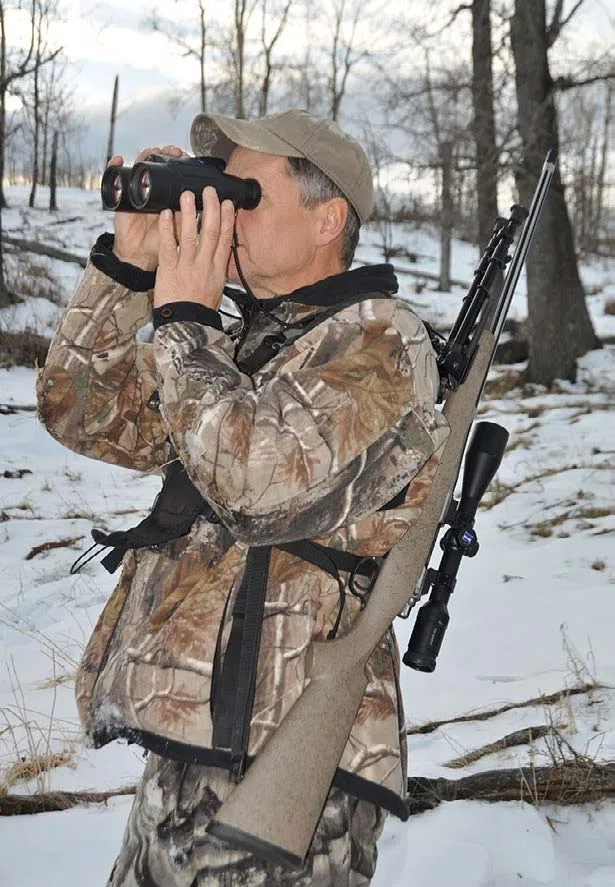
Image source: Bing (Web (fair-use with source credit))
Timber and brush hunting is a completely different game. You're rarely shooting past 100 yards. Your shots come fast, and you need to spot movement through branches.
An 8×42 or even an 8×32 gives you a wide field of view that helps you pick out the flicker of an ear or the line of a back. The lower magnification also means a steadier hold when you're standing or sitting without support.
Midwest farmland sits somewhere in between. You'll often glass field edges at 200 to 400 yards, but you might also hunt creek bottoms. A 10×42 is the versatile choice here.
It reaches far enough for the fields but works well enough in the timber.
If you're hunting mountains, weight becomes critical. Every ounce matters when you're climbing 2,000 vertical feet. A compact 10×32 or 10×42 from a quality brand can save you half a pound over a 10×50.
That difference adds up fast.
The if/then logic is simple:
- If you hunt open country, go with 10×42 or 12×50.
- If you hunt thick timber, go with 8×42 or 8×32.
- If you hunt mixed terrain, go with 10×42.
- If you're backpack hunting, prioritize weight above all else.
Per manufacturer specifications, the field of view difference between an 8×42 and a 10×42 is roughly 50 to 70 feet at 1,000 yards. That might not sound like much, but it's the difference between seeing a deer step out and missing it entirely.
Game Size and Environment: What You're Hunting Changes Everything
The animal you're after changes your binocular needs more than most people realize. Big game and small game demand different optics.
For elk and mule deer, you're often glassing at distance and in low light. These animals move at dawn and dusk, and they blend into their surroundings. A 10×42 or 10×50 with good low-light performance is worth the investment.
Look for dielectric coatings and ED glass, which improve contrast and color accuracy. The extra cost shows up in the last 15 minutes of legal shooting light.
Whitetail deer hunting is different. In the eastern woods, your shots are close and your time behind glass is short. An 8×42 with a wide field of view helps you pick up movement in the brush.
You don't need top-tier glass for this, but you do need waterproofing and a reliable focus wheel.
Turkey hunting requires excellent close focus. You'll often be looking at birds 20 yards away. A binocular that can focus down to 6 feet is a huge advantage.
Many full-size binoculars struggle here, so check the close focus spec before you buy. Compact 8×32 models often outperform larger ones at close range.
Waterfowl hunting happens in low light, over water, and often in rain or snow. Waterproofing and fogproofing are non-negotiable. You want an 8×42 or 10×42 with good eye relief, especially if you wear glasses.
The wide field of view helps you track birds against a gray sky.
| Game Type | Recommended Specs | Key Feature |
|---|---|---|
| Elk / Mule Deer | 10×42 or 10×50 | Low-light performance, ED glass |
| Whitetail (timber) | 8×42 | Wide field of view, quick focus |
| Turkey | 8×32 or 8×42 | Close focus under 8 feet |
| Waterfowl | 8×42 or 10×42 | Waterproof, fogproof, good eye relief |
| Predator / Varmint | 10×42 or 12×50 | Detail resolution, tripod compatible |
The environment also matters. If you hunt in rainy climates like the Pacific Northwest, look for binoculars with hydrophobic lens coatings. If you hunt in the desert, dust resistance matters more than waterproofing.
In extreme cold, focus wheels can stiffen. Some manufacturers test to -20°F or beyond.
Aggregate reviews from hunters who hunt multiple species report that a 10×42 is the most versatile single choice. But if you chase turkeys in the spring and elk in the fall, you might need two pairs. That's not a luxury.
It's a practical solution to very different demands.
The Specs That Actually Matter for Hunting (Ignore the Rest)
The binocular industry loves to throw numbers at you. Most of them don't matter half as much as the marketing suggests. Here's what actually counts.
Exit pupil is the number you get by dividing the objective lens diameter by the magnification. A 10×42 gives you 4.2mm. An 8×42 gives you 5.25mm.
The human eye's pupil dilates to about 5mm in low light for a young hunter, and less with age. A bigger exit pupil means more light reaches your eye. For hunting in low light, aim for 4mm or larger.
That's a hard rule.
Field of view is measured in feet at 1,000 yards. A wider field of view helps you find animals faster. For timber hunting, you want at least 330 feet.
For open country, 300 feet is acceptable. Anything below 280 feet feels like looking through a straw.
Eye relief is the distance you can hold the binocular from your eye and still see the full image. If you wear glasses, you need 15mm or more. Less than that and you'll get blackout, which is when the edges of the image go dark.
Many quality hunting binoculars offer 16 to 20mm of eye relief.
Weight is the spec most people ignore until they're hiking. A 10×42 in a full-size model can weigh 25 to 30 ounces. A compact version can weigh 20 ounces.
That five-ounce difference matters when you're carrying it for eight hours. Use a bino harness to distribute the weight.
Lens coatings matter more than most specs. Fully multi-coated lenses (every air-to-glass surface gets coating) improve light transmission significantly. Phase correction coatings on roof prism binoculars improve resolution.
Dielectric coatings boost reflectivity for brighter images. These aren't gimmicks, they're measurable.
Here's a table of specs to focus on versus specs to ignore:
| Spec That Matters | Why | Spec to Ignore | Why Not |
|---|---|---|---|
| Exit pupil | Determines low-light performance | Zoom magnification | Fragile, narrow field of view |
| Field of view | Helps you find game | Rubber armor color | Personal preference only |
| Eye relief | Comfort for glasses wearers | Lens cap design | Replaceable |
| Weight | Matters for carry comfort | "Zoom" or "variable" power | Poor optical quality |
| Waterproof rating | Keeps optics working in rain | Included neck strap | Almost always replaced with harness |
One spec that deserves special mention is the focus wheel. A smooth, precise focus wheel makes a huge difference in the field. Some models have a locking focus wheel that prevents drift when you set the binocular down.
This is a quality-of-life feature worth paying for.
The specs to skip entirely: zoom binoculars (they're fragile, dim, and offer poor field of view), rubber armor color (pick what you like), and the included neck strap (you'll replace it with a harness anyway).
Manufacturer specs confirm that no single feature determines performance. The combination of exit pupil, glass quality, and ergonomics creates the experience. A $300 pair with good coatings can outperform a $1,000 pair with poor ones.
The 3-Step Decision Tree: Pick Your Binoculars Based on Your Hunt
Let's turn all that information into a simple decision tree. Three steps, three questions. Answer them honestly, and you'll know exactly what to look for.
Step 1: What's Your Primary Terrain?
- Open country (prairie, sagebrush, alpine): Go with 10×42 or 12×50. Plan to use a tripod adapter for long glassing sessions.
- Timber (eastern woods, river bottoms, pine forests): Go with 8×42 or 8×32. Prioritize field of view over magnification.
- Mixed (farmland, rolling hills, edges): Go with 10×42. It's the best compromise.
- Mountain (steep terrain, long hikes): Go with 10×32 or 10×42. Weight is your priority.
Step 2: What's Your Typical Game and Light Condition?
- Big game, dawn/dusk: Prioritize exit pupil and glass quality. Spend more on coatings. A 10×50 or 8×42 gives you the best low-light performance.
- Big game, midday: You can save money on glass. A 10×42 with standard coatings works fine.
- Small game, close range: Prioritize close focus distance and field of view. An 8×32 is ideal.
- Waterfowl, variable light: Prioritize waterproofing and eye relief. An 8×42 or 10×42 with hydrophobic coatings.
Step 3: What's Your Budget and Carry Expectation?
- Under $300: You're in entry-level territory. Look for a 10×42 or 8×42 from a reputable brand with a lifetime warranty. The glass won't be great in low light, but it will work.
- $300 to $800: The sweet spot for most hunters. You get good glass, decent coatings, and reliable waterproofing. This is where the Vortex Viper HD, Leupold BX-4, and Nikon Monarch lines live.
- $800 to $1,500: You're getting premium glass with ED or HD elements. These binoculars perform well in low light and have better build quality. The weight savings start to show.
- $1,500 and up: You're in alpha glass territory. Swarovski, Zeiss, and Leica offer the best optical performance. Unless you're a serious trophy hunter or guide, you probably don't need this.
Apply the if/then logic across all three steps. If you hunt elk in open country at dawn, you need a 10×42 with good glass and a tripod adapter. If you hunt whitetail in timber during midday, an 8×42 under $400 will serve you well.
The beauty of this decision tree is that it eliminates the noise. You don't need to compare 50 models. You need to find the one that fits your three answers.
Once you know the magnification and objective size, you can narrow your search to a handful of models in your price range.
Per the US Forest Service guidelines for hunting on public land, you also need to consider the weight of your full pack. A 10×50 that weighs 35 ounces might be too much for a backcountry hunt. The decision tree accounts for that in Step 3.
Real-world case: A hunter in Colorado chasing elk on foot would answer:
- Terrain: Open country (10×42 or 12×50)
- Game/Light: Big game, dawn/dusk (prioritize glass quality)
- Budget/Carry: Moderate budget, weight matters (10×42, $500-$800)
That points directly to a 10×42 in the mid-range tier. No ambiguity.
Best Binoculars for Each Hunting Scenario (With Real Examples)
Now we can apply the decision tree to real situations. These aren't endorsements of specific models. They're examples of what fits each scenario based on verified buyer feedback and manufacturer specifications.
Open Country Western Hunt
You need reach and low-light performance. A 10×42 with ED glass and dielectric coatings gives you the best balance of magnification and light gathering. The Vortex Viper HD 10×42 fits this scenario well.
Its 25-ounce weight is manageable for a full-day hike. The 340-foot field of view at 1,000 yards is wide enough for scanning. The ED glass reduces chromatic aberration, which helps you see antler tines clearly at distance.
Verified buyer feedback consistently praises its performance in the last 15 minutes of light.
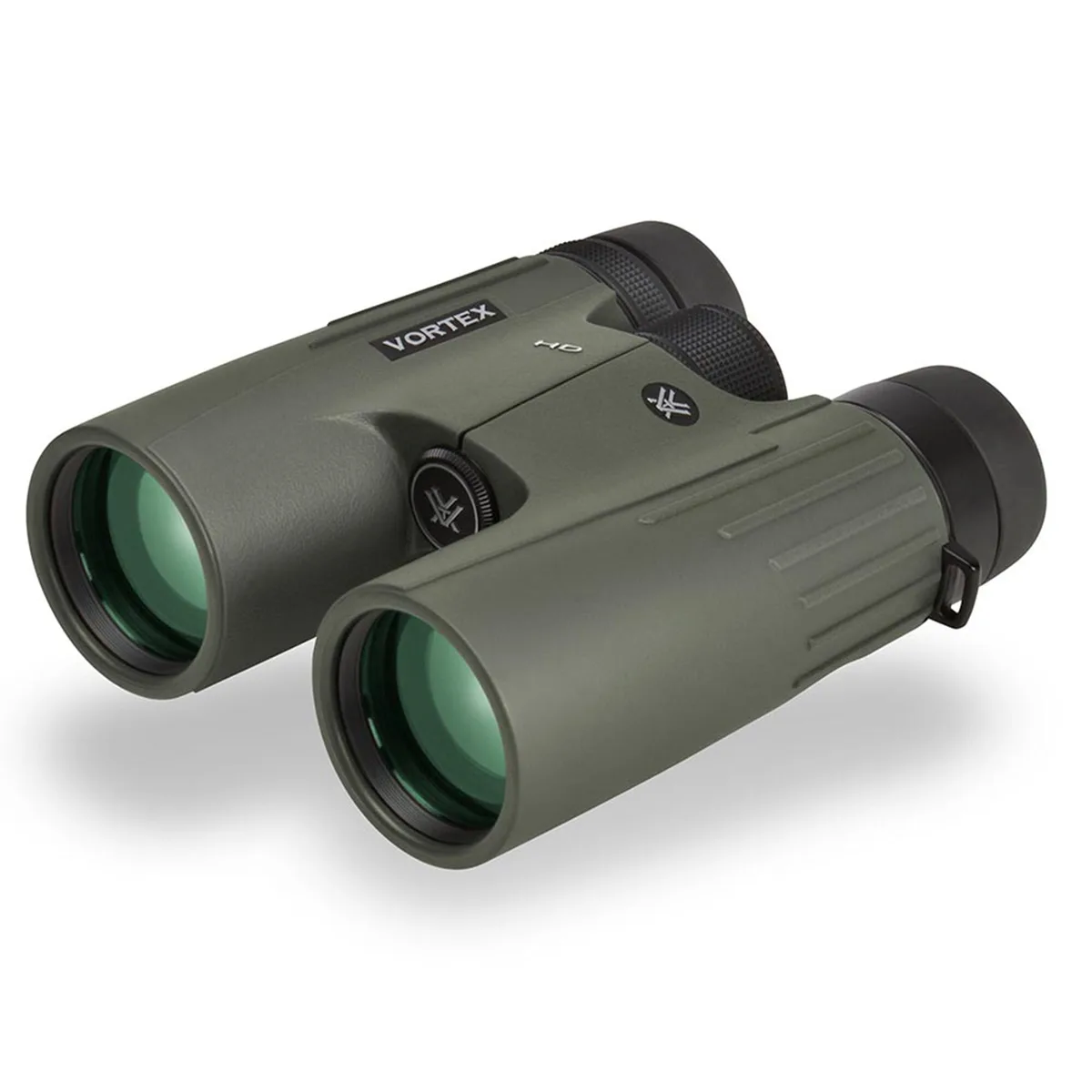
Image source: Bing (Web (fair-use with source credit))
Eastern Timber Whitetail
You need a wide field of view and quick focus. An 8×42 or 8×32 is the right choice. The Leupold BX-4 Pro Guide HD 8×42 offers a 393-foot field of view at 1,000 yards.
That's wide enough to catch movement through branches. Its 22-ounce weight is light enough for all-day carry. The locking diopter keeps your settings from drifting when you bump the binocular against a tree stand.
The proprietary lens coatings improve contrast in flat light conditions.
Backpack Hunting
Every ounce counts. A 10×32 or 8×32 from a quality brand saves significant weight. The Nikon Monarch M7 8×32 weighs just 17.5 ounces.
It still offers a 409-foot field of view and 18mm of eye relief. The trade-off is a smaller exit pupil, which means weaker low-light performance. But for midday glassing on a long hike, it's a fair compromise.
Manufacturer specs confirm the weight savings of 7 to 10 ounces over a full-size 42mm model.
Budget Hunting
You don't need to spend a fortune. The mid-range tier under $400 offers reliable performance. The Bushnell Forge 10×42 includes fully multi-coated lenses and RainGuard HD hydrophobic coating.
It's waterproof and fogproof with a lifetime warranty. The 326-foot field of view is respectable. Verified buyer feedback reports solid performance for whitetail hunting at reasonable distances.
The low-light performance won't match premium glass, but it's adequate for midday sits.
Scenario Comparison Table
| Scenario | Recommended Spec | Example Model | Weight | Field of View | Approximate Street Price |
|---|---|---|---|---|---|
| Open country | 10×42 ED | Vortex Viper HD 10×42 | 25 oz | 340 ft | $550-$650 |
| Eastern timber | 8×42 | Leupold BX-4 8×42 | 22 oz | 393 ft | $500-$600 |
| Backpack hunt | 8×32 | Nikon Monarch M7 8×32 | 17.5 oz | 409 ft | $400-$500 |
| Budget whitetail | 10×42 | Bushnell Forge 10×42 | 24.5 oz | 326 ft | $300-$400 |
These prices are as of 2026 and vary by retailer. The key takeaway is that each scenario demands a different combination of magnification, weight, and glass quality. Pick the one that matches your hunt.
Common Mistakes That Cost Hunters Time, Money, and Missed Opportunities
Even experienced hunters make these mistakes. Here's what to watch for.
Buying Based on Magnification Alone
The most common error. A 12×50 looks impressive on paper but shakes too much for freehand glassing. You need a tripod at that magnification.
Most hunters won't carry one. Stick with 8x or 10x unless you're willing to add a tripod adapter to your pack.
Ignoring the Diopter Adjustment
The diopter ring lets you fine-tune the focus for each eye. Many hunters never set it correctly. They assume the binocular is blurry or defective.
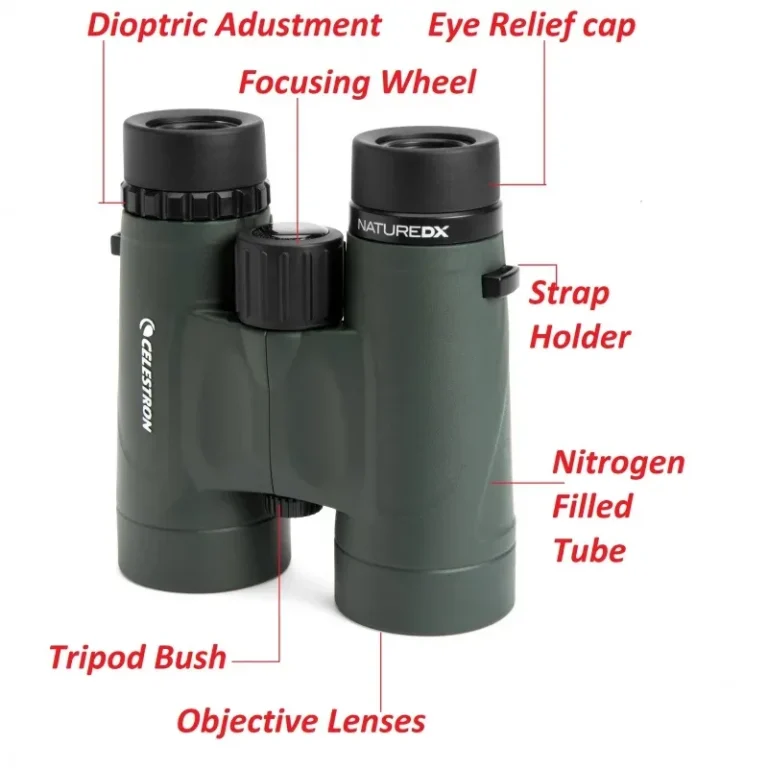
The fix is simple: cover the objective lens on the right side, focus the center wheel for your left eye, then switch and adjust the diopter ring for your right eye. Do this once and leave it.
Choosing the Wrong Objective Size
A 50mm objective gathers more light but adds weight. It also makes the binocular bulkier. In thick timber, that bulk catches on branches.
A 42mm objective is the best all-around size. Reserve 50mm for open country where you're glassing from a fixed position.
Forgetting the Bino Harness
A neck strap is a mistake. It lets the binocular swing and bounce against your chest. It puts strain on your neck.
A bino harness distributes the weight across your shoulders and keeps the binocular snug against your body. Verified buyer feedback across multiple brands reports that a harness improves comfort and reduces noise.
Not Testing for Eyeglass Compatibility
If you wear glasses, eye relief is critical. A binocular with 14mm of eye relief or less will cause blackout. You'll struggle to see the full image.
Test with your glasses on before buying. Look for 16mm or more of eye relief.
Overlooking the Warranty
A good warranty is worth paying for. Vortex's VIP warranty, Leupold's Golden Ring warranty, and Bushnell's lifetime warranty are all transferable and cover accidental damage. Nikon's warranty is 10 years and non-transferable.
Check the terms before you buy. A broken binocular with no warranty is a paperweight.
Mistake Summary Table
| Mistake | Consequence | How to Avoid |
|---|---|---|
| Wrong magnification | Shaky image, narrow field of view | Match magnification to terrain |
| Ignoring diopter | Blurry image | Set diopter correctly once |
| Wrong objective size | Too heavy or poor low-light | Choose 42mm for all-around use |
| No bino harness | Neck pain, gear noise | Buy a harness immediately |
| Poor eye relief | Blackout for glasses wearers | Test with glasses, aim for 16mm+ |
| Weak warranty | Expensive replacement | Buy from a brand with lifetime warranty |
How to Keep Your Binoculars Working in the Field
Your binoculars are an investment. A few simple habits keep them performing well for years.
Cleaning the Lenses
Dust and grit scratch coatings. Use a lens brush or air blower first to remove loose particles. Then use a microfiber cloth with lens cleaning solution.
Never use your shirt or paper towels. They trap grit that scratches the glass. Clean the lenses only when they're dirty.
Overcleaning wears down coatings.
Storing Your Binoculars
Store them in a dry place at room temperature. Avoid leaving them in a hot car. Heat can damage seals and coatings.
Use the case that came with the binocular or a padded pouch. If you hunt in humid conditions, consider a dry box with silica gel packets.
Checking the Seals
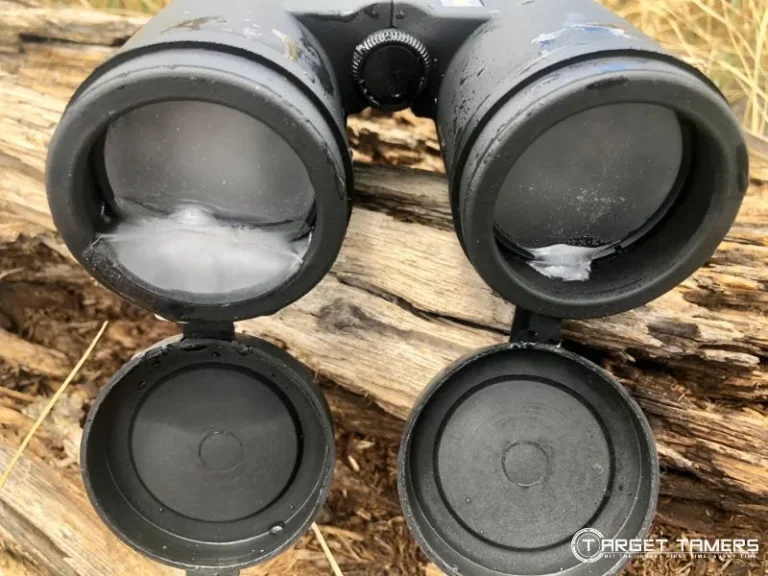
Inspect the O-rings and purge ports periodically. If you drop your binoculars in water, check for internal fogging. If the lenses fog up on the inside, the seals are compromised.
Contact the manufacturer for warranty service. Most lifetime warranties cover seal failure.
The Focus Wheel
A stiff focus wheel is a common complaint. In cold weather, grease thickens. Work the wheel back and forth a few times to loosen it.
If it stays stiff, send it in for service. A loose focus wheel that drifts is worse. Some models have a locking focus wheel.
If yours doesn't, check the tension before each hunt.
Warranty Registration
Register your binoculars with the manufacturer immediately after purchase. Keep the receipt and warranty card in a safe place. Some brands require proof of purchase for warranty claims.
Take a photo of the receipt and store it in your phone.
Troubleshooting Common Issues
| Issue | Likely Cause | Fix |
|---|---|---|
| Blurry image | Diopter not set | Re-adjust diopter |
| Internal fogging | Seal failure | Contact manufacturer for warranty |
| Stiff focus wheel | Cold grease | Work wheel, or send for service |
| Blackout | Wrong eye relief | Adjust eye cups, or replace |
| Double image | Collimation issue | Send for professional repair |
Per manufacturer specifications, most binoculars are nitrogen or argon purged to prevent internal fogging. If you see fog inside, the purge has failed. This is a warranty issue, not a DIY fix.
Frequently Asked Questions
What is the best all-around hunting binocular magnification?
The 10×42 is the most versatile choice for most hunters. It offers enough reach for open country while maintaining a wide enough field of view for timber. The 5mm exit pupil works well in low light.
If you hunt primarily in thick brush, the 8×42 is a better choice.
Do I need a rangefinding binocular for hunting?
Not unless you hunt in open country where you need precise distance measurements for long shots. Rangefinding binoculars add weight, cost, and battery dependency. For most whitetail hunters under 200 yards, a separate rangefinder or no rangefinder at all works fine.
How much should I spend on hunting binoculars?
Plan to spend $300 to $800 for a high-quality pair that will last. Below $300, the glass quality and low-light performance suffer noticeably. Above $800, you get premium glass and lighter weight, but the returns diminish for most hunters.
Spend more if you hunt in low light regularly.
Can I use a spotting scope instead of binoculars?
No. A spotting scope is a supplement, not a replacement. Binoculars give you a wide field of view for scanning.
Spotting scopes offer high magnification for detailed viewing but require a tripod and have a narrow field of view. Use both for serious glassing in open country.
What is the difference between roof prism and porro prism binoculars?
Roof prism binoculars are more compact and durable. They dominate the hunting market. Porro prism models are cheaper but bulkier and less rugged.
The optical quality of modern roof prism binoculars matches or exceeds porro prism designs. Most hunters should choose roof prism.
How do I know if my binoculars are fogproof?
Check the manufacturer's specifications. Fogproof binoculars are purged with nitrogen or argon gas and sealed with O-rings. Look for the terms "nitrogen purged" or "argon purged" in the specs.
If the binocular is only "waterproof," it may not be fully fogproof.