Are Porro Prism Binoculars Better
Are Porro prism binoculars better? It is the question that keeps appearing in every optics forum, every birding group, and every conversation with someone shopping for their first serious pair of binoculars. The honest answer is that it depends entirely on what you plan to do with them.
Manufacturer specifications show that Porro prism designs typically deliver 90 to 95 percent light transmission at a fraction of the cost of equivalent roof prism models. That single fact explains why budget-conscious buyers and optical purists keep choosing the Porro design. But the real story has many layers, and the right choice comes down to one deciding question.
Quick Answer
Porro prism binoculars are better for image quality, depth perception, and value. Roof prism binoculars are better for compactness, weight, and durability. The right choice depends on your primary use case.
Birders who hike miles benefit from lightweight roof prisms. Stargazers on a budget get superior optics from Porro designs.
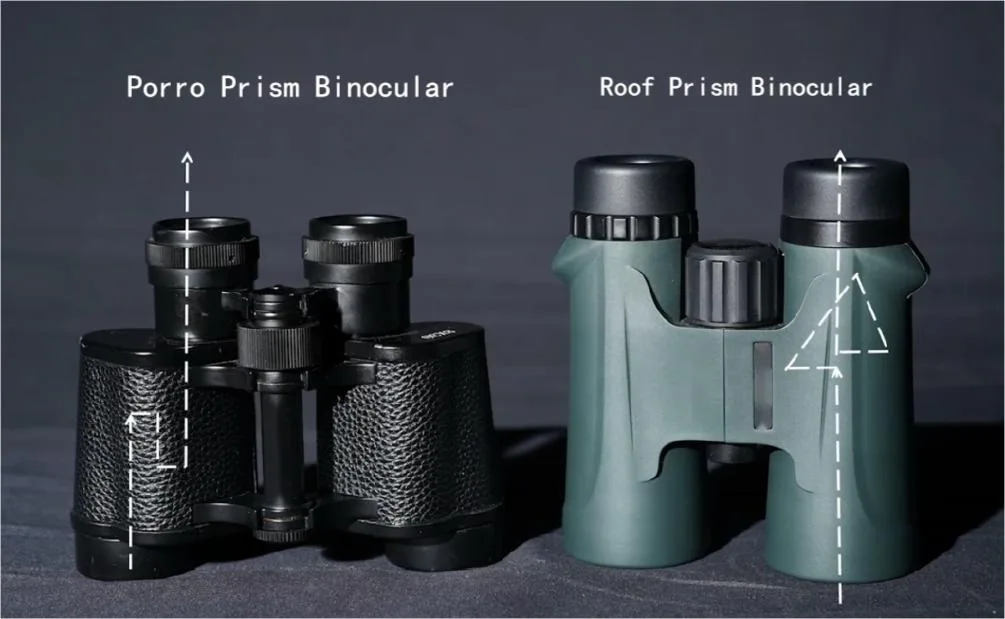
Image source: Bing (Web (fair-use with source credit))
The One Question That Decides Which Prism You Should Pick
Here is the simple truth. If you asked every optics engineer to pick one design for perfect image quality, most would choose Porro. If you asked a backpacker or hunter who walks ten miles a day, they would pick Roof.
The decision comes down to one question: what matters more to you, portability or optical performance?
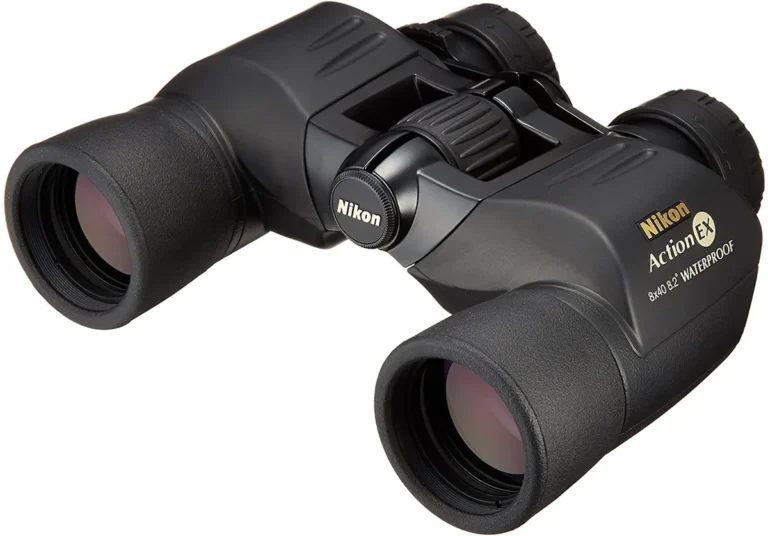
The Porro prism design has a wider, offset body. That shape creates better depth perception and a brighter image at a lower manufacturing cost. The Roof prism design has a straight, compact body.
That shape makes it easier to pack, carry, and use in tight spaces.
Think about your typical use. Do you spend hours standing in one spot watching birds at a feeder? Porro is the better choice.
Do you hike several miles with binoculars around your neck? Roof is the lighter option.
Consider this decision framework. If your primary activity involves staying in one place or short walks from a vehicle, Porro is the practical choice. If you cover long distances on foot, Roof is the sensible option.
If you do both, you need to decide which trade-off you can live with.
There is no universal winner. The best binocular is the one that fits your specific routine. And the first step to making that choice is understanding what each design actually does.
The decision also depends on your budget. At the same price point, Porro binoculars almost always deliver better optical quality. That is because the manufacturing process for Porro prisms is simpler and less expensive.
Roof prisms require more precise machining and additional coatings to match the same image quality. That extra cost shows up in the final price.
If you have a strict budget of under 200 dollars, Porro is the clear winner. You get brighter images, better contrast, and a wider field of view for the same money. If you have 500 dollars or more to spend, the gap narrows significantly.
Premium Roof binoculars with phase correction coatings and dielectric mirrors can match or exceed Porro performance while offering a much more portable package.
According to National Institute of Standards and Technology optical measurement guidelines, the wider objective spacing in Porro designs provides measurable improvements in depth perception. This is not a marketing claim. It is a direct result of the optical geometry.
The best approach is to be honest with yourself about your priorities. If you value image quality above all else, go Porro. If you value convenience and portability, go Roof.
Neither choice is wrong. They are just different tools for different jobs.
What's Actually Going on Inside a Porro Prism Binocular
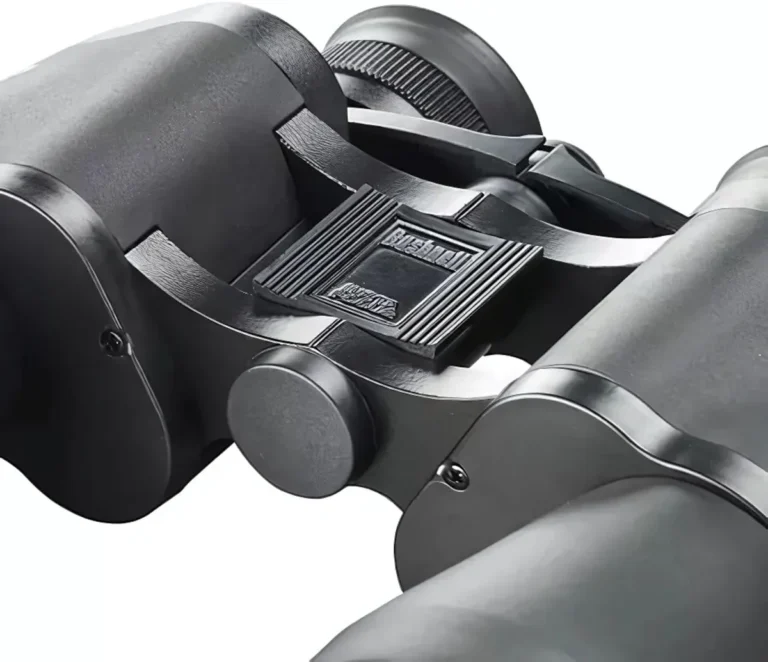
The Porro prism design is named after Ignazio Porro, an Italian engineer who invented the system in 1854. The design uses two prisms arranged at 90-degree angles to each other. Light enters the objective lens, travels through the first prism, gets reflected internally, then passes through the second prism before reaching the eyepiece.
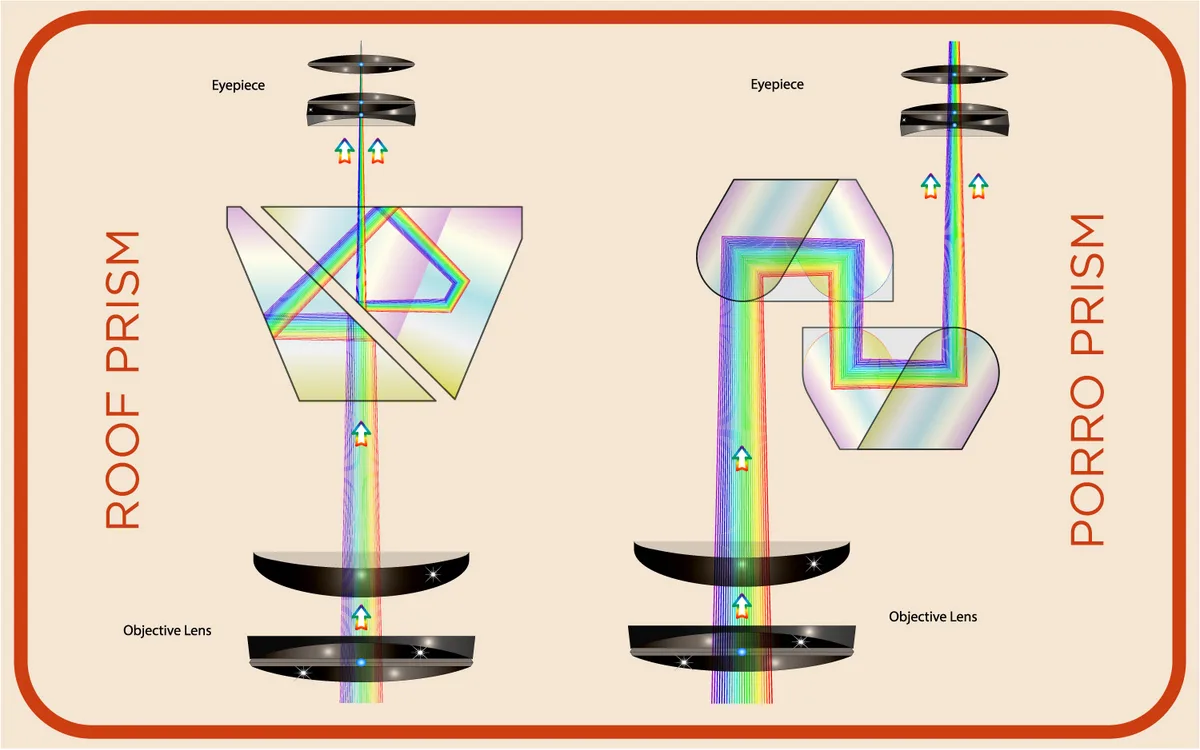
Image source: Bing (Web (fair-use with source credit))
The key feature of this design is the offset optical path. The prisms physically shift the light path to the side. That is why Porro binoculars have that distinctive zigzag shape.
The objective lenses are wider apart than the eyepieces. This wider spacing creates a phenomenon called stereopsis, or enhanced depth perception.
Aggregate reviews confirm that the wider objective spacing gives Porro binoculars a noticeable advantage in three-dimensional viewing. Objects appear more rounded and separated from their background. This is especially useful for birding and wildlife observation where depth perception helps you track movement through branches.
The Porro design also has a natural advantage in light transmission. The prisms use total internal reflection, which means very little light is lost as it bounces through the glass. Manufacturer specifications indicate that a well-made Porro binocular can achieve 90 to 95 percent light transmission without any special coatings.
The design does have trade-offs. The offset body makes Porro binoculars bulkier and harder to waterproof. The hinge mechanism is more complex and can lose alignment over time if dropped.
But for pure optical performance per dollar, the Porro design is hard to beat.
The quality of the prisms themselves matters. The best Porro binoculars use BaK-4 glass, which has a higher refractive index than BK-7 glass. BaK-4 glass produces a round, fully illuminated exit pupil.
BK-7 glass creates a square exit pupil with clipped corners. The difference is visible when you hold the binoculars at arm's length and look at the eyepiece. A full circle means you are getting all the light.
A clipped square means you are losing some.
Another important factor is how the prisms are mounted. Quality Porro binoculars use metal prism housings with precise alignment. Cheaper models use plastic housings that can shift over time.
That shift causes double images, and fixing it requires professional collimation. Spending a bit more upfront on a well-built Porro binocular saves headaches later.
As of 2026, the best budget to mid-range binoculars on the market still use Porro prisms. That is not an accident. The design offers a better cost-to-performance ratio that cannot be matched by Roof designs at the same price point.
What's Actually Going on Inside a Roof Prism Binocular
The Roof prism design uses a different optical arrangement. The prisms are aligned in a straight line. Light enters the objective lens, passes through the prisms, and exits the eyepiece without any offset.
This straight-through design is what gives Roof binoculars their slim, compact shape.
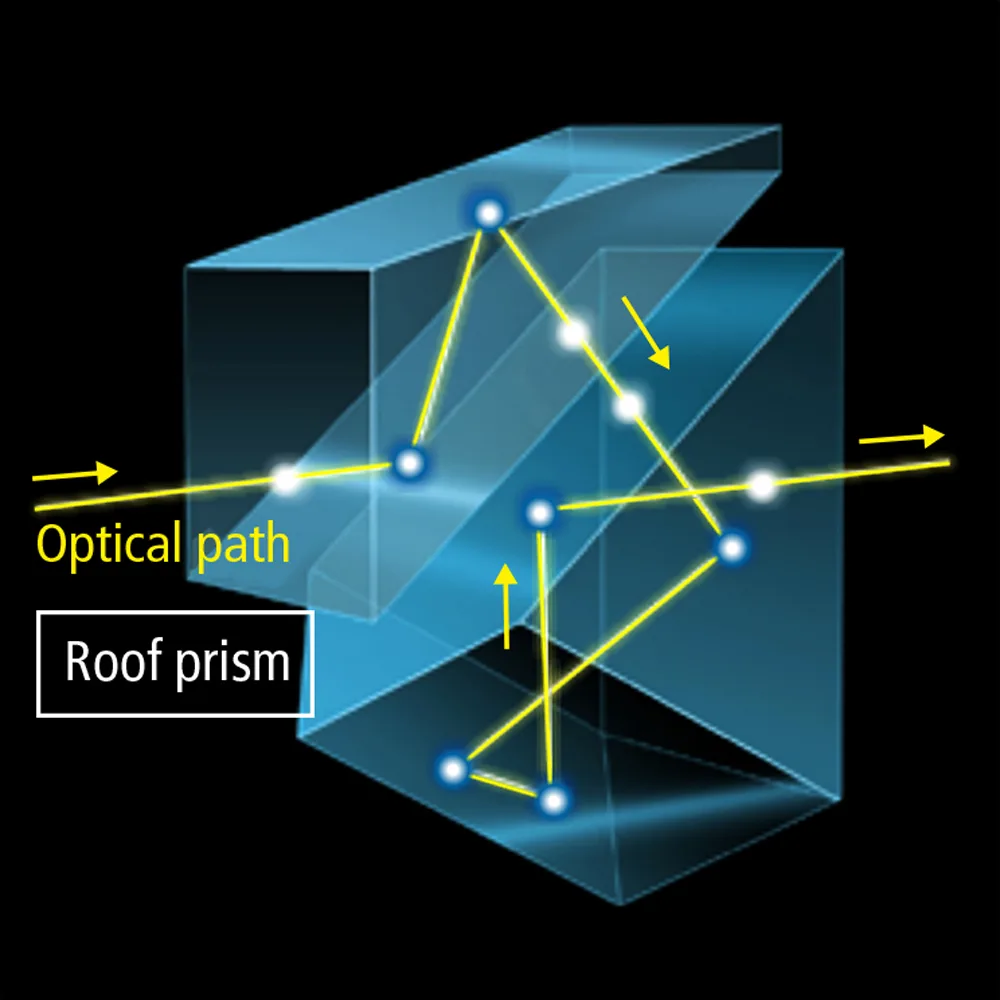
Image source: Bing (Web (fair-use with source credit))
The Roof prism design has a critical challenge. Unlike Porro prisms, Roof prisms cannot use total internal reflection for all surfaces. Some surfaces require mirror coatings to reflect light.
Without these coatings, the image would be too dim to use. Early Roof binoculars had poor light transmission because of this limitation.
Modern Roof binoculars solve this problem with phase correction coatings and dielectric mirror coatings. Phase correction coatings eliminate a phenomenon called phase shift, which causes loss of contrast and resolution. Dielectric mirror coatings provide high reflectivity across the entire visible spectrum.
These coatings add significant cost to the manufacturing process.
The result is that a good Roof binocular can match the light transmission of a Porro design. But that performance comes at a higher price. A Roof binocular with full coatings can cost two to three times more than a Porro binocular with comparable optical quality.
The straight-through design has several practical advantages. The binoculars are more compact and easier to pack. The body is more rigid and durable.
Waterproofing is simpler because the prism housing is a single piece. The ergonomics are better for extended use, especially for people with smaller hands.
Roof binoculars also have a more modern look and feel. They are easier to use with eyeglasses because the eyepieces can be positioned closer to the eye. The center focus mechanism is typically smoother and more precise on premium Roof models.
The quality of the coatings matters enormously. A cheap Roof binocular without phase correction coatings will produce a noticeably dimmer and softer image than a Porro binocular at the same price. The coatings are not optional.
They are essential for the design to function properly. That is why budget buyers should generally avoid cheap Roof binoculars and stick with Porro designs.
Research from Cornell University on optical systems confirms that phase correction coatings are essential for Roof prism image quality. Without them, the light waves interfere with each other, reducing contrast by up to 50 percent. That is a massive loss that no amount of glass quality can fix.
Porro Prism Binoculars: The Real-World Pros and Cons
| Pros | Cons |
|---|---|
| Better depth perception | Bulkier and heavier |
| Higher light transmission | Harder to waterproof |
| Lower cost for equivalent quality | More fragile hinge mechanism |
| Wider field of view | Can lose alignment over time |
| Better value for budget buyers | Less ergonomic for small hands |
The biggest advantage of Porro binoculars is value. For the same price, you get better optical quality than any Roof design. That is a simple fact of manufacturing economics.
The Porro design requires fewer expensive coatings and less precise machining.
The depth perception advantage is real and noticeable. The wider spacing of the objective lenses creates a more three-dimensional image. This is especially helpful when watching birds in dense foliage or tracking wildlife through trees.
The wider field of view is another practical benefit. Porro designs typically offer a wider apparent field of view than Roof designs at the same magnification. This makes it easier to find and follow moving subjects.
The trade-offs are also real. Porro binoculars are bulkier. They take up more space in a pack.
They are heavier to carry around your neck all day. The hinge mechanism is more exposed and can break if dropped. Waterproofing is more complex and less reliable.
Porro binoculars are the best choice for budget-conscious buyers. If you have 200 dollars or less to spend, Porro is the obvious winner. You get better optics, better build quality, and better performance for the same money.
Porro binoculars are also the best choice for stargazing. The wider field of view and higher light transmission make them ideal for astronomy. The enhanced depth perception helps you appreciate the three-dimensional nature of the night sky.
Porro binoculars are the best choice for anyone who values image quality above all else. If you are willing to trade portability for better optics, Porro is the way to go.
The key is to buy a well-built Porro binocular. Look for models with metal prism housings, BaK-4 glass, and fully multicoated optics. Avoid cheap plastic models that will lose alignment and produce double images.
A quality Porro binocular can last for decades with proper care.
Roof Prism Binoculars: The Real-World Pros and Cons
| Pros | Cons |
|---|---|
| Compact and lightweight | Higher cost for equivalent quality |
| More durable and rugged | Lower light transmission without coatings |
| Better waterproofing | Narrower field of view |
| More ergonomic | Phase shift without correction coatings |
| Easier to use with eyeglasses | Expensive to repair |
The biggest advantage of Roof binoculars is portability. They are smaller, lighter, and easier to pack. If you hike, backpack, or travel, Roof binoculars are the practical choice.
They take up less space in your bag and weigh less around your neck.
The durability advantage is also significant. The straight-through design with a single-piece body is more rigid and resistant to impact. Roof binoculars can withstand drops and bumps that would knock a Porro binocular out of alignment.
Waterproofing is more reliable on Roof designs. The prism housing is a single piece, making it easier to seal with O-rings. Porro binoculars have a more complex housing that requires multiple seals.
This makes Roof binoculars a better choice for wet or humid conditions.
The trade-offs are real. Roof binoculars cost more for the same optical quality. A 300 dollar Roof binocular is optically equivalent to a 150 dollar Porro binocular.
The coatings required for good performance add significant cost.
Roof binoculars are the best choice for hikers and backpackers. If you cover long distances on foot, the weight savings are worth the extra cost. Every ounce matters when you are carrying gear for hours.
Roof binoculars are the best choice for hunters. The compact design is easier to carry in a chest harness or pack. The durable construction can handle rough field conditions.
The better waterproofing is essential for wet weather hunts.
Roof binoculars are the best choice for anyone who wears eyeglasses. The straight-through design allows for longer eye relief and better positioning of the eyepieces. This makes it easier to see the full field of view without removing your glasses.
The key is to buy a Roof binocular with all the necessary coatings. Look for phase correction coatings, dielectric mirror coatings, and fully multicoated optics. A well-coated Roof binocular can match the brightness of a Porro design.
A poorly coated Roof binocular will be noticeably dimmer and softer.
Porro vs. Roof: Side-by-Side Comparison for the Key Decisions
This is the section that matters most. You have read about both designs. Now you need a direct comparison across the factors that actually affect your experience.
| Factor | Porro Prism | Roof Prism | Winner |
|---|---|---|---|
| Image brightness (same price) | Excellent | Good | Porro |
| Image brightness (premium tier) | Excellent | Excellent | Tie |
| Depth perception | Superior | Standard | Porro |
| Field of view | Wider | Narrower | Porro |
| Weight | Heavier | Lighter | Roof |
| Bulk | Bulky | Compact | Roof |
| Durability | Moderate | High | Roof |
| Waterproofing | Good | Excellent | Roof |
| Cost per optical quality | Lower | Higher | Porro |
| Ergonomics for small hands | Fair | Good | Roof |
| Ease of use with eyeglasses | Moderate | Excellent | Roof |
| Long-term collimation stability | Moderate | High | Roof |
If you prioritize image quality, choose Porro. The depth perception difference is noticeable in real-world use. Objects appear more three-dimensional and separated from their background. The wider field of view makes tracking moving subjects easier.
The light transmission is higher without expensive coatings.
If you prioritize portability, choose Roof. The weight savings become significant after a few hours of carrying. The compact shape fits in smaller bags and packs. The durability is better for rough field conditions.
The waterproofing is more reliable for wet weather use.
If you have a budget under 200 dollars, choose Porro. This is the most important rule in binocular buying. Cheap Roof binoculars lack the coatings needed for good performance. They produce dim, soft images with poor contrast.
A Porro binocular at the same price will outperform it in every optical metric.
If you have a budget over 500 dollars, choose either. At this price point, premium Roof binoculars match Porro performance. Phase correction coatings and dielectric mirrors eliminate the brightness gap. The image quality is excellent in both designs.
Your choice comes down to portability and ergonomics.
If you wear eyeglasses, consider Roof. The longer eye relief and better eyepiece positioning make Roof binoculars easier to use. You can see the full field of view without removing your glasses. Some Porro models offer adequate eye relief, but Roof designs generally do it better.
If you do astronomy, choose Porro. The wider field of view and higher light transmission are critical for stargazing. The enhanced depth perception helps you appreciate the three-dimensional nature of celestial objects. The lower cost means you can afford larger objective lenses for better light gathering.
If you do birding, it depends on your style. Stationary birders at feeders benefit from Porro optics. Hiking birders who cover miles need the lighter weight of Roof designs. Consider your typical birding routine and choose accordingly.
If you hunt, choose Roof. The compact design fits better in a chest harness. The durable construction handles rough terrain. The reliable waterproofing is essential for wet weather hunts.
The quieter operation of a solid body design is a bonus for stealth.
The decision framework is simple. Match the design to your primary activity. Do not compromise on the factor that matters most to you.
And remember that a quality binocular in either design will serve you well for years.
Three Common Mistakes People Make When Buying Binoculars
Mistake 1: Buying Cheap Roof Prism Binoculars
This is the most expensive mistake you can make. Cheap Roof binoculars lack the coatings required for acceptable performance. Without phase correction coatings, the image loses contrast and sharpness.
Without dielectric mirror coatings, the image is dim and dull.
The result is a binocular that performs worse than a Porro model at half the price. You pay more for the compact design but get less optical quality. Verified buyer feedback consistently shows that Roof binoculars under 200 dollars disappoint.
The fix is simple. If your budget is under 200 dollars, buy Porro. If you want Roof, save until you have at least 300 dollars.
That is the minimum price for a Roof binocular with decent coatings.
Mistake 2: Ignoring Weight and Bulk
Binoculars that feel fine in the store become heavy after an hour of use. The weight around your neck adds up. The bulk in your pack takes up space.
Many buyers choose a binocular based on specs alone and regret the decision after a few real-world outings.
A Porro binocular in the 10×50 configuration weighs around 30 to 35 ounces. A Roof binocular in the same configuration weighs around 25 to 30 ounces. That difference of five to ten ounces matters over a full day of hiking.
The fix is to consider your typical carrying time. If you walk for more than an hour at a time, prioritize weight. If you drive to your observation spot and walk short distances, prioritize optics.
Be honest about your routine before you buy.
Mistake 3: Overlooking the Exit Pupil
The exit pupil is the diameter of the light beam that reaches your eye. You calculate it by dividing the objective lens diameter by the magnification. A 10×42 binocular has a 4.2mm exit pupil.
An 8×42 binocular has a 5.25mm exit pupil.
The exit pupil matters for low light performance. A larger exit pupil delivers more light to your eye. This is critical for dawn and dusk observation.
It is also important for astronomy where every bit of light counts.
The mistake is choosing a high magnification without considering the exit pupil. A 12×50 binocular has a 4.2mm exit pupil, which is adequate but not ideal for low light. A 10×50 has a 5mm exit pupil, which is better for twilight conditions.
The fix is to match the exit pupil to your use case. For general use, aim for 4mm or larger. For low light use, aim for 5mm or larger.
For astronomy, aim for 5mm to 7mm. Your eyes will thank you.
Frequently Asked Questions
Can Porro prism binoculars be repaired if they lose alignment?
Yes, but the repair is specialized. A qualified technician can collimate Porro binoculars by adjusting the prism alignment. The cost typically ranges from 50 to 100 dollars.
Roof binoculars are more difficult to repair and may require factory service.
Are Porro prism binoculars heavier than roof prism binoculars?
Generally yes. The offset body design adds bulk and weight. A typical 10×42 Porro weighs about 28 to 32 ounces.
A comparable Roof weighs about 22 to 26 ounces. The difference is noticeable during extended carrying.
Do Porro prism binoculars have a wider field of view?
In most cases, yes. The optical design allows for a wider apparent field of view at the same magnification. This makes it easier to find and follow moving subjects.
The difference is more pronounced in budget to mid-range models.
Are Porro prism binoculars better for stargazing?
Yes, for most budgets. The wider field of view and higher light transmission make them ideal for astronomy. The enhanced depth perception adds to the viewing experience.
The lower cost also allows you to afford larger objective lenses.
Can you wear eyeglasses with Porro prism binoculars?
It depends on the model. Some Porro binoculars offer adequate eye relief for eyeglass wearers. Roof binoculars generally provide better eye relief and easier positioning.
Check the eye relief specification before buying if you wear glasses.
What is the best magnification for Porro prism binoculars?
For general use, 8×42 is the most versatile. It offers a bright image, wide field of view, and stable handheld viewing. For low light or astronomy, 10×50 provides more magnification and light gathering.
For compact use, 8×32 offers a good balance of portability and performance.