
How Far Should a Fire Pit Be From a Fence
You have a new fire pit, or you're planning to buy one. You're picturing marshmallows, good conversation, and a warm glow. But then you look at your fence, and the question hits you: how far should a fire pit be from a fence?
It's a good question. The wrong distance can mean a melted vinyl panel, a charred wood plank, or worse.
The answer isn't one number. It depends on your fire pit, your fence, and your local rules. As of 2026, the International Residential Code (IRC) and the International Fire Code (IFC) provide the baseline guidance.
These standards set a minimum of 10 feet from combustible structures for open fires. Your specific situation might require more. Let's walk through the variables so you get it right the first time.
Quick Answer
For a wood-burning fire pit, keep it at least 10 feet from any fence. For a gas fire pit, 5 feet is usually safe. For a propane fire table, 3 feet can work.
Always check your local codes first. They may be stricter.
Why There's No Single Answer
You might be hoping for a simple number, like 10 feet. But that number is a starting point, not a finish line. The real distance depends on three things: what you're burning, what your fence is made of, and what your local government says.
Ignore any of these, and you could end up with a problem.
Think about it. A wood fire sends out sparks and embers. A gas fire has a steady flame but no flying coals.
A vinyl fence melts at a much lower temperature than a metal one. And your city might have its own rules that are stricter than the national code. The right answer covers all three factors.
The Three Variables That Decide Your Fire Pit Distance
Variable 1: What Fuel You're Burning
The fuel type changes the risk profile significantly.
- Wood-burning fire pits produce sparks, embers, and intense radiant heat. They need the most clearance. Plan for at least 10 to 15 feet from any fence.
- Gas fire pits (natural gas or propane) have a contained flame. They produce fewer embers. A distance of 5 to 10 feet is usually sufficient.
- Propane fire tables are low-profile. They burn clean and produce less heat. Many manufacturers recommend 3 to 5 feet from combustible surfaces.
If you want a cleaner burn with fewer embers, consider a low-smoke option. These models produce less smoke and fewer sparks, which means less risk to nearby fences.
Variable 2: What Your Fence Is Made Of
Your fence material determines how easily it can catch fire or be damaged.
- Wood fences are combustible. Dry wood, especially in summer, can ignite from embers or sustained heat. Keep a generous distance.
- Vinyl fences do not catch fire easily, but they warp and melt at around 160°F. The heat from a fire pit can easily reach that temperature at close range.
- Metal fences (aluminum, steel, wrought iron) are non-combustible. They can handle heat well, but they still get hot. A 3 to 5 foot buffer is practical.
- Stone or concrete fences are the safest. They absorb heat without damage. A 2 to 3 foot gap is often enough.
Variable 3: What Your Local Codes Say
Local codes override all general advice. Some cities require 15 feet from any structure. Others have specific rules about property lines.
Some have no rules at all, but that does not mean you should guess.
Always check with your local building department or fire marshal before you start. They can tell you the exact distance required for your address. A quick call or visit to their website can save you a lot of trouble.

Image source: Bing (Web (fair-use with source credit))
Decision Tree: Find Your Required Clearance
Use this simple decision tree to find your minimum distance. Start at the top and follow the path that matches your setup.
Branch A: Wood-Burning Fire Pit + Combustible Fence
You have a wood fire pit and a wood or vinyl fence. This is the highest risk combination.
- Minimum distance: 15 feet
- Why: Embers can travel 10 feet or more. The heat can dry out wood and cause it to ignite. Vinyl can warp from the heat alone.
- Extra precautions: Use a spark screen. Clear any dry leaves or debris from the area. Consider a heat shield on the fence side.
Branch B: Wood-Burning Fire Pit + Non-Combustible Fence
You have a wood fire pit and a metal, stone, or concrete fence.
- Minimum distance: 10 feet
- Why: The fence will not burn, but embers can still land on the ground nearby. The heat can still be uncomfortable.
- Extra precautions: Keep the ground clear. Use a spark screen. Be mindful of wind direction.
Branch C: Gas Fire Pit + Combustible Fence
You have a gas fire pit and a wood or vinyl fence.
- Minimum distance: 5 feet
- Why: Gas fires produce no embers. The main risk is radiant heat. At 5 feet, the heat is unlikely to damage wood or melt vinyl.
- Extra precautions: Check the manufacturer's manual. Some gas pits require more clearance. Position the fire pit so the flame is not pointing directly at the fence.
Branch D: Gas Fire Pit + Non-Combustible Fence
You have a gas fire pit and a metal, stone, or concrete fence.
- Minimum distance: 3 feet
- Why: This is the safest combination. The fence will not burn, and the heat is contained.
- Extra precautions: Still check the manufacturer's manual. Some models have specific clearance requirements.
Branch E: Propane Fire Table + Any Fence
You have a low-profile propane fire table.
- Minimum distance: 3 feet from any fence
- Why: Fire tables are designed for small spaces. They produce less heat and no embers.
- Extra precautions: Still check the manual. Some tables have a higher BTU output and may need more space.
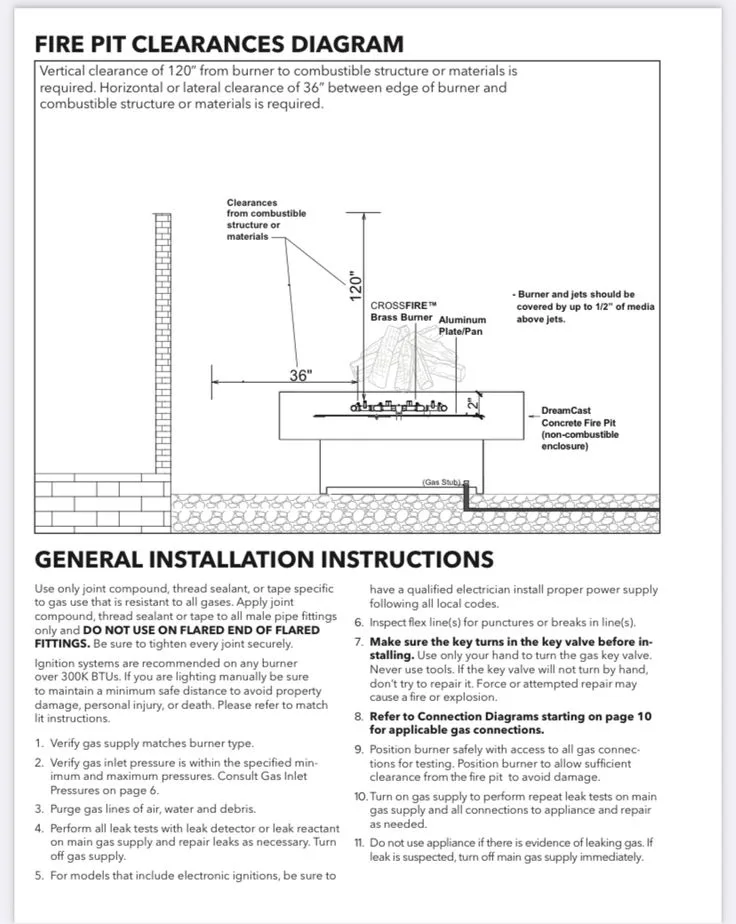
Image source: Bing (Web (fair-use with source credit))
How to Check Your Local Codes Without Calling 20 Offices
Finding your local rules does not have to be a headache. Here is a step-by-step approach that works for most people.
First, check your city or county website. Look for a section on building permits, fire safety, or outdoor burning. Many cities now publish their fire codes online.
You can search for "fire pit setback" or "open burning regulations" on the site.
Second, call the fire department's non-emergency number. The fire marshal's office is usually the authority on recreational fires. Ask them directly: "What is the minimum distance from a fence for a fire pit in this city?" They can give you the exact number.
Third, check your HOA covenants. If you live in a planned community, your HOA may have its own rules. These can be stricter than the city code.
A violation could mean a fine, even if you are following the city law.
For more guidance on choosing the right setup for your space, look at models designed for smaller yards. Many gas options require less clearance and are easier to position safely. The National Fire Protection Association (NFPA) also publishes guidelines on recreational fires that can help you understand the risks.
What Happens If You Get It Wrong
Safety Risks You Can't Afford to Ignore
The most obvious risk is a fire. A wood fence can catch fire from embers. A vinyl fence can melt and drip.
A metal fence can get hot enough to burn someone who touches it. And the fire can spread to your house, your neighbor's property, or nearby trees.
The other risk is carbon monoxide. If your fire pit is too close to a fence or wall, the smoke can get trapped. It can pool in your yard or drift into your home.
This is especially dangerous for gas fire pits that burn clean but still produce CO.
Legal and Insurance Consequences
If your fire pit damages your neighbor's fence, you are liable. You could be paying for repairs, legal fees, and higher insurance premiums. Your homeowner's insurance may deny a claim if they find that you violated a local code.
Some cities fine homeowners for illegal fire pits. Fines can range from 100 to 500 dollars. In some cases, you may be forced to remove the fire pit entirely.
A permit is often required for permanent installations. Skipping it can lead to enforcement action.
To protect yourself, make sure your insurance policy covers fire pits. Some policies exclude them. If yours does, you may need to add a rider.
The International Code Council (ICC) publishes the IRC and IFC standards that many local codes are based on. Following those standards is your best defense.
Common Mistakes to Avoid When Placing Your Fire Pit
Assuming the manufacturer's manual is enough. The manual gives you a minimum. But your local code may require more. Always check the code first.
The manual is a starting point, not the final word.
Forgetting about wind. You might place your fire pit 10 feet from the fence. But on a windy day, embers can drift sideways. They can land on or near the fence.
Always account for prevailing wind direction. Place the fire pit upwind of the fence if possible.
Placing the fire pit on grass. Grass dries out quickly. It can catch fire from embers or heat. Use a non-combustible base like gravel, stone, or concrete pavers.
This adds a layer of protection. There are fire pits designed for gravel patios that work well with this setup.
Ignoring the fence height. A tall fence can trap heat and smoke. The heat can rise and warp the top of a vinyl fence or dry out a wood fence. Measure the full height of the fence.
If it is over 6 feet, consider adding extra clearance.
Using a cheap fire pit without a spark screen. Wood fires throw embers. A spark screen catches them. Without one, embers can travel 10 feet or more.
This is a simple fix that makes a big difference.
Skipping the permit. Some cities require a permit for permanent fire pits. Skipping it can lead to fines and forced removal. A permit also means an inspection.
That inspection ensures your setup is safe.
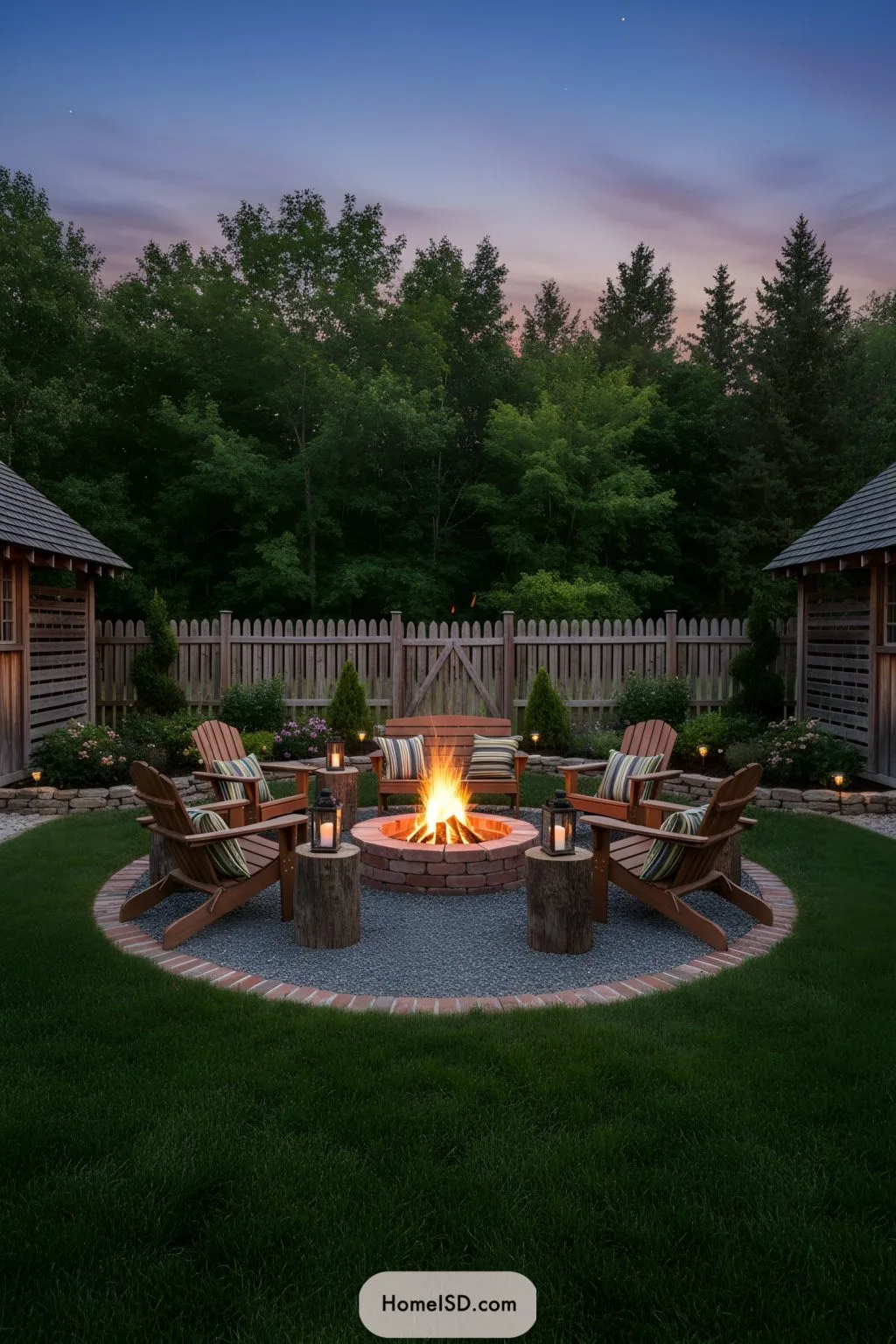
Image source: Bing (Web (fair-use with source credit))
Frequently Asked Questions
Can I put a fire pit 3 feet from a wood fence?
No, that is too close. A wood fence is combustible. The heat and embers from a wood fire pit can ignite it.
Even a gas fire pit at 3 feet is risky. Stick to at least 10 feet for wood-burning and 5 feet for gas.
Does a fire pit need to be a certain distance from a vinyl fence?
Yes, vinyl fences warp and melt at around 160°F. A fire pit close to vinyl can cause permanent damage. Keep a wood-burning pit at least 15 feet away.
A gas pit needs at least 5 feet. Check the manufacturer's manual for exact numbers.
What if my neighbor has a fence right on the property line?
If the fence is on the property line, you need to follow the same rules. The distance is measured from the fence, not from the property line. You may need to place your fire pit further back to meet the clearance.
Talk to your neighbor before you start.
Do I need a permit for a portable fire pit?
In many cities, portable fire pits under a certain size do not require a permit. But some cities require a permit for any open flame. Check with your local fire department.
They can tell you the rules for your specific address.
What is the safest distance for a fire pit from any fence?
For a wood-burning fire pit, 15 feet is the safest minimum. For a gas fire pit, 10 feet is a safe bet. For a propane fire table, 5 feet is comfortable.
These distances account for heat, embers, and wind. They also give you peace of mind.
Can I use a heat shield to reduce the required distance?
Some heat shields are approved by local codes. But most codes require the full clearance regardless. A heat shield can reduce heat transfer, but it does not stop embers.
Check with your fire marshal before relying on a shield.