
How Much Clearance Does a Fire Pit Need
You just bought a fire pit, and you're itching to light it up. But before you strike that match, there's one question you absolutely need to answer: how much clearance does a fire pit need? Get it wrong, and you're not just risking a melted lawn chair.
You're looking at a potential house fire, a fine from the local fire marshal, or a denied insurance claim.
The National Fire Protection Association (NFPA) provides baseline guidelines, but your local codes may be stricter. As of 2026, the standard recommendation for a wood-burning fire pit is at least 10 feet from any structure. That's just the starting point.
Let's dig into what you actually need to know to keep your backyard safe.
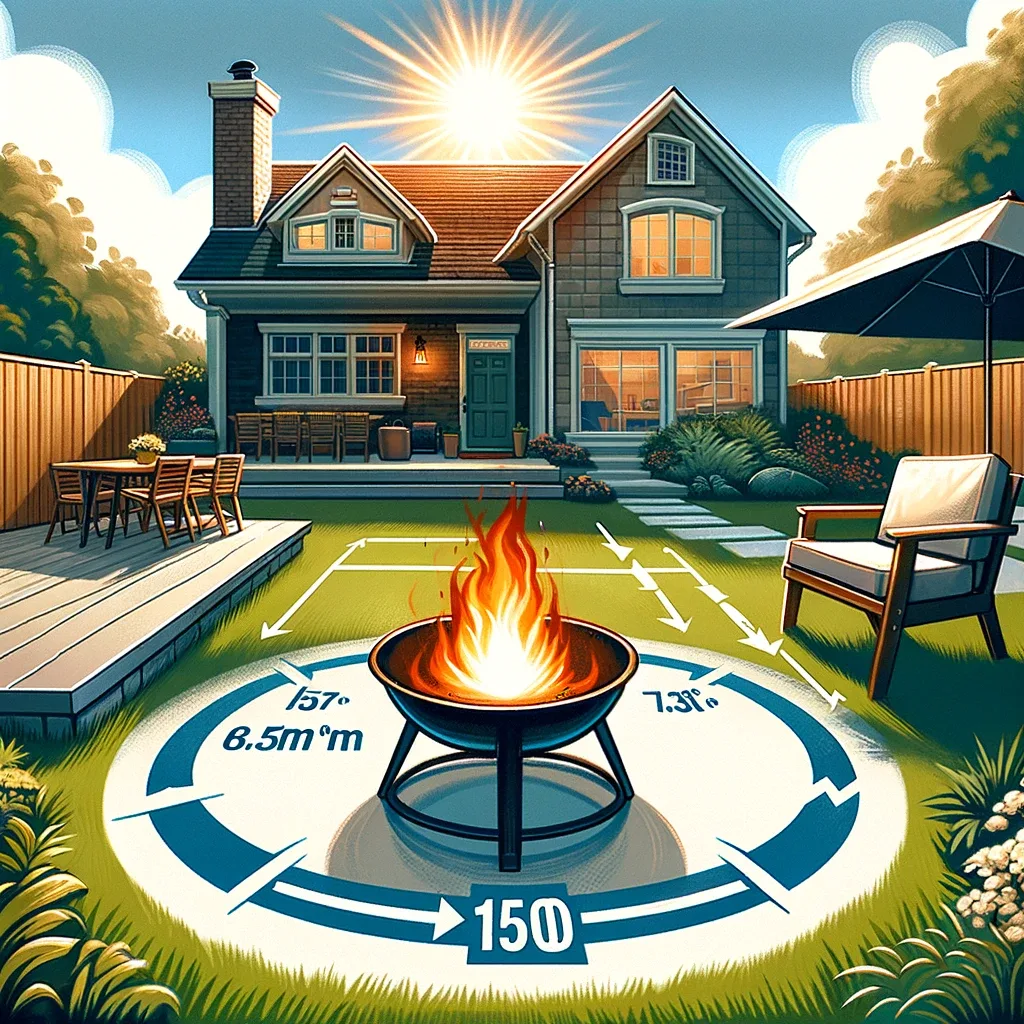
Image source: Bing (Web (fair-use with source credit))
Quick Answer
A fire pit needs at least 10 feet of lateral clearance from structures. Overhead clearance should be 15 to 20 feet. Wood-burning models need a 20-foot ember zone.
Gas fire pits typically need less space, around 3 to 10 feet depending on BTU output. Always check your local fire codes and manufacturer instructions. These numbers are minimums, not suggestions.
Why Clearance Isn't Just a Suggestion
Clearance is about physics, not bureaucracy. A fire pit radiates heat in every direction. That heat can warp vinyl siding, crack glass tables, and ignite dry leaves from a surprising distance.
Wood-burning fire pits also launch embers. Even a calm evening can send a single spark drifting toward your fence or house. A gust of wind turns that into a five-alarm problem.
Aggregate reviews show that homeowners who thought 6 feet was plenty often learned the hard way.
The NFPA sets these distances based on real fire data. Their guidelines are built from incidents where proper clearance was the only thing that stopped a small fire from becoming a structure fire. Per the NFPA 1 Fire Code, outdoor fire pits must maintain a minimum separation from combustible materials.
You can review the full code details on the NFPA website.
Beyond the flame, there's the radiant heat zone. That's the area where the air temperature is high enough to ignite materials. For a typical 36-inch wood-burning fire pit, that zone extends 8 to 10 feet from the fire ring.
Anything inside that zone is at risk.
So when you see a clearance number, treat it as a boundary. The fire stays on one side. Your house, your fence, your neighbor's shed, and your kid's play set stay on the other.
The Real Numbers: Lateral, Overhead, and Ember Zone
Let's get specific. Clearance breaks down into three categories. Each one has its own minimum distance.
Mix them up and you create a blind spot.
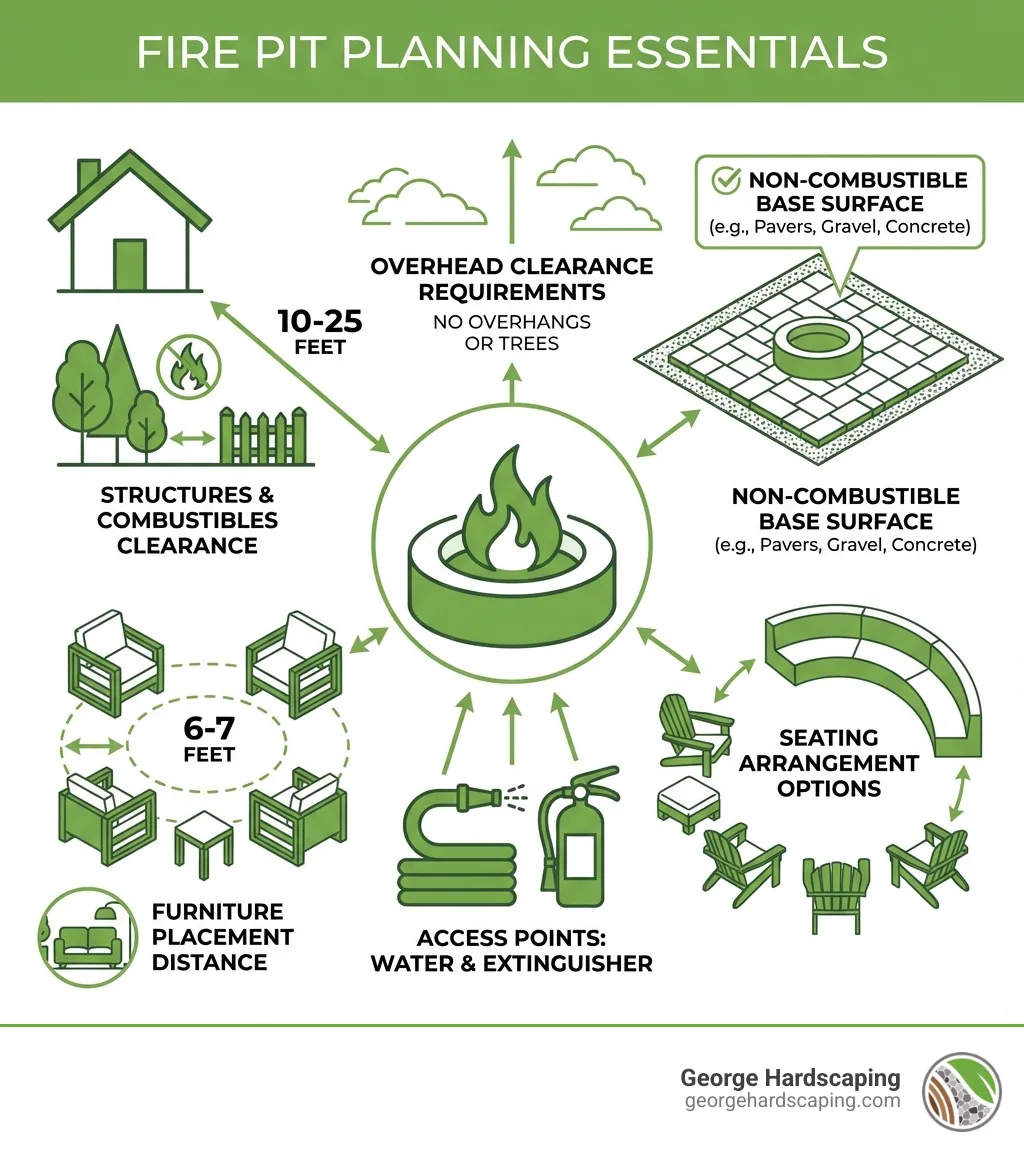
Image source: Bing (Web (fair-use with source credit))
Lateral clearance is the horizontal distance from the edge of the fire pit to any structure, fence, or combustible material. For a wood-burning fire pit, the standard is 10 feet minimum. For a gas fire pit, many manufacturers allow 3 to 5 feet.
That depends on the BTU output. Higher BTUs push more heat, so the clearance increases.
Overhead clearance is the vertical space above the fire pit. This includes roof overhangs, pergolas, tree branches, string lights, umbrellas, and balcony bottoms. The minimum is 15 to 20 feet.
Even a covered patio with a 10-foot ceiling is too low. Heat rises and collects, which can ignite the structure above.
Ember zone is the area where sparks and embers can land while still hot enough to ignite something. For wood-burning fire pits, this zone extends 20 to 25 feet from the fire pit. Dry grass, mulch, leaves, and wooden furniture need to stay outside that radius.
Here's a quick reference table for the standard distances:
| Clearance Type | Wood-Burning Fire Pit | Gas Fire Pit |
|---|---|---|
| Lateral (from structures) | 10 feet minimum | 3–10 feet (per manufacturer) |
| Overhead (roof, branches) | 15–20 feet minimum | 15–20 feet minimum |
| Ember zone | 20–25 feet | Not applicable (no embers) |
| Combustible surface (deck, grass) | 10–15 feet with fire-resistant mat | 5 feet with non-combustible base |
These numbers are the floor, not the ceiling. If you're in a wildfire-prone area, your local code may require 20 feet or more. Always default to the stricter rule.
What Makes Your Situation Different?
One size doesn't fit here. Your specific situation changes the clearance requirements. Let's walk through the variables.
If you have a gas fire pit, your clearance is usually smaller. Gas doesn't produce embers, so the ember zone is irrelevant. But the radiant heat can still be intense.
A 60,000 BTU gas fire pit puts out significant heat. You need to follow the manufacturer's specified clearance, typically 3 to 5 feet from structures. If you're after a reliable unit, the options in our roundup of top-rated models for 2026 are a good starting point.
If you use a wood-burning fire pit, you need the full 10 feet lateral and the 20-foot ember zone. Wood sparks. It pops.
It sends embers flying. No exceptions. This is non-negotiable.
If your fire pit sits on a wooden deck, you need a fire-resistant mat underneath. The mat must extend at least 2 feet beyond the fire pit on all sides. Maintain the full 10-foot clearance from the house.
Some decks are closer to the house than that. If your deck is attached and you can't get 10 feet, you need a different spot. For deck-specific concerns, the models designed for deck use are built with lower heat output and wider bases.
If you're on a gravel or concrete patio, you're in a better position. Those surfaces are non-combustible. But you still need lateral clearance to structures.
The surface doesn't change the heat threat to your house. For patio-specific setups, check out the best picks for concrete patios and gravel patios.
If you're in a rental property, check your lease and your local fire code. Many apartments and rented homes ban fire pits entirely. Some allow propane models with a specific distance from the building.
Don't assume it's okay.
If you're in a wildfire-prone area, your local fire department may require 20 feet of clearance from any structure. Some zones ban wood-burning fire pits entirely during dry season. Know your burn ban status before you light.
If you're a DIY builder, you're on the hook for all of this. No manufacturer instructions to follow. You need to research your local building code and get a permit if required.
A permanent fire pit installation often needs an inspection.
The Safe Setup Checklist
Now that you know the numbers, here's how to set up safely. Follow this checklist every time you place a new fire pit or move an existing one.

Image source: Bing (Web (fair-use with source credit))
Step 1: Measure from the edge, not the center. Your clearance is measured from the outer edge of the fire pit, not the middle. A 36-inch fire pit adds 18 inches to every measurement from center. Use the edge.
Step 2: Survey the overhead space. Check for roof overhangs, tree branches, string lights, umbrellas, and any other overhead obstruction. Clearance is 15 to 20 feet minimum. If you can't measure it, don't use that spot.
Step 3: Clear the ground within the ember zone. Remove dry leaves, grass, mulch, pine needles, and any combustible debris. The ember zone for wood-burning fire pits is 20 feet. That's a big radius.
Rake it clean.
Step 4: Place a non-combustible base. Use a fire-resistant mat on wood decks, gravel on bare soil, or concrete pavers. The base should extend at least 2 feet beyond the fire pit on all sides.
Step 5: Check the wind direction. Position the fire pit so the prevailing wind carries embers away from your house, fence, and neighbor's property. Light a test fire with a small piece of paper to see where the smoke goes.
Step 6: Keep a fire extinguisher or hose within reach. A garden hose with a spray nozzle is fine. A fire extinguisher rated for Class A and B fires is better. Don't rely on the kitchen faucet.
Step 7: Check your local fire code. This is the step most people skip. Call your local fire department or look up your city's municipal code. Some areas require a permit.
Some require a minimum distance from property lines. Some ban fire pits during certain months.
Step 8: Read the manufacturer's manual. If you bought a fire pit, the manual includes the specific clearance distances for that model. Follow them. They are tested and certified.
If you're looking for a budget-friendly option, our picks for the best value fire pits offer solid safety features at a reasonable price.
Common Mistakes That Get People in Trouble
We've seen the same errors show up in homeowner forums and safety reports. Avoid these.
Mistake 1: Assuming 10 feet is enough for everything. The 10-foot rule is for lateral clearance to a structure. It does not cover the ember zone, overhead clearance, or distance from property lines. You need to check all three.
Mistake 2: Placing a fire pit on dry grass. Grass is a combustible surface. A single ember can start a fire that spreads under the fire pit. Even a fire-resistant mat isn't foolproof on dry grass.
Use gravel, concrete, or stone instead.
Mistake 3: Ignoring the roof overhang. A covered patio with a 10-foot ceiling is too low. Heat rises and can ignite the roof deck. You need 15 to 20 feet of overhead clearance.
If your patio cover is lower, put the fire pit in the open.
Mistake 4: Not checking the local burn ban. Many areas have seasonal bans on wood-burning fires. If you light up during a ban, you can face a fine of hundreds or thousands of dollars. Check your county's website before lighting.
Mistake 5: Putting the fire pit too close to the property line. Even if you're 10 feet from your house, you might be 3 feet from the fence. Your neighbor's fence is a combustible structure. Most codes require 5 to 10 feet clearance from property lines.
Start a fire that damages a neighbor's home and you're liable.
Mistake 6: Using a fire pit on a wooden deck without a mat. A wooden deck is combustible. The fire pit's heat can char the deck boards. Embers can fall between the cracks.
A fire-resistant mat is mandatory. Even then, keep the fire pit at least 10 feet from the house. For a reliable option that works well on decks, take a look at our top fire pit picks for decks.
Clearance FAQs: Your Top Questions Answered
Can I put a fire pit on a wooden deck?
Yes, but with strict conditions. You need a fire-resistant mat that extends at least 2 feet beyond the fire pit on all sides. Maintain 10 feet of lateral clearance from the house.
Gas models are safer on decks because they produce no embers. Always check the manufacturer's manual for deck-specific requirements.
How close can a fire pit be to a fence?
Most local codes require 5 to 10 feet of clearance from property lines and fences. Wood fences are combustible. Even a gas fire pit radiates enough heat to warp or discolor wooden fence boards.
Measure from the edge of the fire pit, not the center.
What is the minimum distance from a house for a gas fire pit?
Gas fire pits typically need 3 to 10 feet from the house, depending on the BTU output. Higher BTU models push more heat and require more space. Always follow the manufacturer's specified clearance.
Some local codes require 10 feet regardless of the fuel type.
Do I need a permit for a permanent fire pit?
Many municipalities require a permit for permanent installations. This includes in-ground fire pits and built-in stone or brick units. Portable fire pits usually don't need a permit.
Call your local building department or fire marshal to confirm. Skipping the permit can lead to fines and insurance issues.
How far should a fire pit be from tree branches?
Overhead clearance should be a minimum of 15 to 20 feet. Heat rises and can dry out or ignite low-hanging branches. Dry leaves and pine needles are especially flammable.
Trim any branches that hang within that zone before lighting your first fire.
What happens if I ignore the clearance rules?
You risk a structure fire, property damage, injury, and denied insurance claims. If a fire spreads to your house or a neighbor's property, your homeowner's insurance may not cover the damage. You could also face fines from the local fire department.
The rules exist for real reasons.