Can You Put a Fire Pit on Concrete
So you have a concrete patio, a new fire pit, and one question that's probably been nagging at you: can you put a fire pit on concrete? It's a fair question, and the answer isn't a simple yes or no. Get it right and you've got a safe, stable setup for years of evenings outdoors.
Get it wrong and you could crack your slab, void your warranty, or even create a fire hazard.
Concrete starts to suffer structural damage when surface temperatures exceed about 500°F (260°C). Many wood-burning fire pits push surface temps well past that threshold, especially during a full burn. That's the core of the problem.
It's not just about whether the pit sits level. It's about heat transfer, material science, and knowing the limits of what's under your feet.
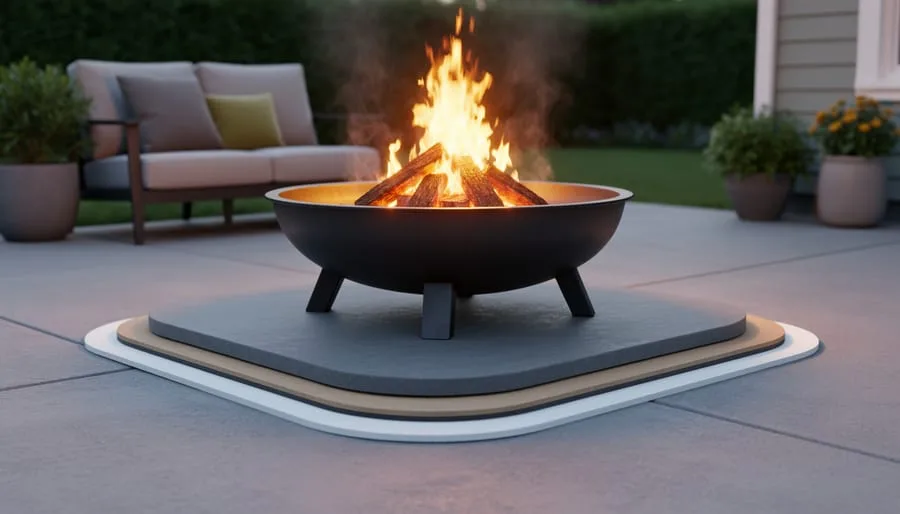
Image source: Bing (Web (fair-use with source credit))
Why Getting This Right Matters
Let's start with the direct answer. Yes, you can place a fire pit on concrete if you take the right precautions. But the risks are real.
Concrete is porous and contains moisture trapped inside its structure. When intense heat from a fire pit drives that moisture outward faster than it can escape, the surface layer can pop off in a process called spalling. You end up with flaking, pitting, and permanent damage.
The stakes go beyond cosmetics. A badly placed fire pit can transmit enough heat through thin concrete to affect the subgrade below. That's especially true if the slab was poured directly on organic soil that can smolder.
In attached garages or covered patios, the radiant heat can reach combustible framing. Fire departments respond to structure fires started by improperly placed outdoor fire pits every year.
What's commonly missed is that the type of fire pit matters just as much as the concrete. A propane model with a heat shield running at 30,000 BTUs poses far less risk than a 100,000 BTU wood burner with no base insulation.
What Actually Happens to Concrete Under a Fire Pit
To understand the risk, you need to see what happens at the microscopic level. Concrete is a mixture of cement, aggregate, and water. When it cures, a portion of that water remains chemically bound inside.
Heat from a fire pit drives that residual moisture toward the surface. If the heat ramps up too quickly, the water turns to steam faster than it can escape through the pores. The pressure builds beneath the surface and literally blows the top layer off.
This is spalling. It looks like small circular craters or peeling flakes across the area under the fire pit. It's not just ugly.
Once the surface seal is broken, water can penetrate deeper, freeze in winter, and cause further cracking. Spalling typically starts after repeated exposure, not on the first use.
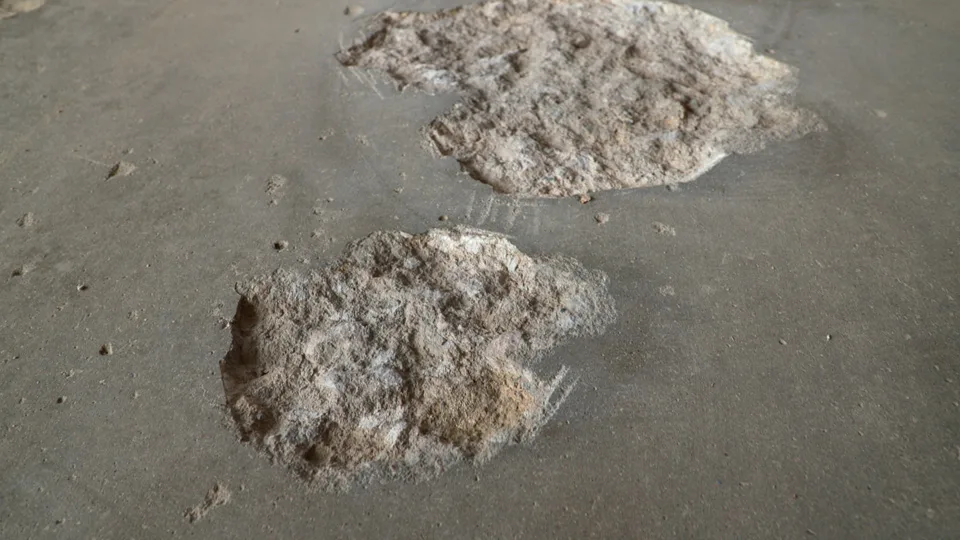
Image source: Bing (Web (fair-use with source credit))
A related issue is thermal shock. If the concrete was poured in cold weather and is still damp, setting a hot fire pit directly on it can cause a rapid temperature differential between the top and bottom of the slab. That unequal expansion creates stress cracks, often radiating outward from the fire pit location.
Per research from the Portland Cement Association, concrete exposed to sustained temperatures above 500°F (260°C) begins to degrade. Gas fire pits typically run between 350°F and 600°F at the base plate. Wood fires can exceed 800°F at the bottom of the burn chamber.
A heat barrier isn't optional. It's the difference between a usable patio and a repair bill.
The Real Risks You Need to Know
Let's talk about the mistakes we see most often. They fall into three categories: heat damage, fire spread, and code violations.
Heat damage risks:
- Concrete spalling and cracking from direct contact
- Discoloration and staining from smoke and embers
- Weakening of the slab over time, especially if hairline cracks already exist
Fire spread risks:
- Embers jumping onto nearby mulch, dry grass, or wood furniture
- Heat transfer through thin concrete igniting combustible material underneath (a real concern for slabs poured over wood decking or soil with organic matter)
- Wind blowing fire curtains toward overhanging branches or eaves
Code and compliance risks:
- Most local fire codes require a minimum 10-ft clearance from structures (houses, fences, sheds)
- Many HOAs prohibit wood-burning fire pits on concrete patios or restrict their use entirely
- Using a fire pit on a concrete balcony in a multi-unit building often violates fire code and lease agreements
One of the most common mistakes is thinking concrete is fireproof. It's fire-resistive, but the heat differential and moisture content create vulnerabilities. Another common error is placing a fire pit directly on fresh concrete that hasn't fully cured.
New concrete takes 28 days to reach full strength. Using it sooner with a high-heat source can lock in moisture that later causes spalling.
And then there's the clearance mistake. People measure from the fire pit edge to the house, but forget the overhang of a second-story balcony or the roof eave. The fire code measures from the top of the fire pit opening, not the base.
How to Safely Put a Fire Pit on Concrete
Here's the step-by-step process that minimizes risk and keeps your concrete (and your home) safe.
Step 1: Choose the Right Fire Pit
Not all fire pits are equal when it comes to concrete safety. Propane and natural gas models produce less intense heat at the base because the burn chamber sits higher and airflow is controlled. Wood-burning fire pits concentrate heat directly below the grate.
If you're set on wood, look for models with double-walled construction or a built-in heat shield. There are plenty of models tested for concrete patio use, like the ones we've covered in our roundup of models suited for concrete patios.
Step2: Install a Thermal Barrier
This is non-negotiable. A fire pit pad or heat shield sits between the fire pit and the concrete. The best options are:
- Steel or aluminum heat shields, 1/4 to 1/2 inch thick, sold as fire pit bases or add-on accessories
- Ceramic fiber pads, rated for 2000°F+, flexible and non-conductive
- Fire-resistant concrete pavers, must be kiln-fired and rated for high heat, not standard patio pavers
- Lava rock or fire glass, spread in a shallow tray under the fire pit, they absorb and disperse heat
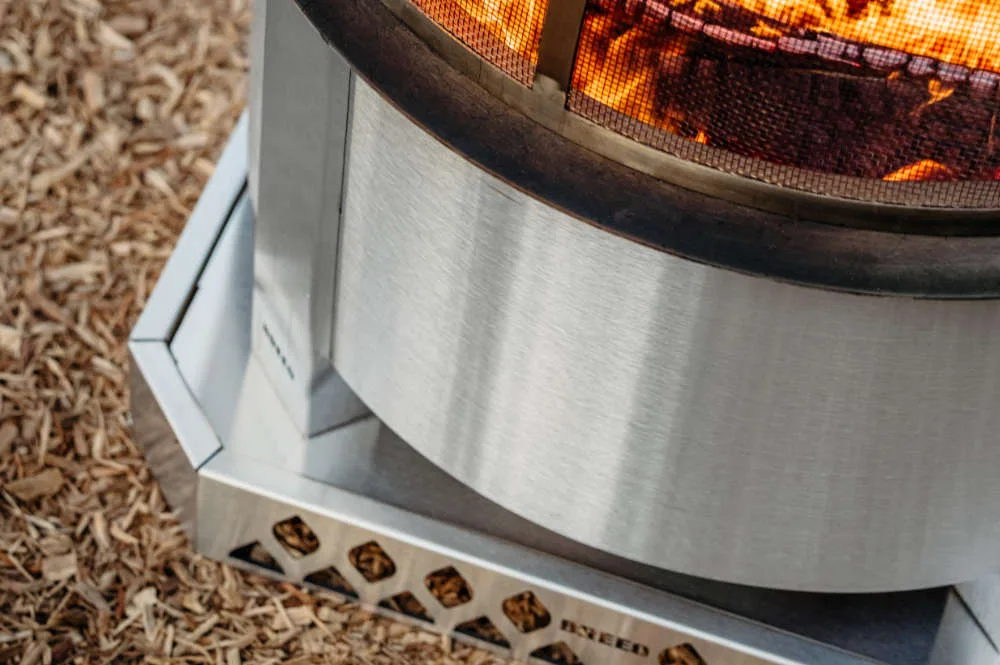
Image source: Bing (Web (fair-use with source credit))
Step3: Establish Proper Clearances
Measure from the outer edge of the fire pit, not the pad. Minimums:
- 10 fett from any structure (house, garage, fence)
- 3 feet from combustble surfaces (decking, shrubbery, wood furniture)
- 20 feet from prpane tanks (for gas fire pits)
- Check your local fire department's guidelines, may cities have stricter rules
Step4: Prepare the Concrete Surface
Sweep the area clean. Remove any debris, leaves, or flammable maerial. If the concrete is newly poured, wait at last 28 days.
Check for existing cracks or damage, any compromised area is more vulnerablee to heat stress. If you're placing a heavy fire pit, ensure the slab is at least 4 inches thick. Thinner slabs may crack under weight plus heat.
Step5: Use an Ember Mat
Even with a heat shield, embers can escape. A fireproof ember mat (typically fiberglass or silicone-coated fabric) placed under the pit provides an extra layer of protection. It also catches ash, making cleanup easier.
When to Call a Pro: Codes, Structural Issues, and Liability
There are situations where DIY isn't enough. If any of these apply, bring in a professional:
- You're installing a built-in fire pit on concrete. Built-ins require a proper foundation, een a reinforced concrete pad poured separately from the patio slab. That's not a weekend project.
- Our concrete slab is less than 4 inches thick or shows signs of structural fatigue. A structural engineer or contractor needs to assess whether it can handle the weight and heat.
- Your local fire code requires a permit. Many municipalities now require pemits for any outdoor fire pit within 15 feet of a structure. A licensed contractor will know the requirements.
- You live in a wildfire-prone area. Counties with high fire risk often have strict regulations on fire pit type, location, and fuel. Ignoring them can void yor homeowner's insurance and lead to fines.
- **The fire pit will sit on a concrete balcony above ground level. This introduces additional risks of heat transfer to the unit below or a structure that wasn't designed for fire. Always confirm with your property manager and local fire minister.
Liability is a real concern. If a fire starting from your fire pit damages a neighbor's propertyg, your homeowner's insurance may not cover it if the pit was placed in violation of local codes. Some policies exclude coverage for fire pits on combustible surfaces or within certain distances.
We recommend checking with your insurance agent first.
For gas fire pits, the National Fire Protection Association (NFPA) provides guidelines on installation and clearances. Those are worth reviewing if you're considering a natural gas or propane model.
Frequently Asked Questions
Can I put a fire pit directly on concrete without a pad?
No. Direct contact can cause spalling, cracking, and permanent damage. You need a heat barrier like a steel shield, ceramic pad, or fire-resistant pavers.
Even gas fire pits benefit from some form of thermal protection.
How thick does concrete need to be for a fire pit?
At least 4 inches for a portable fire pit. For heavier built-in units or frequent heavy use, 6 inches is safer. If the slab is already poured and thin, place the pit on a reinforced pad or use a larger heat-spreading base.
Will a propane fire pit damage concrete?
Propane fire pits generate lower base temperatures than wood-burning models, but they still produce heat. Over time, repeated use can cause discoloration and mild spalling. A heat shield or paver is still a good idea.
How far should a fire pit be from a house on concrete?
Most local codes require at least 10 feet of clearance from any structure. Measure from the outer edge of the fire pit, not the base or pad. Check your local ordinances, some areas require 15 feet or more.
Can I use a fire pit on a concrete balcony?
It depends on local fire codes and your building's rules. Many multi-unit buildings prohibit open flames on balconies. Even where allowed, you need a non-combustible surface, a heat shield, and careful clearance from overhangs.
Check with your property manager first.
What is the best fire pit type for concrete patios?
Propane or natural gas fire pits are safest because they produce less intense heat at the base. If you prefer wood, choose a double-walled model with a built-in heat shield. Look for units specifically rated for use on concrete or non-combustible surfaces.
The Bottom Line on Fire Pits and Concrete
You can absolutely use a fire pit on concrete. The key is preparation. Use a thermal barrier, keep proper clearances, and choose the right type of fire pit for your situation.
Don't assume concrete is indestructible. Treat it with the same respect you would a wood deck, and you'll enjoy many safe, damage-free burns.
Remember that local codes and insurance policies exist for a reason. A few minutes of planning can save you thousands in repairs or liability. When in doubt, call a pro.
Your concrete (and your safety) will thank you.