Best Fish Finder: Top Picks For Smart Anglers
The best fish finder combines clear sonar, accurate GPS, easy controls, and dependable performance on every trip.
You may know the feeling: you reach a quiet lake, mark a promising spot, and still cannot tell whether fish are below the boat. A good fish finder removes much of that guesswork. It shows depth, bottom shape, cover, and fish targets on a screen you can read at a glance. I reviewed these popular Humminbird, Garmin, and Lowrance models with real use in mind. This guide compares their sonar, mapping, display size, installation, strengths, limits, and value so you can choose the best fish finder for your boat, kayak, or fishing style.

Humminbird Helix 5 G3 GPS…
Dual Spectrum CHIRP Sonar: Delivers views of fish arches and fish-holding structure with two ways to search — Wide Mode for maximum coverage and Narrow Mode for detailed scanning; Precise…

Garmin Striker Vivid 4cv Fishfinder…
Easy-to-use 4-inch color fishfinder with new vivid scanning sonar color palettes to easily distinguish fish and structure; tilt/swivel bailmount bracket included Includes a GT20 transducer for built-in Garmin CHIRP traditional…

Garmin 010-01550-00 Striker 4 with…
Clear Vu scanning Sonar shows you more of what is in the water around your boat; This high frequency sonar gives near photographic images with detailed representations of objects, structure…
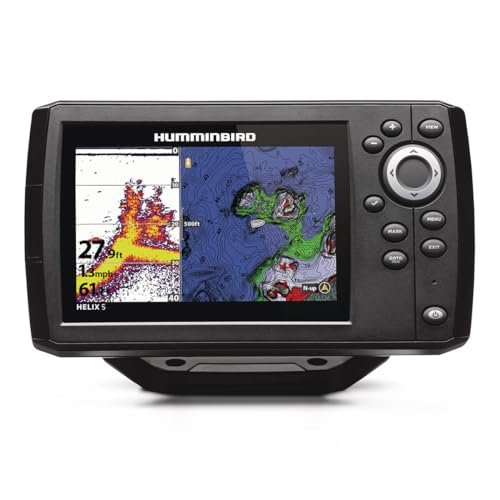
Humminbird Helix 5 GPS Fish Finder

The Humminbird HELIX 5 G3 gives anglers a useful mix of sonar detail, GPS, and a practical five-inch color display. Its Dual Spectrum CHIRP sonar helps separate fish targets from the bottom and nearby cover. The screen is large enough for a clear view without taking too much room on a small console. I especially like its simple layout because it lets me focus on fishing instead of digging through menus.
This model suits lake anglers who want more than a basic depth finder. The built-in GPS can help you mark productive spots, docks, brush piles, and launch areas for later trips. The transducer supports common mounting setups, but you should measure your boat and check the included hardware before installation. It is not a live-sonar unit, yet it offers strong traditional sonar value for the money.
Pros:
- Dual Spectrum CHIRP improves target separation
- Built-in GPS helps mark fishing spots
- Five-inch screen is useful on compact consoles
- Color display remains easy to read in normal daylight
- Menu layout is friendly for new users
- Good balance of sonar features and price
Cons:
- Screen may feel small for split-screen views
- Does not provide live forward-facing sonar
- Mapping features depend on the included chart coverage and setup
My Recommendation
I recommend the HELIX 5 G3 for anglers who want GPS and stronger sonar without moving into a premium price range. It is a smart fit for aluminum boats, bass boats, and serious weekend anglers who fish known lakes. The GPS gives it a clear advantage over entry-level units. For many users, this is one of the best fish finder choices when value, simple control, and dependable traditional sonar matter most.
Garmin Striker Vivid 4cv Fishfinder

The Garmin Striker Vivid 4cv is a compact fish finder built for anglers who want clear sonar in a small package. Its four-inch color screen uses vivid color palettes to make the bottom and fish arches easier to view. The unit includes a transducer and supports Garmin CHIRP traditional sonar plus ClearVü scanning sonar. That combination gives you a better picture of both fish targets and structure than a plain depth display.
The compact size makes this Garmin a strong choice for kayaks, jon boats, and crowded dashboards. Its controls are easy to learn, and the GPS helps you mark waypoints as you explore. The screen is not ideal for viewing several panels at once, so I would choose a larger model for complex navigation. Still, it delivers a very good day-to-day experience for anglers who value simple setup and low weight.
Pros:
- Compact design fits small boats and kayaks
- ClearVü scanning adds structure detail
- Vivid color palettes improve screen contrast
- Built-in GPS supports waypoint marking
- Simple controls reduce the learning curve
- Lightweight design places little strain on a small mount
Cons:
- Four-inch screen limits split-screen comfort
- Small text can be harder to read from a standing position
- Advanced mapping and networking features are limited
My Recommendation
I would choose the Striker Vivid 4cv for a kayak angler, bank-to-boat fisherman, or first-time sonar owner. It gives you useful scanning sonar and GPS without a bulky display. This model is also a good choice when every inch of console space matters. Among compact units, it can be the best fish finder for practical depth readings, easy controls, and quick installation.
Garmin Striker 4 GPS Fishfinder

The Garmin Striker 4 remains a popular entry-level GPS fish finder because it focuses on the features most anglers use. Its CHIRP sonar sends a wider range of frequencies than basic single-frequency sonar, which can improve target definition. The 3.5-inch screen is small, but the clear color view shows depth, bottom contour, and fish symbols in a direct way. I find this type of focused design helpful for someone who does not need a large chartplotter.
This unit works well on small fishing boats, canoes, and kayaks with a stable mounting point. The GPS lets you mark waypoints and return to productive water with less guesswork. It does not offer the larger display, scanning views, or advanced mapping of more expensive models. However, its low-cost design makes it an appealing first step into electronic fish finding.
Pros:
- Affordable entry point for GPS sonar
- CHIRP sonar provides useful target detail
- Small size works well on compact craft
- Easy keypad controls suit beginners
- GPS waypoint marking supports repeatable trips
- Low power needs suit basic boat electrical systems
Cons:
- 3.5-inch screen is small for older eyes
- No advanced side-imaging or live-sonar view
- Limited room for maps and sonar at the same time
My Recommendation
The Garmin Striker 4 is best for beginners, casual anglers, and anyone replacing a simple depth finder. It gives you the core tools needed to learn how depth, bottom lines, and fish marks appear on sonar. I also like it for a second boat or a small portable setup. If your budget is tight, this may be the best fish finder to buy before spending more on advanced imaging.
Garmin Striker Vivid 7cv Fishfinder

The Garmin Striker Vivid 7cv gives you a much larger seven-inch screen while keeping the controls simple. A larger display makes depth numbers, fish arches, and ClearVü scanning images easier to read while you move across the water. The included GT20-TM transducer supports traditional CHIRP and ClearVü sonar for a useful view beneath the boat. Bright color palettes also help structure stand out against the bottom.
This model feels more comfortable than a compact unit when you need to watch sonar for long periods. The screen leaves more room for split views, although the exact layout depends on the selected functions. Garmin’s waypoint tools help you save spots and return to them later. It lacks side imaging and live sonar, but it gives recreational anglers a strong upgrade in screen space and sonar clarity.
Pros:
- Seven-inch screen is easy to view at a glance
- ClearVü shows structure with added detail
- Vivid palettes help separate bottom and cover
- GPS supports waypoint planning and return trips
- Simple interface avoids a steep learning curve
- Included transducer makes the package convenient
Cons:
- Larger display needs more mounting space
- Does not include side imaging
- Power and mounting demands exceed those of compact units
My Recommendation
I recommend the Striker Vivid 7cv for boat anglers who want a large, readable display without paying for a high-end networked system. It is especially useful for anglers who stand while fishing or share the screen with a partner. The GPS and ClearVü sonar cover the needs of many freshwater trips. For screen comfort and simple operation, this is one of the best fish finder options in the midrange class.
Garmin Striker Vivid 7sv Fishfinder

The Garmin Striker Vivid 7sv builds on the 7cv design with additional scanning sonar capability. Its seven-inch color display gives you enough space to compare traditional sonar with imaging views. The side- and down-scanning functions can help reveal weed lines, timber, ledges, and other cover around the boat. This wider view is valuable when fish are not directly under the transducer.
I see this unit as a practical step for anglers who are ready to study structure more closely. It still uses an approachable interface, so you do not need expert electronics skills to begin. As with any scanning sonar, a steady boat and suitable speed help create a cleaner picture. The unit needs more console space than a four-inch model, but the added view can save time when searching for a productive area.
Pros:
- Seven-inch display supports comfortable sonar viewing
- Scanning sonar reveals cover near the boat
- Traditional CHIRP sonar adds fish target detail
- Vivid color choices improve image contrast
- GPS helps mark and revisit structure
- Useful upgrade for anglers learning imaging sonar
Cons:
- Requires more installation space than compact units
- Scanning quality depends on boat speed and mounting
- May offer more features than a casual angler needs
My Recommendation
The Striker Vivid 7sv is best for freshwater anglers who want to locate structure instead of relying only on fish icons. Bass anglers, crappie anglers, and lake explorers can benefit from the wider scanning view. I would choose it over the 7cv when imaging matters more than the simplest possible setup. It offers strong value for anyone seeking the best fish finder with a large screen and useful structure detail.
Humminbird HELIX 7 G4 GPS Fish Finder

The Humminbird HELIX 7 G4 brings a seven-inch display and MEGA Side Imaging to anglers who want a wider view of the water. Side imaging can reveal submerged trees, rock piles, channels, and other targets away from the boat path. The screen gives you room to view sonar and navigation information with less crowding. Its GPS tools also help you build a record of productive areas over time.
This is a more advanced traditional sonar package than the smaller HELIX 5. It rewards anglers who spend time learning how imaging works and how boat movement affects the picture. The unit is a better fit for a full-size boat console than a cramped kayak dashboard. If you fish large lakes and use structure as your main clue, the extra imaging range can feel like turning on a flashlight beneath the surface.
Pros:
- MEGA Side Imaging shows cover beside the boat
- Seven-inch display improves map and sonar readability
- GPS supports accurate waypoint storage
- Useful for locating channels, rock, and timber
- Strong choice for bass and structure-focused fishing
- More screen room for multiple data views
Cons:
- Higher price than basic fish finders
- Installation takes more planning and console space
- Imaging requires practice to interpret well
My Recommendation
I recommend the HELIX 7 G4 to anglers who fish often and want to search beyond the narrow area directly below the transducer. It is a strong match for bass boats, serious lake anglers, and users who value Humminbird’s imaging system. Beginners can use it, but they should expect a learning period. For detailed side imaging and GPS in one package, it may be the best fish finder for structure hunters.
Lowrance Eagle Eye 9 Live Sonar

The Lowrance Eagle Eye 9 stands apart with its live sonar approach and large nine-inch IPS screen. Live sonar can show fish and lure movement in near real time, giving anglers a more active way to read the water. The large display is easier to share and more comfortable when you need to study detail. This package also includes a transom-mount transducer and preloaded C-MAP inland charts for supported inland use.
This Lowrance is designed for anglers who want advanced tools rather than a basic depth reading. The chartplotter function helps with route planning, while the live view can support techniques such as casting to fish you can see on screen. It costs more and needs careful installation, power planning, and practice. I would not buy it simply for occasional depth checks, but serious anglers may find its live feedback changes how they fish.
Pros:
- Live sonar shows fish and lure activity in real time
- Nine-inch IPS display provides excellent viewing space
- Preloaded inland charts support navigation on covered waters
- Chartplotter and fish finder functions work in one unit
- Useful for active casting and target tracking
- Large screen helps two anglers view the display
Cons:
- Higher cost than traditional sonar units
- Requires more setup and power planning
- Advanced features take time to learn
- Chart coverage may not include every waterway
My Recommendation
The Eagle Eye 9 is best for serious anglers who want live sonar, a large screen, and chartplotter functions in one system. It makes the most sense for bass anglers, tournament users, and boat owners who fish often enough to use its advanced tools. Casual users may prefer a simpler Garmin or Humminbird model. For live target tracking, this is arguably the best fish finder in this group, provided your budget and boat setup can support it.
How I Compared These Fish Finders
I looked beyond screen size and brand names when comparing these models. A fish finder is only useful when it gives a clear picture, fits your boat, and stays simple enough to use under pressure. I focused on sonar type, GPS, display comfort, installation, portability, and the kind of fishing each unit supports.
I also separated traditional sonar from scanning and live sonar. Traditional CHIRP sonar is often enough for depth, bottom, and fish targets. Down imaging and side imaging add structure detail. Live sonar goes further by showing movement as it happens, but it also costs more and demands more skill.
Sonar Type Matters
CHIRP sonar sends a range of frequencies through the water. This can create cleaner target separation than a basic single-frequency signal. It helps you read fish near the bottom, although sonar marks still require practice and judgment.
Down-scanning sonar creates a more detailed view below the boat. Side imaging extends the search area to the left and right. Live sonar can show changing fish and lure positions, but its results depend on transducer position, water clarity, boat movement, and correct settings.
Screen Size and Readability
A 3.5- or four-inch display saves space and works well on kayaks. However, small screens can make split views and tiny map details harder to read. A seven-inch display offers a more comfortable view for most boats.
The nine-inch Lowrance screen is best when you want to share the view or study live sonar. Before buying, measure the mounting area. A large display can be excellent on a bass boat and awkward on a small canoe.
GPS and Mapping
GPS lets you save waypoints. You can mark a brush pile, drop-off, dock, or successful casting area. This turns a good fishing day into useful information for future trips.
Not every fish finder includes the same chart features. Some offer waypoint navigation without detailed maps. Others include chart data for selected inland waters. Always check current chart coverage for your normal lakes before treating a unit as a full navigation system.
Transducer Installation
The transducer is the part that sends and receives the sonar signal. A poor mount can create noise, weak readings, or an uneven image. Follow the installation guide and keep the transducer clear of turbulence when possible.
Transom mounts suit many small and mid-size boats. Kayak users may need a special arm or inside-hull setup. Check cable length, power connections, mounting angle, and clearance before drilling holes.
Best Fish Finder Buying Guide for 2026
The best fish finder for you depends on how and where you fish. Do not pay for live sonar if you only need depth and a way to mark spots. On the other hand, do not choose a tiny entry-level screen if you plan to study side imaging for hours.
Choose by Fishing Style
For casual lake trips, the Garmin Striker 4 covers the basics at a friendly price. For a kayak or jon boat, the Striker Vivid 4cv adds scanning sonar while keeping the footprint small. For a larger boat, the Striker Vivid 7cv offers a more comfortable display.
Structure-focused anglers should consider the Striker Vivid 7sv or Humminbird HELIX 7 G4. These units help you inspect more than the narrow path directly below the boat. Anglers who want to watch fish and lure movement should look at the Lowrance Eagle Eye 9.
Know What Fish Marks Mean
A fish finder does not identify every mark perfectly. A large arch may be a fish, but it can also come from cover, interference, or several fish close together. I treat the display as a map of clues, not a promise of a catch.
Learn to compare fish marks with depth, bottom hardness, water temperature, and structure. The best fish finder will not replace skill. It will help you apply skill with better information.
Think About Power
Most boat fish finders need a stable 12-volt power source. Loose terminals and weak batteries can cause shutdowns or screen noise. Use a suitable fuse and protect the cable from water, sharp edges, and moving parts.
Portable and kayak users should plan for battery weight and runtime. A small unit may be easier to power for a full day. Advanced live-sonar systems may require more careful battery planning.
Readability in Sunlight
Bright sunlight can wash out a weak display. Look for a screen with good brightness and use a shade when possible. Mount the unit where you can see it without twisting your body or blocking your view of the water.
Color palettes are not just decoration. A strong contrast between the bottom, fish, and cover helps you read the screen faster. Still, the best palette depends on depth, light, and personal preference.
Traditional Sonar or Live Sonar?
Traditional sonar offers excellent value. It is reliable for finding depth changes, bait, fish, and bottom structure. Many anglers never need more.
Live sonar is more interactive. It can help you aim casts and watch fish react. But it adds cost and complexity, and it works best for anglers who enjoy studying the screen while they fish.
Best Fish Finder Comparison Table
| Best for | Why |
|---|---|
| Beginners and small boats | Garmin Striker 4 offers simple CHIRP sonar, GPS, and compact installation. |
| Structure and side imaging | Humminbird HELIX 7 G4 gives you a larger display and MEGA Side Imaging. |
| Live sonar and advanced fishing | Lowrance Eagle Eye 9 adds live target viewing, charts, and a large IPS screen. |
Tips for Getting Better Results
Start with the factory settings. Change one setting at a time so you understand its effect. Sensitivity that is too high can fill the screen with clutter, while sensitivity that is too low can hide useful marks.
Keep the boat at a steady speed when scanning. Sudden turns can stretch or distort the image. Mark waypoints when you find a useful feature, and add a short note such as “deep edge” or “brush at 18 feet.”
Clean the transducer after each trip. Remove weeds, mud, and thick water growth. Inspect the cable and connector often, especially after trailering or moving a portable unit.
Use depth changes as a guide rather than chasing every fish icon. Fish often relate to a change in bottom shape, cover, current, or temperature. A fish finder works best when you combine its view with local knowledge and the right lure.
FAQs Of Best Fish Finder
What is the best fish finder for beginners?
The Garmin Striker 4 is a strong beginner choice. It has simple controls, CHIRP sonar, GPS waypoint marking, and a compact design. Choose the Striker Vivid 4cv if you also want ClearVü scanning sonar.
Is CHIRP sonar better than regular sonar?
CHIRP sonar uses a range of frequencies and can improve target separation. It often gives a cleaner view of fish near the bottom. Proper transducer placement and correct settings still matter.
Do I need GPS on a fish finder?
GPS is not required for basic depth readings, but it adds real value. You can mark productive spots, channels, ramps, and hazards. GPS is especially useful when you fish the same lakes more than once.
Is side imaging worth the extra cost?
Side imaging is worth considering if you search for cover and structure across a wide area. It can help you find targets outside the boat path. Casual anglers who only need depth may prefer a lower-cost traditional sonar unit.
Can I use a boat fish finder on a kayak?
Many compact fish finders work on kayaks with the right mount and battery. Check the transducer method, cable length, power needs, and waterproof design. A four-inch Garmin is usually easier to fit than a large chartplotter.
Final Verdict: Which Should You Buy?
For most anglers, the Humminbird HELIX 5 G3 is the best fish finder because it balances CHIRP sonar, GPS, screen size, and value. Choose the Garmin Striker 4 for a low-cost start, or the Lowrance Eagle Eye 9 for live sonar.
The right best fish finder should match your boat, fishing style, and skill level. Buy the features you will use, install the transducer with care, and let better information guide your next cast.