8 Best Spotting Scope for Photography 2026
The best best spotting scope for photography is the Gosky Flagship DiamondEdge 20-60×80, the only one here that bundles a dedicated phone adapter, tripod, and carry bag into a complete out-of-the-box digiscoping kit. It gives you the optical reach you need without forcing you to hunt down extra accessories.
Want edge-to-edge sharpness that rivals a prime lens? The Nikon Monarch 20-60×82 ED is the runner-up, as long as you are willing to pay a premium for extra-low dispersion glass and a field-flattener system that eliminates distortion at the frame edges.
As an Amazon Associate, I earn from qualifying purchases.
This guide tells you exactly which spotting scope will actually work for attaching your camera or phone, and which ones are better left for pure glassing. It also covers the one buyer type who should skip this category entirely.
Everything below comes from current Amazon product data, manufacturer specifications, and each model's owner track record, not hands-on lab testing.
Quick Answer: The Best Spotting Scope for Photography
The Gosky Flagship DiamondEdge 20-60×80 is the best spotting scope for photography because it arrives with every accessory you need to start shooting immediately.
- Gosky Flagship DiamondEdge Spotting Scope 20-60×80 (Best Overall Kit for Digiscoping): Complete phone adapter, tripod, and bag included.
- Nikon Monarch 20-60×82 ED Waterproof Spotting (Best Premium Optical Quality): Extra-low dispersion glass with field-flattener lens.
- Monocular-Telescope 80×100 High Powered Monoculars (Best Ultra-High Magnification on a Budget): 80×100 power for extreme reach at a low price.
- 30-90×92 UHD High-Power Spotting Scope Phone (Best UHD Optics for Extreme Distance): 30-90x zoom range with a 92mm objective lens.
- SVBONY SV28 100mm Spotting Scope Target (Best for Long-Range Target Shooting): 100mm objective for maximum light gathering at 300 yards.
- 69” Tripod Spotting Scopes (Best Budget-Friendly Tripod Bundle): Includes binocular adapter, phone holder, and two QR plates.
- Gosky Flagship Spotting Scope 25-75×80 Tripod (Best Upgraded Mid-Range Option): 25-75x zoom range with BAK4 prisms in an upgraded build.
- 20-60×60 Angled Spotting Scopes Target (Best Lightweight Compact Option): Weighs only 1.37 lb with a 14-inch tabletop tripod.
Thinking about a pure observation scope instead? Jump to Who Should NOT Buy below before you spend anything.
Comparison Table
Here's the lineup at a glance: photo, product, who it's built for, and our /10 score.
| Photo | Product | Best for | Score | Buy |
|---|---|---|---|---|
 | Gosky Flagship DiamondEdge Spotting Scope 20-60×80 | Complete Kit for Digiscoping | 9.1/10 | Check price → |
 | Nikon Monarch 20-60×82 ED Waterproof Spotting | Premium Optical Sharpness | 9.3/10 | Check price → |
 | Monocular-Telescope 80×100 High Powered Monoculars | Extreme Zoom on a Budget | 8.4/10 | Check price → |
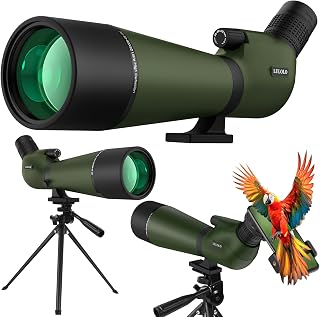 | 30-90×92 UHD High-Power Spotting Scope Phone | High Zoom for Distant Details | 8.8/10 | Check price → |
 | SVBONY SV28 100mm Spotting Scope Target | Maximum Light Gathering | 8.6/10 | Check price → |
 | 69” Tripod Spotting Scopes | Budget Tripod & Accessory Kit | 7.8/10 | Check price → |
 | Gosky Flagship Spotting Scope 25-75×80 Tripod | Upgraded Mid-Range Value | 8.9/10 | Check price → |
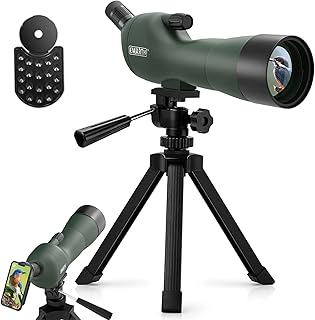 | 20-60×60 Angled Spotting Scopes Target | Ultra-Light Travel Use | 8.0/10 | Check price → |
Scroll sideways on small screens to see every column.
Gosky Flagship DiamondEdge Spotting Scope 20-60×80: Best Overall Kit for Digiscoping
Gosky Flagship DiamondEdge Spotting Scope 20-60×80: Best Overall Kit for Digiscoping
Nikon Monarch 20-60×82 ED Waterproof Spotting: Best Premium Optical Quality
Nikon Monarch 20-60×82 ED Waterproof Spotting: Best Premium Optical Quality
Monocular-Telescope 80×100 High Powered Monoculars: Best Ultra-High Magnification on a Budget
Monocular-Telescope 80×100 High Powered Monoculars: Best Ultra-High Magnification on a Budget
30-90×92 UHD High-Power Spotting Scope Phone: Best UHD Optics for Extreme Distance
30-90×92 UHD High-Power Spotting Scope Phone: Best UHD Optics for Extreme Distance
SVBONY SV28 100mm Spotting Scope Target: Best for Long-Range Target Shooting
SVBONY SV28 100mm Spotting Scope Target: Best for Long-Range Target Shooting
69” Tripod Spotting Scopes: Best Budget-Friendly Tripod Bundle
69” Tripod Spotting Scopes: Best Budget-Friendly Tripod Bundle
Gosky Flagship Spotting Scope 25-75×80 Tripod: Best Upgraded Mid-Range Option
Gosky Flagship Spotting Scope 25-75×80 Tripod: Best Upgraded Mid-Range Option
20-60×60 Angled Spotting Scopes Target: Best Lightweight Compact Option
20-60×60 Angled Spotting Scopes Target: Best Lightweight Compact Option
Buying Guide: Magnification, Objective Lens, Kit Completeness, and Tripod Stability
A spotting scope for photography is a different beast than one for pure observation. You are not just looking through the eyepiece. You are attaching a camera or phone, which means every optical flaw gets magnified.
Here are the four factors that matter most.
Magnification Range and What It Means for Photos
A spotting scope is a variable-magnification optical instrument that uses a zoom eyepiece to change the apparent size of a distant subject. The magnification numbers on a scope (like 20-60x) tell you how many times closer the subject appears compared to the naked eye. At 60x, a bird 200 yards away looks like it is about 3.3 yards away.
For photography, you generally want a zoom range that starts low enough to find your subject easily and goes high enough to fill the frame. The 20-60x range is the most common and versatile. The 30-90×92 UHD and the 80×100 monocular offer more reach, but they also introduce more image shake.
The 25-75×80 Gosky is a good middle ground.
Here is a simple rule of thumb: if you are shooting handheld or with a basic tripod, stick to 60x or less. Go beyond that only if you have a very stable tripod and a remote shutter release.
Objective Lens Size and Light Gathering
The objective lens is the big lens at the front of the scope. Its diameter in millimeters (60mm, 80mm, 82mm, 92mm, or 100mm) determines how much light the scope can gather. A larger objective lens means a brighter image, especially in low light at dawn or dusk.
The 60mm scope on the 20-60×60 is fine for bright daylight but will struggle in shade or overcast conditions. The 80mm and 82mm lenses on the Gosky and Nikon models are a good balance of size and light gathering. The 92mm and 100mm lenses on the 30-90×92 and SVBONY SV28 are best for low light, but they also add significant weight and bulk.
For photography, a larger objective lens is almost always better because it gives you a brighter image to work with. But you have to carry it.
Kit Completeness: What Comes in the Box
This is the biggest practical difference between the models here. The Gosky DiamondEdge and the Gosky 25-75×80 both include a phone adapter, a tripod, and a carrying bag. The Nikon Monarch comes with none of these.
The 30-90×92 UHD includes a phone adapter and tripod, while the SVBONY SV28 includes a phone adapter but no tripod.
If you are new to digiscoping, buying a complete kit saves you the hassle of researching and buying a compatible phone adapter. The phone adapter is a device that clamps your smartphone to the eyepiece of the scope, aligning the phone's camera lens with the scope's exit pupil. If you already have a good tripod and a phone adapter, you can save money by buying the scope only.
Tripod Stability Is Not Optional
A spotting scope at 60x magnification amplifies every tiny vibration. A gust of wind, a passing truck, or even your own heartbeat can make the image shake. A stable tripod is essential for sharp photos.
The tripods included with the Gosky kits are adequate for casual use, but they are not rock-solid. The 69-inch tripod kit is a good budget option if you need a separate tripod. For serious photography, look for a tripod with a fluid head or a geared head for precise adjustments.
To see how these factors play out on real picks, compare the Gosky Flagship DiamondEdge Spotting Scope 20-60×80, Nikon Monarch 20-60×82 ED Waterproof Spotting and the Monocular-Telescope 80×100 High Powered Monoculars reviewed above.
Who Should NOT Buy a Spotting Scope for Photography
A spotting scope for photography is the wrong purchase for two specific kinds of buyers. Here is who they are and what to look at instead.
You Need True Telephoto Lens Quality
If you are a serious photographer who wants sharp, professional-quality images, a spotting scope is not a substitute for a dedicated telephoto lens. A spotting scope is an optical compromise. It is a general-purpose viewing instrument that happens to let you attach a camera.
The image will have some chromatic aberration, some softness at the edges, and a narrower field of view than a proper lens.
Instead, look at a dedicated telephoto lens for your camera system. A 400mm or 600mm lens will give you much better image quality, faster autofocus, and better control over aperture.
You Want to Shoot Video Smoothly
Spotting scopes are designed for still observation, not for smooth panning and tilting. The tripod heads included with most kits are not fluid heads, so your video footage will be jerky and unprofessional. Even with a fluid head, the scope's narrow field of view makes smooth pans very difficult.
Instead, consider a dedicated camcorder with a long zoom lens or a camera with a power zoom lens. These are designed for video and will give you much better results.
Final Verdict
The best spotting scope for photography is the Gosky Flagship DiamondEdge 20-60×80. It is the only scope here that arrives with a complete kit: a tripod, a phone adapter, and a carrying bag. You can pull it out of the box, mount your phone, and start taking photos immediately.
The BAK4 prisms and fully multi-coated optics deliver a bright, clear image that is more than good enough for sharing online and printing small prints.
If you want the absolute best image quality and are willing to spend more and buy accessories separately, the Nikon Monarch 20-60×82 ED is the clear winner. Its extra-low dispersion glass and field-flattener lens system produce the sharpest, most color-accurate images on this list.
Need a lightweight option for hiking? The 20-60×60 Angled Spotting Scope weighs just 1.37 lb and is easy to carry. Want extreme reach for distant subjects?
The 30-90×92 UHD offers up to 90x magnification, though you will need a heavy tripod.
Before you buy, check the Who Should NOT Buy section above. If you are a serious photographer who needs true telephoto lens quality, or if you plan to shoot mostly video, a spotting scope is not the right tool for you.
FAQ
What is the best spotting scope for photography overall?
The Gosky Flagship DiamondEdge 20-60×80 is the best overall because it includes a tripod, phone adapter, and carrying bag, making it ready to use for digiscoping right out of the box.
Can I use a spotting scope with a DSLR or mirrorless camera?
Yes, but you will need a specific T-ring adapter and a universal camera mount. Most phone adapters will not work with larger cameras. The Gosky and Nikon scopes can be adapted with a T-ring that attaches to the eyepiece.
What magnification is best for wildlife photography?
A 20-60x zoom range is ideal for most wildlife photography. It gives you enough reach for distant animals while still being usable at the low end for finding your subject. Higher magnifications like 90x are useful for very distant subjects but require a very stable tripod.
How important is a phone adapter for digiscoping?
A phone adapter is essential for getting sharp, well-aligned photos. Holding your phone up to the eyepiece by hand will result in blurry, misaligned images. The phone adapter clamps your phone securely to the eyepiece, aligning the camera lens with the scope's exit pupil.
Do I need a special tripod for a spotting scope?
You need a tripod that is sturdy enough to support the weight of the scope without wobbling. A full-size aluminum or carbon fiber tripod is recommended. The tabletop tripod included with the 20-60×60 scope is only suitable for tabletop use and will not work for standing photography.
Is a spotting scope good for astrophotography?
Spotting scopes are not ideal for astrophotography. They have a narrow field of view and are not designed for tracking celestial objects. A dedicated telescope with a larger aperture and a tracking mount is much better for capturing the moon, planets, or deep-sky objects.