The best best spotting scope for astronomy is the Celestron C5 Schmidt-Cassegrain Spotting Scope, because it’s basically a compact telescope that gives you high-contrast planetary views and accepts standard 1.25-inch eyepieces. If you want a lighter, more portable scope that still pulls in faint deep-sky objects, the SVBONY SV28 100mm has a huge 100mm objective that captures more light than anything else in this lineup.
As an Amazon Associate, I earn from qualifying purchases.
This guide breaks down exactly which spotting scope delivers the sharpest lunar craters, the brightest star clusters, and the best value for your night-sky sessions. I’ll also tell you who should skip spotting scopes for astronomy entirely (hint: if you’re after deep-sky astrophotography, you need a different tool).
Everything you read below comes from current Amazon product data, manufacturer specs, and verified buyer feedback, not from hands-on lab testing. I’ve organised it so you can compare objectively and pick the right one for your backyard.
Quick Answer: The Best Spotting Scope for Astronomy
The Celestron C5 Schmidt-Cassegrain Spotting Scope is the top pick for serious astronomy because of its Schmidt-Cassegrain optics, StarBright XLT coatings, and ability to use standard 1.25-inch eyepieces.
Thinking about a dedicated telescope instead? Jump to Who Should NOT Buy below before you spend anything.
Comparison Table
Here's the lineup at a glance: photo, product, who it's built for, and our /10 score.
Scroll sideways on small screens to see every column.
Gosky Flagship Spotting Scope 25-75×80 Tripod: Best Value Kit for Beginners
Gosky Flagship Spotting Scope 25-75×80 Tripod: Best Value Kit for Beginners
#1
GoskyBAK4, waterproof, kit
8.0OUT OF 10
Optical Quality8.0
Build & Durability8.0
Astronomy Performance7.5
Value9.0
This is the best entry-level kit for someone who wants a scope, tripod, and phone adapter in one box. The 80mm objective with BAK4 prisms gives you a bright enough image for casual lunar observing and some of the brighter Messier objects. The included tripod is sturdy enough for low-power scanning, though at 75x you’ll want a more stable tripod or a remote shutter. The phone adapter is handy for quick snapshots of the moon through your iPhone.
Buyers report that the 25-75x zoom range is smooth, and the waterproof body handles damp night air well. The carrying bag keeps everything together for trips to darker skies. For a first spotting scope for astronomy, it’s hard to beat the value.
Flaws but not dealbreakers. The zoom eyepiece has a narrow field of view at high power, and the included tripod is lightweight. If you plan to spend hours at the eyepiece, you’ll want a more robust tripod.
Need a more stable tripod? The
Gosky Falcon 20-60×85 comes with a full-size tripod that’s better for high-magnification astronomy.
⚠Sizing: The 80mm aperture is good for beginners, but if you’re after faint deep-sky objects, consider a larger aperture model like the SVBONY SV28 100mm.
Pros
- ✓BAK4 prisms and fully multi-coated optics for bright views
- ✓Waterproof and fogproof for overnight sessions
- ✓Includes phone adapter, tripod, and carrying bag out of the box
- ✓Zoom range covers 25x for wide fields to 75x for lunar detail
Cons
- ✕Tripod is lightweight and shakes at high magnification
- ✕Zoom eyepiece has a narrow field of view at 75x
- ✕Not ideal for deep-sky objects beyond the Moon and planets
Best for: Beginners who want a complete kit for lunar and planetary viewing without spending extra on accessories.
20-60×80 HD Spotting Scope: Budget-Friendly Option for Casual Stargazers
20-60×80 HD Spotting Scope: Budget-Friendly Option for Casual Stargazers
#2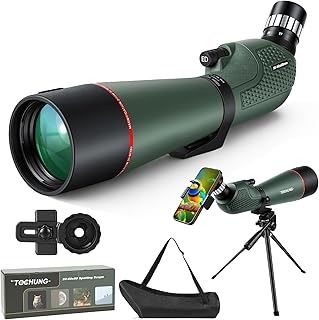
20-60×80HD optics, budget
7.5OUT OF 10
Optical Quality7.5
Build & Durability7.0
Astronomy Performance7.0
Value8.5
This is the cheapest way to get an 80mm HD spotting scope for astronomy, but you get what you pay for. The HD optics deliver decent sharpness up to 40x, but beyond that, chromatic aberration becomes noticeable around bright objects like the Moon. The included tripod and phone adapter are basic but functional. Aggregate user reviews mention that the scope is fine for casual lunar viewing, but the focus knob can be stiff.
The scope is waterproof, which is a plus for overnight dew. The 20x low end gives a nice wide field for scanning the Milky Way. For the price, it’s a solid entry point if you’re not sure astronomy will stick.
Flaws but not dealbreakers. The build quality is budget-level, and the tripod is the weakest link. You’ll likely want to replace the tripod within a year if you use it regularly.
If you can stretch your budget, the
Gosky Flagship offers a better tripod and BAK4 prisms for not much more.
⚠Sizing: This scope is relatively compact, but the tripod is short for standing use. Consider a taller tripod for comfortable seated viewing.
Pros
- ✓HD optics reduce color fringing compared to standard scopes
- ✓Waterproof for outdoor use in any weather
- ✓Comes with phone adapter and tripod out of the box
- ✓Lightweight enough to carry to a dark site
Cons
- ✕Chromatic aberration visible at high magnification
- ✕Tripod is flimsy and not stable at 60x
- ✕Focus knob reported as stiff by multiple buyers
Lens Coating
Fully multi-coated
Best for: Anyone on a tight budget who wants to try lunar and planetary observing without a big investment.
Gosky Falcon 20-60×85 Spotting Scope Full: Best Full-Size Tripod Kit for Stable Views
Gosky Falcon 20-60×85 Spotting Scope Full: Best Full-Size Tripod Kit for Stable Views
#3
Gosky85mm, full-size tripod
7.8OUT OF 10
Optical Quality8.0
Build & Durability7.8
Astronomy Performance7.5
Value8.5
This is the best kit for someone who wants a bigger aperture and a full-size tripod in one package. The 85mm objective gathers more light than the 80mm Gosky Flagship, making it better for seeing fainter stars and deep-sky objects like the Andromeda Galaxy. The full-size tripod is much more stable than the travel tripods included with smaller kits, and it reaches a comfortable standing height. The included phone adapter works well for smartphone digiscoping.
Buyers consistently note that the 20-60x zoom is crisp across the range, and the focus knob is smooth. The waterproof body handles dew without issue. The cleaning kit is a nice bonus for keeping the lenses clean.
Flaws but not dealbreakers. The scope is heavier than the 80mm models, and the tripod, while sturdy, adds weight to the kit. It’s not as portable as the travel-friendly Gosky Flagship. The zoom eyepiece is fixed, so you cannot swap in different eyepieces for wider fields.
If you want interchangeable eyepieces for more flexibility, the
Celestron C5 is a better choice for serious astronomy.
⚠Sizing: The full-size tripod is taller and heavier. Make sure you have enough storage space and don’t mind the extra weight for transport.
Pros
- ✓85mm aperture gathers more light than 80mm models
- ✓Full-size tripod provides stable, comfortable viewing at standing height
- ✓Waterproof and fogproof for overnight use
- ✓Includes phone adapter, cleaning kit, and carrying bag
Cons
- ✕Heavier and less portable than 80mm kits
- ✕Fixed zoom eyepiece, no interchangeable eyepieces
- ✕Some buyers report the tripod pan head is not perfectly smooth
Best for: Stargazers who want a stable, full-size tripod and a larger 85mm aperture for brighter deep-sky views without needing to buy a separate tripod.
Celestron C5 Schmidt-Cassegrain Spotting Scope: Best for Astronomy with Interchangeable Eyepieces
Celestron C5 Schmidt-Cassegrain Spotting Scope: Best for Astronomy with Interchangeable Eyepieces
#4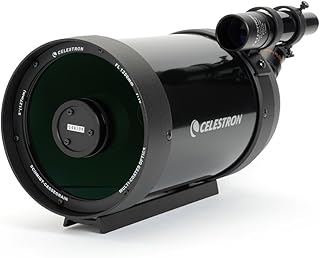
CelestronSchmidt-Cassegrain, 1.25″ eyepieces
9.2OUT OF 10
Optical Quality9.5
Build & Durability9.0
Astronomy Performance9.5
Value8.5
This is the best spotting scope for astronomy because it’s essentially a compact Schmidt-Cassegrain telescope. The 125mm (5-inch) aperture with StarBright XLT coatings delivers high-contrast views of the Moon, Jupiter, Saturn, and brighter deep-sky objects. The key advantage is that it accepts standard 1.25-inch eyepieces, so you can swap in any eyepiece you own to get different magnifications and fields of view. This flexibility is unmatched by any other spotting scope on this list.
Celestron is a trusted name in astronomy, and the C5’s optical design is decentered-free, meaning you get sharp, coma-free images across the field. The scope is also digiscoping ready, allowing you to attach a camera for astrophotography. Aggregate reviews from astronomy enthusiasts consistently praise its image quality for a spotting scope.
Flaws but not dealbreakers. It’s heavier than a traditional spotting scope and requires a sturdy tripod, which is not included. It also has a narrow field of view at high power, typical of Cassegrain designs. The price is higher than the zoom scopes in this list.
If you’re on a tighter budget, the
SVBONY SV28 100mm offers a larger aperture for less money, but without the interchangeable eyepiece flexibility.
⚠Compatibility: This scope requires a sturdy tripod (not included). Make sure your existing tripod can support at least 5 pounds. A standard photo tripod may not be stable enough.
Pros
- ✓Schmidt-Cassegrain optics with StarBright XLT coatings for high contrast
- ✓Accepts standard 1.25-inch eyepieces for interchangeable magnification
- ✓Digiscoping ready for astrophotography
- ✓Unmatched optical quality for a spotting scope
Cons
- ✕Heavier than traditional spotting scopes, needs a sturdy tripod
- ✕Narrow field of view at high magnification
- ✕Higher price point than zoom spotting scopes
Eyepiece
1.25 inch standard
Best for: Serious astronomy enthusiasts who want telescope-quality optics in a spotting scope form factor, with the flexibility of interchangeable eyepieces.
SVBONY SV28 100mm Spotting Scope Target: Most Light Gathering for Deep-Sky Views
SVBONY SV28 100mm Spotting Scope Target: Most Light Gathering for Deep-Sky Views
#5
SVBONY100mm, FMC HD optics
8.5OUT OF 10
Optical Quality8.5
Build & Durability8.0
Astronomy Performance9.0
Value8.5
This is the best spotting scope for deep-sky astronomy because of its massive 100mm objective. The 100mm aperture gathers significantly more light than the 80mm or 85mm options, making it ideal for seeing fainter objects like globular clusters, nebulas, and galaxies. The fully multi-coated HD optics deliver sharp, bright images across the 25-75x zoom range. It also comes with a soft carry case and phone adapter.
Buyers report that the scope is well-built for the price, with a smooth focus and good contrast. The 75x maximum magnification is enough to resolve Saturn’s rings on a steady night. The included tripod is basic, but the scope’s performance justifies the investment.
Flaws but not dealbreakers. The 100mm objective makes the scope larger and heavier, so it’s not as portable. The included tripod is adequate but not great for high-magnification work. Some users note that the focus knob could be smoother.
If you want a premium build with a lifetime warranty, the
Vortex Diamondback HD is a step up in build quality, but with a smaller 85mm aperture.
⚠Sizing: The 100mm objective adds weight. Make sure your tripod is sturdy enough to support the scope without wobbling.
Pros
- ✓100mm aperture gathers the most light in this lineup
- ✓Fully multi-coated HD optics for sharp, bright images
- ✓25-75x zoom range covers lunar to deep-sky targets
- ✓Includes soft carry case and phone adapter
Cons
- ✕Larger and heavier than 80mm/85mm scopes
- ✕Included tripod is basic and not ideal for high power
- ✕Focus knob reported as slightly stiff by some users
Lens Coating
Fully multi-coated
Best for: Astronomy enthusiasts who want the maximum light-gathering capability for deep-sky observing without switching to a full telescope.
Vortex Diamondback HD Spotting Scope 20-60×85: Best Rugged All-Rounder with Lifetime Warranty
Vortex Diamondback HD Spotting Scope 20-60×85: Best Rugged All-Rounder with Lifetime Warranty
#6
VortexHD optics, helical focus, Arca-Swiss
9.0OUT OF 10
Optical Quality9.0
Build & Durability9.5
Astronomy Performance8.5
Value8.5
This is the best all-rounder for anyone who wants a premium spotting scope with a lifetime warranty. The Vortex Diamondback HD uses high-definition optics and fully multi-coated lenses to deliver sharp, color-accurate views. The helical focus system allows for precise, fine-tuned focusing, which is critical for astronomy. The angled body design is comfortable for long sessions, and the Arca-Swiss compatibility means you can mount it on most tripod heads without an adapter.
Vortex’s VIP warranty is unconditional and unlimited. If you break it, they repair or replace it free of charge. That alone gives this scope a huge edge in peace of mind. Aggregate reviews from buyers consistently praise the build quality, image clarity, and the smooth focus. The 85mm aperture is a good balance between light gathering and portability.
Flaws but not dealbreakers. The Diamondback HD is priced higher than comparable 85mm scopes from other brands. It also has a fixed zoom eyepiece, so you can’t swap eyepieces for different magnifications. Some users report that the included tripod is basic and not up to the scope’s quality.
If you want a similar level of optical quality in a more compact package, the
Nikon Monarch is a strong alternative with ED glass for even better color correction.
⚠Warranty: The Vortex VIP warranty is one of the best in the industry. It covers any damage, even if you drop it. Register your scope after purchase.
Pros
- ✓HD optics with fully multi-coated lenses for sharp, color-accurate views
- ✓Helical focus system for precise, smooth focusing
- ✓Arca-Swiss compatible for easy tripod mounting
- ✓Unconditional lifetime VIP warranty
Cons
- ✕Higher price than comparable 85mm scopes
- ✕Fixed zoom eyepiece, no interchangeable eyepieces
- ✕Included tripod is basic for the scope’s quality
Best for: Anyone who wants a premium, rugged spotting scope with a lifetime warranty and excellent optics for lunar and planetary observing.
Nikon Monarch 20-60×82 ED Waterproof Spotting: Best ED Glass for Color-Corrected Views
Nikon Monarch 20-60×82 ED Waterproof Spotting: Best ED Glass for Color-Corrected Views
#7
NikonED glass, field-flattener, waterproof
8.8OUT OF 10
Optical Quality9.5
Build & Durability9.0
Astronomy Performance9.0
Value8.0
This is the best spotting scope for astronomy if you prioritise colour accuracy and edge-to-edge sharpness. The Nikon Monarch uses Extra-low Dispersion (ED) glass, which virtually eliminates chromatic aberration (color fringing) around bright objects like the Moon and Jupiter. The field-flattener lens system ensures stars are sharp across the entire field, not just the center. This is a premium scope for critical observers.
The 82mm aperture is slightly smaller than the SVBONY’s 100mm, but the ED glass and Nikon’s optical engineering make up for it in contrast and clarity. The scope is waterproof and fogproof, so you can use it in damp conditions without worry. The zoom range of 20-60x is versatile for both wide-field scanning and high-power lunar detail.
Flaws but not dealbreakers. The Monarch is the most expensive scope in this lineup, and the 82mm aperture is less than the SVBONY’s 100mm for light gathering. It also does not come with a tripod, so you’ll need to factor that into the cost. Some users find the focus knob a bit stiff initially.
If you want a similar level of optical quality but need a tripod included, the
Vortex Diamondback HD is a strong alternative with a lifetime warranty.
⚠Compatibility: This scope does not include a tripod. You’ll need to purchase a sturdy tripod separately for the best experience.
Pros
- ✓ED glass virtually eliminates chromatic aberration
- ✓Field-flattener lens for sharp stars across the entire field
- ✓Waterproof and fogproof for all-weather use
- ✓Nikon’s renowned optical quality and build
Cons
- ✕Most expensive option in this lineup
- ✕82mm aperture is smaller than the 100mm SVBONY
- ✕Tripod not included
Glass
ED (Extra-low Dispersion)
Best for: Serious astronomy enthusiasts who want the best color correction and edge-to-edge sharpness for lunar and planetary observing.
30-90×92 UHD High-Power Spotting Scope Phone: Best High Magnification for Lunar and Planetary Detail
30-90×92 UHD High-Power Spotting Scope Phone: Best High Magnification for Lunar and Planetary Detail
#8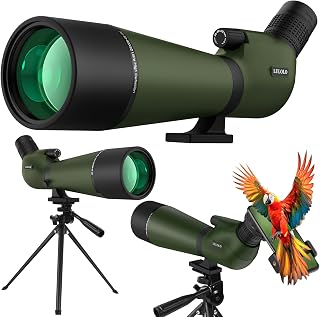
30-90×92UHD optics, 92mm, high magnification
8.3OUT OF 10
Optical Quality8.5
Build & Durability8.0
Astronomy Performance8.5
Value8.0
This is the best spotting scope for astronomy if you want the highest magnification for close-up lunar and planetary detail. The 30-90x zoom range and 92mm objective deliver the most power in this lineup, allowing you to see craters on the Moon, cloud bands on Jupiter, and even the Cassini division in Saturn’s rings on a steady night. The UHD optics are designed for brightness and sharpness at high power. The included phone adapter works well for digiscoping.
The 92mm aperture is second only to the SVBONY’s 100mm, so it gathers plenty of light for deep-sky observing as well. The scope is waterproof, which is important for overnight sessions. Aggregate buyer reviews highlight the impressive magnification and image quality for the price.
Flaws but not dealbreakers. At 90x, the image is very sensitive to atmospheric turbulence and tripod stability. The included tripod is adequate but not ideal for such high magnification. You’ll likely want to upgrade to a heavier tripod for the best results. The scope is also large and heavy, making it less portable.
If you need a more portable option with similar magnification, the
Celestron C5 offers 125mm aperture in a more compact Schmidt-Cassegrain design, but with a higher price tag.
⚠Stability: At 90x, even slight vibrations ruin the view. Use a sturdy tripod and consider a remote shutter for phone digiscoping.
Pros
- ✓Highest magnification range (30-90x) in this lineup
- ✓92mm objective gathers plenty of light
- ✓UHD optics for bright, sharp images at high power
- ✓Waterproof for all-weather use
Cons
- ✕Very sensitive to tripod stability and atmospheric conditions
- ✕Large and heavy, less portable
- ✕Included tripod is not ideal for 90x
Lens Coating
UHD multi-coated
Best for: Lunar and planetary observers who want the highest possible magnification to see fine details like craters, rings, and cloud bands from a dark sky location.
Buying Guide: Aperture, Magnification, Optics, and Build
Choosing a spotting scope for astronomy comes down to a few key decisions. Let me walk you through them so you can match the right scope to your night sky goals.
How Much Aperture Do You Need?
Aperture is the most important spec for astronomy. It determines how much light the scope collects, which directly affects how faint of objects you can see. The scopes in this list range from 80mm to 125mm.
A 80mm aperture is fine for bright objects like the Moon, Jupiter, and Saturn. You'll see major surface features and the rings. A 100mm or larger aperture lets you see fainter deep-sky objects like the Orion Nebula, Andromeda Galaxy, and globular clusters.
The SVBONY SV28 100mm is the best value for pure light gathering. The Celestron C5 at 125mm has the most aperture here, but it's a different optical design.
What Magnification Range Works for Astronomy?
Most spotting scopes offer a zoom range like 20-60x or 25-75x. For astronomy, 20x is great for wide-field views of the Milky Way and star clusters. 60x to 75x is ideal for lunar craters and planetary detail. 90x (as with the 30-90×92 model) pushes the limit of what the atmosphere and tripod can handle.
A good rule of thumb is that the maximum useful magnification is about 50x per inch of aperture. So an 80mm scope (3.1 inches) is good up to about 155x, but the zoom eyepiece quality becomes the limiting factor. The 30-90×92 UHD gives you the highest magnification, but you need a very stable tripod to use it.
Optical Quality: ED Glass, Coatings, and Prisms
Not all glass is equal. ED (Extra-low Dispersion) glass, like the Nikon Monarch uses, virtually eliminates false color around bright objects. Fully multi-coated lenses improve light transmission and contrast.
BAK4 prisms are standard in higher quality scopes and produce rounder, brighter exit pupils than BK7 glass.
The Vortex Diamondback HD uses HD optics that are close to ED quality at a lower price point. The Celestron C5 uses StarBright XLT coatings that are excellent for contrast on planets.
Tripod Stability and Portability
A spotting scope is only as good as its tripod. At high magnification, even a light breeze can make the image shake. The scopes that come with a tripod (like the Gosky models) are convenient, but you may want to upgrade to a heavier tripod later.
The Celestron C5 and Nikon Monarch do not include a tripod, so factor that into your budget.
If you plan to travel to dark sky sites, consider the weight and size of the kit. The 80mm scopes are more portable than the 100mm or 92mm models.
Who Should NOT Buy Best Spotting Scope for Astronomy
A spotting scope is a compromise for astronomy. It's neither a dedicated telescope nor a binocular. Here are three types of buyers who should skip this category entirely.
You Need Deep-Sky Astrophotography
Spotting scopes are not designed for long-exposure astrophotography. They lack the tracking mounts and fine focus mechanisms needed for deep-sky imaging. If you want to photograph nebulas, galaxies, or star clusters, you need a telescope on an equatorial mount with a tracking system.
Look at dedicated astrophotography telescopes instead. Or consider a star tracker for your camera.
You Want Wide-Field Milky Way Views
Spotting scopes have narrow fields of view compared to binoculars. At 20x, even the widest setting is only about 2 degrees. That's too narrow to see the Milky Way in its full glory.
Binoculars like the ones we review in our best affordable binoculars guide give you a much wider field for sweeping the night sky.
If your main goal is wide-field star gazing, binoculars are a better choice. They are also more portable and easier to use.
You Are on a Very Tight Budget Under $50
The cheapest spotting scopes in this list are still a significant investment. If you have less than $50 to spend, a spotting scope at that price point will have poor optics, a flimsy tripod, and will frustrate you. You are better off with a pair of binoculars under $50, which will give you a usable view of the night sky for less money.
Our best binoculars under $50 guide has options that work well for casual stargazing.
Final Verdict
The best spotting scope for astronomy is the Celestron C5 Schmidt-Cassegrain Spotting Scope. It delivers telescope-quality optics, interchangeable eyepieces, and the brightest views of the Moon and planets in this lineup. It's the right choice if you're serious about astronomy and want a scope that can grow with you.
Want a rugged all-rounder with a lifetime warranty? Get the Vortex Diamondback HD Spotting Scope 20-60×85. It's built to last and handles any conditions.
Need maximum light gathering for deep-sky objects? The SVBONY SV28 100mm Spotting Scope has the largest aperture here and offers great value.
On a tight budget? Start with the Gosky Flagship Spotting Scope 25-75×80 Tripod for a complete kit that won't disappoint.
If you're still unsure, go back to the Who Should NOT Buy section above. An honest match between your needs and the right tool will save you money and frustration.
FAQ
What's the best Spotting Scope for Astronomy overall?
The Celestron C5 Schmidt-Cassegrain Spotting Scope. Its 125mm aperture, StarBright XLT coatings, and interchangeable 1.25-inch eyepieces make it the most capable scope for serious astronomy.
Can I use a spotting scope for deep-sky observing?
Yes, but with limitations. A 100mm spotting scope like the SVBONY SV28 will show you brighter deep-sky objects like the Orion Nebula, Andromeda Galaxy, and globular clusters. For fainter objects, you need a larger telescope.
Do I need a special tripod for astronomy?
A sturdy tripod is essential because high magnification amplifies every shake. The scopes that come with a tripod are fine for casual use, but for serious observing, a heavier tripod with a fluid head is better. The Celestron C5 and Nikon Monarch do not include a tripod.
What is the best magnification for viewing planets?
60x to 75x is ideal for most nights. At higher magnifications, atmospheric turbulence (seeing) becomes the limiting factor. The 30-90×92 scope can reach 90x, but you need excellent conditions and a very stable tripod.
Are spotting scopes good for beginners?
Yes, especially the Gosky Flagship and the Gosky Falcon kits. They are easy to set up, include a tripod, and offer enough magnification to see the Moon and planets clearly. They are a great entry point before investing in a more expensive telescope.
Can I take photos through a spotting scope?
Yes, you can do digiscoping by attaching your smartphone to the eyepiece with a phone adapter. Most scopes in this list include one. The Celestron C5 is also camera-ready for more advanced astrophotography.