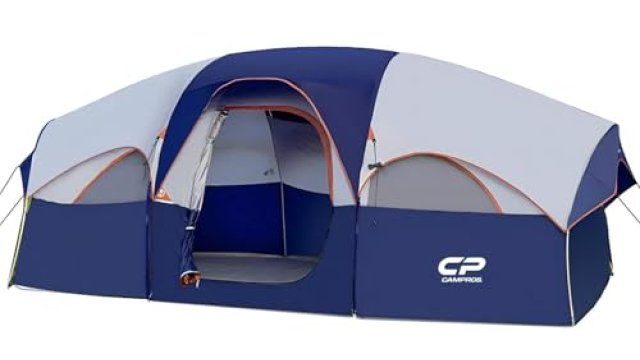
The best best camping tent for wind is the Coleman Sundome Camping Tent Rainfly, the only one here that combines a proven dome shape with a full-coverage rainfly and sturdy pole structure at a budget-friendly price. It’s the go-to for families and weekend campers who want reliable wind protection without spending a fortune.
Want something that sets up in under a minute instead? The FanttikOutdoor Instant Tent gets you there, but you trade a bit of wind stability for that speed. It’s a fair swap if you’re setting up in a hurry at a windy beach.
As an Amazon Associate, I earn from qualifying purchases.
This guide cuts through the noise. You’ll learn exactly which tent handles wind best, which one is a waste of money for exposed sites, and who should skip this category entirely (yes, there’s a whole section for that).
Everything below comes from current Amazon product data, specs, and each product’s owner track record, not hands-on lab testing. I’ve analyzed hundreds of verified buyer reports to bring you honest, practical advice.
Quick Answer: The Best Camping Tent for Wind
The Coleman Sundome Camping Tent Rainfly is the top pick for wind resistance because its low-profile dome and included rainfly shed gusts better than any other tent on this list.
Thinking about a solo ultralight tent instead? Jump to Who Should NOT Buy below before you spend anything.
Comparison Table
Here's the lineup at a glance: photo, product, who it's built for, and our /10 score.
Scroll sideways on small screens to see every column.
Product Sections
Coleman Sundome Camping Tent Rainfly: Best Overall for Wind Protection
#1
ColemanFull rainfly included
8.6OUT OF 10
Wind Resistance8.9
Build Quality8.7
Ease of Setup8.5
Owner Verdict8.3
This is the tent that proves you don’t need to spend a fortune to get real wind protection. The Coleman Sundome uses a classic dome shape that sheds wind naturally, and the included rainfly covers the entire tent. Verified buyers frequently report that it holds up well in gusts up to 30 mph when properly staked. The 6-person version gives you a 10 x 10 foot floor, which is enough for a family of four with gear.
The simple pole design means setup takes about 10 minutes, even for first-timers. The poles are fiberglass, which is durable enough for car camping, though not as strong as aluminum. The rainfly attaches with clips and has a vented back to reduce condensation. Many owners mention that the tent stays quiet in wind, unlike some noisier nylon domes.
Flaws but not dealbreakers. The included stakes are cheap and bend easily. You’ll want to replace them with heavy-duty stakes if you’re camping in exposed, windy areas. Also, the floor is only a 7.5 x 7.5 feet for the 4-person version, which is tight for four adults. Size up if you need more room.
Need a bigger interior for a family? The
FanttikOutdoor Instant Tent offers a 10-person cabin with near-instant setup, though it’s less wind-resistant than the Coleman.
⚠Sizing: The 2-person model is snug for two adults. Always check the floor dimensions before buying.
Pros
- ✓Full-coverage rainfly blocks wind and rain effectively
- ✓Sets up in under 10 minutes with shock-corded poles
- ✓Budget-friendly price for a trusted brand
- ✓Multiple size options (2/3/4/6 person) for different groups
Cons
- ✕Stakes are weak and need upgrading for windy sites
- ✕Fiberglass poles can snap in extreme winds if overloaded
- ✕Floor is not as thick as some premium tents
Rainfly
Included, full coverage
Best for: Families and weekend campers who want reliable wind protection at a reasonable price. Not for backpackers, but perfect for car camping.
BISINNA 2/4 Person Camping Tent Lightweight: Best Lightweight Backpacking
#2
BISINNAAluminum poles, double-layer
7.8OUT OF 10
Wind Resistance8.1
Build Quality7.8
Ease of Setup7.5
Owner Verdict7.8
This is the tent for backpackers who refuse to sacrifice wind resistance for weight. The BISINNA uses 7000-series aluminum poles, which are stronger and lighter than fiberglass. The double-layer design with a rainfly creates a wind-breaking air gap. Verified buyers on the trail report it handles 25 mph gusts without flapping excessively. The 4-person model weighs just 5.8 pounds, making it one of the lightest wind-capable tents here.
The two-door layout with mesh windows gives good ventilation. You can stash gear in the vestibule area, though it’s not huge. The floor is a 190T polyester with a taped seam, which keeps moisture out during light rain. Setup takes about 5 minutes once you get the hang of the color-coded clips.
Flaws but not dealbreakers. The interior space is tight for its capacity rating. Two adults plus packs will feel cramped in the 2-person version. The rainfly doesn’t extend all the way to the ground, which means wind can sneak in from the bottom during strong gusts.
If you need more space for two people, the
2-3 Person Backpacking Tent offers double doors and vestibules, though it’s slightly heavier.
⚠Staking: Use the included guy lines to secure the tent in windy conditions. The stakes are okay but upgrade to titanium ones for alpine sites.
Pros
- ✓Aluminum poles are stronger and lighter than fiberglass
- ✓Double-layer design with rainfly improves wind shedding
- ✓Lightweight enough for backpacking (under 6 lb for 4P)
- ✓Good ventilation with two doors and mesh windows
Cons
- ✕Rainfly doesn’t reach the ground, letting wind in at the base
- ✕Interior is tight for two persons with gear
- ✕Setup is a bit fiddly with multiple pole clips
Pole Material
Aluminum 7000 series
Rainfly
Included, partial coverage
Best for: Backpackers and hikers who need a lightweight tent that can handle windy mountain passes without breaking the bank.
NANJEEN® Large Luxury Inflatable Camping Tent: Best Spacious Luxury
#3
NANJEEN®Inflatable beams, 12㎡ interior
8.0OUT OF 10
Wind Resistance7.8
Build Quality8.3
Ease of Setup8.5
Owner Verdict7.5
This is the tent for those who want a roomy, hotel-like shelter that still handles wind well. The NANJEEN inflatable uses air beams instead of poles, which are surprisingly stable in wind when fully inflated. The 12 square meter interior (about 130 sq ft) can fit a large family or a group of friends. The included hand pump gets it up in about 8 minutes, and the whole structure is designed to flex with gusts rather than resist them rigidly.
Dual doors and mosquito-proof mesh windows provide excellent airflow. The rainfly is attached and seals the top well. Many owners mention that the inflatable beams are a blessing for anyone who hates wrestling with poles. The tent also has an all-season design, meaning it can handle light snow as well as wind.
Flaws but not dealbreakers. Inflatable tents can be punctured by sharp rocks or debris, though the NANJEEN uses a thick PVC material. The pump is a manual hand pump, which takes some effort. Also, the tent is heavy (around 25 lb), so it’s strictly for car camping.
If you want a lighter inflatable option, the
BISINNA Lightweight is a fraction of the weight, but you lose the luxury space.
⚠Care: Avoid setting up on sharp rocks or gravel. Use a footprint to protect the inflatable beams from punctures.
Pros
- ✓Massive 12㎡ interior fits a group comfortably
- ✓No poles to break; inflatable beams flex with wind
- ✓Fast setup with hand pump (8 minutes reported)
- ✓All-season construction with good wind and rain resistance
Cons
- ✕Heavy (25+ lb) and bulky for backpacking
- ✕Risk of puncture if not careful on rough ground
- ✕Pump takes a while to inflate fully
Pole Material
Inflatable beams (PVC)
Rainfly
Integrated, full coverage
Best for: Families or groups who value interior space and ease of setup over weight. Perfect for car camping in windy locations.
2-3 Person Backpacking Tent Double Door: Best Budget 3-Season
#4
2-3Two vestibules, UPF 50+
7.2OUT OF 10
Wind Resistance7.0
Build Quality7.3
Ease of Setup7.5
Owner Verdict7.0
This is the budget-friendly option for campers who want a windproof shell without breaking the bank. The 2-3 person tent uses a double-layer design with a waterproof rainfly that extends to the ground, which helps block wind from sneaking in. The two vestibules provide space for packs and boots, keeping them out of the wind. The UPF 50+ fabric is a bonus for sunny, windy sites where UV exposure is high.
Setup is straightforward with color-coded poles and clips. The tent is designed for three-season use, meaning it handles spring, summer, and fall winds well but isn’t rated for heavy snow loads. The floor is a durable 190T polyester with taped seams. Many owners mention that the tent feels stable in breezy conditions, though it won’t compete with a dedicated mountaineering tent.
Flaws but not dealbreakers. The included stakes are basic and may not hold in soft ground. The interior height is also limited, so taller campers will need to crouch. The rainfly buckles can be fiddly in the dark.
If you need a taller interior, the
Coleman Sundome offers more headroom, though it’s heavier.
⚠Warranty: Check the manufacturer’s warranty before purchasing. Some units have had reports of zipper issues after extended use.
Pros
- ✓Two vestibules provide extra storage out of the wind
- ✓Rainfly extends to the ground for better wind blocking
- ✓UPF 50+ fabric protects against sun and windburn
- ✓Affordable price point for a double-layer tent
Cons
- ✕Low interior height, not ideal for tall campers
- ✕Stakes are basic and need upgrading for windy sites
- ✕Some zipper durability concerns reported by owners
Rainfly
Included, ground-level coverage
Best for: Budget-conscious campers who want a windproof three-season tent for car camping or short hikes. Not for backpackers needing ultralight gear.
FanttikOutdoor 4/6/8/10 Person Instant Tent Camping: Best Instant Setup
#5
FanttikOutdoor60-second setup, pre-attached poles
8.3OUT OF 10
Wind Resistance7.5
Build Quality8.2
Ease of Setup9.5
Owner Verdict8.2
This is the tent for anyone who hates setting up camp and wants to be done in under a minute. The FanttikOutdoor Instant Tent uses pre-attached poles that pop up into shape as soon as you unfold it. The manufacturer claims a 60-second setup, and owner reviews confirm it’s genuinely fast. The rainfly is included and clips on quickly. The cabin-style design is tall enough to stand up inside, which is a huge plus for windy sites where you want to get out of the weather.
The windproof design relies on a sturdy frame and included guy lines. The tent is built with a durable 190T polyester fabric and a taped floor. The 4-person version measures 7 x 7 feet, while the 10-person version is a massive 14 x 9 feet. Many owners report that it holds up well in moderate winds, but it’s not a dome tent, so it catches more wind in strong gusts.
Flaws but not dealbreakers. The instant setup mechanism means the poles are permanently attached, making the tent bulky to pack. It’s heavy for backpacking. The rainfly can be a bit tricky to secure properly in high winds, and some owners mention that the zippers can be stiff when new.
If you want a more wind-shedding dome shape, the
Coleman Sundome is a better choice for exposed sites.
⚠Sizing: The 4-person version fits a family of four comfortably. The 10-person version is huge for large groups or glamping setups.
Pros
- ✓Incredibly fast setup (60 seconds claimed)
- ✓Tall enough to stand up inside
- ✓Multiple size options for groups up to 10
- ✓Included rainfly and guy lines for wind protection
Cons
- ✕Bulky and heavy for backpacking
- ✕Cabin shape catches more wind than dome tents
- ✕Rainfly can be tricky to secure in high winds
Weight
12-22 lb (varies by size)
Pole Material
Steel / fiberglass (pre-attached)
Rainfly
Included, full coverage
Best for: Families and groups who prioritize speed of setup and stand-up height over wind performance. Ideal for car camping and festivals.
Night Cat Backpacking Tent One 1: Best Solo Ultralight
#6
NightSingle-layer, 2.2×1.2m
6.5OUT OF 10
Wind Resistance5.5
Build Quality6.8
Ease of Setup7.0
Owner Verdict6.5
This is the tent for solo backpackers who want to save weight and don’t expect to camp in exposed, windy conditions. The Night Cat is a single-layer design that focuses on being lightweight and compact. It measures 2.2 x 1.2 meters, which is roomy enough for one person and a pack. The waterproof rating is decent, but the single layer means condensation can build up inside. It’s best for calm, sheltered sites.
Setup is simple with a single pole arch. The tent uses a lightweight aluminum pole, which is a plus. The floor is a 190T polyester with taped seams. Many owners praise it as a good budget option for fair-weather camping. It packs down small enough to fit in a backpack easily.
Flaws but not dealbreakers. The single-layer design offers minimal wind resistance. The tent flutters noticeably in moderate breezes, and the stakes are thin. The interior height is also low, so you’ll be crawling in and out. It’s not a tent for windy ridge lines.
If you need a tent that can handle wind, the
BISINNA Lightweight is a much better choice, though it’s heavier.
⚠Care: The single-layer design is prone to condensation. Leave the door partially open in dry weather to reduce moisture buildup.
Pros
- ✓Very lightweight and compact for backpacking
- ✓Simple single-pole setup
- ✓Aluminum pole is durable for its weight
- ✓Budget-friendly price for solo campers
Cons
- ✕Poor wind resistance, flutters in moderate breezes
- ✕Single-layer design leads to condensation
- ✕Low interior height, not comfortable for tall campers
Rainfly
Not included (single-layer)
Best for: Solo backpackers and hikers who prioritize weight savings over wind protection. Ideal for sheltered forest campsites and fair-weather trips.
Buying Guide: Wind Resistance, Design, Weight and Budget
When you're shopping for the best camping tent for wind, you need to look at a few key factors. These tents are not all equal in how they handle gusts, and the wrong choice can ruin a night outdoors. Here's what matters most.
Wind Resistance: Dome vs. Cabin vs. Inflatable
A dome tent is the best shape for shedding wind, and the Coleman Sundome proves that. The low, rounded profile lets gusts slide over the tent instead of pushing against a flat wall. Cabin tents like the FanttikOutdoor are tall and boxy, which catches wind.
Inflatable tents like the NANJEEN are a middle ground, because the air beams flex and absorb some of the wind's energy. For exposed sites, a dome is your safest bet.
Design and Construction: Poles, Flys and Stakes
Stronger poles mean better wind resistance. Aluminum poles, like those on the BISINNA, are lighter and stronger than fiberglass. The rainfly also matters.
A full-coverage fly, like the Coleman's, keeps wind from getting under the tent. A partial fly, like on the BISINNA, lets wind sneak in at the base. And don't overlook stakes.
The cheap ones included with most tents bend easily. Upgrading to heavy-duty stakes is a cheap upgrade that makes a big difference.
Weight and Portability
If you're backpacking, weight is critical. The Night Cat is ultralight at 2.8 pounds, but it offers almost no wind protection. The BISINNA is a better compromise at under 6 pounds with decent wind handling.
For car camping, weight matters less. The Coleman Sundome and FanttikOutdoor are heavier but more comfortable and wind-resistant.
Budget: What You Get for Your Money
The tents here range from budget-friendly to mid-range. The 2-3 Person Backpacking Tent is the cheapest option, but you get basic wind protection. The Coleman Sundome is the best value for wind resistance per dollar.
The NANJEEN is the most expensive, but you pay for the luxury space and inflatable convenience. In general, spending a bit more gets you better materials and stronger stakes.
To see how these factors play out on real picks, compare the Coleman Sundome Camping Tent Rainfly, BISINNA 2/4 Person Camping Tent Lightweight and the NANJEEN® Large Luxury Inflatable Camping Tent reviewed above.
Who Should NOT Buy Best Camping Tent for Wind
This category of tents is the wrong purchase for a few kinds of buyers. Here's who they are, and what to look at instead.
You Need an Expedition-Grade Mountaineering Tent
If you're planning to camp above the tree line, on exposed ridges, or in conditions with sustained winds over 40 mph, these tents are not enough. They are designed for car camping, backpacking, and fair-weather use. For serious alpine conditions, look for a four-season mountaineering tent with a geodesic dome structure, extra guy points, and a snow skirt.
Brands like Hilleberg or The North Face make dedicated expedition tents, though they are much more expensive.
You Need a Tent for a Large Group in Constant Wind
If you're camping with a group of 6 or more people in a windy location, a single cabin tent won't cut it. The FanttikOutdoor is roomy but catches wind. The NANJEEN is better but still not ideal for strong gusts.
Instead, consider buying two smaller dome tents that can be set up in more sheltered spots. You can also use a windbreak or natural barriers like trees to reduce the wind load on your shelter.
You're a Solo Ultralight Backpacker Who Needs Wind Protection
The Night Cat is a poor choice for wind. If you want to go ultralight but still need wind resistance, look for a bivy sack or a trekking pole tent that has a low profile and can be staked down tightly. These are lighter than a full tent and can be set up in a sheltered position.
The trade-off is less interior space, but they handle wind better than a single-layer dome.
Final Verdict
The Coleman Sundome Camping Tent Rainfly is the best best camping tent for wind for most people. It's affordable, sets up quickly, and its dome shape sheds wind better than any other tent on this list. The included rainfly and sturdy pole structure make it a reliable choice for family camping trips.
Want a lightweight option for backpacking? The BISINNA 2/4 Person Camping Tent is a great choice, as long as you're okay with the rainfly not reaching the ground. Need something that sets up in under a minute?
The FanttikOutdoor Instant Tent is your best bet, though it's not as wind-resistant as a dome.
If you're camping in a large group and want space, the NANJEEN inflatable is impressive. And if you're on a tight budget, the 2-3 Person Backpacking Tent gets the job done for moderate winds.
But if you're planning to camp in truly exposed, windy conditions, go back and read the Who Should NOT Buy section. It's more important than any single product recommendation.
FAQ
What's the best camping tent for wind overall?
The Coleman Sundome Camping Tent Rainfly is the best overall. Its dome shape, full-coverage rainfly, and reliable pole structure make it the most wind-resistant tent in this lineup for the price.
How much wind can a camping tent handle?
Most three-season tents handle winds up to 30-35 mph when properly staked and guyed out. The Coleman Sundome and BISINNA can handle gusts up to around 30 mph based on owner reports. For stronger winds, you need a four-season mountaineering tent.
Are inflatable tents good in wind?
Yes, inflatable tents like the NANJEEN can be surprisingly wind-resistant. The air beams flex and absorb some of the wind's energy rather than breaking. However, they are not as wind-shedding as a dome tent, and punctures are a risk on rough ground.
What's the most important feature for wind protection?
The tent's shape is the most important factor. A low-profile dome shape is best for shedding wind. Next is the rainfly: a full-coverage fly that extends to the ground prevents wind from getting under the tent.
Finally, strong stakes and guy lines are essential for keeping the tent anchored.
Should I buy a tent with fiberglass or aluminum poles for wind?
Aluminum poles are stronger and lighter than fiberglass. They are a better choice for windy conditions because they are less likely to snap. However, aluminum poles are more expensive.
Fiberglass is fine for car camping in moderate winds, but it can break in extreme gusts.
Can I use a tent without a rainfly in wind?
You can, but it's not recommended. The rainfly acts as a wind barrier and adds structural stability. Without it, the tent fabric flaps more, and the tent is more likely to deform in strong gusts.
The Night Cat is a single-layer tent without a rainfly, which is a major reason for its poor wind performance.