Best Bike Pump: Top Picks For Easy Inflation
The best bike pump delivers the right pressure, fits your valves, and makes every ride feel safer.
A flat tire can turn a calm ride into a long walk home. A good pump solves that problem fast, whether you need a full tire refill in the garage or a quick boost beside the road. I compared pressure ratings, valve support, gauge design, body strength, hose reach, and ease of use across these popular models. This Best Bike Pump guide covers floor pumps, compact electric pumps, and simple budget choices so you can pick the right tool for your bike and riding style.

BV Bike Pump out of…
COMFORTABLE HANDLE because of ergonomically designed air pump for bike handle. 160 PSI HIGH PRESSURE Air Pump for balls and bikes, for easy pumping even for high pressures. EASY TO…

Topeak JoeBlow Sport III High-Pressure…
Durable Steel Construction: Built with a robust steel barrel and base, the Topeak JoeBlow Sport III ensures long-lasting durability and stability during high-pressure inflation sessions, ride after ride. High-Pressure Performance:…

AstroAI L7 Tire Inflator Portable…
ADVANCED TRUEGAUGE SCREEN: This battery tire inflator includes updated sensor technology, capable of collecting pressure data from tire inflators at a frequency of 200 times per second. Its valid data…
BV Steel Bike Pump With 160 PSI

The BV steel bike pump is a strong choice for riders who want a classic floor pump with a high pressure limit. Its steel body gives it a more solid feel than many light plastic pumps. The listed 160 PSI capacity is more than enough for most road, hybrid, commuter, and mountain bike tires. A wide base also helps keep the pump steady while you work.
This model uses a smart valve head that supports Presta and Schrader valves without needing a separate loose adapter. That makes it useful for homes with more than one bike. The built-in gauge helps you watch pressure as you inflate, which is safer than guessing by hand. I especially like this style for riders who want a simple tool for routine tire care and weekend repairs.
Pros:
- Durable steel construction feels stable during use
- 160 PSI rating supports high-pressure road tires
- Smart head works with Presta and Schrader valves
- Built-in gauge makes pressure checks easier
- Floor-pump design reduces hand and wrist strain
- Useful for bikes, sports balls, and other inflatables
Cons:
- Steel construction can feel heavier than a plastic pump
- Analog gauges may be less exact than digital displays
- Its larger floor-pump shape is not ideal for carrying on rides
Topeak JoeBlow Sport III Floor Pump

The Topeak JoeBlow Sport III is a well-known floor pump for regular riders who value smooth operation and a clear gauge. It has a steel barrel, an ergonomic handle, and a broad base that helps it stay planted. The 160 PSI maximum gives it plenty of range for common bike tires. Its 3-inch analog gauge sits low on the pump, where it is easy to read during inflation.
Topeak fits this pump with a TwinHead DX5 head for Presta, Schrader, and Dunlop valves. The long hose gives you more room to move around the bike and reduces awkward bending near the wheel. The handle also feels more comfortable during repeated pumps than a narrow plastic grip. For a household with road bikes, mountain bikes, and city bikes, this pump offers broad valve coverage in one package.
Pros:
- Strong steel barrel is suited to frequent use
- Large 3-inch gauge is easy to view
- TwinHead DX5 supports three common valve types
- Long hose improves reach around the bicycle
- Ergonomic handle feels comfortable during long fills
- Wide base improves balance on hard floors
Cons:
- It costs more than basic entry-level floor pumps
- The analog gauge may need careful viewing in low light
- It is too large for a small saddle bag
AstroAI L7 Cordless Bike Pump

The AstroAI L7 takes a different approach from a manual floor pump. It is a cordless electric inflator with a listed maximum pressure of 150 PSI. Instead of pushing a handle again and again, you set the target and let the motor do the work. This can be a great relief when a hand pump feels like a chore or when you need to inflate several tires.
A portable electric pump is especially useful for commuters, families, and riders who keep a pump in the car. The digital-style control system can make target pressure easier to manage than a small analog dial. Still, I recommend charging the unit before every long trip and learning how its hose and valve connection work at home. Electric pumps save effort, but a dead battery cannot help beside a quiet road.
Pros:
- Cordless design removes the need for manual pumping
- 150 PSI rating covers many bicycle tire needs
- Portable size works well in a car or repair kit
- Useful for riders with hand or wrist discomfort
- Can help inflate more than one tire during a trip
- Digital operation can make target pressure simple to set
Cons:
- Battery life limits the number of tires per charge
- Electric motors make more noise than manual pumps
- It may need cooling breaks during repeated inflation
- It is less dependable if you forget to charge it
Portable Dual-Valve Bike Floor Pump
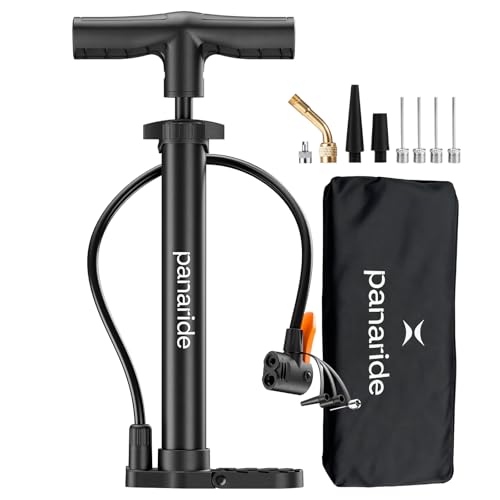
This portable floor pump is made for people who want one compact tool for several inflating jobs. Its dual Presta and Schrader valve design removes the need to carry a separate adapter. The floor-style shape gives you more leverage than a tiny frame pump. It can serve road bikes, mountain bikes, strollers, and sports balls around the home.
The main appeal here is flexibility. You can store it in a closet, garage, or vehicle without giving up the basic comfort of a floor pump. Its compact build may not feel as heavy or refined as a premium steel model, but it should suit casual riders and families well. I would choose it for simple maintenance, backup use, and light travel rather than demanding daily shop work.
Pros:
- Supports both Presta and Schrader valves
- Compact design is easier to store than a full-size pump
- Floor format provides better leverage than a tiny hand pump
- Works with bikes, strollers, and sports balls
- Useful as a spare pump for family vehicles
- Simple design is approachable for new cyclists
Cons:
- Compact construction may offer less stability than a wide-base pump
- It may take more strokes on large mountain bike tires
- Gauge readability can vary by lighting and viewing angle
BV Ergonomic Bike Floor Pump

The BV ergonomic floor pump is a practical middle-ground option for home bike care. It offers a 160 PSI rating, a pressure gauge, and a smart valve head that automatically supports Presta and Schrader valves. The ergonomic handle is shaped to make repeated strokes more comfortable. That matters when you check tire pressure every week or prepare several bikes for a group ride.
I see this pump as a strong fit for commuters, casual cyclists, and families who want useful features without a complex setup. The automatic valve head keeps the process quick and reduces the chance of using the wrong adapter. Its floor design also lets you use your body weight, rather than only your arms. As with any analog gauge, use the same gauge each time for consistent readings and follow the tire maker’s recommended range.
Pros:
- 160 PSI capacity suits a broad range of bicycle tires
- Smart valve head handles Presta and Schrader valves
- Ergonomic handle helps reduce grip fatigue
- Built-in gauge supports more controlled inflation
- Floor design makes routine tire service easier
- Good feature balance for home users
Cons:
- Analog gauge is not as precise as a quality digital gauge
- The pump is not designed for carrying on the bike
- New users should confirm the valve head is locked before pumping
Schwinn Air Center Floor Bike Pump

The Schwinn Air Center is a straightforward floor pump for cyclists who prefer a simple tool. It has a wide metal base, a dual head for Schrader and Presta valves, and a listed maximum pressure of 120 PSI. That rating is enough for many hybrid, commuter, kids’, and mountain bike tires. It does not include a pressure gauge, so you will need a separate gauge if exact pressure matters to you.
The lack of a gauge keeps the design basic, but it also changes how you should use the pump. I would pair it with a small digital gauge for road tires or any tire that needs careful pressure control. The wide metal base is a useful touch because it helps the pump stay steady on the floor. For a budget-minded rider who wants to restore air without paying for extra features, this can be a sensible choice.
Pros:
- Wide metal base offers stable footing
- Dual head fits Presta and Schrader valves
- 120 PSI rating covers many everyday bike tires
- Simple design is easy for beginners to understand
- Usually appeals to budget-focused cyclists
- Floor format gives more leverage than a small hand pump
Cons:
- No built-in pressure gauge is included
- Less suitable for riders who need exact road-bike pressure
- Basic materials may not feel as premium as heavier models
- You may need to buy a separate pressure gauge
DSUY Mini Electric Bike Pump
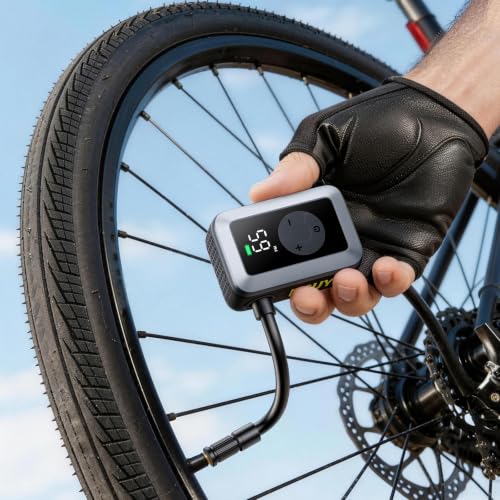
The DSUY mini electric bike pump is aimed at riders who want powered inflation in a small package. Its listed maximum pressure is 120 PSI, and it includes a digital gauge for easier pressure checks. A compact electric pump can save time when you face a soft tire before work or at the start of a ride. It also helps people who find manual pumping hard on the hands.
This type of pump works best when you treat it as a convenience tool, not a replacement for every pump in your kit. The battery needs regular charging, and a small motor may take time to fill a large tire from flat. I would test the valve connection and charging cable before carrying it outdoors. For short commutes, emergency use, and riders who value a small digital device, the DSUY offers a useful blend of size and function.
Pros:
- Small electric design is easy to carry
- 120 PSI rating suits many bike tire setups
- Digital gauge makes pressure easier to monitor
- Reduces the hand effort needed for inflation
- Useful for commutes and roadside emergencies
- Compact form fits many vehicle or backpack kits
Cons:
- Battery capacity may not support many full inflations
- Small compressors can be slower on high-volume tires
- Motor noise may bother some users
- It must be charged before an important ride
What Makes the Best Bike Pump?
The Best Bike Pump is not always the pump with the highest number on the box. A 160 PSI rating looks impressive, but most riders need a pump that reaches their normal tire pressure with ease. The valve head, gauge, base, hose, and handle often matter more during real use. A pump should also match the type of bike you ride and the place where you plan to use it.
For home use, I usually favor a floor pump. Its long barrel moves more air per stroke, and its base lets you push down with both arms and body weight. A mini pump makes more sense on the road because it can fit inside a jersey pocket, frame bag, or backpack. An electric pump saves effort, but it adds battery care to your ride checklist.
How I Compare These Bike Pumps
I look at more than pressure claims when judging a bike pump. The first test is valve fit. A pump that works with both Presta and Schrader valves is easier to share across a household. The second test is control: a useful gauge should help you stop near the pressure you want without constant guesswork.
I also consider stability and comfort. A narrow base can move while you pump, while a broad base gives you a firm platform. A hard, thin handle can make a full tire refill tiring. A longer hose can protect the valve stem and lets you stand in a more natural position.
Finally, I consider the cost of ownership. Manual pumps do not need batteries, chargers, or replacement power cells. Electric pumps can be fast and kind to sore hands, but they need careful charging and storage. Those trade-offs explain why there is no single model for every cyclist.
Floor Pump or Mini Pump?
A floor pump is the best tool for regular tire maintenance at home. It fills tires faster and usually gives better leverage. If you ride often, the time saved adds up. A floor pump also makes it easier to set both tires to a similar pressure before a ride.
A mini pump is an insurance policy. It may not fill a tire as quickly, but it can get you moving after a puncture or slow leak. I suggest carrying one on longer rides even if you use a floor pump at home. A small pump turns a bad surprise into a short stop.
Many serious cyclists keep both. The floor pump handles weekly checks, while the mini pump stays with the bike. An electric model can fill the emergency role if you remember to charge it. The right choice depends on whether your first need is speed, portability, or low effort.
Presta and Schrader Valve Support
Presta valves are narrow and common on road bikes and many performance wheels. Schrader valves are wider and look like the valves used on car tires. They need different openings or a pump head designed for both. Before buying any pump, check the valve type on your bicycle.
Automatic or smart heads are convenient because they can detect or support both common valve styles. Dual-head designs also work well, but you must place the correct side on the valve. Do not force the pump head onto a Presta valve. Open the small Presta nut first, then attach the head straight and secure it.
After inflation, remove the head with care. Pulling at an angle can bend a Presta valve, especially when the tube has little pressure. This small habit protects the tube and helps the Best Bike Pump work well for years.
Why a Pressure Gauge Matters
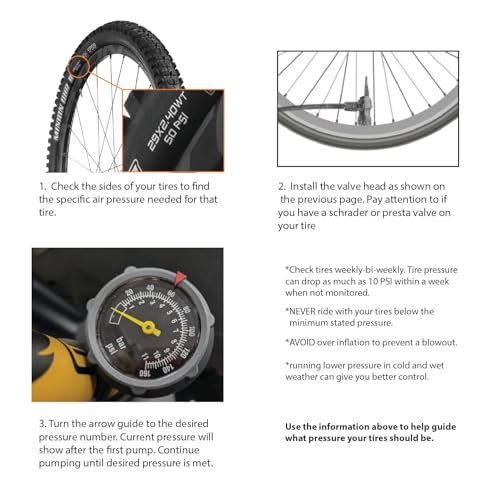
Pressure changes how a bicycle feels. Too little air can make steering slow and can increase the chance of a pinch flat. Too much air can reduce comfort and grip. The correct range depends on the tire, rider weight, wheel size, surface, and the tire maker’s guidance.
A gauge gives you a repeatable number. That is much better than squeezing the tire and hoping it feels right. Analog gauges are simple and do not need batteries. Digital gauges are often easier to read, but their batteries can run low at the wrong time.
Use the number printed on the tire as a limit or guide, not as a universal target for every ride. Never exceed the lowest pressure limit marked on the tire, rim, or other manufacturer instructions. If you change tire size or riding surface, adjust pressure in small steps and watch how the bike handles.
How to Use a Bike Pump Correctly
Start by checking the tire and rim for visible damage. If the tire has a deep cut, exposed casing, or a damaged valve, adding air may not make it safe. Find the valve and remove its cap. For a Presta valve, loosen the small tip nut without removing it.
Attach the pump head straight. Lock the lever if the head uses a lever. Pump with smooth, full strokes and keep the barrel aligned with the valve. Watch the gauge as the pressure rises, then release the head carefully when you reach the desired range.
Afterward, check the tire bead and spin the wheel. The tire should sit evenly around the rim. If one section looks low or bulged, let the air out and inspect it before riding. These steps are simple, but they prevent many avoidable valve and tire problems.
Best Bike Pump Buying Guide
Choose a pump with a pressure rating above your normal target. The extra range gives the pump room to work without running at its limit. For most casual and mountain riders, 120 PSI can be enough. Road cyclists may prefer a 160 PSI model, although the real benefit is often easier pumping at moderate pressure.
Look for a strong base if the pump will stay in your garage. Steel can add weight, but that weight often improves stability. Plastic can lower cost and make the pump easier to move. Neither material alone guarantees a great pump, so inspect the handle, head, hose, and base as a complete system.
Think about gauge location. A large, low gauge is easy to read while standing. A small gauge may be harder to see, especially for older eyes or in a dark garage. If a pump has no gauge, include the price of a separate gauge in your budget.
For electric models, check charging needs and storage. Keep the pump charged, but follow the product instructions for long-term storage. Do not leave a lithium-powered device in extreme heat inside a parked vehicle. A charged pump is helpful; a damaged battery is a safety concern.
My Recommendation
The BV steel pump is my favorite all-around option for riders who want a durable manual pump, a 160 PSI rating, a gauge, and broad valve support. It gives home mechanics the basic tools needed for regular tire care without adding battery concerns. The Topeak JoeBlow Sport III is the stronger premium pick for frequent riders who want a refined head, long hose, large gauge, and very stable operation.
The AstroAI L7 and DSUY mini electric pumps suit people who value low effort and portability. I would choose the AstroAI for a car kit or several tires, and the DSUY for a compact emergency setup. The Schwinn is best for budget users who already own a pressure gauge, while the portable dual-valve pump fits casual families and mixed inflating tasks.
| Best for | Why |
|---|---|
| Home maintenance | The BV steel and BV ergonomic pumps offer floor-pump leverage, gauges, and dual-valve support. |
| Frequent or serious riders | The Topeak JoeBlow Sport III adds a durable build, large gauge, long hose, and three-valve support. |
| Roadside convenience | The AstroAI L7 and DSUY mini electric pumps reduce hand effort and travel easily. |
For most people searching for the Best Bike Pump, I would start with the BV steel model or the BV ergonomic model. Both cover the needs that matter most: stable floor use, a pressure gauge, and support for common valves. If comfort, long-term use, and a smoother premium feel matter more than price, move up to the Topeak.
FAQs Of Best Bike Pump
What PSI should I use in my bike tires?
Use the pressure range printed on the tire and follow the bike or rim maker’s limits. Start near the middle of that range, then adjust for rider weight, tire size, and road surface. Lower pressure can add comfort, while higher pressure can reduce rolling resistance on some tires.
Is a 160 PSI bike pump better than a 120 PSI pump?
Not always. A 160 PSI rating gives more range, but most riders do not need to inflate to 160 PSI. A 120 PSI pump can work well for many mountain, hybrid, commuter, and kids’ bikes. Choose the pump that reaches your target pressure easily and has the features you need.
Can one bike pump fit Presta and Schrader valves?
Yes. Many pumps use a smart head or dual head for both valve types. Check the product details before buying and attach the head straight to avoid bending a narrow Presta valve.
Should I buy a manual or electric bike pump?
Buy a manual floor pump for dependable home use and frequent tire checks. Choose an electric pump when you want less hand effort or a portable emergency tool. Many riders keep a manual pump at home and a small pump for the road.
Do I still need a pressure gauge?
Yes, if the pump has no gauge or if you want precise readings. Tire pressure affects comfort, grip, handling, and puncture risk. A separate digital gauge is a useful partner for a basic pump without a built-in display.
Final Verdict: Which Should You Buy?
The BV steel bike pump is the Best Bike Pump for most home users. It combines a 160 PSI rating, durable steel, a gauge, and Presta and Schrader support. Choose the Topeak for premium frequent use, or an AstroAI or DSUY electric model for low-effort portable inflation.
A reliable bike pump protects your ride from small problems. Pick the style that matches your bike, storage space, and riding plan, then check tire pressure often.