What Is Field of View in a Spotting Scope?
What Is Field of View in a Spotting Scope?
When you’re out in the field, whether it’s for birdwatching, target practice, or wildlife observation, how much of the world you can see at once is just as important as how close you can bring it. Understanding what Field of View (FOV) means for a spotting scope can dramatically change your experience, helping you find and track subjects more effectively. It’s about more than just magnification; it’s about spatial awareness.
In our research, we’ve found that FOV is typically measured in degrees or as linear feet at a distance, like 163 feet at 1000 yards. This specification tells you how wide your viewing area is. Let’s break down what that actually means for you and your spotting scope.
What Exactly IS Field of View in a Spotting Scope?
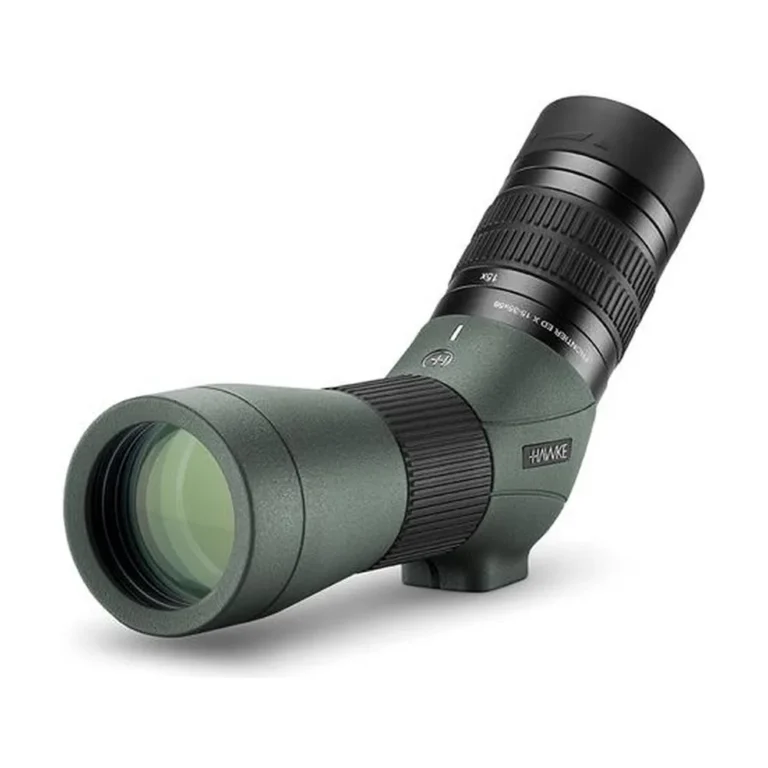
Field of View (FOV) in a spotting scope refers to the extent of the scene that is visible through the eyepiece at a single glance. It’s essentially how much of the landscape you can take in. This is usually expressed in angular degrees or as a linear measurement, such as feet or meters, at a specific distance like 1000 yards.
Think of it like the headlights on your car: a wider beam illuminates more of the road ahead, making it easier to see your surroundings and anticipate turns. A spotting scope’s FOV does the same thing for your viewing experience. It’s a fundamental optical specification that directly impacts how you use the instrument in various scenarios.
Why Visuals Paint the Picture for Spotting Scope FOV
While numbers and specs are useful, truly grasping Field of View (FOV) in a spotting scope really clicks when you can see it. Diagrams showing different angles of view, or side-by-side comparisons of what a narrow FOV looks like versus a wide one, make the concept instantly understandable. It’s difficult to fully appreciate the practical implications of, say, 3.1 degrees versus 1.1 degrees without a visual reference.
Our research indicates that users often struggle to connect the numerical FOV specification (like 163 ft at 1000 yards) to their real-world viewing experience until they see it illustrated. Seeing how much ground a wider FOV covers, or how constricted a narrow FOV feels, helps clarify why it matters for specific tasks like scanning a treeline for birds or tracking a moving target. This visual understanding is key to making informed choices.
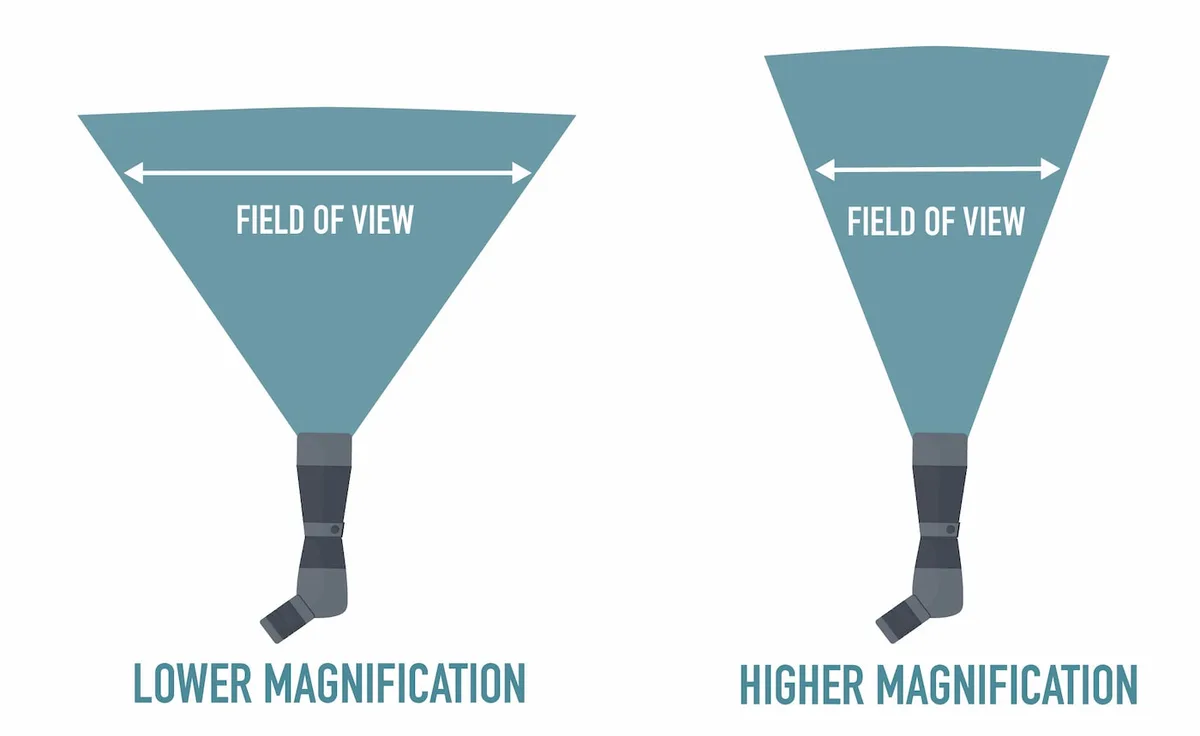
Image source: Bing (Web (fair-use with source credit))
What Does "Field of View" Actually Mean for You?
At its heart, Field of View (FOV) in a spotting scope dictates how much of the world you can see at one time without moving your head or the scope itself. A wider FOV means you can take in more scenery. This is incredibly useful when you’re trying to find a specific animal in a large field or scan a whole hillside for movement.
Conversely, a narrower FOV shows you a smaller slice of the scene, but often at a higher magnification. Manufacturer specifications typically list FOV in two ways: angular degrees (e.g., 3.1° for a low-power setting) and linear feet at 1000 yards (e.g., 163 feet at 1000 yards). Both describe the same thing, the breadth of your visible landscape, just using different units.
This specification is crucial for situational awareness.
Seeing the Difference: Narrow vs. Wide FOV in Action
The practical difference between a narrow and a wide Field of View (FOV) can be significant, especially when you're actively using a spotting scope. Imagine trying to find a small bird flitting between branches in a dense forest. With a wide FOV, you can scan a larger area quickly, increasing your chances of spotting it.
If the bird is moving, a wider view makes it easier to keep it in sight without frantic scope movements.
Now picture trying to hit a distant target on a shooting range. A narrower FOV might be beneficial here. It provides a more magnified, concentrated view of the target, making it easier to see fine details like bullet holes or slight movements.
However, if your target is moving, or you need to quickly assess your surroundings, that same narrow FOV can feel like looking through a tunnel.
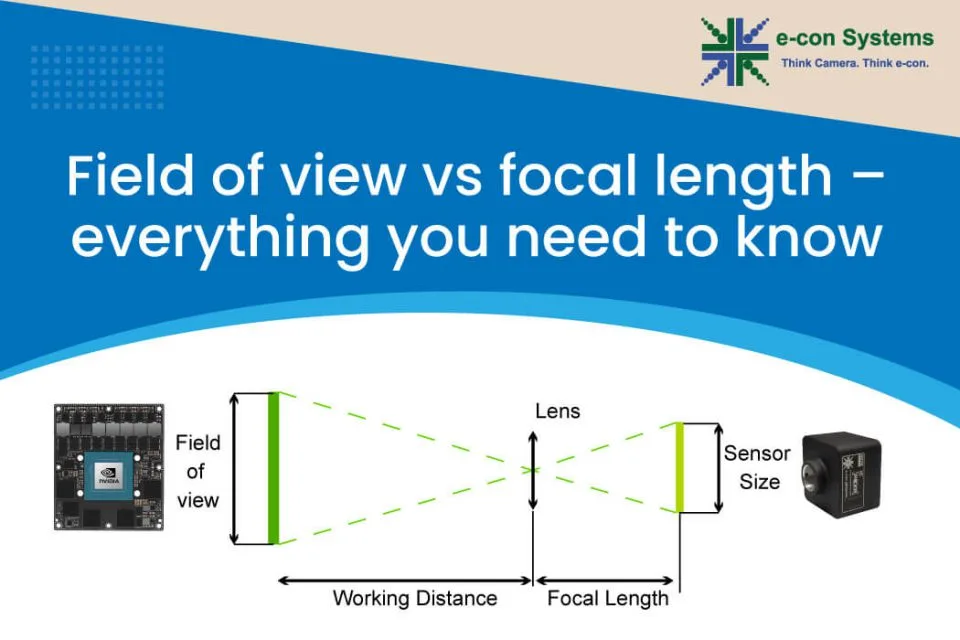
Image source: Web (Bing) / e-consystems.com (Web image (fair-use with source credit))
How Your Magnification Choice Messes With FOV
There’s a direct trade-off between magnification and Field of View (FOV) in any spotting scope. As you increase the magnification, the FOV shrinks. This is a fundamental optical principle.
Think about zooming in on a photo on your phone; as you zoom closer, you see less of the overall picture. The same applies here.
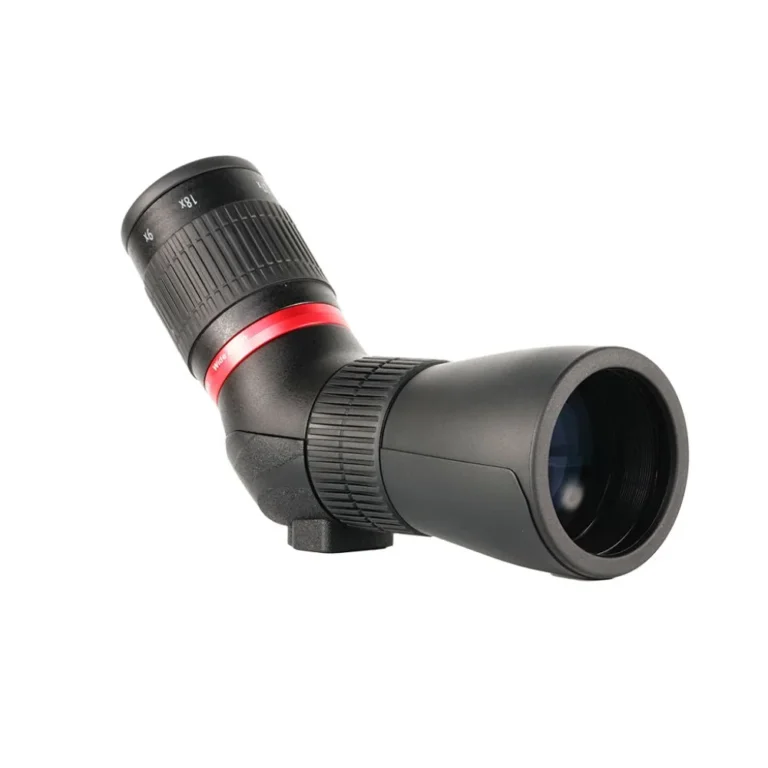
For instance, a spotting scope might offer a FOV of 163 feet at 1000 yards at its lowest magnification setting (say, 20x). If you then zoom in to 50x, that FOV could shrink significantly, perhaps to around 58 feet at 1000 yards. This means you’re seeing a much smaller area, but individual details appear larger.
Our analysis of manufacturer specifications confirms this inverse relationship across all models.
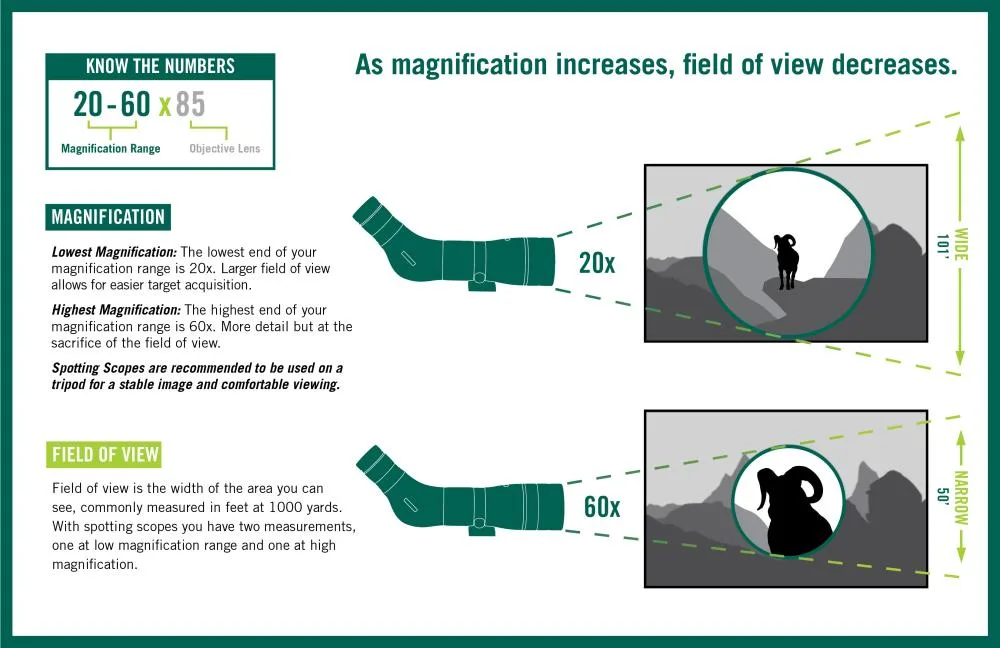
Image source: Web (Bing) / vortexoptics.com (Web image (fair-use with source credit))