What Is Eye Relief in a Spotting Scope?
So, what is eye relief in a spotting scope, and why should you even care? It's the distance between your eye and the eyepiece where you can see a full, clear image, and getting it right makes a huge difference in comfort and usability. Too short, and you'll struggle to see anything properly, especially if you wear glasses.
Manufacturer specifications often list eye relief in millimeters (mm). For instance, a spotting scope with 20mm of eye relief offers a much more relaxed viewing experience than one with just 12mm. Understanding this simple spec can save you a lot of frustration and help you pick the right scope for your needs.
Spotting Scope Eye Relief: The Core Explanation
Eye relief is a critical optical specification that defines the distance from the eyepiece lens to where your eye needs to be positioned to achieve a full, unobstructed field of view. Think of it as the "sweet spot" for your eye. If your eye is too close or too far from this point, you'll experience vignetting (darkening around the edges of the image) or a complete blackout, making it impossible to see the intended picture.
It’s measured in millimeters (mm).
How Eye Relief Affects Your Viewing Experience
The amount of eye relief on a spotting scope directly impacts how comfortable and effective your viewing sessions will be. It's not just a technical detail; it's about your personal ability to use the instrument without strain or visual obstruction. For many users, particularly those who wear corrective lenses, this specification is non-negotiable.
Seeing Clearly with Glasses
If you wear glasses, eye relief is paramount. You need enough space between your eye and the eyepiece to accommodate your eyeglasses without losing the full field of view. For many, this means looking for a spotting scope with at least 15mm of eye relief, though 18mm or more is often ideal.
Without sufficient eye relief, you'll likely experience significant vignetting, essentially a reduced field of view that makes it feel like you're looking through a tunnel.
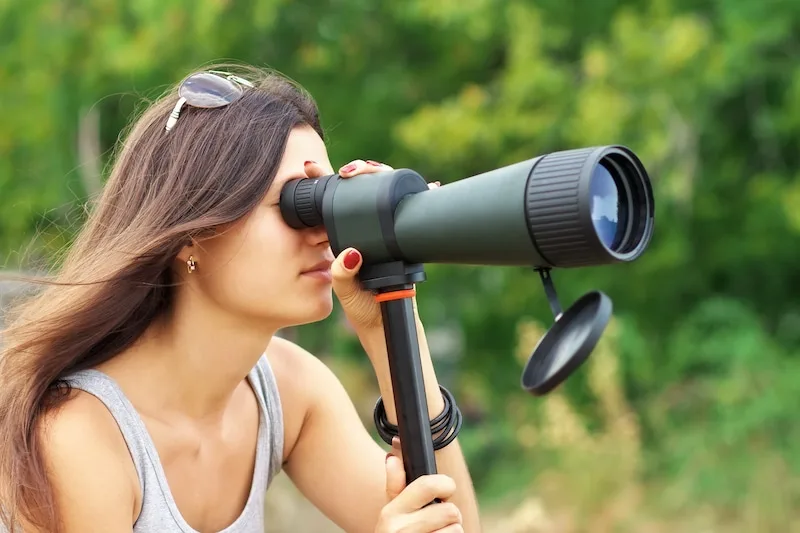
Image source: Bing (Web (fair-use with source credit))
Avoiding "Blackouts" and Eyestrain
Even if you don't wear glasses, adequate eye relief contributes to a more enjoyable and less fatiguing experience. When you have enough eye relief, you can relax your eye a comfortable distance from the eyepiece. This prevents you from having to strain or hold your eye unnaturally close, which can lead to discomfort and eyestrain over time.
Consistent blackouts due to insufficient eye relief can disrupt your observation flow and make it difficult to track moving subjects like birds or wildlife.
Image source: Web (Bing) / opticsforce.com (Web image (fair-use with source credit))
Eye Relief Specs: What the Numbers Mean
Spotting scope specifications will always list eye relief, typically in millimeters. Understanding these numbers helps you make an informed choice about which scope is right for your viewing habits and needs. It's a straightforward measurement, but its implications for usability are significant.
Long vs. Short Eye Relief
Generally, spotting scopes are categorized by their eye relief as having "long" or "short" eye relief. Long eye relief is typically considered to be 15mm or more. This provides a more generous viewing margin, making it easier for users to find the full field of view and especially beneficial for those wearing glasses.
Short eye relief, usually less than 15mm, requires the viewer to place their eye very close to the eyepiece. This can be less comfortable and problematic for glasses wearers.
Image source: Web (Bing) / forum.stirton.com (Web image (fair-use with source credit))
Typical Eye Relief Ranges
You'll commonly find spotting scopes offering eye relief anywhere from 10mm to 25mm. For example, many entry-level or compact models might have around 12-14mm of eye relief, which is functional but might feel a bit cramped for some. Mid-range and higher-end scopes often boast 16mm, 18mm, 20mm, or even more.
Manufacturer specifications from reputable brands often highlight extended eye relief as a key comfort feature. As of 2026, optical designs continue to push for greater eye relief without sacrificing image quality or field of view.
Finding the Right Eye Relief: Who Needs What?
The ideal eye relief isn't a one-size-fits-all number; it depends heavily on your personal viewing situation and preferences. If you're trying to decide on a spotting scope, consider who will be using it and for what purpose. This will help you narrow down the crucial eye relief specification.
Spotting Scope Eye Relief for Glasses Wearers
If you wear glasses, eye relief is paramount. You need enough space between your eye and the eyepiece to accommodate your eyeglasses without losing the full field of view. For many, this means looking for a spotting scope with at least 15mm of eye relief, though 18mm or more is often ideal.
Without sufficient eye relief, you'll likely experience significant vignetting, essentially a reduced field of view that makes it feel like you're looking through a tunnel.
Eye Relief for Non-Glasses Wearers
Even if you don't wear glasses, a longer eye relief can still offer a superior viewing experience. It allows for a more relaxed posture, reducing the need to press your eye right up against the rubber eyecup. This increased comfort can be a significant advantage during long birdwatching excursions or extended periods of target observation.
While you might be able to tolerate shorter eye relief, you'll likely find that scopes with 15mm or more provide a noticeably less fatiguing view.
Specific Activities and Eye Relief Preferences
Different activities can influence how much eye relief you might prefer. For example, when birdwatching, you might need to quickly acquire a target, and a comfortable, wide field of view provided by good eye relief helps. For stationary shooting at a range, where you might spend longer focused on a single point, comfort becomes even more important.
While the core optical requirements are the same, the duration and intensity of use can make eye relief a bigger factor in overall satisfaction.
Common Mistakes When Choosing Eye Relief
When you're looking for a new spotting scope, it's easy to get sidetracked by magnification or objective lens size and overlook the importance of eye relief. This mistake can lead to buyer's remorse once you're out in the field. Here are a couple of common errors people make that you can avoid.
- Ignoring Eye Relief Completely: The biggest mistake is not even checking the eye relief specification. You might assume all scopes are comfortable, but that's simply not the case. You could end up with a scope that, while optically sound, is physically uncomfortable to use, especially if you wear glasses.
- Assuming Longer is Always Better (Without Context): While long eye relief is generally desirable for comfort and glasses wearers, it can sometimes come at the cost of a narrower field of view or slightly reduced brightness in some optical designs. For some specialized applications where field of view is less critical than raw magnification, a slightly shorter eye relief might be acceptable if it maximizes other optical qualities. However, for general-purpose use, prioritizing sufficient eye relief is key.
Expert Tips for Selecting a Spotting Scope Based on Eye Relief
When you're in the market for a spotting scope, keep these expert-backed tips in mind to ensure you select one with suitable eye relief for your needs. It's about balancing the optical specifications with your personal comfort and how you intend to use the instrument.
- Prioritize Glasses Wearers: If you wear glasses, make 15mm of eye relief your absolute minimum. Better yet, aim for 18mm or more. Don't be swayed by other features if the eye relief isn't there; you'll likely be disappointed.
- Test if Possible: Whenever you can, try looking through a scope before you buy it. This is the best way to gauge eye relief comfort. See if you can easily find the full image without straining, and whether it feels comfortable with your glasses on (if applicable).
- Consider Your Primary Activity: For extensive birding or wildlife observation where you'll be looking for extended periods, prioritize comfort. A scope with 18-20mm of eye relief will make those long days much more pleasant. For occasional use or specific, short-duration tasks, a slightly shorter eye relief might suffice, but comfort is always a factor in usability.
- Read Reviews with a Critical Eye: When reading reviews, pay close attention to comments about eye relief, especially from users who also wear glasses. Aggregated buyer feedback often highlights if eye relief is a strong or weak point of a particular model. Per optical engineering standards, eye relief is a quantifiable metric, but user experience is subjective and highly valuable.
- Don't Forget the Eyecup: The design of the eyecup itself plays a role. A well-designed, adjustable eyecup can help you position your eye correctly for optimal eye relief, even on scopes with less generous specs. It should be soft enough to rest against your brow or spectacle frame comfortably.
FAQs About Spotting Scope Eye Relief
What is the standard eye relief for most spotting scopes?
There isn't a single "standard" for all spotting scopes, as it varies by model and intended use. However, for general comfort and usability, many manufacturers aim for eye relief between 15mm and 20mm. Entry-level scopes might offer slightly less, while premium models often exceed 20mm.
Can I use a spotting scope with short eye relief if I don't wear glasses?
Yes, you absolutely can use a spotting scope with short eye relief if you don't wear glasses. However, you might find it less comfortable for extended viewing sessions. You may need to hold your eye closer to the eyepiece, which can lead to fatigue.
How does magnification affect eye relief?
Magnification itself doesn't directly change the physical eye relief specification. However, higher magnification can make the effects of insufficient eye relief more noticeable. With more zoom, any vignetting or blackout caused by being slightly off the optimal eye position becomes more apparent and disruptive.
Are there specific spotting scopes designed for extreme eye relief?
Yes, some manufacturers offer specialized eyepieces or scopes that prioritize very long eye relief, often exceeding 20mm or even 25mm. These are particularly beneficial for users who need maximum comfort or have very specific viewing requirements, though they can sometimes be more expensive or have a narrower field of view.
How can I check eye relief on a spotting scope I'm considering?
You can find the eye relief specification listed on the product's specifications page, often in millimeters (mm). If you're in a store, ask a sales associate or try looking through the scope yourself to gauge the comfort and find the full field of view.