What Is the Difference Between a Spotting Scope and a Telescope?
Ever found yourself gazing at a distant bird or a hazy object in the night sky and wondering what the best tool for the job is? You've probably heard of spotting scopes and telescopes, and while they both involve looking at things far away, they're actually built for pretty different gigs. Think of it like this: you wouldn't use a hammer to screw in a bolt, right?
Same idea here.
Let's break down what makes them tick and when you'd grab one over the other. For instance, manufacturer specifications for a typical spotting scope often list an objective lens diameter of 60mm, while astronomical telescopes can feature objective lens diameters well over 100mm to capture fainter light.
What Is the Difference Between a Spotting Scope and a Telescope?
Spotting scopes are for land, telescopes for space. Spotting scopes offer bright, detailed terrestrial views. Telescopes gather faint light for celestial objects.
Spotting Scopes: Your Close-Up Wildlife Buddy
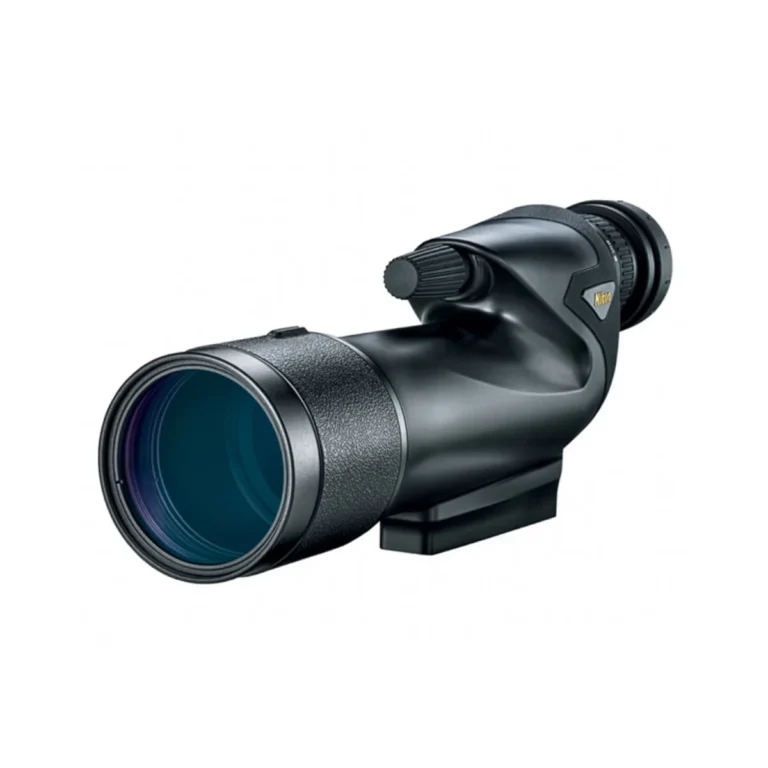
Imagine you're out in nature, maybe at a lake or on a hiking trail, and you spot something interesting way across the field. You want to see the details, the feathers on a bird, the markings on an animal, or even just the texture of a distant rock. That's where a spotting scope shines.
- What they're good for: Primarily for terrestrial (land-based) viewing. They're designed to give you a bright, clear, and detailed image of objects that are relatively close, typically within a few hundred yards or a couple of miles.
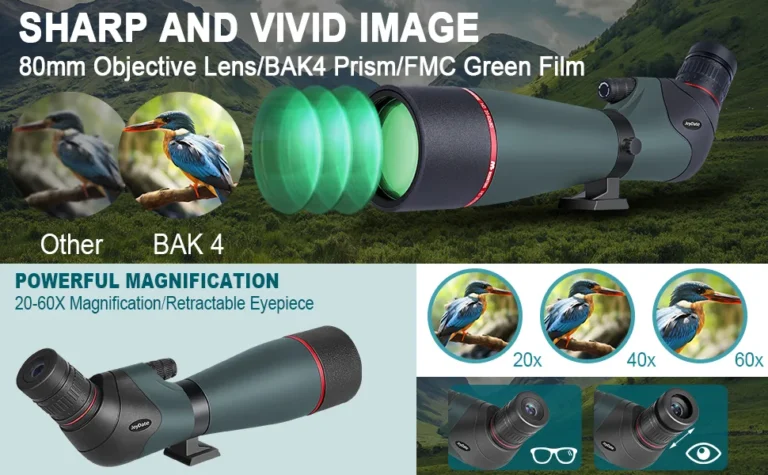
- How they work: Spotting scopes are essentially powerful monoculars (single-eyepiece binoculars). They often have a larger objective lens (the big one at the front) than binoculars to gather more light, making distant objects appear brighter and sharper, especially in lower light conditions. They usually come with variable magnification, so you can zoom in and out to get the best view.
- Think of it as: A super-powered magnifying glass for the natural world.
Image source: Bing (Web (fair-use with source credit))
Telescopes: Reaching for the Stars (and Beyond!)
Now, if you're looking up, way up, towards the night sky, a telescope is your ticket. These are built to capture faint light from objects that are unimaginably far away.
- What they're good for: Astronomy! They're designed to view celestial objects like planets, moons, nebulae, galaxies, and star clusters. While you can technically use some telescopes for daytime viewing, it's not their primary purpose and often not ideal.
- How they work: Telescopes work by gathering light and magnifying it. There are different types (refractors, reflectors), but the main goal is to collect as much light as possible from faint, distant sources and bring them into focus so you can see them. They often have a longer focal length, which helps achieve higher magnifications needed for stargazing.
- Think of it as: A light bucket for the cosmos.
Image source: Bing (Web (fair-use with source credit))
Key Differences at a Glance
It really boils down to their intended use and design. Here’s a quick rundown of what sets them apart:
| Feature | Spotting Scope | Telescope |
|---|---|---|
| Primary Use | Terrestrial viewing (wildlife, nature) | Astronomical viewing (stars, planets, etc.) |
| Magnification | Typically 20x to 60x (variable) | Can range from 50x to over 200x (or more) |
| Objective Lens | Usually 50mm to 80mm | Can vary greatly, often larger for more light |
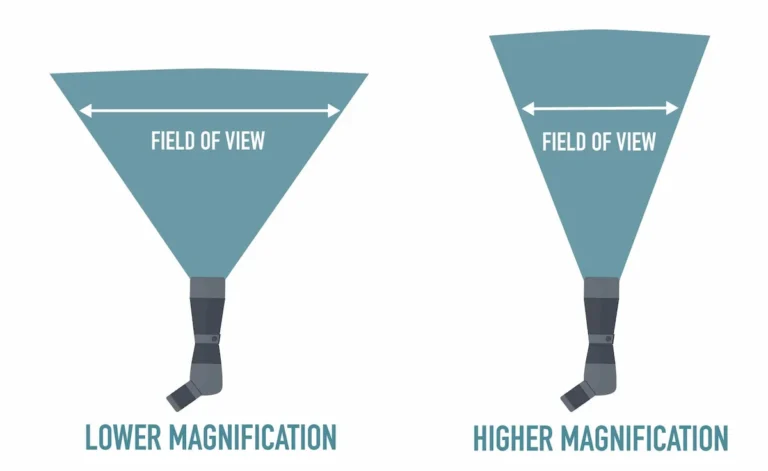
| Field of View | Wider, for tracking moving targets | Narrower, focused on specific celestial objects |
| Image Orientation | Usually upright and correctly oriented | Often inverted (upside down) or mirrored |
When to Choose Which
The best tool for the job really depends on what you want to see. If you're primarily interested in observing things here on Earth, a spotting scope is your go-to.
Choose a Spotting Scope if:
- You're a birdwatcher aiming to identify distant species.
- You're a hunter needing to scout terrain or game from afar.
- You enjoy nature observation and want to see intricate details without disturbing wildlife.
- You need a portable optic for daytime excursions.
Choose a Telescope if:
- You're fascinated by the night sky and want to see planets, moons, or deep-space objects.
- You’re interested in nebulae, galaxies, or star clusters.
- You’re looking for a dedicated instrument for astronomical study.
While some telescopes can be adapted for daytime use, their design is fundamentally for capturing faint, distant light from space. They often produce inverted or mirrored images, which can be disorienting for terrestrial viewing. For observing distant land-based subjects, a spotting scope’s clear, upright image and wider field of view, typically around 1.5-3 degrees at 20x magnification per manufacturer specifications, make it the more practical and enjoyable option.
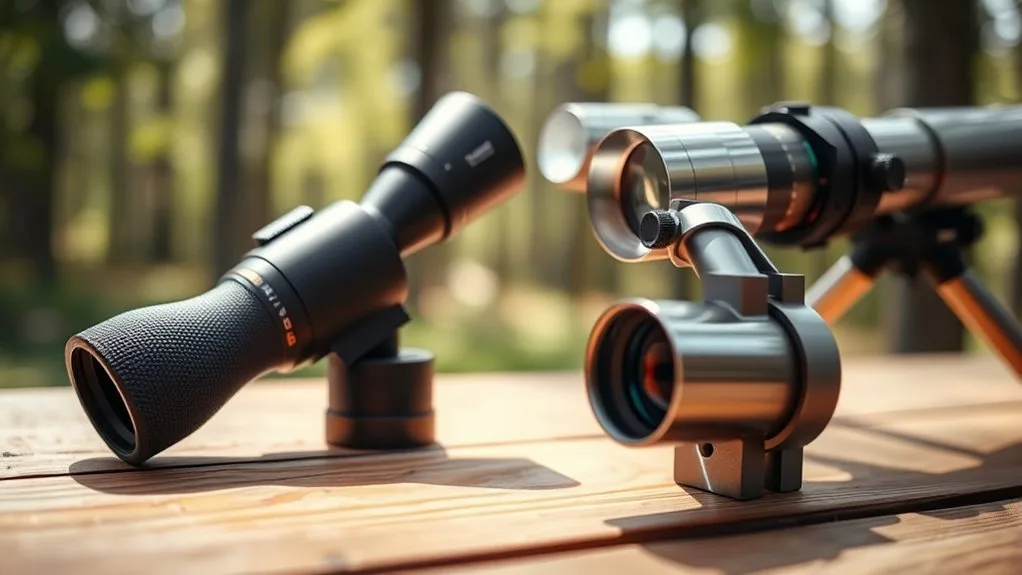
Image source: Web (Bing) / americangunworks.net (Web image (fair-use with source credit))
Common Mistakes to Avoid
When you're looking to get a clearer view of distant objects, whether they're in your backyard or out in the cosmos, it's easy to grab the wrong tool. One of the most common slip-ups is trying to use a telescope for daytime nature viewing. While technically possible with some setups, the inverted image and narrower field of view make it a frustrating experience compared to a spotting scope.
- Don't confuse their purposes: A telescope’s design is optimized for gathering faint light from celestial bodies, not for the bright, detailed, and upright views needed for terrestrial subjects.
- Avoid expecting too much from magnification: Simply having the highest magnification doesn't always mean a better view. For spotting scopes, excessive zoom can lead to a shaky image that's hard to hold steady. For telescopes, too much magnification can make faint objects disappear into a blurry mess.
- Ignoring the importance of aperture: For telescopes, the diameter of the main lens or mirror (the aperture) is crucial for light-gathering power. For spotting scopes, a larger objective lens diameter (e.g., 60mm vs. 50mm) generally provides a brighter image, especially in low light.
Maintenance & Long-Term Optimization
Keeping your optical instruments in top shape ensures they perform their best, whether you're scanning the horizon or the heavens. For spotting scopes, which are often used outdoors, protecting them from dust, moisture, and impact is key. After each use, gently wipe down the exterior with a soft, lint-free cloth.
Use a lens cleaning solution and a specialized lens brush or micro-fiber cloth for the objective and eyepiece lenses, always wiping from the center outwards.
Telescopes, especially those with exposed mirrors or lenses, require similar care. Dust is the enemy; store them in their protective cases or covers when not in use. For reflector telescopes, occasional collimation (aligning the mirrors) might be necessary to maintain optimal image clarity, a process detailed in most manufacturer manuals from brands like Celestron or Sky-Watcher.
Refrain from touching the optical surfaces directly with your fingers, as skin oils can degrade coatings over time.
Quick Care Tips
- Spotting Scopes: Keep lens caps on. Wipe down the body. Clean lenses with appropriate solution and cloth.
- Telescopes: Store in cases. Use lens covers. Collimation may be needed for reflectors, as per manufacturer guidance.
Real Scenarios: Spotting Scope vs. Telescope in Action
Let's paint a picture of how these tools are actually used. Imagine a birder setting up for a day at a local marsh. They’ve spotted a distant raptor perched on a snag.
Their spotting scope, set to 40x magnification, brings the bird into sharp, upright focus, revealing subtle plumage details and the distinct markings that confirm it as a specific species. The process is quick; a few turns of the focus knob, and they have a clear view.
Contrast this with an amateur astronomer on a clear, moonless night. They've pointed their telescope, a 6-inch reflector with a 750mm focal length, towards the Andromeda Galaxy. At 150x magnification, the faint, hazy oval shape of the galaxy appears, stretching across the eyepiece.
It's a challenging view, requiring patience and stable conditions, but it's a sight impossible to appreciate without the telescope's light-gathering power.
Scenario 1: The Birder
- Objective: Identify a distant raptor.
- Tool: Spotting scope (e.g., 60mm objective, 20x-60x magnification).
- Outcome: Sharp, upright image revealing plumage details.
Scenario 2: The Stargazer
- Objective: View the Andromeda Galaxy.
- Tool: Reflector telescope (e.g., 6-inch aperture, 750mm focal length).
- Outcome: Faint, hazy oval visible at high magnification.
Costs and Specifications
When considering a purchase, understanding the typical price range and key specifications helps in making an informed decision. Spotting scopes can vary widely in price, from under $100 for basic models to upwards of $1,000 for high-end, professional-grade optics from brands like Kowa or Vortex. Key specifications to check include objective lens diameter (larger gathers more light, e.g., 65mm, 80mm), magnification range (e.g., 20-60x), field of view, and whether it's a straight or angled body, which can affect comfort.
Telescopes also span a vast price spectrum. Entry-level beginner telescopes can be found for as little as $150-$300, offering decent views of the moon and brighter planets. Mid-range telescopes, perhaps a Dobsonian reflector with an 8-inch aperture, might cost between $400 and $800.
High-end astronomical telescopes, particularly complex Schmidt-Cassegrains or advanced refractors, can easily run into the thousands, even tens of thousands, of dollars. Crucial specs here are aperture (diameter of primary lens/mirror), focal length, and the type of mount (alt-azimuth or equatorial). As of 2026, market trends suggest increased accessibility of computerized GoTo mounts on mid-range telescopes, simplifying object location.
Spotting Scope Price & Spec Examples
| Price Range | Typical Specs | Best For |
|---|---|---|
| $50 – $200 | 50-60mm objective, 15-45x zoom | Casual backyard use, basic nature viewing |
| $200 – $600 | 60-80mm objective, 20-60x zoom, better optics | Dedicated birdwatching, hunting |
| $600+ | 80mm+ objective, advanced coatings, premium optics | Serious wildlife photography, pro use |
Telescope Price & Spec Examples
| Price Range | Typical Specs | Best For |
|---|---|---|
| $150 – $400 | 70-90mm refractor or 4-5 inch reflector, basic mount | Lunar and bright planet observation |
| $400 – $1000 | 6-8 inch Dobsonian or computerized mount | Deeper sky objects, general astronomy |
| $1000+ | 8 inch+ aperture, advanced optics, equatorial mount | Serious astrophotography, dedicated research |
Expert Tips for Your Choice
When you're trying to decide between a spotting scope and a telescope, think about your primary interest. Our research indicates that most optical instrument manufacturers design these tools with very specific end-users in mind. For terrestrial adventures, like birdwatching or hunting, look for a spotting scope with a good objective lens diameter, 60mm or 70mm often strikes a good balance between light-gathering capability and portability.
If your passion lies with the cosmos, then a telescope is your clear choice. Consider what you want to see; if it's planets and the moon, a smaller refractor telescope might be sufficient. For fainter deep-sky objects, a larger-aperture reflector telescope will gather more light, revealing nebulae and galaxies that are invisible to smaller instruments.
Always check manufacturer specifications for details on aperture, focal length, and recommended magnification ranges before purchasing.