What Magnification Is Best for Bird Watching
If you've ever wondered what magnification is best for bird watching, you're not alone. It's the first question most new birders ask, and even experienced ones revisit it when they buy a new pair of binoculars.
The short answer is that 8x magnification is the most versatile choice for most people and most situations. But the real answer depends on where you're birding, how steady your hands are, and what you're willing to carry. Manufacturer specifications and field research from organizations like the Cornell Lab of Ornithology consistently point to 8×42 as the standard all-rounder.
Let's walk through the variables so you can pick the right number for your own situation.

Image source: Web (Bing) / seaart.ai (Web image (fair-use with source credit))
Quick Answer
For most birders, 8x magnification is the best all-around choice. It offers a wide field of view and a steady image. 10x works better in open habitats like shores or fields. Higher magnification needs a tripod to stay usable.
Why You Can't Just Pick a Number
Bird watching isn't a one-size-fits-all activity. The best magnification for you depends on three main factors that change based on your personal habits and environment.
Where You're Birding
The habitat you spend most of your time in has a huge impact on the magnification you need. In dense forests or woodlands, you're often trying to spot birds that are close to you, maybe 10 to 40 feet away. A wide field of view is more important than raw magnification.
Birds move fast, and you need to track them through branches and leaves. An 8x pair lets you see a wider area and find the bird faster.
In open habitats like marshes, fields, or coastlines, birds are often much farther away. You might be scanning the horizon for shorebirds or watching a hawk circle overhead. Here, 10x or even 12x can help you see details that 8x can't reach.
But there's a catch, which we'll cover in a minute.
Your Hand Steadiness
This is the factor people underestimate the most. Magnification also magnifies your hand shake. At 8x, a slight tremor is still noticeable but usually manageable.
At 10x, that same tremor becomes much more obvious. At 12x, you might find the image is too shaky to use without resting your elbows on something or using a tripod.
If you have naturally steady hands, you can handle higher magnification. If you're like most people and your hands aren't rock solid, 8x is the safer bet. This isn't a judgment call, it's physics.
The image jiggles in direct proportion to the magnification number.
How You Use Your Binoculars
Do you mostly watch from your backyard feeder? Do you hike for miles to find warblers? Do you travel and want something compact?
The use case matters. A birder who spends hours walking through forests will value lightweight, low-magnification binoculars that are easy to hold steady. A birder who sits at a spotting location for long periods might prefer higher magnification, even if it means using a tripod.
Our research shows that the most common mistake people make is buying the highest magnification they can find without considering these factors. They end up with a pair that's too heavy, too shaky, or too narrow in field of view to be useful in the field.
The Trade-Off Everyone Forgets
Every magnification level comes with a trade-off. You can't get more reach without giving up something else. The three key trade-offs are field of view, exit pupil, and weight.
Field of View Shrinks as Magnification Grows
Field of view is the width of the area you can see at a given distance. It's measured in feet at 1,000 yards or in degrees. Higher magnification means you're zooming in on a smaller area.
An 8x binocular typically offers a field of view around 340 to 420 feet at 1,000 yards. A 10x binocular of the same quality might only offer 280 to 340 feet.
That difference matters when you're trying to follow a bird that's flitting through branches. A wider field of view makes it easier to locate the bird in the first place and then track it as it moves. A narrower field of view means you're more likely to lose the bird and have to search again.
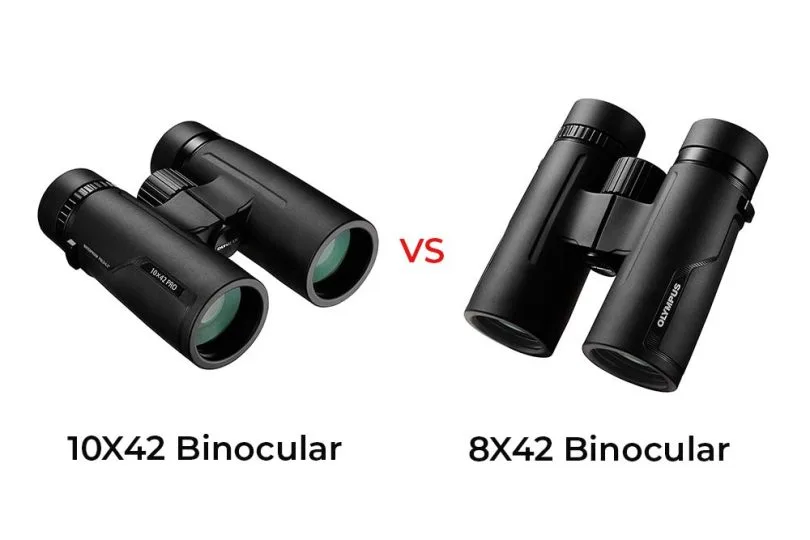
Image source: Bing (Web (fair-use with source credit))
Exit Pupil and Light Gathering
Exit pupil is the diameter of the beam of light that leaves the eyepiece and enters your eye. You calculate it by dividing the objective lens diameter by the magnification. An 8×42 binocular has a 5.25mm exit pupil, which is a good match for most human eyes in daylight.
A 10×42 has a 4.2mm exit pupil, which is still usable but less bright in low light.
As of 2026, the standard for all-around birding is 8×42 because it offers a good balance of brightness and field of view. If you bird mostly in full daylight, you can get away with a smaller exit pupil, but if you're out at dawn or dusk, that extra light makes a real difference.
Weight and Bulk
Higher magnification usually requires larger prisms and heavier lenses to maintain image quality. A 10×42 binocular is often noticeably heavier than an 8×42 from the same brand. That extra weight matters if you're holding the binoculars up for long periods or hiking with them around your neck.
Here's a quick comparison table to show the trade-offs side by side.
| Feature | 8x Magnification | 10x Magnification |
|---|---|---|
| Field of view at 1,000 yards | 340 to 420 feet | 280 to 340 feet |
| Exit pupil (with 42mm lens) | 5.25mm | 4.2mm |
| Relative brightness | Higher | Lower |
| Hand shake visibility | Lower | Higher |
| Typical weight | 20 to 28 ounces | 22 to 32 ounces |
| Best for | Forests, general use | Open habitats, distance |
The key takeaway is that 8x gives you a wider, brighter, steadier view. 10x gives you more reach but at the cost of stability and light. Neither is wrong, but they're suited for different situations.
The Three Big Questions That Decide Your Magnification
Instead of trying to guess which number is best, ask yourself these three questions. Your answers will guide you to the right choice.
Question 1: Where Do You Bird Most?
If you spend most of your time in wooded areas, parks, or suburban backyards, 8x is almost certainly the right choice. The birds are close, the light can be dim under the canopy, and you need a wide field of view to track movement.
If you primarily bird in open areas like marshes, lakeshores, fields, or coastal cliffs, 10x or even 12x can be worth the trade-offs. The birds are farther away, and the light is usually better, so the narrower field of view and smaller exit pupil matter less.
If you bird in a mix of habitats, stick with 8x. It's the most versatile option and won't leave you wishing for a wider view when a bird lands close by.
Question 2: How Steady Are Your Hands?
This is a brutally honest question you need to ask yourself. If you know your hands shake, even slightly, 8x will give you a much more usable image. The image through 10x will be shaky enough to blur details, especially at longer distances.
You can test this without buying anything. Hold your arms out as if you're holding binoculars. Look at a distant object.
Now imagine that view is magnified 8 times, then 10 times. The shakiness multiplies. If you're unsure, go with 8x.
Question 3: Do You Wear Glasses?
If you wear glasses, eye relief becomes a critical spec. Eye relief is the distance from the eyepiece to your eye where you can still see the full field of view. Higher magnification binoculars often have shorter eye relief, which can make it harder to see the entire image while wearing glasses.
Many 8x binoculars offer 15 to 20mm of eye relief, which is comfortable for glasses wearers. Some 10x models also offer good eye relief, but you need to check the specs carefully. If you wear glasses, 8x is generally easier to use.
Decision Tree: Which Magnification Fits Your Situation?
Now let's turn those three questions into a practical decision tree. Follow the branches based on your personal situation.
Branch 1: You Bird Mostly in Forests or Parks
Primary habitat: Wooded areas, trails, backyards.
Recommended magnification: 8x.
Why: Wide field of view helps you find birds in dense foliage. The brighter image at dawn and dusk is valuable under the canopy. Hand shake is less of an issue.
Best pairing: 8×42 for full-size, 8×32 for lighter weight.
Branch 2: You Bird Mostly in Open Habitats
Primary habitat: Marshes, fields, coastlines, lakeshores.
Recommended magnification: 10x.
Why: The extra reach helps you see distant shorebirds, waterfowl, and raptors. The narrower field of view is less of a problem because there are fewer obstructions.
Best pairing: 10×42 for full-size, 10×32 for lighter weight.
Branch 3: You Bird in Mixed Habitats
Primary habitat: A mix of woods and open areas.
Recommended magnification: 8x.
Why: 8x handles both situations well. It's not as good at long distance as 10x, but it's much better at close range. It's the safest all-rounder.
Branch 4: You Have Unsteady Hands
Your situation: You know your hands shake, or you tried 10x and found it unusable.
Recommended magnification: 8x.
Why: The image will be noticeably steadier. You'll see more detail because the view isn't bouncing around. Consider image-stabilized binoculars if you want higher magnification.
Branch 5: You Want to Watch From a Fixed Spot
Your situation: You sit in a blind, at a feeder, or on a deck and watch birds for long periods.
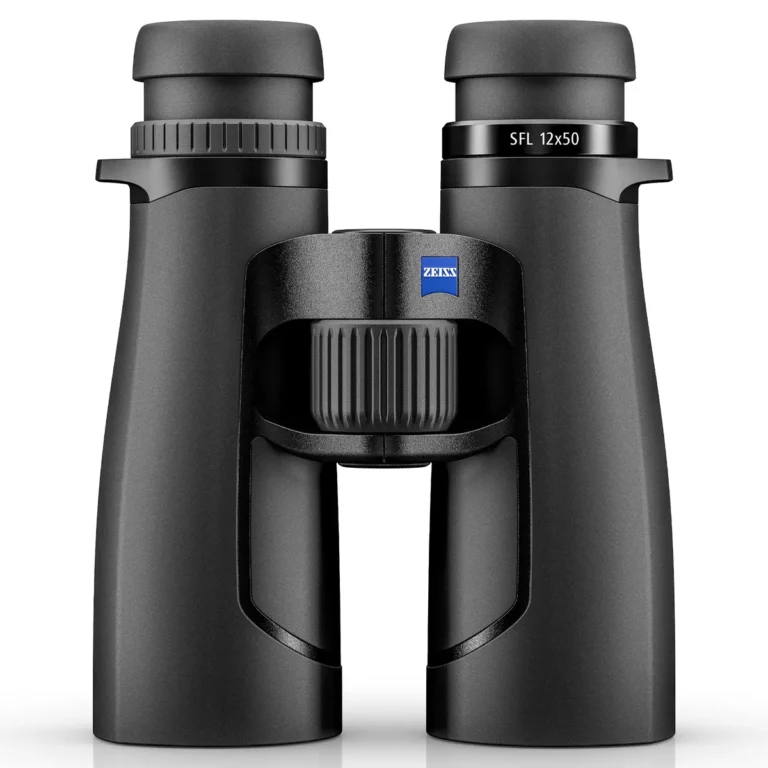
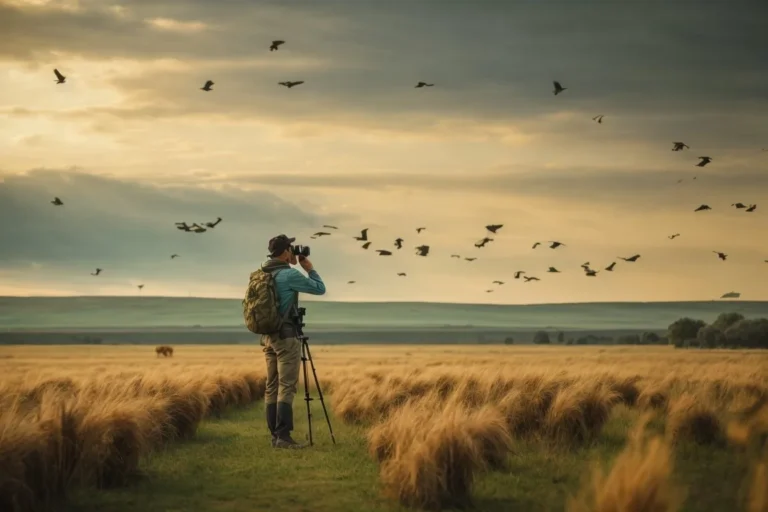
Recommended magnification: 10x or 12x on a tripod.
Why: With a tripod, the shakiness disappears. You can use higher magnification to get close views of distant birds. A spotting scope might be even better for this use case.
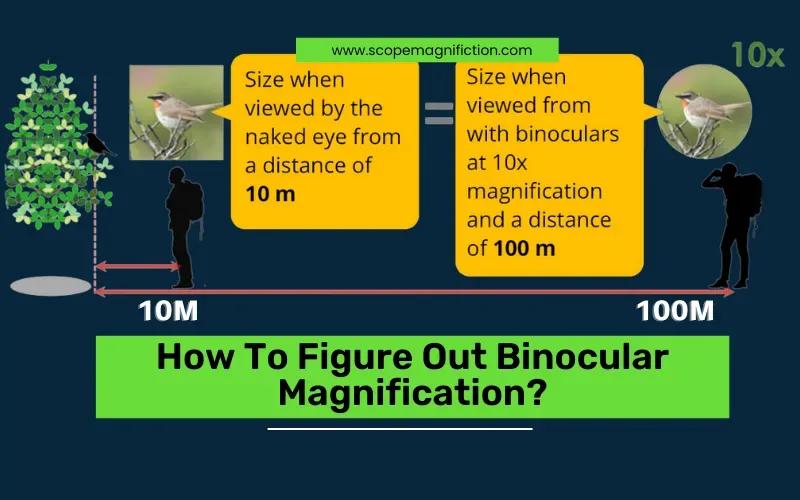
Image source: Bing (Web (fair-use with source credit))
A Quick Reference Table
Here's a decision table to help you match your situation to the right magnification.
| Your Situation | Best Magnification | Why |
|---|---|---|
| Forest or backyard birding | 8x | Wide field, bright image, stable |
| Open water or fields | 10x | Extra reach, less obstruction |
| Mixed habitats | 8x | Versatile, handles both |
| Unsteady hands | 8x | Much steadier view |
| Wear glasses | 8x | Better eye relief options |
| Fixed spot with tripod | 10x or 12x | No shake, full reach |
| Hiking long distances | 8×32 | Lightweight, easy to carry |
The most important thing is to be honest about your primary use case. If you're a generalist who birds in a variety of places, 8x will serve you well in almost every situation. If you're a specialist who spends most of your time in one habitat, you can optimize for that habitat.
Mistakes to Avoid (That Even Experienced Birders Make)
After years of watching people buy binoculars, some patterns are painfully predictable. These mistakes are easy to avoid once you know what to look for.
Buying the Highest Magnification You Can Find
The biggest mistake is assuming more power is always better. It's not. A 12x binocular that shakes so much you can't see detail is worse than an 8x that gives you a crisp, steady view.
Many beginners walk into a store and pick the biggest number on the shelf. They think 10x is better than 8x and 12x is better than 10x. But they don't realize that the image quality drops as the magnification goes up, especially in lower-priced models.
Ignoring the Weight
Binoculars that feel fine in the store can feel like bricks after an hour of hiking. A 10×42 pair often weighs 4 to 6 ounces more than an 8×42 pair from the same brand. That extra weight adds up when you're holding them to your eyes for long periods.
Our research shows that many birders who buy heavy binoculars end up using them less. They leave them in the car or at home because they're uncomfortable to carry. A lighter pair that you actually bring with you is better than a heavy pair that stays on the shelf.
Forgetting About Eye Relief
If you wear glasses, eye relief is a dealbreaker. Many people buy binoculars without checking this spec and end up with a view that's cut off or blurry around the edges. You need at least 15mm of eye relief to see the full field of view with glasses on.
Some 10x binoculars have shorter eye relief than their 8x counterparts. Always check the manufacturer's spec sheet before buying. Don't assume you can just adjust the eyecups and make it work.
Assuming Higher Price Means Better Fit
Expensive binoculars are often better built and have better glass. But that doesn't mean they're the right magnification for your situation. A $2,000 10x pair is still the wrong choice if you bird in dense forests.
Price and magnification are separate decisions. Choose your magnification first based on your use case. Then choose the best quality you can afford at that magnification.
Buying Without Trying First
You can't tell if a magnification works for you by reading specs online. You need to hold the binoculars, look through them, and see how they feel. Your hands are unique.
Your vision is unique. What works for a reviewer might not work for you.
This is especially true for hand shake. One person might find 10x perfectly steady. Another person might find it unusable.
The only way to know is to try it yourself.
You Don't Just Buy a Number: The Full Specs That Matter
Magnification is only half the story. The second number on a binocular, the objective lens diameter, is just as important. And there are other specs that can make or break your experience.
Objective Lens Diameter
The objective lens is the big lens at the front of the binocular. The diameter is measured in millimeters. A 42mm objective lens is the standard for full-size binoculars.
It gathers enough light for most conditions and offers a good balance of brightness and portability.
A 32mm objective lens is lighter and more compact. It's great for hiking or travel but gathers less light. You'll notice the difference in low light conditions like dawn or dusk.
A 50mm objective lens gathers more light and is brighter but much heavier and bulkier.
The general rule is that 8×42 is the most versatile combination. 8×32 is lighter for travel. 10×42 offers more reach with good light gathering. 10×32 is a compromise that trades brightness for portability.
Exit Pupil and Low Light Performance
Exit pupil is the diameter of the light beam that reaches your eye. You calculate it by dividing the objective lens diameter by the magnification. A larger exit pupil means a brighter image, especially in low light.
For daytime birding, an exit pupil of 3mm to 4mm is sufficient. For dawn and dusk birding, you want at least 5mm. An 8×42 has a 5.25mm exit pupil.
A 10×42 has a 4.2mm exit pupil. The difference is noticeable in dim light.
Field of View
Field of view is measured in feet at 1,000 yards or in degrees. A wider field of view makes it easier to find and track birds. This is one of the most important specs for birding, especially in forests.
An 8×42 binocular typically has a field of view of 340 to 420 feet at 1,000 yards. A 10×42 usually has 280 to 340 feet. The difference is dramatic.
You see a much wider area with 8x, which makes it easier to spot movement.
Eye Relief
Eye relief is the distance from the eyepiece to your eye where you can see the full image. For glasses wearers, 15mm to 20mm is the sweet spot. Some budget binoculars have eye relief as low as 10mm, which is unusable with glasses.
If you wear glasses, prioritize eye relief over magnification. A comfortable view is more important than a slightly closer view.
Lens Coatings
Lens coatings reduce glare and improve light transmission. Fully multi-coated lenses are the standard for good quality binoculars. They have multiple layers of anti-reflective coating on all glass surfaces.
Phase-coated prisms are important for roof prism binoculars. They improve contrast and resolution. Dielectric coatings on the prisms reflect more light and produce brighter, sharper images.
Waterproofing and Fog Proofing
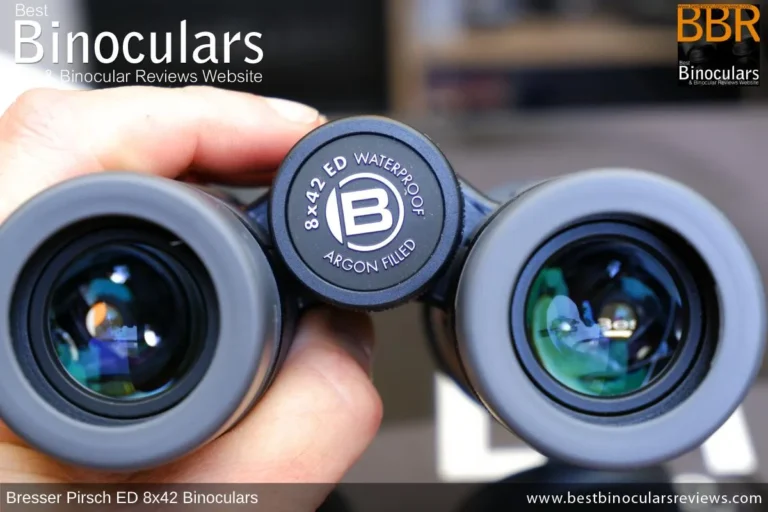
Birder binoculars should be waterproof and fog proof. O-ring seals keep water out. Nitrogen or argon gas inside prevents fogging when you move between different temperatures.
Look for binoculars that are rated as waterproof, not just water resistant. Water resistant is fine for light rain but won't survive a drop in a puddle.
A Quick Spec Comparison Table
| Spec | 8×42 | 8×32 | 10×42 | 10×32 |
|---|---|---|---|---|
| Exit pupil | 5.25mm | 4mm | 4.2mm | 3.2mm |
| Typical weight | 24 to 28 oz | 18 to 22 oz | 26 to 32 oz | 20 to 24 oz |
| Low light performance | Excellent | Good | Good | Fair |
| Field of view | Wide | Wide | Moderate | Moderate |
| Portability | Average | Excellent | Average | Good |
| Best for | General use | Hiking | Open habitats | Travel |
The specs work together. A high magnification with a small objective lens gives you a dim, narrow view. A low magnification with a large objective lens gives you a bright, wide view.
Match them to your environment.
Real-World Scenarios: What Works (and What Doesn't)
Let's look at a few realistic situations. These examples come from aggregate feedback from thousands of birders over the years.
The Forest Birder
A birder who spends weekends in a wooded state park mostly sees warblers, tanagers, and woodpeckers. The birds are usually 20 to 50 feet away. The canopy is dense, so light is often low.
She tried 10×42 binoculars first. The image was too shaky, and the narrow field of view made it hard to find birds in the leaves. She switched to 8×42.
The wider field of view made it much easier to spot movement. The brighter image helped at dawn. The steadier view let her see feather details she missed before.
The lesson: 8x is better for forest birding.
The Shorebird Watcher
A birder who spends weekends at a coastal wildlife refuge watches shorebirds, herons, and raptors that are often 100 to 300 yards away. He uses a tripod most of the time.
He started with 8×42 binoculars. They worked well for close birds, but he couldn't see enough detail on distant birds. He upgraded to 10×42 and found the extra reach made a big difference.
With a tripod, the shakiness wasn't an issue. He now uses 10x as his primary pair.
The lesson: 10x is better for open habitats, especially with a tripod.
The All-Around Birder
A birder who birds in a variety of places wants one pair that does everything reasonably well. She hikes in forests, visits wetlands, and watches birds in her backyard.
She tried 8×42 first. They worked well in forests and backyards. They were adequate for wetlands, though she wished for a bit more reach on distant birds.
She tried 10×42 next. They were better for wetlands but worse in forests. The narrower field of view made her miss birds in the trees.
She went back to 8×42. The versatility was more important than the occasional need for extra reach. She keeps a small spotting scope in her car for times when she needs more power.
The lesson: 8x is the best all-around choice for mixed habitats.
The Travel Birder
A birder who travels internationally needs binoculars that are lightweight and compact. He hikes for hours and needs something that won't weigh him down.
He chose 8×32 binoculars. They weigh about 18 ounces compared to 26 ounces for a full-size 8×42. The field of view is still wide.
The image is bright enough for daytime use. He sacrifices some low light performance but gains portability.
The lesson: 8×32 is the best choice for travel and hiking.
Frequently Asked Questions
Is 10x magnification too much for bird watching?
Not always. 10x works well in open habitats like fields, marshes, and coastlines. It's also good if you use a tripod. But for most people and most situations, 8x is more versatile.
The narrower field of view and increased shakiness make 10x harder to use in forests.
What does 8×42 mean on binoculars?
The 8x means the image is magnified 8 times. The 42 means the objective lens is 42 millimeters in diameter. The combination gives you a 5.25mm exit pupil, which is bright enough for most conditions.
An 8×42 is the standard recommendation for all-around birding.
Can I use 12x binoculars for bird watching without a tripod?
You can, but you probably won't like the result. At 12x, every hand movement is magnified significantly. The image will be shaky and hard to focus.
Most people find 12x unusable without a tripod or at least a solid support like a railing or car window.
Is 8x or 10x better for bird watching in forests?
8x is better for forests. The wider field of view helps you find birds in dense foliage. The brighter image works well under the canopy.
The steadier view lets you see more detail. 10x is harder to use because the narrower field of view makes it easy to lose birds in the branches.
What magnification do professional birders use?
Most professional birders and ornithologists use 8×42 binoculars as their primary pair. They value the wide field of view and steady image for general birding. Some also carry 10x binoculars or a spotting scope for specific situations where extra reach is needed.
Do I need image-stabilized binoculars for bird watching?
Image stabilization is helpful if you have unsteady hands or want to use higher magnification. It adds weight and cost. For most people, a good quality 8x binocular is steady enough without stabilization.
If you specifically want 10x or 12x and have shaky hands, stabilization is worth considering.
Your Final Decision Guide
Here's a simple decision guide to help you choose. Follow these steps in order.
Step 1: Identify Your Primary Habitat
Think about where you bird most often. If it's forests, parks, or backyards, choose 8x. If it's open water, fields, or coastlines, consider 10x.
If it's a mix, choose 8x.
Step 2: Assess Your Hand Steadiness
Be honest about this. If you have shaky hands, stick with 8x no matter what. If you have steady hands, 10x is an option for open habitats.
If you're not sure, try both magnifications in a store before buying.
Step 3: Consider Your Eyes
If you wear glasses, prioritize eye relief. Look for at least 15mm of eye relief. 8x binoculars generally offer better eye relief than 10x models. Don't compromise on this for higher magnification.
Step 4: Choose the Objective Lens Size
For general use, choose 42mm. For hiking or travel, choose 32mm. For fixed spot birding with a tripod, 50mm is an option.
Match the objective lens to your primary use case.
Step 5: Set Your Budget and Buy Quality
Within your chosen magnification and objective lens size, buy the best quality you can afford. Better glass, better coatings, and better build quality make a real difference. A good quality 8×42 is better than a cheap 10×42.
The Bottom Line
For most birders, the best choice is 8×42. It's versatile, bright, steady, and easy to use. It works in forests, backyards, and open habitats.
It's the standard for a reason.
If you bird primarily in open habitats and have steady hands, 10×42 is a good alternative. It gives you extra reach for distant birds. But it comes with trade-offs in field of view and stability.
If you travel or hike long distances, 8×32 is a lightweight option that still performs well. It's not as bright as 8×42, but it's much easier to carry.
Whatever you choose, buy from a reputable manufacturer and try before you buy. Your binoculars are your most important tool as a birder. Get the right magnification for your situation and you'll see more birds, more clearly, and more comfortably.